Offered by Galerie Nicolas Lenté



REQUEST INFORMATION


French School, 17th century, circa 1620–1630
Oil on oak panel, h. 32 cm, w. 25.5 cm
Blackened and molded wooden frame; framed dimensions: h. 43.5 cm, w. 36 cm
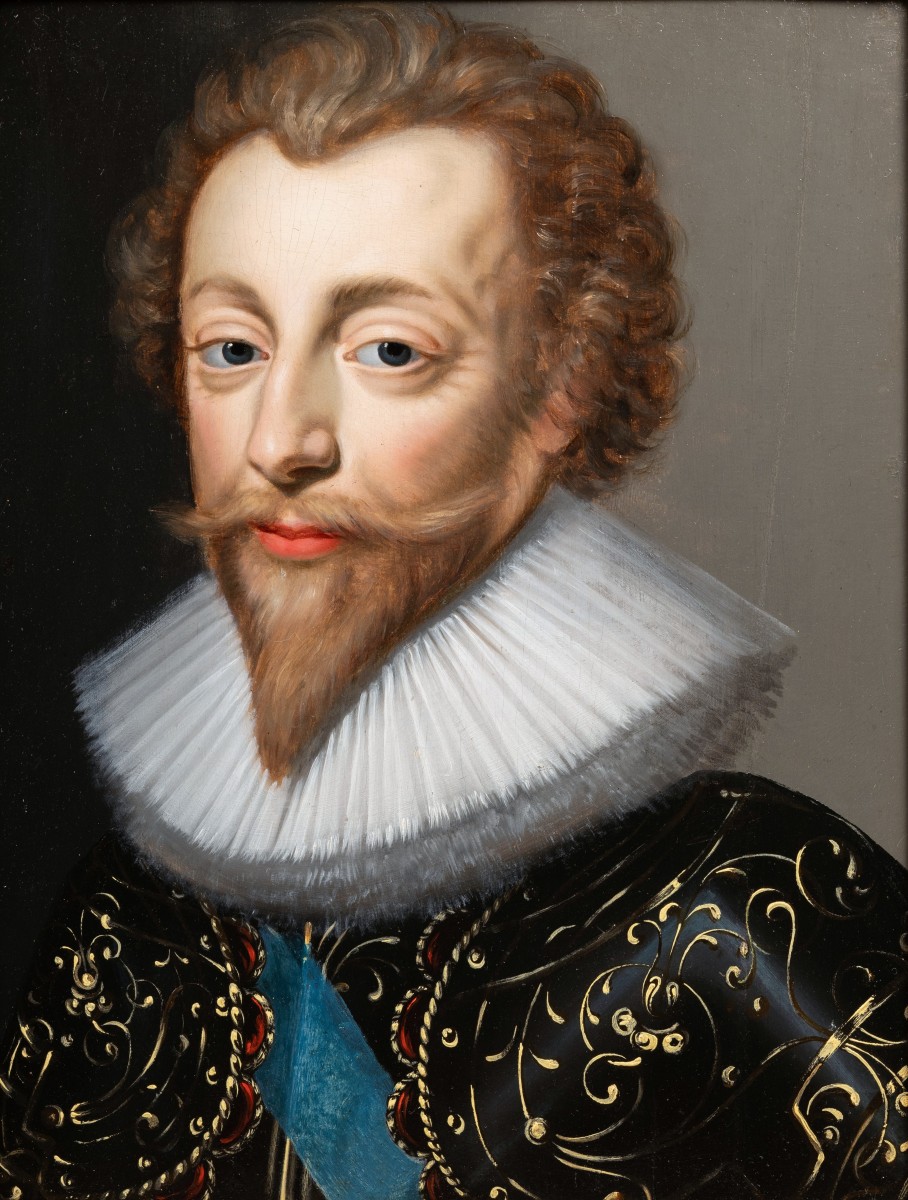
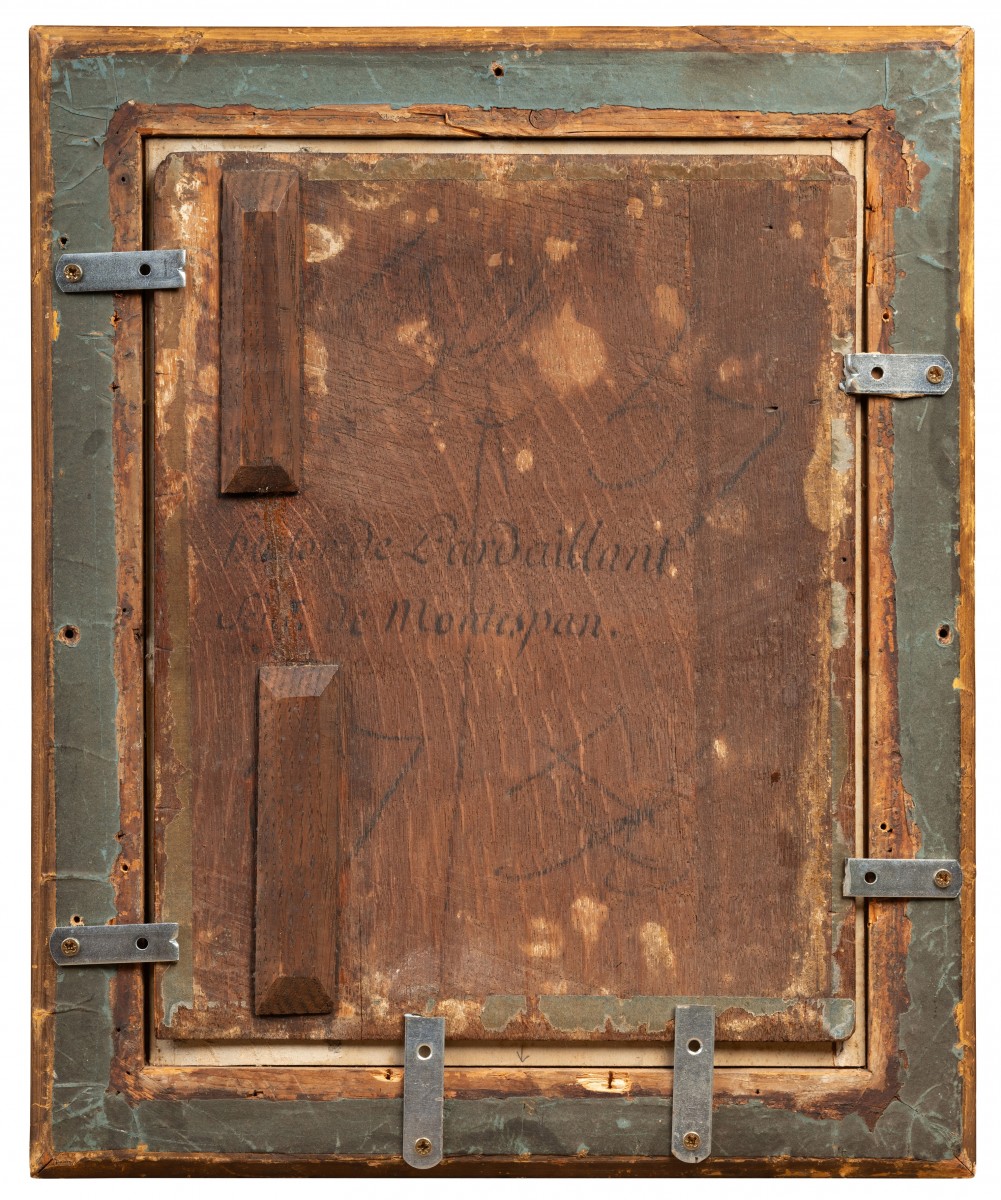
Portrait of Roger-Hector de Pardaillan de Gondrin, Marquis de Montespan (?–1661), father of Louis-Henri de Pardaillan de Gondrin, who would later become the husband of Françoise-Athénaïs de Rochechouart, Marquise de Montespan.
The sitter is portrayed in bust-length, turned three-quarters, his face bathed in light, gazing at the viewer with large blue eyes.
Wearing his hair in the fashion of the period, the young marquis sports an elegant moustache and a pointed beard.
He is dressed in a cuirass adorned with gilt scrollwork, wears around his neck a large pleated white lace ruff, and across his chest the blue sash of the Order of the Holy Spirit.
Claude Déruet, born around 1588 in Nancy, where he died on October 20, 1660, was a Lorraine painter associated with late Mannerism.
Déruet was apprenticed to Jacques Bellange, official court painter to Duke Charles III of Lorraine.
He was ennobled in 1621 and made a Knight of the Order of Saint Michael in 1645 by Louis XIII. Déruet owned a luxurious residence in Nancy, known as La Romaine, where Louis XIII and the Queen stayed in 1633.
Déruet mainly produced paintings of small or medium format, as well as series of drawings, as recorded in his posthumous inventory. His œuvre includes several religious paintings, often on copper—particularly Virgins in garlands of flowers in the Flemish manner—popular scenes, and numerous portraits in the northern and French tradition of the 16th century. Déruet’s originality, however, lies in a romanticized mythology in which the equestrian figure predominates, whether in allegorical portraits (Louis XIV on horseback with Minerva, Juno, and Diana, Versailles; The Horsewoman and the Goddesses, Musée Lorrain, Nancy) or in scenes populated by numerous small figures set within Caronesque architectural frameworks (The Rape of the Sabine Women, 1651, Alte Pinakothek, Munich), or in meticulously rendered landscapes inspired by Italianized Flemish painters of the 16th century (Banquet, Musée Lorrain, Nancy; Suite of the Amazons, c. 1621, Musée des Beaux-Arts, Strasbourg; Suite of the Elements, painted for the Château de Richelieu, c. 1640–1641, Musée des Beaux-Arts, Orléans).
Roger-Hector de Pardaillan de Gondrin, Marquis de Montespan (?–1661)
Marquis d’Antin, Marquis de Montespan, Count of Miélan, honorary knight to Madame, Duchess of Orléans, seneschal and governor of Bigorre.
He married by contract dated June 11, 1635, Marie Christine Zamet, daughter of Jean Zamet, Baron of Murat, Marshal of the King’s camps and armies, and Governor of Fontainebleau.
From this union were born several sons, including Louis-Henri de Pardaillan de Gondrin, who inherited the title of Marquis de Montespan (1640–1701) and married in 1663 Françoise-Athénaïs de Rochechouart.
Delevery information :
We organize the shipping and delivery of our artworks worldwide, working with specialized fine art carriers as well as DHL Express for the secure shipment of small and medium-sized works (up to 120 cm).
Each artwork is carefully packed and shipped in a custom-made transport crate to ensure optimal protection. All shipments are fully tracked and insured.
We pay the utmost attention to every stage of the shipping process to ensure fast, reliable delivery. Shipments via DHL Express are generally dispatched within approximately 7 days of purchase.
All of our artworks can be viewed at our Paris gallery and may also be collected in person.