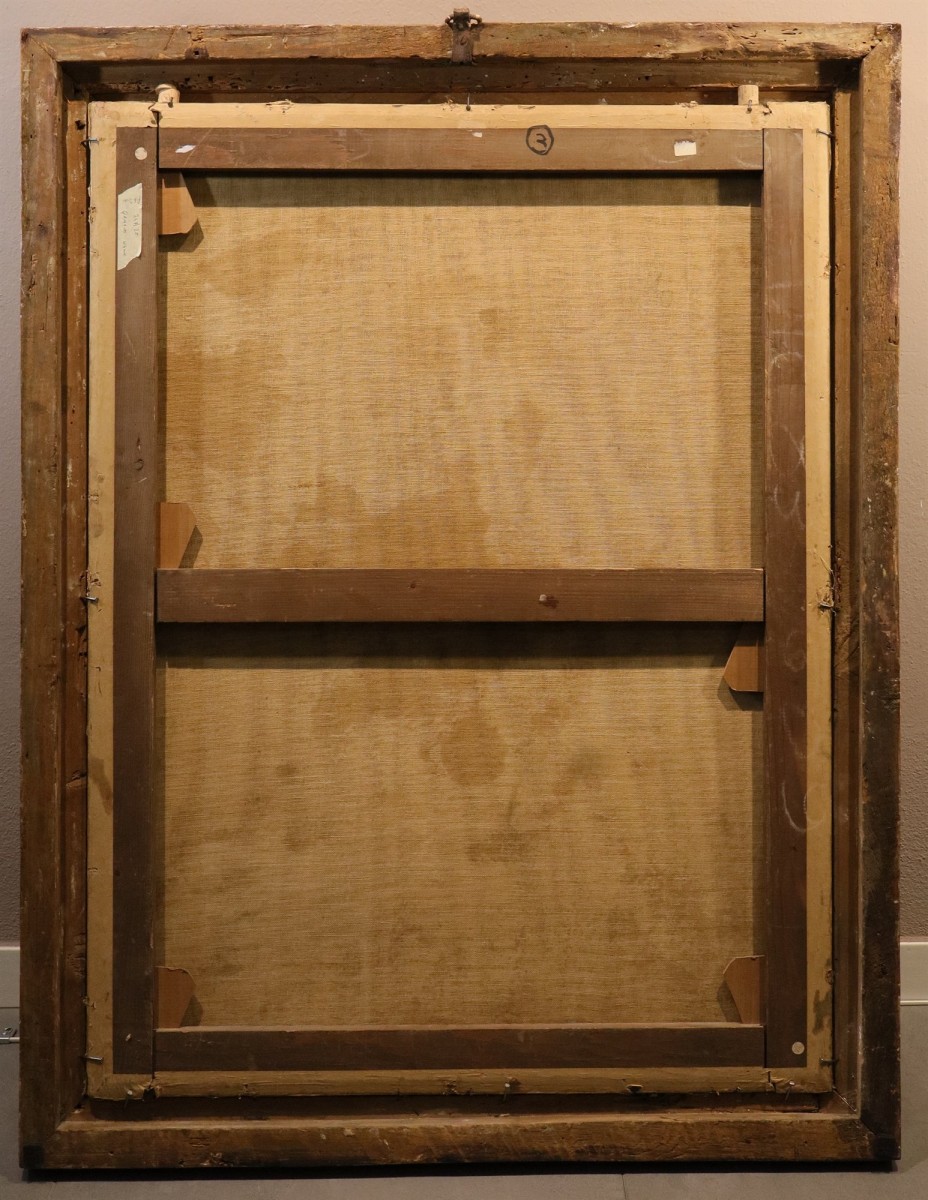
Offered by Antichità Castelbarco

Claude Vignon (Tours, 1593 – Paris, 1670)
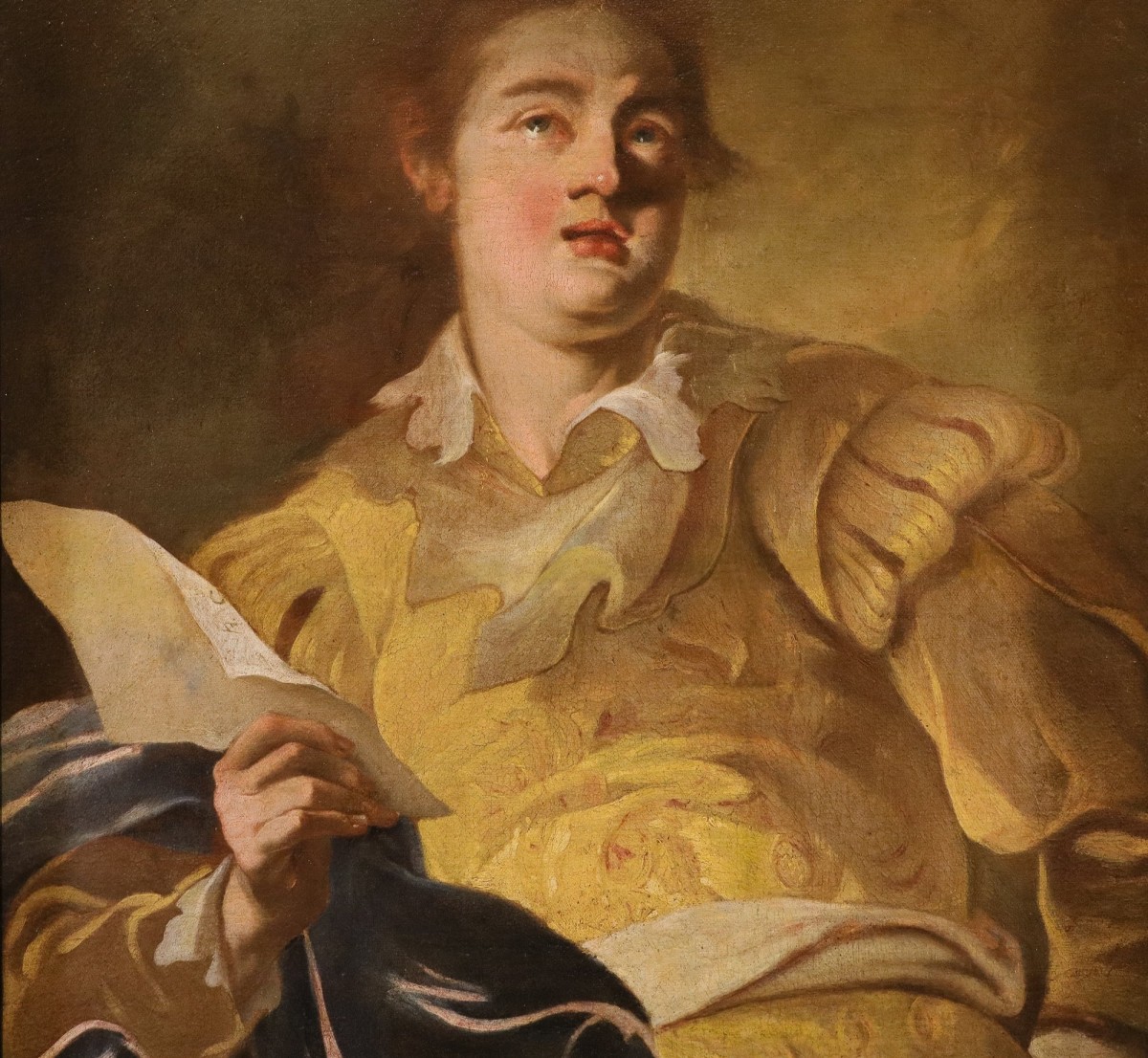
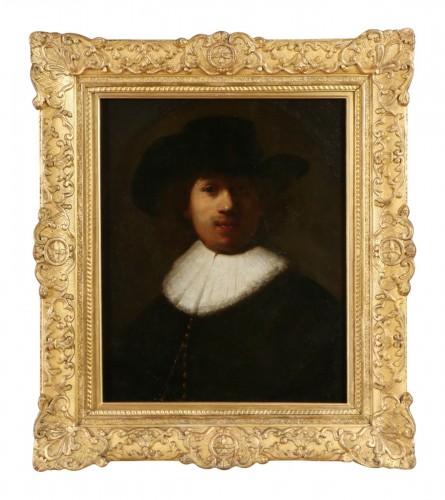
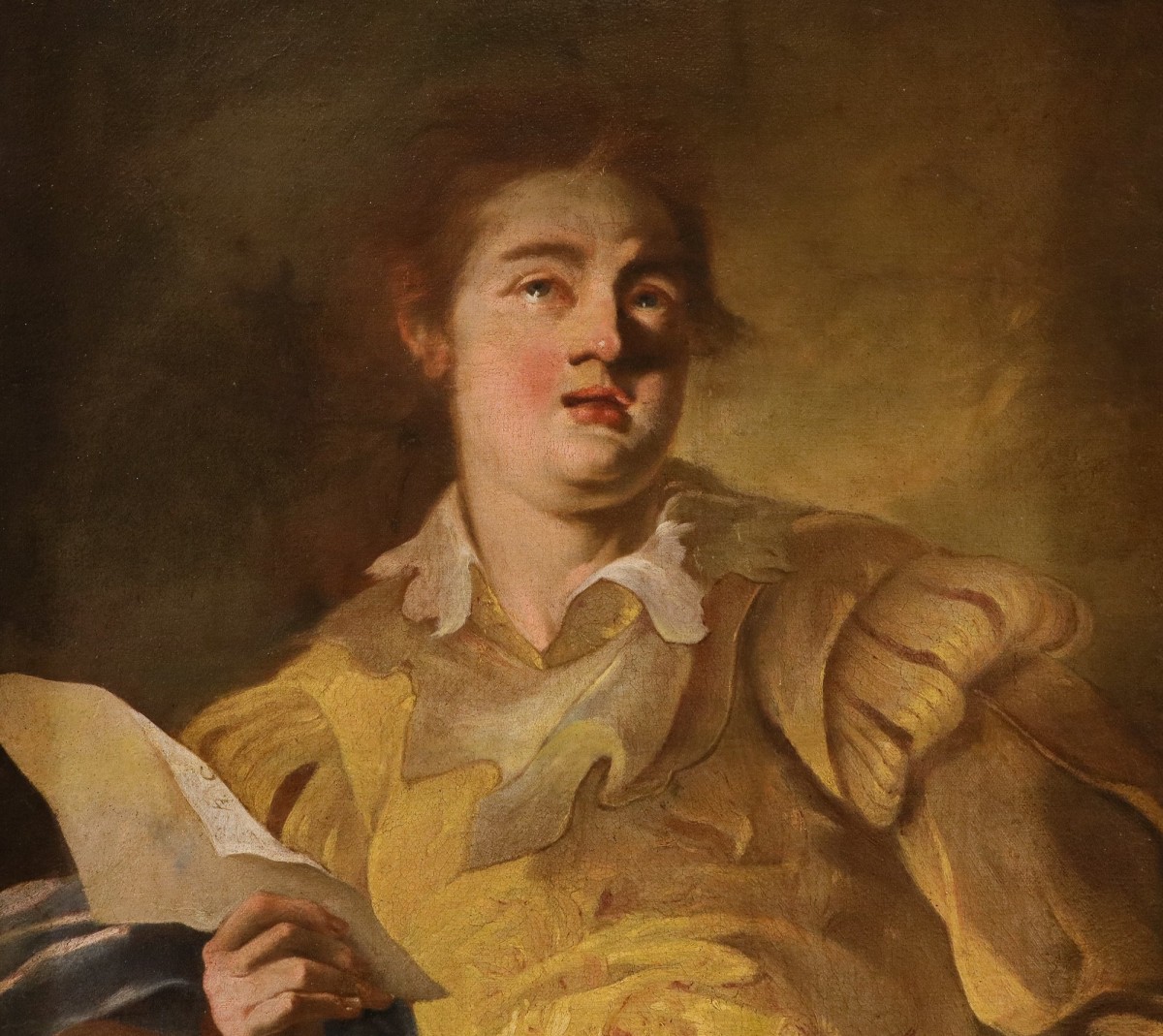
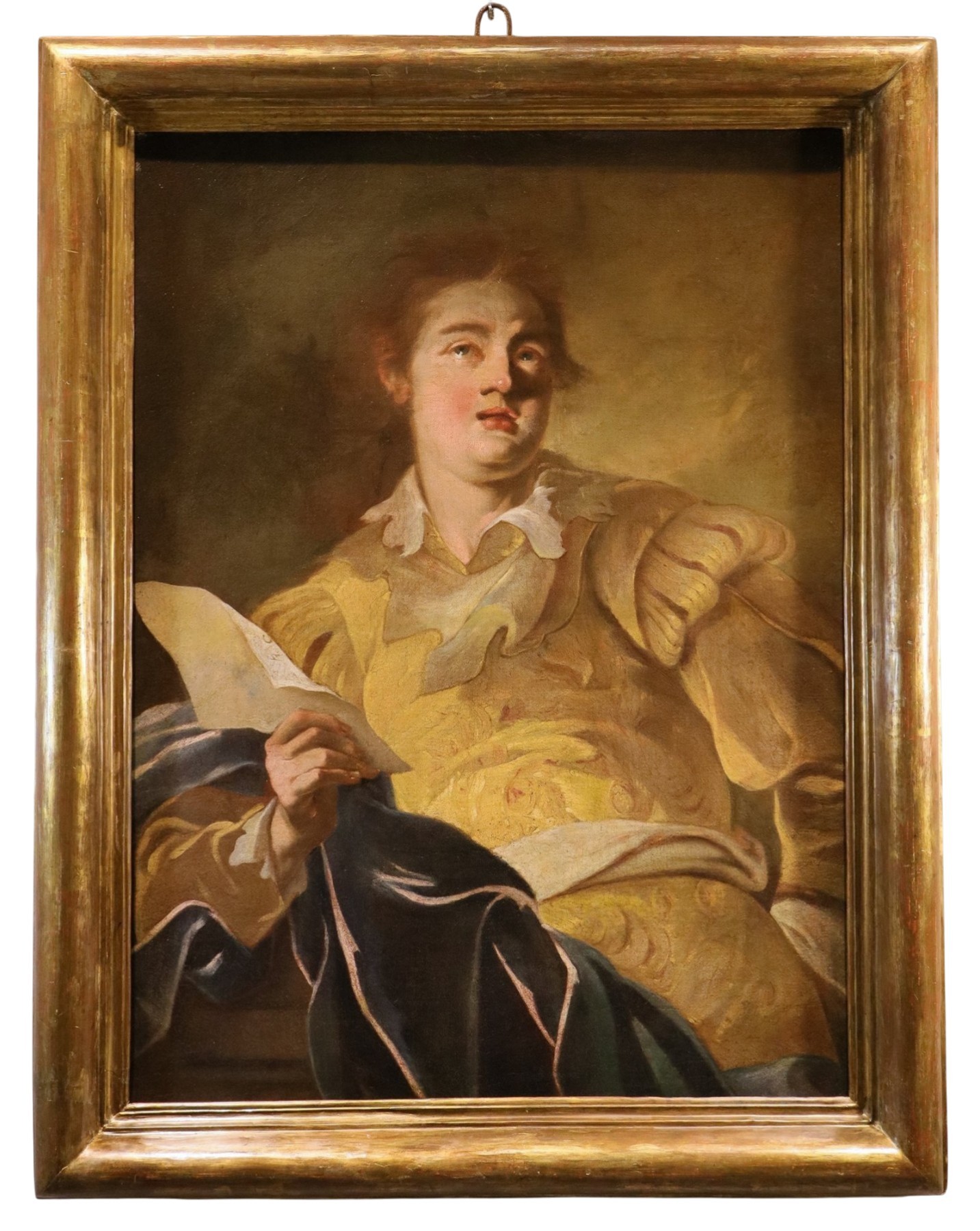
Portrait of a singer in a doublet
Circa 1625
Oil on canvas (105 x 79 cm. - In frame 120 x 94 cm.)
The work has been the subject of a detailed study by Dr Daniele Fiore (2019) (link to the document
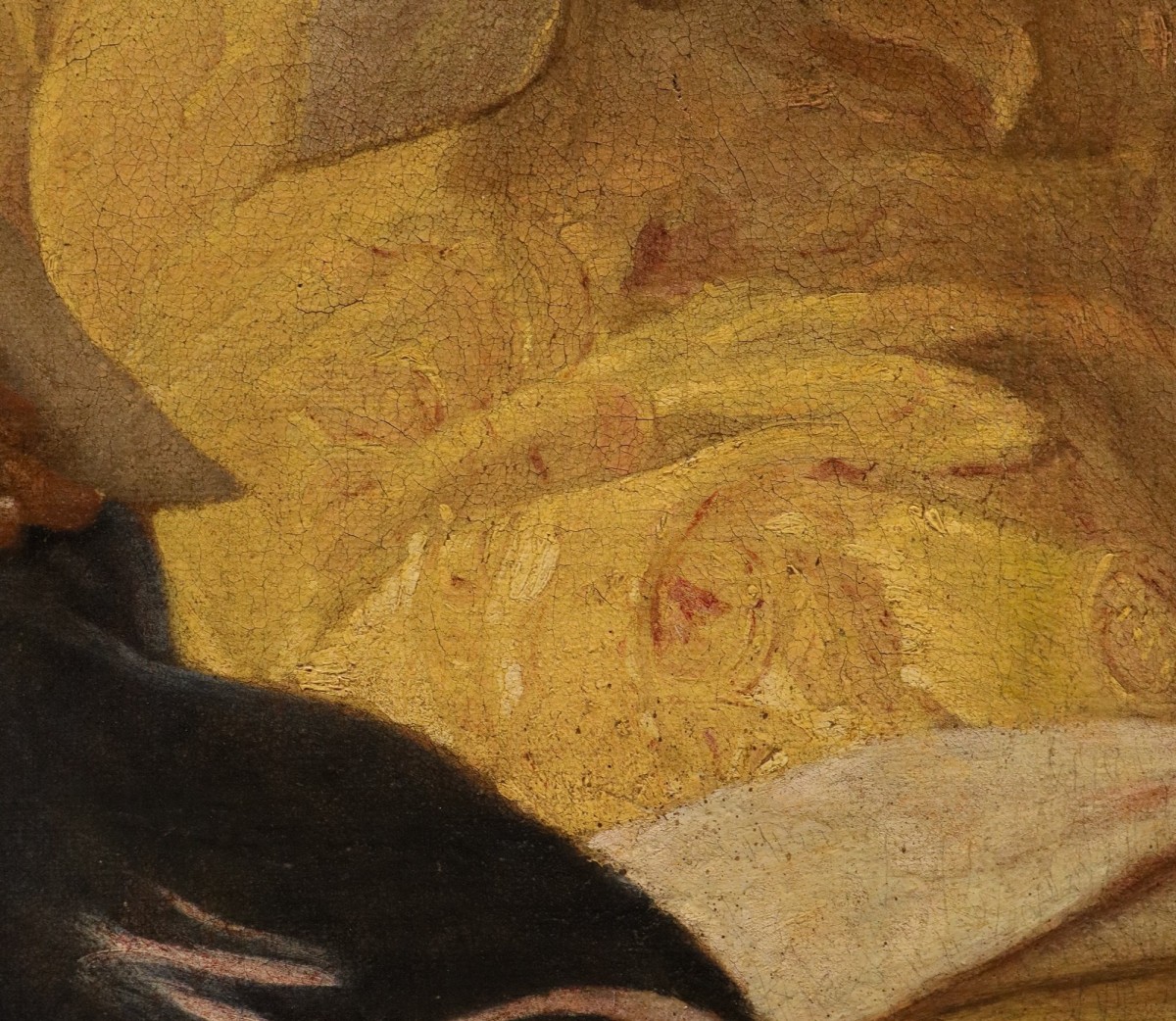
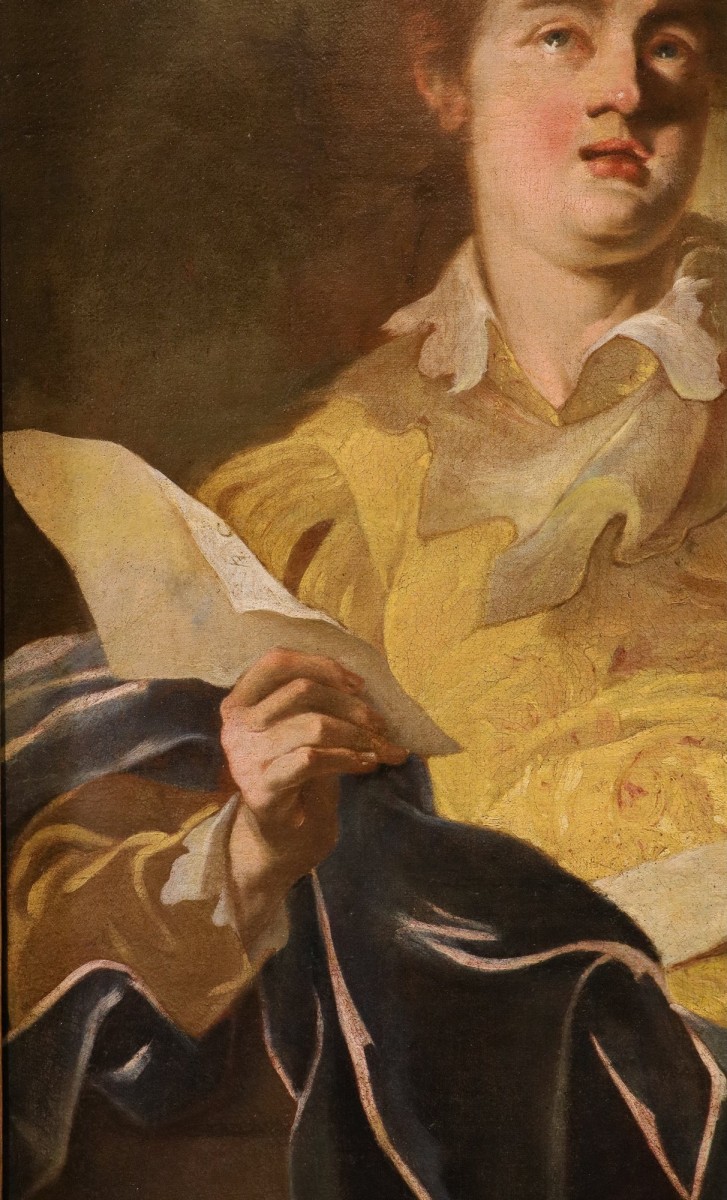
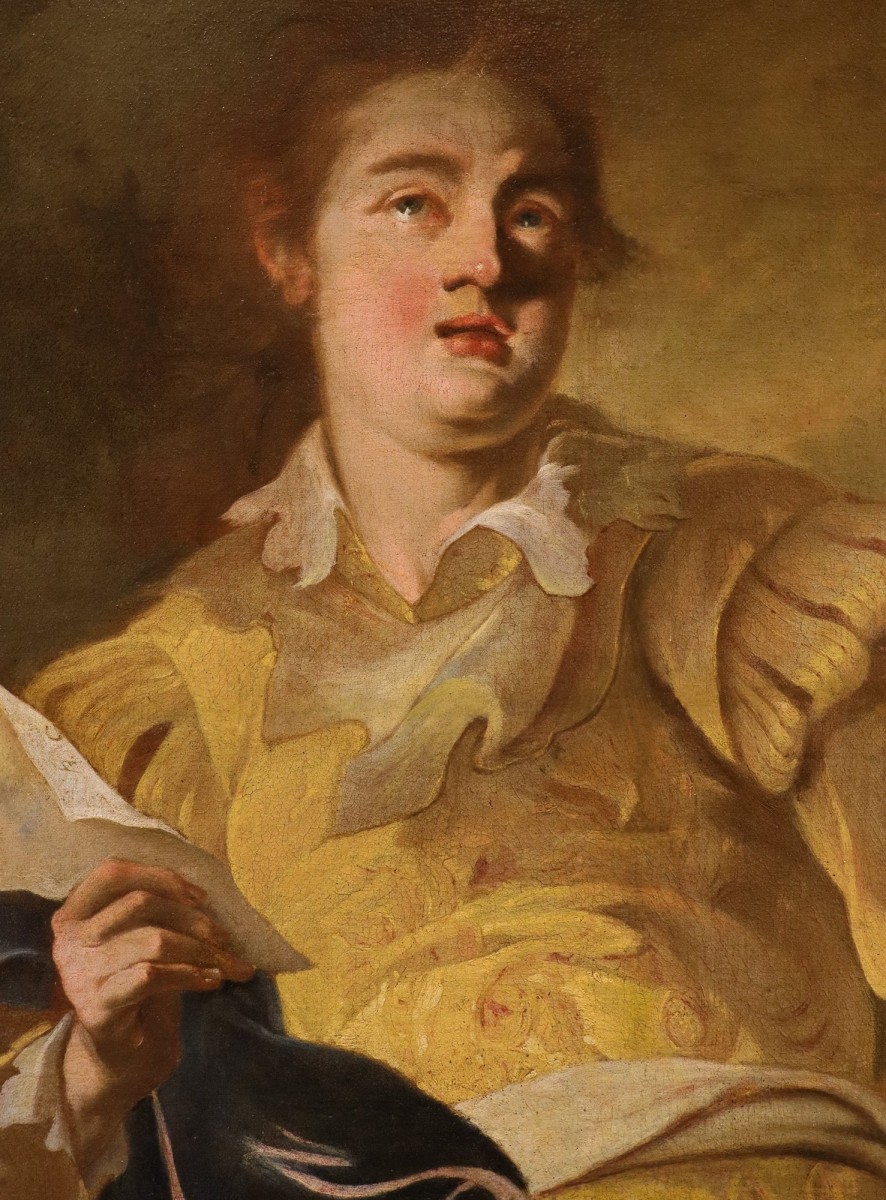
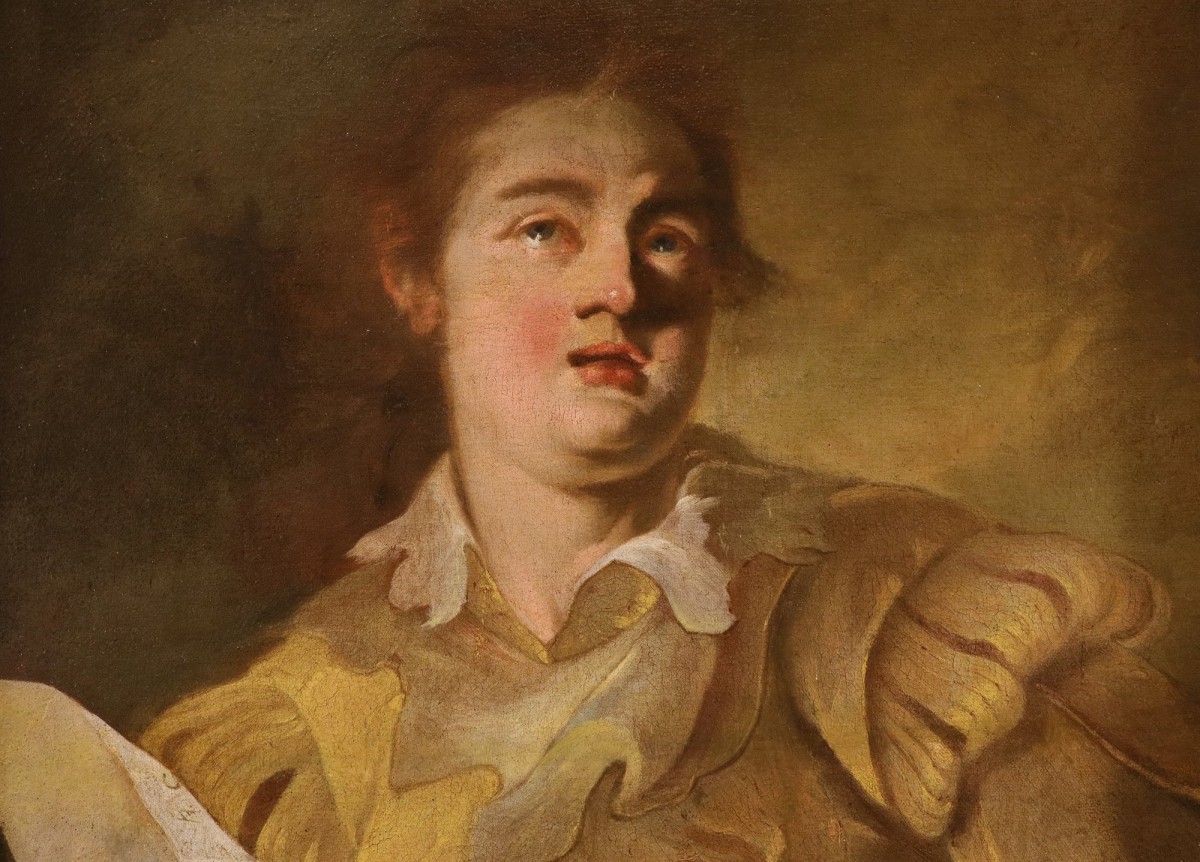
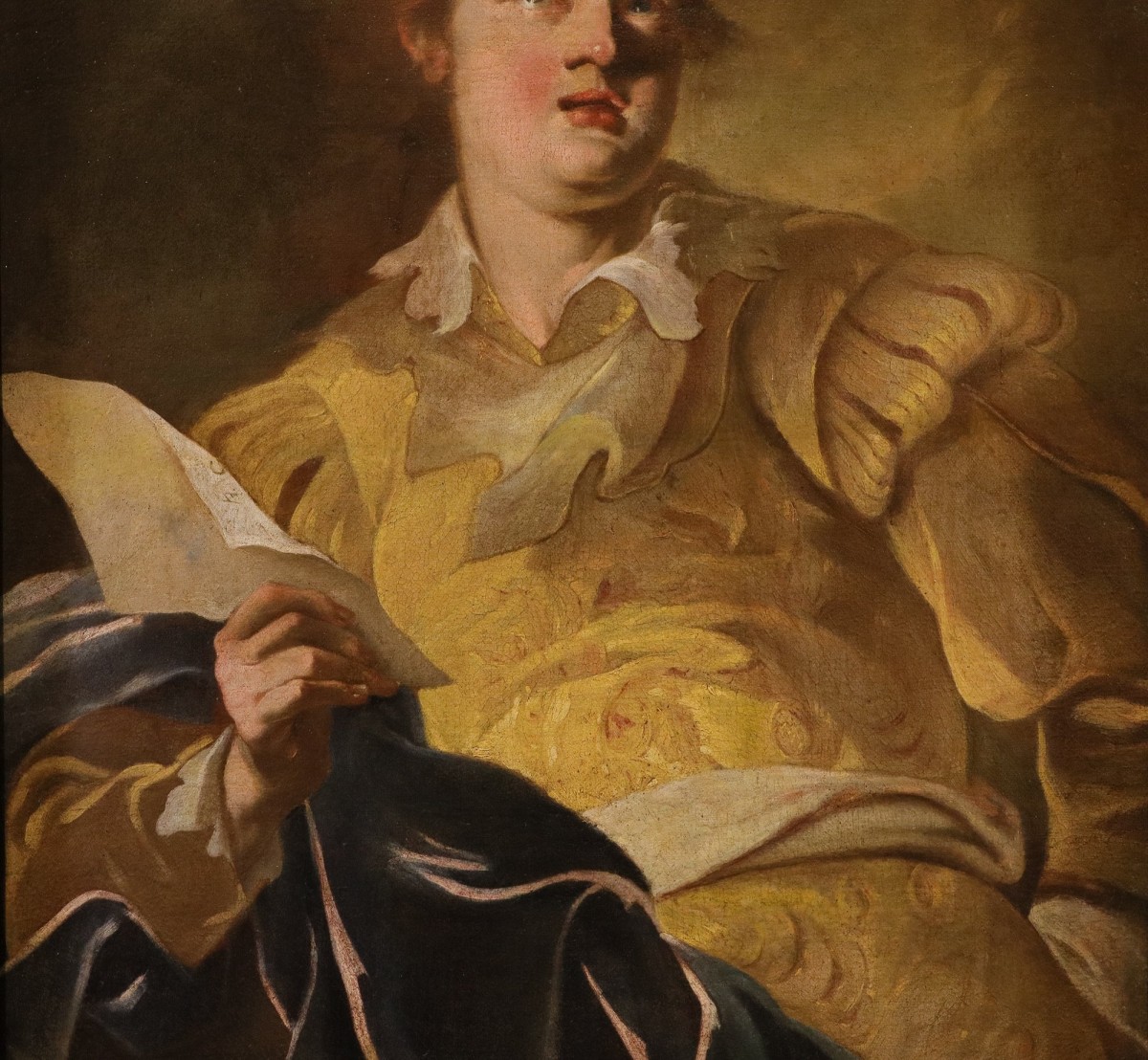
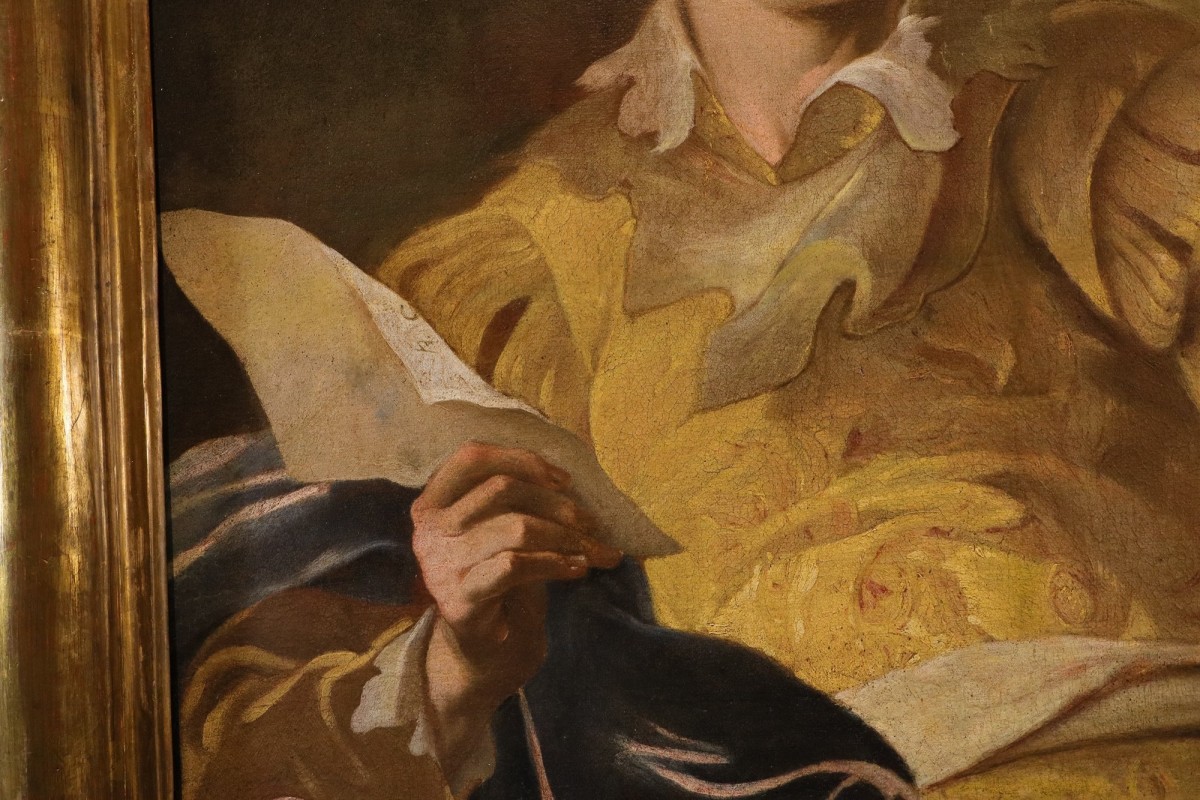
We present this interesting portrait of a young singer, immortalised from the front as he holds his score, elegantly dressed in a damask doublet with puffed sleeves, from which emerges a shirt with a soft collar, cinched at the waist by a sash, in typical Renaissance fashion.
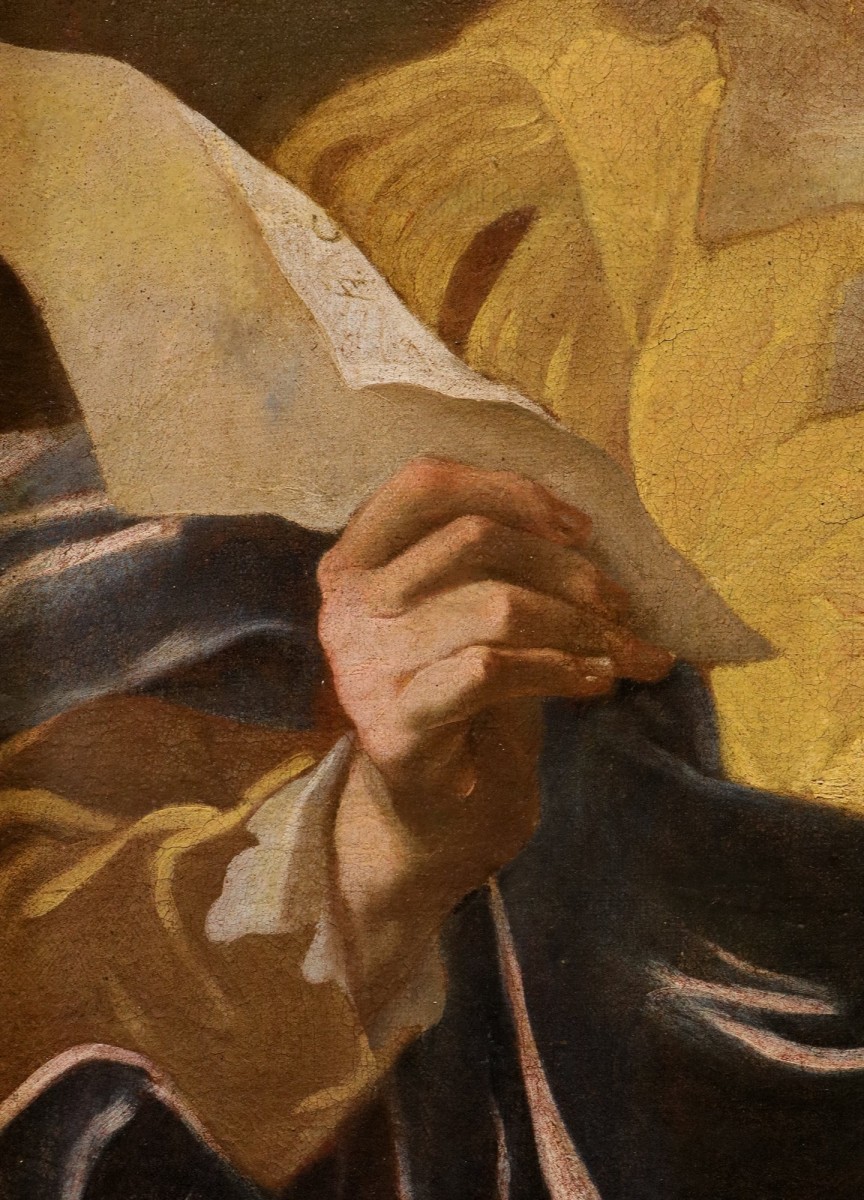
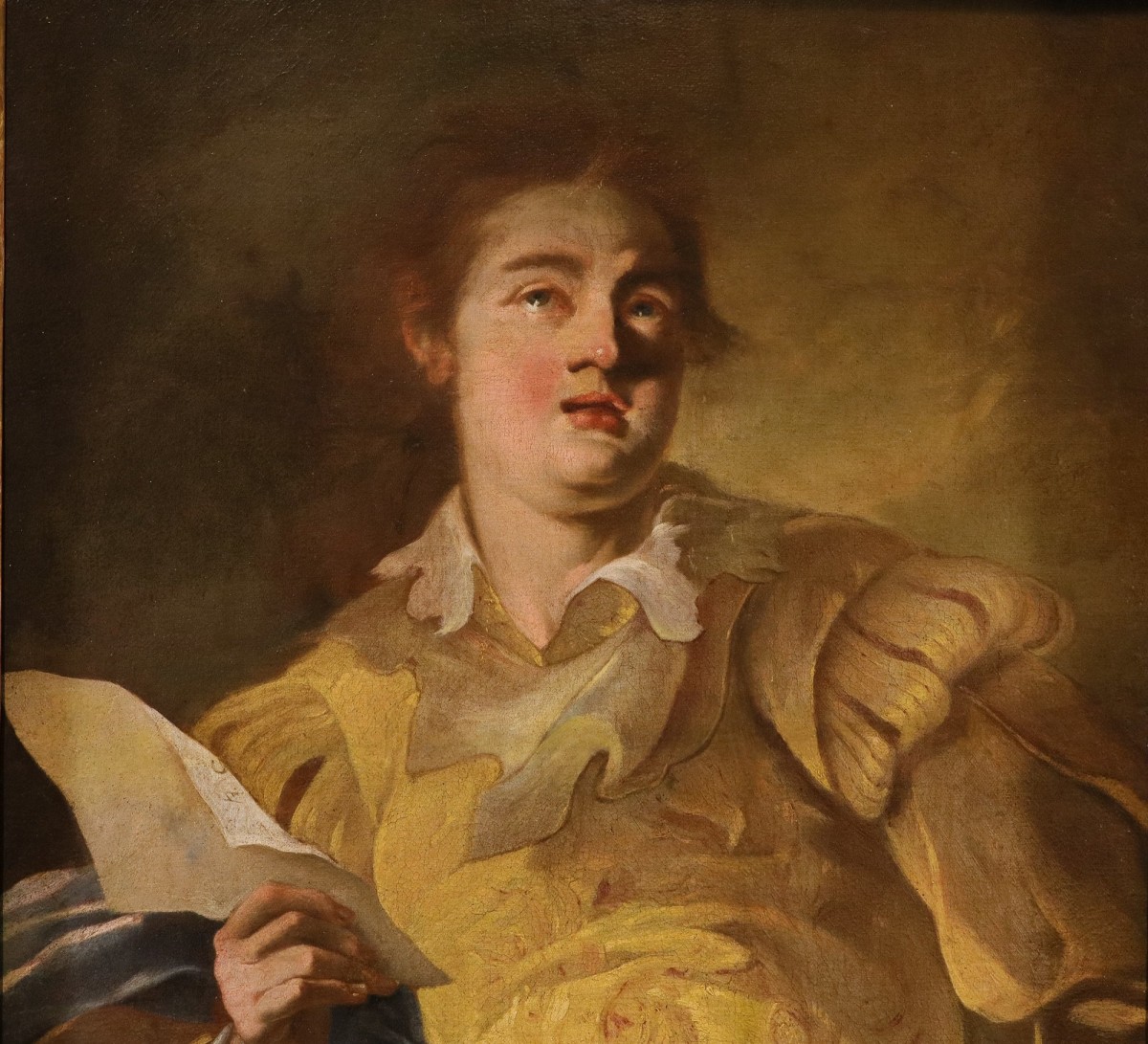
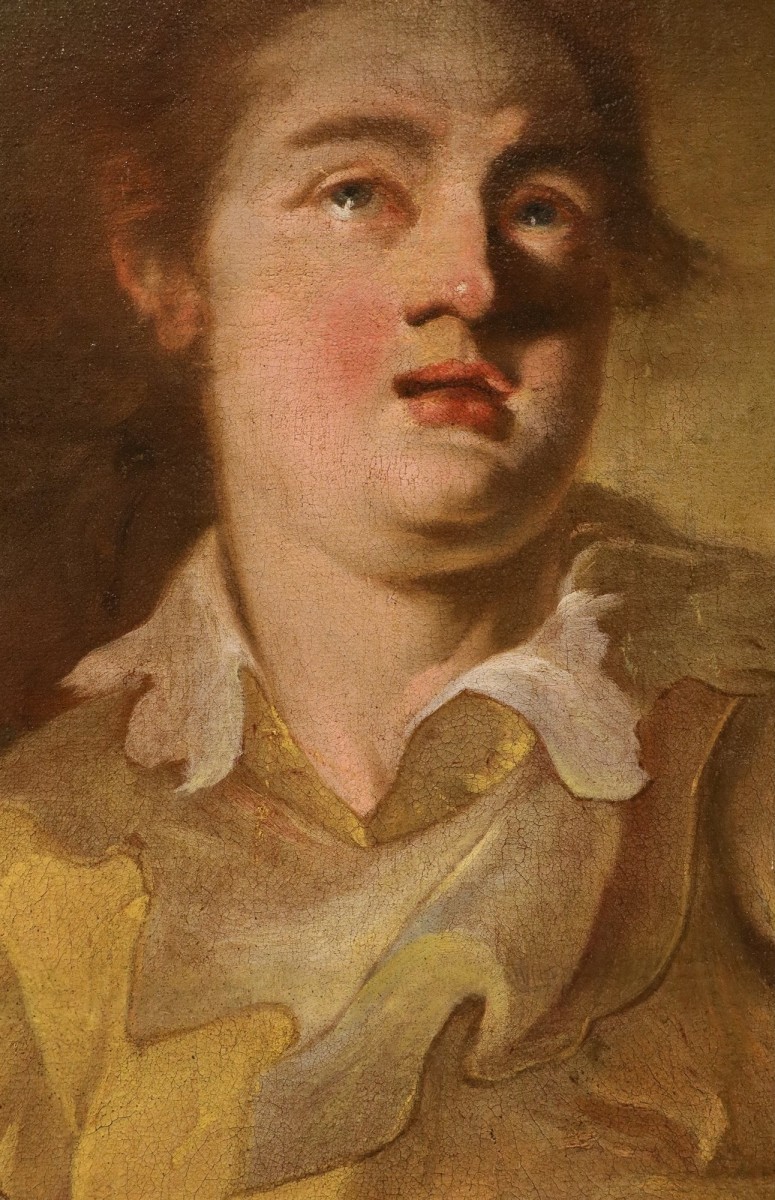
The subject is shown with dishevelled hair, as if he had just been hit by a gust of wind that ruffled his hair and bent the corner of the sheet music, revealing some letters in capital letters (the first, cruciform, perhaps an “F”, the second a “B” with a probable apical sign, the third a “C”).
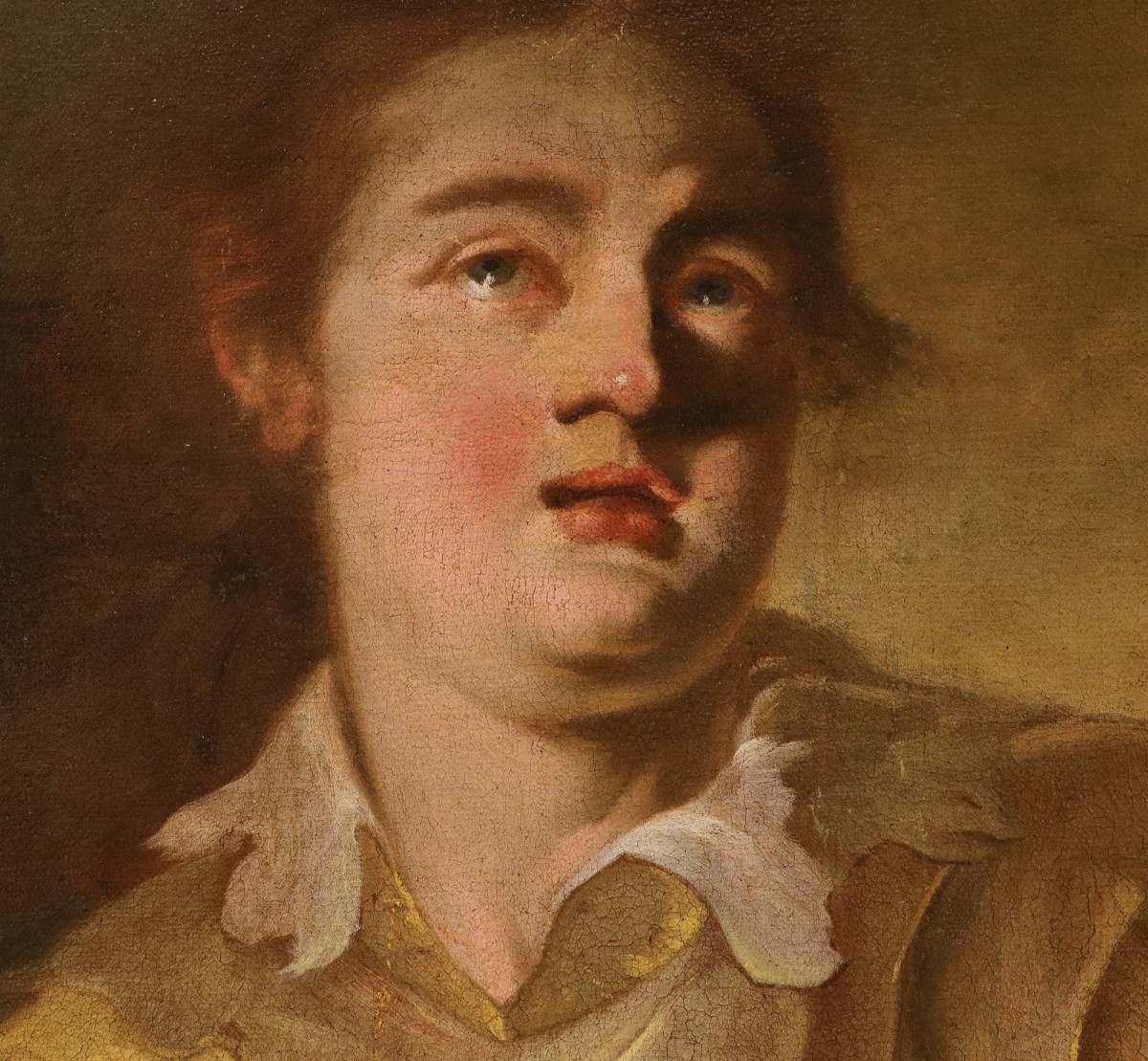
In this sense, the facial expression, with the mouth open in the act of singing and the gaze turned upwards, leaves us wondering whether those eyes are searching for the perfect note or cursing the unexpected draught.
The young man's intense gaze seems so lost in a “dreamy distance” that it makes him fascinating, emphasised by the soft rendering of the light that defines the volumes of his face.
His pose is also curious, with his left hand held under his jacket, giving the impression of a relaxed posture, as if the young man were improvising a song with his hand in his pocket and his right side leaning with his elbow on a balustrade.
An analysis of the composition and style would allow us to attribute the work to the French artist Claude Vignon (Tours, 1593 - Paris, 1670), illustrating a subject typical of the figurative repertoire created by the great master, very close to the world of music. In his portraits, Vignon was able to modulate Caravaggio's chiaroscuro with the light colours favoured by his fellow French artists working in Rome and Venice.
The rich chromatic material, a distinctive feature of Vignon's work, comes together here in quick, frayed brushstrokes. After studying in Paris under Jacob Bunel, one of the most famous masters of the reign of Henry IV, he moved to Rome to complete his training (c. 1610-1623) under the influence of Caravaggio and his followers, and distinguished himself with an eclectic style characterised by bright colours, thick brushstrokes and a peculiar expressiveness, with a free and theatrical composition.
Based on this attribution, confirmed by a study dedicated to the painting by Dr. Daniele Fiore in 2019, the painting in question could be part of the ‘Triptych of the Singers’ that Claude Vignon painted in the 1620s, consisting of two other canvases in addition to the one presented here, one of which is currently in the Louvre in Paris
Delevery information :
We take care of and organise the transport of the purchased works, both for Italy and abroad, through professional and insured carriers.
We take great care We personally take care of the packaging, to which we devote a great deal of care: each work is carefully packed, first with arti- cle material, then with a custom-made wooden box.
Should you have the desire to see this or other works in person, we would be happy to welcome you to our gallery in Riva del Garda, Viale Giuseppe Canella 18, we are always open by appointment only.