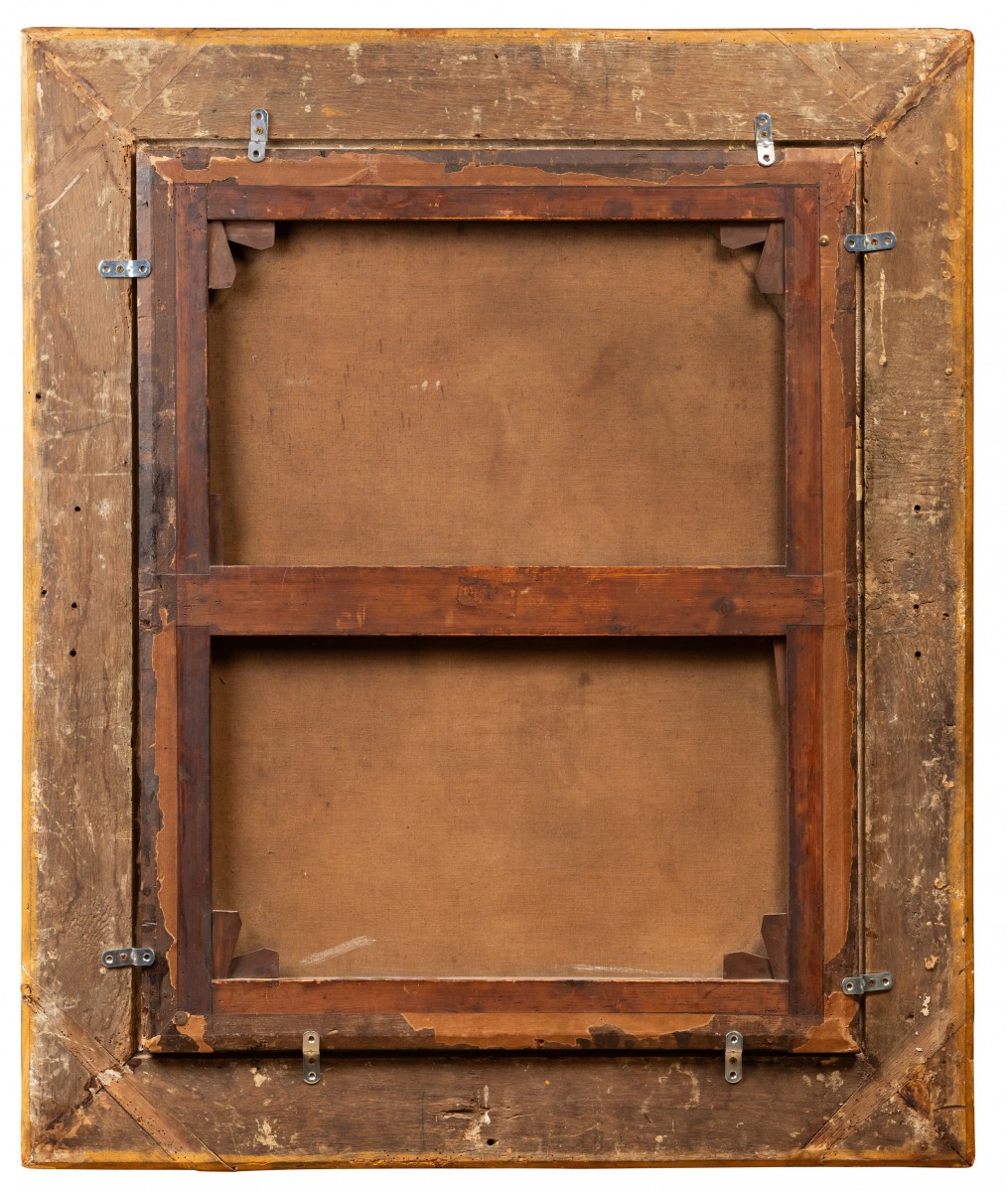
Offered by Galerie Nicolas Lenté
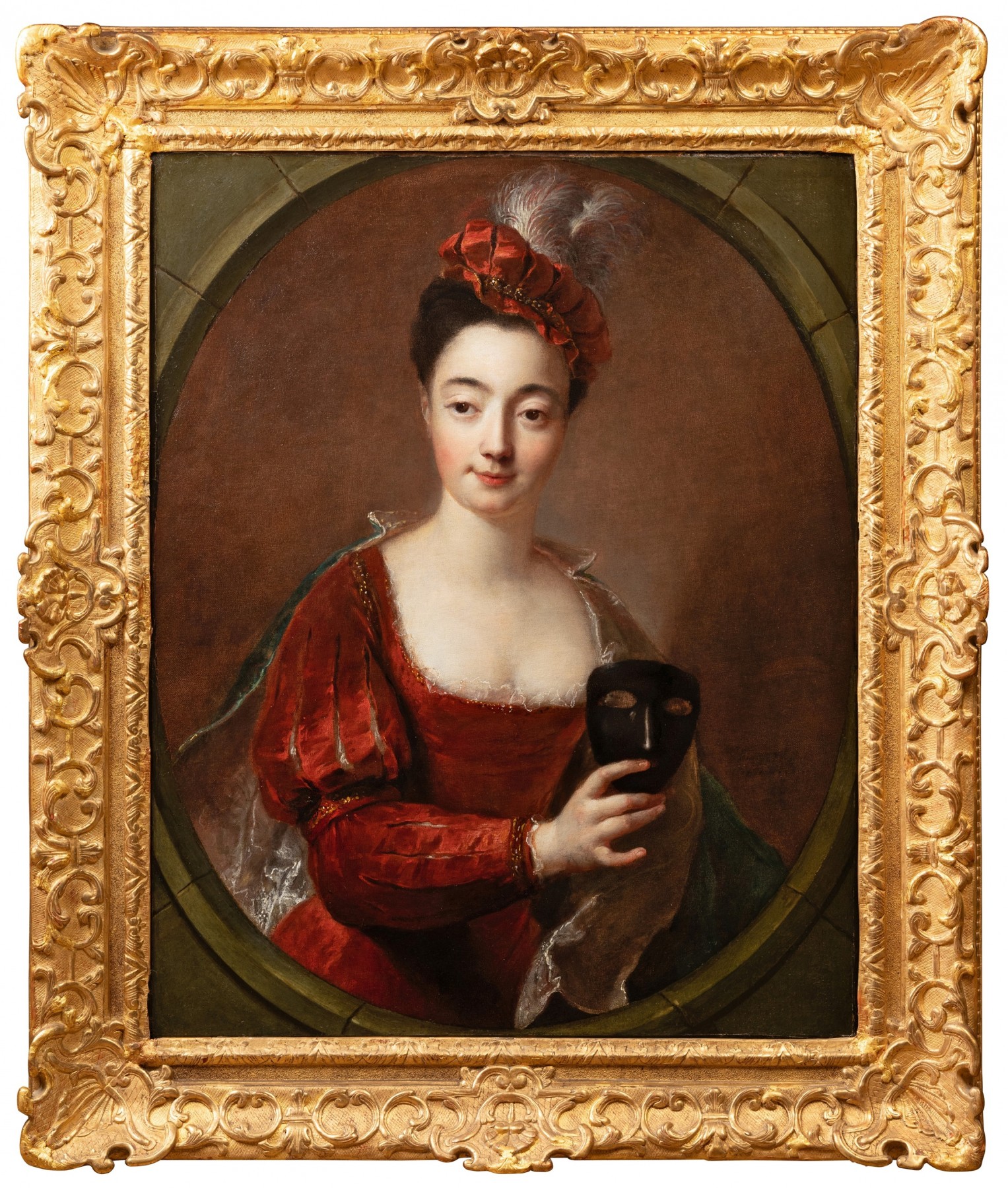

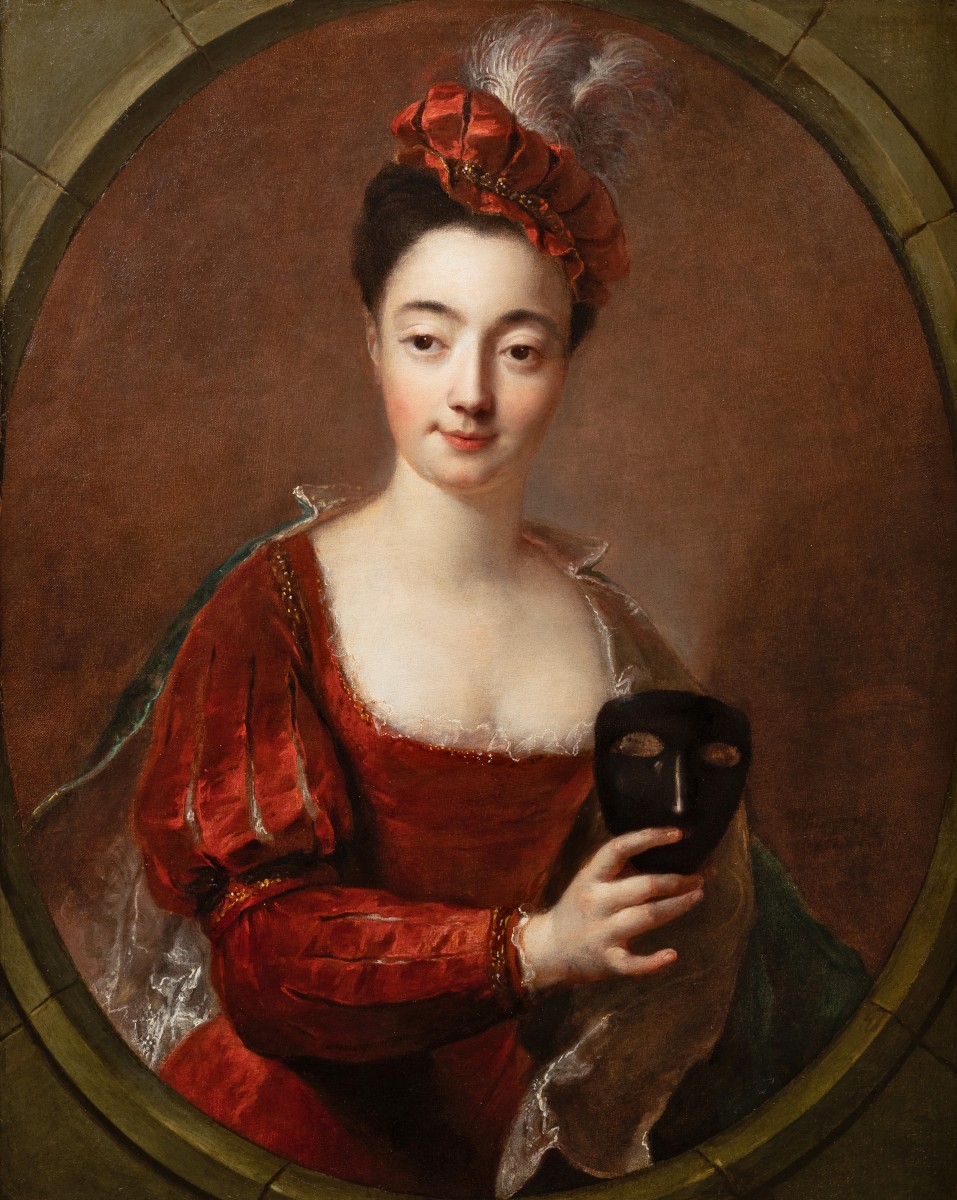
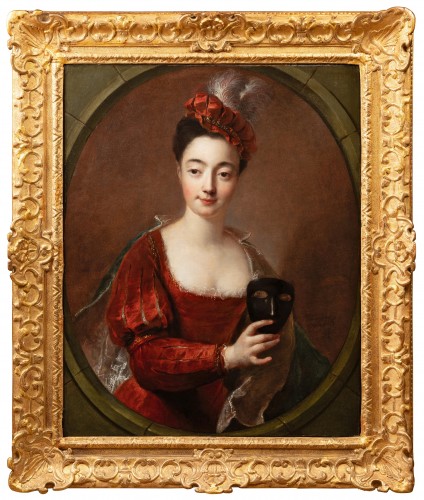
Portrait of a lady in a masquerade costume
by François de Troy (1645–1730)
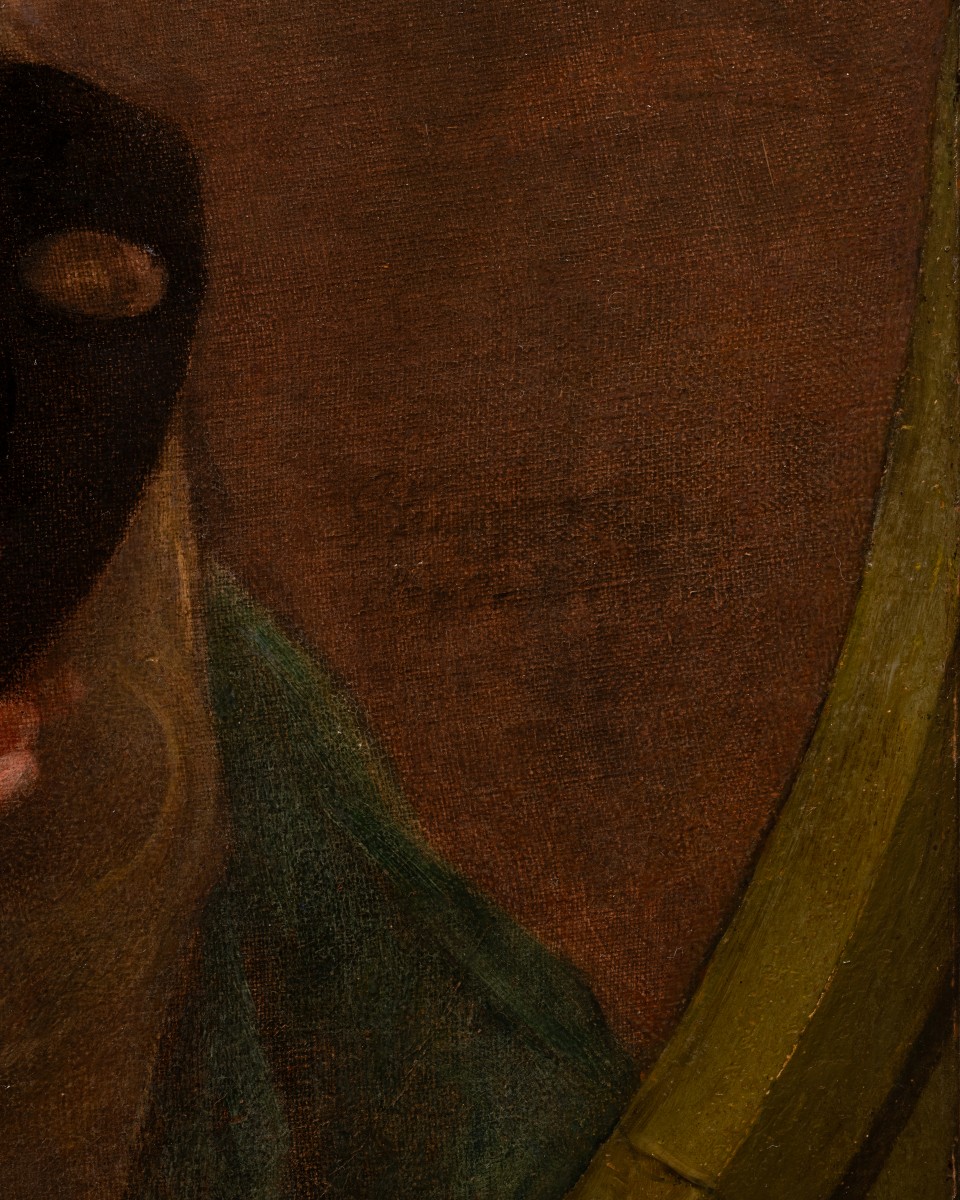
Signed lower right: peint… de Troy…
18th century French School, circa 1715-1720.
Canvas: h. 81 cm, w. 65 cm.
Gilt and finely carved Louis XIV period frame.
Framed: h. 102 cm, w. 86 cm
Provenance:
- Claudon collection auction, Paris, June 23, 1926, lot 50
- Maroni Gallery, Paris in 1969 (documentation recorded on the RKD website (center for research in art history in the Netherlands https://rkd.nl/imageslite/1072333)
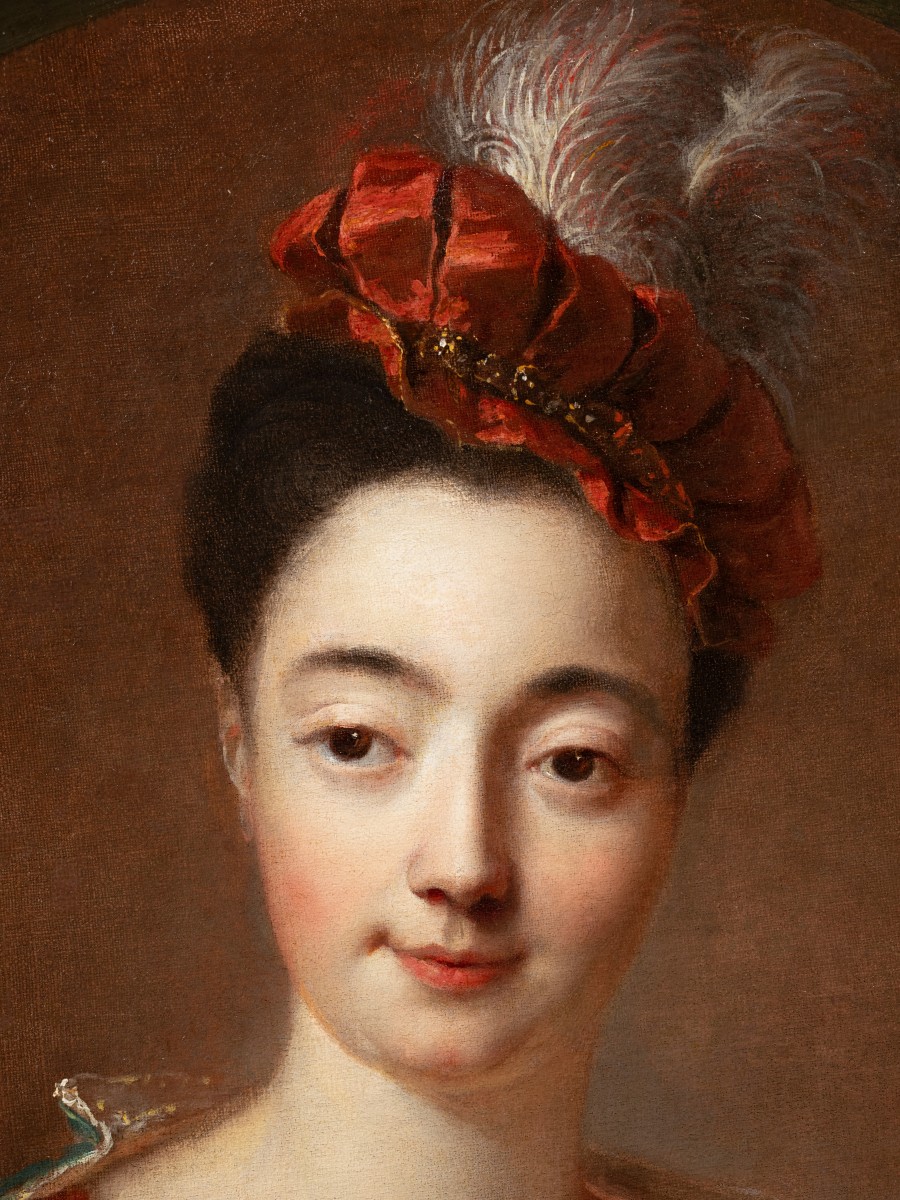
Our portrait exquisitely illustrates the talent and virtuosity of François de Troy, where the controlled brilliance of color, the richness of textures, and the refined gestures combine to offer an idealized image of the high-society woman, at once distinguished, mysterious, and fully immersed in the sophisticated culture of the late 17th century.
The execution of this work corresponds to the painter's mature period in his long career and coincides with the advent of the Regency and the emergence of a new generation of artists who profoundly influenced the French school during the first third of the 18th century.
Following the fashion for fêtes galantes initiated by Watteau and continued by Lancret, the static portrait inherited from the reign of Louis XIV gradually gave way to freer and more expressive effigies, where fantasy now blended with reality.
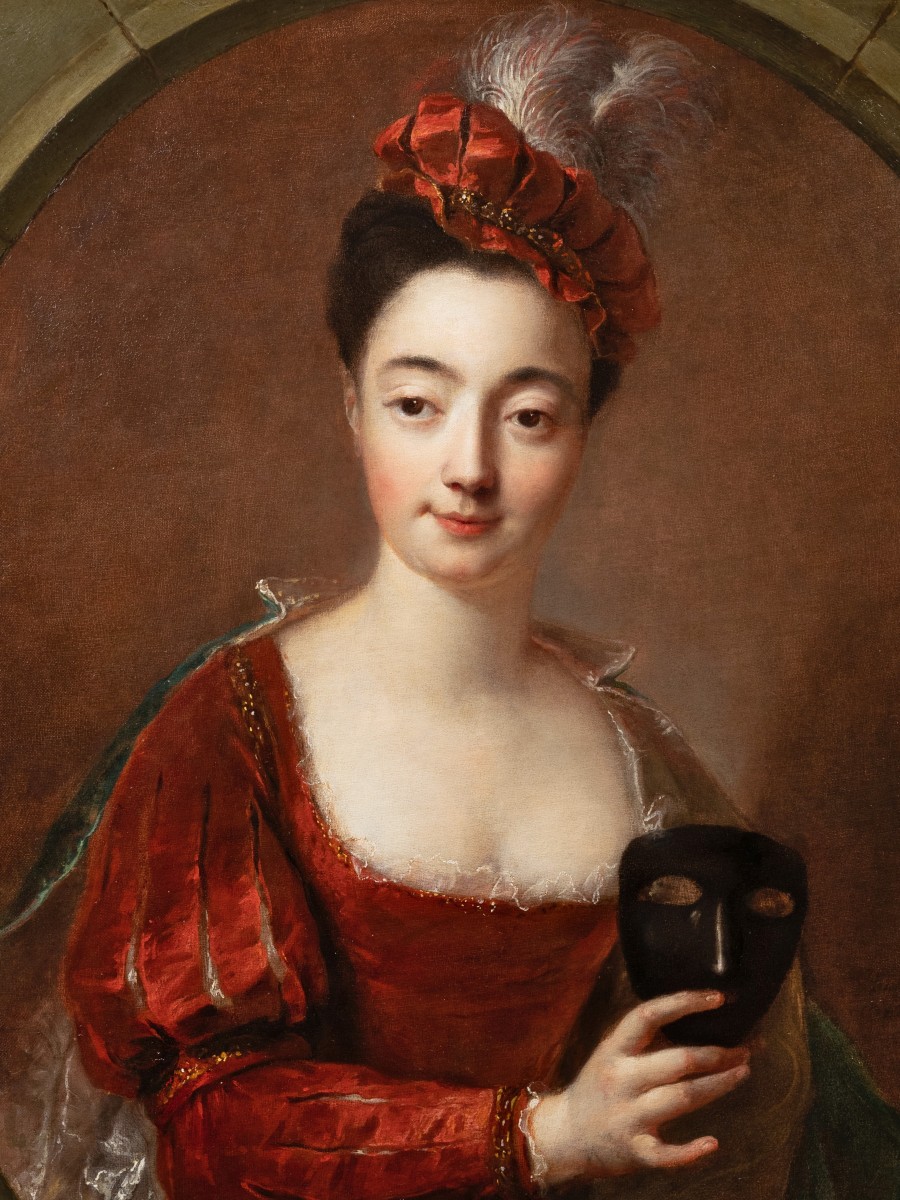
Our young lady is portrayed in three-quarter view, half-length, within a simulated oval that enhances the intimacy and presence of the sitter. A slight inclination of the torso lends her suppleness and elegance to the pose. Her calm and direct gaze establishes a measured connection with the viewer and contributes to the impression of distinction and restraint characteristic of formal portraits.
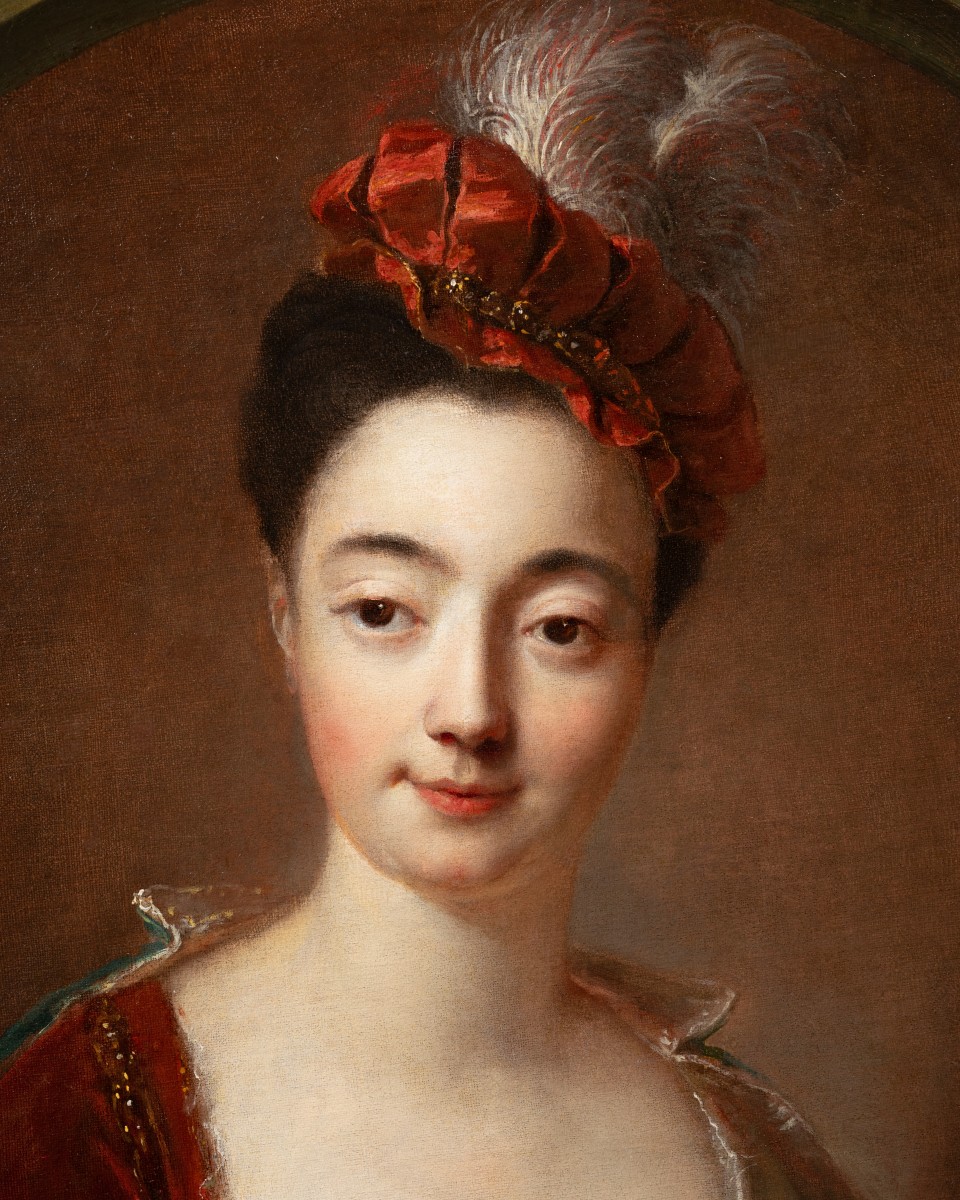
The finely modeled face displays a fair complexion with satiny tones, enlivened by delicately rosy cheeks. The features are idealized without rigidity: a small, closed mouth, a straight nose, and dark, slightly shaded eyes. The updo, disciplined hairstyle reveals the forehead and emphasizes the proud bearing of the head.
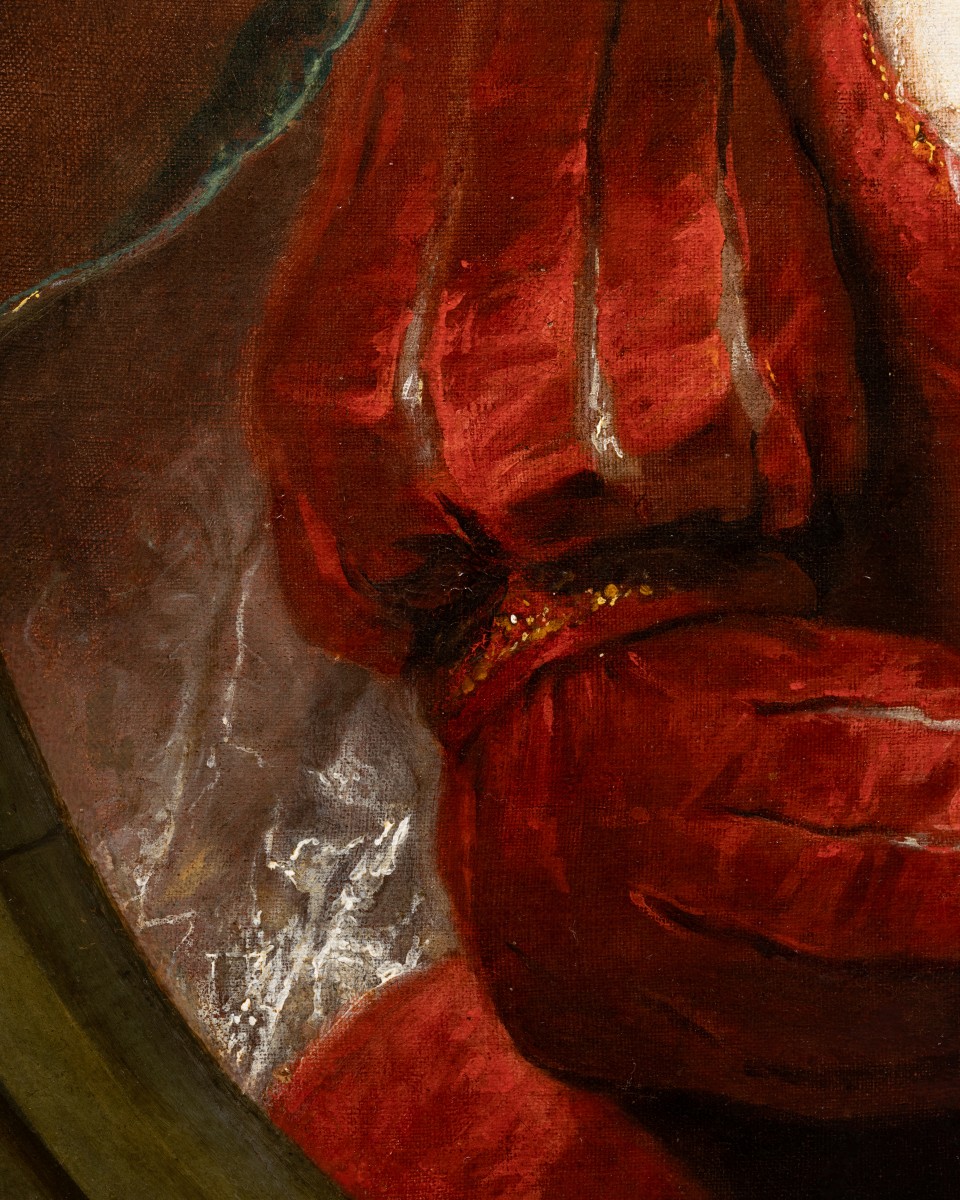
The lady wears a sumptuous masked ball gown, a theme in vogue among the aristocracy, whose tastes and customs leaned towards the world of entertainment and theater. The richly pleated, terracotta-red silk dress is adorned with braid and enhanced by a deep neckline that reveals ivory-white lace. The slashed sleeves, revealing a white blouse beneath the colored silk, are an explicit reference to Renaissance costumes, here deliberately reinterpreted according to the taste of the late 18th century, in a spirit of erudite fantasy characteristic of masked balls.
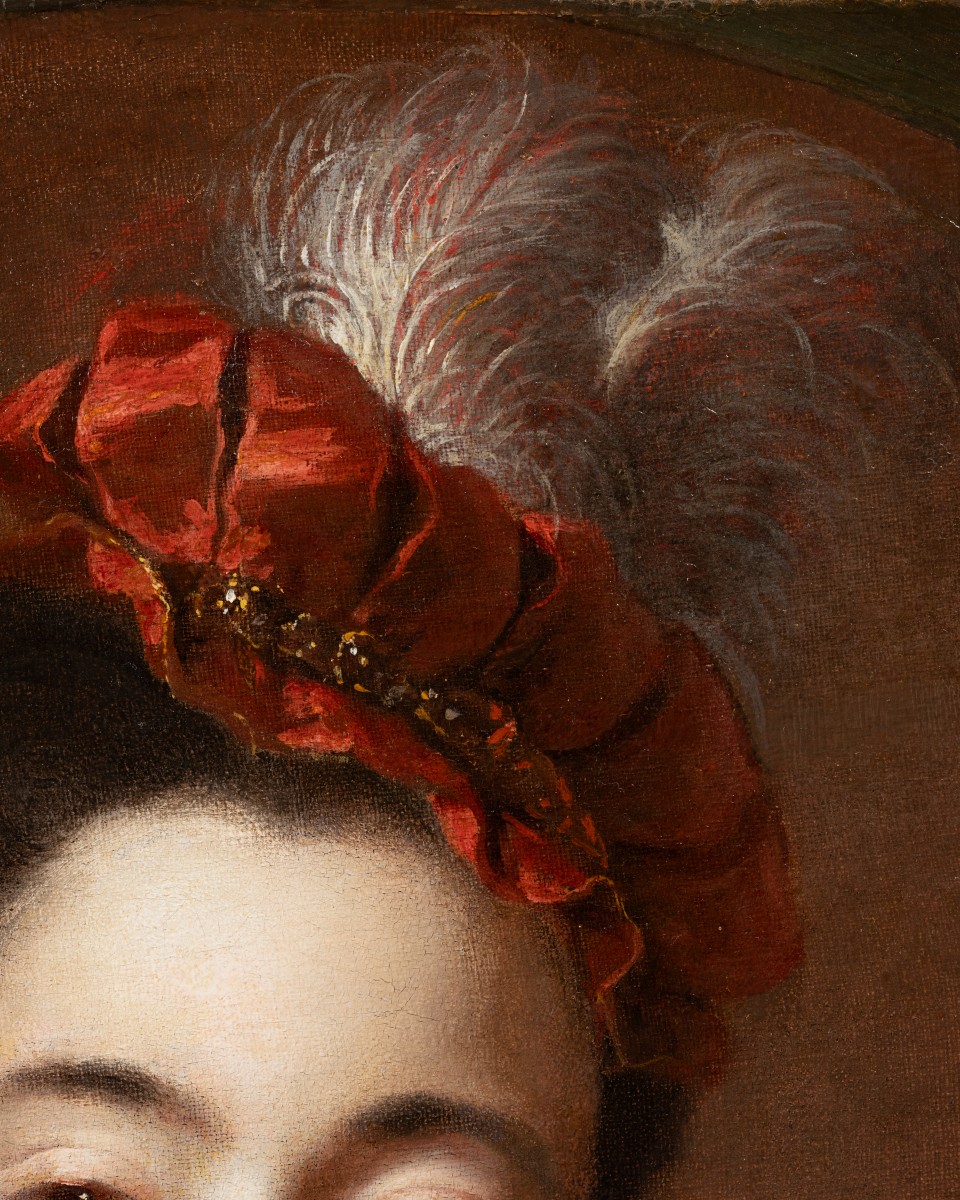
A dark green velvet cloak, lined with ivory silk, fastened at the shoulders, partially envelops the figure. The contrast between the matte velvet, the shimmering silk, and the diaphanous lace testifies to the painter's virtuosity in rendering precious materials. The shimmering white highlights, slightly zigzagged, correspond to the more vibrant graphic style of François de Troy's later years.
The hairstyle is completed by a small terracotta-red silk cap, its shape inspired by Renaissance women's headwear, surmounted by a matching ornamental hat. This hat is embellished with yellow gold jewelry and an ivory-white ostrich feather with pearly reflections, reinforcing the sumptuous and theatrical character of the costume.
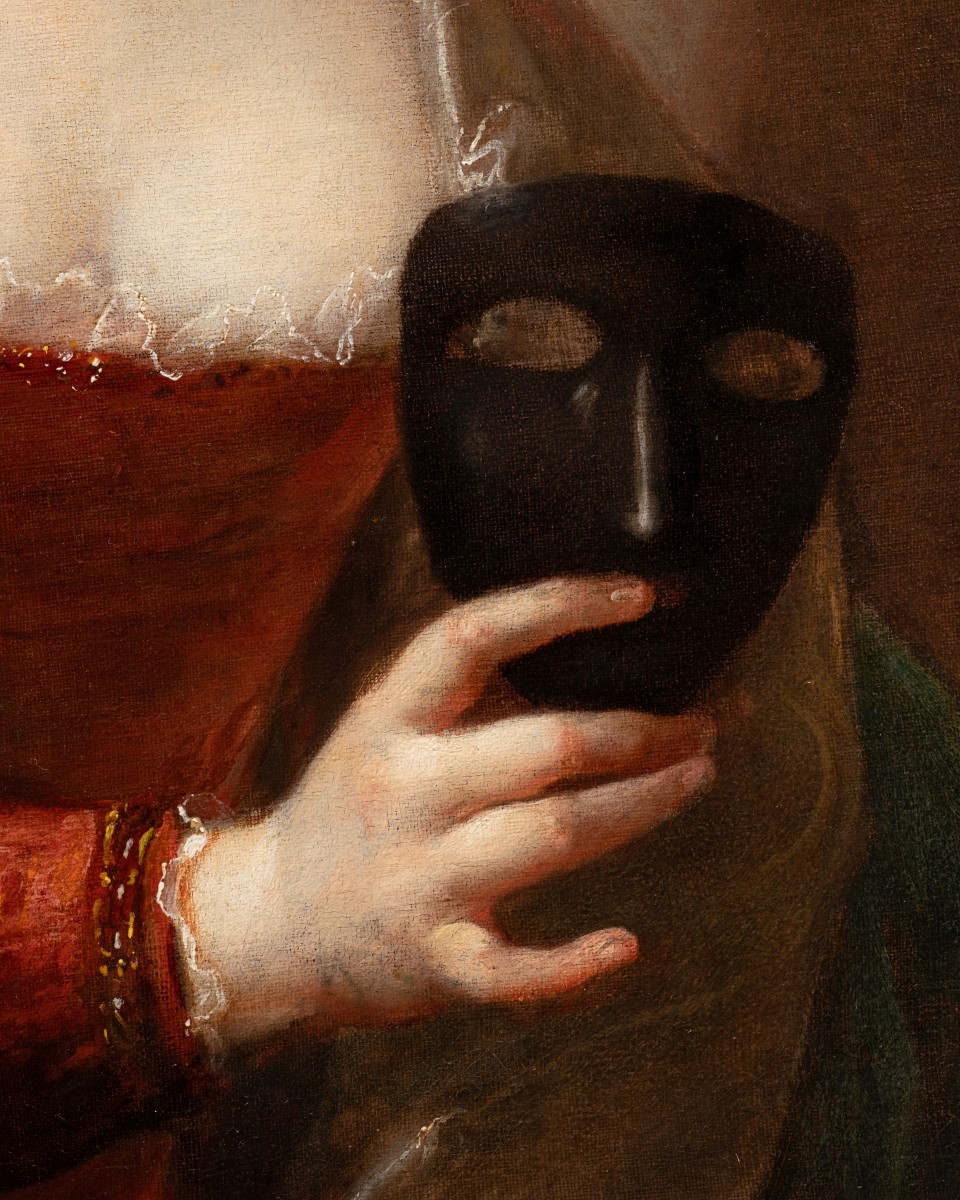
In her hand, the lady holds a matte black mask, the central element of the composition. This accessory, emblematic of masked balls, introduces a strong symbolic dimension: it evokes worldly games, dissimulation, and controlled seduction, while creating a marked contrast with the softness of the uncovered face.
The rubbed background, typical of the artist, is rendered in warm brown tones nuanced with ochre, remaining deliberately neutral in order to isolate the figure and focus attention on the model. The soft, diffused lighting sculpts the forms without dramatic effects, lending the whole a hushed and elegant atmosphere.
The young woman's clothes allude to what was then called the "costume d’espagnolette" a fashion that spread after Philip of Anjou, grandson of Louis XIV, ascended to the throne of Spain in 1700. Many portrait painters of the Regency popularized this disguise outfit for masked balls among their models, abandoning the mythological disguises in vogue in the previous century.
François de Troy (Toulouse 1645 – Paris 1730)
from a family of Toulouse artists, distinguished himself early on by creating a coat of arms for the solemn entry of the Prince of Conti into Toulouse in 1662. He then moved to Paris where he continued his training in the studio of Nicolas Loir, and later of Jean Cotelle, whose daughter he married in 1668. Initially a history painter, he was accepted into the Academy in 1671 and formally admitted in 1674 with his painting "Mercury and Argus." Through his association with the studio of Claude Lefebvre, he turned to portraiture, becoming one of the greatest exponents of the late reign of Louis XIV and the Regency. It is believed that through his friendship with Charles Le Brun, the King's First Painter, he was introduced to Madame de Montespan, who made him one of her official artists. The influence of the impetuous favorite allowed him to gain access to the royal family and all those of importance at court and in Paris. He also served as portraitist to the English royal family, exiled in France at the Château de Saint-Germain-en-Laye from 1689. A skilled courtier, François de Troy then became attached to the Duke of Maine, Louis XIV's beloved bastard son, and to his influential wife, daughter of the Prince of Condé. Appointed assistant professor in 1692, he became a professor at the Academy the following year. He served as its director from 1708 to 1711. He was also frequently commissioned by Parisian aldermen for religious paintings. His son Jean-François (1679 – 1752) collaborated with him at the end of his career before taking up the torch and perpetuating the family glory.
Delevery information :
We organize the shipping and delivery of our artworks worldwide, working with specialized fine art carriers as well as DHL Express for the secure shipment of small and medium-sized works (up to 120 cm).
Each artwork is carefully packed and shipped in a custom-made transport crate to ensure optimal protection. All shipments are fully tracked and insured.
We pay the utmost attention to every stage of the shipping process to ensure fast, reliable delivery. Shipments via DHL Express are generally dispatched within approximately 7 days of purchase.
All of our artworks can be viewed at our Paris gallery and may also be collected in person.