Offered by Galerie Gilles Linossier
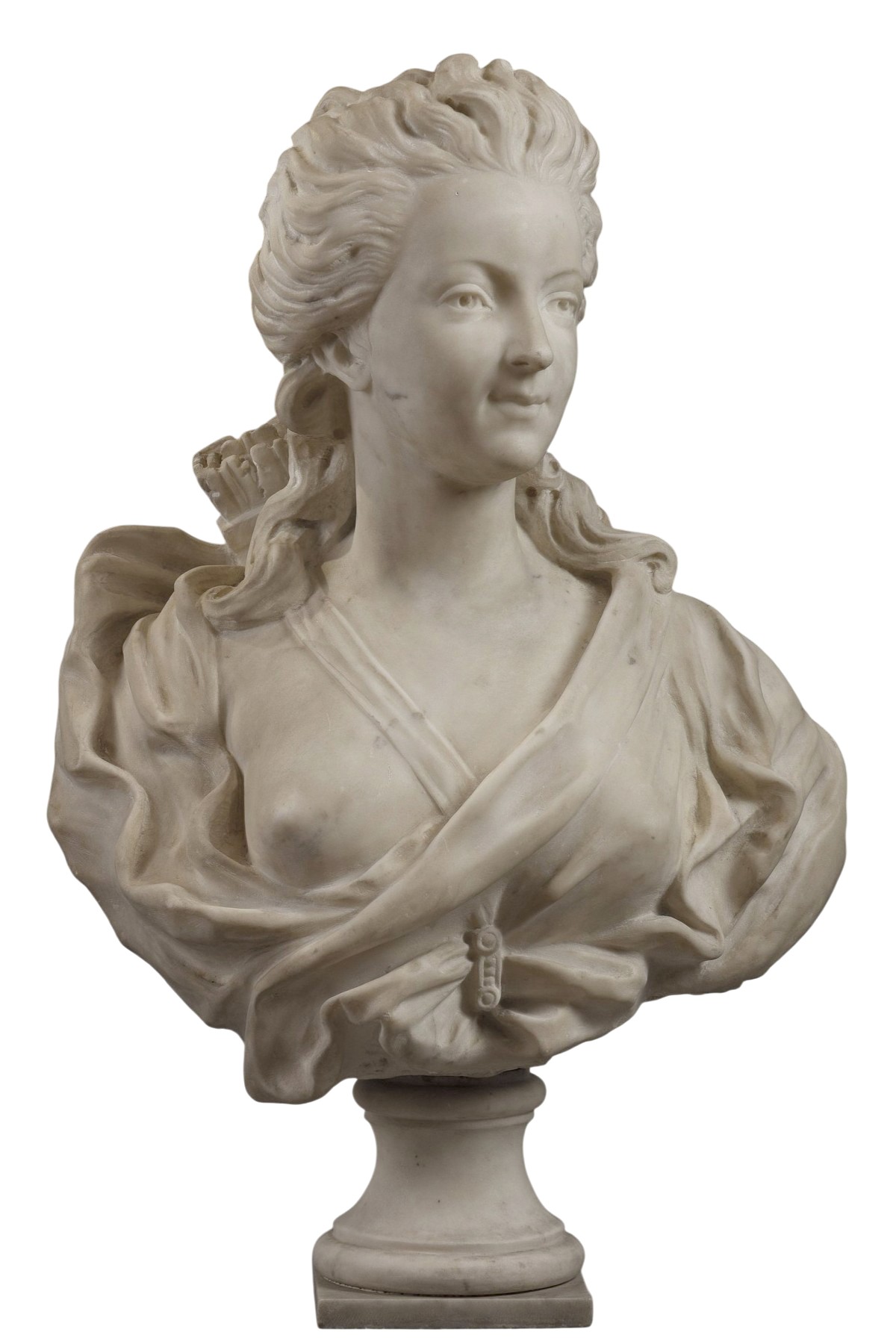
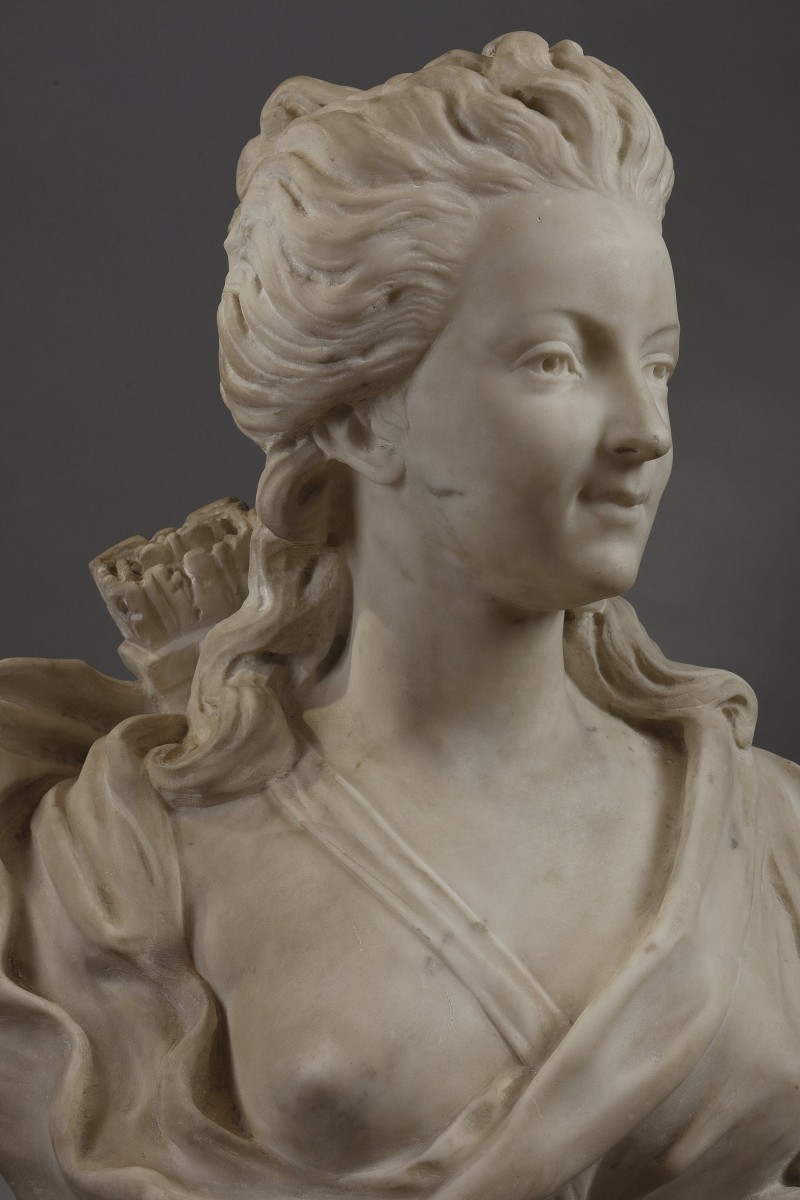
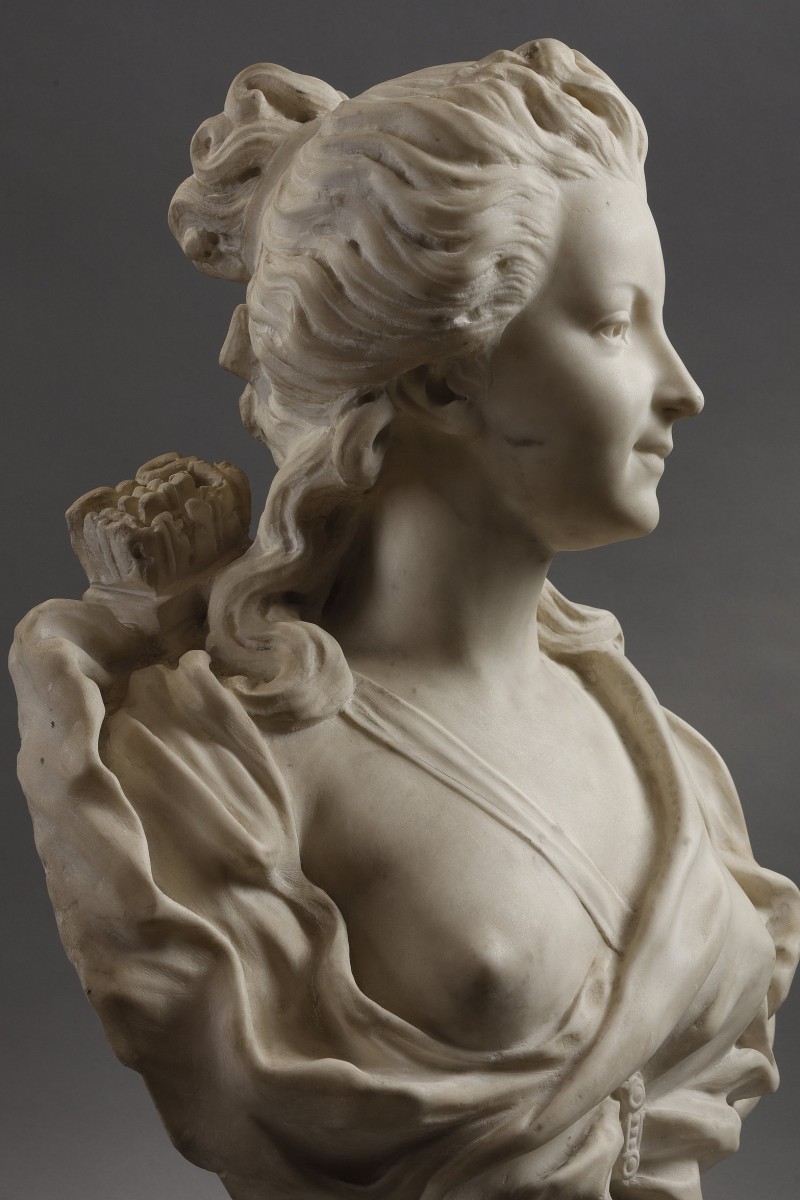

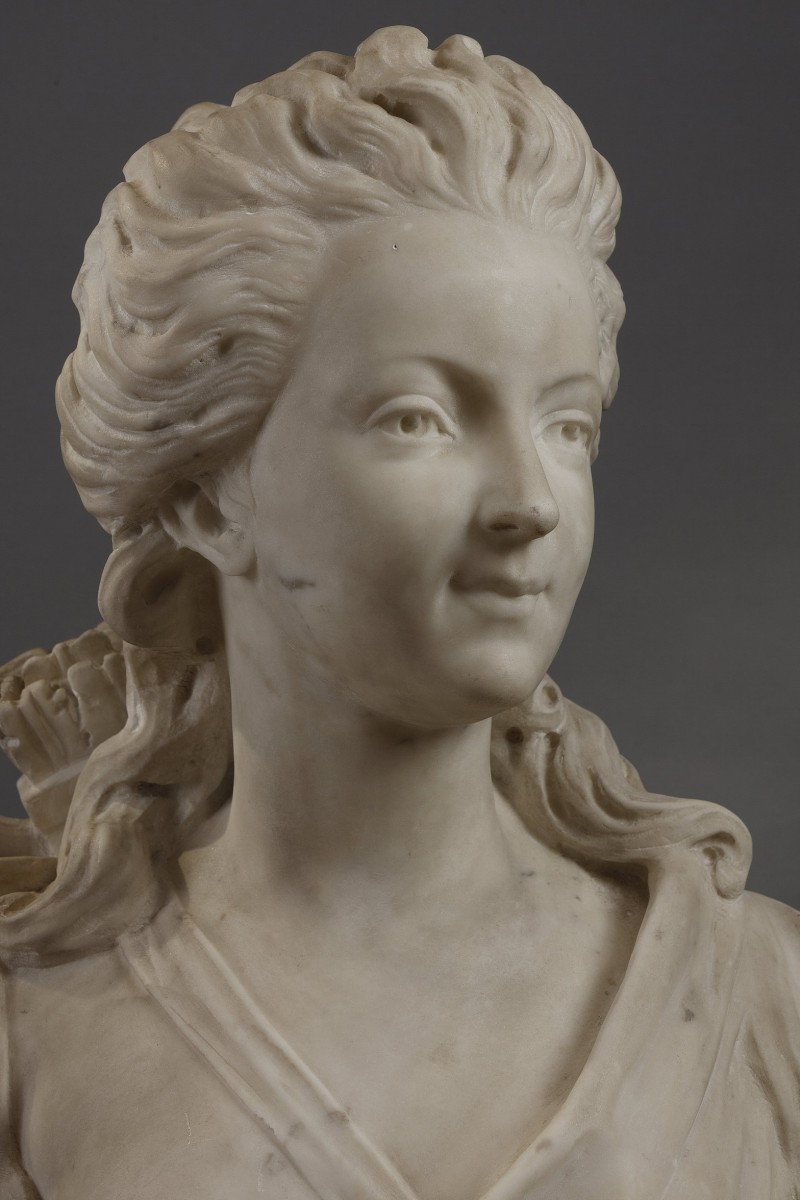
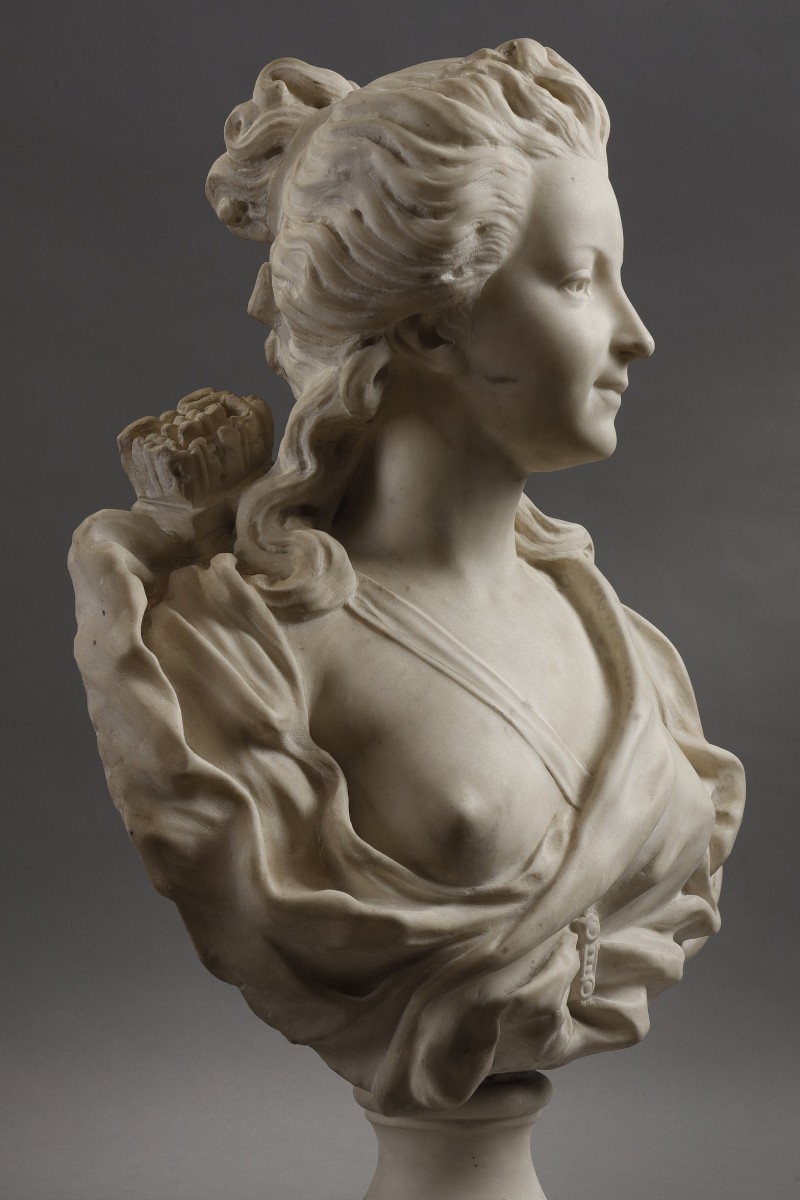
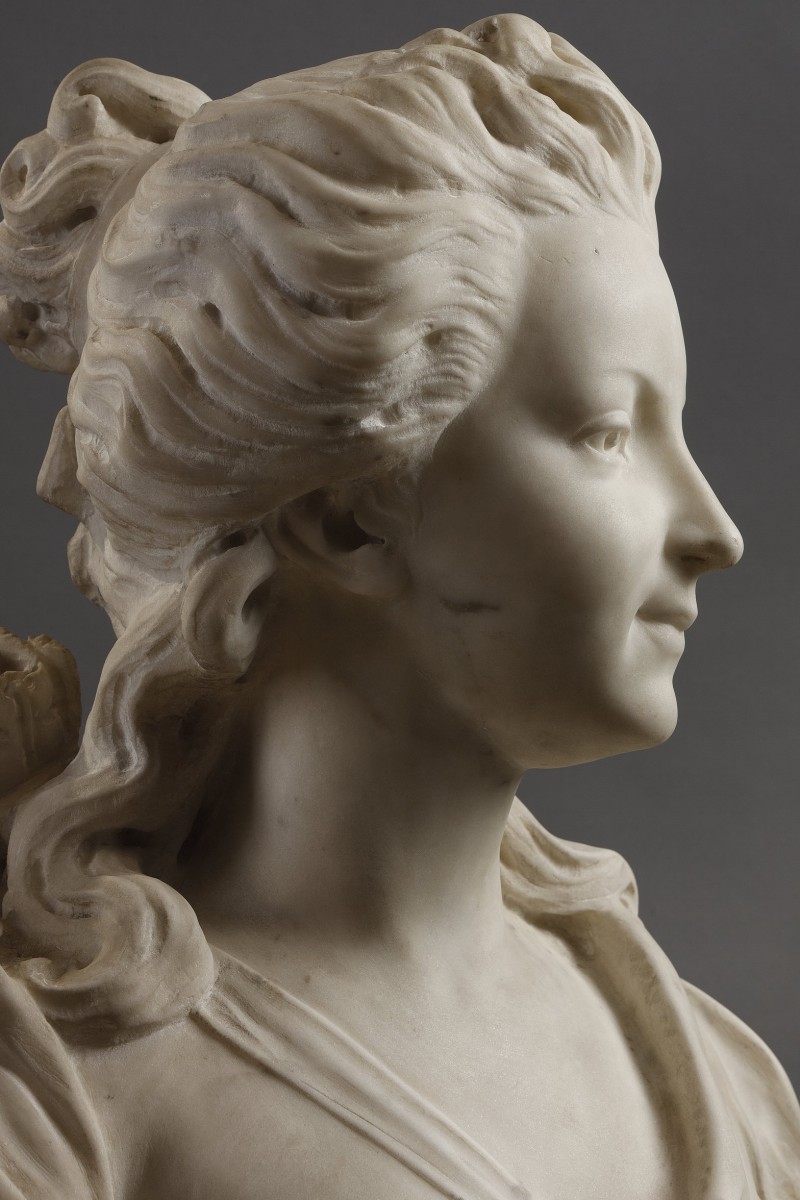
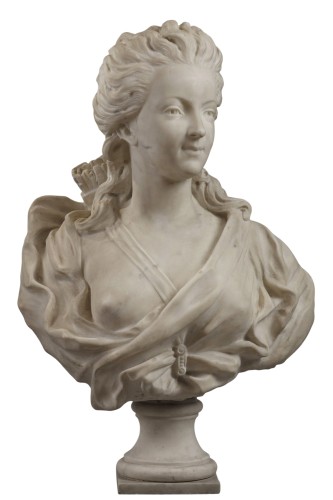
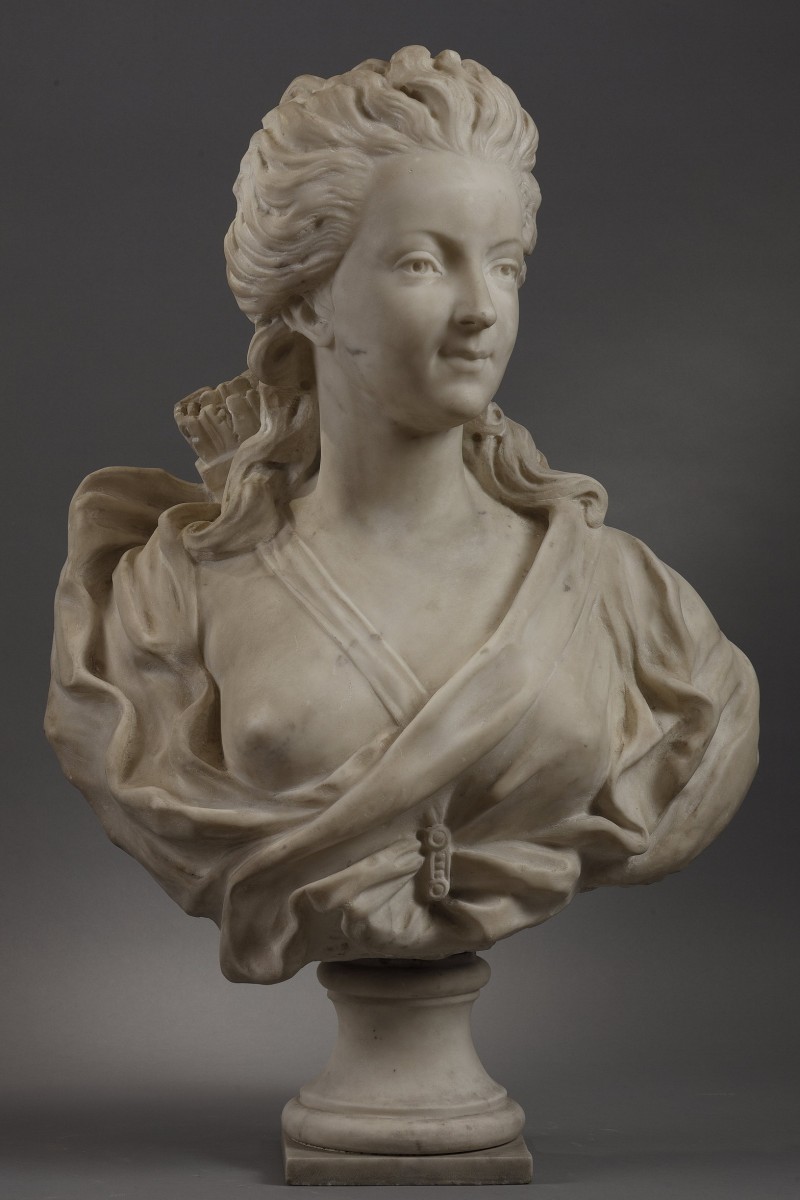
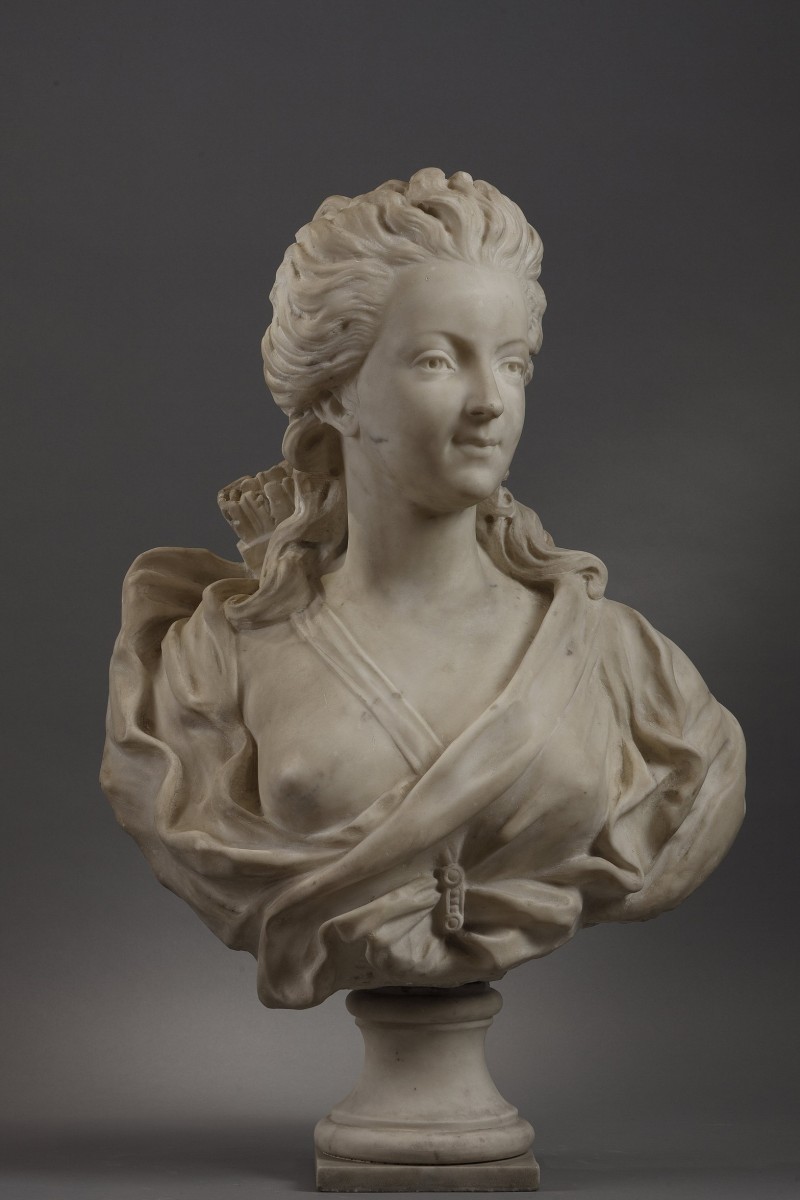
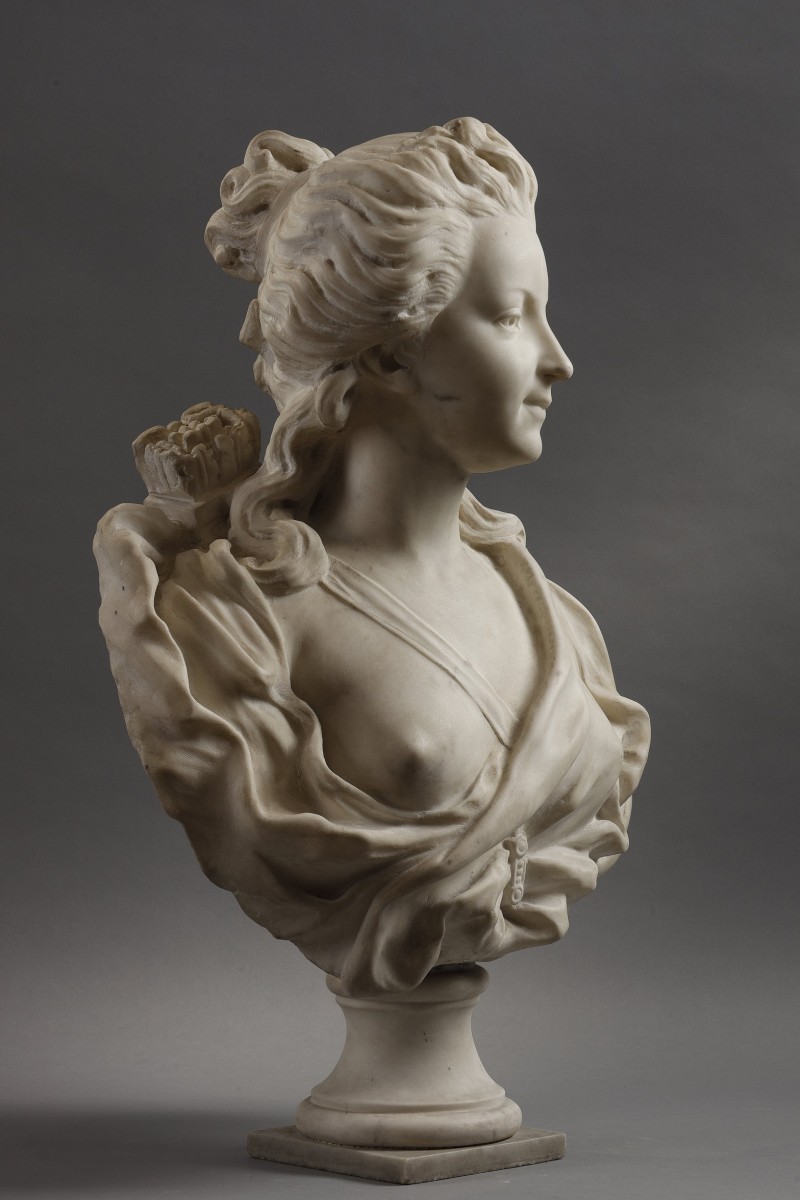
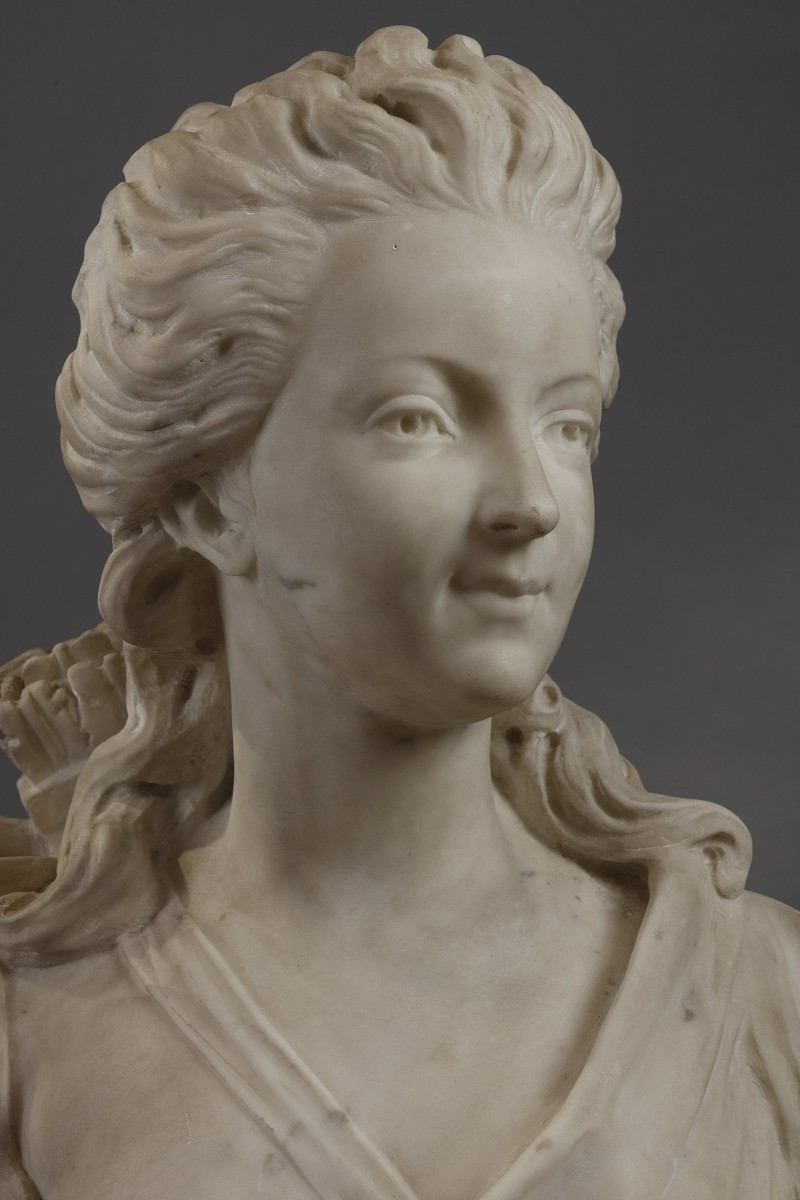
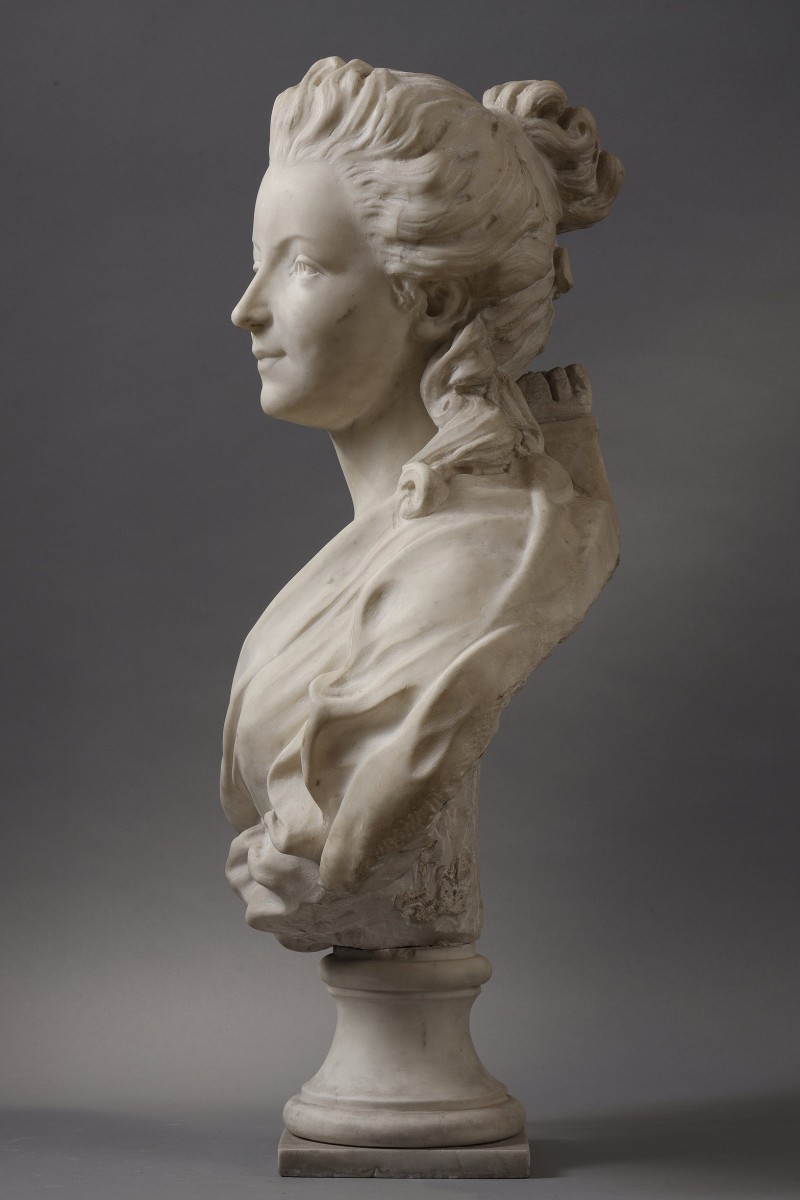
This marble bust depicts a young woman as Diana the Huntress, the ancient goddess of the hunt, an identity suggested here by the quiver positioned behind her shoulder.
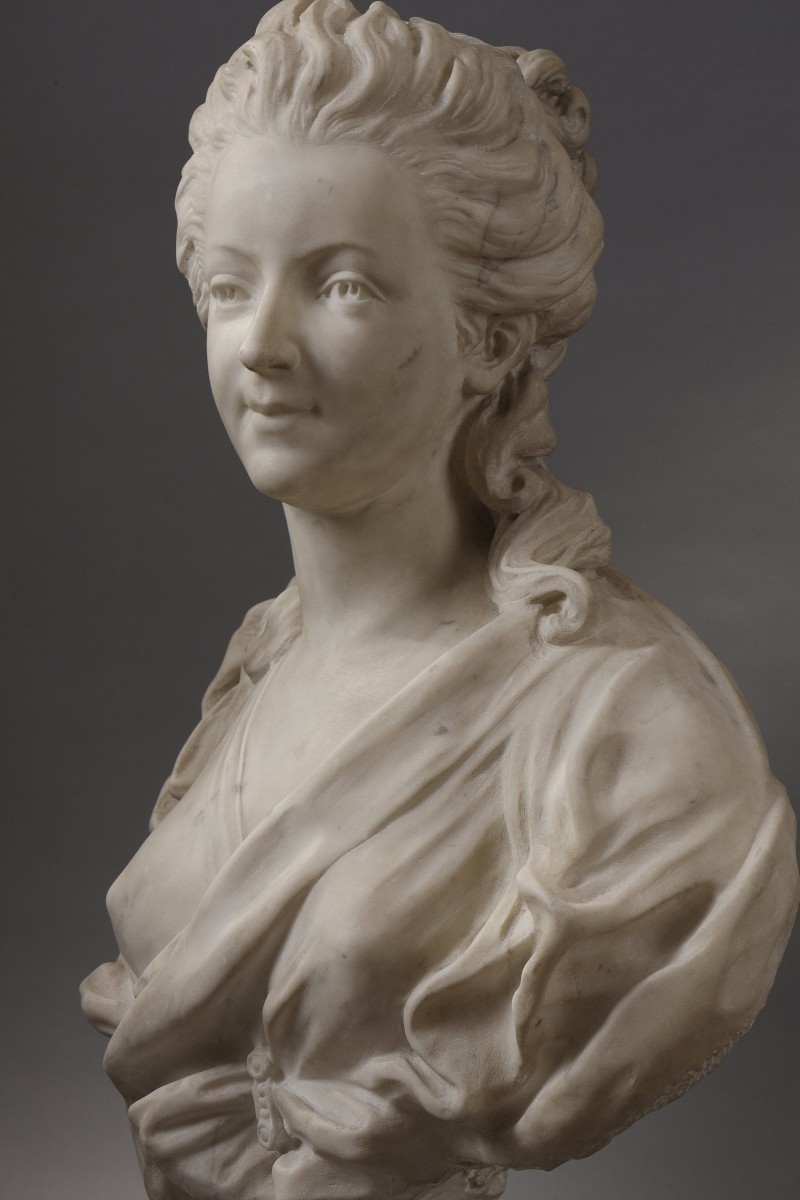
The figure combines the conventions of an 18th-century female portrait with a mythological theme, in which classical attributes lend an allegorical dimension to the subject. It rests on a small pedestal say "piédouche" set upon a square base.
The composition is notable for its expansive, enveloping structure. The bust is presented in a three-quarter view, with the right breast exposed; the head is turned slightly toward the left shoulder, and the gaze follows the same direction.
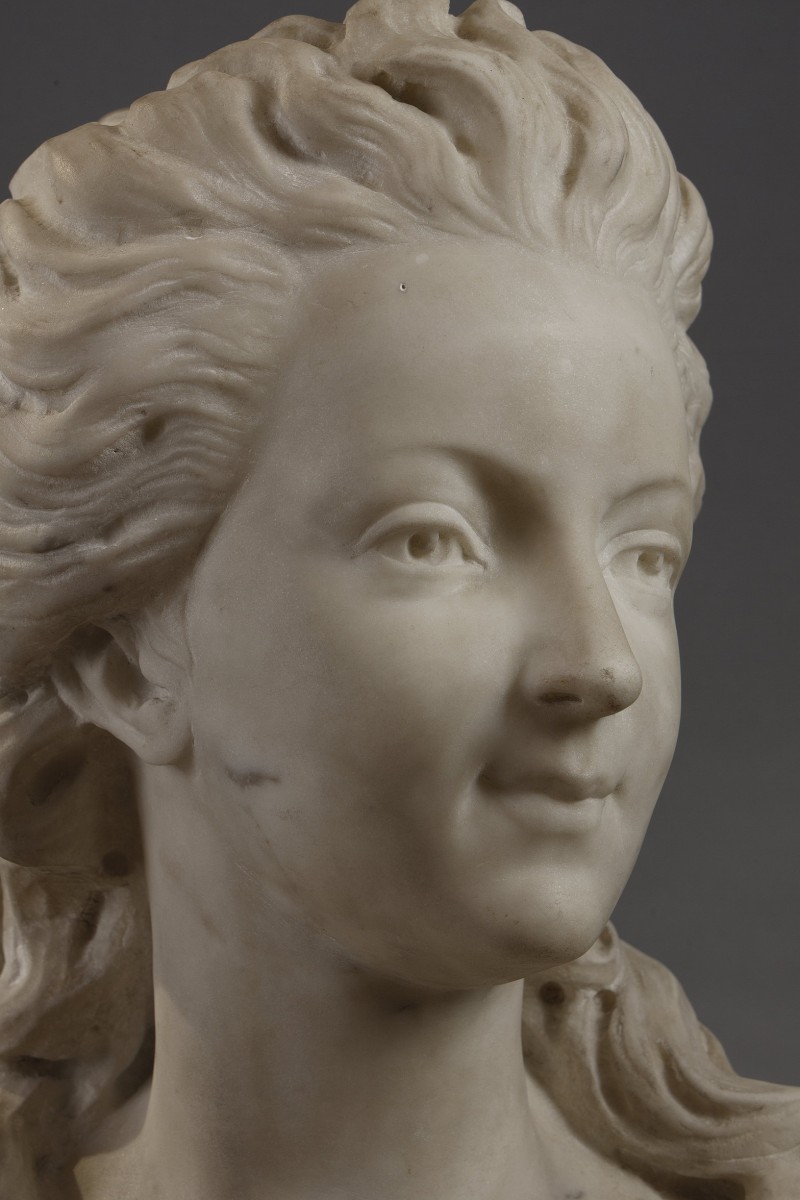
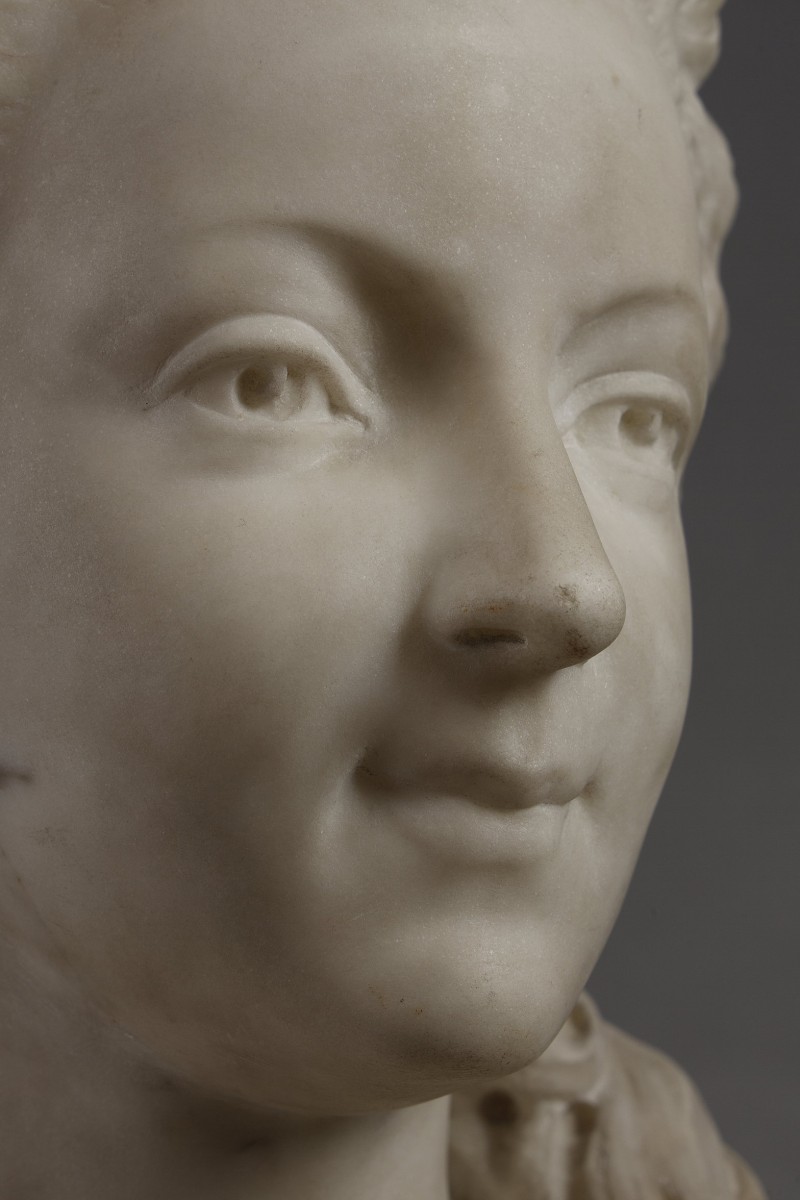
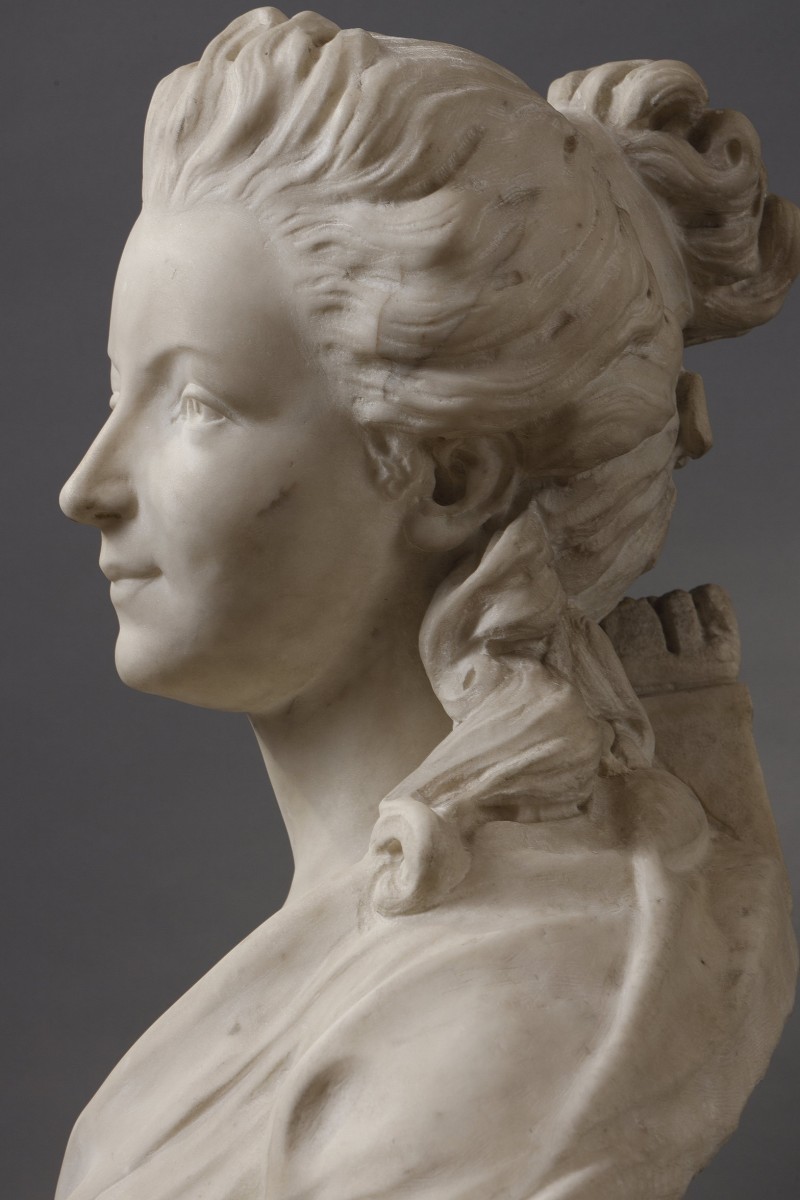
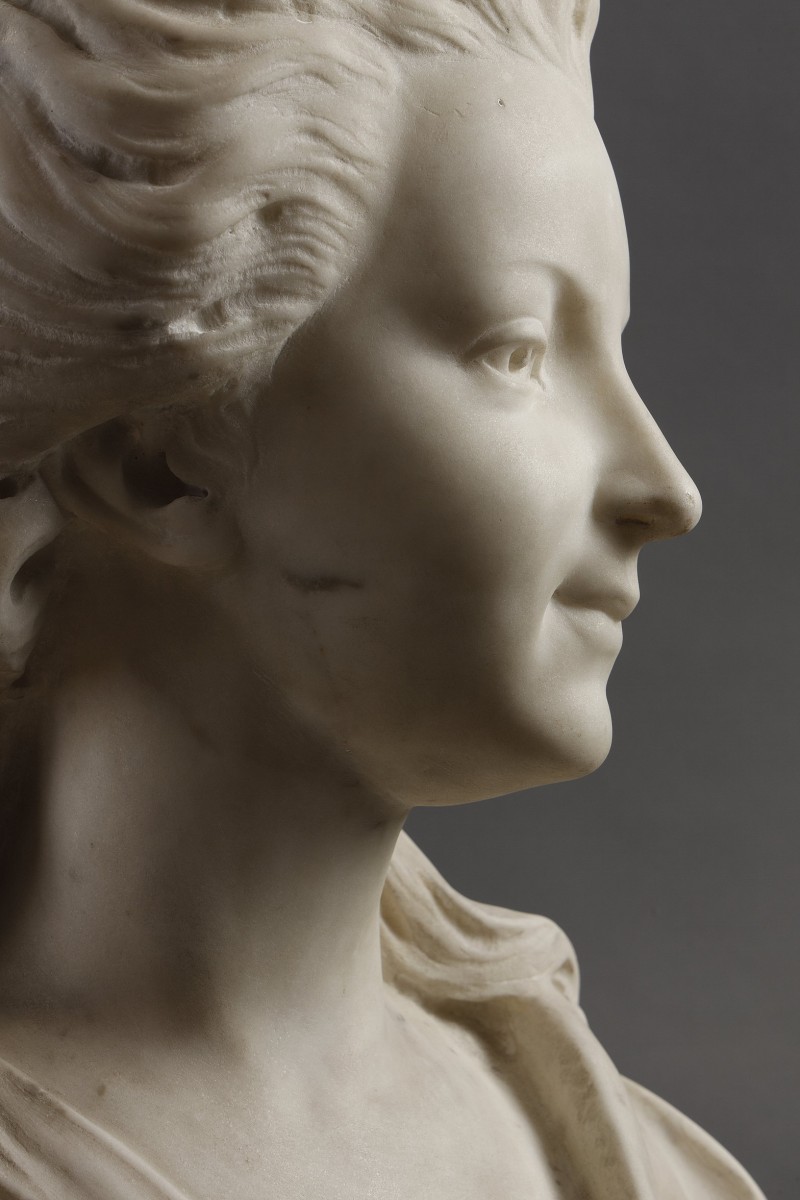
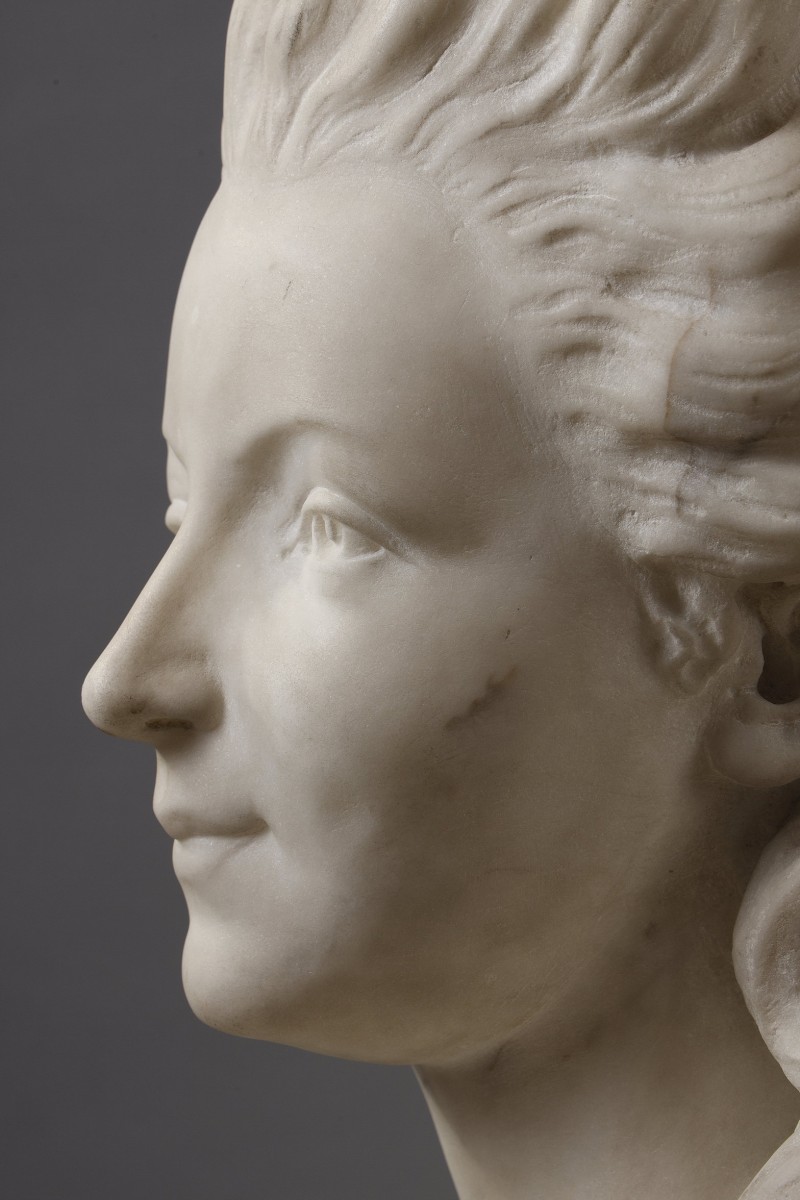
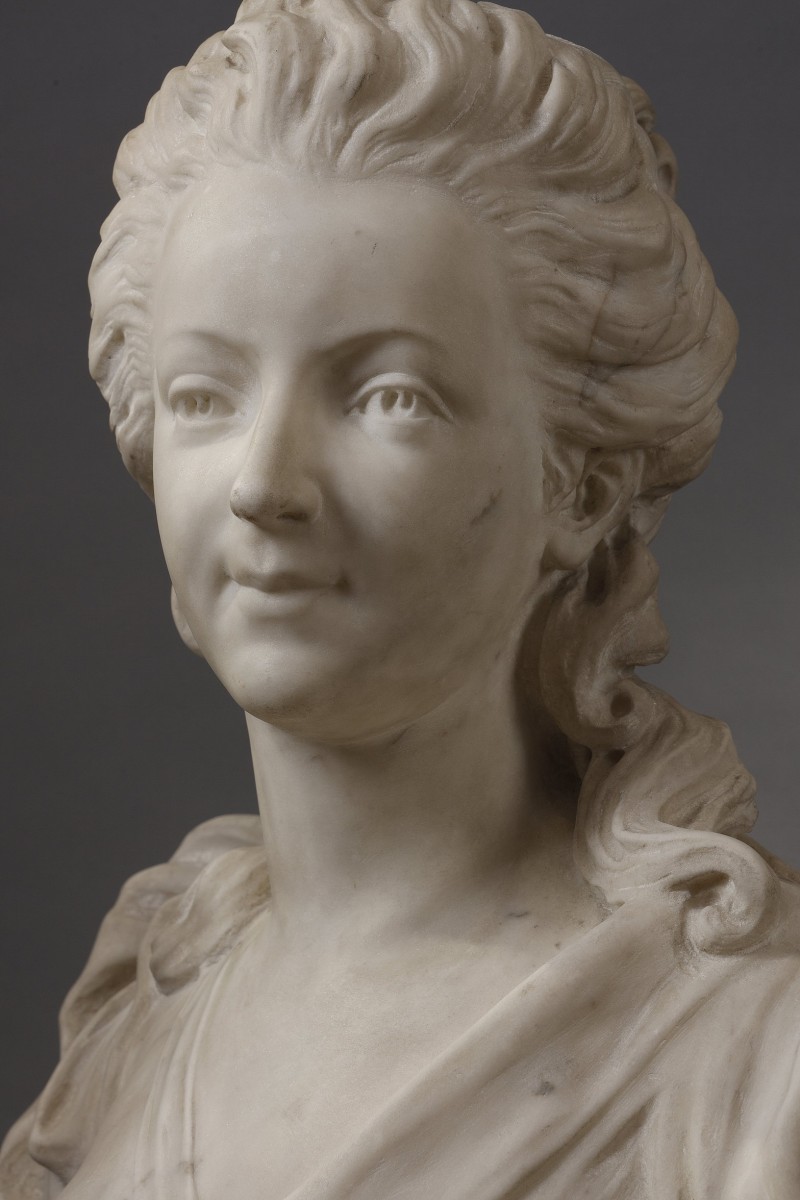
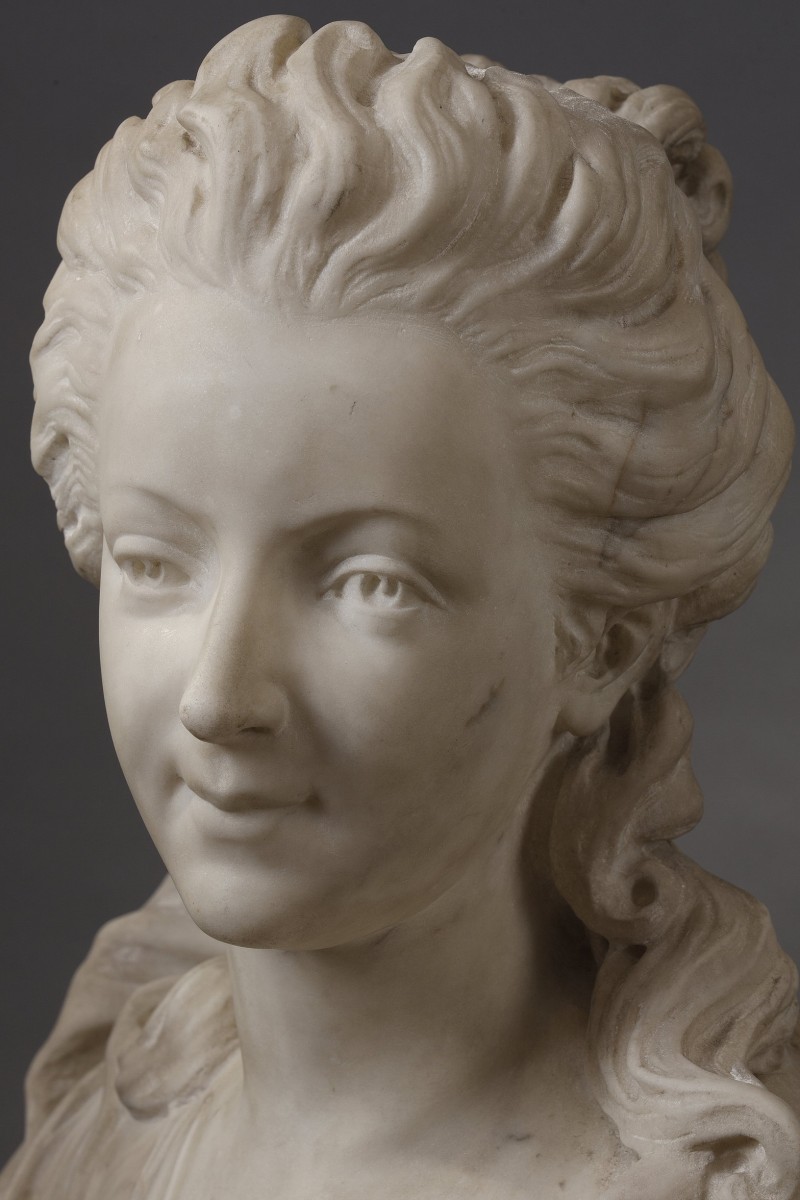
The face, characterized by regular features and delicate modeling, displays an open forehead, a straight nose, a finely defined mouth, and a rounded chin. The expression is restrained, enlivened by a subtle smile that imparts a natural presence to the face, avoiding any excessive idealization.
The hair is a significant element of the composition. Voluminous and abundant, it is swept up to the crown of the head and arranged in a series of broad, flowing waves. The strands are deeply carved, with supple contours that follow the overall movement of the hairstyle.
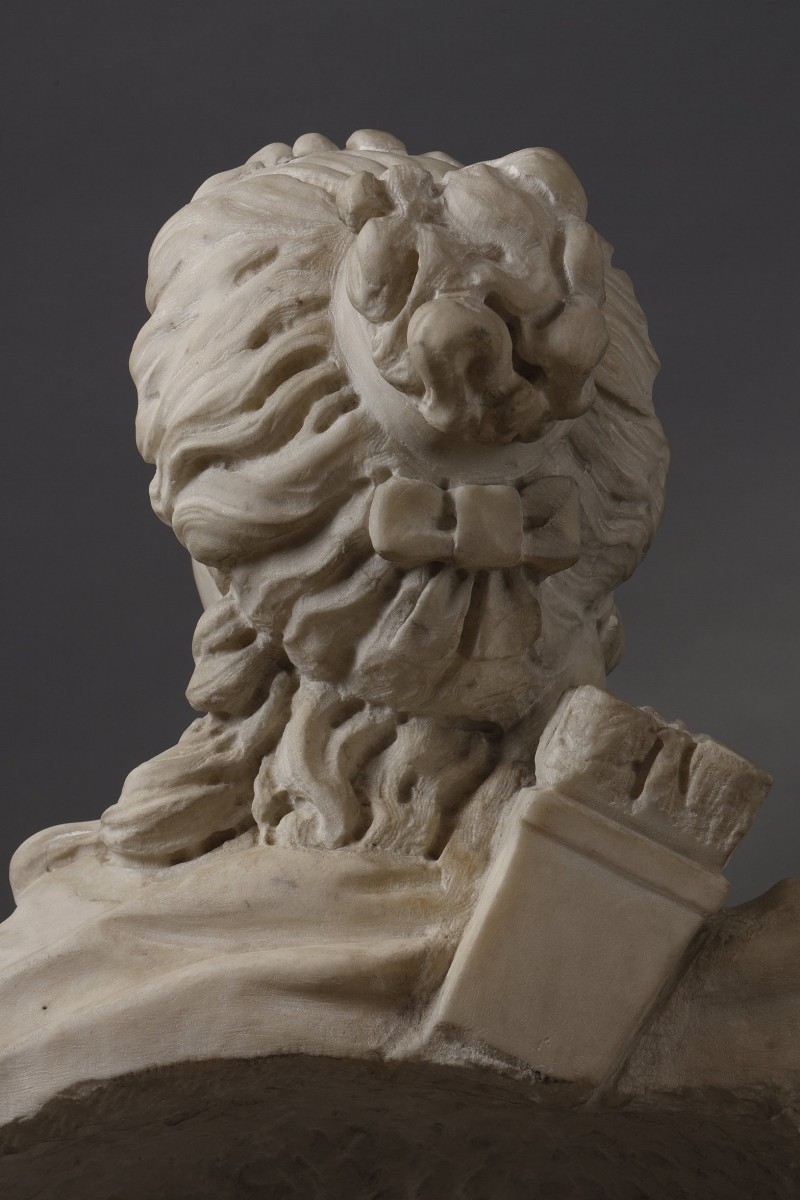
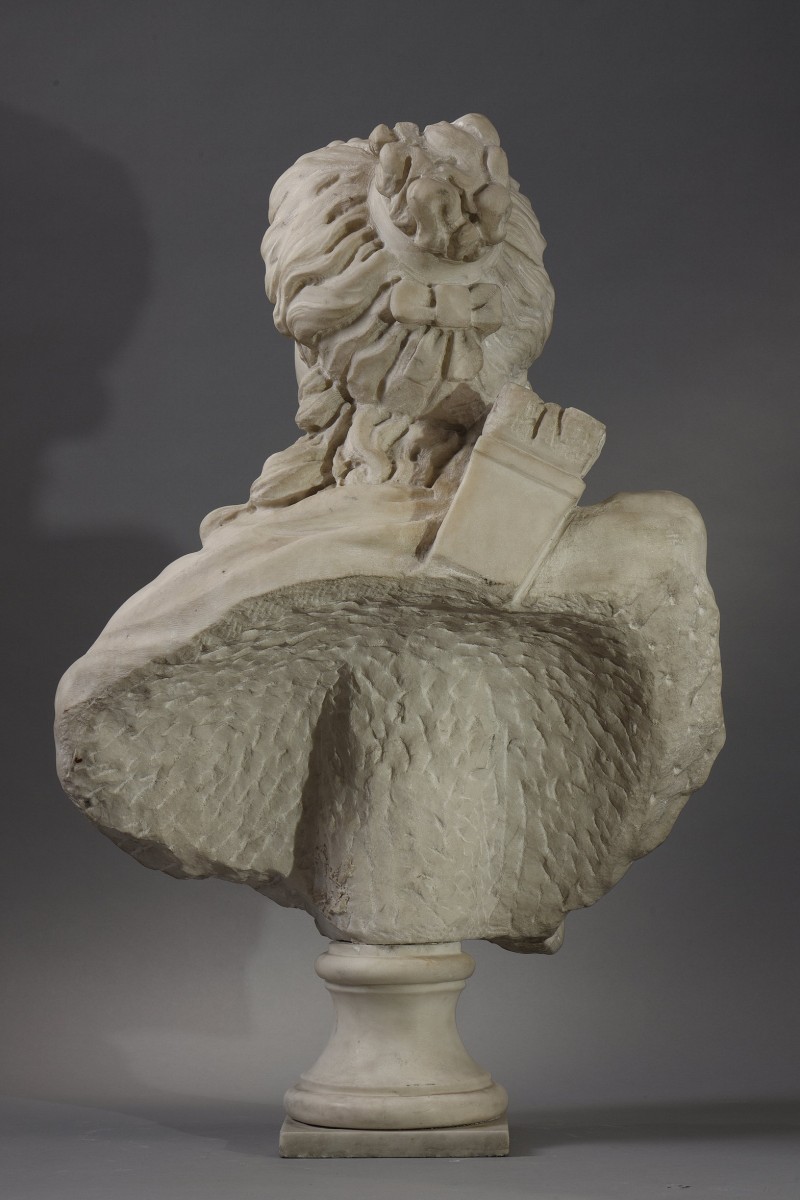
At the back, the hair is gathered and secured by a large, knotted ornament. This treatment gives the sculpture a highly refined silhouette, with volumes that extend into the locks falling over the shoulders.
The attire, rendered in a classical style, consists of drapery crossed over the chest, leaving the right breast exposed, a hallmark of the aesthetic associated with ancient beauties.
One section of fabric runs diagonally from the shoulder to cover the rest of the torso, while a second fold of drapery envelops the lower portion of the composition. The folds are not arranged uniformly: some are wide and deeply recessed, notably around the shoulders and arms, while others, more tightly gathered, follow the overlapping of the fabric across the chest.
The lower section is particularly enlivened by the movement of the drapery. The fabric forms a series of folds that intersect and overlap, secured at the waist by a sculpted, jewel-like clasp. This detail helps to visually organize the composition and recalls the knotting techniques frequently employed in 18th-century depictions of women in the classical style.
Viewed from the back, the quiver, slung behind the shoulder, serves as the primary attribute for identifying the figure as Diana. Its rectangular shape and the relief elements adorning its upper end are clearly defined.
The work demonstrates a mastery of marble carving, most evident in the transition from the volumes of the face to the undulating hair and the arrangement of the drapery. The sculpture relies on an interplay between polished surfaces and more deeply carved, recessed areas. The face is rendered with a smooth, even finish to evoke the softness of skin, while the hair and the folds of the garment possess a more dynamic, textured quality. This differentiation of surfaces enhances the clarity of the composition and highlights its individual elements.
This sculpture can be associated with works produced within the circles of major French sculptors from the second half of the 18th century, notably Augustin Pajou and Jean-Antoine Houdon, whose explorations of female portraiture and mythological subjects offer points of comparison.
A connection to Augustin Pajou is particularly relevant, given his various portraits of Madame du Barry, executed between 1770 and 1773. The marble bust held by the Louvre Museum, dated 1773, serves as a significant point of reference. In it, Pajou presents an idealized depiction of his subject, while maintaining a meticulous focus on facial features, the arrangement of the hair, and the rendering of the fabric. The hair, consisting of abundant curls, as well as the delicacy of the facial modeling, show affinities with the sculpture under study.
Pajou also created portraits of Madame du Barry in compositions inspired by mythology. His interest in depicting the royal favorite in the guise of figures from antiquity suggests an iconographic connection to the present bust. In particular, there is a tradition of representing Madame du Barry as Diana, a theme associated with the sculptural oeuvre of Pajou.
A terracotta figure depicting Madame du Barry as Diana, offered by Christie’s in 2016, is described as a 19th-century French work after Pajou. The catalogue notes that its composition incorporates elements from the portraits of the favorite created by the sculptor in the 1770s, a characteristic also present in this late 18th-century sculpture.
The treatment of the hair and the structure of the face also allow this work to be situated within the explorations of the female portrait undertaken by Houdon.
A comparison with Houdon’s *Diana the Huntress*—conceived from 1776 onwards and best known through its 1780 marble version, is also essential. In that work, the sculptor profoundly reimagines the traditional image of the goddess, presenting her in motion, with her body leaning forward in a light, graceful stride.
The handling of the subject reflects an attempt to strike a balance between classical references, the idealization of the female form, and naturalistic observation. Although the sculpture in question is a bust rather than a full-length figure, it shares with Houdon’s work the fusion of a female portrait with the mythological identity of Diana.
Through its iconography, the treatment of the hair, and the arrangement of the drapery, this bust belongs to the tradition of French sculpture from the second half of the 18th century, a period defined by a return to classical models and a reinvention of the female portrait. The presence of a quiver, combined with an updo hairstyle and classical-style attire, identifies the figure as Diana the Huntress.
The quality of the modeling, the arrangement of the drapery, and the careful attention given to the hair are characteristic of late 18th-century craftsmanship. The sculpture conveys an idealized sense of gentleness and youth, reminiscent of the style associated with Madame Du Barry.
White Carrara marble
Impressive height of 77 cm, including the pedestal base
Includes restorations consistent with age and maintenance