Offered by Galerie Gilles Linossier
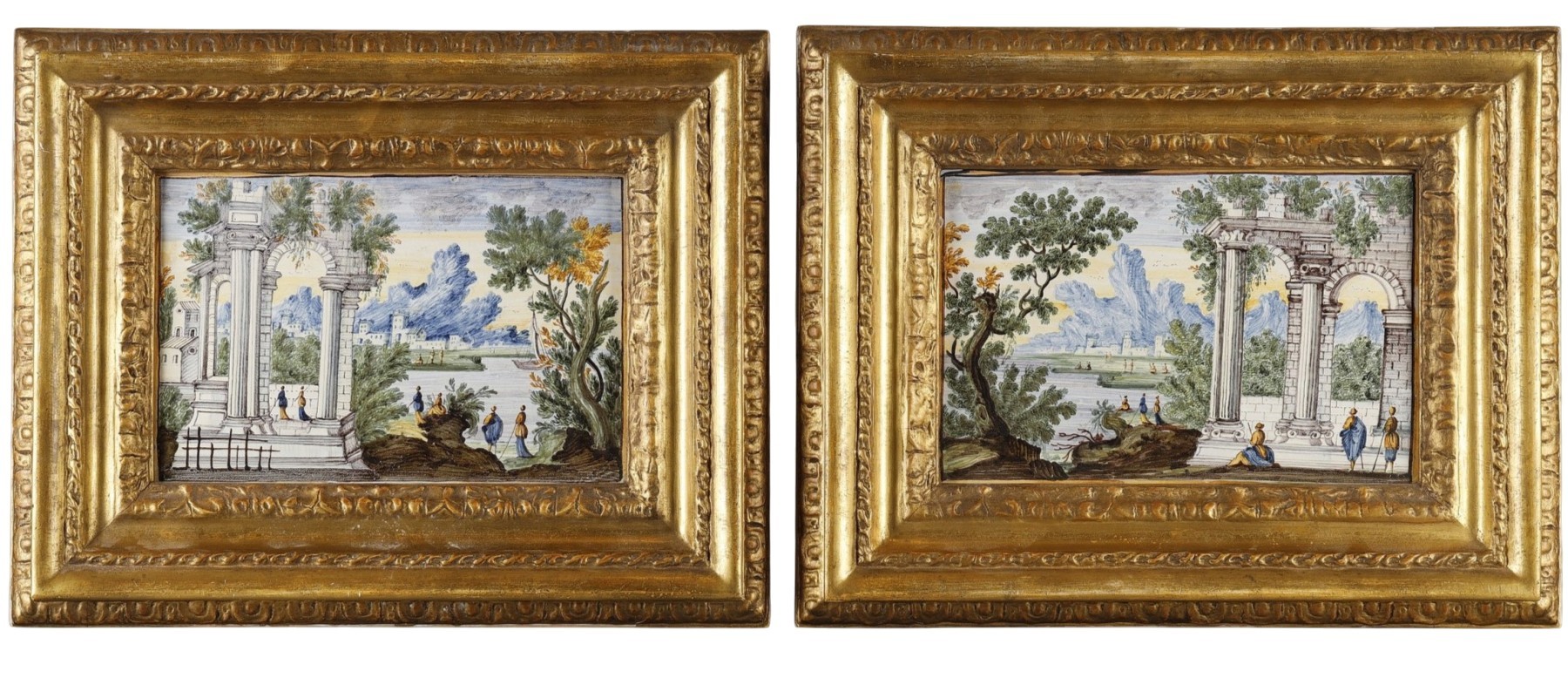
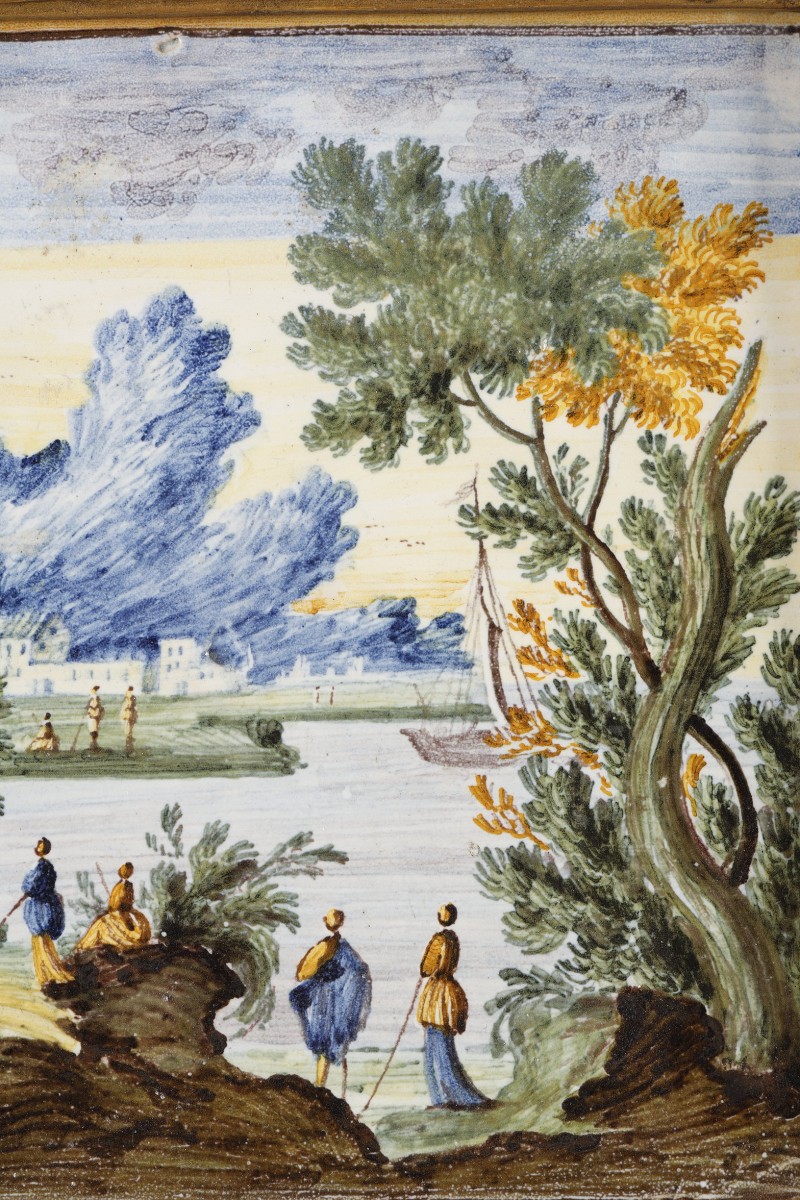
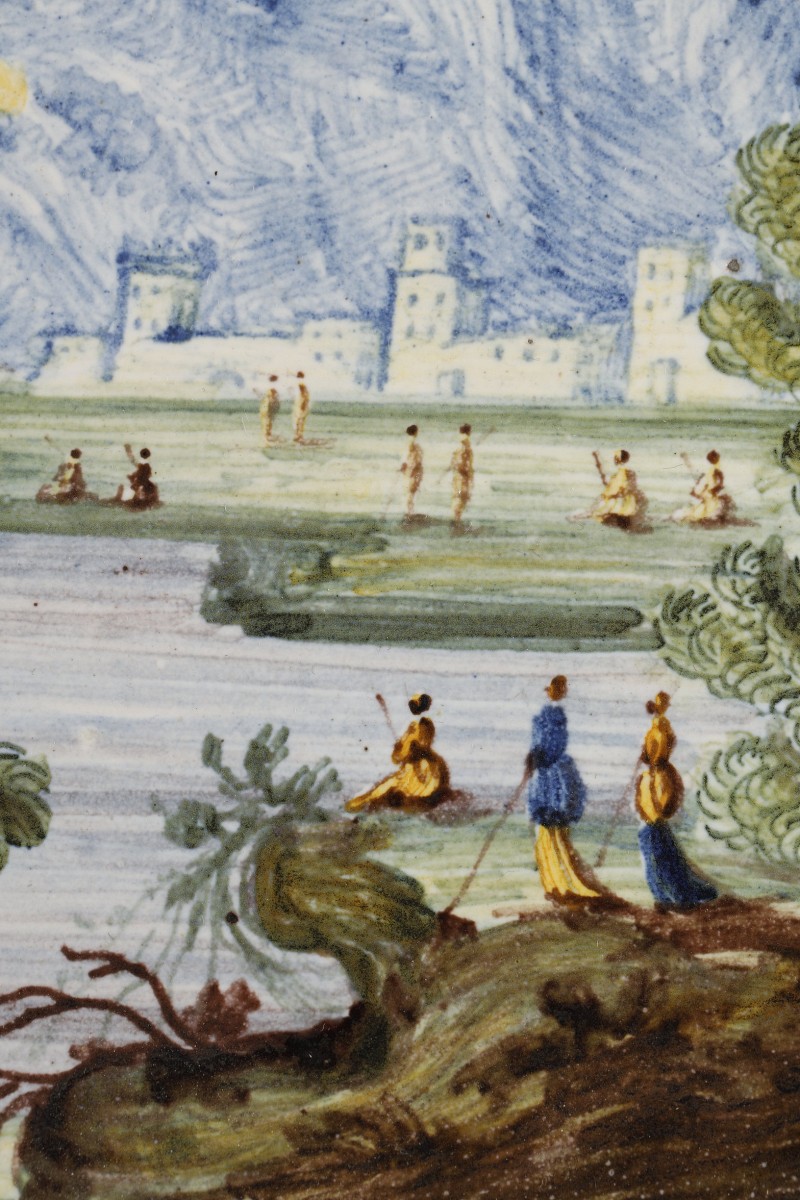

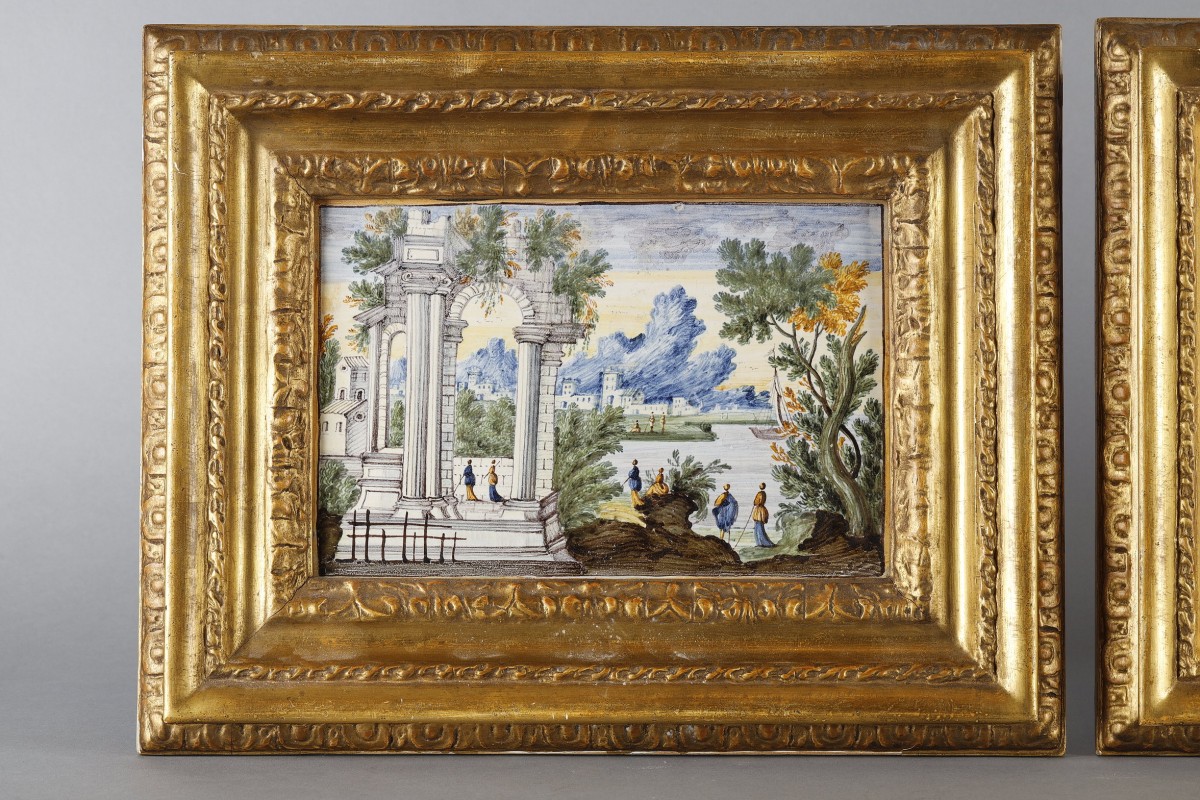
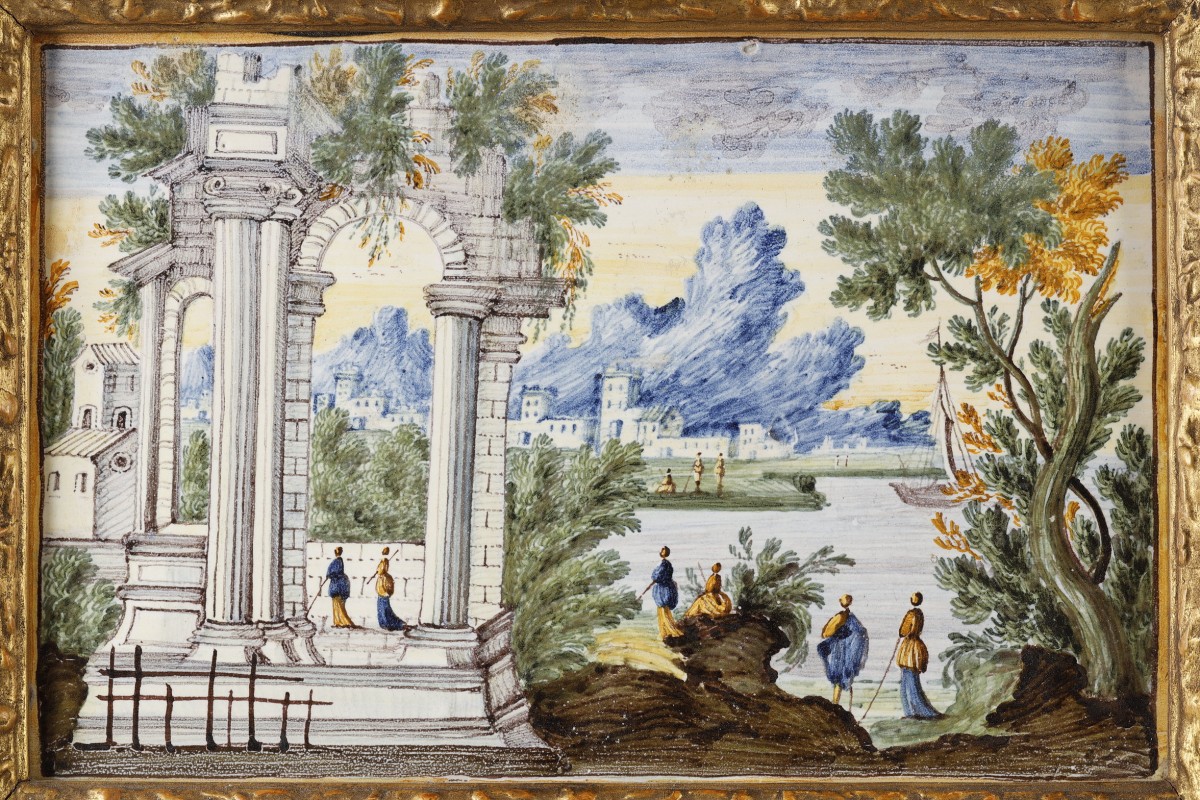
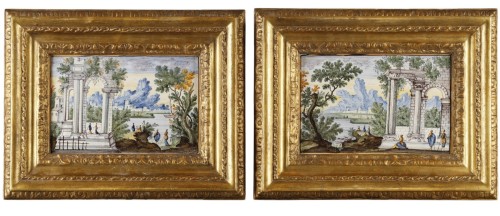
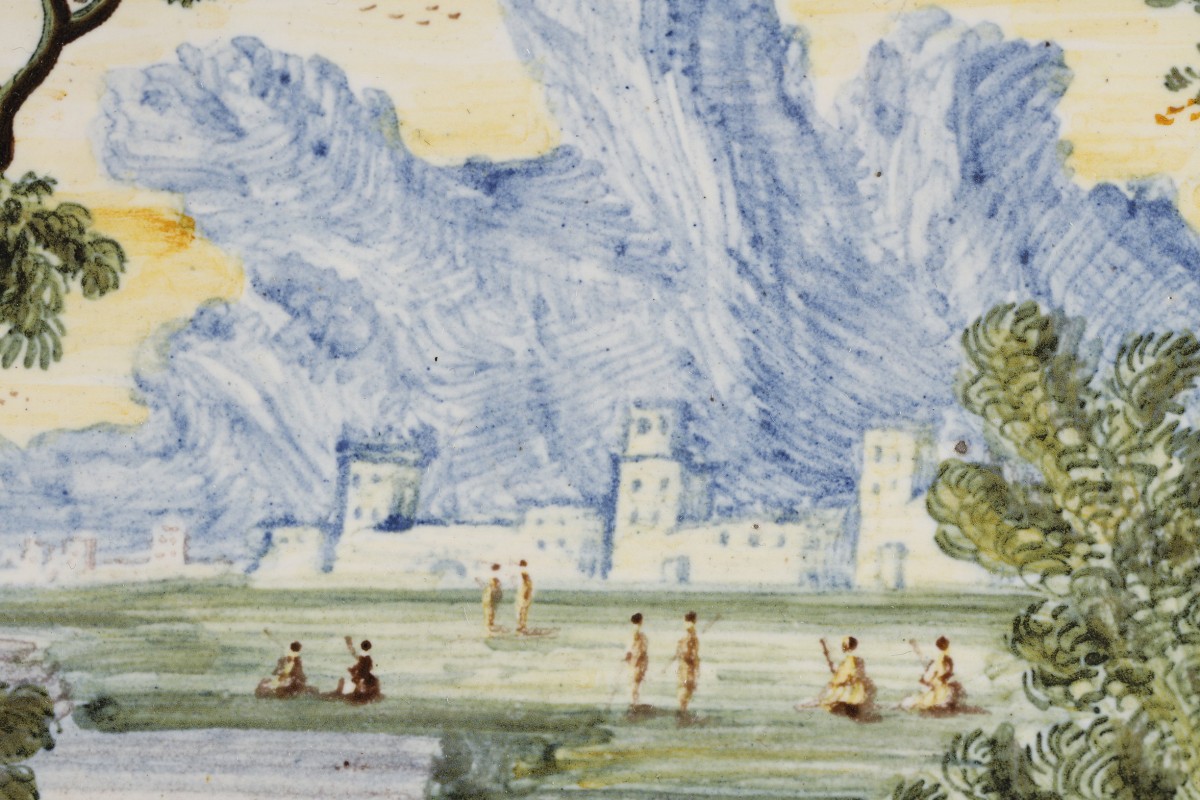
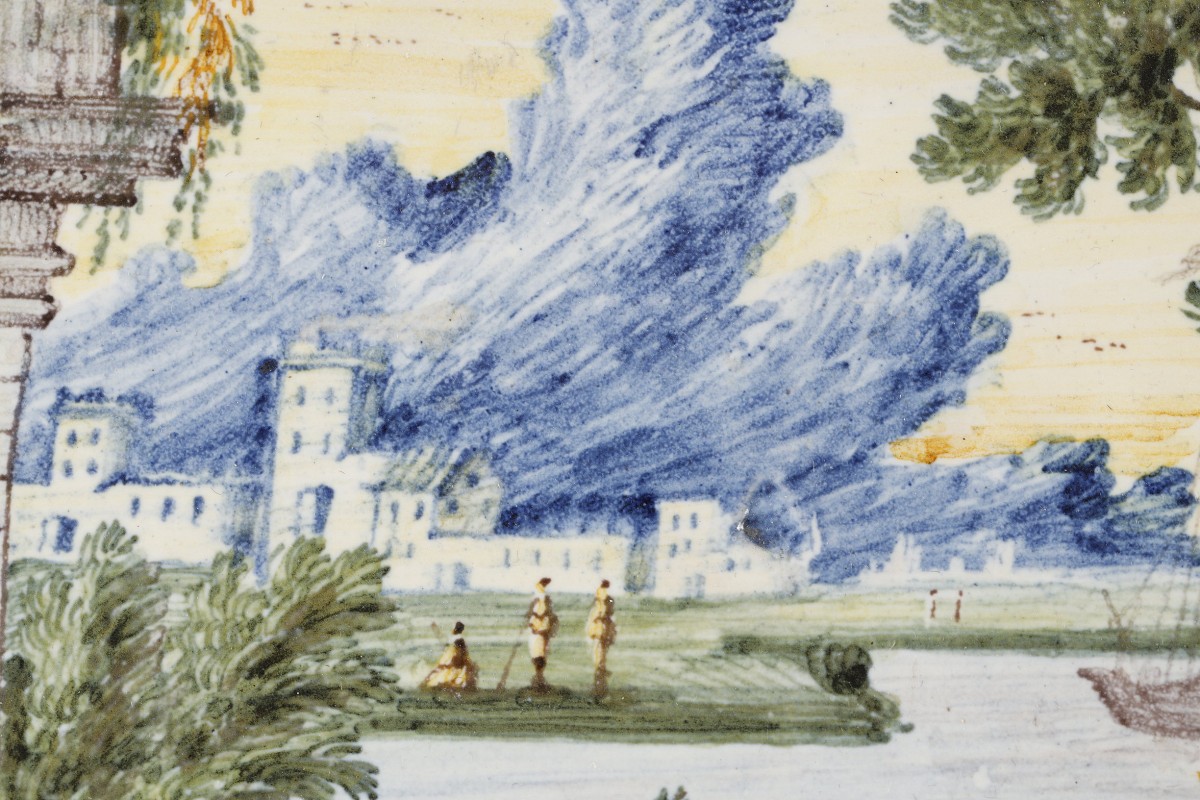
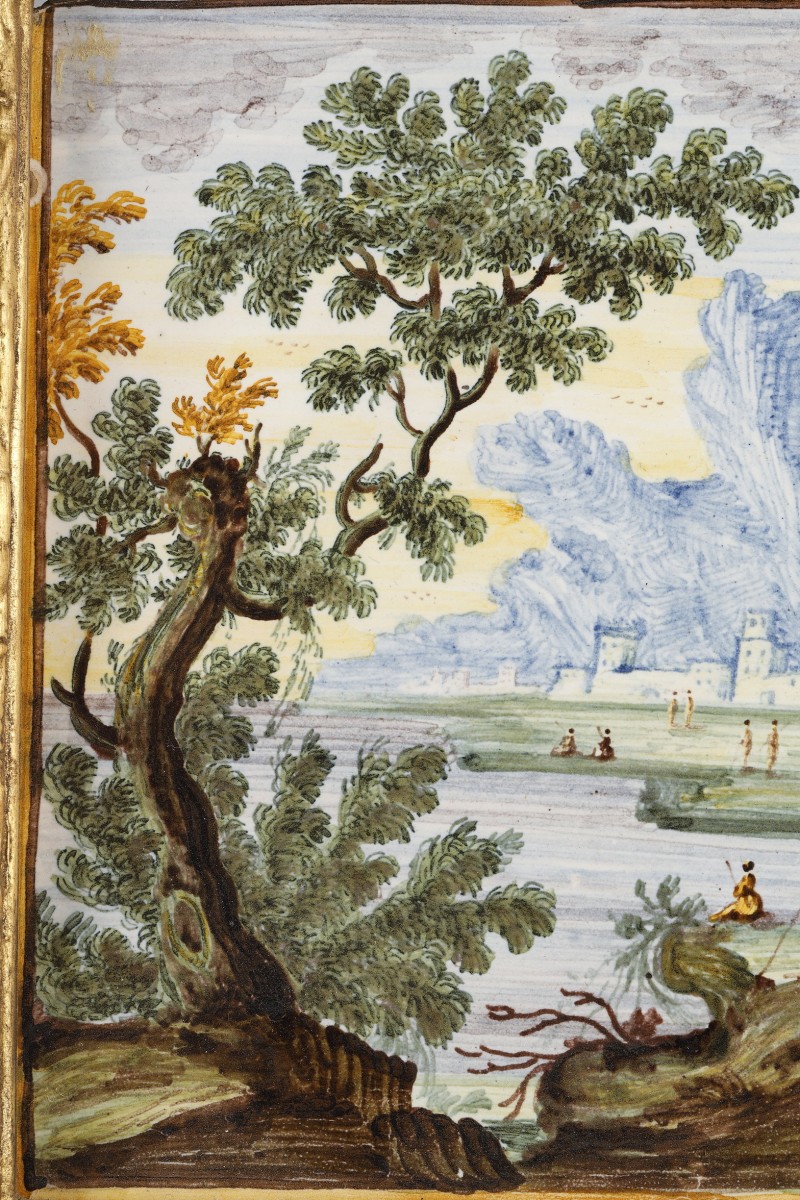
A polychrome scene featuring landscapes enlivened by figures, ruined classical architecture, and trees, opening onto a river with towns in the distance, all presented within beautiful gilded wooden frames.
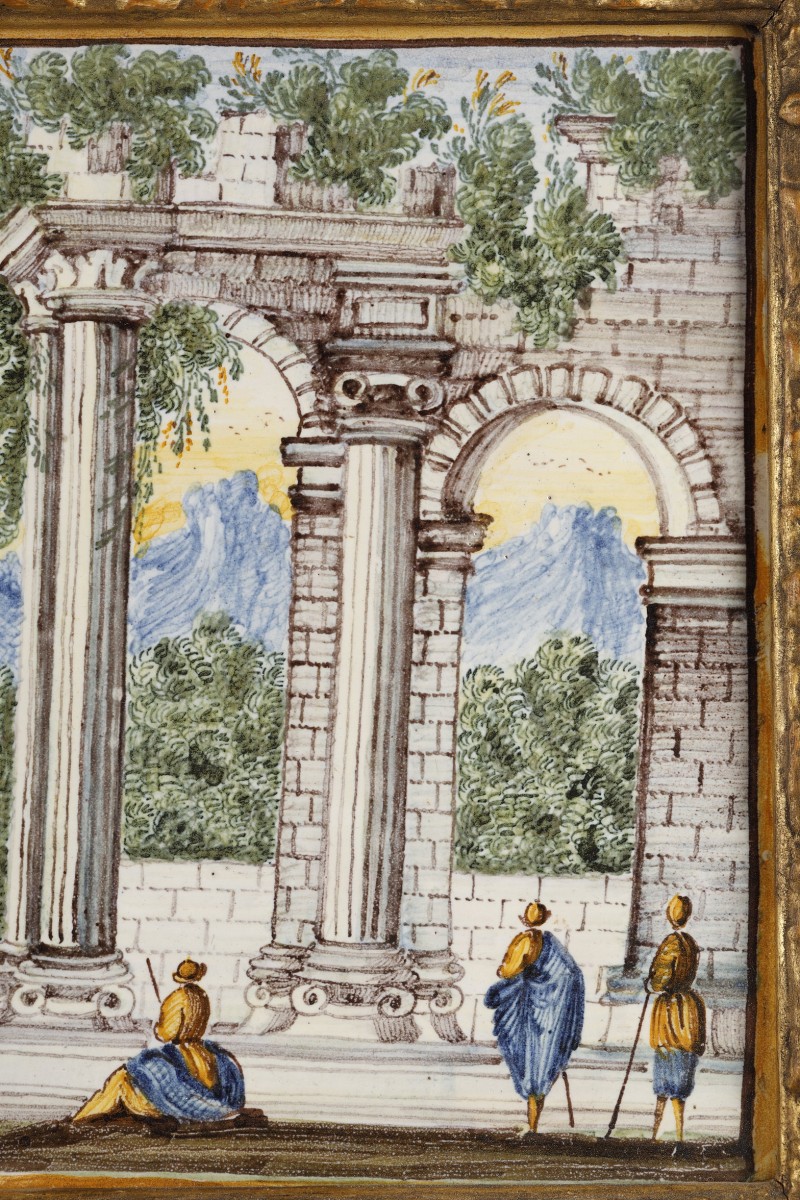
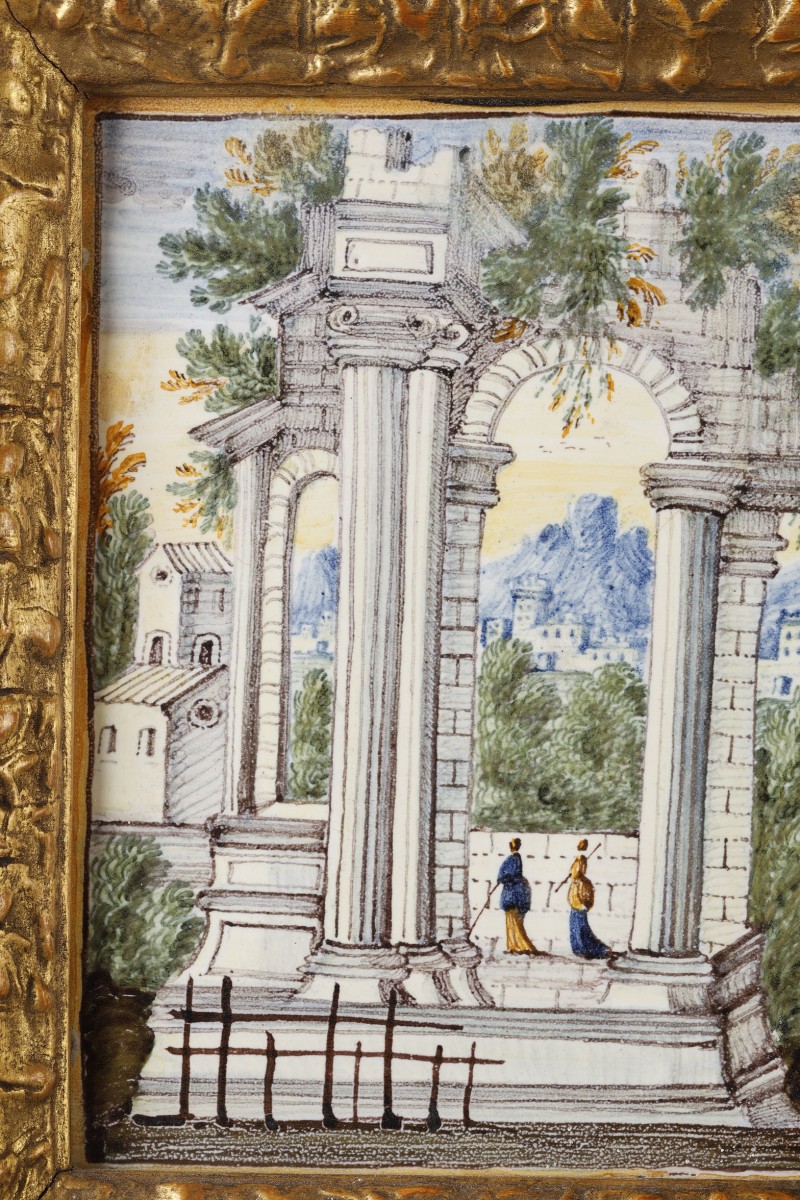
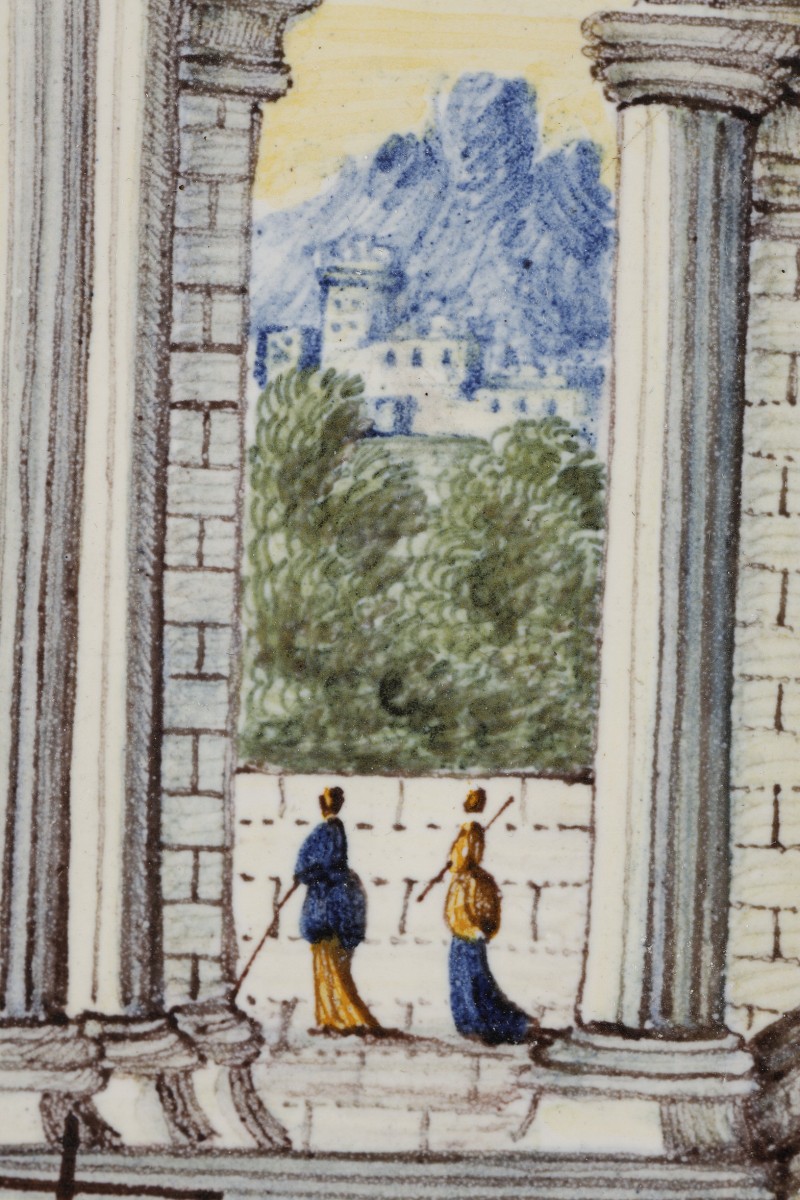
The first panel depicts a landscape centered around a ruined classical structure, positioned on the left side of the composition. A series of columns and pilasters supporting a round arch creates an opening that looks out onto the surrounding landscape. The edifice, rendered with meticulous attention to its architectural details, rests upon a stepped base, which enhances its prominence in the foreground.
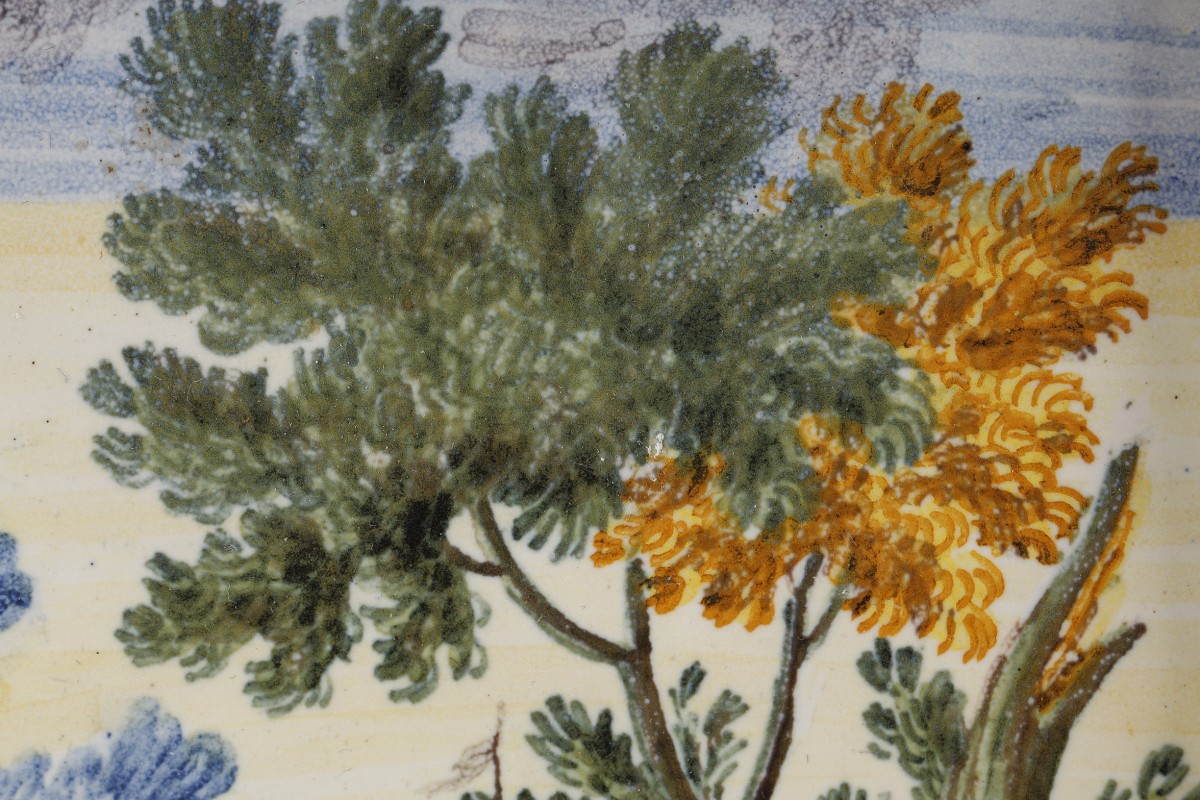
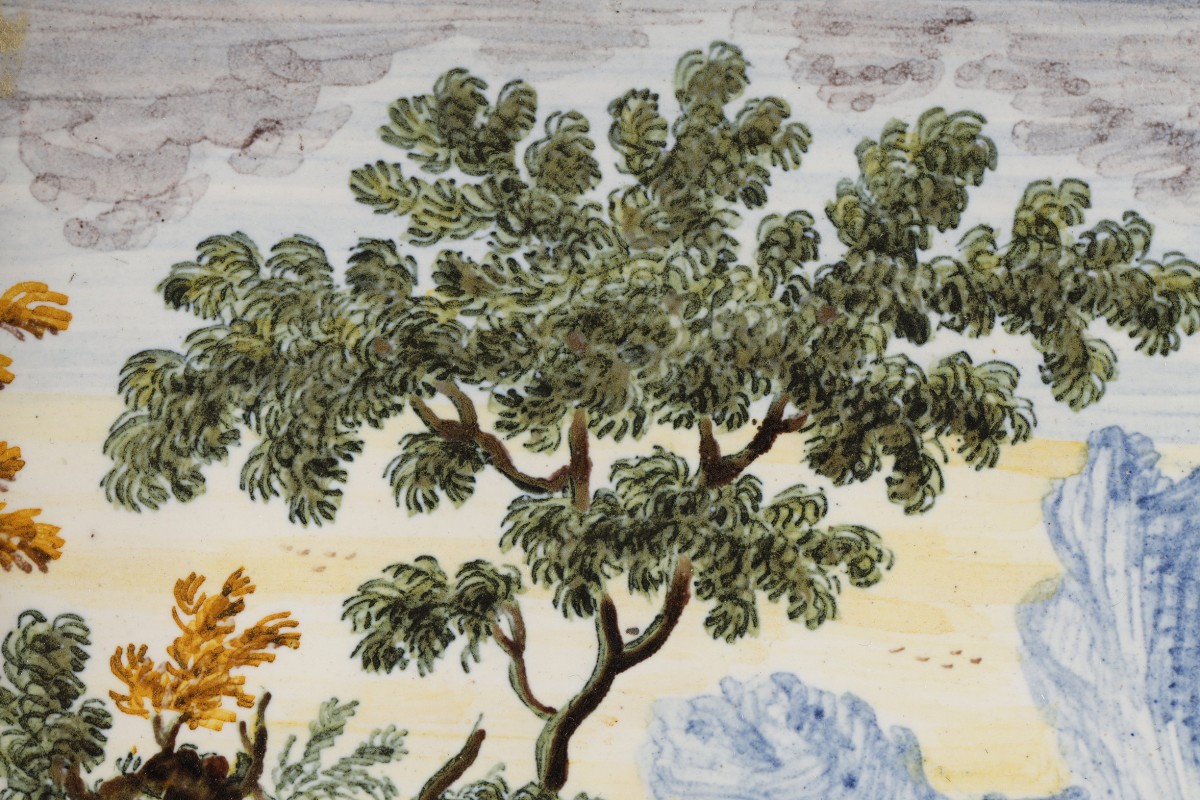
To the right, a tree with a slender trunk and sinuous branches spreads out a lush canopy, blending shades of green and yellow-ochre.
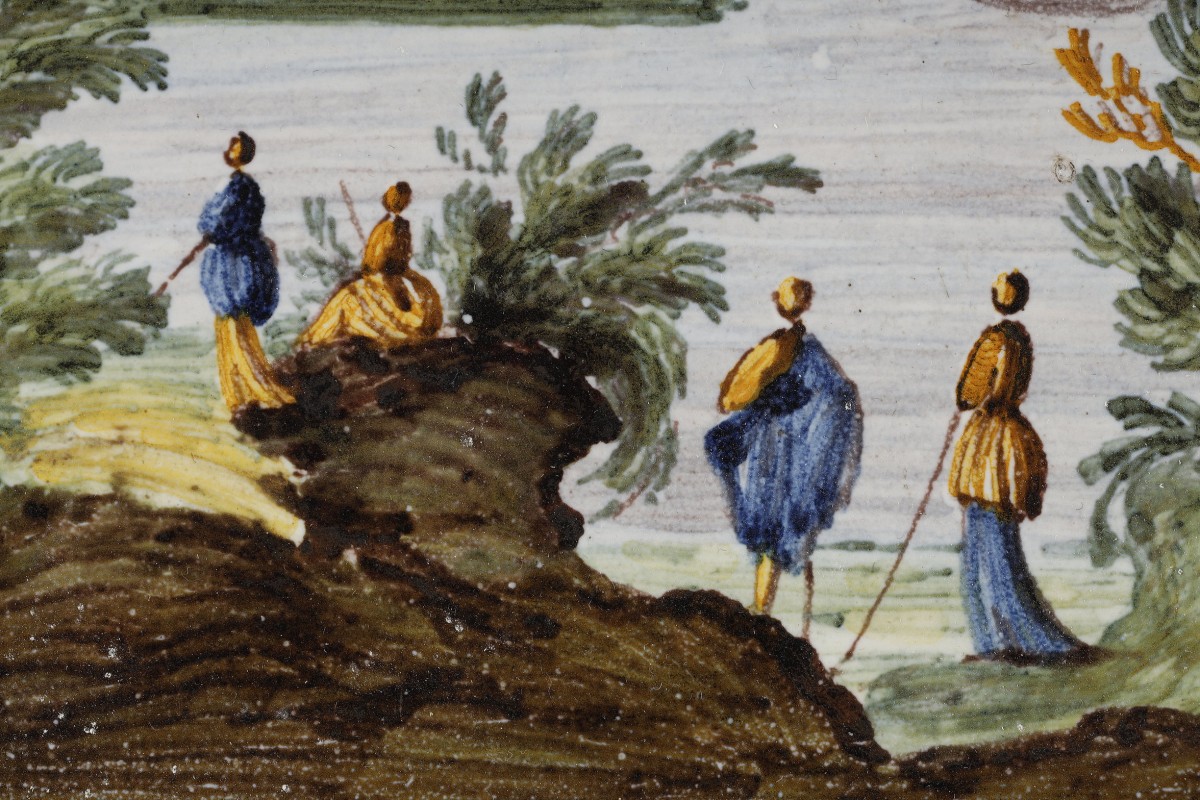
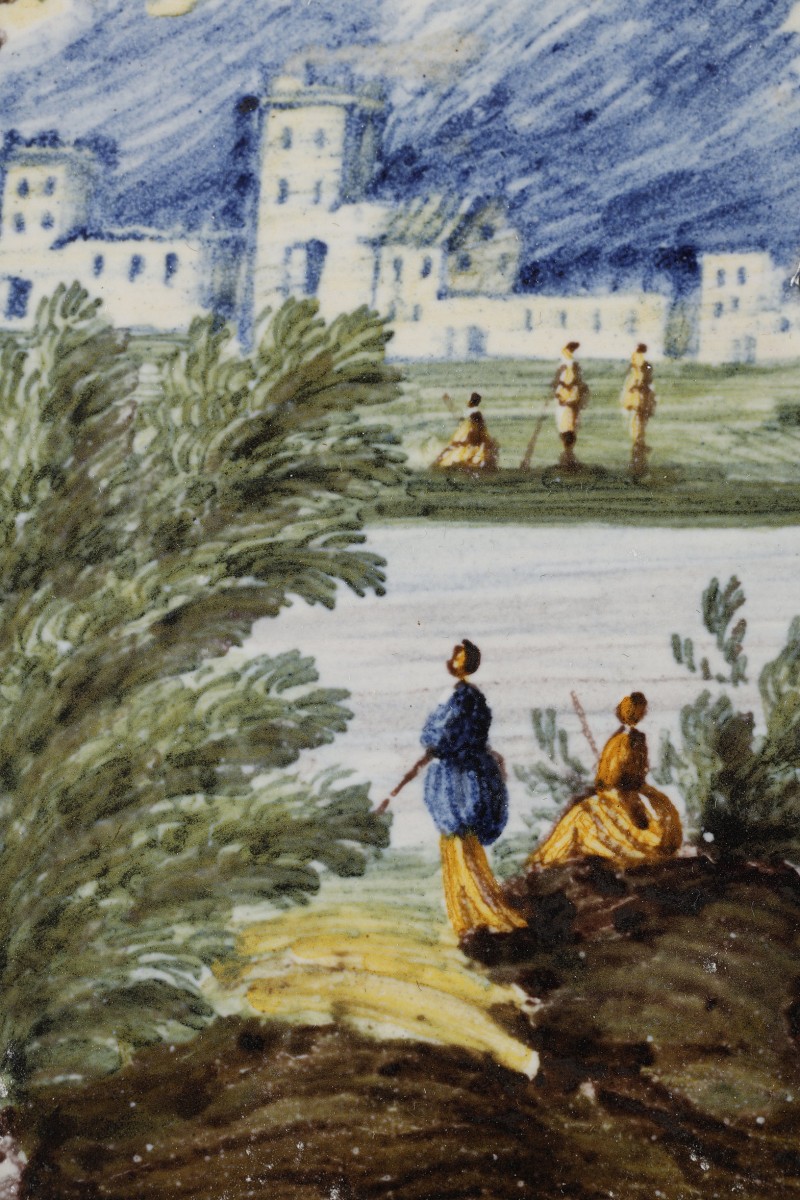
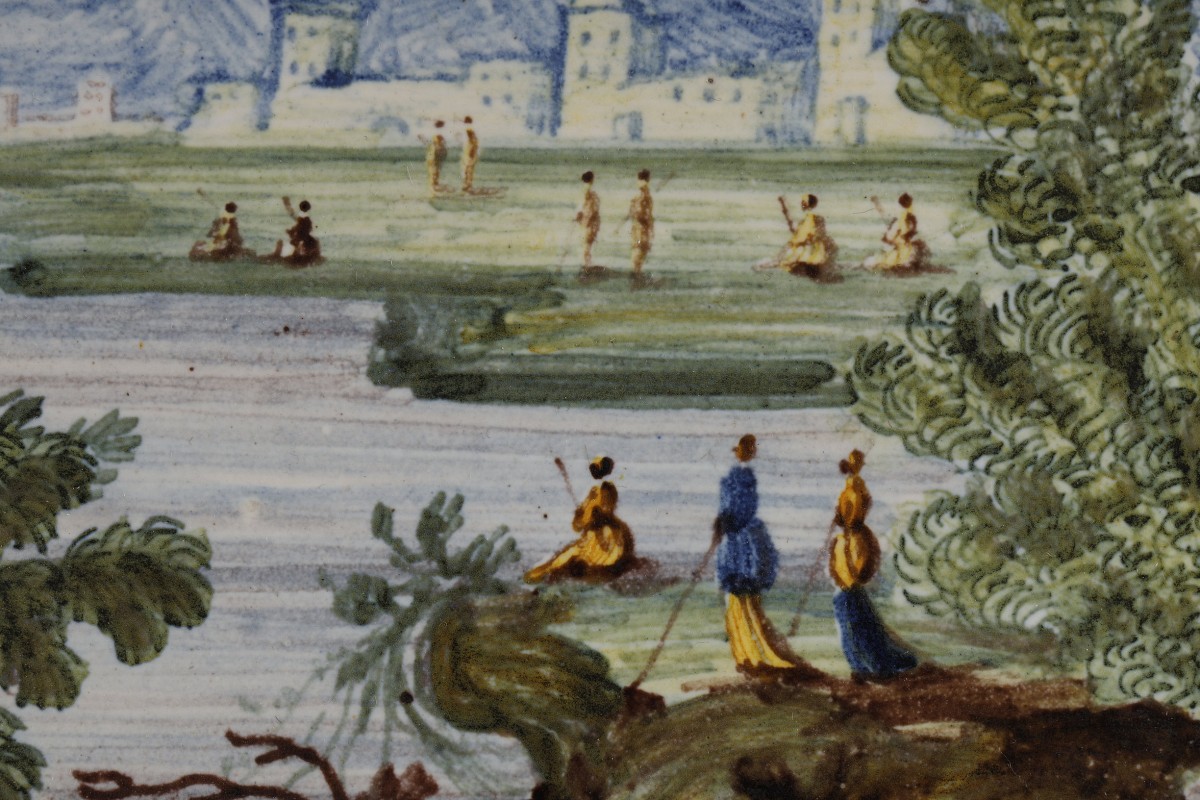
The vegetation frames the scene, guiding the eye toward the expansive landscape beyond. Several figures, dressed in garments of various colors, notably blues and yellows, populate the foreground; some are gathered in small groups, while others stand near the riverbank.
A river winds through the depth of the landscape, with various structures and a town visible on the opposite bank. In the distance, rock formations with bluish tones stand out against a clear sky, rising behind the buildings and figures along the shore.
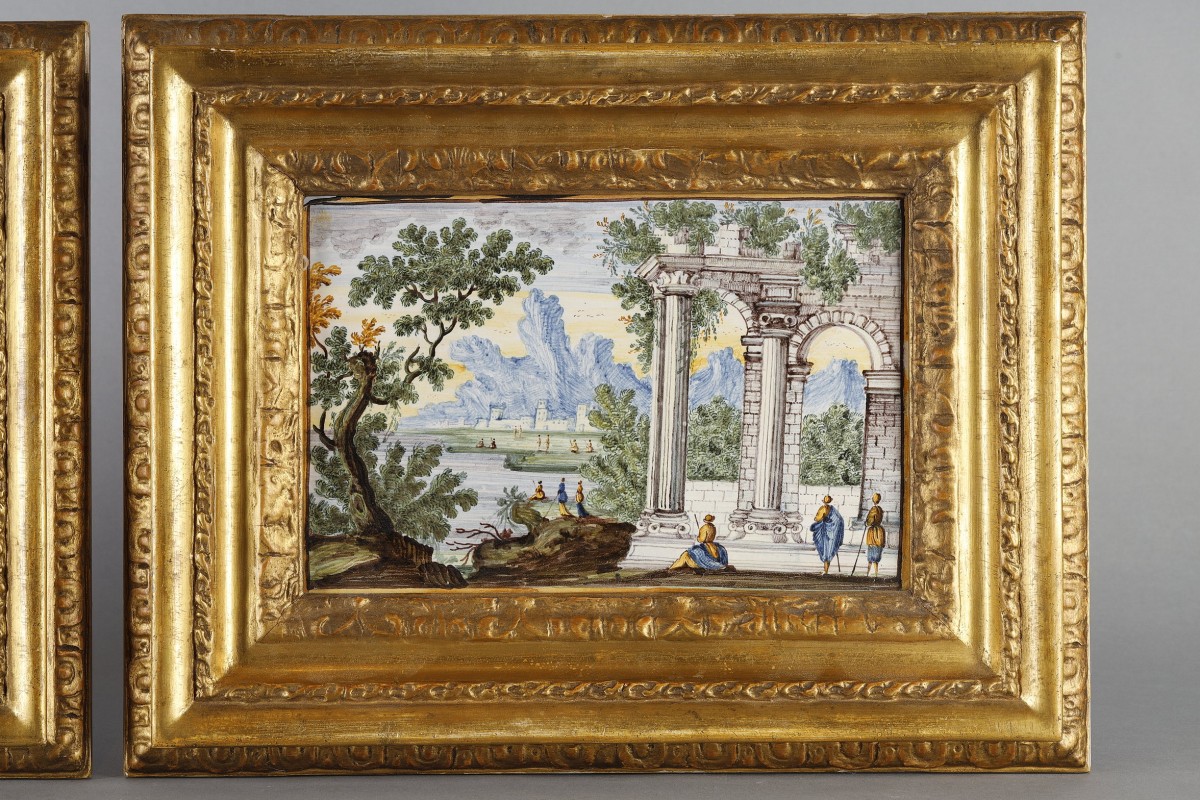
The second panel presents a landscape with a similar theme, though arranged in a mirrored composition.
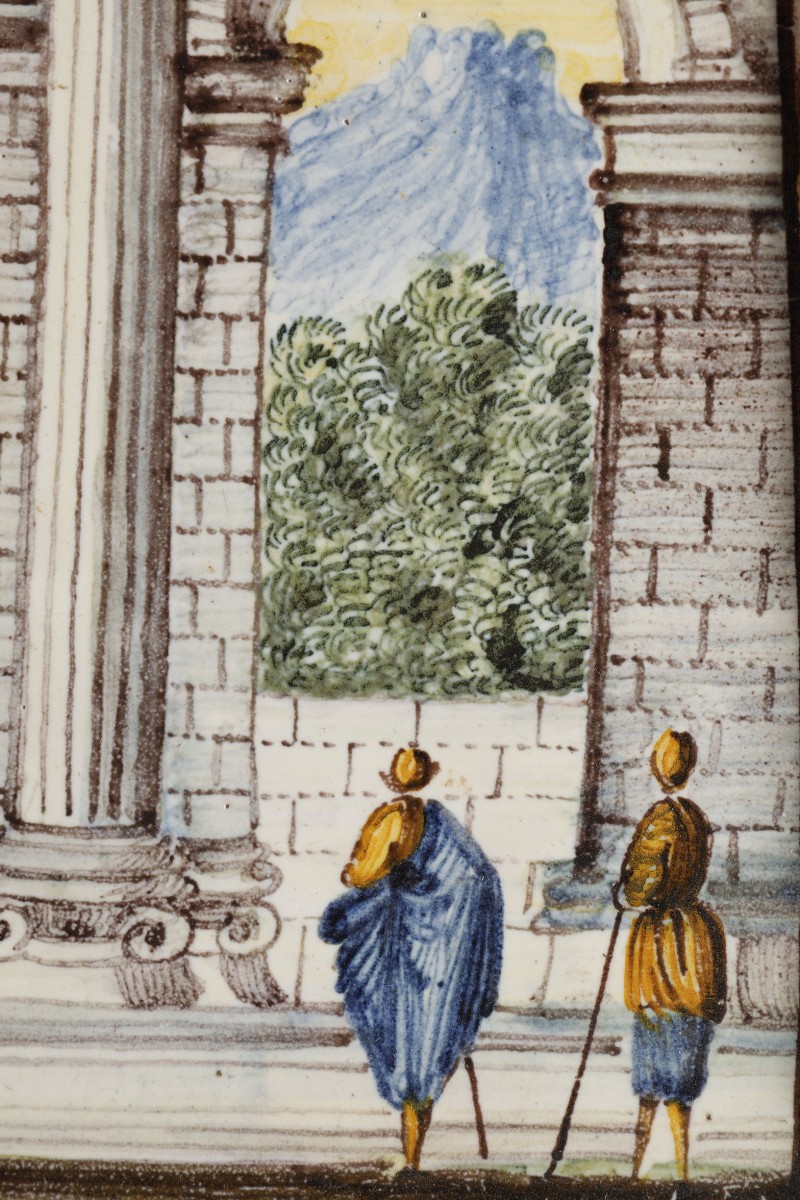
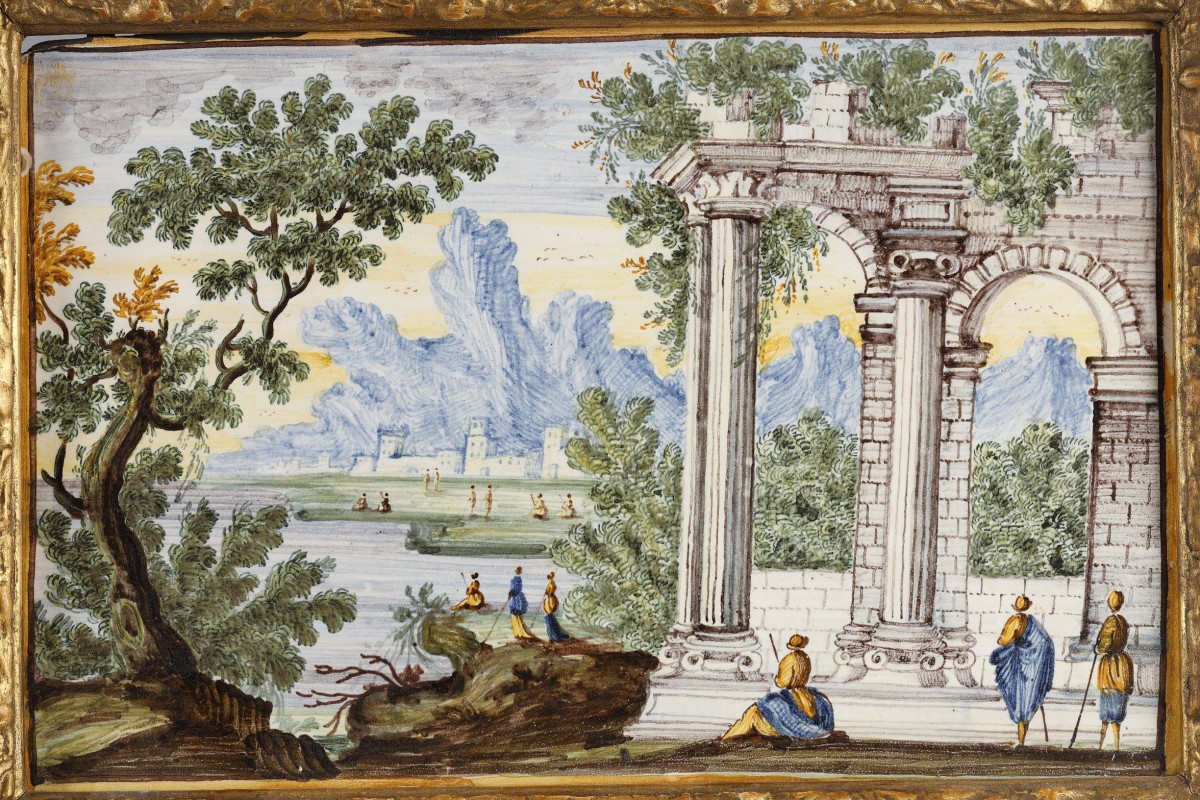
Here, the classical architecture occupies the right side of the scene. It features an imposing round arch framed by columns and pilasters, with architectural elements accentuated by lines and shades of gray and brown that evoke the appearance of aged stone.
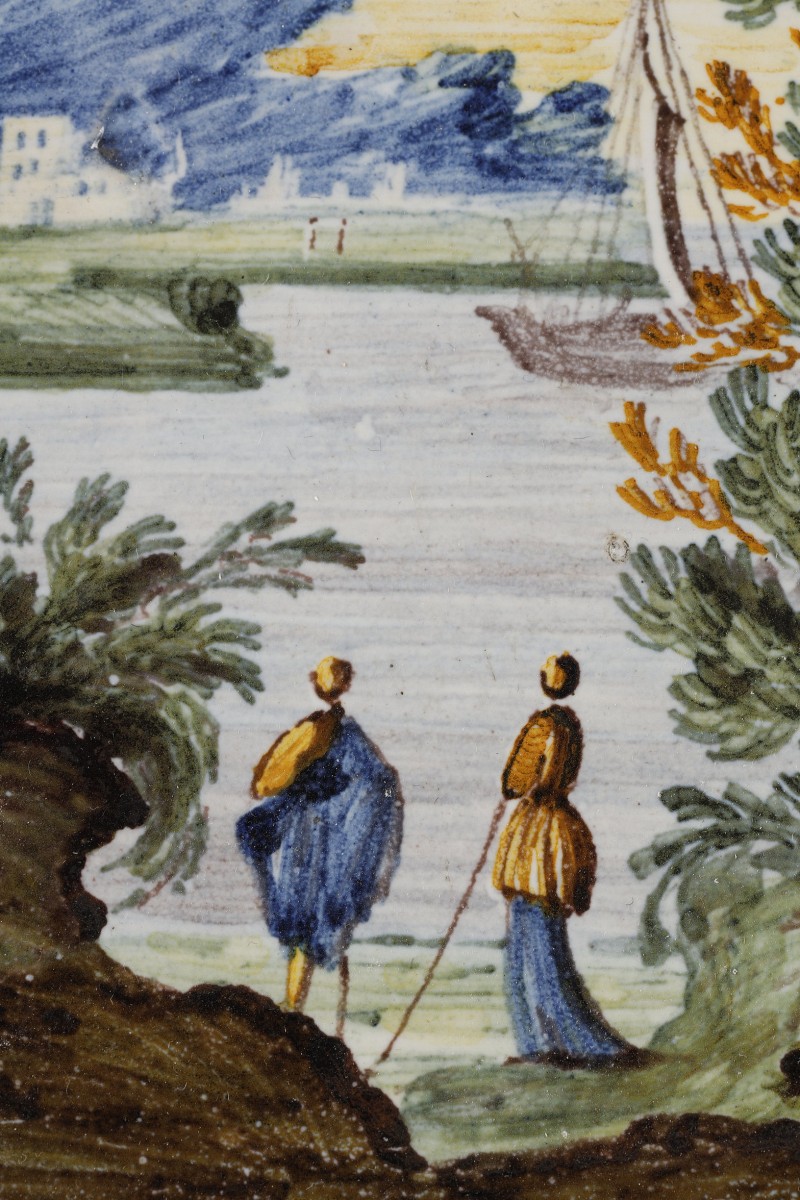
On the left, a tree with a gnarled, leaning trunk rises above a cluster of vegetation and rocks. Its dense foliage, painted in various shades of green, provides a counterpoint to the architecture and defines the landscape.
In the foreground, several figures bring the scene to life: one person sits near the bank, accompanied by others who are standing or moving about, dressed in blue, yellow, and brown.
The eye is drawn further along to a body of water that cuts across the landscape, then toward groups of figures on the opposite bank, distant structures, and mountain ranges in shades of blue, forming a composition that almost mirrors the first section.
The sky, rendered in soft tones of gray and pale yellow, lends a sense of luminosity to the entire scene.
The two plaques feature complementary compositions, organized around a shared architectural and landscape vocabulary. Antique arches and columns, irregularly shaped trees, groups of figures, and open views of a river serve as the primary elements of this setting.
Reversing the arrangement of the architecture and vegetation creates a dialogue between the two scenes, while allowing each to retain a degree of autonomy.
The color palette combines the blues of the sky and mountains, the greens of the vegetation, the browns of the ground and architecture, and the yellow and orange accents found in the figures' attire.
Located in Italy, the town of Castelli was a major center for the production of Italian majolica. Its ceramic tradition, which flourished between the 16th and 18th centuries, saw significant growth during the 18th century, driven in large part by several families of painters and ceramicists.
Works from this period are primarily distinguished by their finely painted, polychrome decorations set against a white enamel background.
Lively landscapes, pastoral scenes, antique architecture, and compositions inspired by contemporary engravings feature prominently in the workshops' repertoire.
Classical ruins, waterways, mountains, and small, costumed figures come together to form imagined landscapes.
Landscape plaques represent one of the most characteristic expressions of this production during the mid-18th century.
A fine pair of 18th-century faience plaques from Castelli, similar in size and housed in beautiful gilded wooden frames.
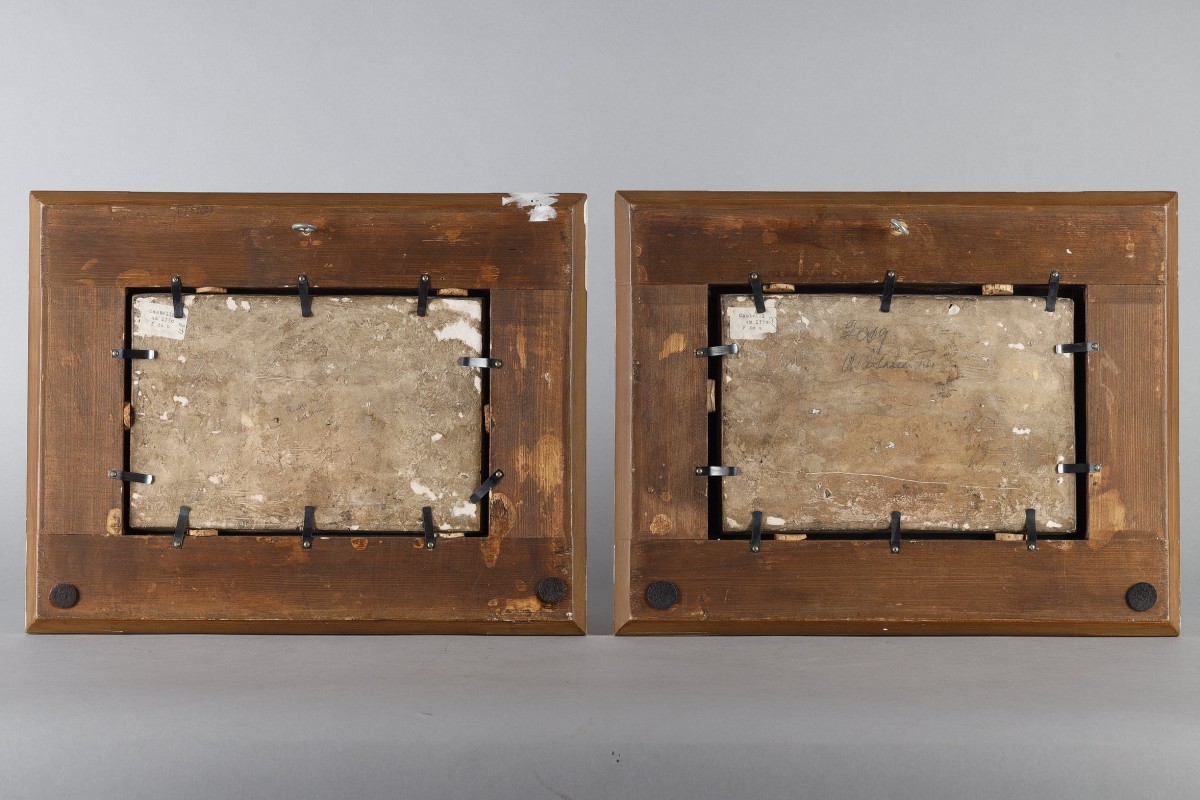
On the reverse, two vintage labels read "Castelli um 1730 F40," marked "a" and "b" respectively.
Includes restorations consistent with age and maintenance.
Dimensions : H 16 cm x w 24 cm
avec cadre : H 30,5 cm x w 38 ,5 cm