Offered by Galerie Magdeleine
REQUEST INFORMATION

Paintings and drawings from the 17th to the 19th century
Anna Dorothea THERBUSCH (Berlin, 1721 – Berlin, 1782)
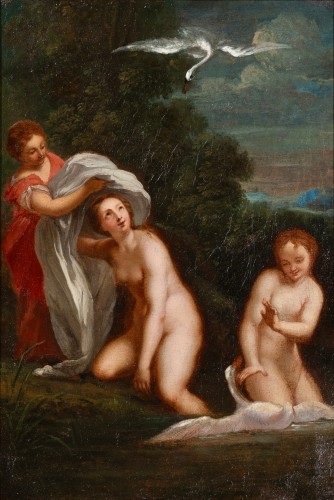
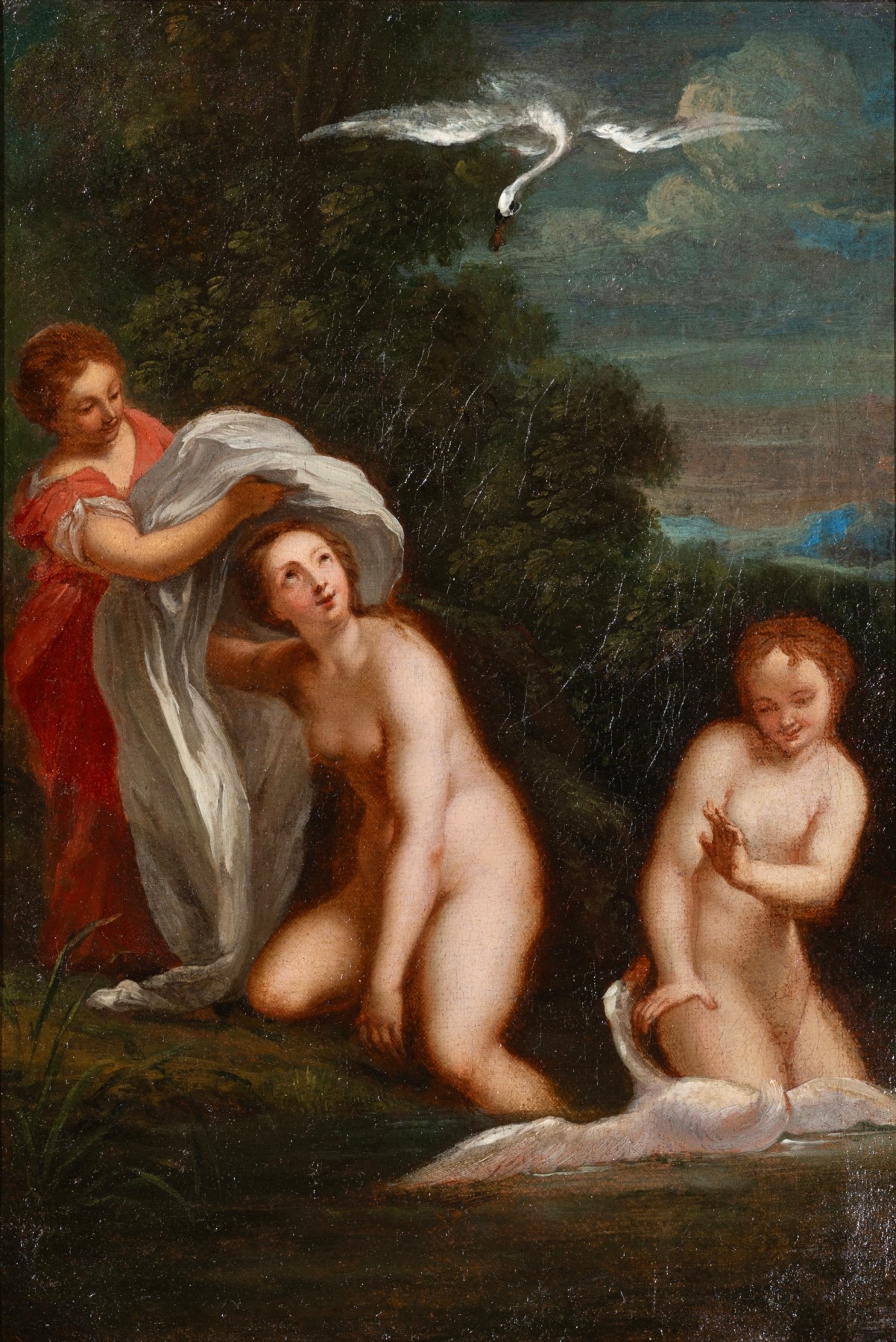
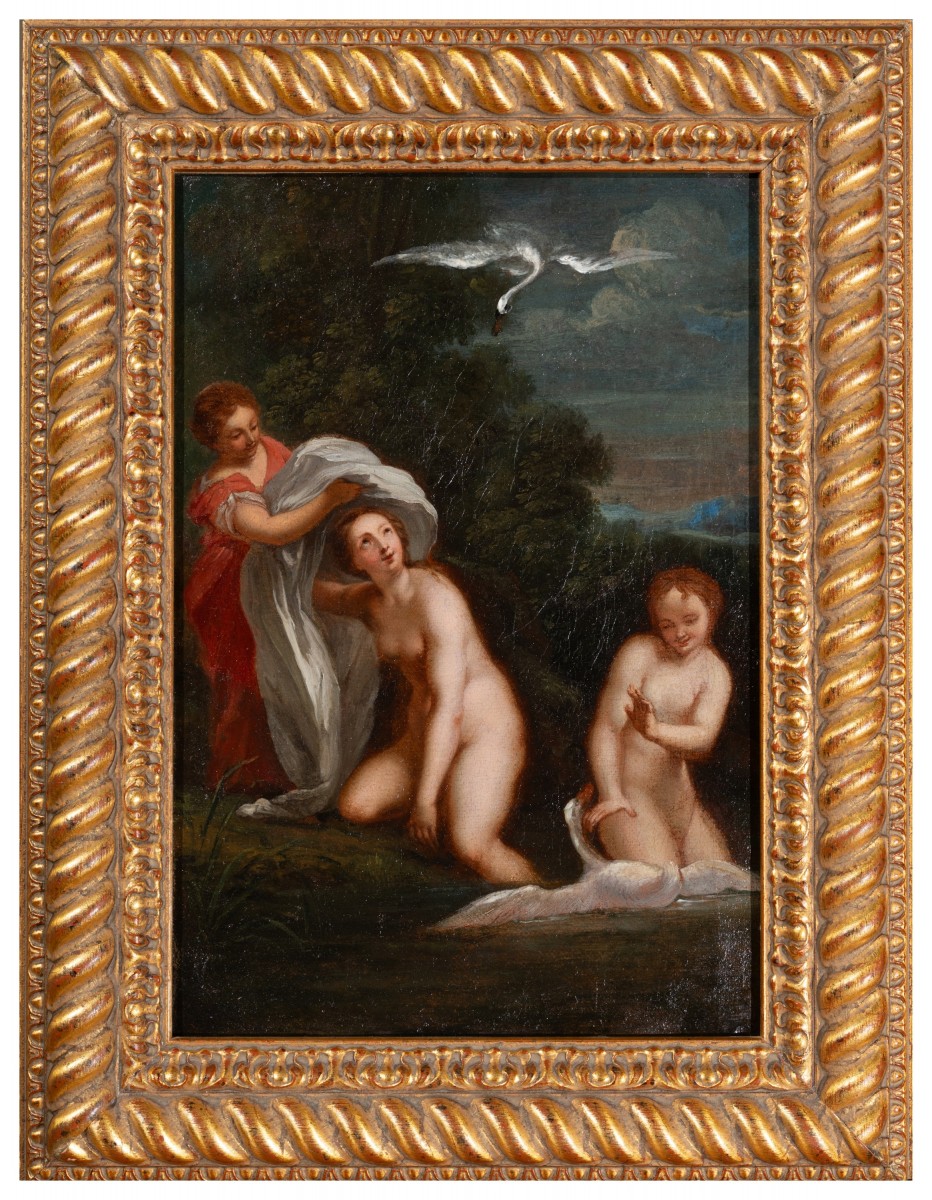
Leda and the Swan, after Correggio
Circa 1772–1775. Oil on canvas. H: 28; W: 19.5 cm.
Already celebrated at the princely courts of the Holy Roman Empire, Anna Dorothea Therbusch traveled to Paris in September 1766. As painter to the King of Prussia, she benefited, despite being a woman, from certain advantages in establishing connections with the administration of the Bâtiments du Roi. Indeed, only a few months after her arrival in France, Therbusch was admitted to the Royal Academy of Painting in Paris as a “portrait painter” and participated for the first time in the Salon that same year.
While her genre scenes and portraits were exhibited, her history painting, Jupiter and Antiope, was rejected by the jury. The nudity of Antiope, considered indecent by commentators and particularly by Diderot, was explicitly cited as the reason for this rejection. This setback, perceived as a personal affront, together with the difficulty of securing commissions from French patrons, prompted her to leave Paris in November 1768.
Upon returning to her native country, Therbusch regained her former popularity. Between 1772 and 1775, she was notably commissioned by Frederick II of Prussia to execute several history paintings for his residence at Sanssouci. Our work was undoubtedly produced during this period.
Indeed, it is a highly personal interpretation by Therbusch of a detail from Correggio's Leda and the Swan (Ill. 4, Gemäldgalerie, Berlin), a painting owned by Frederick II between 1770 and 1806.
It is interesting to note the artist's reuse of the bluish landscape background, already employed in her Antiope of 1767.