Offered by Jan Muller
REQUEST INFORMATION
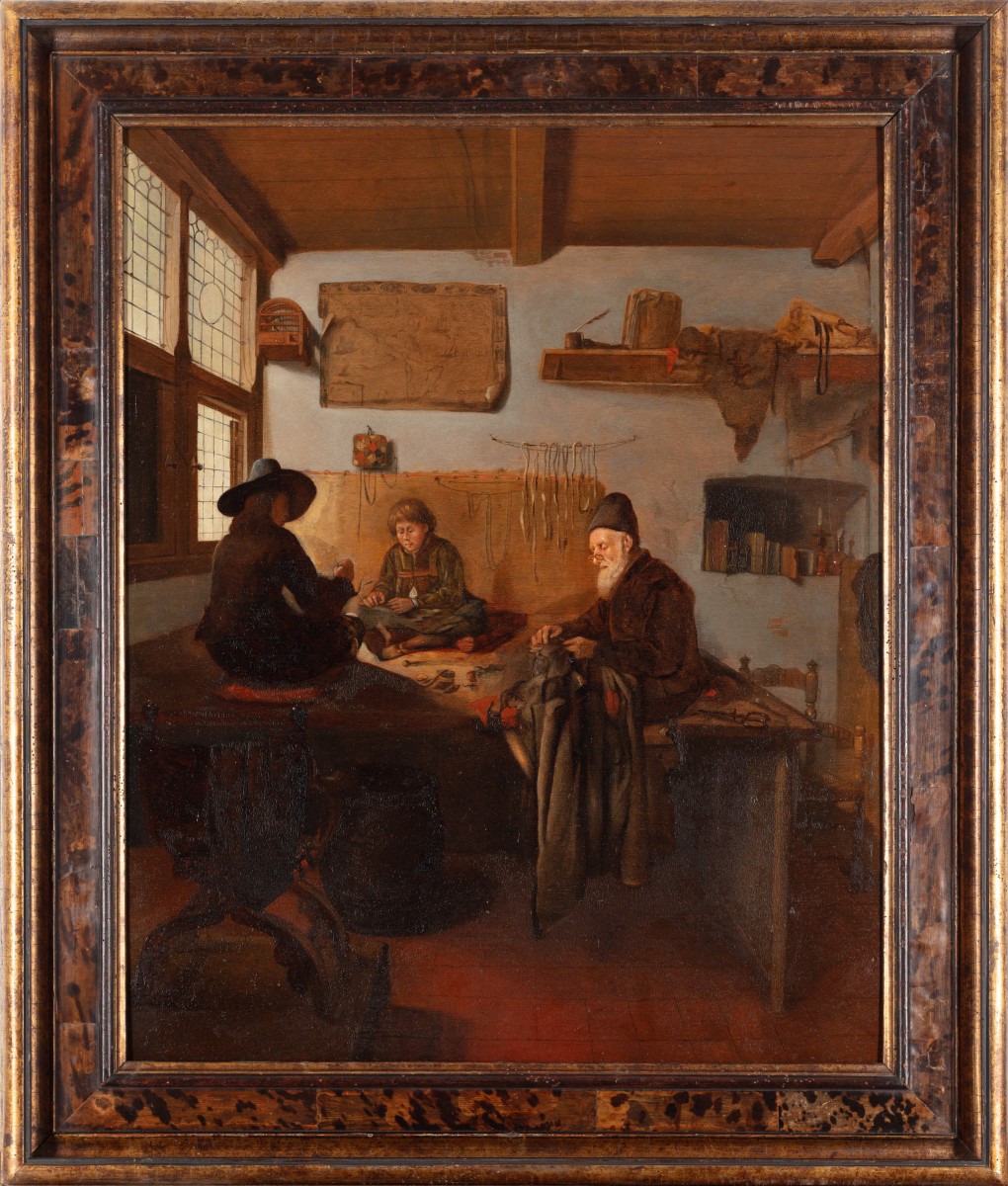

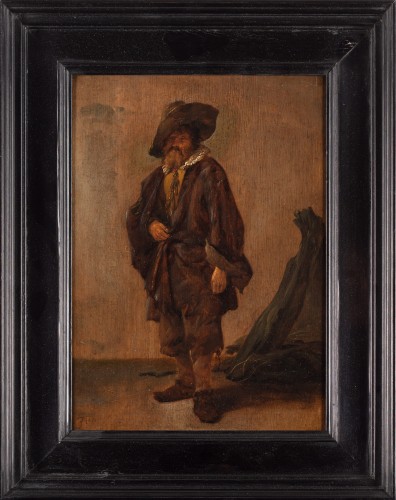
Quiringh van Brekelenkam (Zwammerdam, after 1622 – Leiden, c. 1669) was a Dutch Baroque genre painter. He is said to have trained with Gerrit Dou, and his paintings of the 1640s and 1650s therefore resemble those of the Leiden fijnschilders. In recent years, however, his apprenticeship with Dou has been doubted. A notarial deed of 1646, on which he signed alongside Dou and Dou’s parents, does point to a close tie with the Leiden master. Others see in his work just as much the influence of other painters, such as Gabriel Metsu and Rembrandt.
His father was a tailor. The painter thus grew up in an environment that probably inspired him to paint the scenes on which his fame rests today: the workshops of tailors and cobblers, of which he made around twenty-five variants between 1653 and 1664.
The surviving Leiden estate inventories show that his work was in demand: no fewer than 55 paintings by his hand are listed in twenty documents. Two people owned a remarkable number of his works: the Catholic merchant Hendrick Bugge van Ring had eighteen, and the innkeeper Pieter van Grient eleven, possibly even sixteen. Work by him hangs in, among others, the Rijksmuseum, the National Gallery in London and the Montreal Museum of Fine Arts.
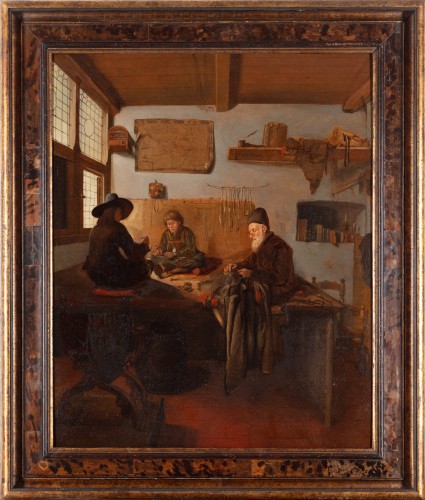
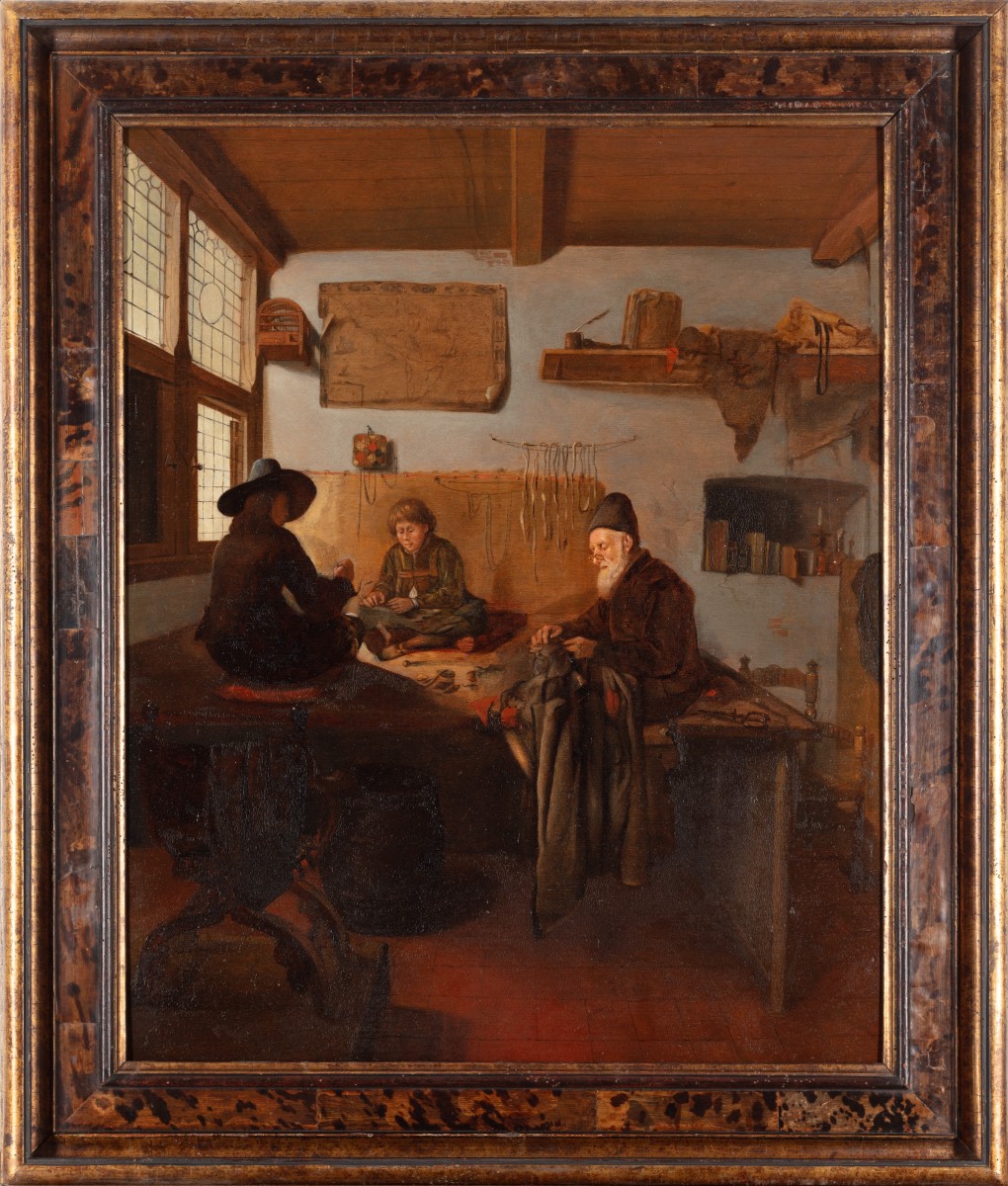
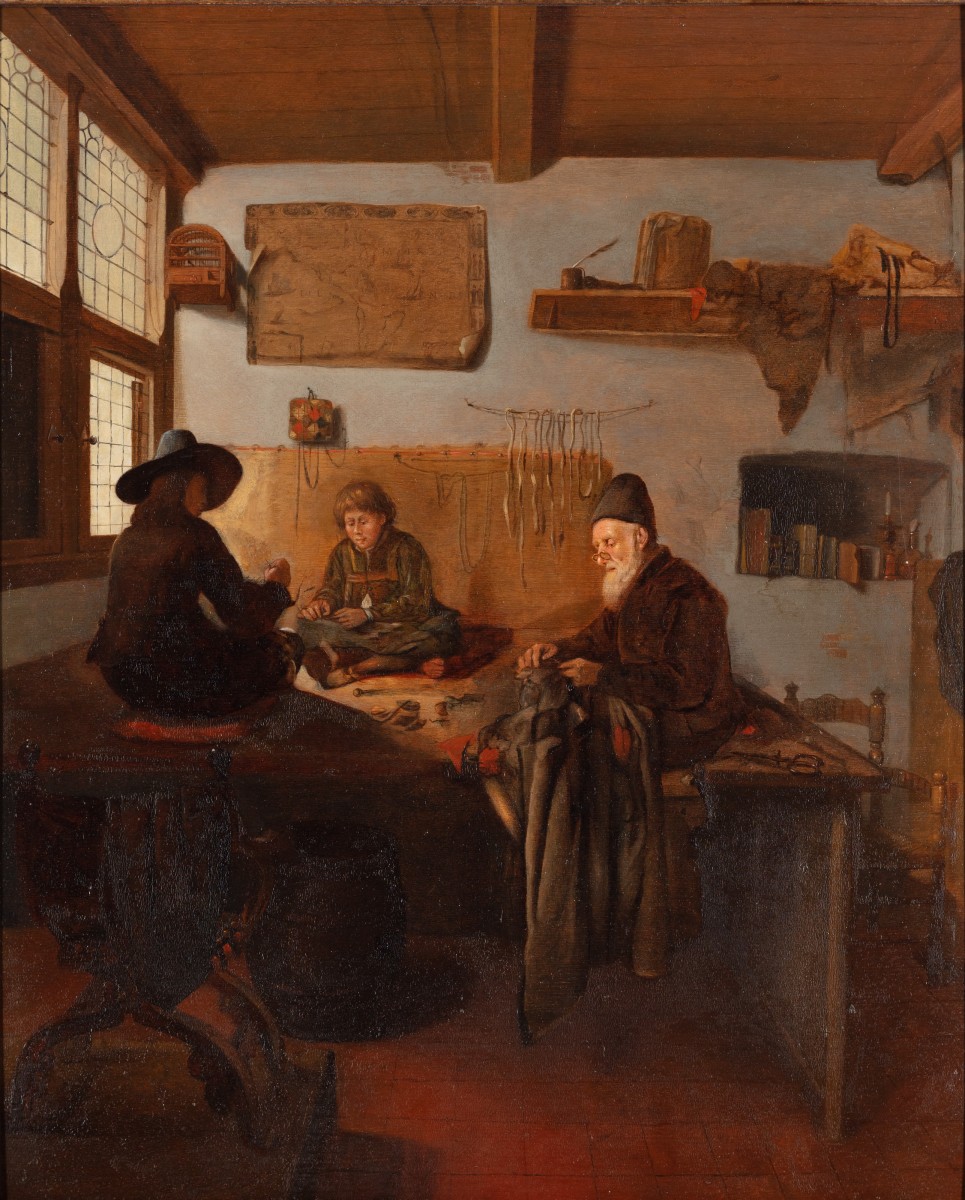
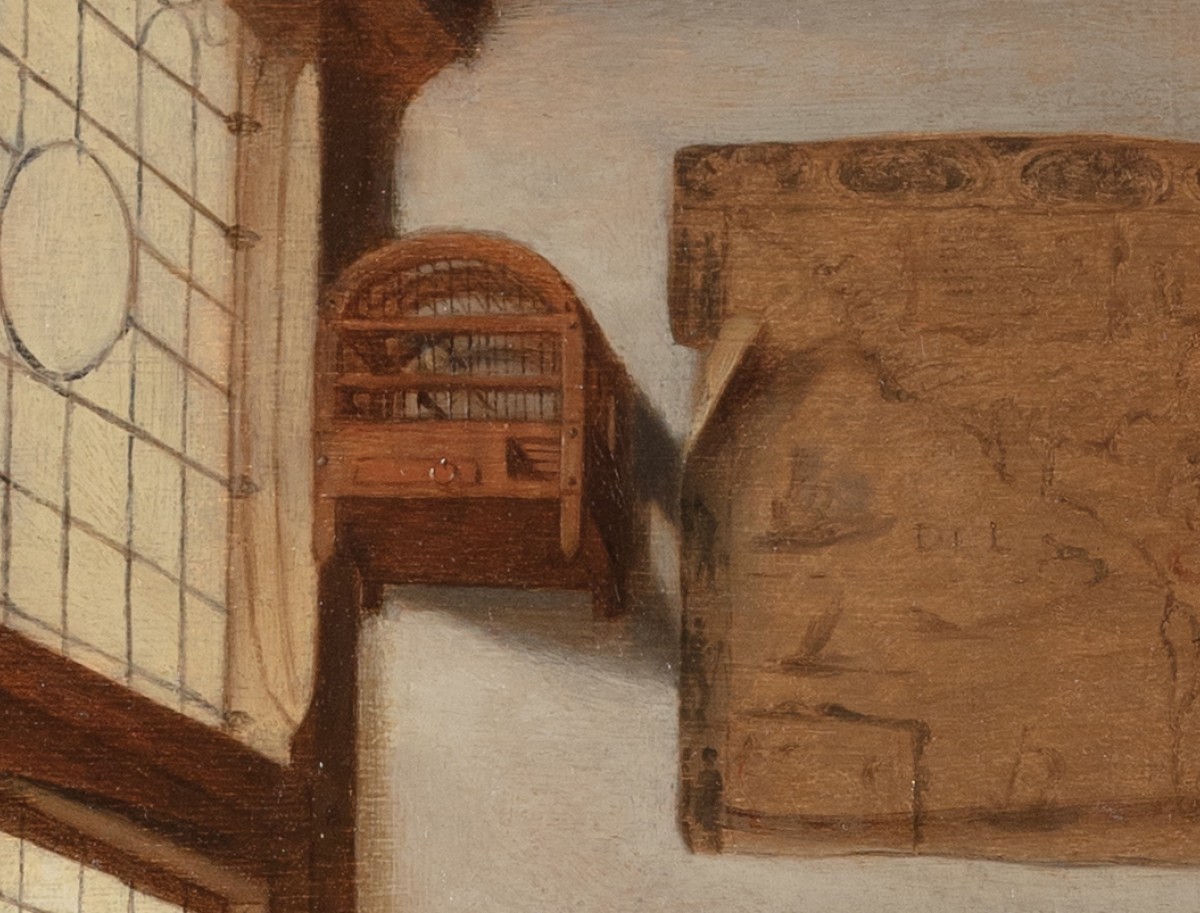
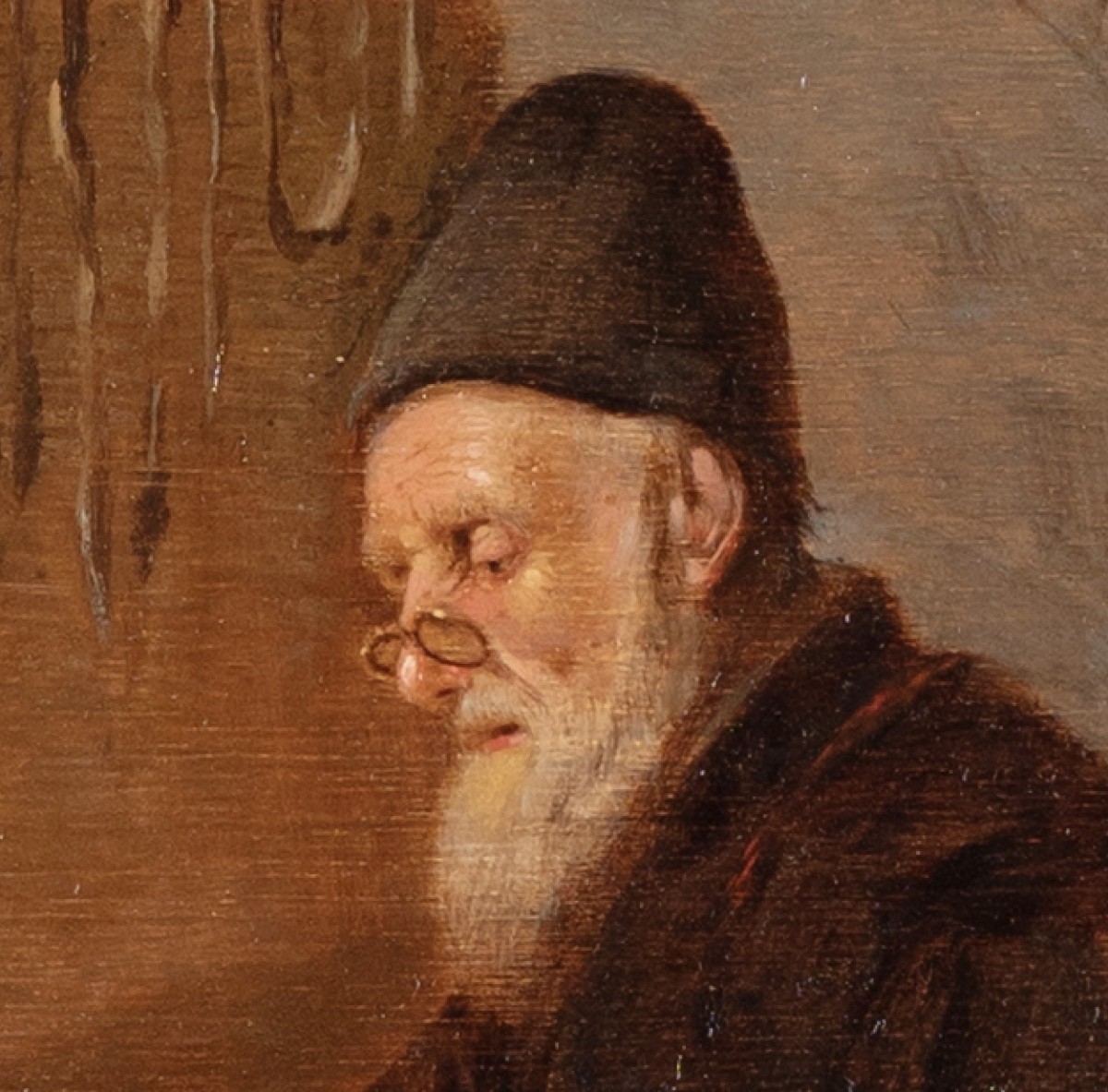
We see an older man, perhaps the owner of the workshop, sewing fabrics together. He sits on a large work surface, where two younger helpers also sit, hard at work. The workshop is filled with fabrics, threads and scissors. Light enters through the windows on the left and falls on the worktable and the figures, so that they can see well what they are working on. In a niche in the wall we see books and a candle. On the wall hang a small birdcage and a map.
The same basic composition recurs often in Brekelenkam’s workshops: the tailor sits on a table by the window, with two helpers, each time with a different interior and different details. In The Tailor’s Workshop in the Rijksmuseum (1661-1662), a tailor and his two young apprentices likewise sit on a raised table by the window, to make the best use of the daylight. There a river landscape hangs on the wall, along with a pincushion and a small birdcage. That paintings hung on the walls shows that not only the rich had them in their homes. Tailors, weavers and spinners were trades that flourished thanks to Leiden’s textile industry.
Brekelenkam painted for a less affluent public than Dou, in the hope that his domestic subjects would appeal to Leiden’s emerging middle class.
Oil on panel
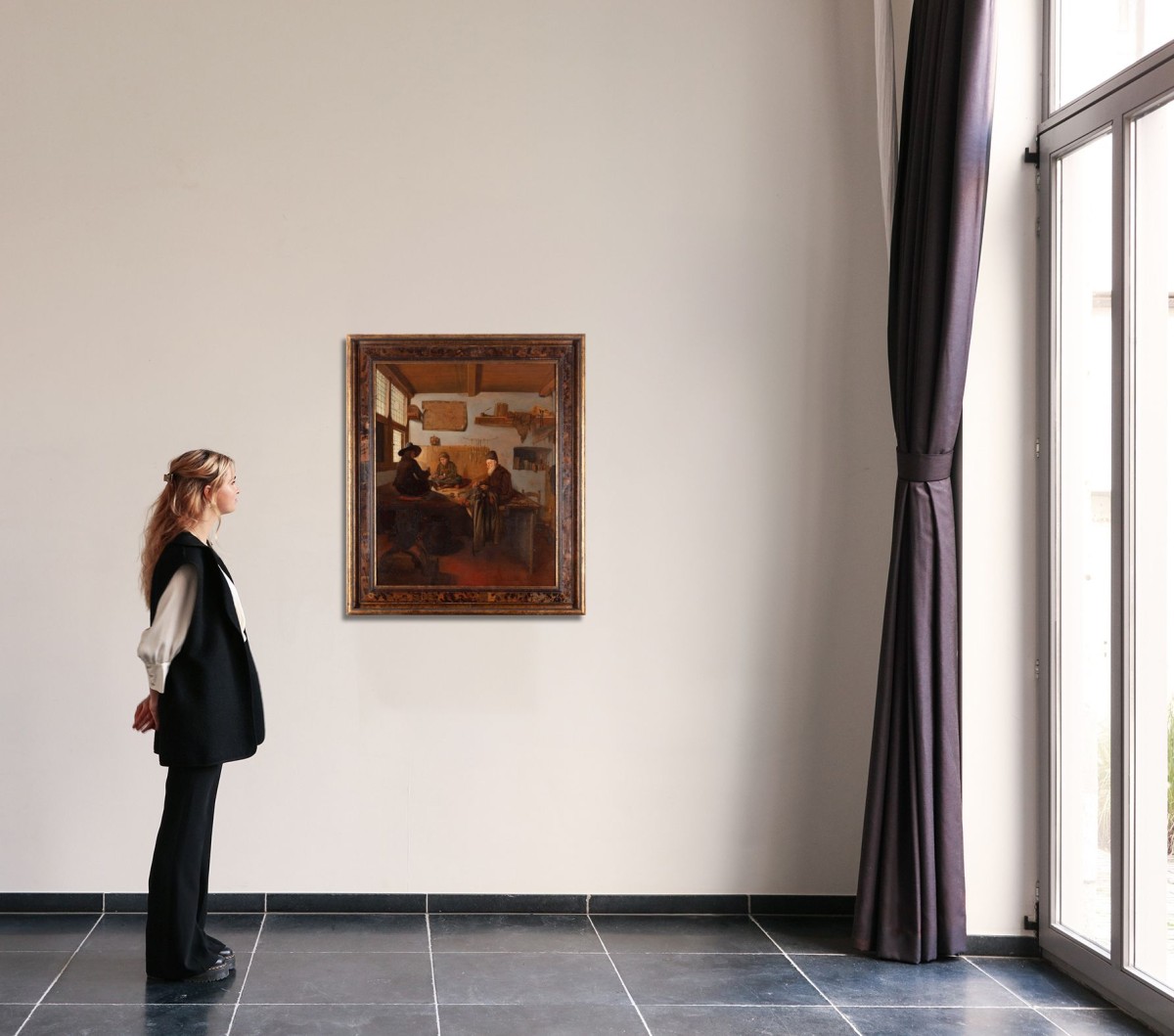
Dimensions: 72 x 58 cm, 90 x 76 cm (framed)
Delevery information :
After reception of payment we can box and ship our items all over the world. Estimates of this service can be provided.