Offered by Jan Muller
REQUEST INFORMATION

Philips de Marlier (Antwerp, c. 1600 – 1667/68) was a Southern Netherlandish painter and copyist. He made mainly flower still lifes and flower garlands surrounding mythological and biblical figures. Around 1617 he became a pupil of the Antwerp painter Carel van Ferrara. In 1621/22 he became a member of the Antwerp Guild of Saint Luke.
He worked for several years in Portugal. According to tradition he stabbed a Dominican friar to death there, whereupon he fled the country and eventually returned to Antwerp. There he set up a workshop where he trained various pupils, among them Carstian Luyckx.
Only a few signed works by him exist, and on the basis of those several others have been attributed to him. His flower still lifes often contain insects. For garland still lifes he worked with figure painters such as Frans Francken II, who painted the figures while De Marlier painted the garland.
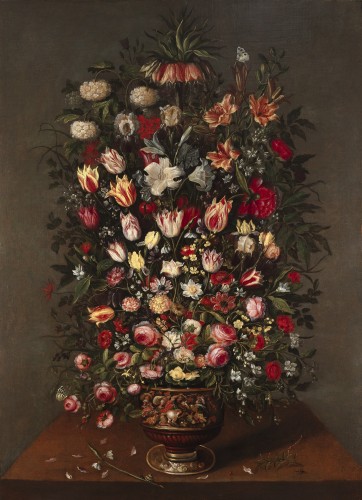
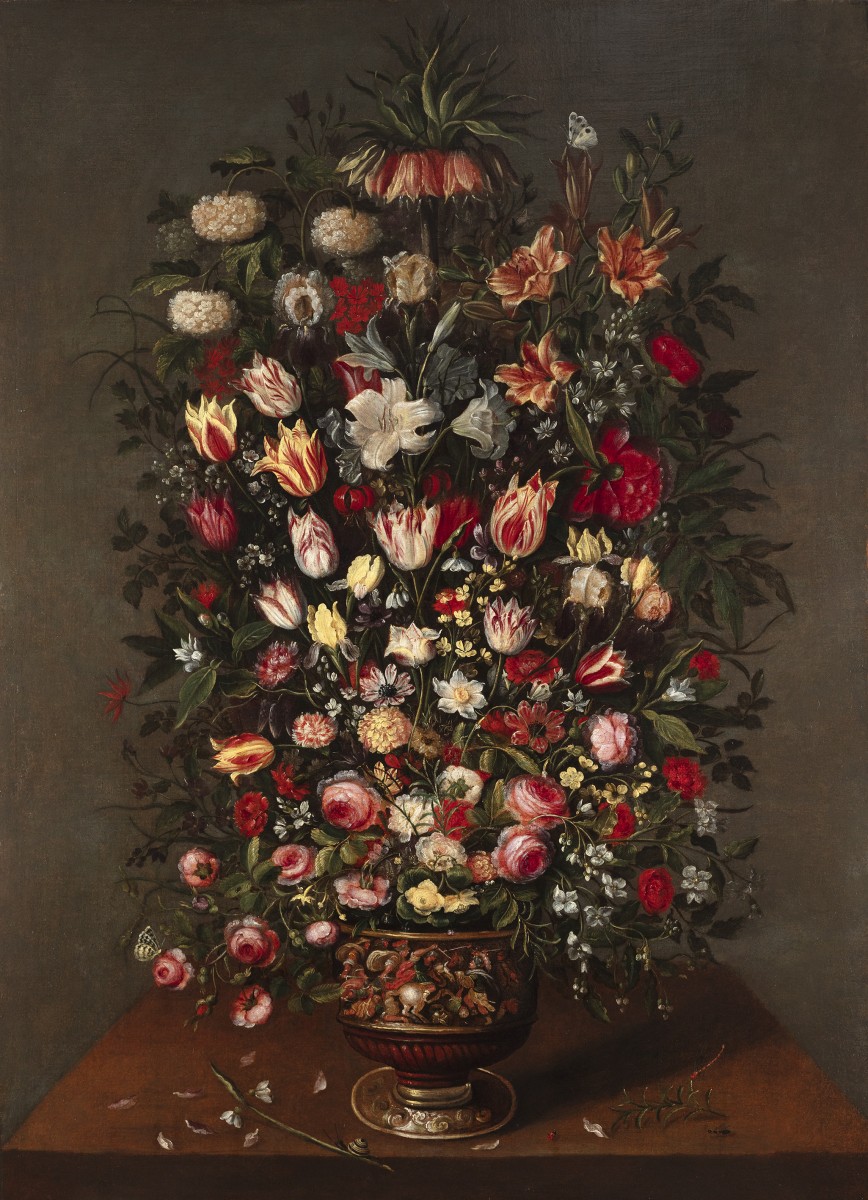
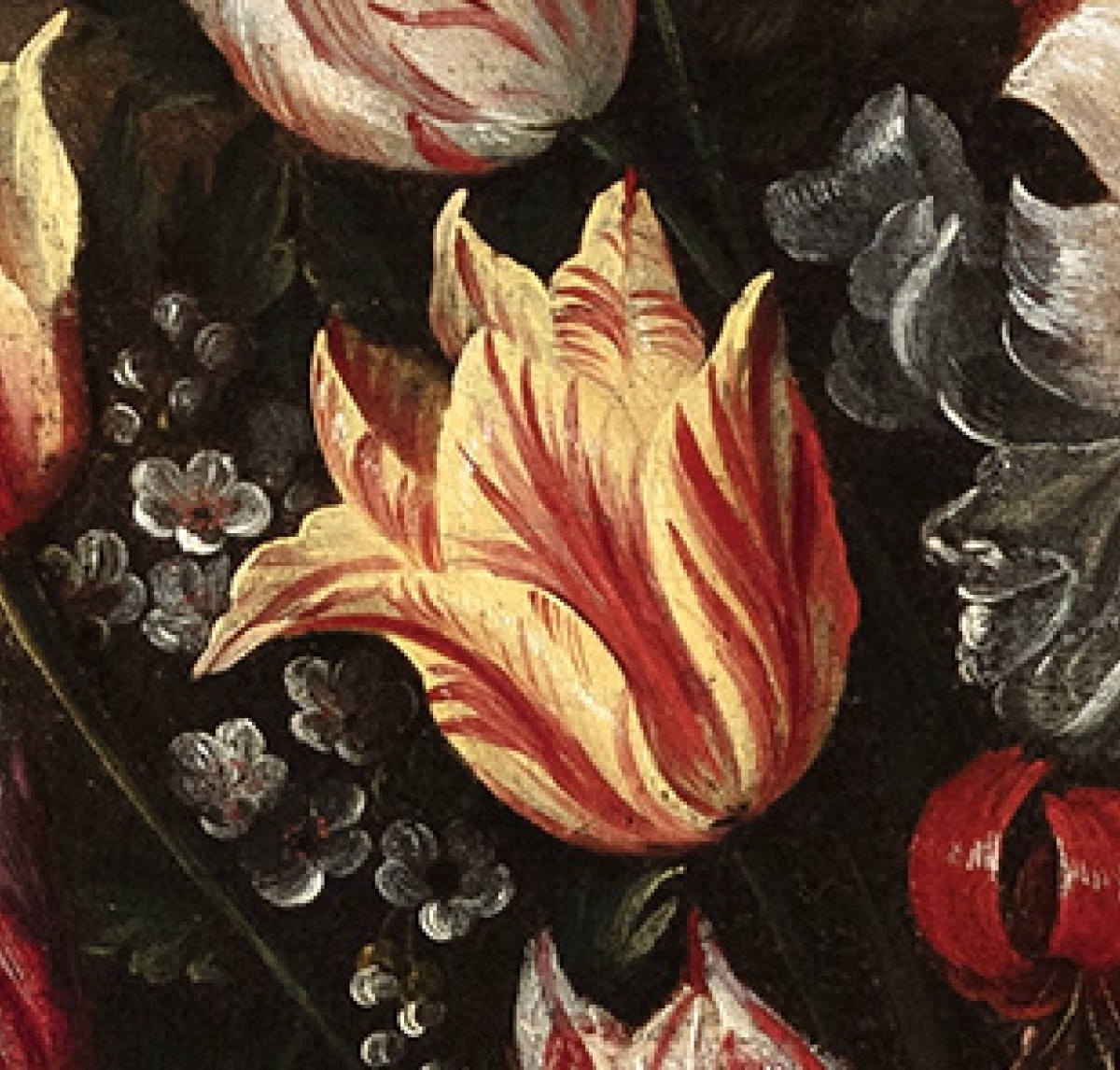
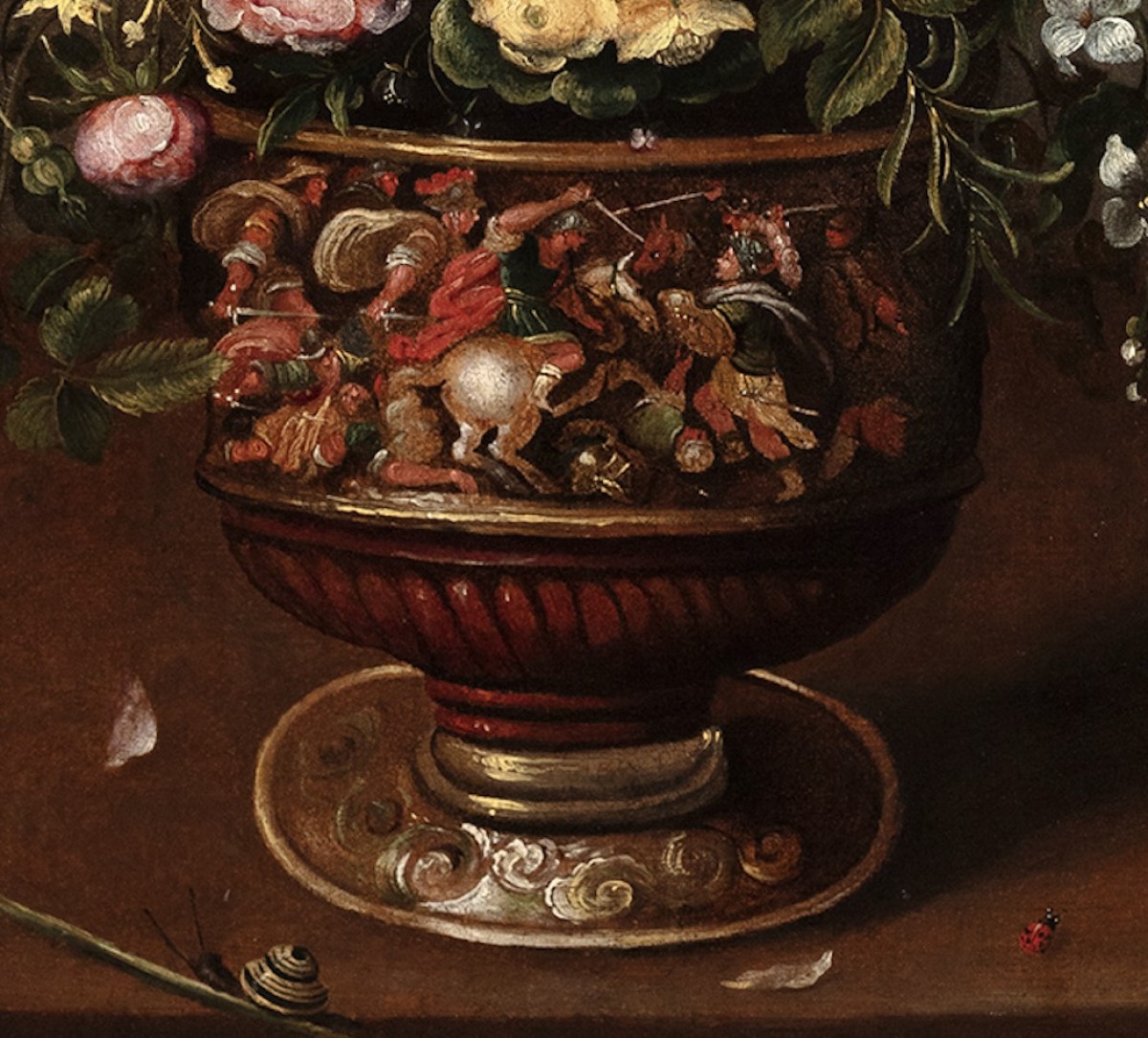
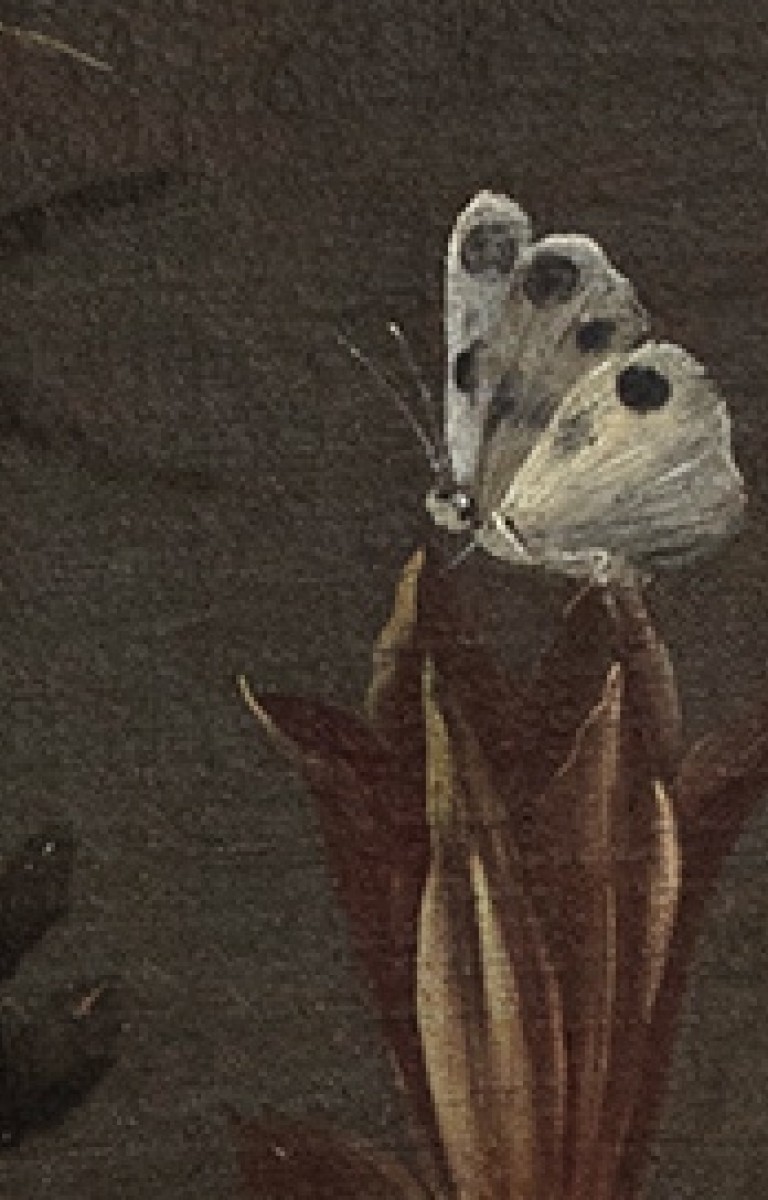
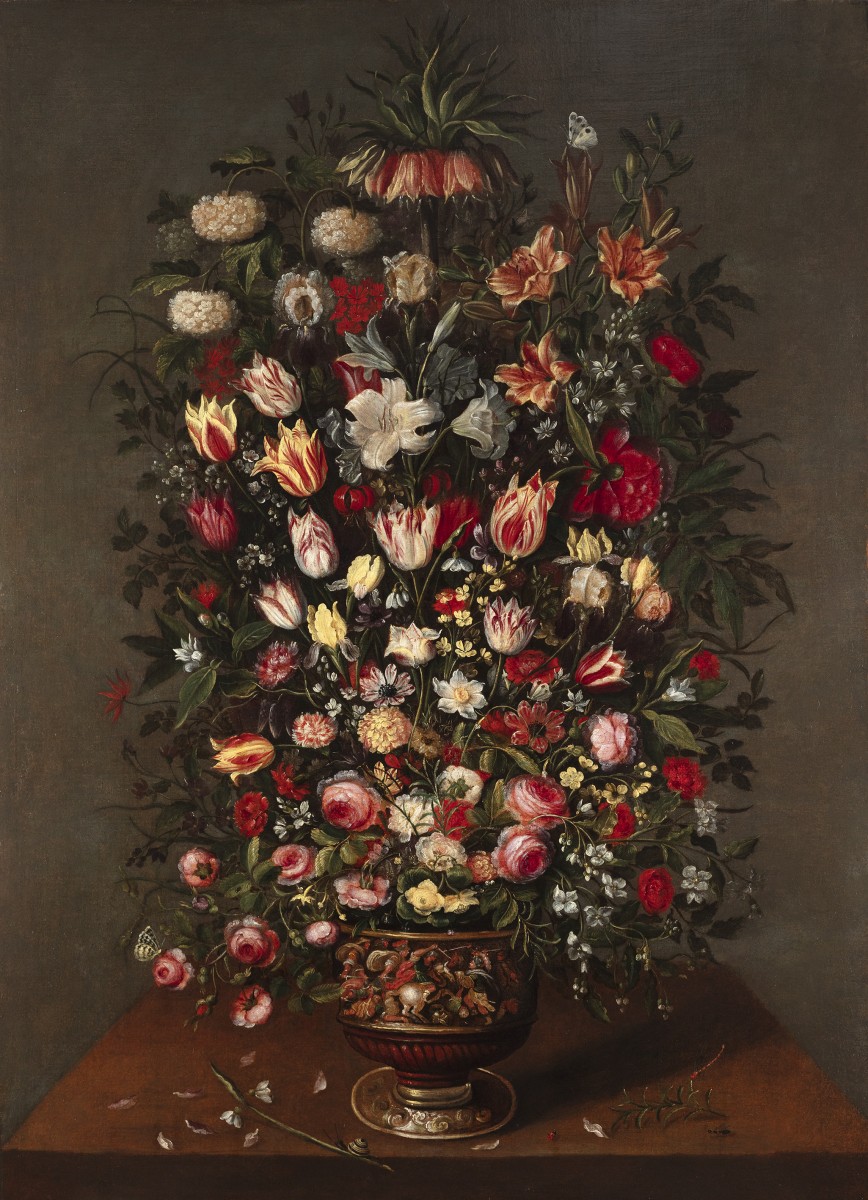
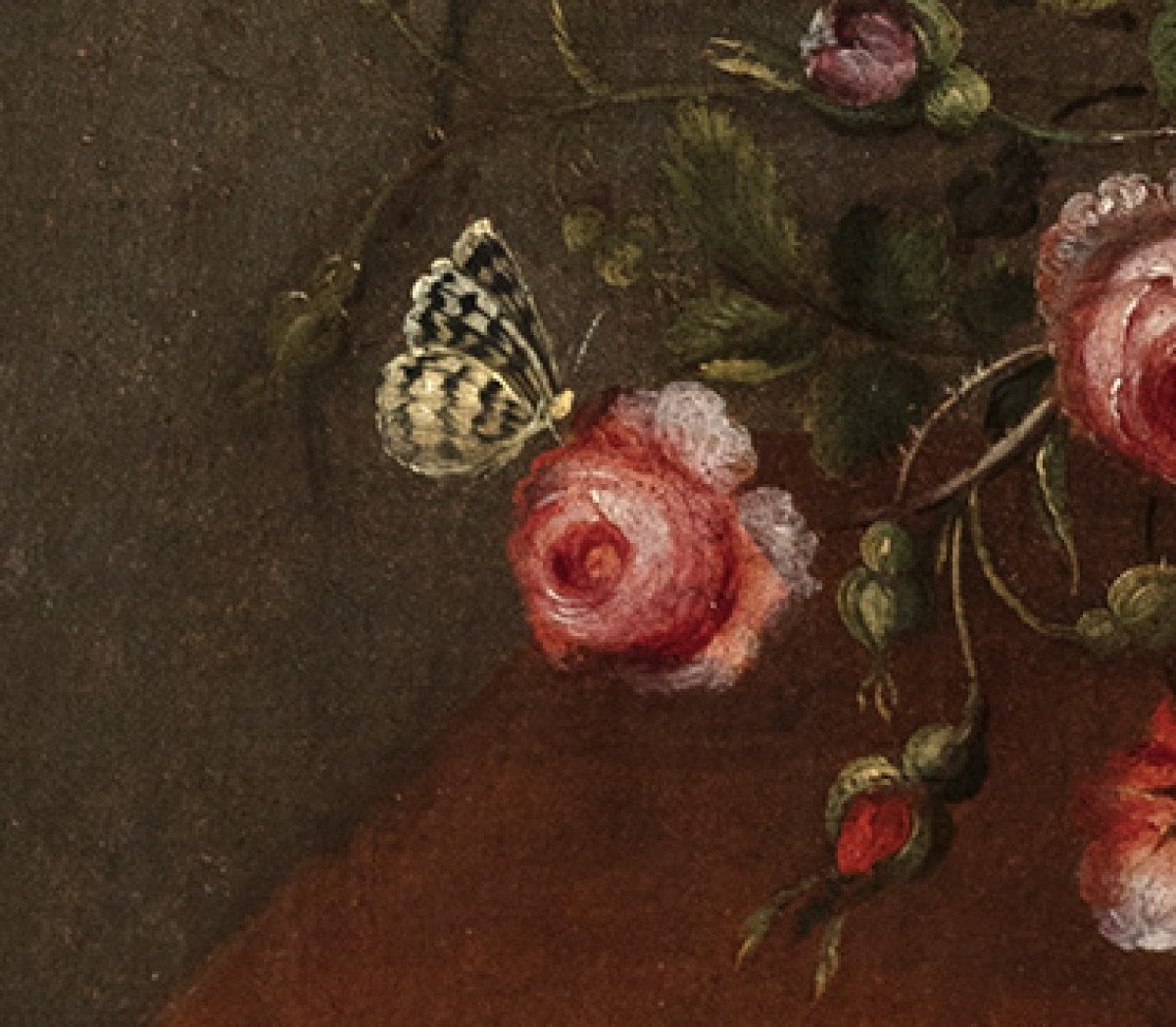
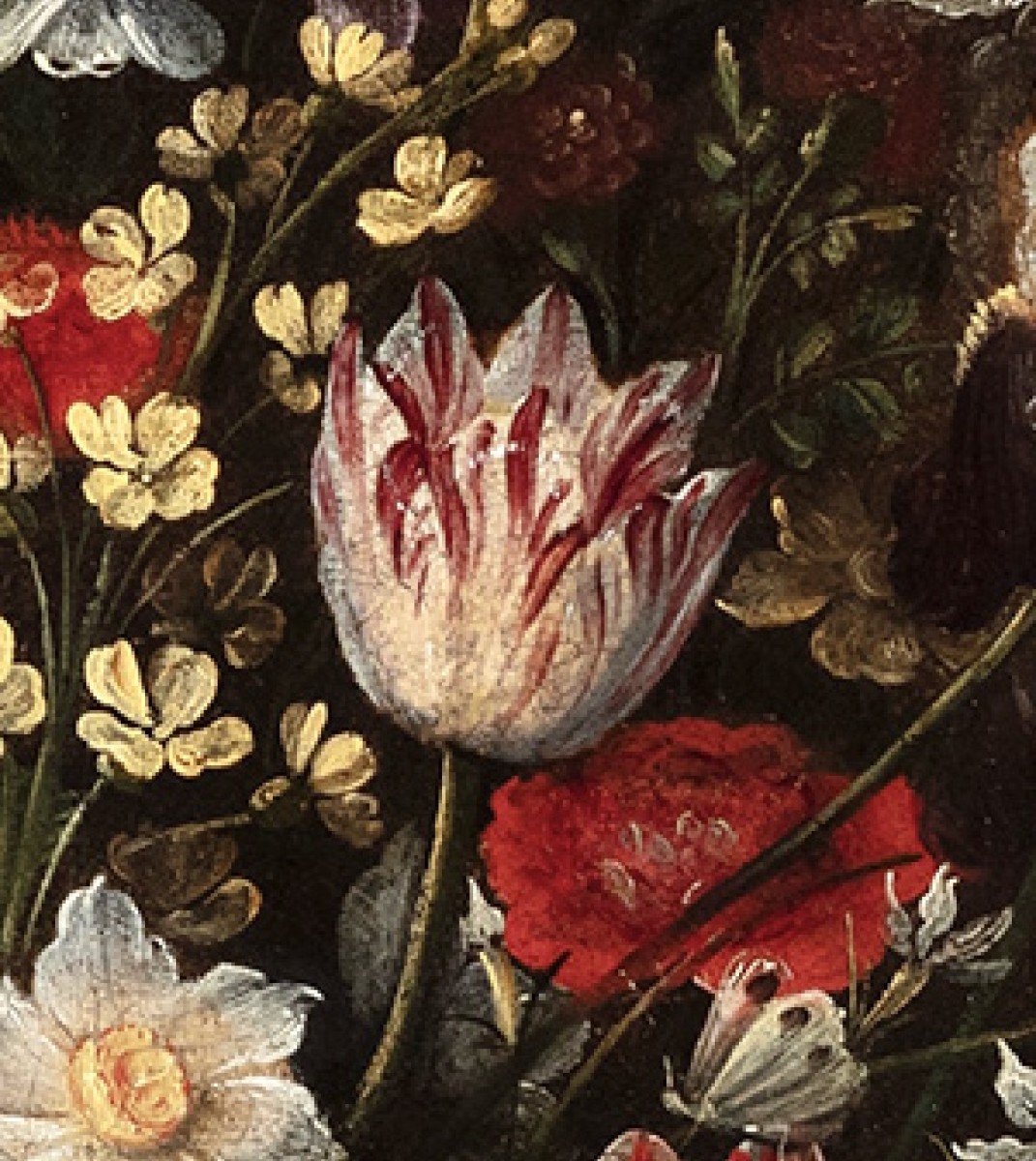
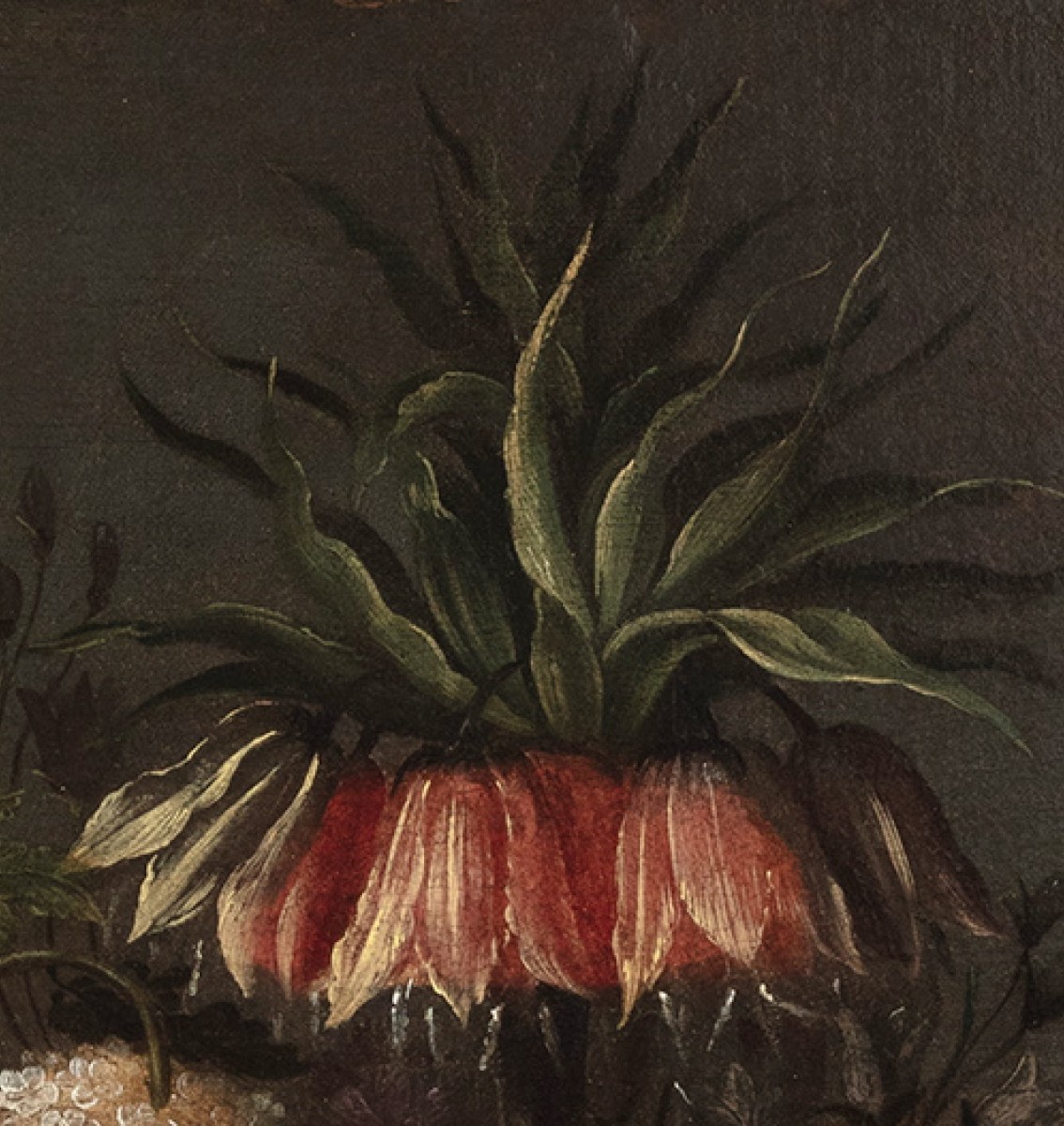
We see a very large bouquet that piles up in an unnatural way. It shows an immense variety of colours, kinds of flowers and positions. At the top stands a crown imperial, below it flamed tulips, lilies, roses, peonies, snowball viburnums and irises. On the richly decorated vase we see a battle scene: horsemen and foot soldiers attack one another. We also see small insects among the flowers and on the tabletop, such as a small ladybird and a snail. A white butterfly sits on a lily at the upper right, and fallen petals and a stem lie on the tabletop.
The bouquet gives an encyclopaedic panorama of flower species, in which art and scientific interest come together, in the tradition of Jan Brueghel the Elder. In that tradition, each flower is placed so that it is shown to its best advantage. The traditional reading of such flower pieces was that they were vanitas symbols or allegories of transience with hidden meanings. Today they are more often seen as simple depictions of the natural world. The painter above all wished to display his skill in a realistic, almost scientific rendering of nature.
The rise of the flower still life must be seen in light of the development of botanical science and a new fashion for collecting plants that spread rapidly in the highest circles of European society. The bouquets combined flowers from different countries and continents that in reality never bloomed at the same time. For princely collectors and wealthy merchants, a flower piece formed part of a private world that included rare garden plants, which sometimes cost more than the paintings of them.
In 2008 the work was still offered at Bonhams as workshop of Jan Brueghel II. The present attribution to Philips de Marlier and the dating to around 1637 we owe to Dr. Fred Meijer.
Oil on canvas
Painted circa 1637.
We’d like to thank dr. Fred Meijer for his attribution and dating of the painting.
Dimensions: 150 x 109 cm, 169 x 127 cm (framed)
Delevery information :
After reception of payment we can box and ship our items all over the world. Estimates of this service can be provided.