Offered by Jan Muller
REQUEST INFORMATION
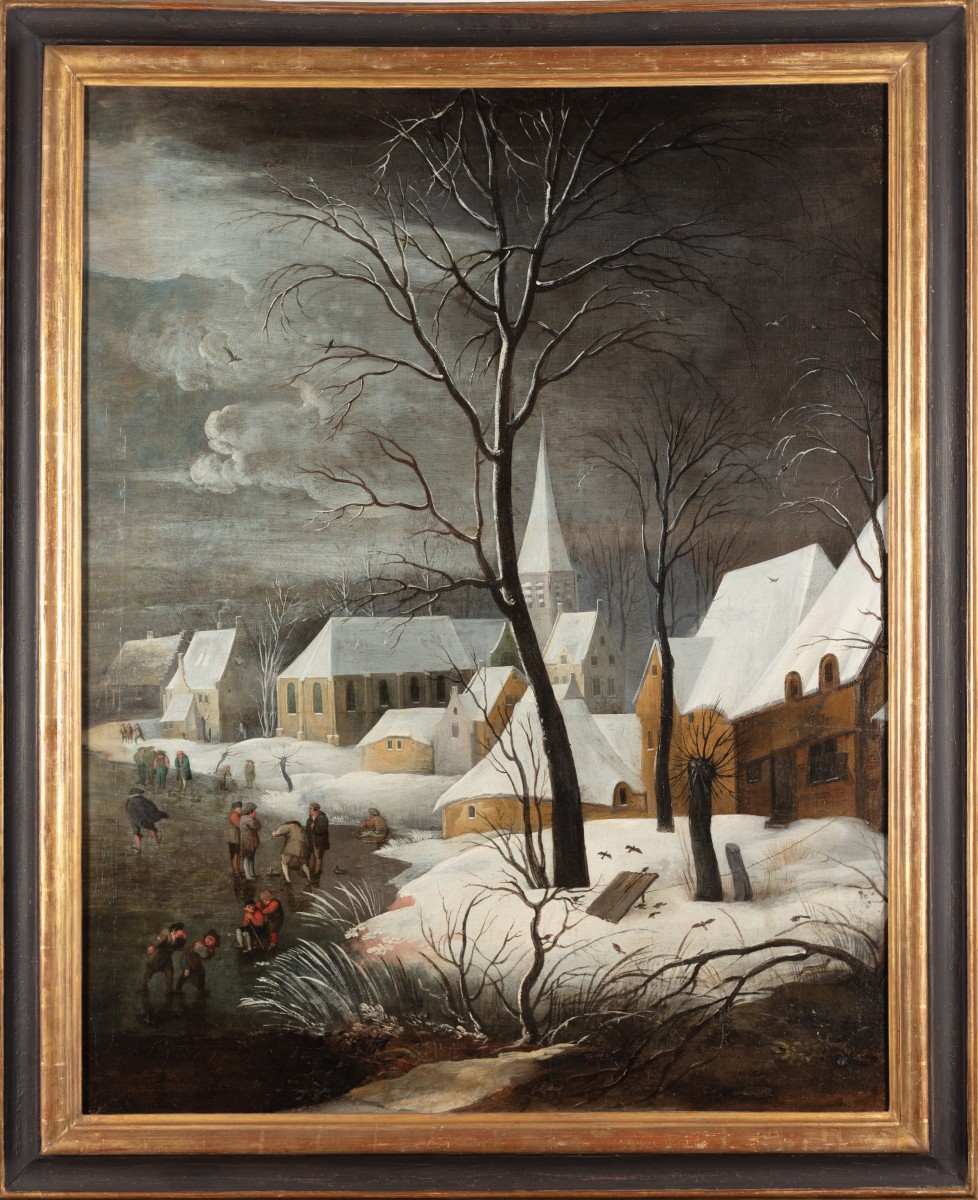

This work is attributed to the Flemish School, seventeenth century. In the art trade, that term refers to a work by an anonymous or not securely identified painter who worked in the Flemish tradition.
This work is indebted to the works of Pieter Bruegel the Elder.
Pieter Bruegel the Elder (c. 1525-1530 – 1569) is among the most significant artists of Dutch and Flemish Renaissance painting. His work was hugely popular and was always keenly collected. His son Pieter Brueghel the Younger was able to keep himself and a large workshop busy for sixty years or more after the original paintings, producing copies and adaptations of his father’s work. The most frequently copied was the Winter Landscape with Skaters and a Bird Trap, whose original is in Brussels and of which 127 copies are known. The artists of the following century were strongly influenced by Bruegel.
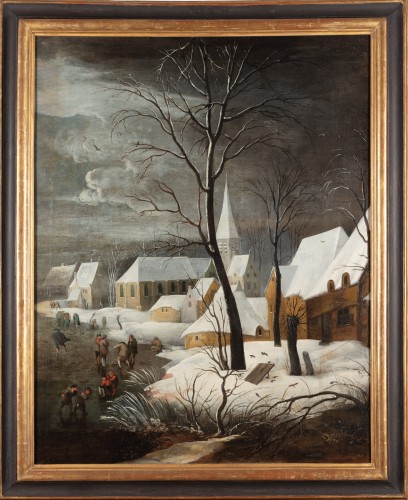
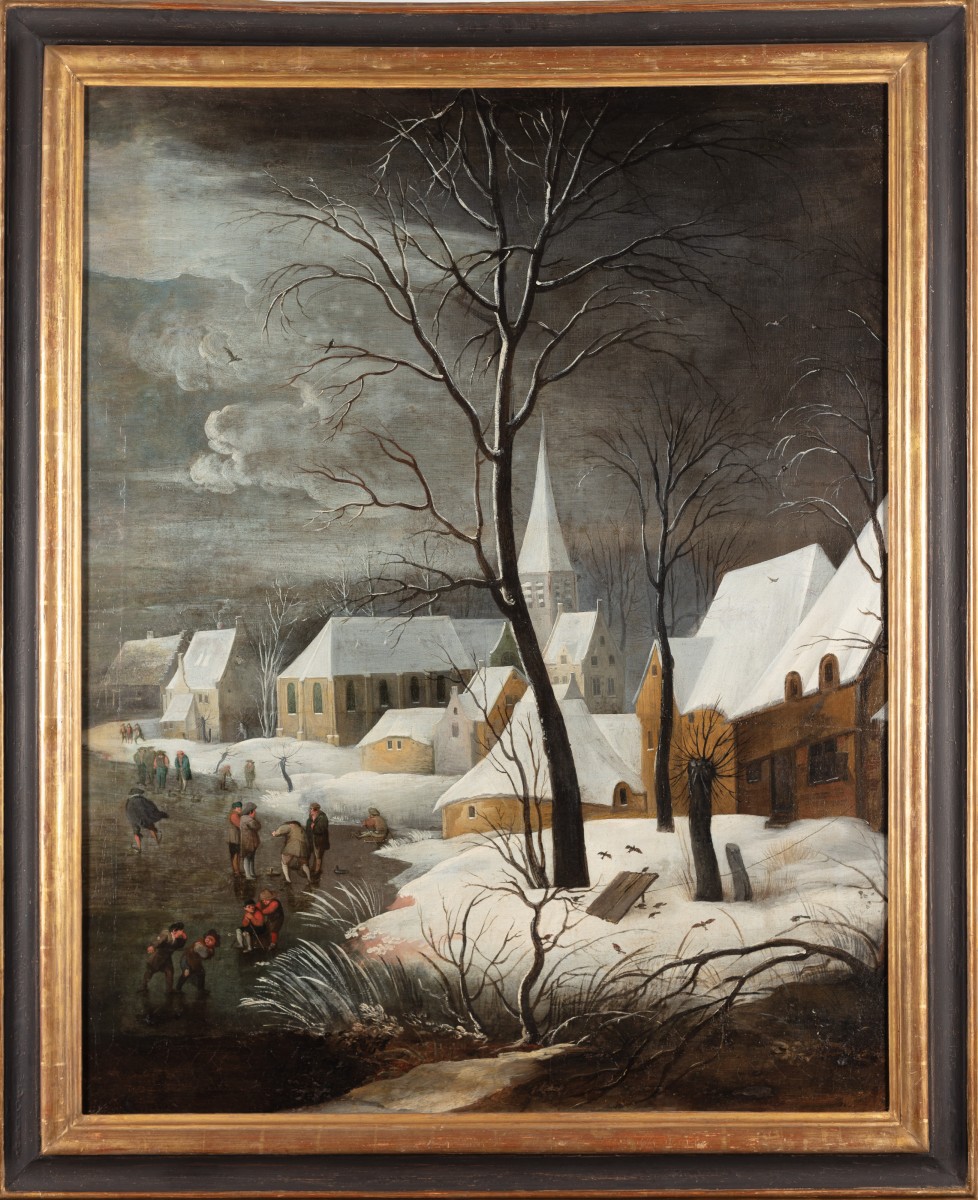
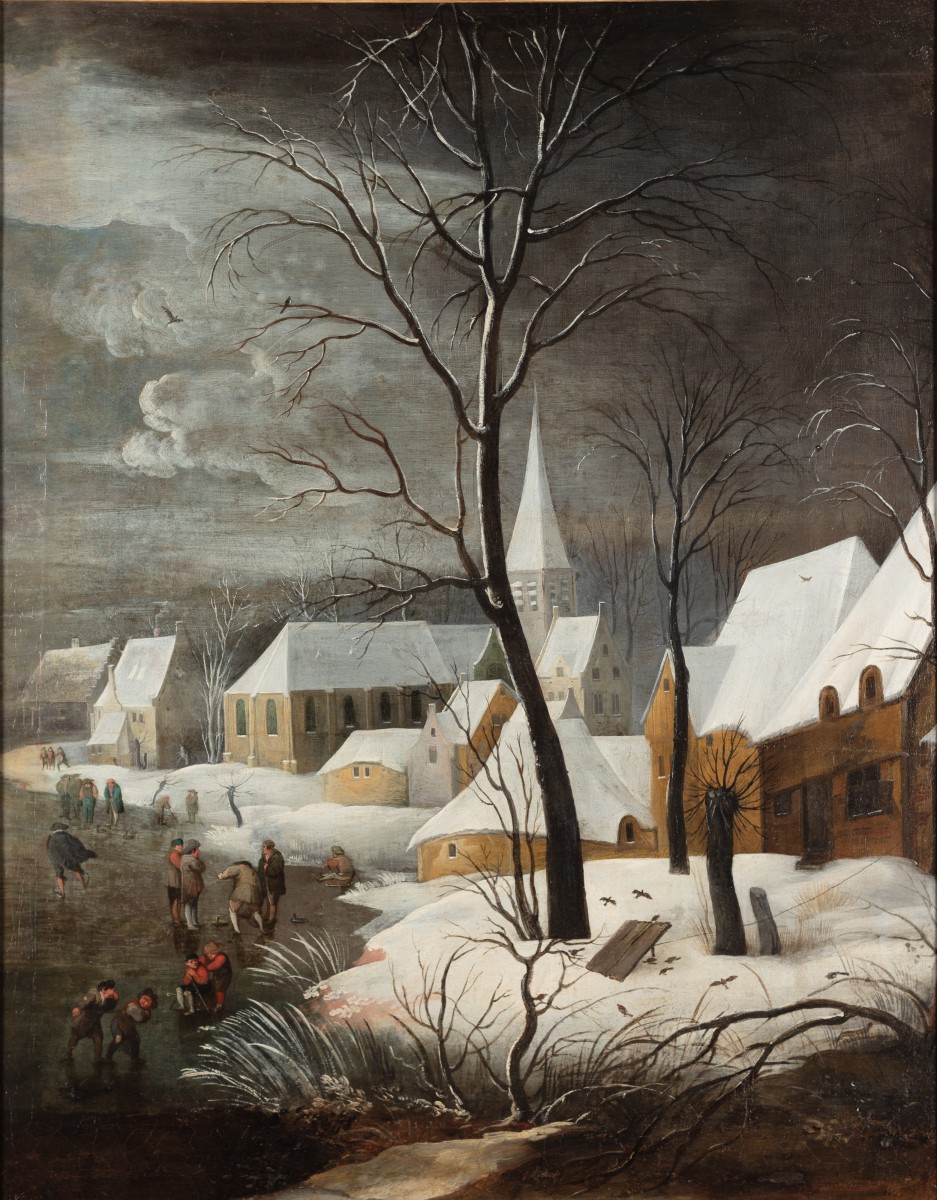
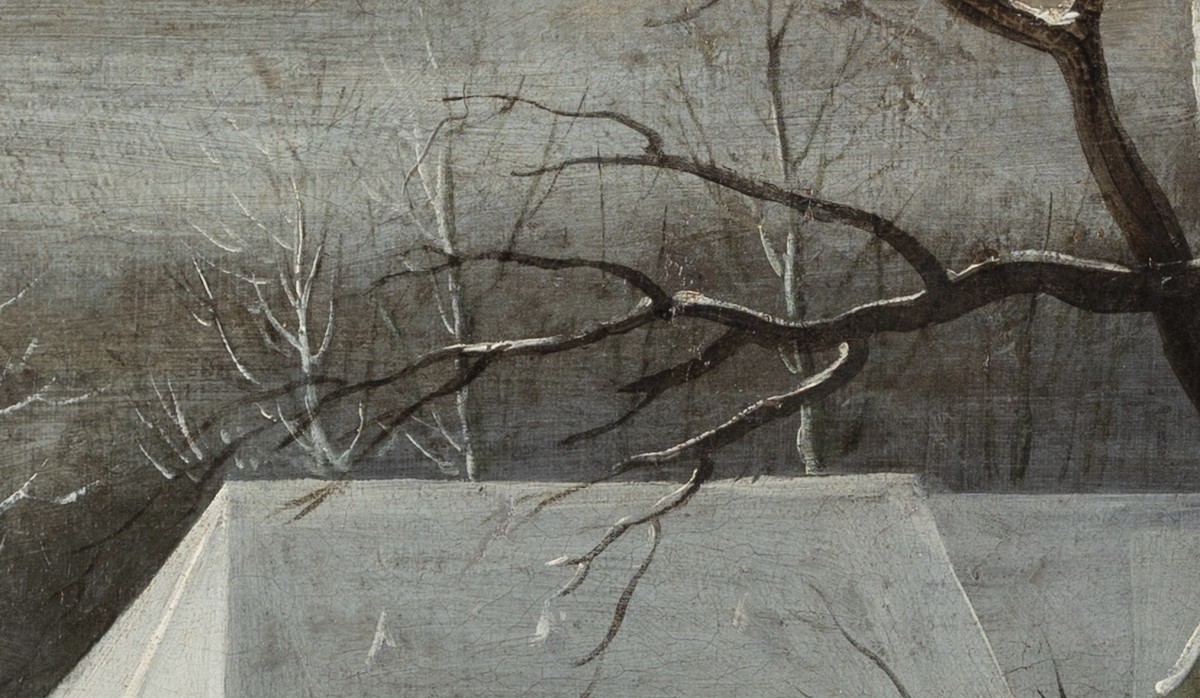
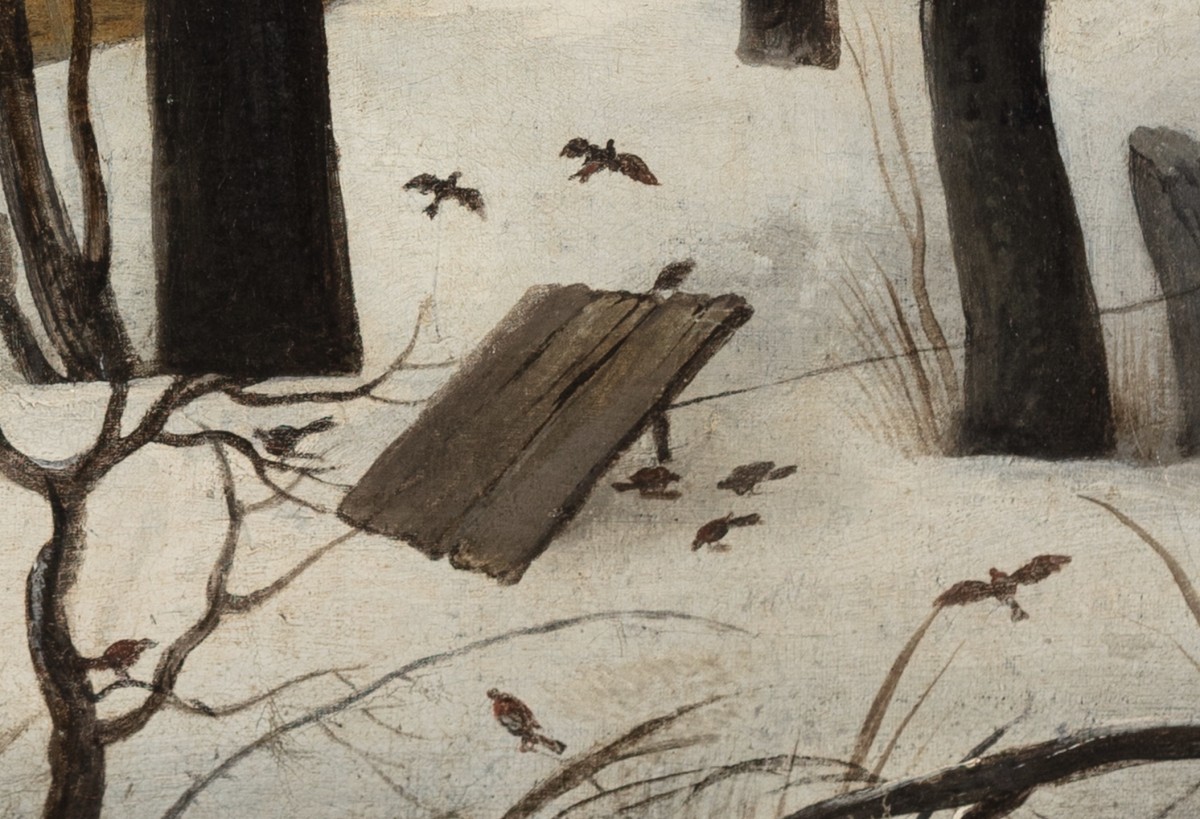
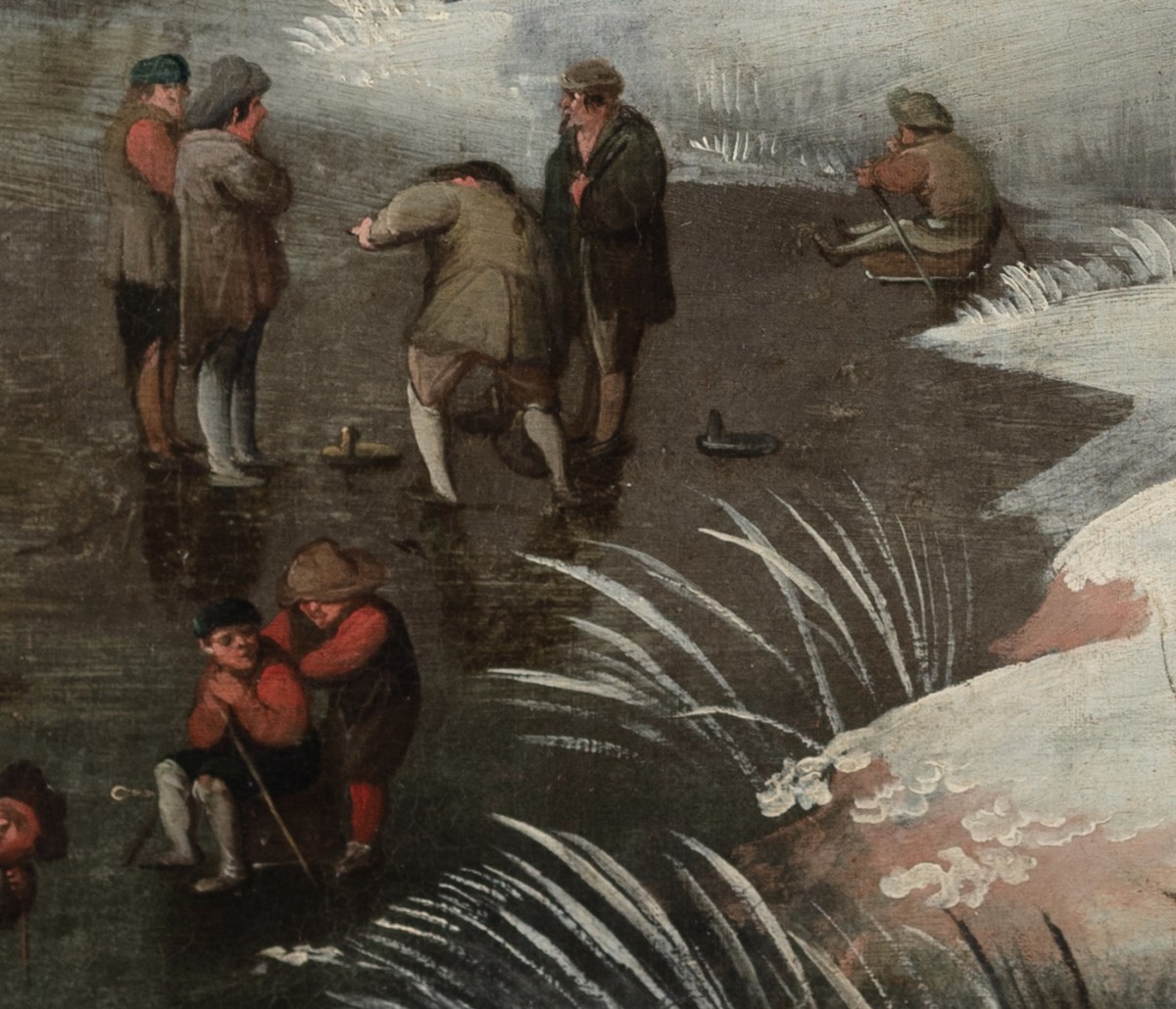
In a snow-covered village landscape, a tall, bare tree stands in the middle of the picture. Behind the tree a church spire rises above the houses with their snow-covered roofs. On the left, a few skaters glide across the frozen river. In the foreground a plank propped at an angle serves as a bird trap, with a small group of birds on the snow around it. The sky is dark and threatening, with a lighter opening on the left, so that the warm brown of the houses and the white of the snow stand out all the more.
The theme goes back to the Winter Landscape with a Bird Trap, a panel painting by Pieter Bruegel the Elder from 1565. It shows a village scene in which people skate on a frozen river, while on the right, among trees and bushes, birds gather around a bird trap. The original, signed and dated, is in the Royal Museums of Fine Arts of Belgium in Brussels. No other painting by Bruegel has so many early copies: the art historian Klaus Ertz documented no fewer than 127 of them in 2000 in his monograph on Bruegel’s son, all from the seventeenth century. He attributed 45 of them to Pieter Brueghel the Younger. This painting is a free variation on that famous model, in vertical format.
The depiction of winter landscapes in Western art begins in the 15th century, as does landscape painting in general. Winter and snow landscapes were rare in earlier European painting, because most subjects were religious. In the 15th century, the calendar pages of the most lavishly decorated books of hours began to include miniatures of the Labours of the Months. By the last quarter of that century, manuscripts of the Ghent–Bruges school often included a full set, with two or three winter scenes for the coldest months. As a genre in painting, however, the snowy landscape only begins in the 1560s, with five paintings by Bruegel, two of which were copied countless times in the following decades. The winter of 1564-1565 was said to be the longest and most severe in more than a hundred years, the beginning of the cold period in northern Europe that we now call the Little Ice Age.
The birds and the bird trap have attracted much attention from art historians. The motif is unusual. Many art historians have sought a moral or allegorical meaning in it, but no single explanation has been widely accepted. Skating, for instance, is sometimes seen as an image of the slippery and precarious nature of human destiny. It was also innovative for its time that the whole landscape and scene form the subject, rather than a single protagonist.
Oil on canvas
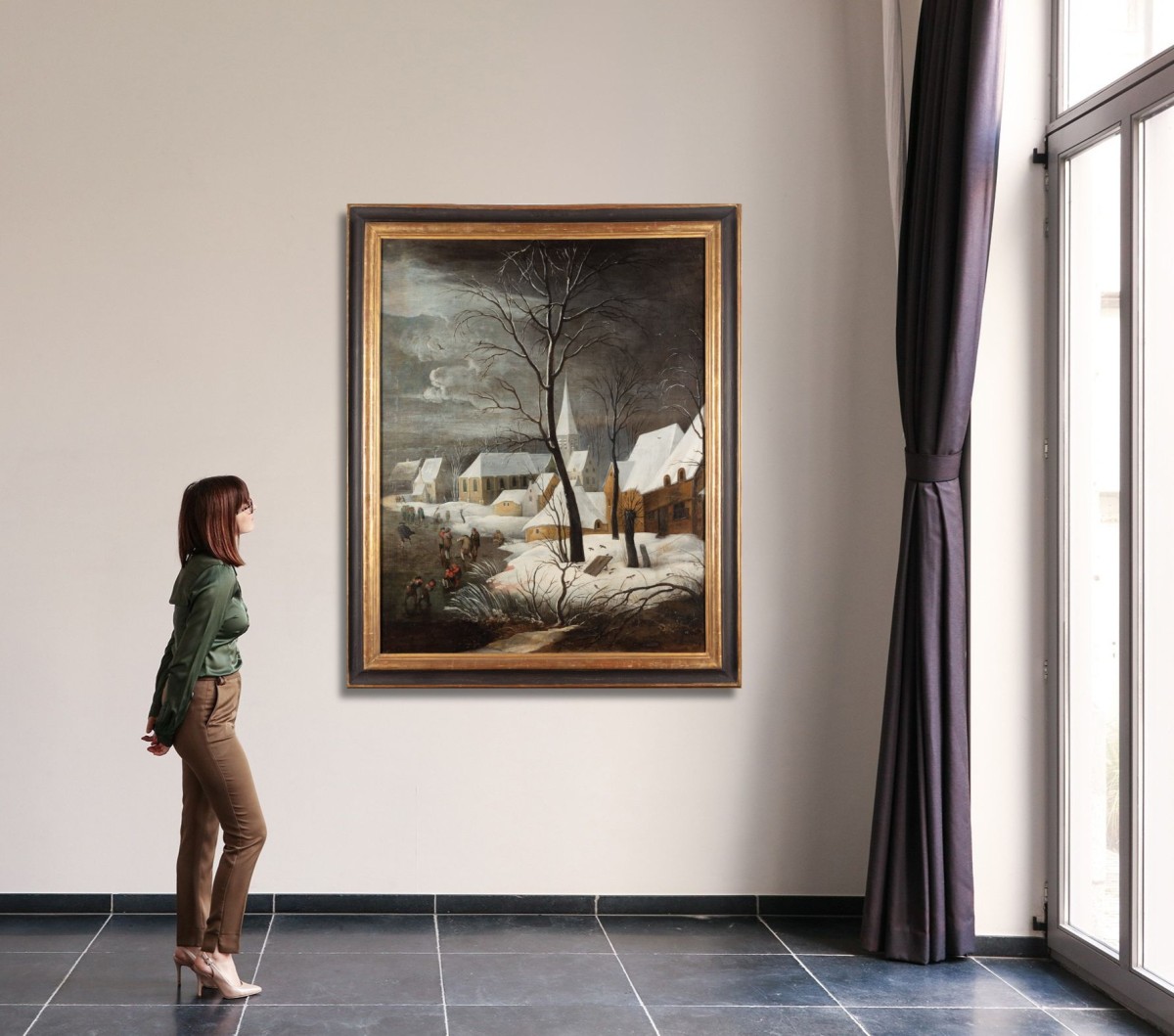
Dimensions: 113 x 106 cm, 153 x 127 cm (framed)
Delevery information :
After reception of payment we can box and ship our items all over the world. Estimates of this service can be provided.