Offered by Jan Muller

Lucas van Uden (Antwerp, 1595 – 1672) was a Flemish landscape painter, draughtsman and engraver. He lived and worked in Antwerp. He was the son of Artus van Uden and Joanna Tranoy. His father was the city painter of Antwerp, a position in which he painted the city’s buildings and restored and gilded the city’s statues and the pieces used in the ommegang procession. Lucas probably studied with his father, since he was never registered as a pupil with the Guild of Saint Luke. Only in 1626-1627, when he was already 32, did he register as a master, in the capacity of “wijnmeester” (master’s son). He was very successful and could live comfortably in the centre of Antwerp. His pupils included Jan Baptist Bonnecroy, Philips Augustijn Immenraet and Gillis Neyts.
Van Uden was principally a landscape painter. His technique, with its attention to detail, especially in his small works, and his search for decorative elements in larger pieces, place him in the same tradition as Jan Brueghel the Elder and Joos de Momper. As with them, dark and cold colours contrast with warm colours. A characteristic of his work is a green tonality in a receding landscape in the distance, supported by slender, tall trees. The landscape is populated by shepherds and peasants. Although he was never part of Rubens’ workshop, his works are partly indebted to the great Antwerp master.
Van Uden collaborated with David Teniers II and Jan Brueghel II. They painted the figures in his landscapes. His drawings are said to have been made directly from nature. Etchings by his hand are found in, among others, the Rijksmuseum and the British Museum.
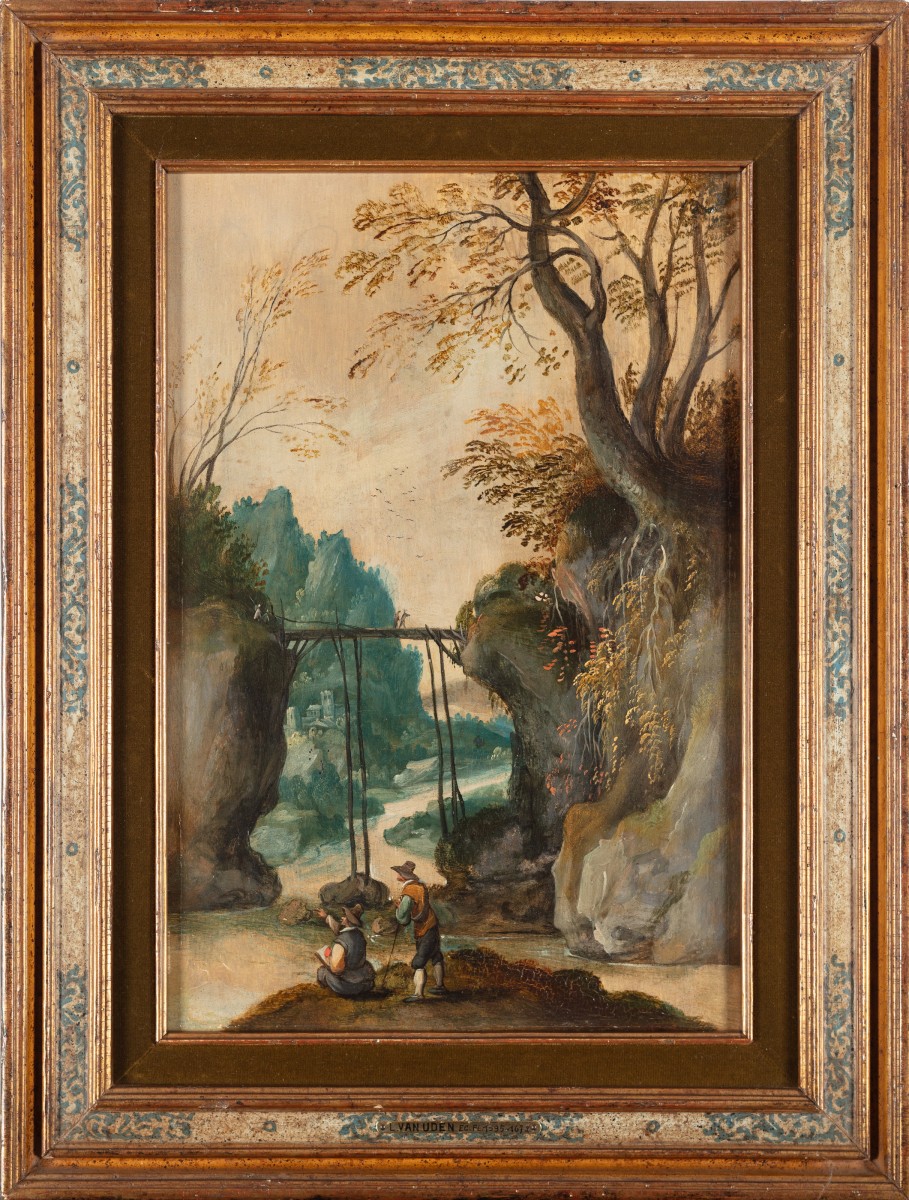
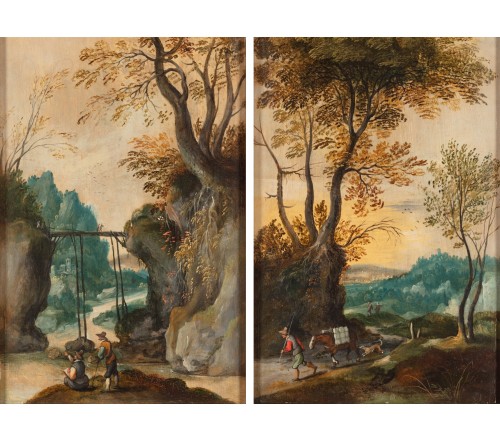
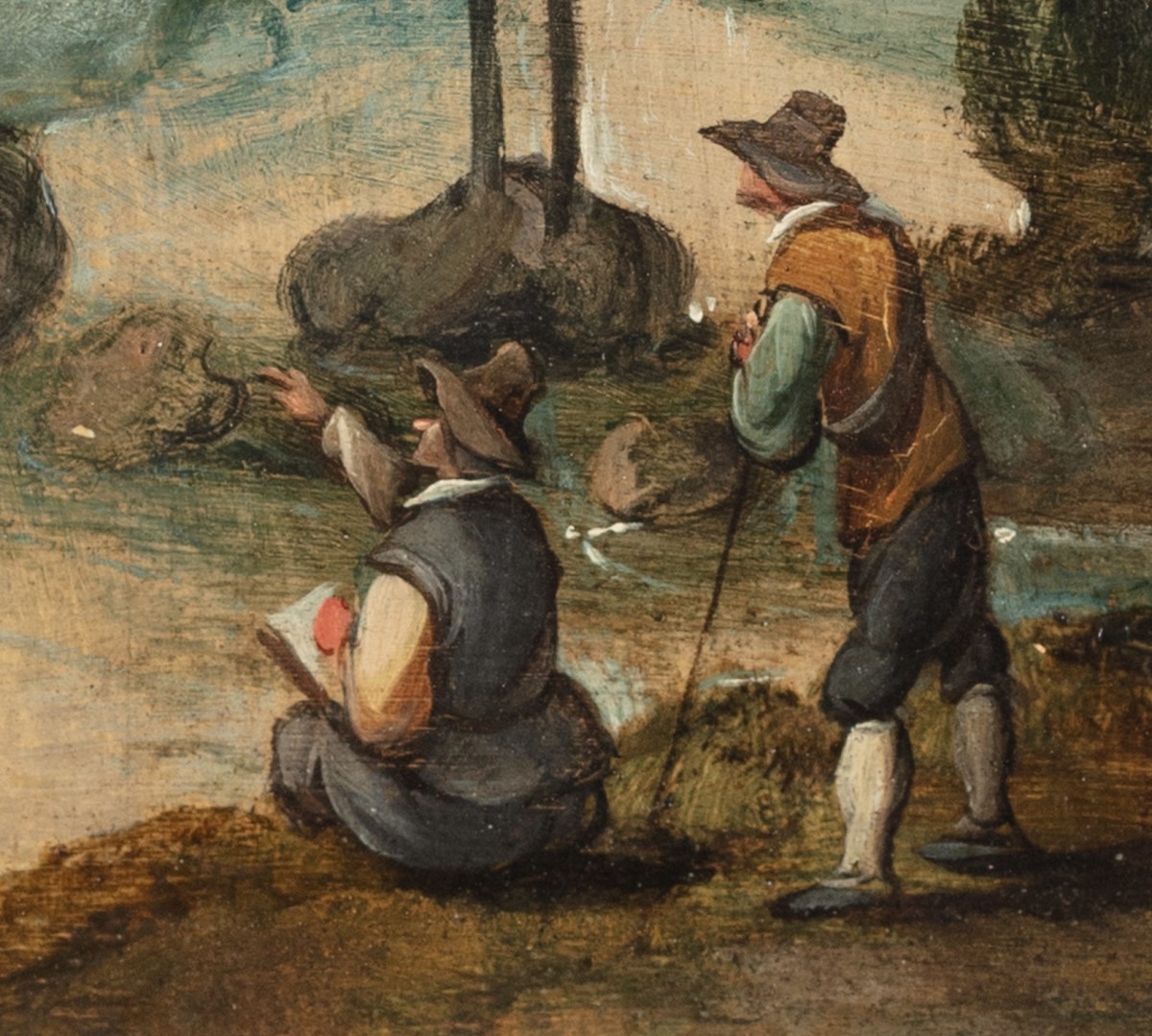
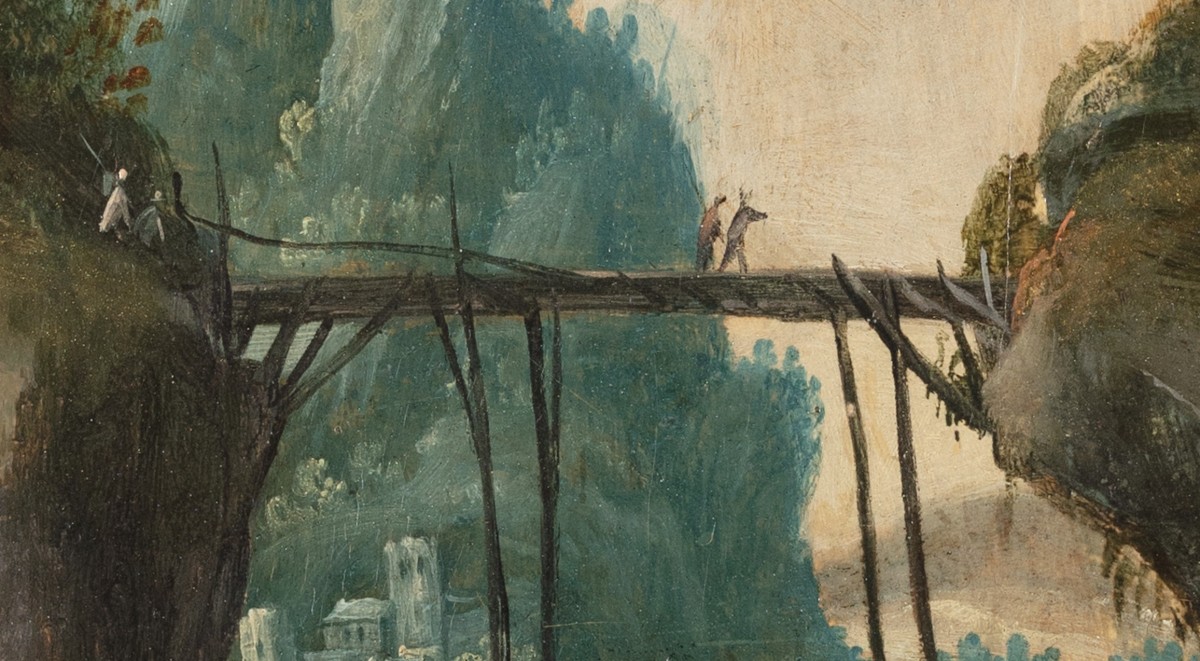
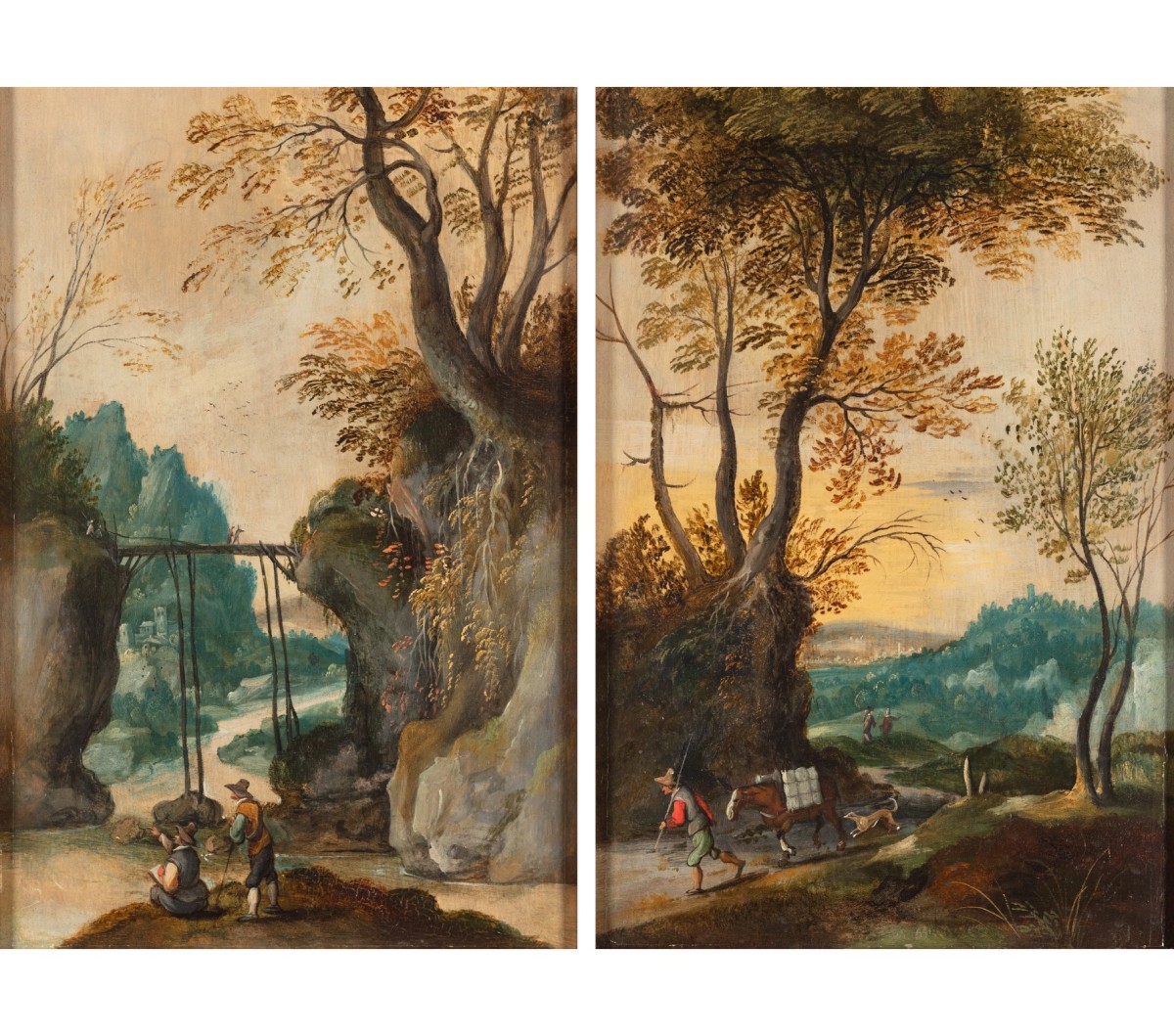
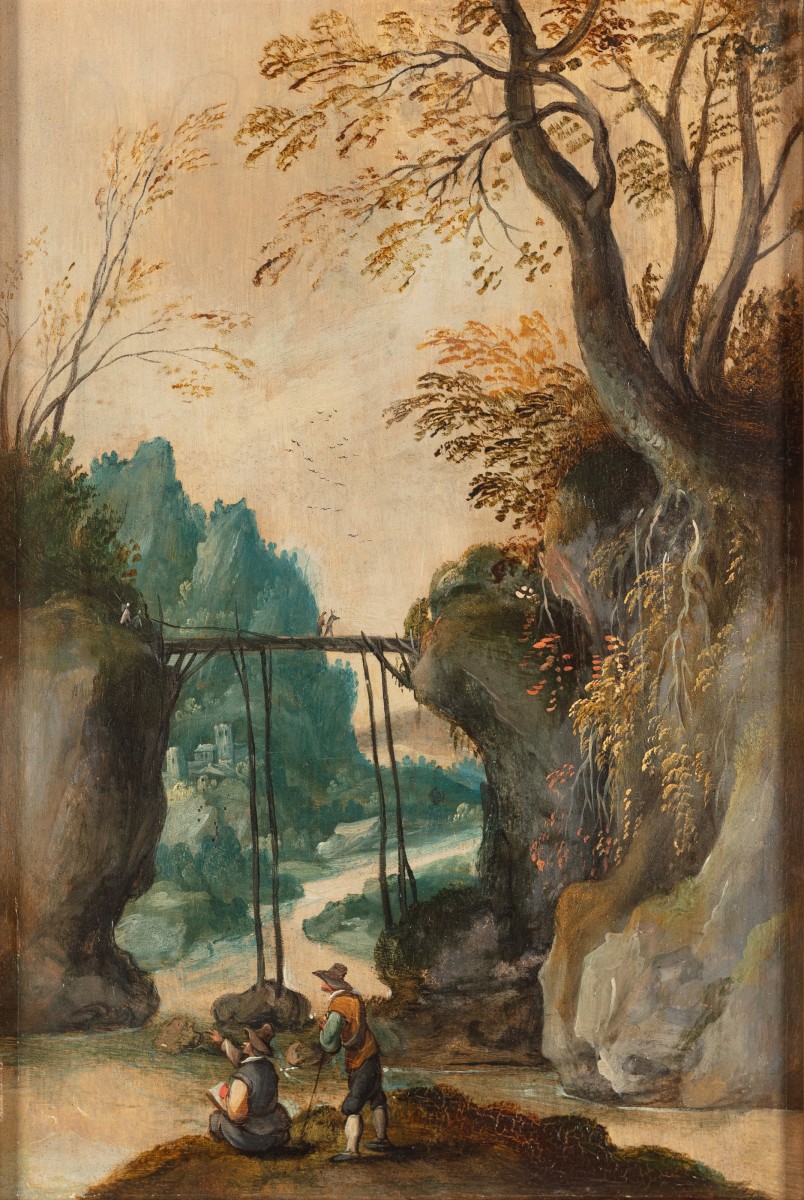
This pair shows two animated landscapes. In the first, two men in the foreground gaze into the distance. The man sitting on the ground seems to have a book or a white notebook in front of him and points at something. Perhaps he is drawing the landscape. In the middle ground a thin bridge spans two rocky ends, and a few travellers cross it. A river flows beneath the bridge. The viewer’s gaze is led beyond the bridge, to a green-blue landscape where a few buildings suggest a town.
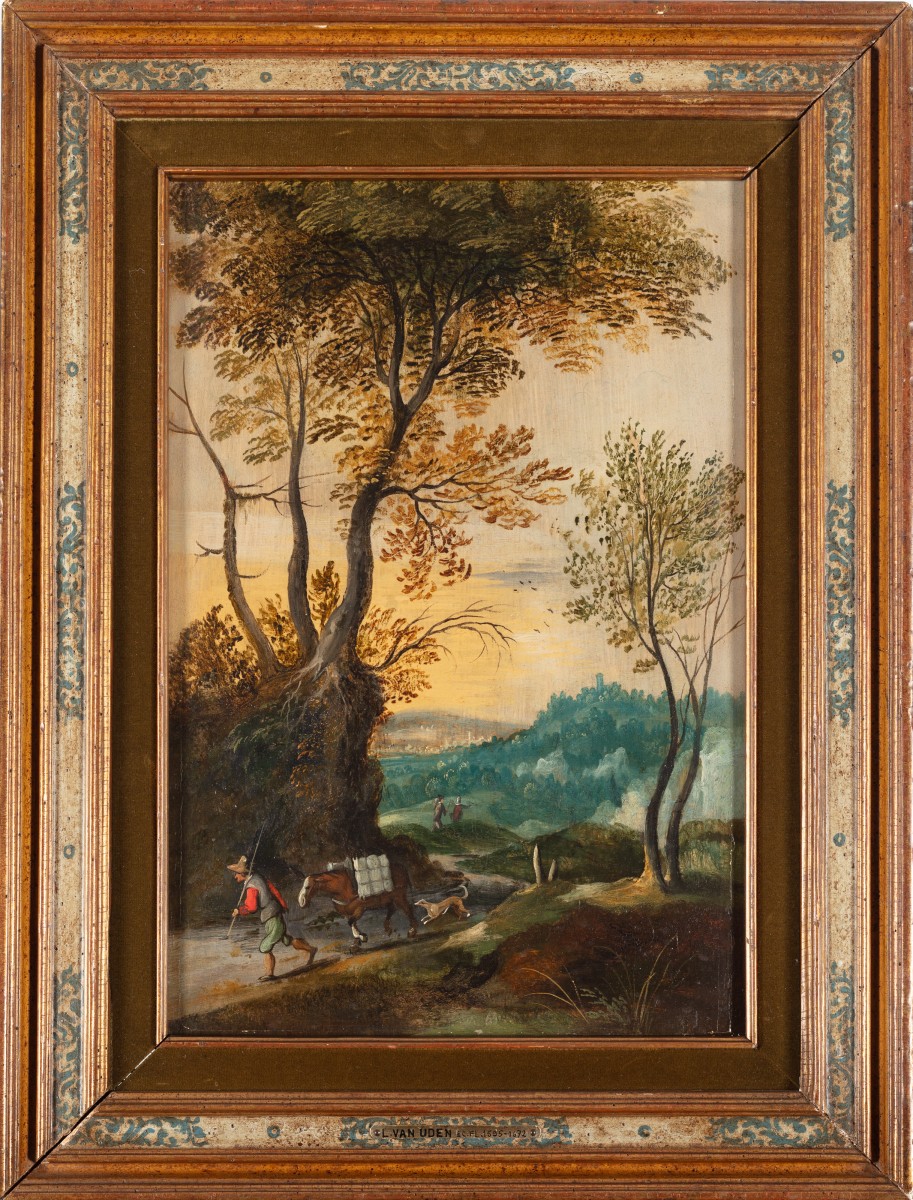
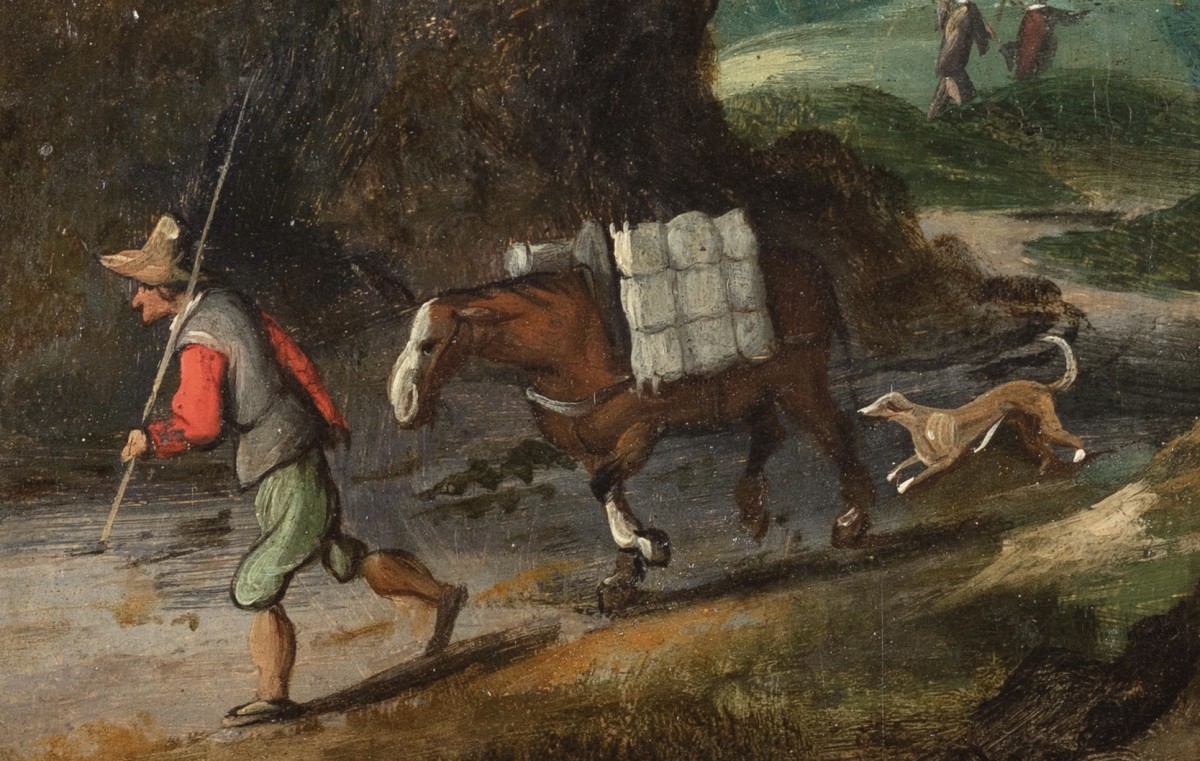
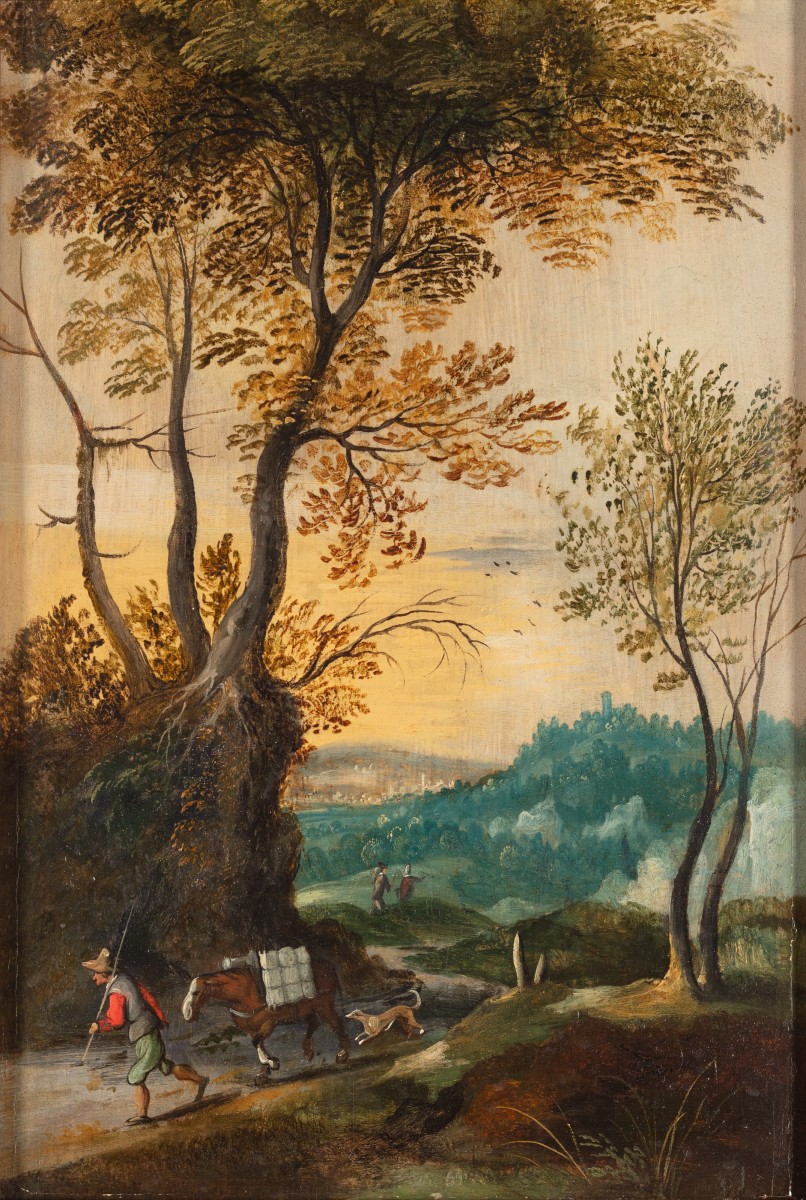
In the second scene, a man in the foreground travels along a path with his horse and dog. His horse is heavily loaded. Perhaps the man is a traveller, or perhaps he is on his way to market to sell his wares. The trees guide the eye, and a little further along the path we see two more figures. In the background we again see a green-blue landscape with the beginnings of a few buildings, an example of atmospheric perspective. The trees at the sides work as repoussoir.
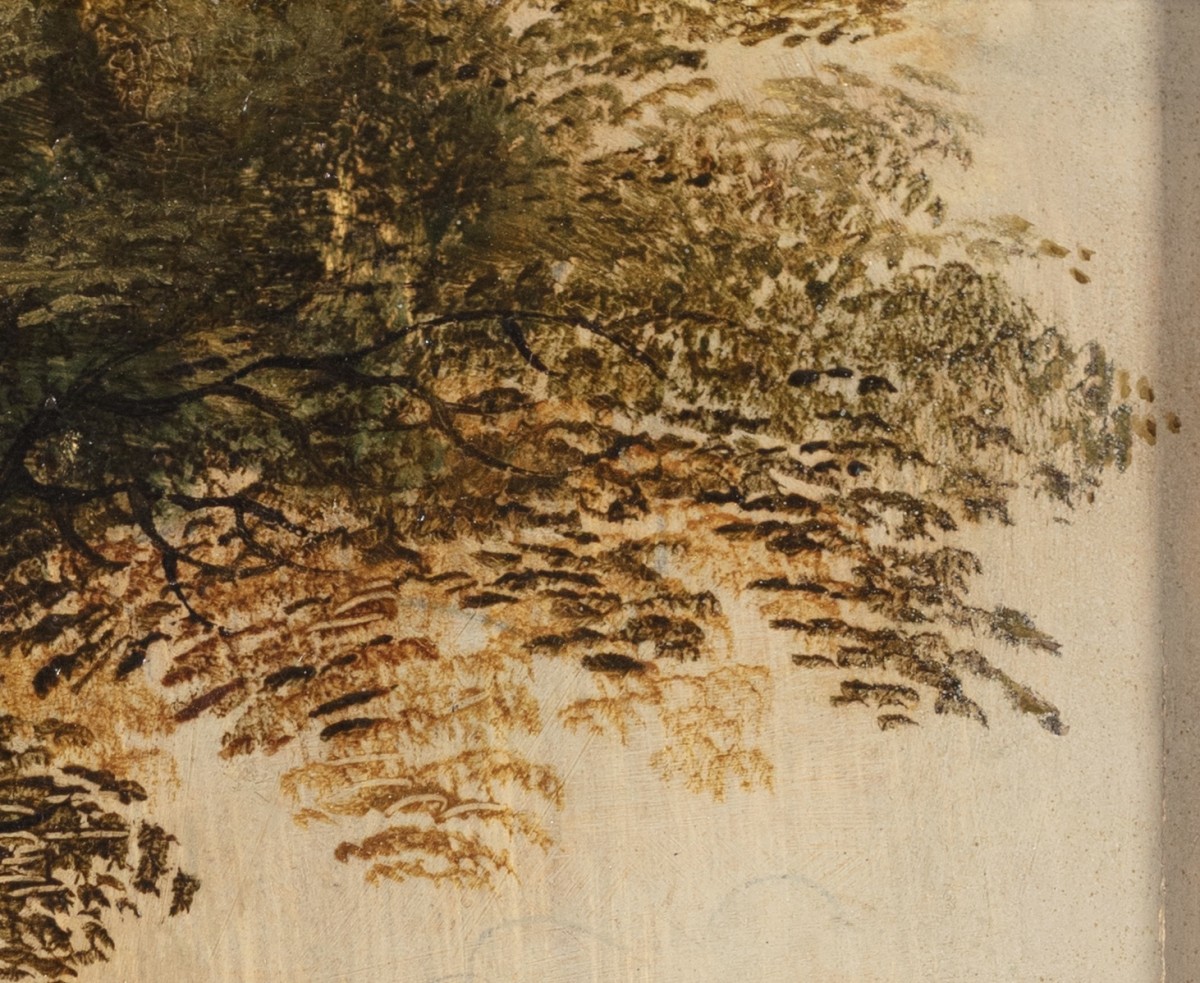
Both landscapes have a clear structure of foreground, middle ground and background, with elements that support this seamlessly. This is typical of Van Uden: his compositions often have a foreground with leafy trees, one of which leans to break the monotony and lead the eye to the centre, where groups of trees, fields or villages stand out against a mountainous background. The warm orange leaves and the golden sky contrast with the green-blue distance.
Landscape painting is a genre in which scenes with, among other things, mountains, plains, trees and rivers form the main subject. Roman frescoes of landscapes decorating rooms have survived in Pompeii and Herculaneum, from the first century BC onwards. In the early fifteenth century, landscape painting emerged in Europe as a separate genre, often as a setting for human activity with a religious subject, such as the Rest on the Flight into Egypt, the Journey of the Magi or Saint Jerome in the Desert. Pure landscapes as the subject of a painting appear only in the early sixteenth century, among others with Joachim Patinir, who developed the “world landscape” in the Netherlands: a panoramic landscape with small figures and a high viewpoint, which remained influential for a long time through Pieter Bruegel the Elder. In the seventeenth century, landscape became enormously popular in the Netherlands, with, among other things, Italianate fantasy landscapes with a southern atmosphere and hilly themes.
Oil on panel
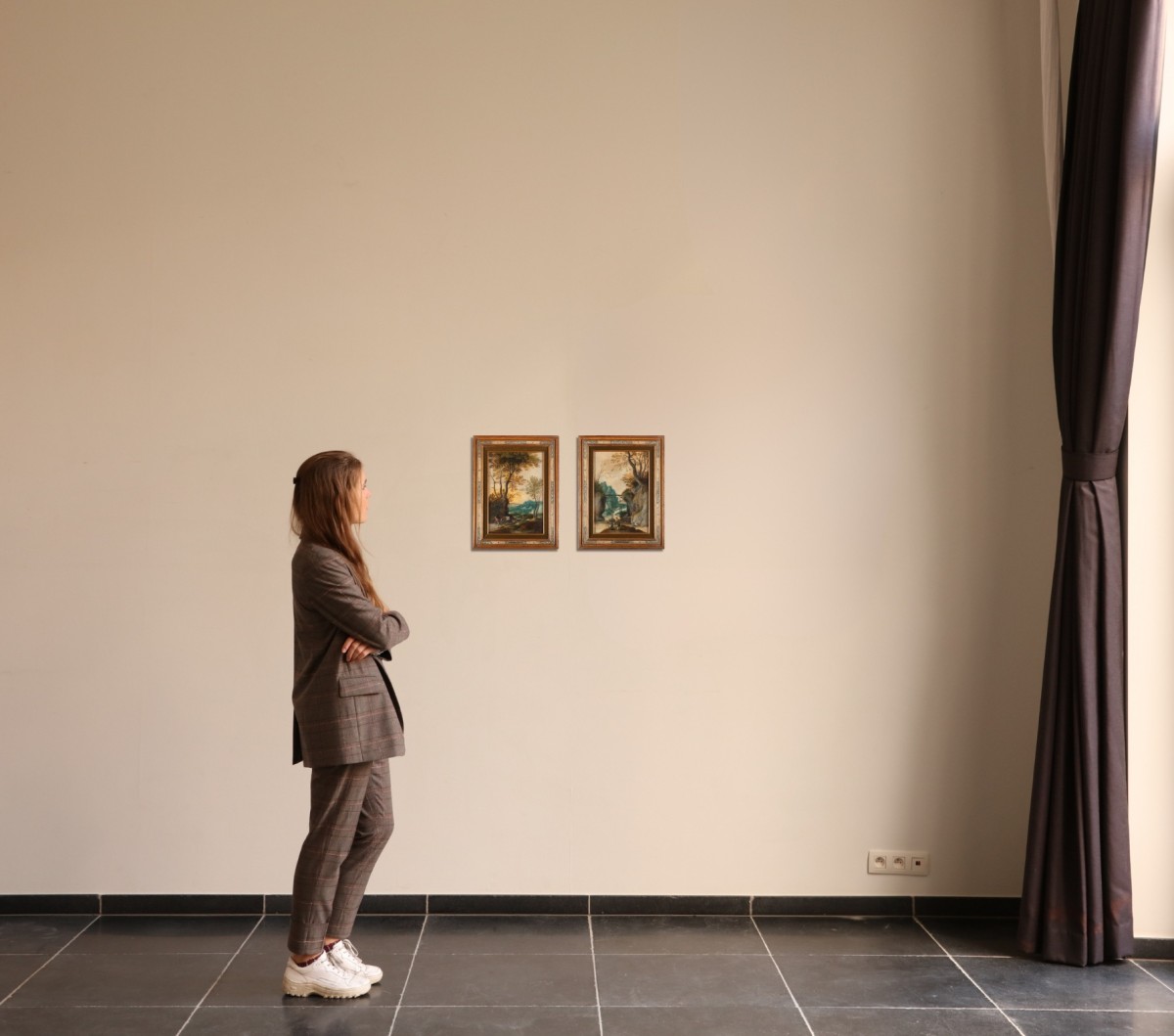
Dimensions: 36 x 26 cm, 44 x 34 cm (framed)
Delevery information :
After reception of payment we can box and ship our items all over the world. Estimates of this service can be provided.