Offered by Jan Muller
REQUEST INFORMATION
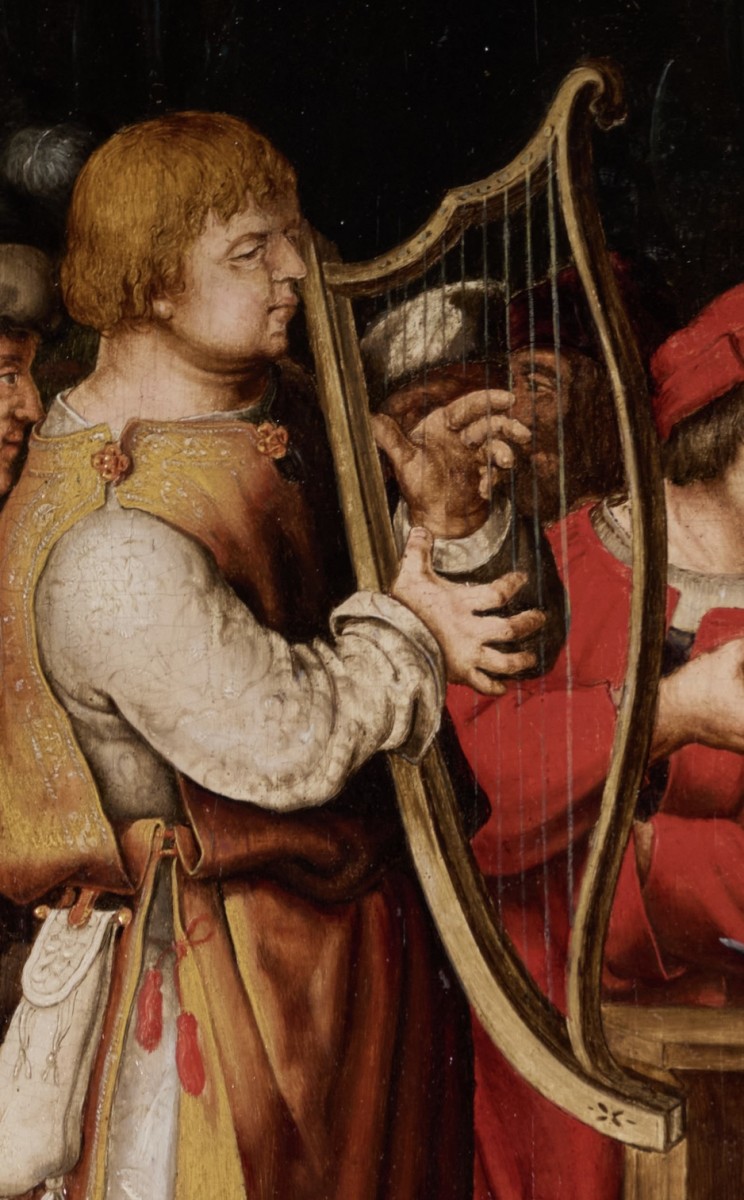

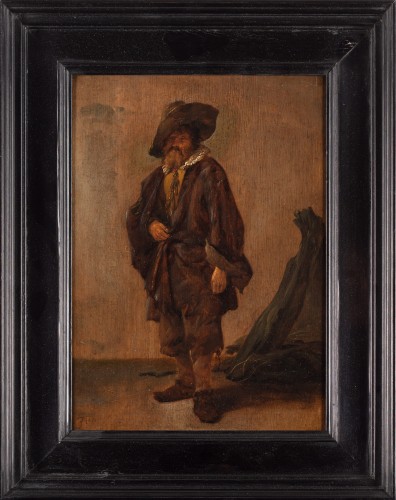
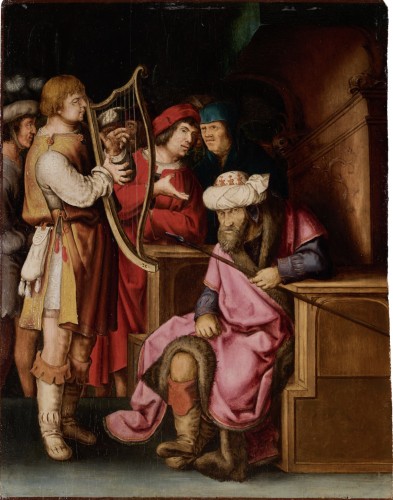
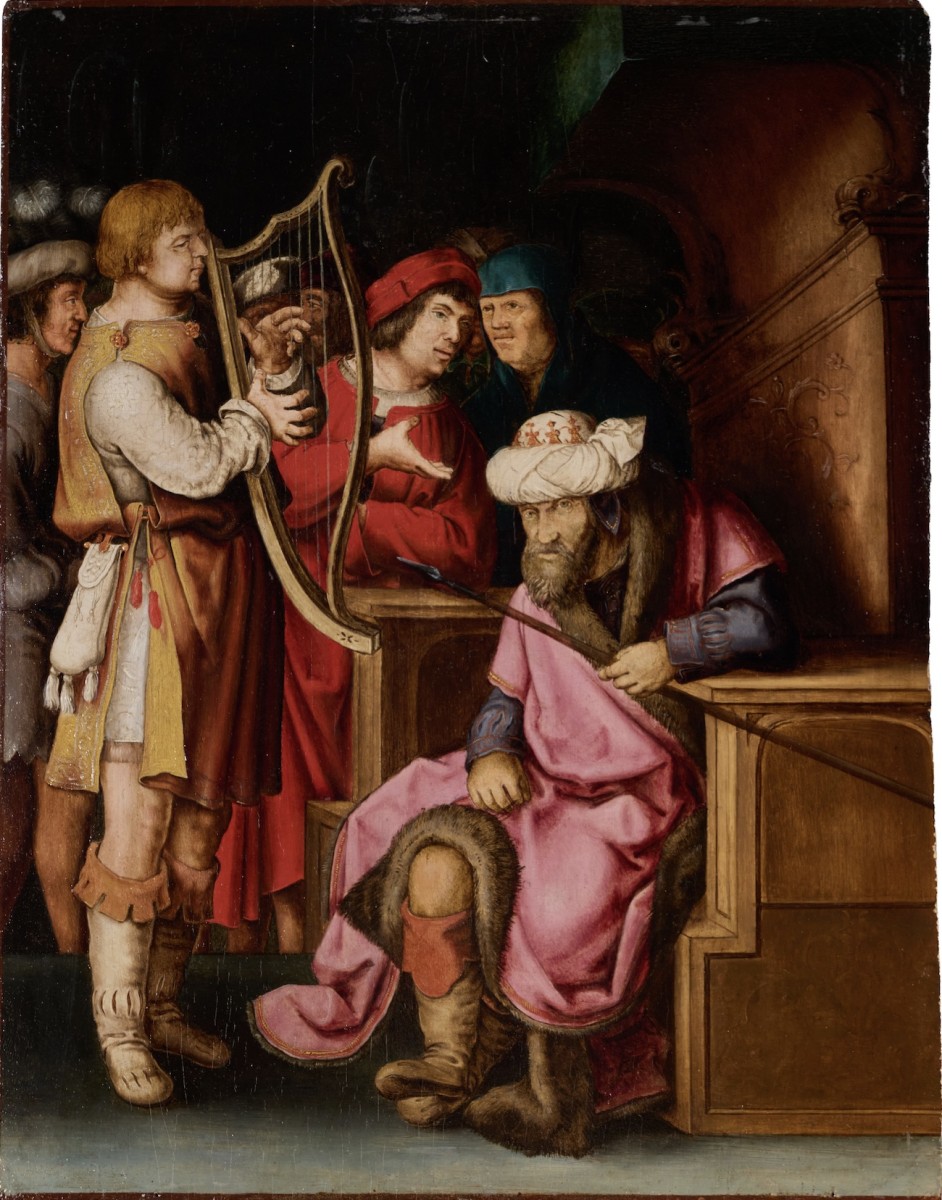
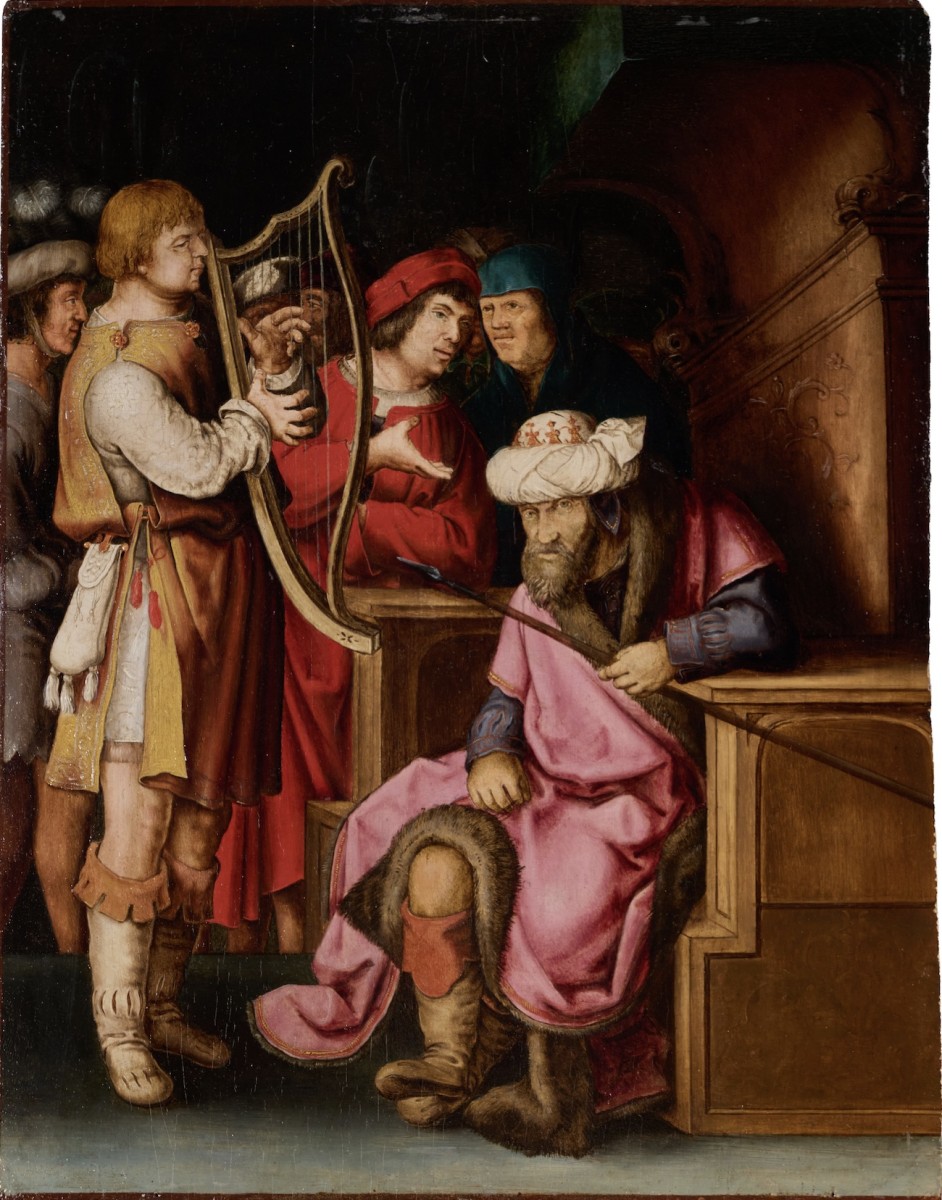
This work is attributed to the Flemish School, seventeenth century, and was painted after an engraving by Lucas van Leyden. Prints such as Lucas’s spread across Europe and served painters as models for centuries.
Lucas van Leyden (Leiden, 1494 – 1533) was a Dutch printmaker in engraving and woodcut, and also a painter. He was one of the first Dutch exponents of genre painting and a highly accomplished engraver. According to Karel van Mander he was a tireless artist who as a child annoyed his mother by working long hours after nightfall. She forbade this, not only because of the cost of candlelight, but also because she felt that too much study was bad for his sensibilities.
He knew the numerous engravings of Marcantonio Raimondi, whose motifs he reworked in his engravings and paintings, and he became highly skilled in that art at a very early age: his earliest known print dates from 1508, when he was perhaps only fourteen. Raimondi’s studies of nudes inspired him in his later work, particularly in his altarpieces, in which he is one of the first Dutch artists to adopt the Italian-style nude figure. His best-known painting is the triptych of the Last Judgement (1526, Museum De Lakenhal, Leiden). He met Albrecht Dürer in 1521 and was widely celebrated and imitated in his time.
The painting shows an episode from the First Book of Samuel. Saul, the first king of Israel, is abandoned by the Holy Spirit, and God sends him an evil spirit. It torments him, and only David’s harp playing can calm him. David, a young shepherd and harpist whose heart is devoted to God, became a hero by killing the giant Goliath. Afterwards he had to go into hiding, because Saul thought he wanted to take his throne. Later David married Michal, one of Saul’s daughters, and succeeded his father-in-law as king of the Israelites.
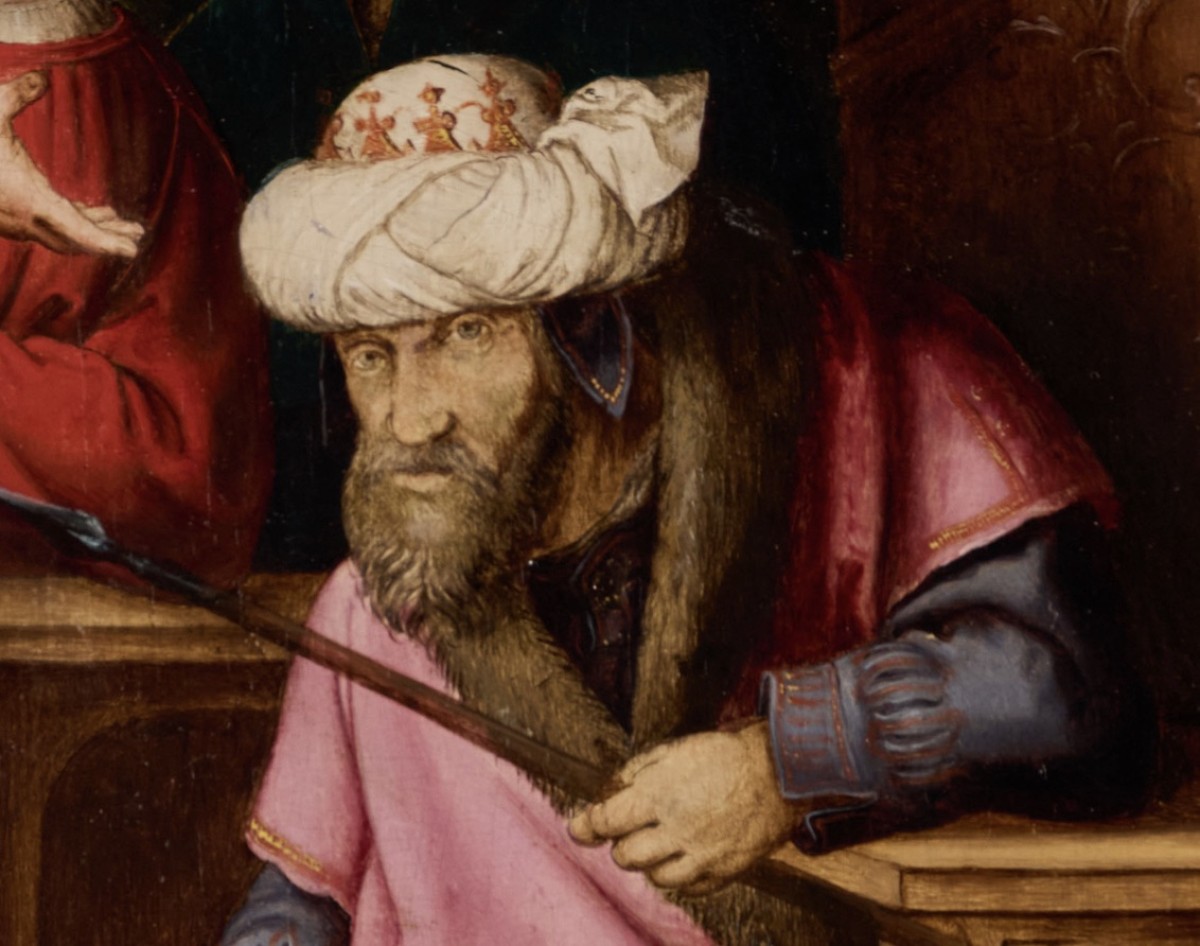
Lucas van Leyden depicts the moment when Saul, darkened by jealousy, listens to David’s playing. Music was then thought to have a therapeutic effect. The tension in the scene is palpable: Saul sits stiff and withdrawn, with a spear in his fist pointing diagonally at the harp player. In this way the engraving already foreshadows that the king will later make an attempt on David’s life. In the engraving Saul convulsively crosses his right foot over his left, and David looks at him calmly, as if confident that the music will soothe the king’s soul.
Here Saul sits on the right, in a rich pink cloak lined with fur and a turban, signs of his royal dignity. His gaze is dark and pensive. On the left stands David, a calm young man with a gentle expression, playing his harp. Between the king and the shepherd two figures stand in conversation, one in red and one in a blue hood. The scene unfolds in a space only suggested, with a dark background in which Saul’s throne is the only clearly recognisable element. In the engraving the gesturing figure at the back is sometimes seen as a self-portrait of Lucas.
David is revered in Jewish prophetic literature as the ideal king and forefather of the future Messiah, and many psalms are attributed to him. The early church saw in his life a prefiguration of Christ’s. He was also admitted among the Nine Worthies, a group of heroes embodying all the ideals of chivalry.
Oil on panel
Dimensions: 29 x 22,5 cm
Delevery information :
After reception of payment we can box and ship our items all over the world. Estimates of this service can be provided.