Offered by Menken Works of Art
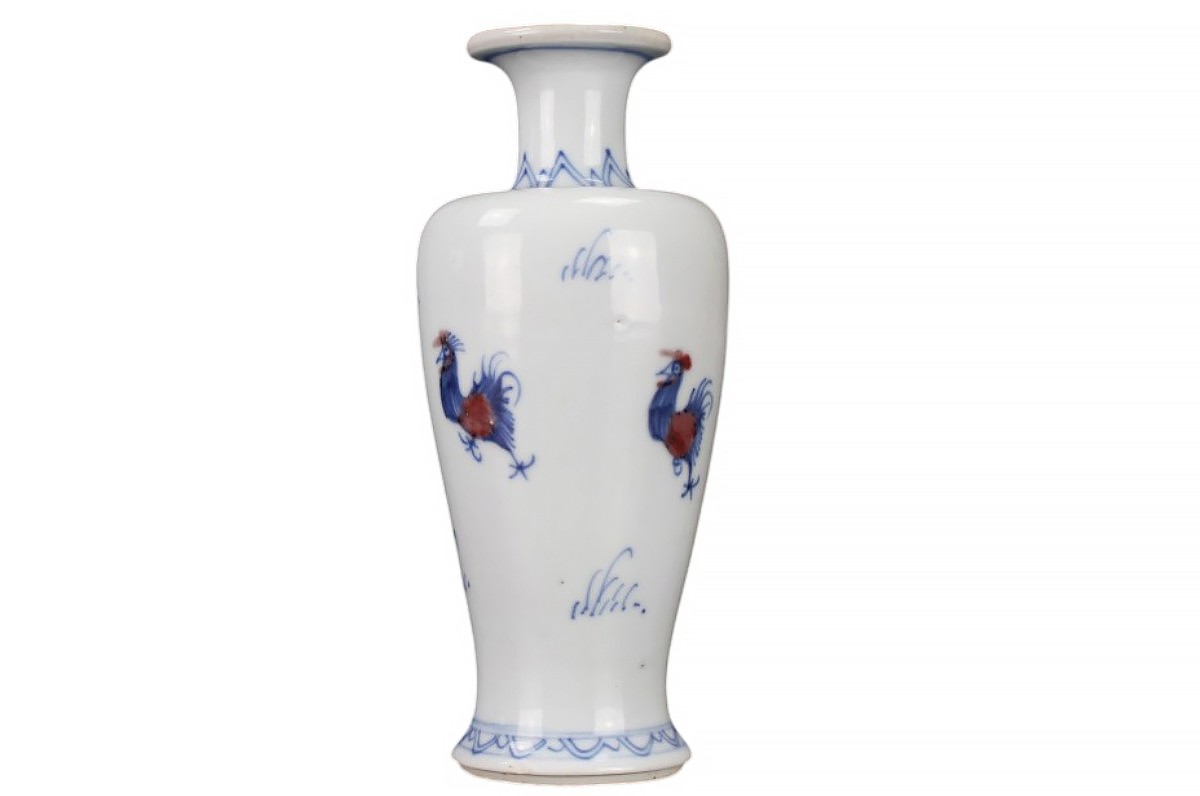
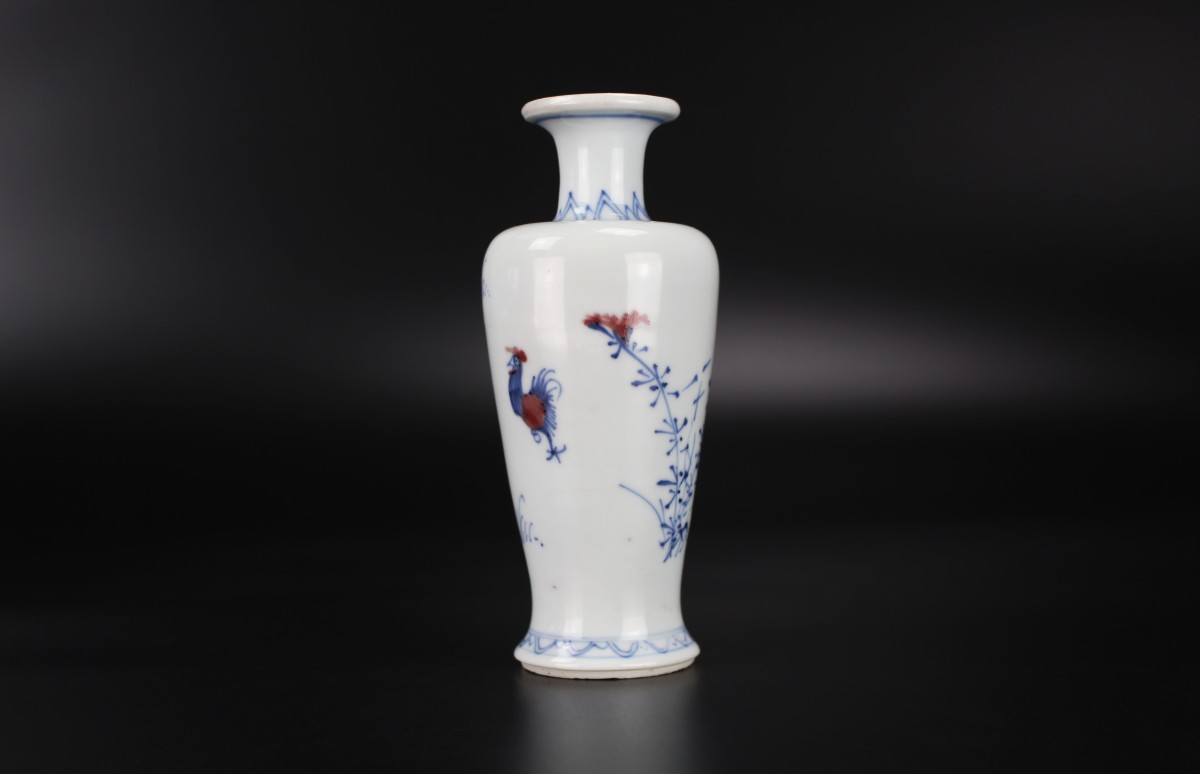
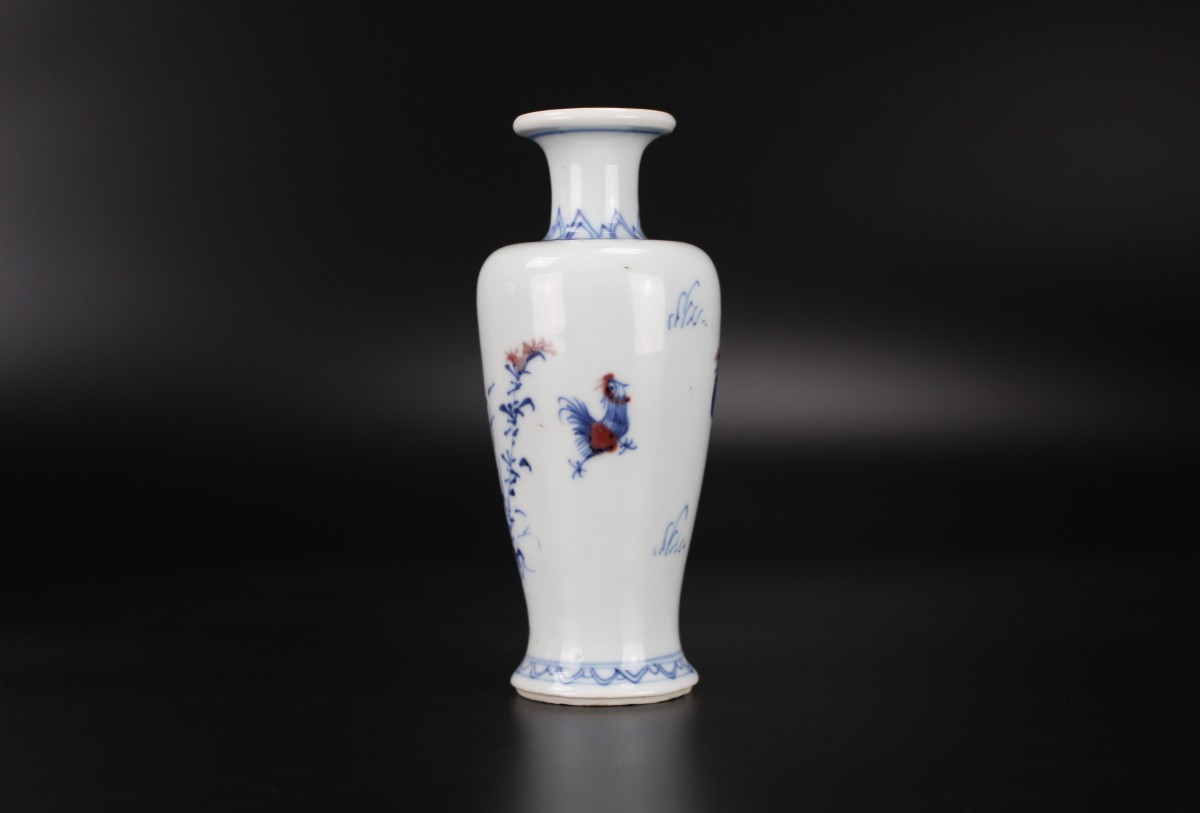
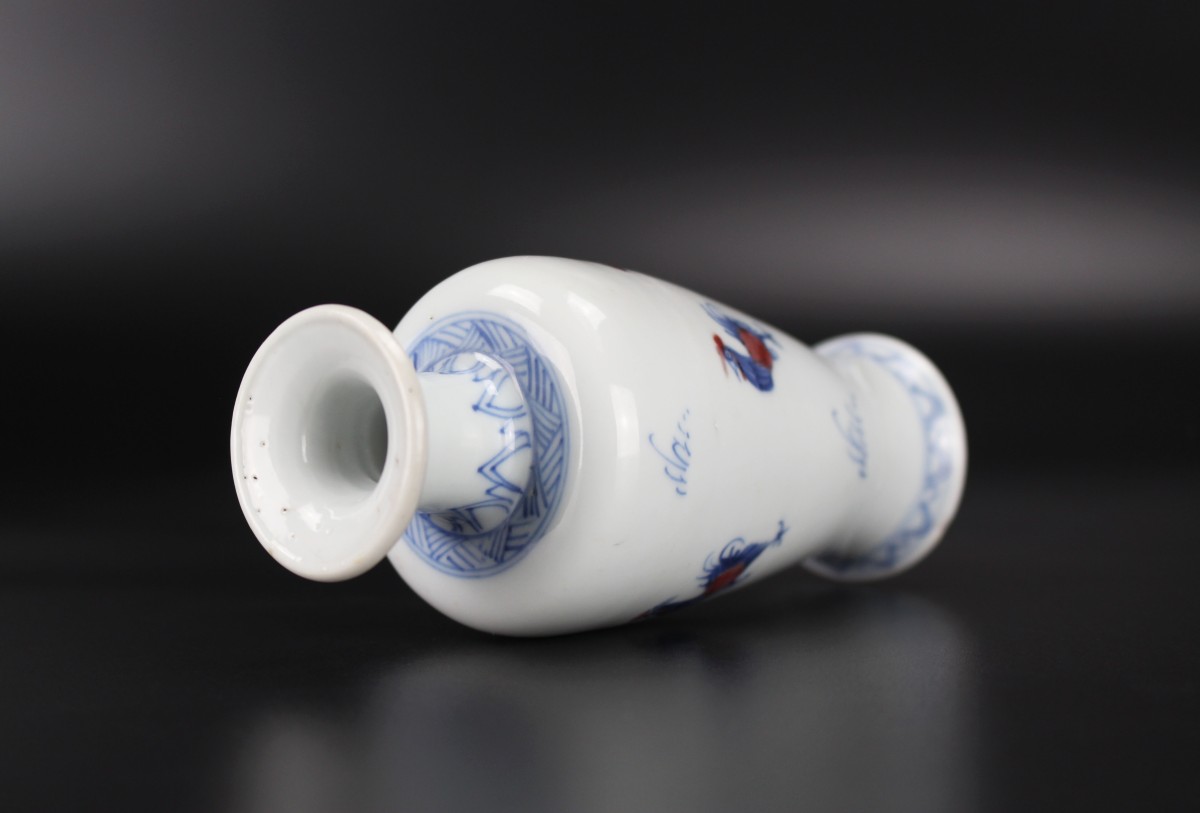
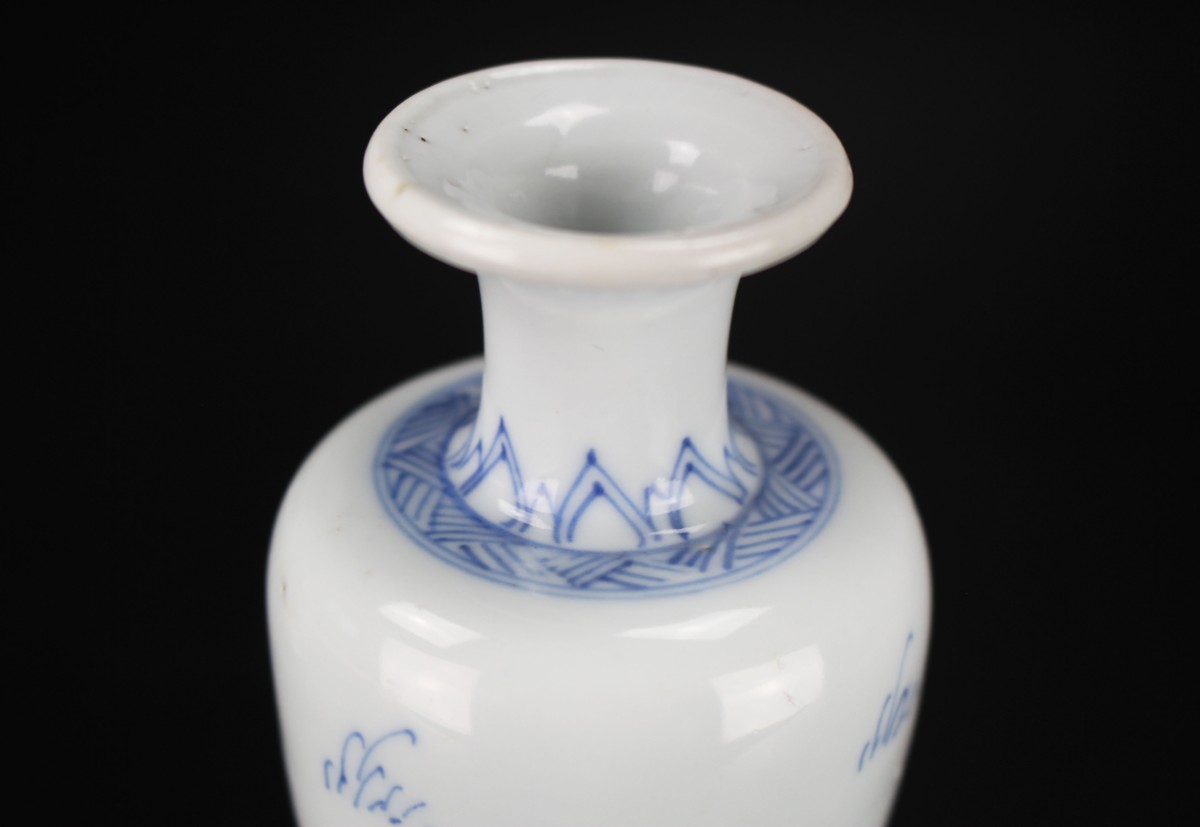

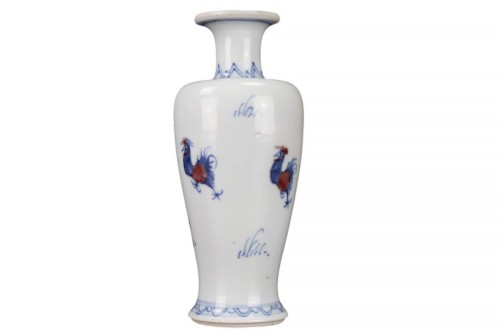
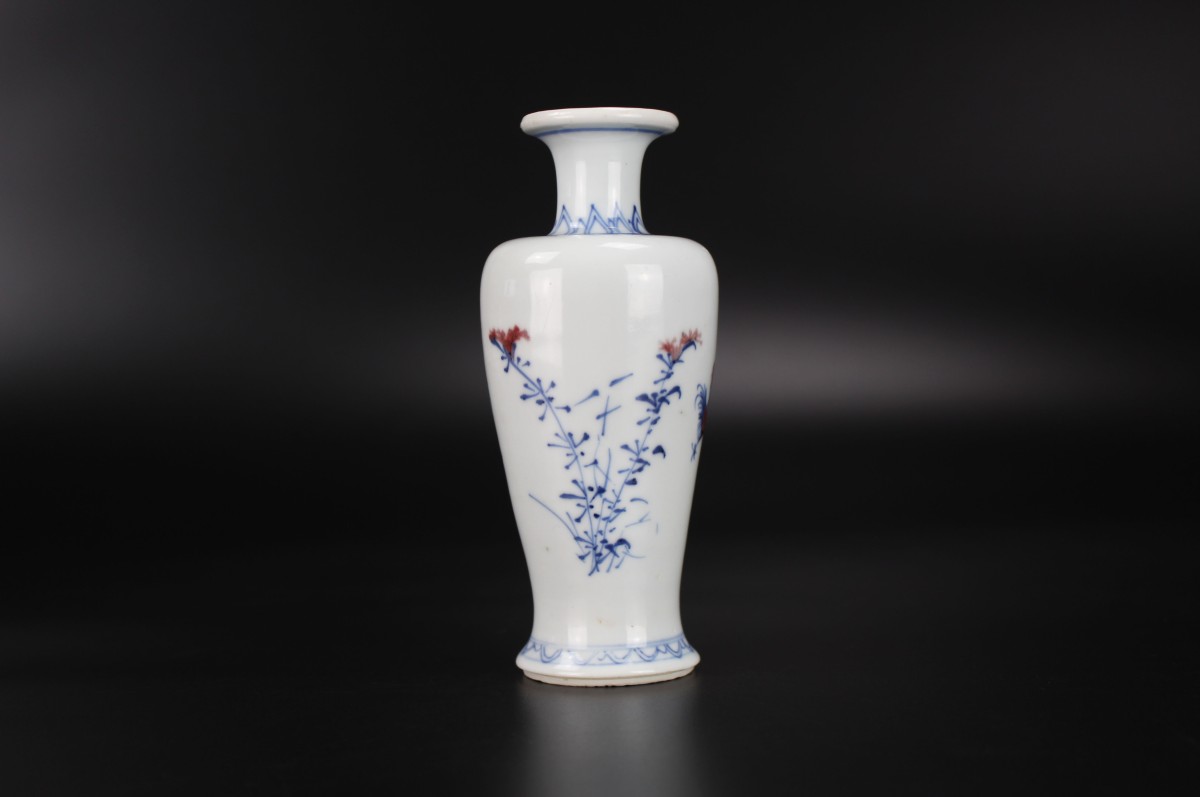
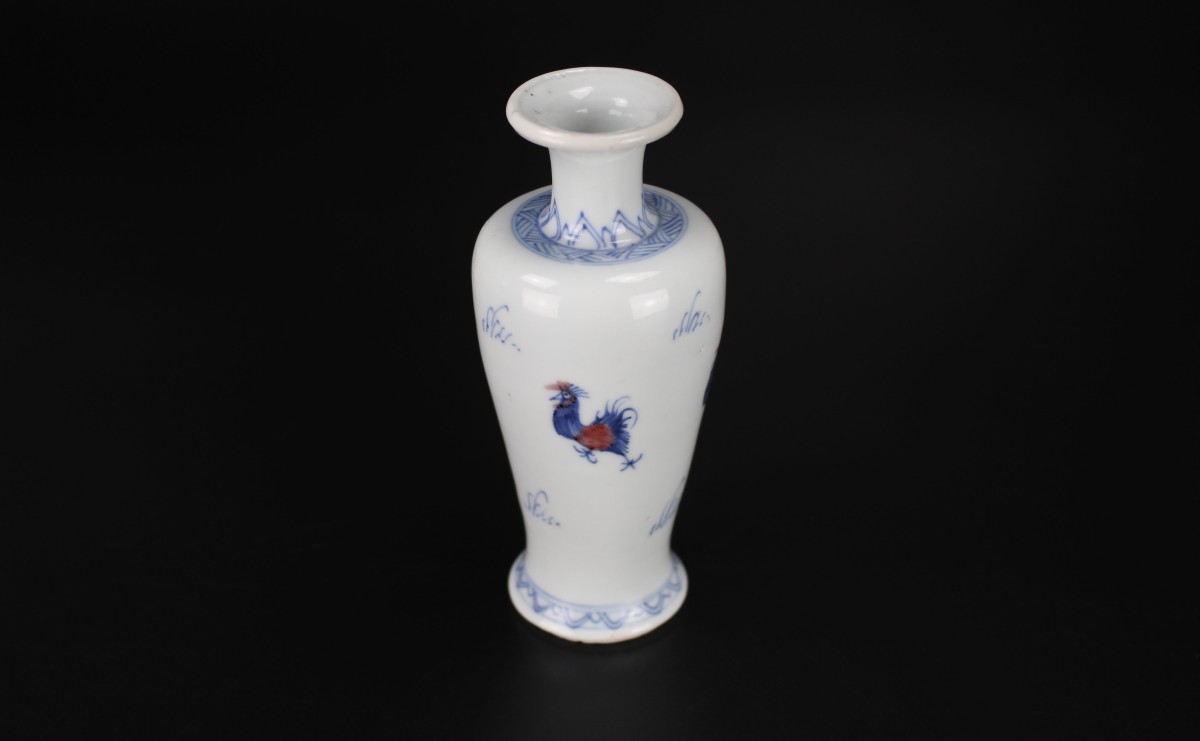
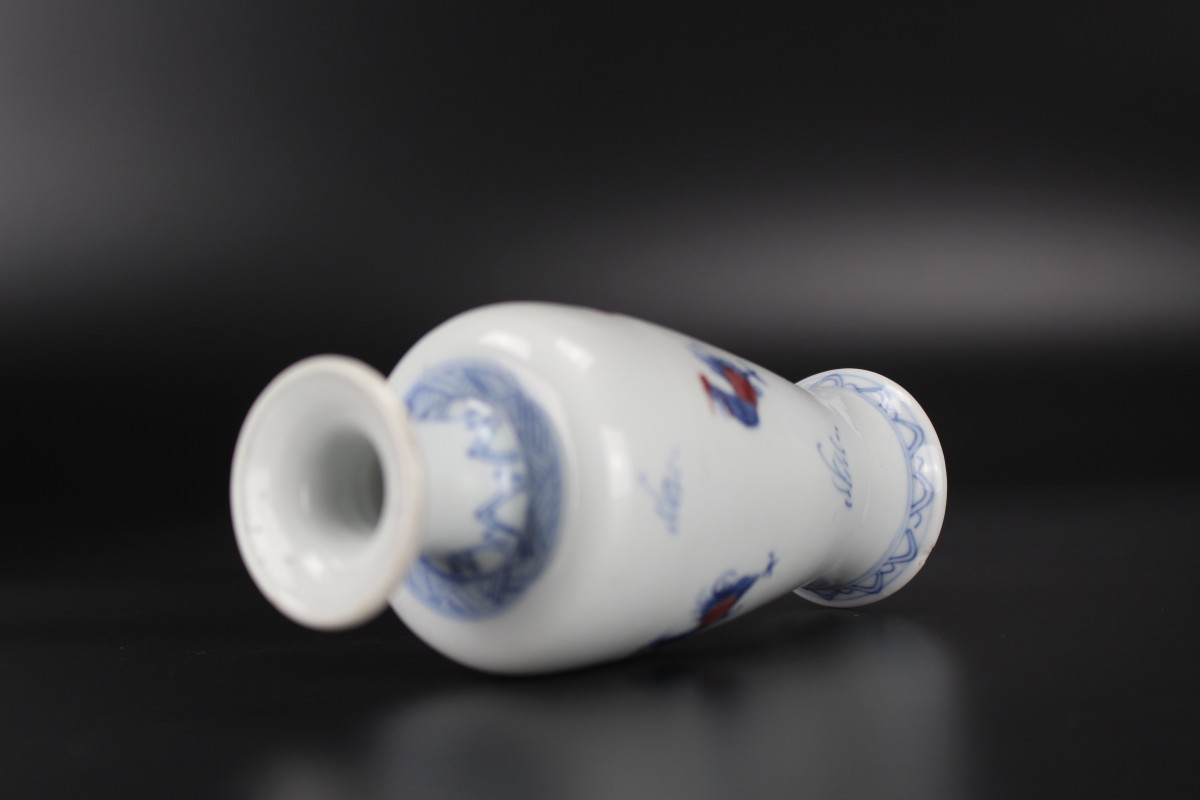
A rare blue and white and copper red ‘roosters’ vase.
Early Kangxi period (1662-1722).
Elegantly potted with flattened shoulders and a narrow neck gently curving to an everted rim, tapering down to a bulbous body and a slightly flared base with stepped footrim, decorated in underglaze blue and white and copper red with three roosters in a grass field and a flowering bamboo branch.
This piece exemplifies the renewed mastery of underglaze copper-red porcelain achieved by the kilns of Jingdezhen during the early Kangxi period. The technique had originally flourished during the Yongle (1402–1424) and Xuande (1426–1435) reigns of the Ming dynasty, when some of the most celebrated examples of copper-red decoration were produced.
Underglaze red was created using a copper-oxide pigment that proved exceptionally unpredictable during firing. Even slight variations in kiln temperature or atmosphere could cause the colour to fade, turn greyish-green, or vanish entirely. Owing to these technical challenges, the method was largely abandoned after the mid-Ming period, surviving only sporadically in porcelains made for domestic and export markets, including Kraak and ko-sometsuke wares of the late Ming era.
During the Kangxi reign (1662–1722), significant advances in ceramic technology enabled potters once again to achieve rich and vibrant copper-red tones. The successful revival of this demanding technique not only demonstrated extraordinary technical skill, but also reflected the Qing court’s broader ambition to legitimise and strengthen its rule through a conscious revival of revered Chinese artistic traditions.
Ref:
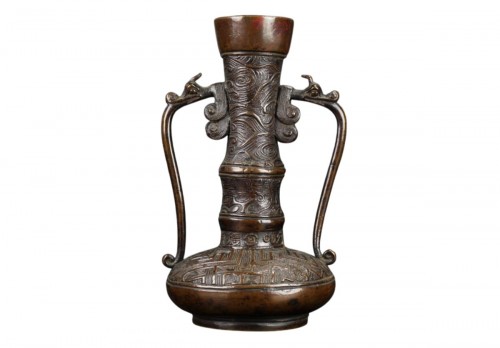
A related vase can be found in the Keramiekmuseum Princessehof, Leeuwarden, inv. no: NO 02154.
Another example, similar to the one in Princessehof, is in the Capital Museum, Beijing.
Dimensions:
Height 13.2 cm, diameter 5.3 cm.
Condition:
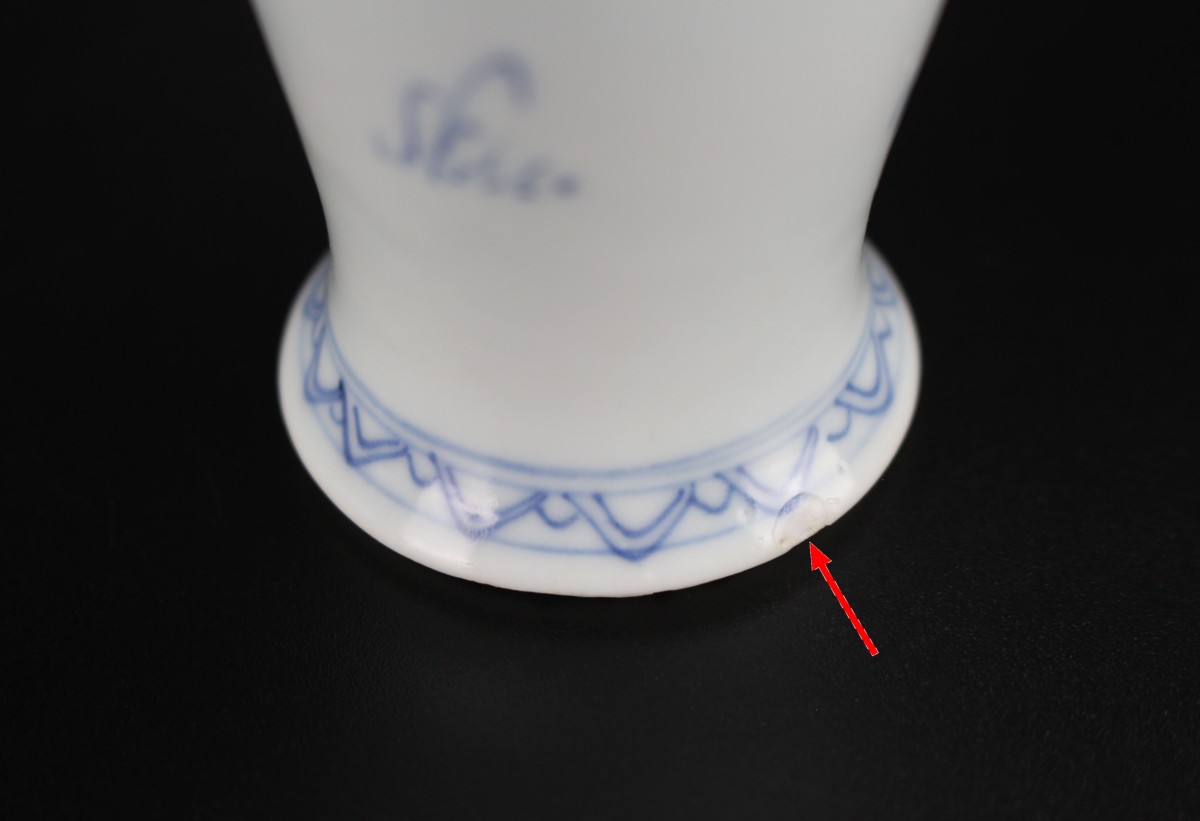
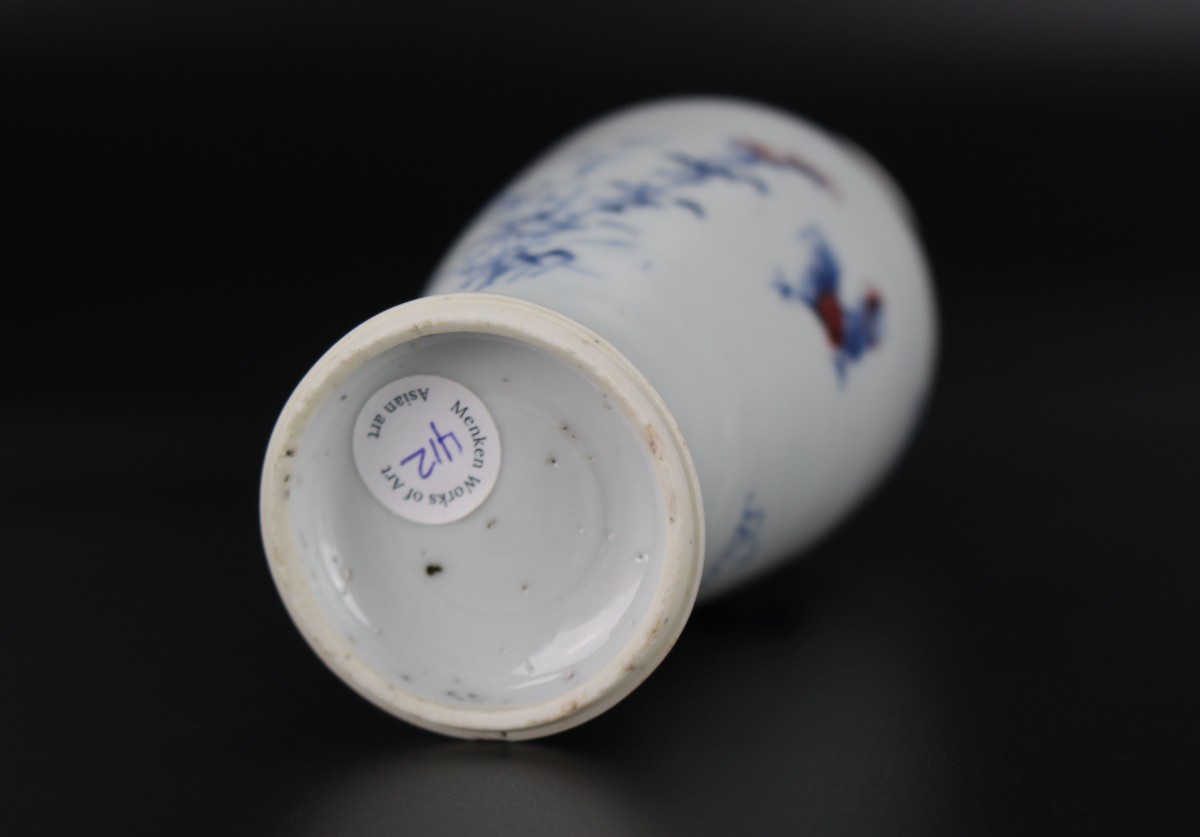
Good condition with a very small chip to the foot rim.
Worldwide registered and insured shipping.
Inv. No: MW412