Offered by Galerie Paris Manaus
REQUEST INFORMATION

Decorative Arts of the 20th century
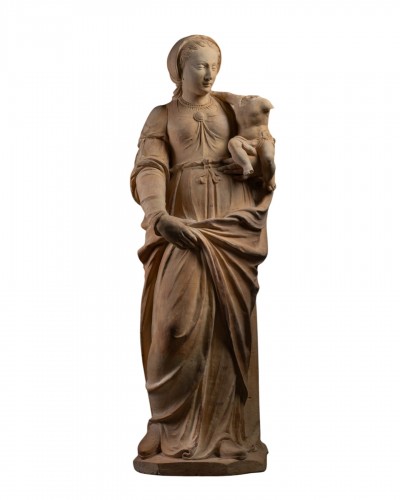
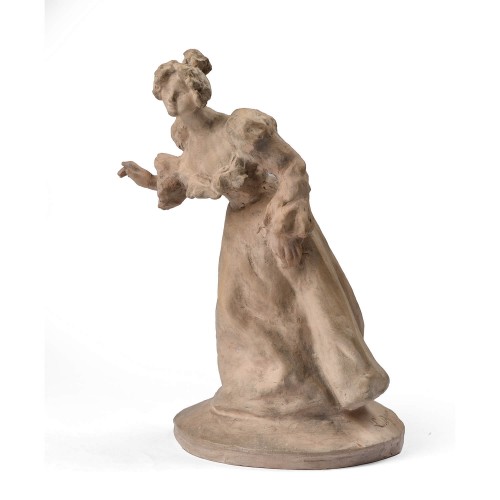
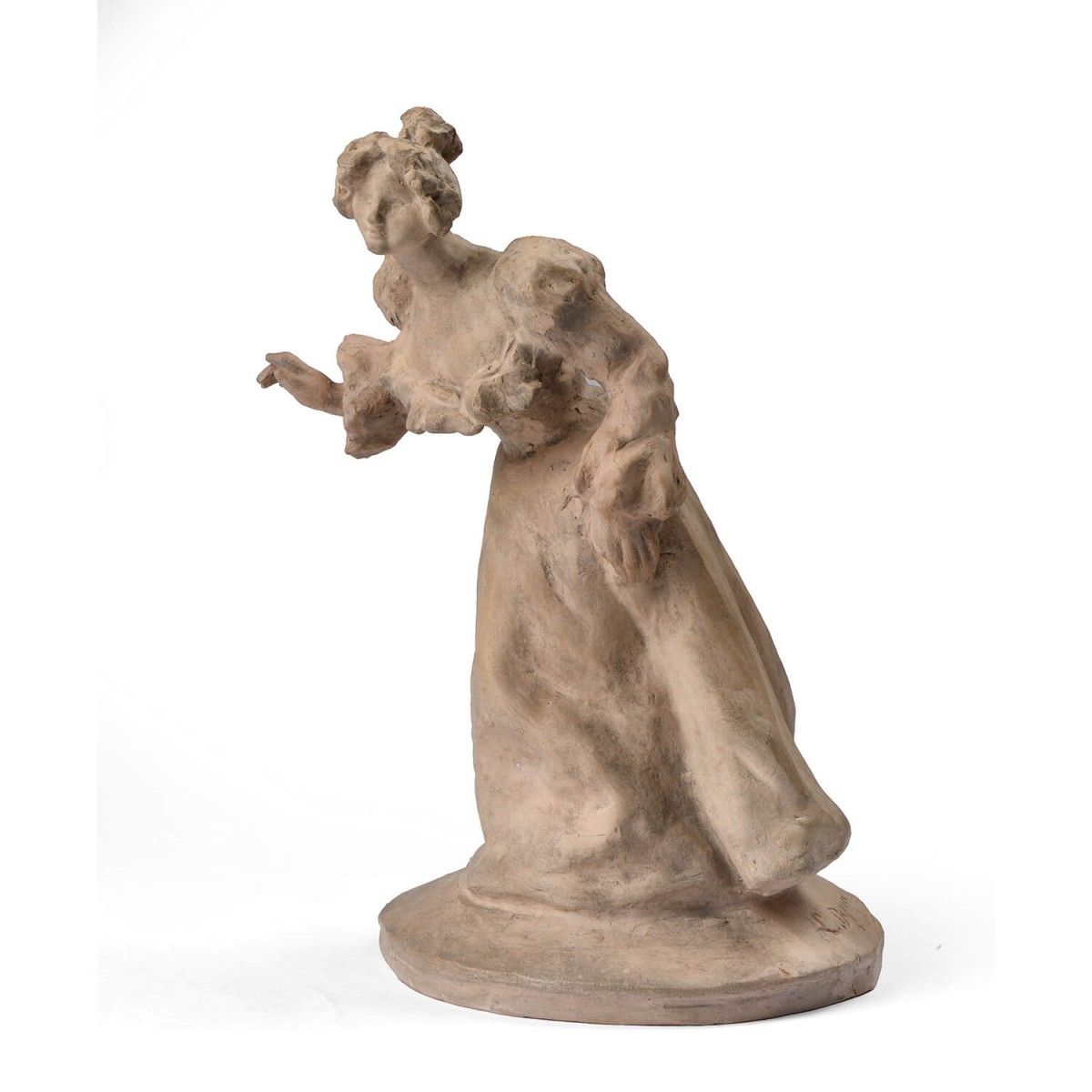
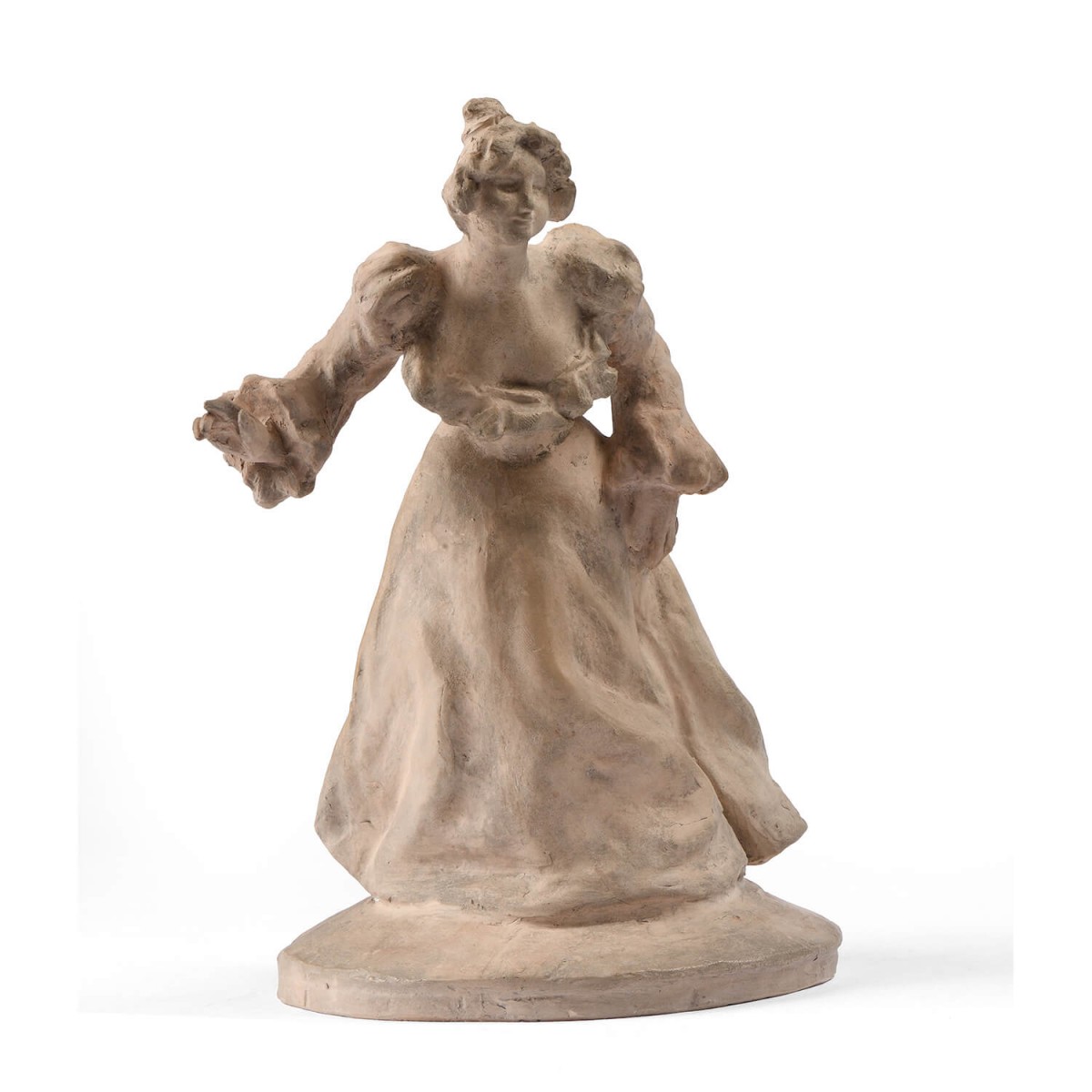
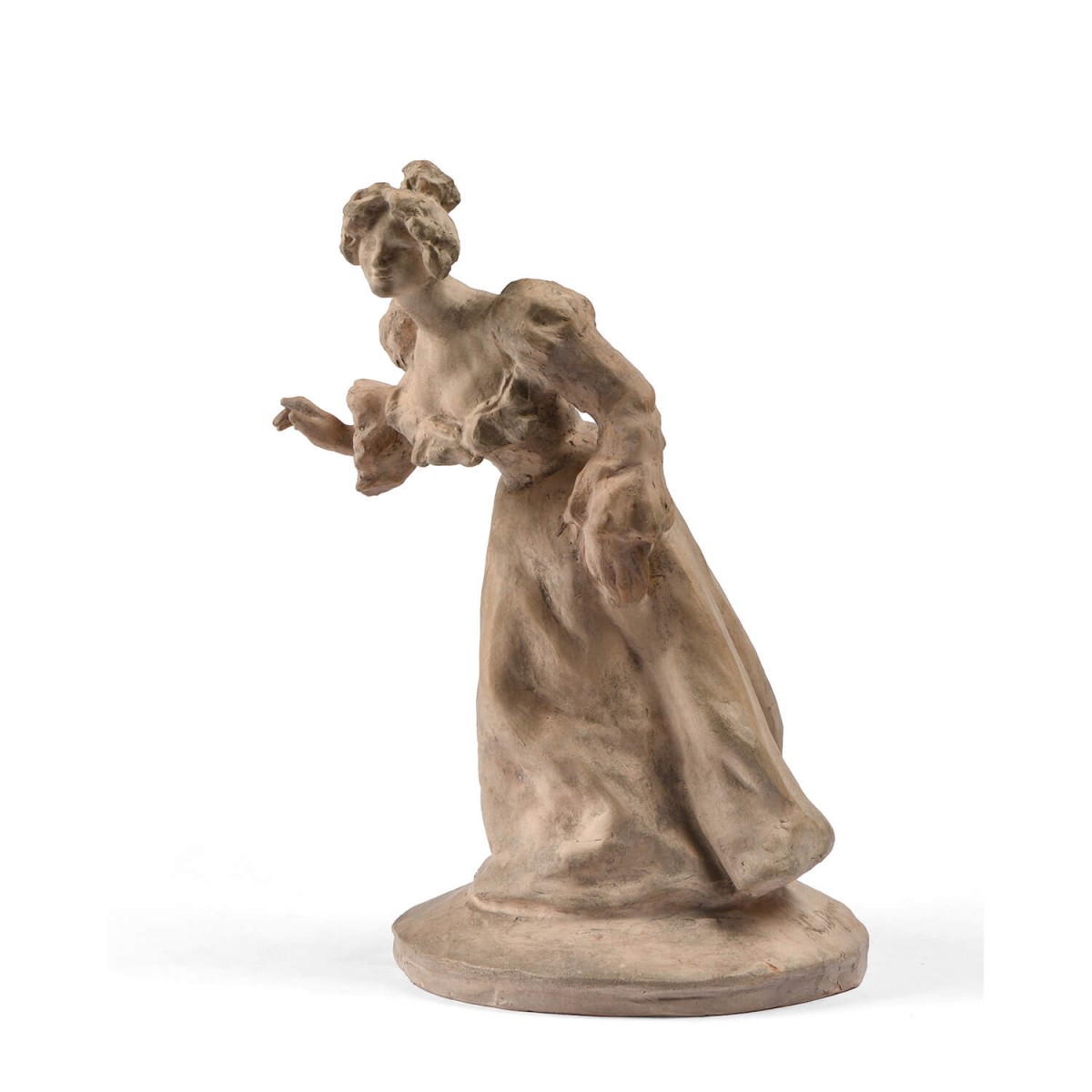
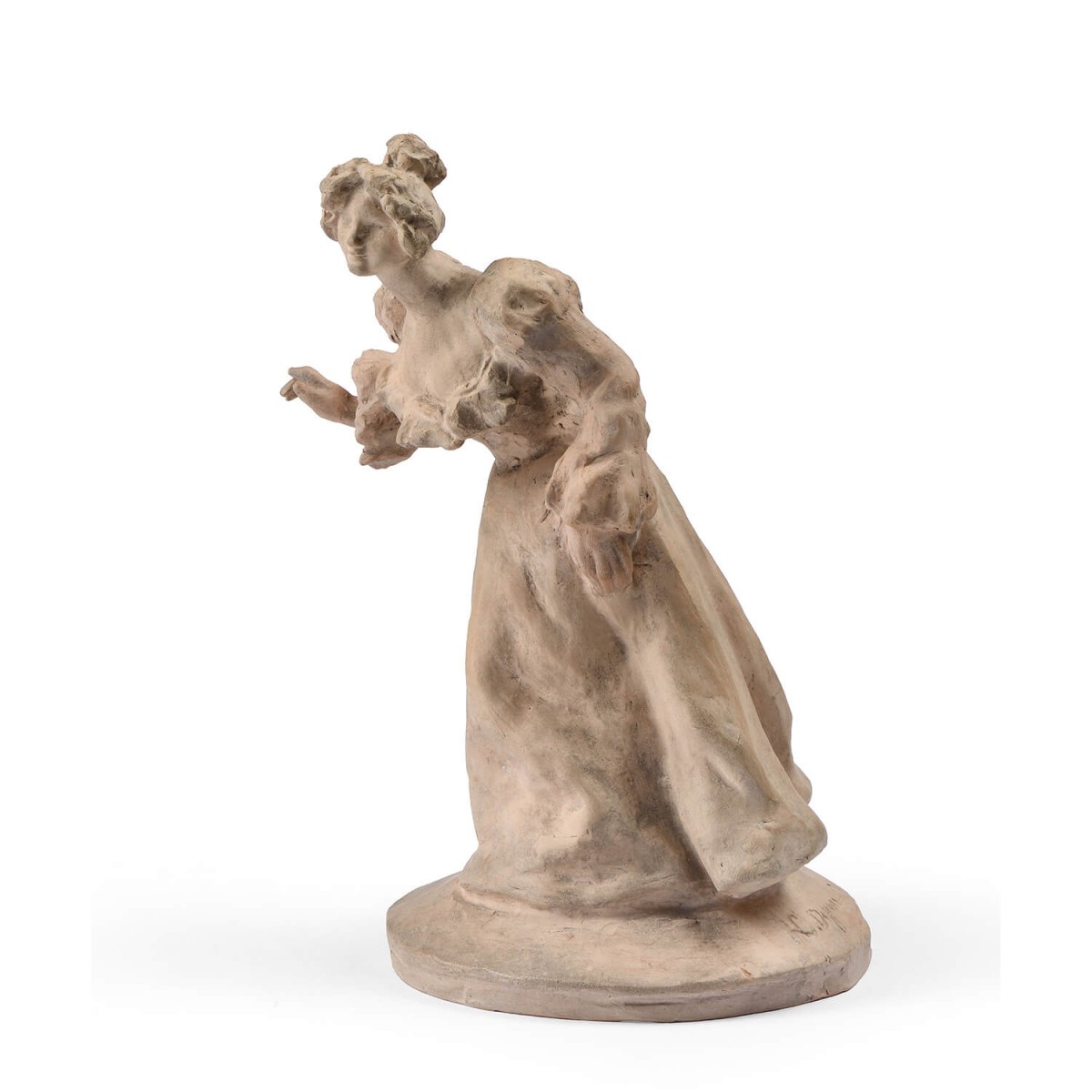
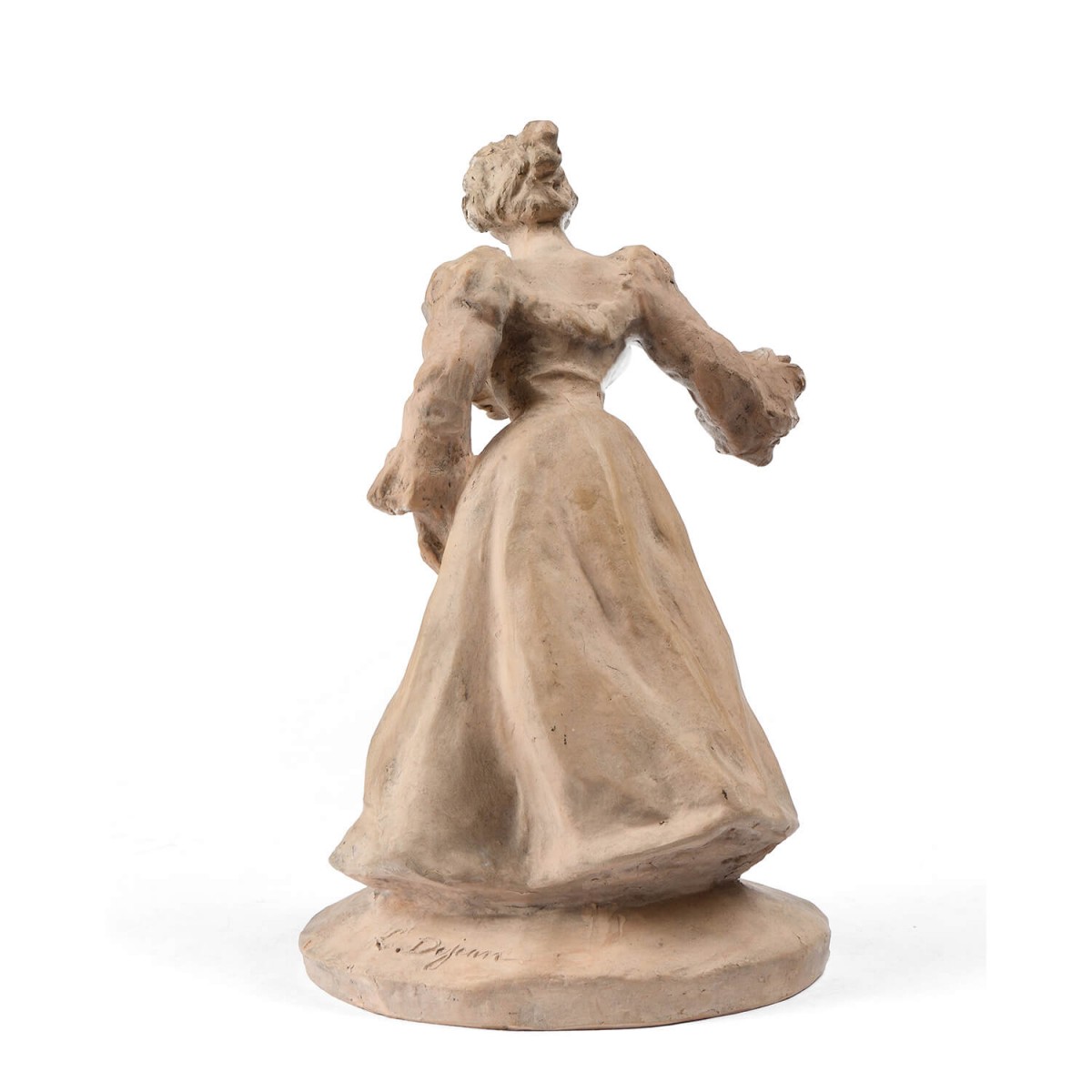
Original edition terracotta.
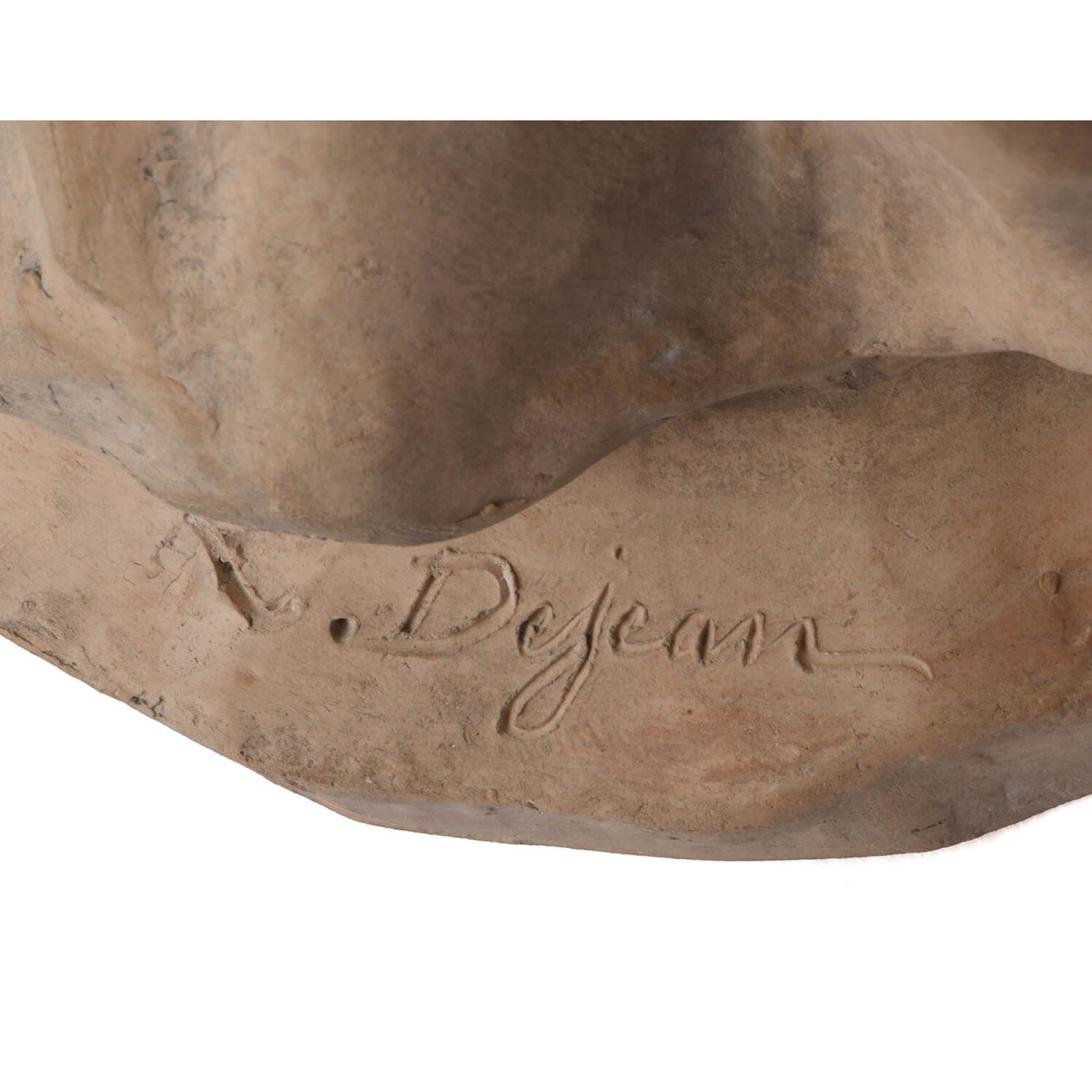
Signed “Louis Dejean” on the reverse of the base, inscribed in the clay before firing.
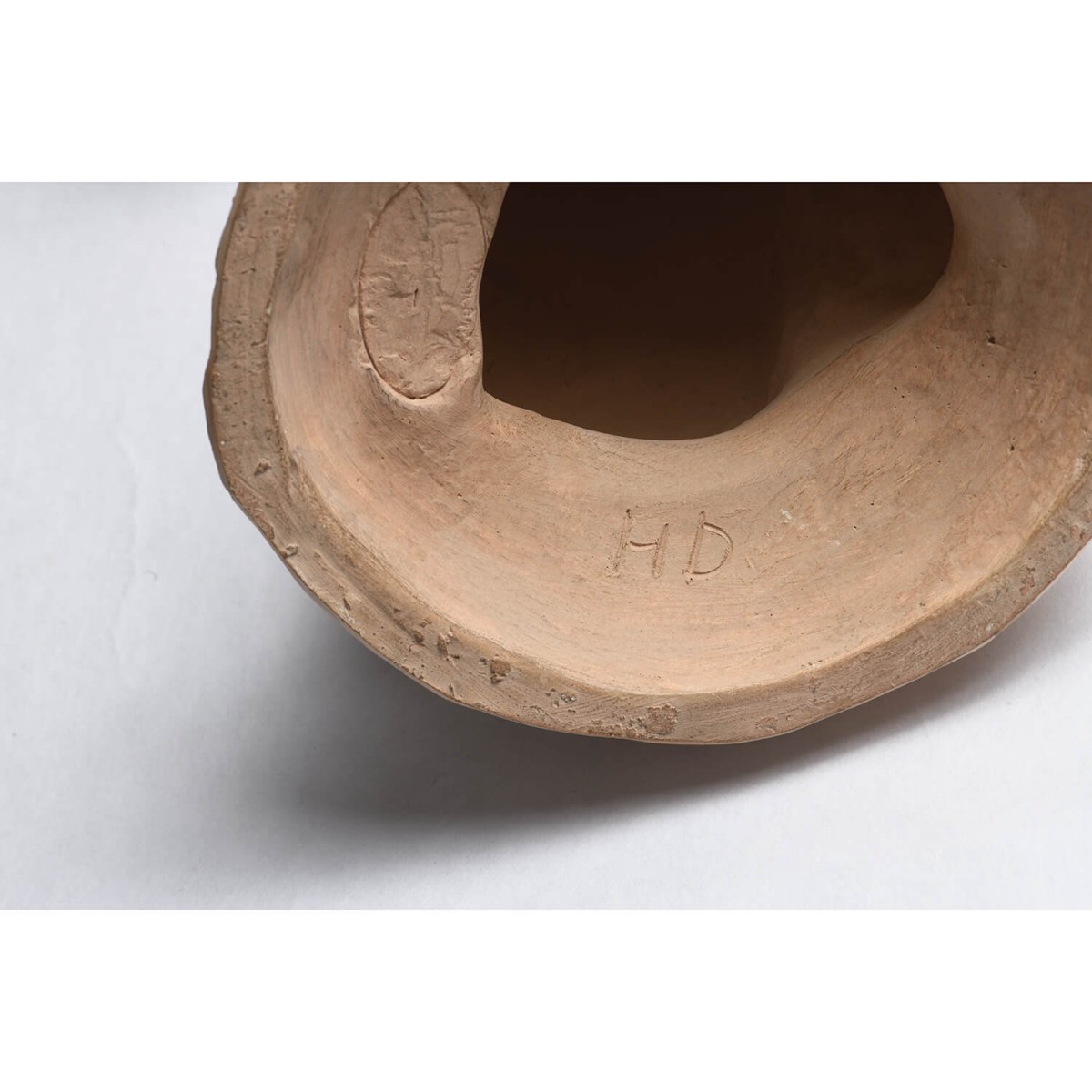
Bears the artist's monogram “HD” underneath.
Bears the publisher's stamp inside.
Circa 1900–1910.
Dimensions: Height: 22.5 cm Width: 17 cm Depth: 13 cm
Biography:
Louis DEJEAN (1872–1953)
After studying for one year at the École des Arts Décoratifs, he began working at the age of sixteen for a textile company, then for a sculptor's assistant, where he worked in marble until his military service. He subsequently joined the studio of Antonin Carlès (1851–1919), where he learned the sculptor's craft as a practitioner. He also worked in this capacity for Rodin until a disagreement concerning the Balzac monument led to their separation in 1909. This dispute did not prevent Dejean from exhibiting alongside Rodin at the Société Nouvelle.
While his time in Carlès's studio had made him a meticulous craftsman, his experience with Rodin enabled him to approach sculptural volumes with greater strength. He initially developed a precise and decorative body of work consisting of female terracotta statuettes, inspired by the Tanagra figurines he admired during his visits to the Louvre. These works depict fashionable Parisian women of the 1900s, wearing long coats, long skirts, and corsets (Woman with a Cane, Melancholy, Out for a Walk).
He exhibited these works successfully at the Société Nationale des Beaux-Arts from 1899 onward, participating almost every year. He was a member of this Salon, as well as the Salon des Tuileries and the Salon d'Automne.
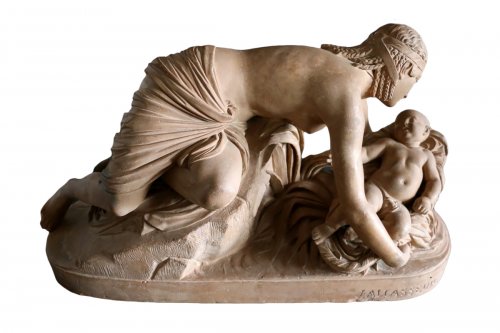
However, he did not limit his work to these modern Tanagra figures. He returned to more monumental sculpture, which he produced in his large studio in Neuilly. Maternity (1910) marked an evolution toward a broader sculptural language, rejecting picturesque detail in favor of the fullness of form.
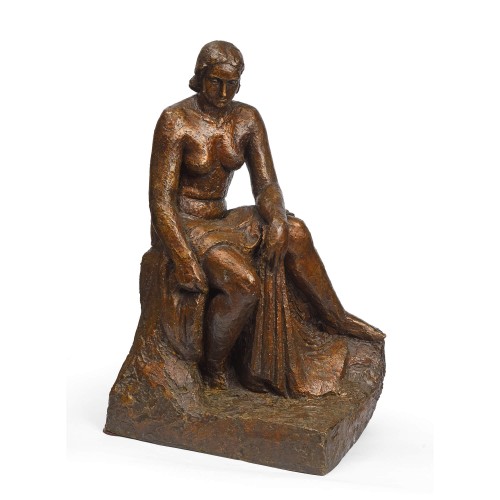
This tendency became even more pronounced in subsequent works: Boxer at Rest, Seated Woman, Narcissus, Young Wrestler, and various other figures, including the female torso exhibited at the Salon des Tuileries in 1926.
Thus, from the lively and expressive art of his early statuettes, Dejean developed a broader style concerned primarily with sculptural form, notably illustrated by the War Memorial of Saint-Ouen (1914–1918).
In 1933, he received a commission for Peace, later renamed Welcome, a large bronze figure created for the first-class dining room of the ocean liner Normandie.
In 1937, he created one of the four Reclining Nymphs surrounding the basin at the Palais de Tokyo in Paris. These works demonstrate his appreciation for the beauty of the human body, particularly busts and nudes.
The town hall of Paris's 5th arrondissement houses The Hammerman, while numerous museums preserve works by Dejean:
- Musée de Cambrai: Phryne, commissioned by the French State in 1932.
- Musée de Nantes: Bust of Laurens.
- Musée Sainte-Croix, Poitiers: Young Girl Arranging Her Hair.
- Musée d'Art Moderne de la Ville de Paris: Eve (marble), Orpheus (stone).
- Roubaix: Kneeling Young Woman (stone).
He is also known as a member of the so-called “Bande à Schnegg,” which included, among others, former collaborators of Rodin: Bourdelle, Despiau, Wlérick, Pompon, Drivier, Dejean, Halou, Marque, Malfray, Niederhausern-Rodo, Cavaillon, Arnold, Jane Poupelet, and Yvonne Serruys.
Although initially influenced by Rodin, Dejean gradually moved away from the master's expressive lyricism toward an increasingly restrained, calm, and serene form of sculpture, seeking simple volumes and balanced compositions.