Offered by La Sculpture Françoise
REQUEST INFORMATION
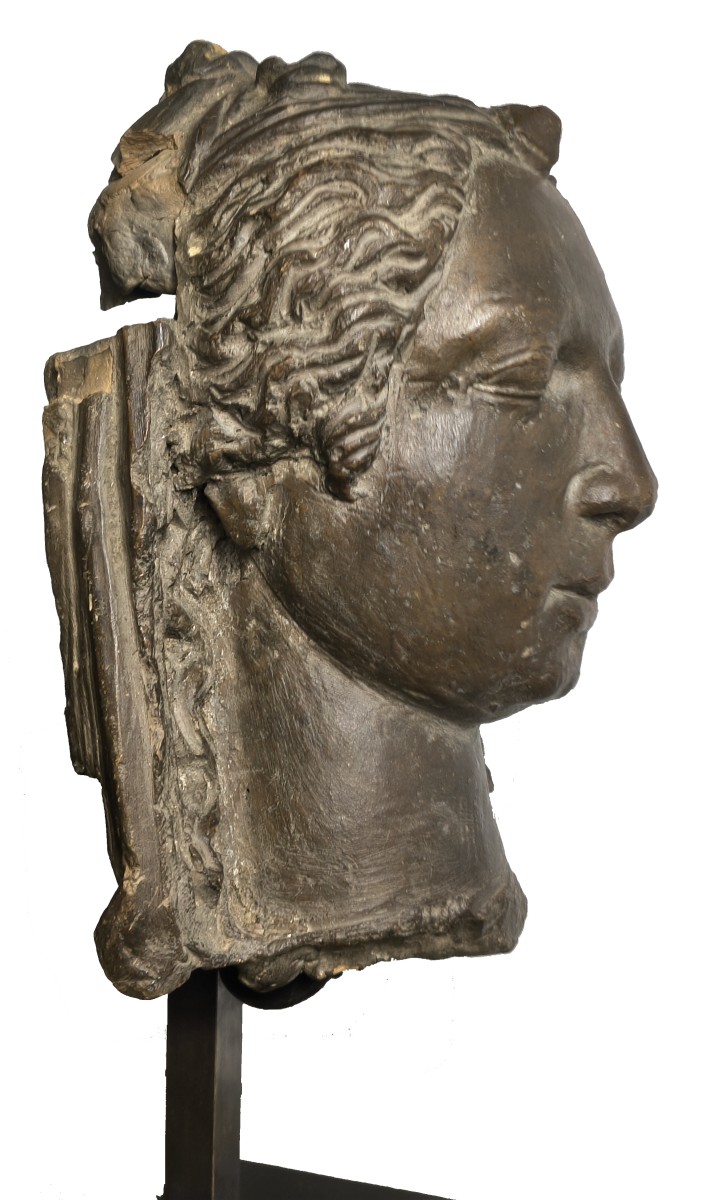
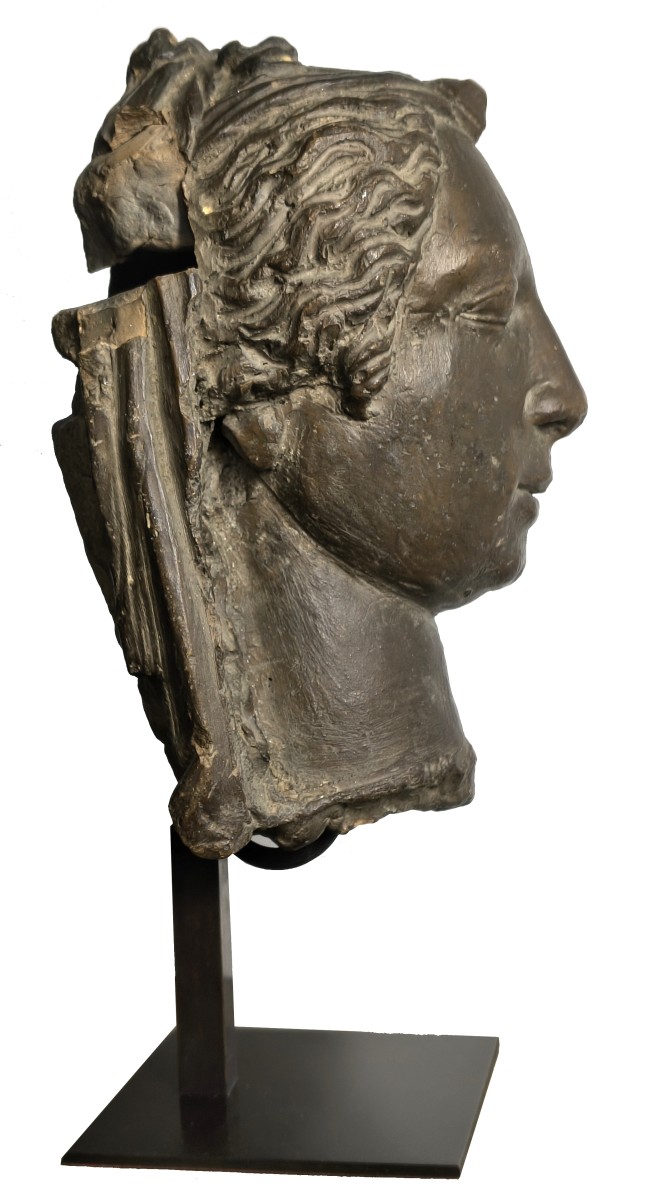

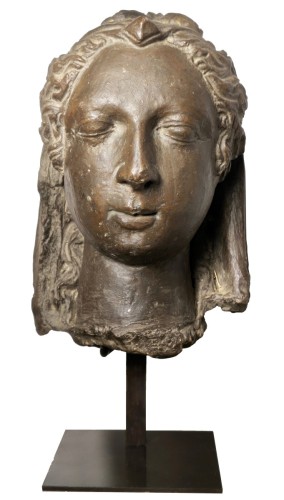
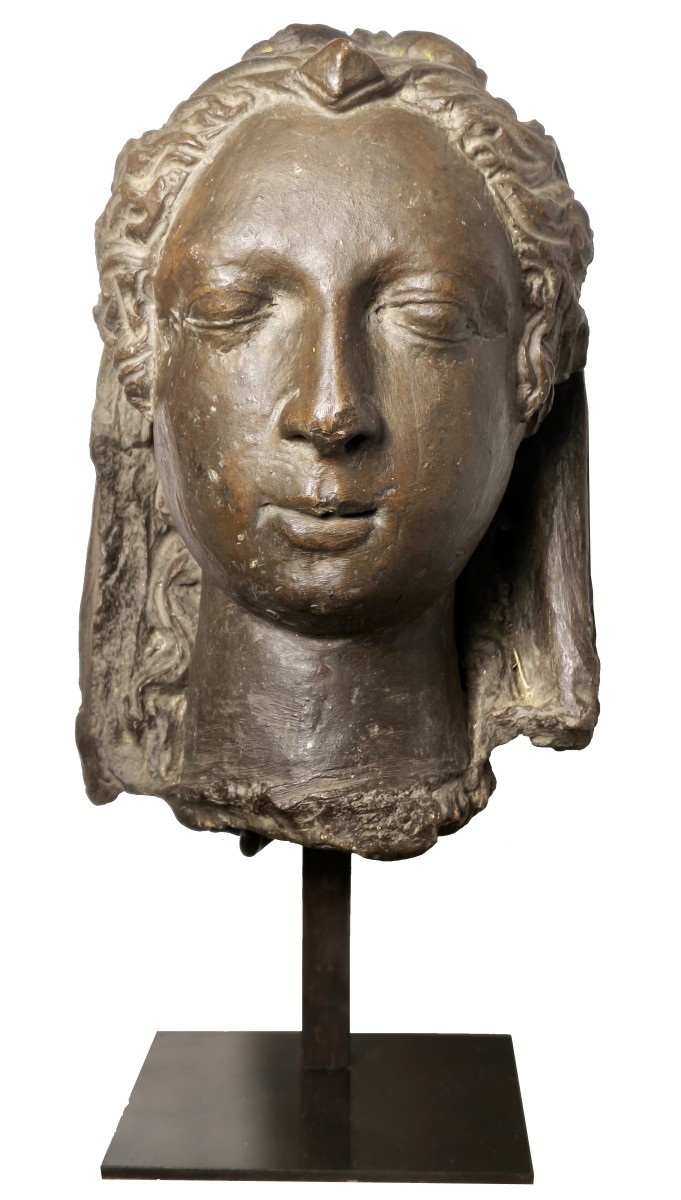
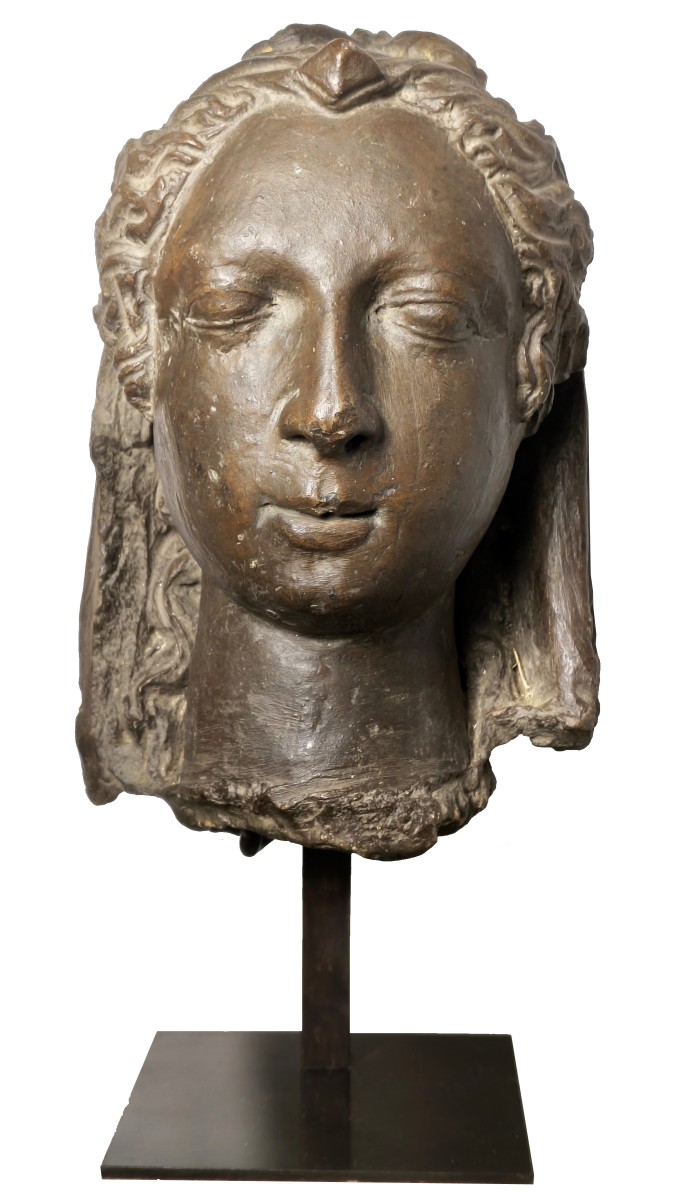
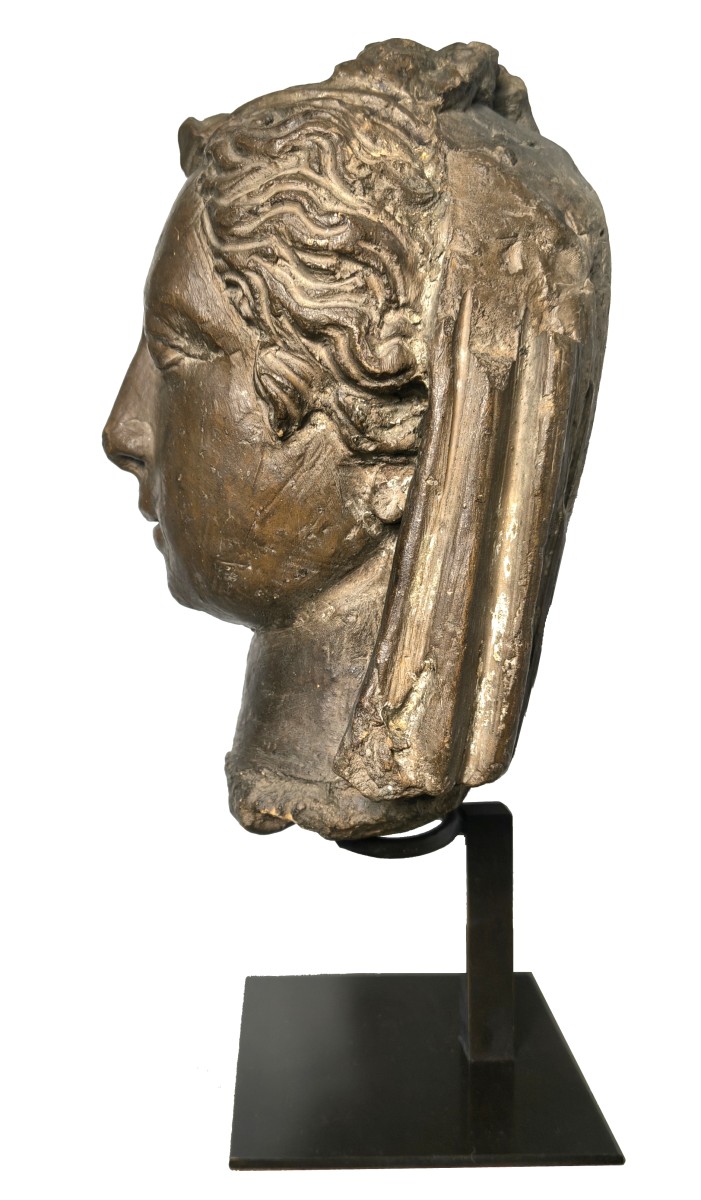
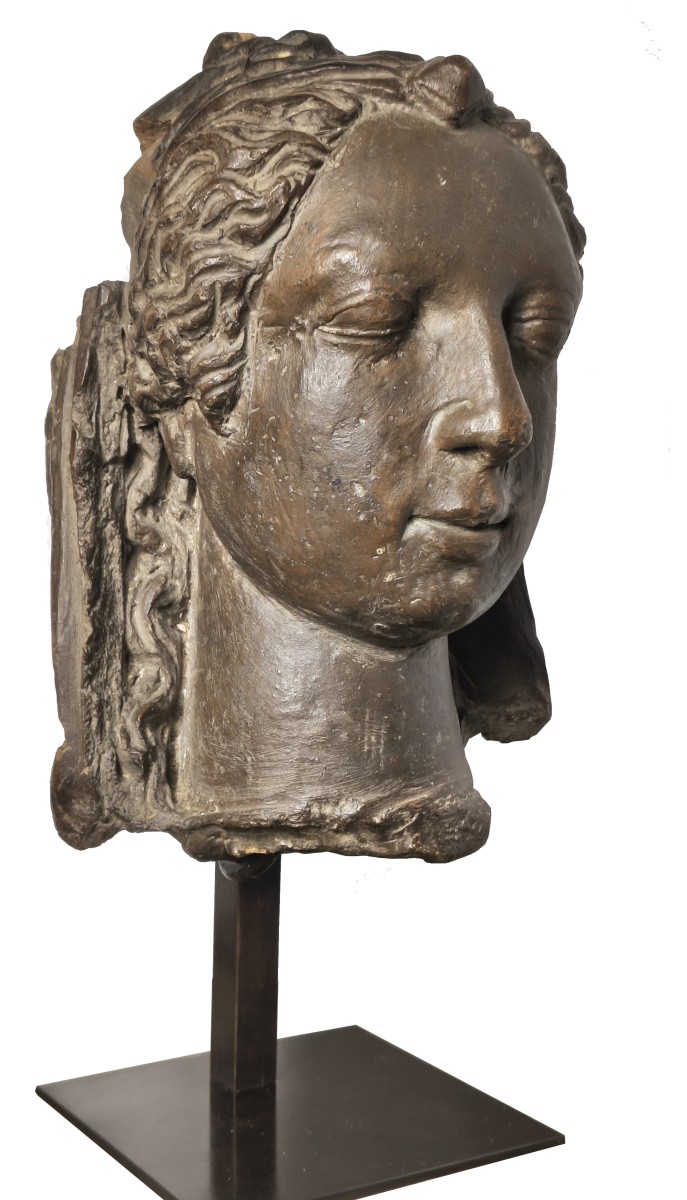
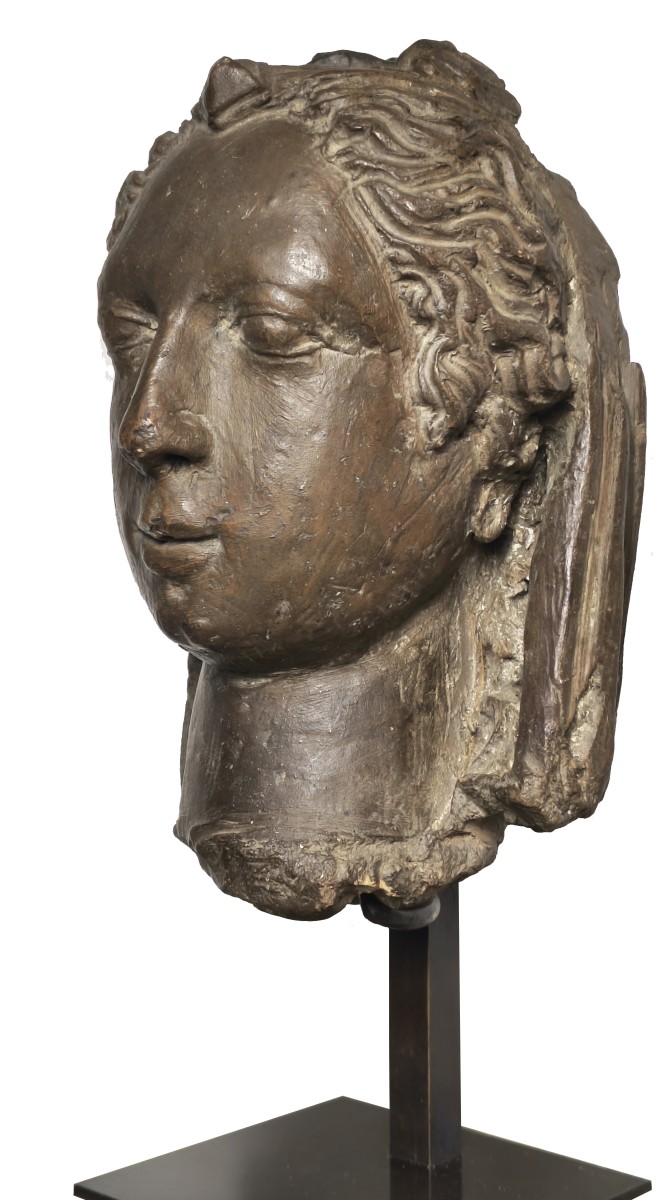
A rare terracotta head of a woman in the style of the Second School of Fontainebleau. The headdress and forehead ornament reflect the court fashion at the turn of the 16th and 17th centuries, a conclusion supported by thermoluminescence dating, which places the final firing between 1550 and 1650.
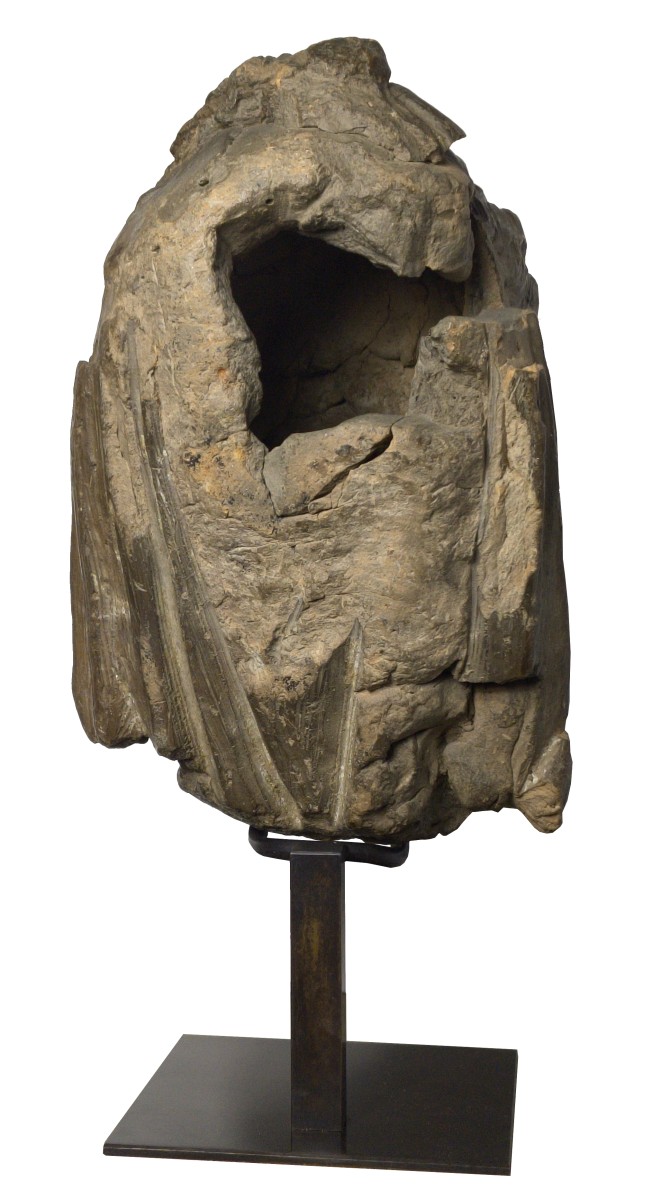
The head features a joint designed for insertion, which, combined with the modeling technique and the quality of its finish, suggests that it was part of a temporary decorative element—for example, a parade mannequin intended to be painted and dressed.
In the late 16th and early 17th centuries, mannequins were used primarily for two purposes. Procession mannequins (or “capipotes”), articulated figures, most often made of wood, intended to be dressed in real clothing and adorned with jewelry during religious processions, with the head almost always being the most meticulously crafted part.
Ephemeral decorative figures for court festivities, used during solemn entrances, masquerades, balls, and ceremonies at the court of the Valois and later the early Bourbons. Artists—whether painters, sculptors, or “puppet makers”—crafted them from lightweight materials such as terracotta, papier-mâché, plaster, cardboard, or wood. Often intended to be painted, dressed, styled, and adorned, they were dismantled or destroyed once the festivities were over. The accounts of Fontainebleau explicitly mention “painters and dollmakers” working on pieces “made of clay, paper, and plaster” for royal receptions.
Several technical and stylistic features of our head link it to this use:
- The head is designed to be attached (via a tenon, socket, or collar).
- The finish is meticulous (face, headdress, forehead ornament), while the reverse side may be more rudimentary or show signs of incomplete firing.
- The style (headdress, forehead ornament) is clearly linked to late 16th-century/early 17th-century court fashion, associated with the Second School of Fontainebleau.
Flaws on the reverse side that appear to date back to the firing process itself. Mounted on a beautiful, custom-made patinated brass base.
Head dimensions: height 21.5 cm – width 13.5 cm – depth 12.5 cm
Total height: 29 cm