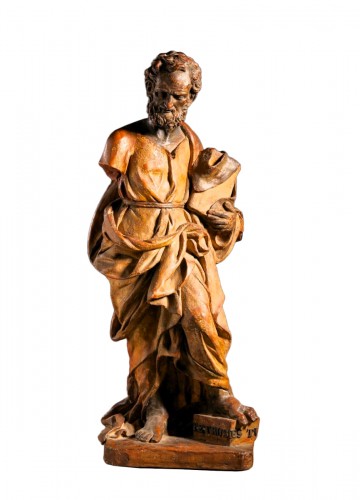
Offered by Dei Bardi Art

Sculptures and works of art from the Middle Ages and the Renaissance
Attributed to Fra Mattia della Robbia (Marco della Robbia, called Fra Mattia; Florence, 1468–1534)
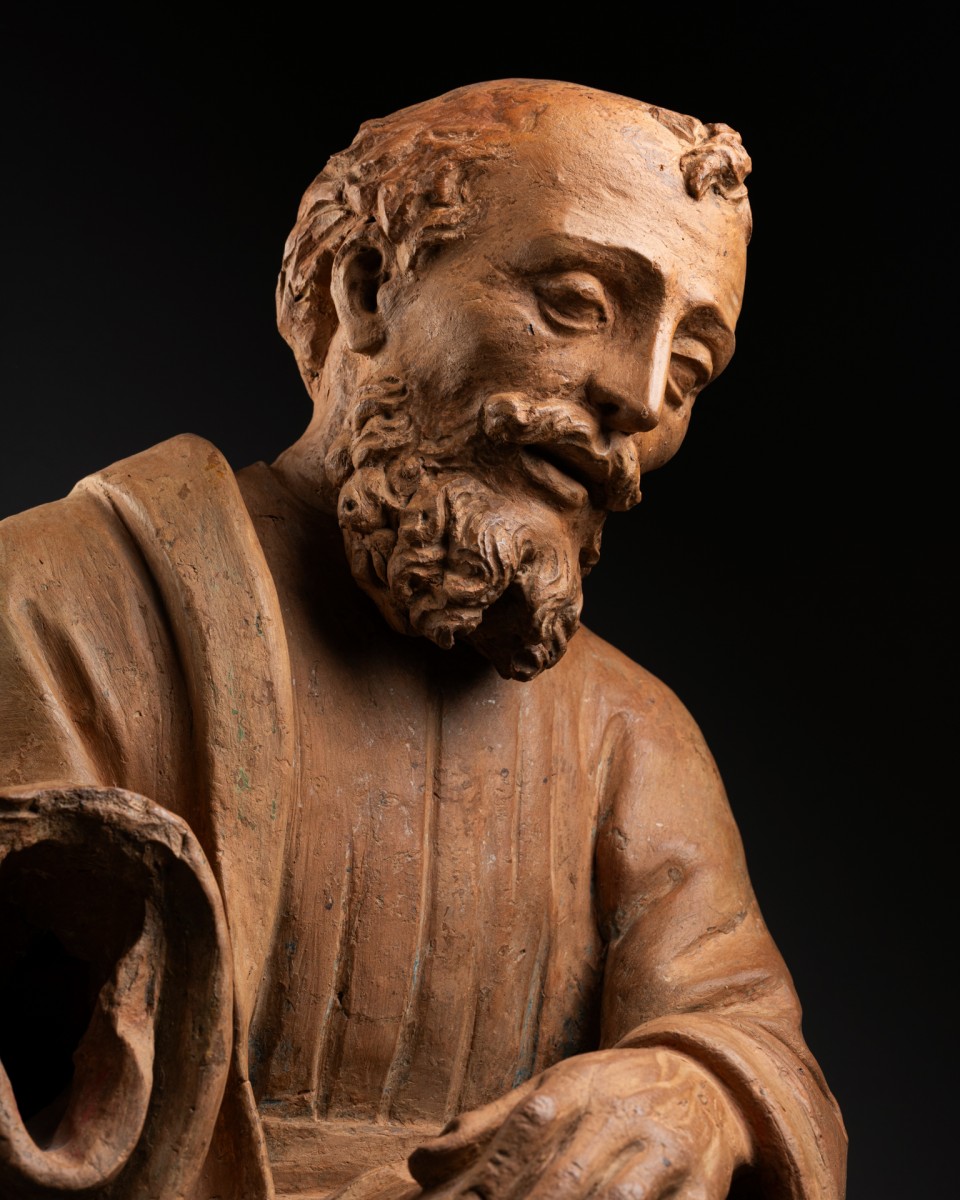
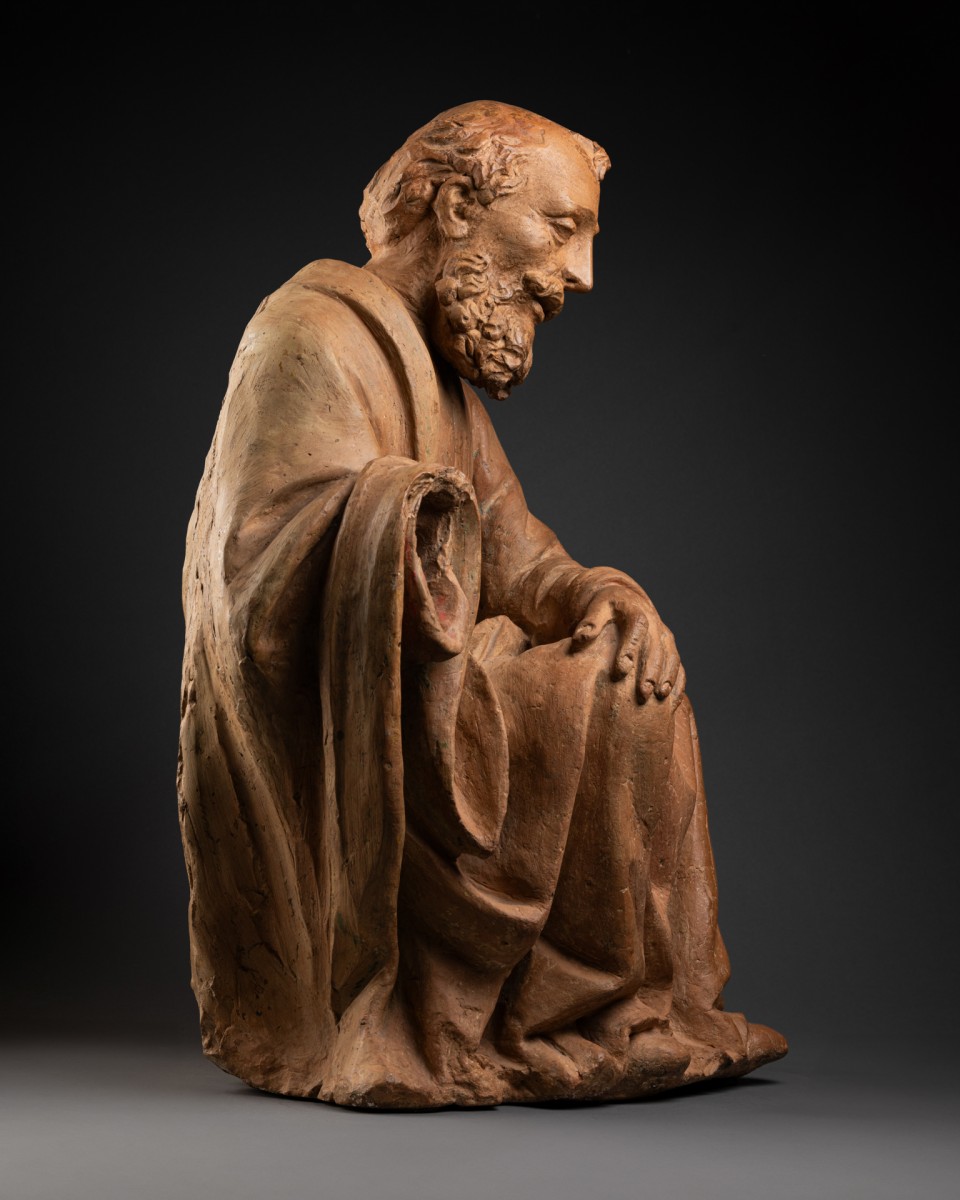
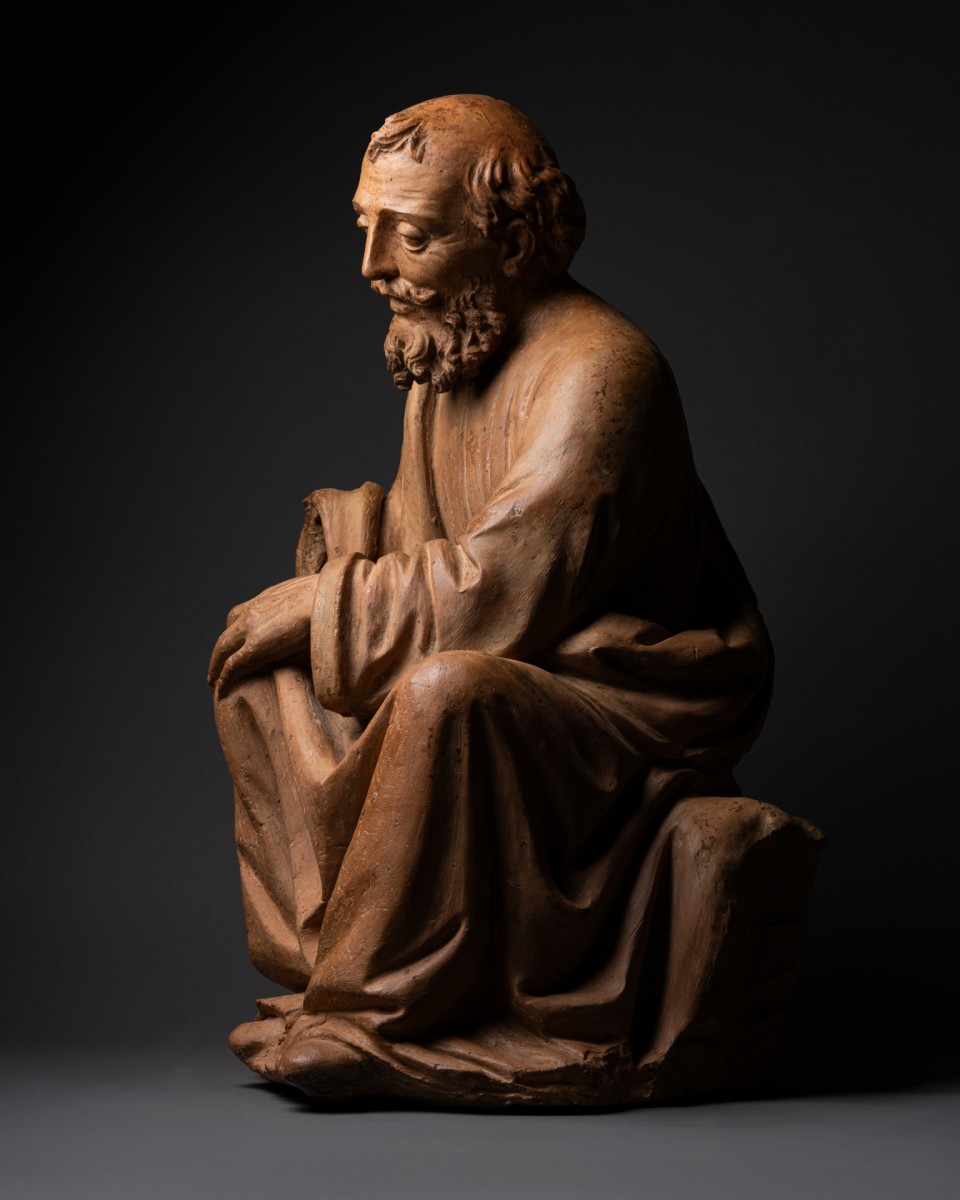
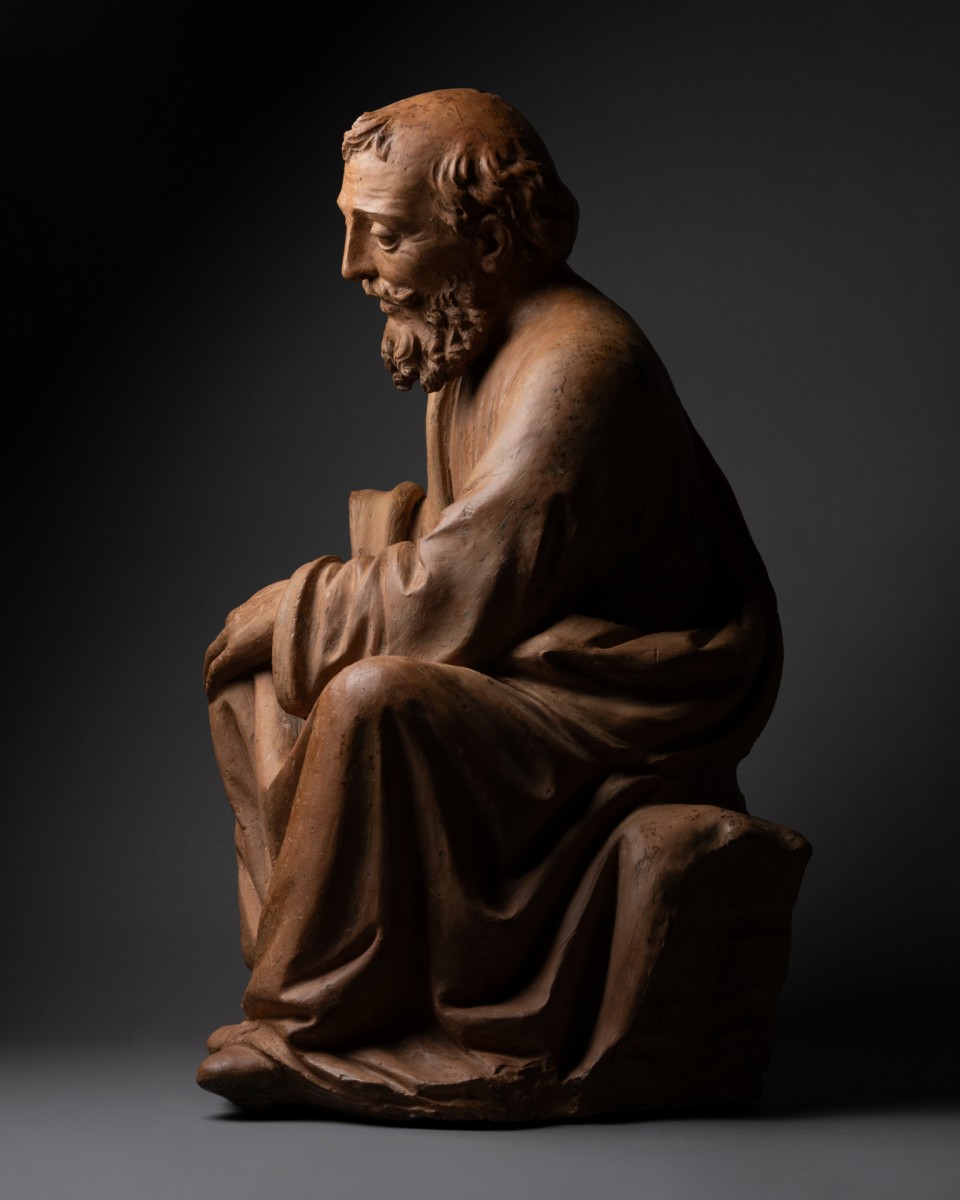
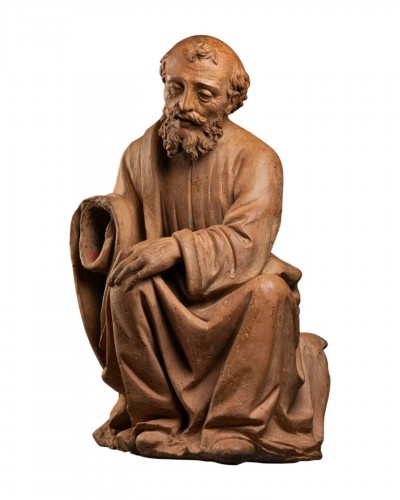
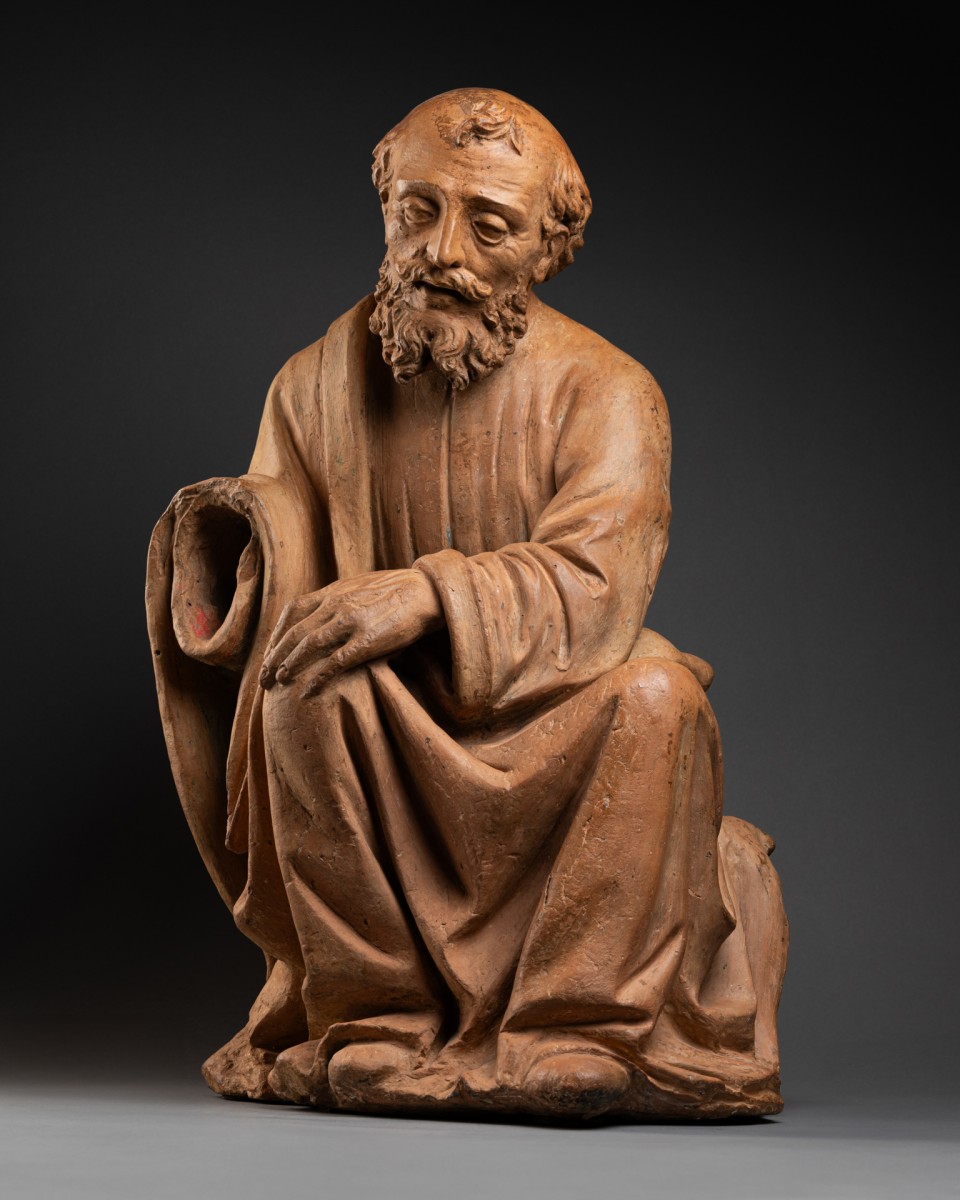
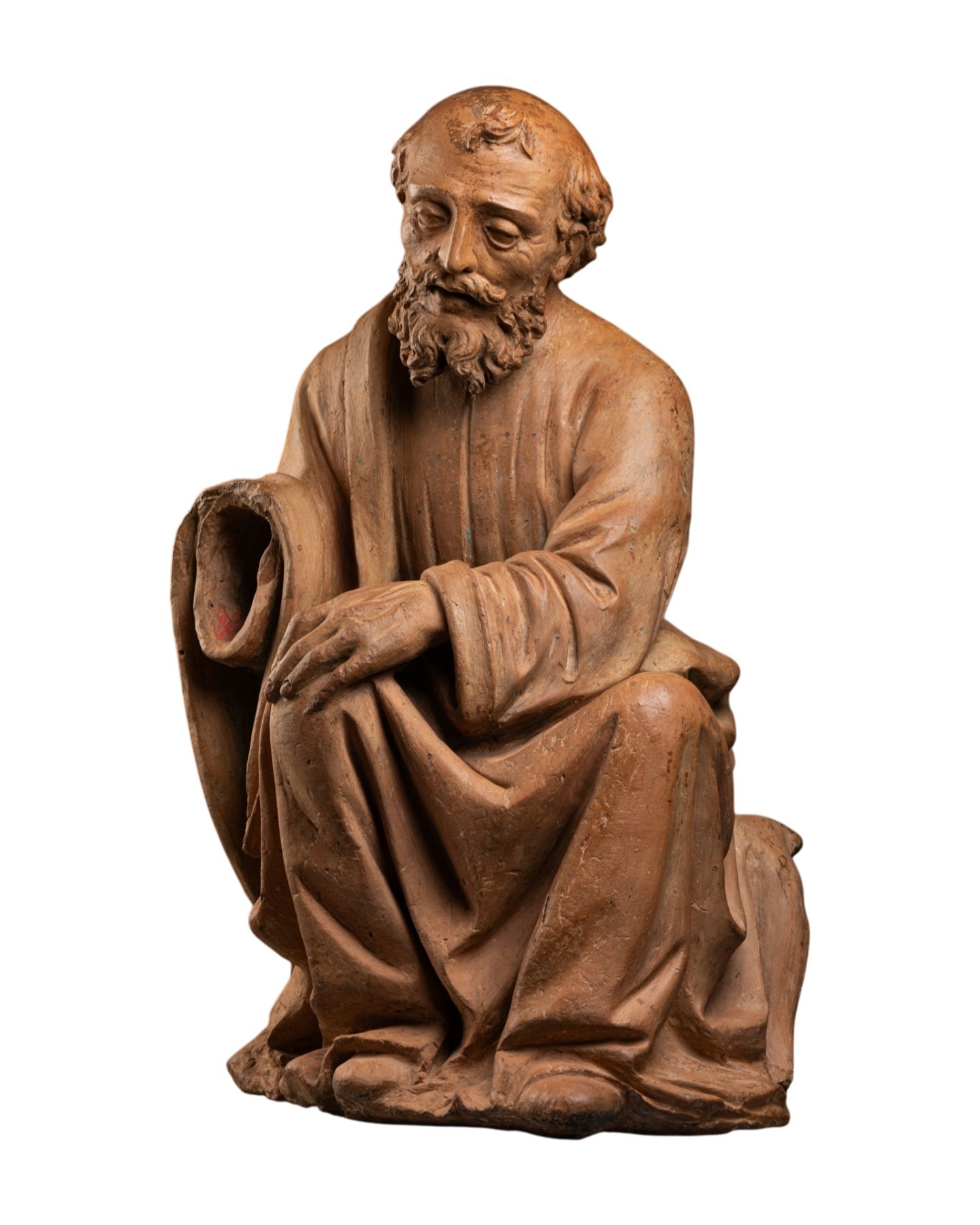
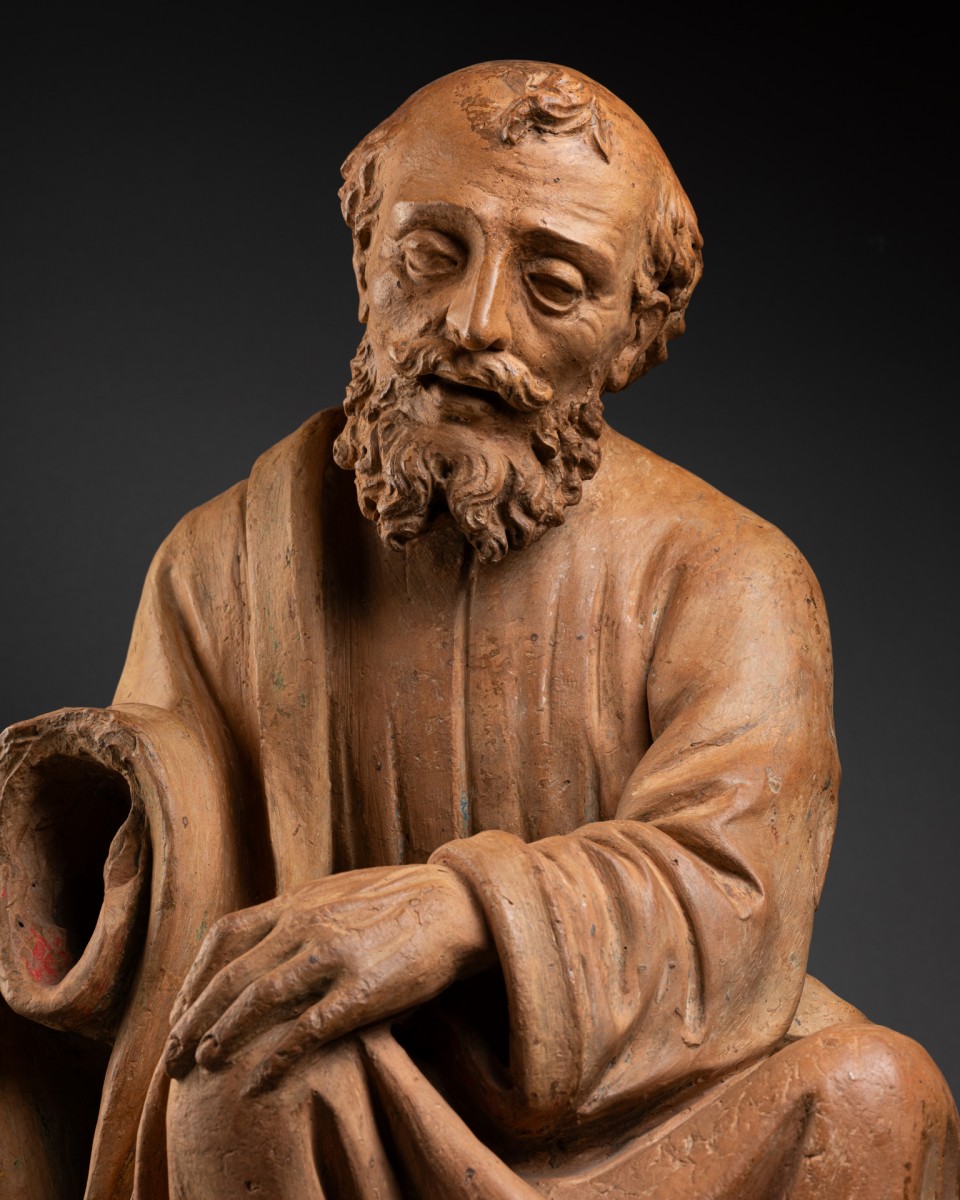
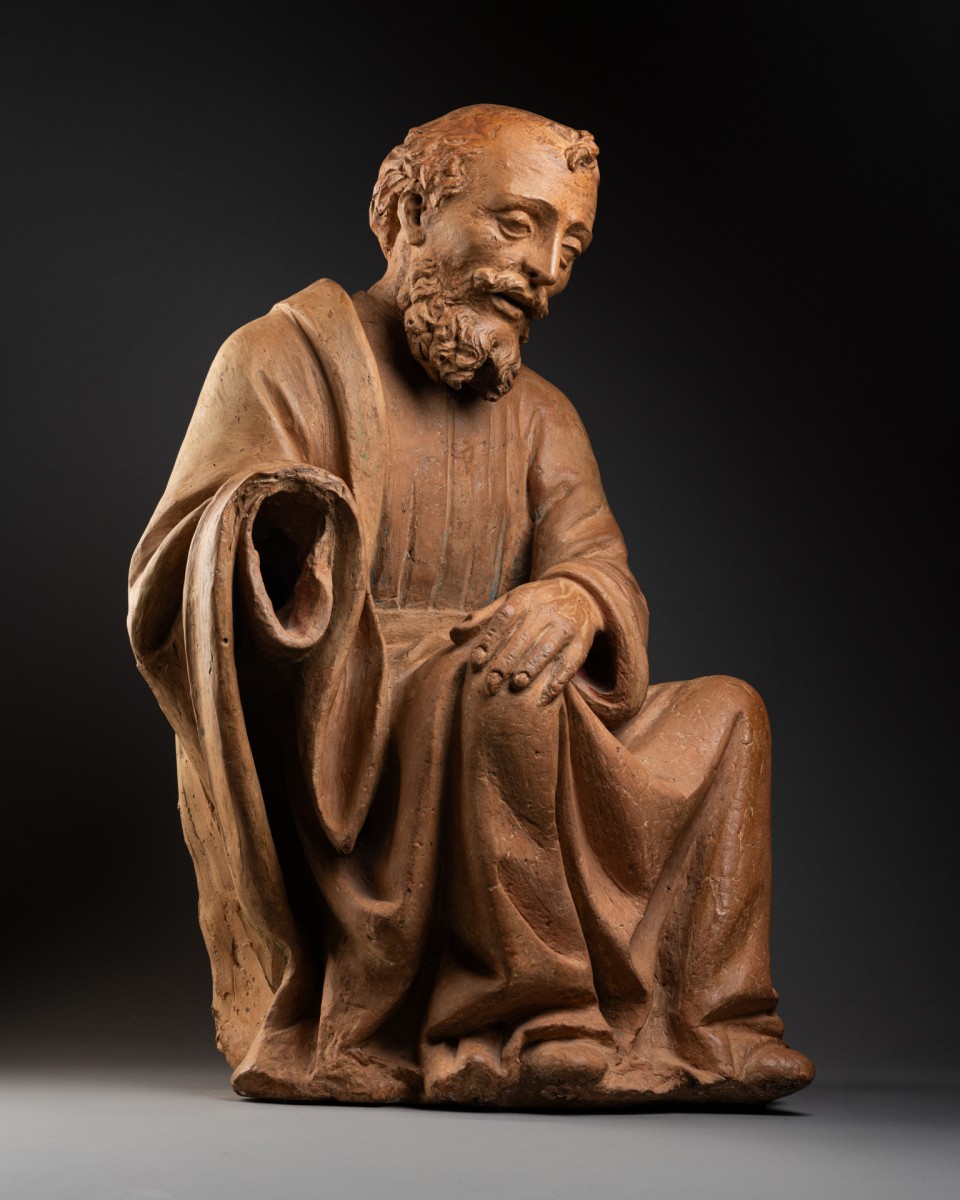
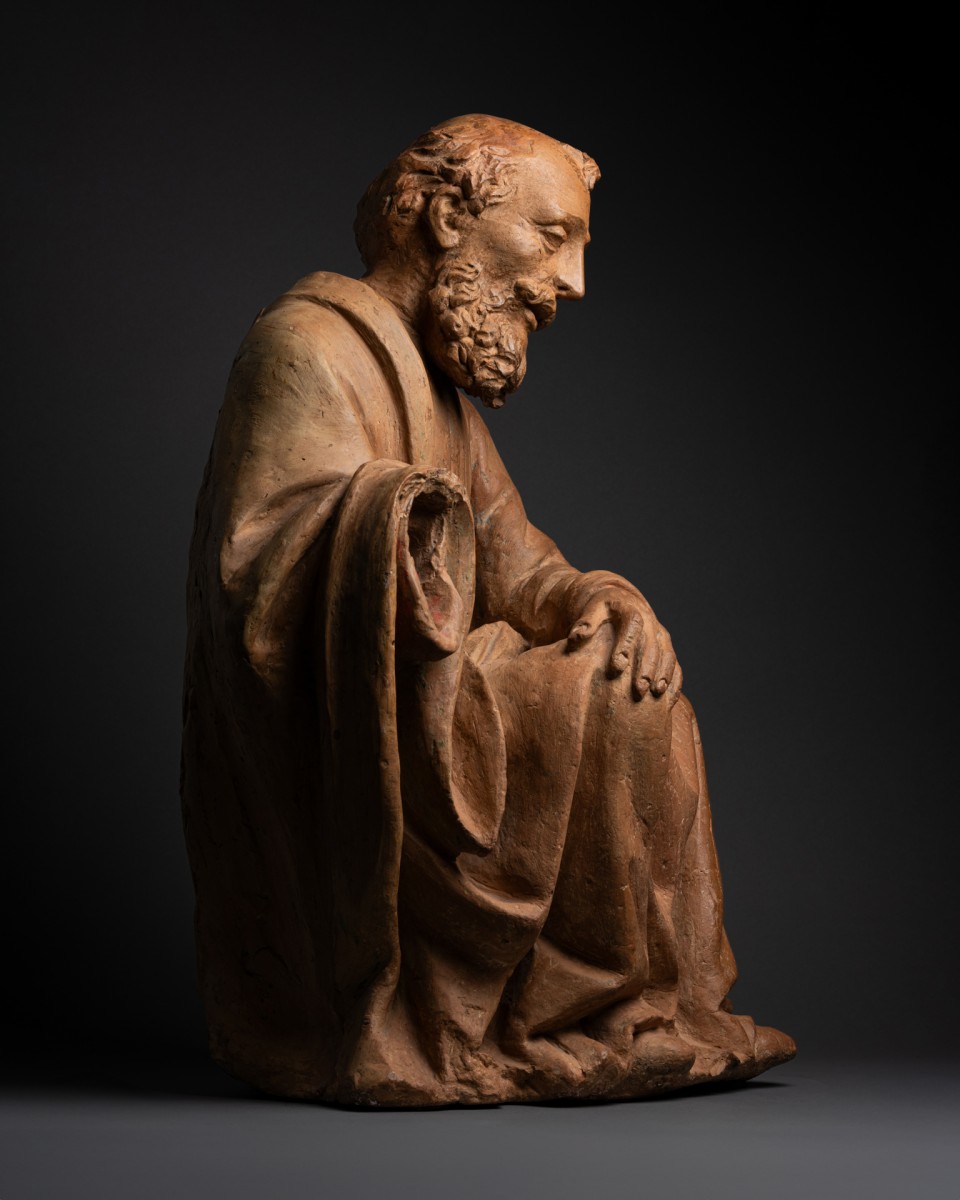
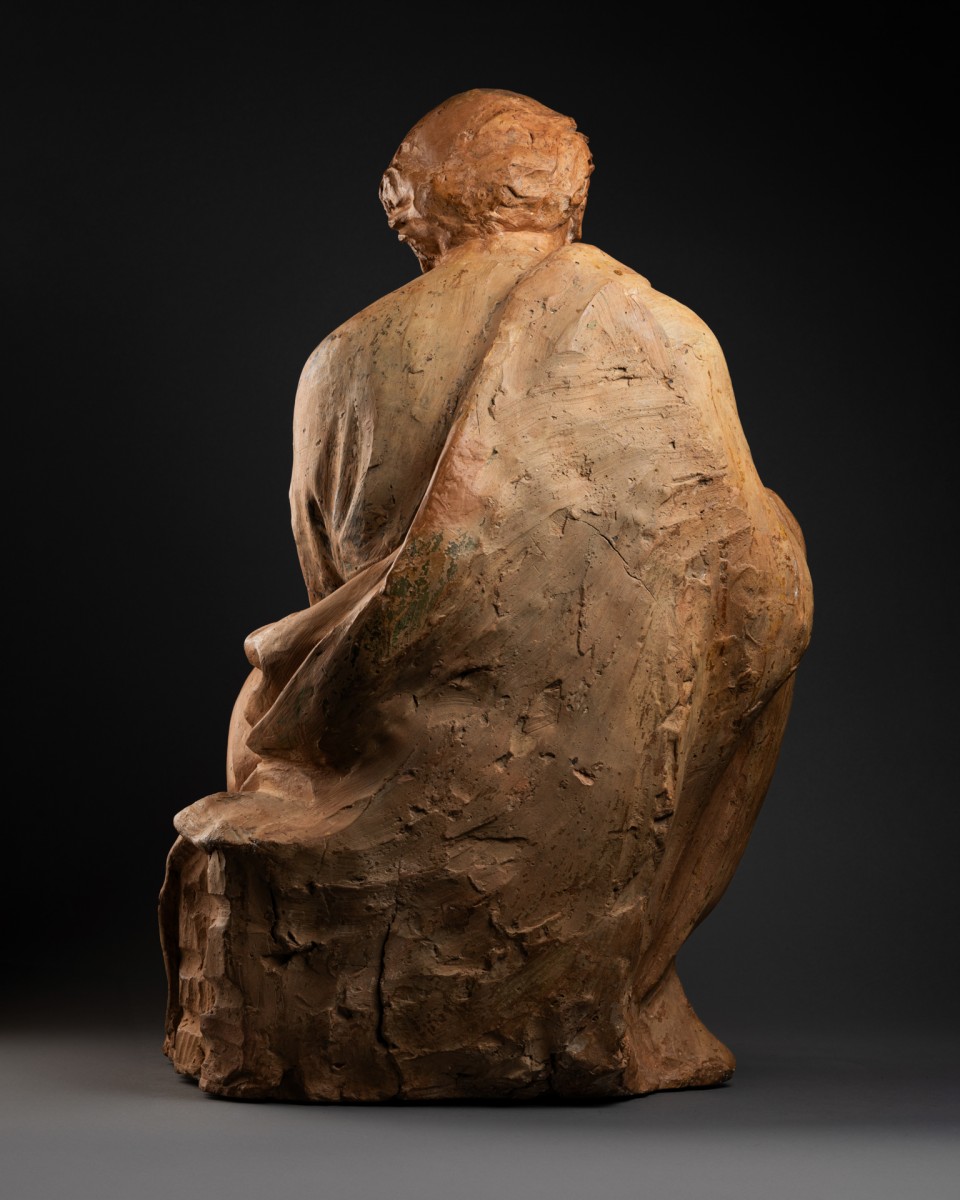
Saint Joseph
Cold-painted terracotta, with traces of polychromy
Tuscany, circa 1505–1510
?55 × 40 × 30 cm
Accompanied by a thermoluminescence analysis certificate
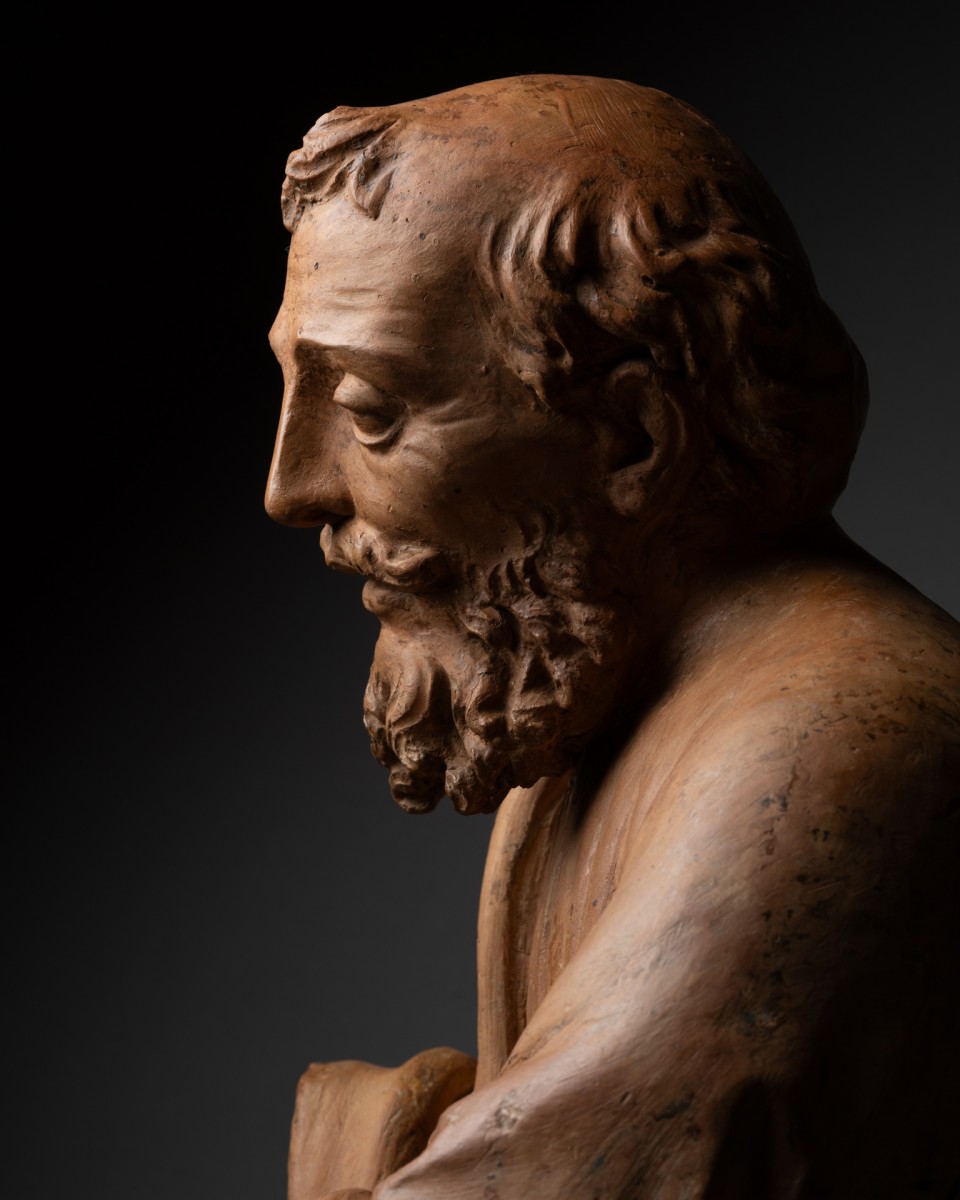
Saint Joseph is depicted seated, his torso inclined slightly forward, one hand resting on his knee, absorbed in an attitude of silent contemplation. His face, marked by age, bears the deeply furrowed features typical of the aged patriarch of biblical iconography; his curled hair, drawn back from the forehead, covers only the temples — a physiognomic type recurring throughout Della Robbia Nativity statuary. The figure would originally have belonged to a crib group of independent, movable figures, within which it likely served as one of the principal elements alongside the Virgin and Child.
The figure of Joseph, long a secondary presence within Christian iconography, gained particular devotional prominence in the fifteenth and sixteenth centuries, as theological emphasis increasingly sought to root Christ's humanity within a domestic, earthly setting. Florence proved especially fertile ground for this development: the production of terracotta crib groups with independent figures flourished there between the late Quattrocento and early Cinquecento, both in the volume of public and private commissions and in the calibre of the artists engaged in their execution. Rudolf Berliner devoted a foundational study to the subject, Die Weihnachtskrippe (1955), and subsequent scholarship by Giancarlo Gentilini has clarified the considerable scale of production issuing from the Della Robbia workshop on Via Guelfa.
It was Andrea della Robbia who first gave the type its most accomplished formulation, notably in the polychrome terracotta crib executed in 1474 for the Duomo of Volterra: a youthful Virgin kneeling before the Child, and a Joseph absorbed in thought. This compositional model was inherited and transmitted by his sons, two of whom — Fra Ambrogio and Fra Mattia — entered the Dominican order under the influence of Savonarola's preaching, which left a decisive mark on the family's artistic production. Fra Ambrogio produced a crib group for the church of Santo Spirito in Siena; Fra Mattia — identified in modern scholarship as Marco della Robbia the Younger (Florence, 1468–1534) — executed one for the Spedale degli Innocenti in Florence, today preserved in the institution's museum and dated there to circa 1500.
It is with this latter group, and specifically with its figure of Saint Joseph, that the present sculpture shows its closest affinities: the same seated, meditative pose; the same belted tunic; the same drapery arranged across the knees; comparable treatment of the furrowed hands and face; and the same curled hair drawn back from the forehead. The choice of cold-painted rather than glazed terracotta — the technique for which the workshop was otherwise renowned — reflects a comparable set of concerns, driven as much by practical considerations of speed and material availability as by an ideological alignment with Savonarola's call for artistic humility, which regarded costlier media such as marble and bronze as ill-suited to expressions of pious simplicity.
Taken together, these stylistic and technical features support a proposed connection to the workshop of Fra Mattia della Robbia, though an autograph attribution cannot be asserted with certainty absent direct comparative examination.
Comparanda :
Andrea della Robbia, polychrome terracotta crib, 1474, Duomo of Volterra.
Antonio Rossellino, terracotta crib group, c. 1480, Metropolitan Museum of Art, New York.
Fra Ambrogio della Robbia, terracotta crib group, church of Santo Spirito, Siena.
Fra Mattia della Robbia (Marco della Robbia the Younger), Madonna in adorazione e San Giuseppe, polychrome terracotta, c. 1500, Museo degli Innocenti, Florence.