Offered by Dei Bardi Art
REQUEST INFORMATION

Sculptures and works of art from the Middle Ages and the Renaissance
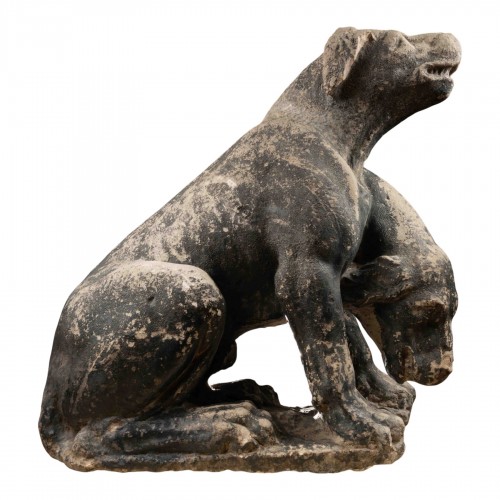
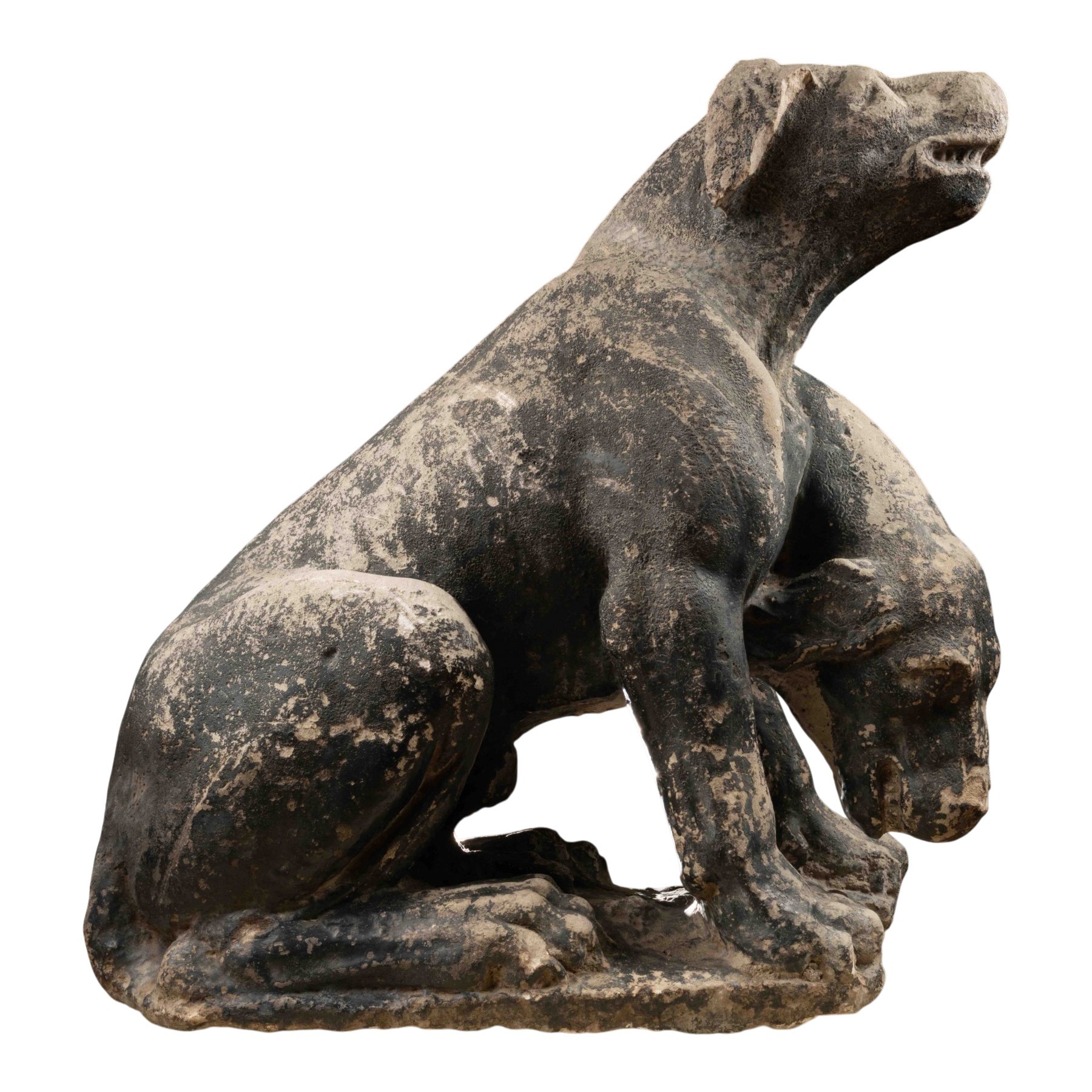
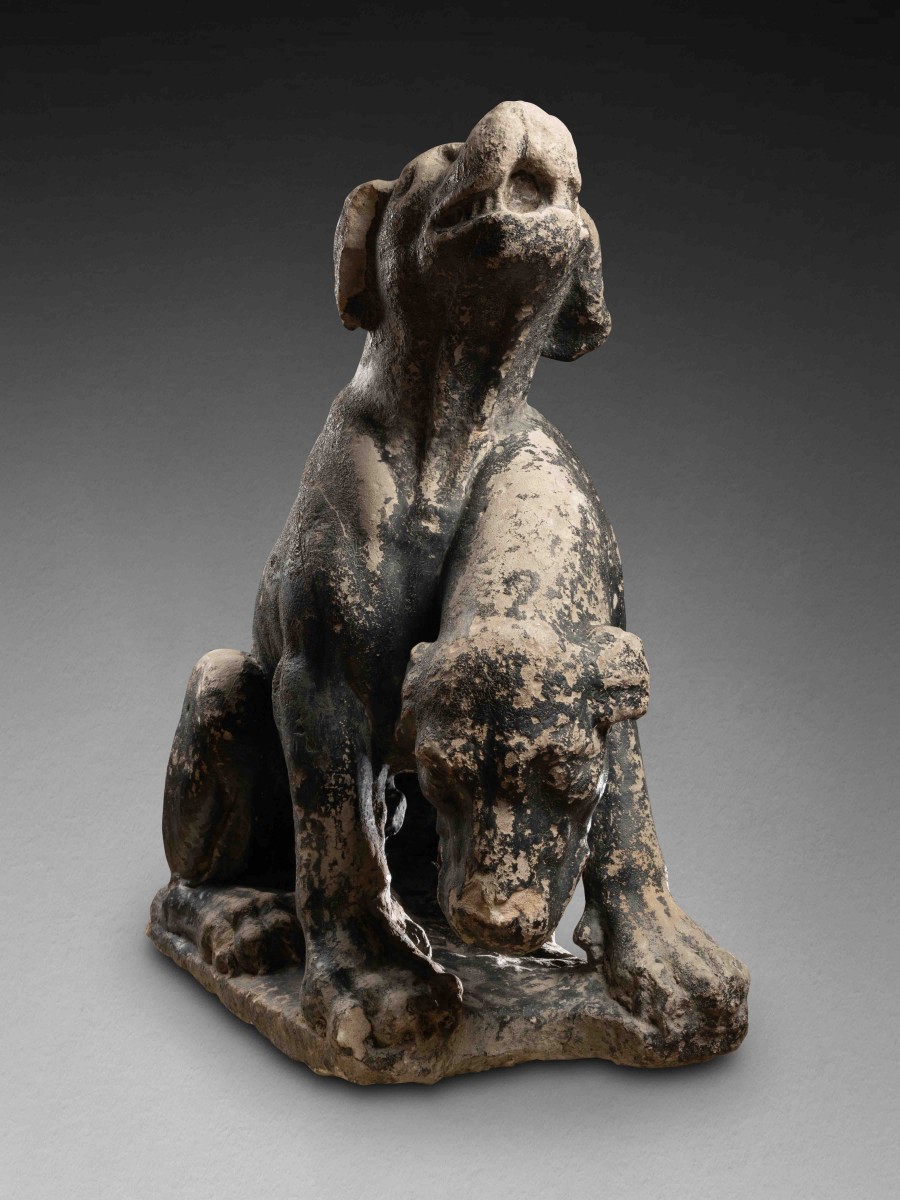
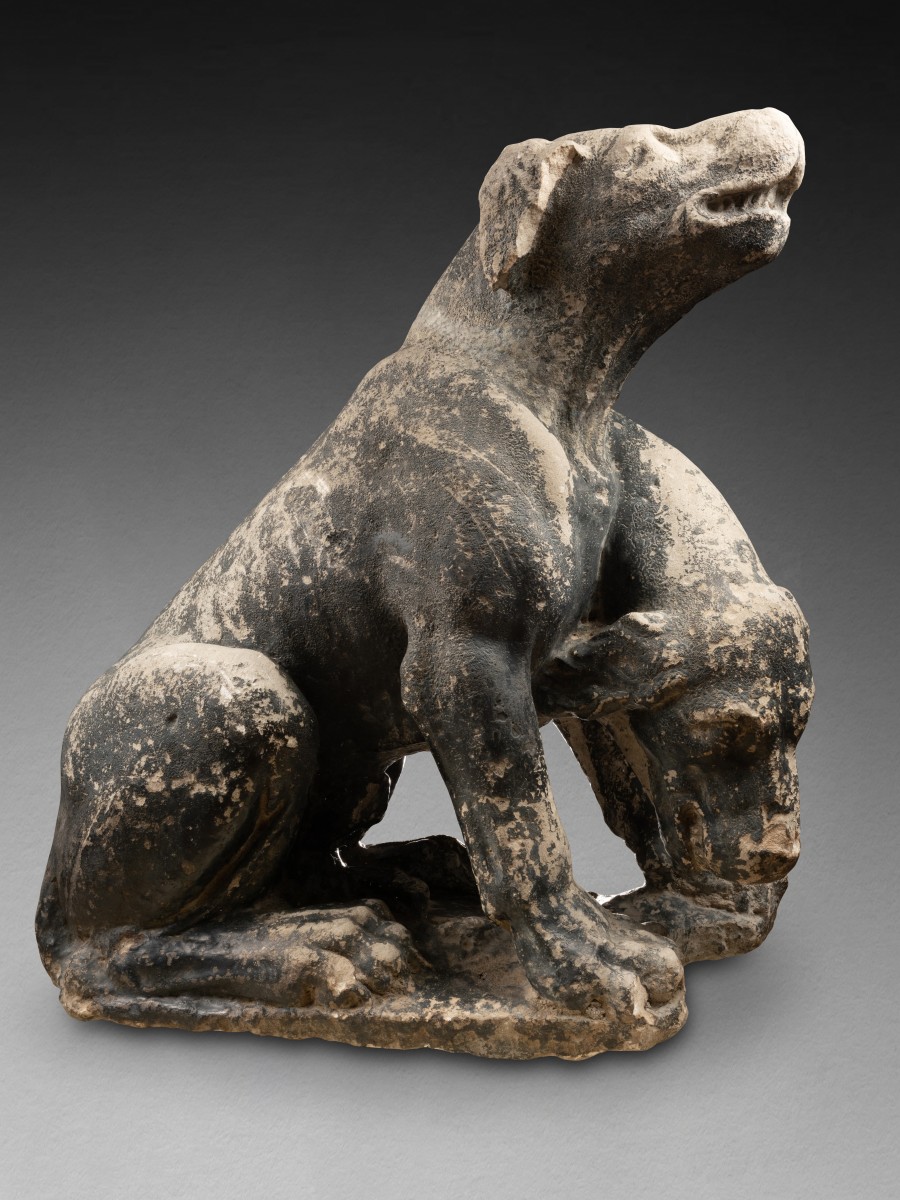
Cerberus
Black painted limestone
Italy, 17th century
Height: 80 cm — Width: 69 cm — Depth: 36 cm?
Depicting the fearsome three-headed hound of the Underworld, this imposing sculpture in black-painted limestone presents Cerberus seated upon a naturalistically rendered rocky base, his forelegs raised in a posture of vigilant menace. The tense musculature, taut skin revealing the ribs, and long, sinewy limbs give the creature a striking physical vitality. Of the three heads — one of which is now lost — two rose vertically along the principal axis, lending the composition a striking verticality that amplifies the monument's imposing presence. The musculature is rendered with expressive vigour characteristic of the Italian Baroque sensibility, revealing a sculptor well acquainted with antique prototypes and their reinterpretation within the culture of aristocratic Italian villa decoration. The surface treatment — a black pigmented coating that evokes either a bronze patina or the darkness of the infernal realm — forms an integral part of the work's iconographic programme.
In Greek mythology, Cerberus was the three-headed hound of Hades, offspring of Echidna, the half-serpent, half-woman monster, and Typhon, a primordial force of destruction and storm. His role was to prevent the dead from escaping the Underworld and the living from entering it.
Dante placed Cerberus at the entrance to the Third Circle of Hell, where the gluttonous are punished under an eternal storm of hail and snow.
Terrifying even to the dead, Cerberus was subdued only by the greatest heroes: Hercules, through brute strength, and Orpheus, through the harmony of his lyre.
The rarity of this sculpture lies in the very nature of its conception: Cerberus treated as an independent, monumental figure in the round. While the three-headed hound appears frequently as a subsidiary figure in major sculptural groups of the period — crouching at the feet of Pluto in Bernini's Rape of Proserpina (1621–1622, Galleria Borghese, Rome), or rendered in bronze in works attributed to Tiziano Aspetti (Metropolitan Museum of Art, New York) and in casts derived from Rosso Fiorentino's composition — his treatment as a fully autonomous sculptural subject at this scale remains exceptional within the Italian Seicento production. No direct comparable in stone of equivalent dimensions is presently known for this period.
The original function of this work was almost certainly decorative and programmatic: a grotto portal, a chthonian fountain, a nymphaeum threshold, or a garden entrance within the tradition of the Italian giardino all'italiana, contexts in which infernal deities and mythological guardians served as symbolic boundary markers between worlds. The tradition of the Italian Baroque garden — as exemplified by the Villa Borghese, Villa Farnese at Caprarola, or Villa Cetinale in Tuscany — accorded a privileged place to mythological figures evoking passage, metamorphosis, and meraviglia. This sculpture belongs fully to that tradition while distinguishing itself through the singular audacity of its autonomous conception.