Offered by Dei Bardi Art
REQUEST INFORMATION

Sculptures and works of art from the Middle Ages and the Renaissance
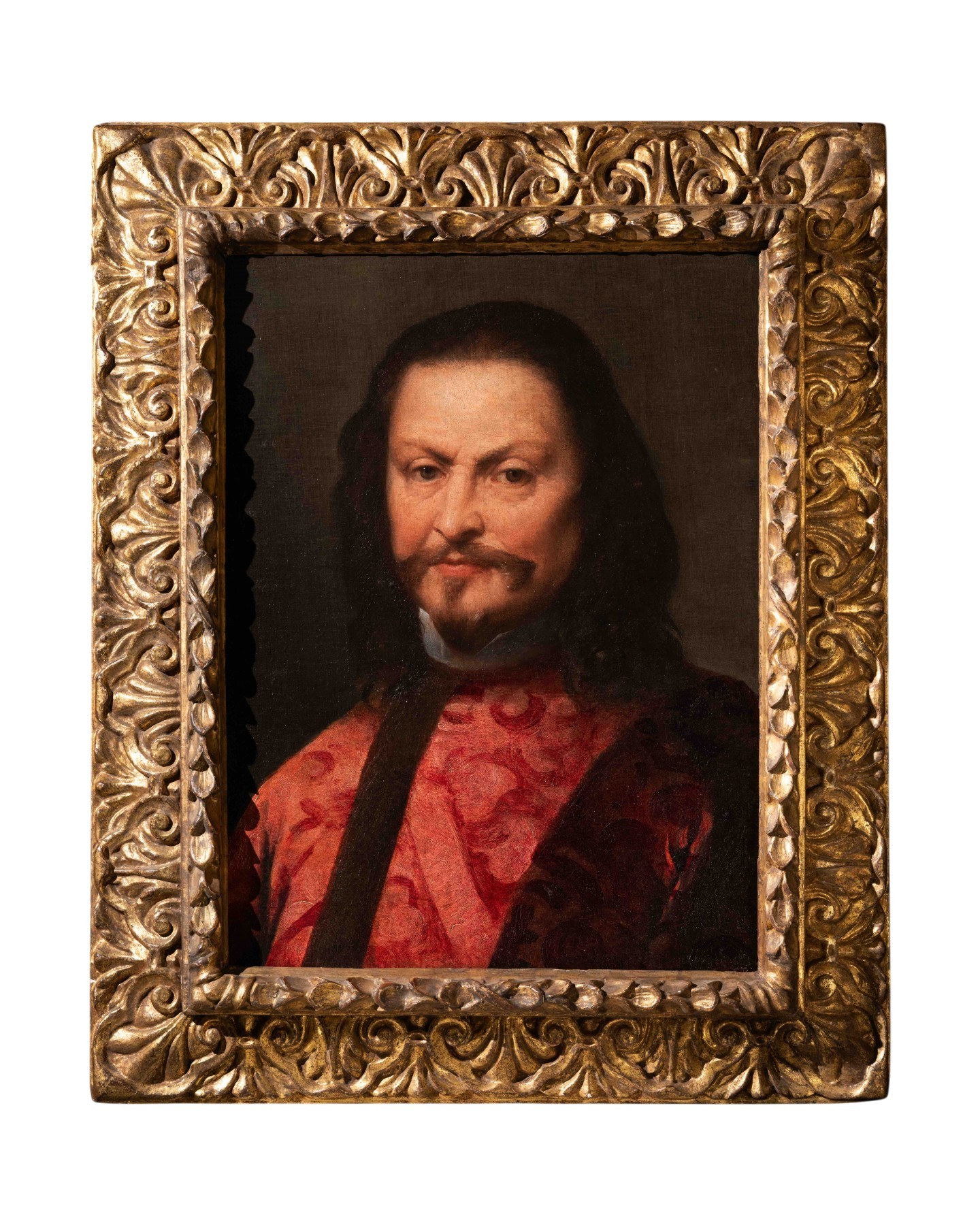
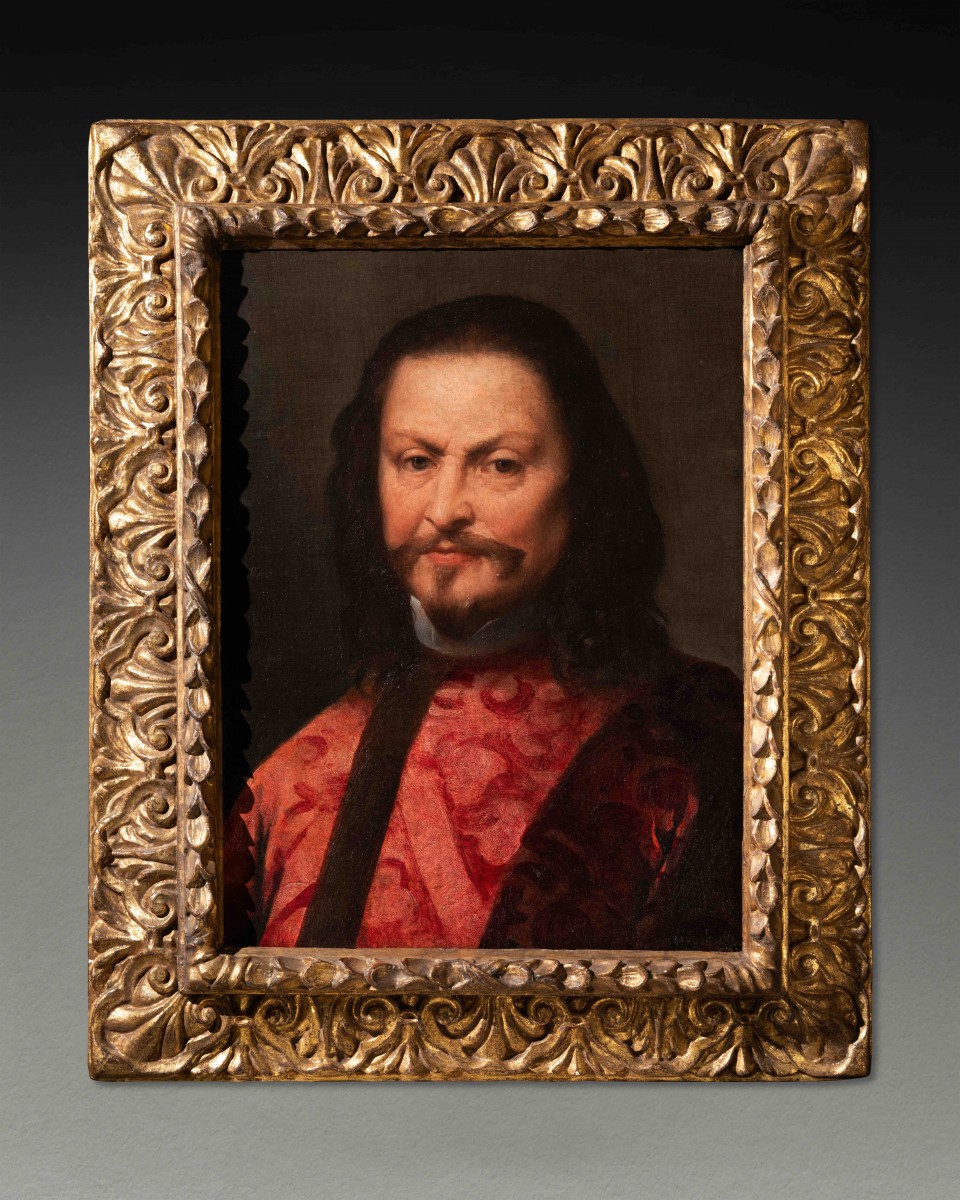
Venetian School, first third of the seventeenth century?Presumed Portrait of Paolo Giordano II Orsini, Duke of Bracciano (1591–1656)?
Oil on canvas
contemporary carved and giltwood frame
64,5 x 47 cm ; 83 x 66 with the frame
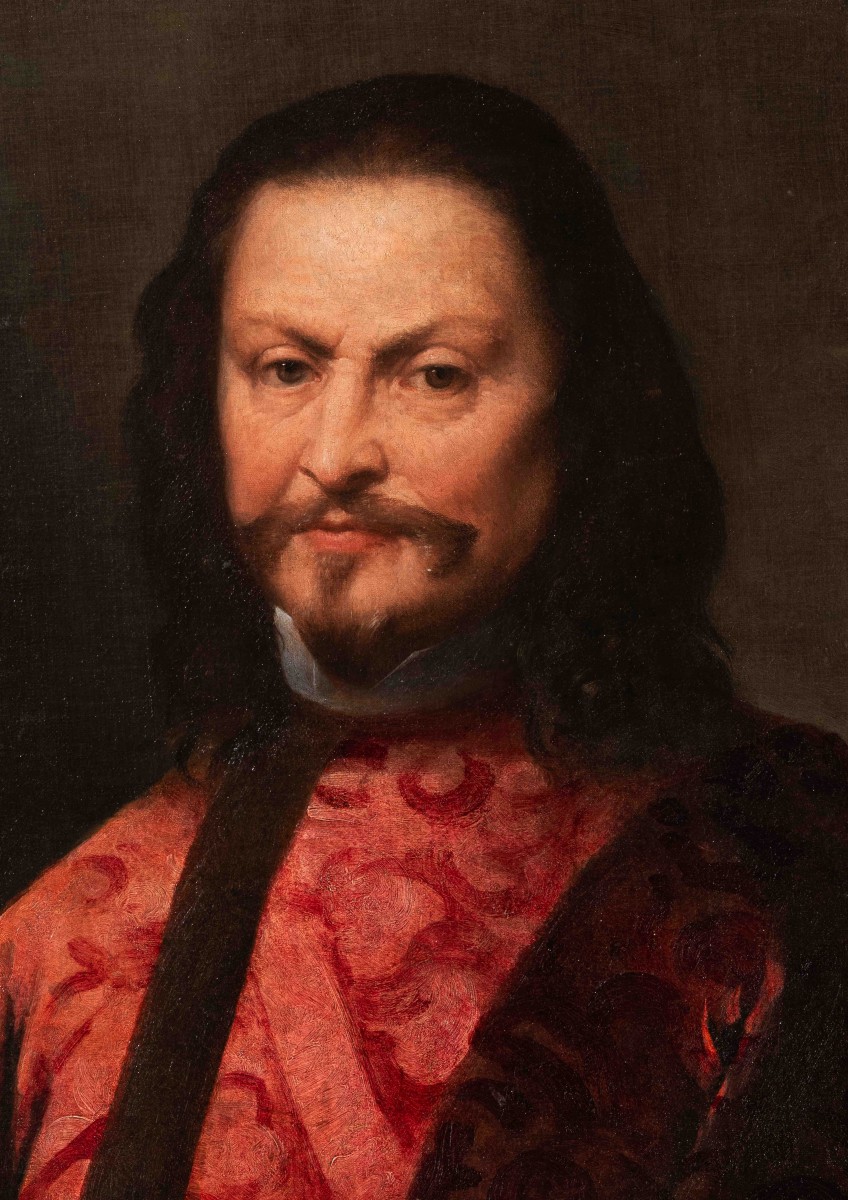
This three-quarter bust portrait depicts a mature man whose commanding features and direct gaze give the likeness considerable psychological presence. Strongly defined brows, penetrating eyes, and a firmly closed mouth convey gravity and self-mastery, while the upturned moustache and narrow pointed beard correspond to a facial type favoured among European elites in the second quarter of the century. The sitter wears a sumptuous crimson silk doublet enriched with elaborate embroidery, crossed by a dark leather baldric that discreetly signals his rank. The sober ochre-brown background, free of architectural or symbolic elements, isolates the figure and heightens both its psychological intensity and the dignity of his station.
The handling demonstrates genuine pictorial assurance in the treatment of materials: subtle modulation of light across the velvet, nuanced differentiation of textures, and a measured chiaroscuro inherited from Titian. These qualities, together with the breadth of touch and the restrained compositional format, place the work within the orbit of the Venetian School of the early seventeenth century, close to the manners of Domenico Tintoretto, Leandro Bassano, and Palma il Giovane.
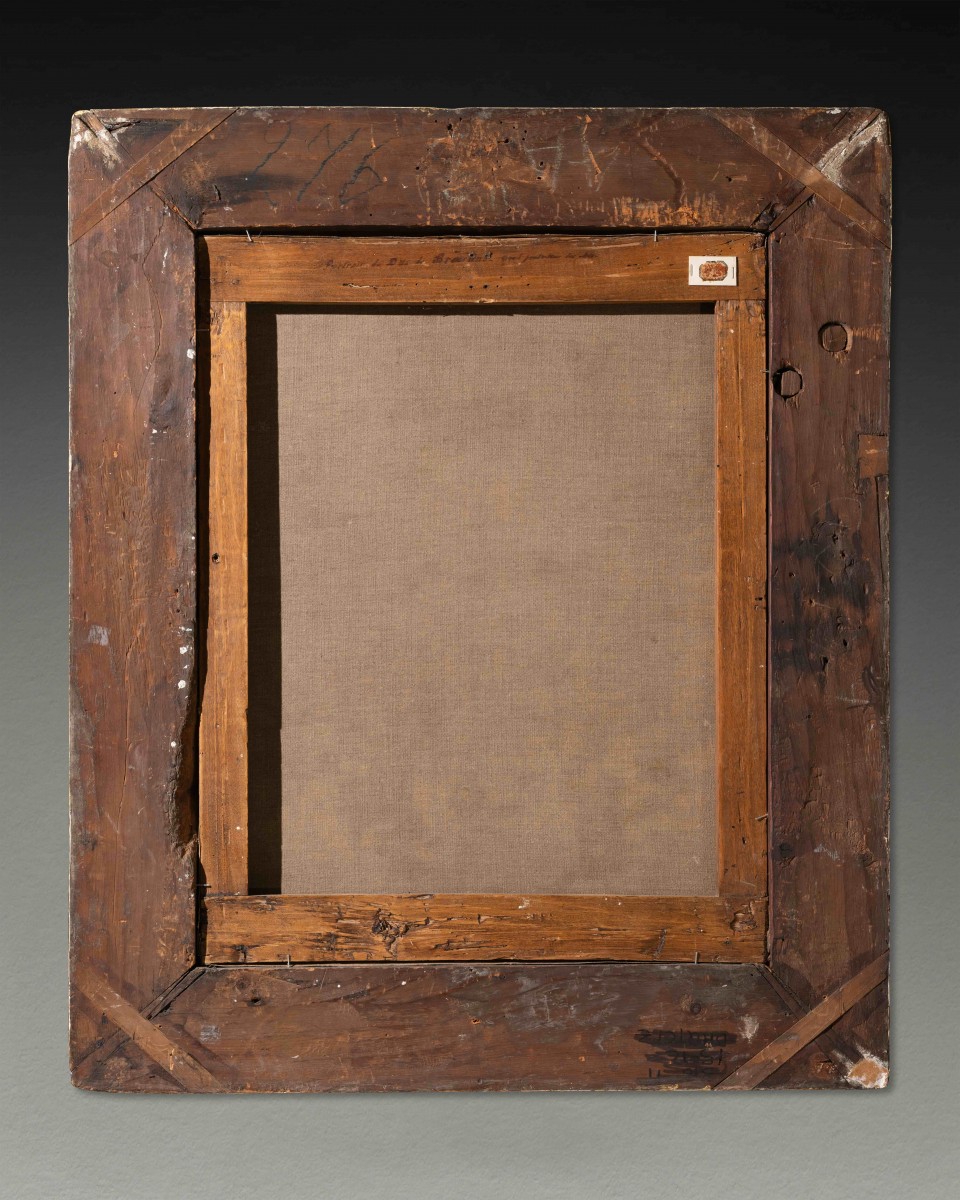
An old inscription on the reverse of the canvas identifies the figure as "Duke of Bracciano, Grand Protector of the Arts" — a title that points convincingly to Paolo Giordano II Orsini (1591–1656). The sitter's apparent age, in his fifties or sixties, and his costume, consistent with the fashions of the 1630s to 1650s, support this hypothesis, though a definitive identification cannot be established with certainty.
Third Duke of Bracciano, poet, amateur painter, and discerning collector, Paolo Giordano II Orsini assembled at his castle on Lake Bracciano a prestigious collection that included works by Tintoretto, Salvator Rosa, and Daniele da Volterra, alongside engravings by Dürer and sculptures by Bernini. His authority in matters of taste was such that both Cardinal Mazarin and Queen Christina of Sweden sought his counsel. Whether the portrait represents Paolo Giordano II himself or another eminent member of the Orsini family, it stands as an eloquent testament to the refinement and cultural ambition of one of Italy's most distinguished aristocratic houses.
The carved and giltwood frame, decorated with scrolling acanthus leaves and foliate ornament, is contemporary with the painting.