Offered by Antichità Castelbarco

Francesco Cairo (Milan 1607 – 1665), workshop of
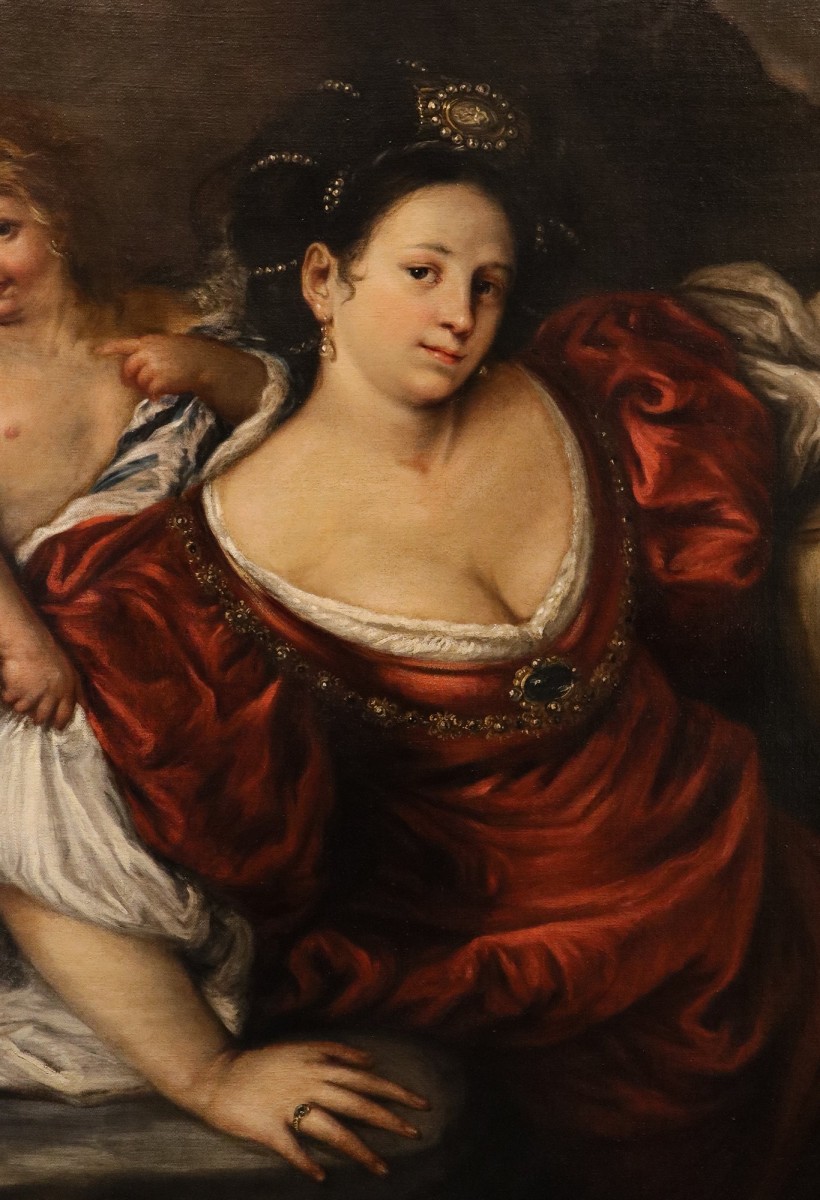
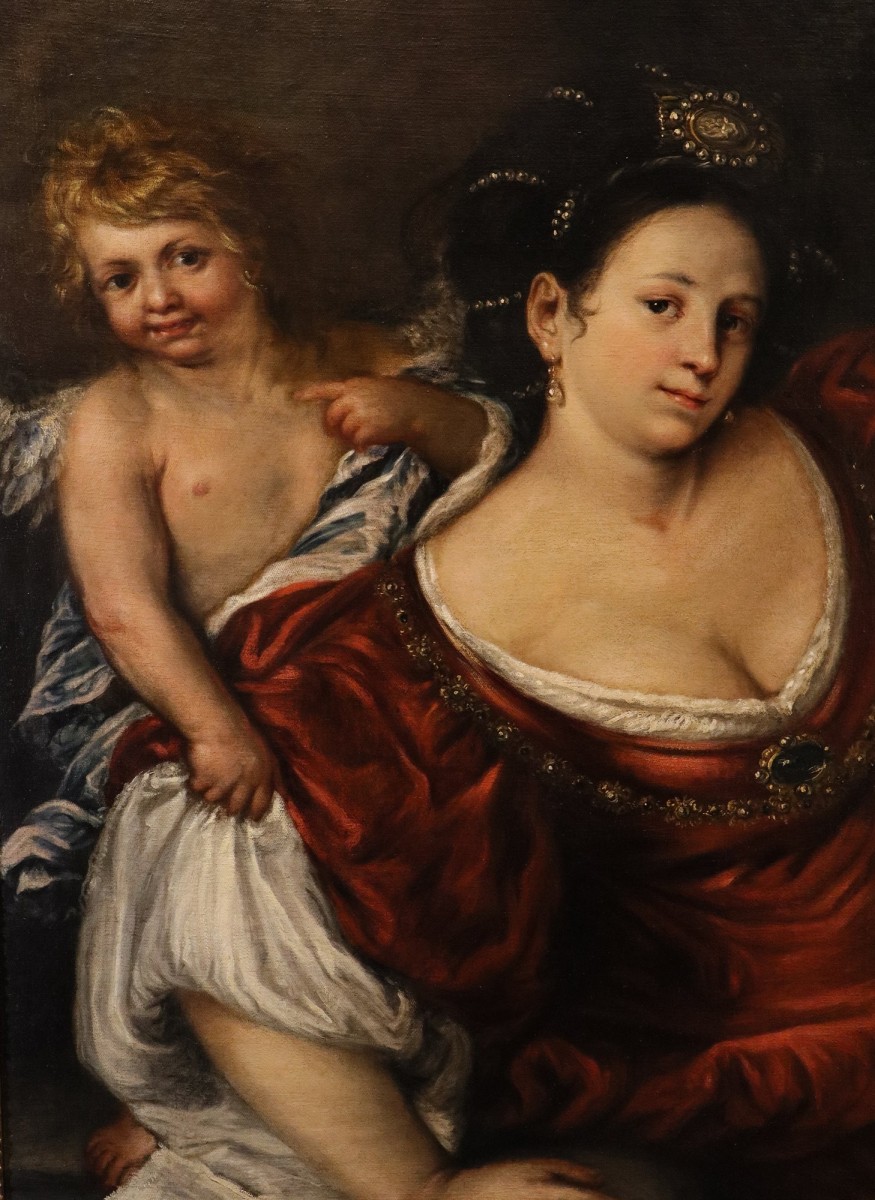
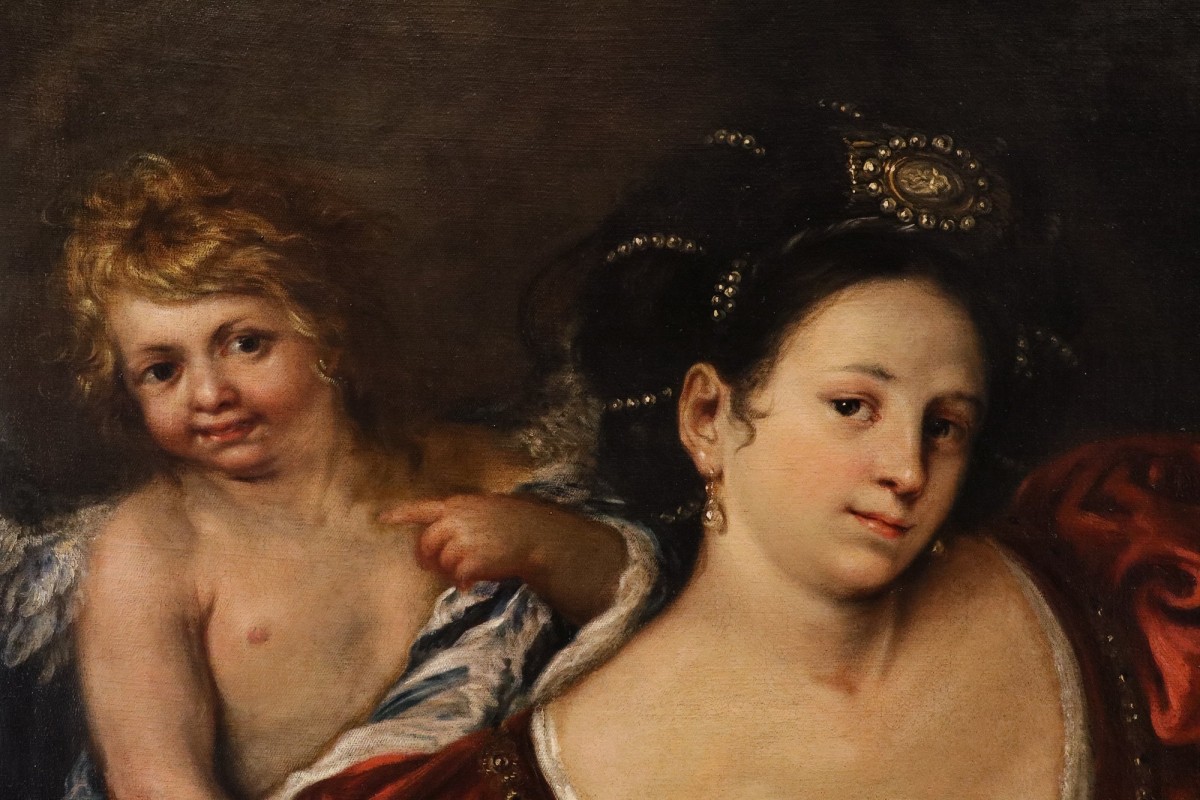
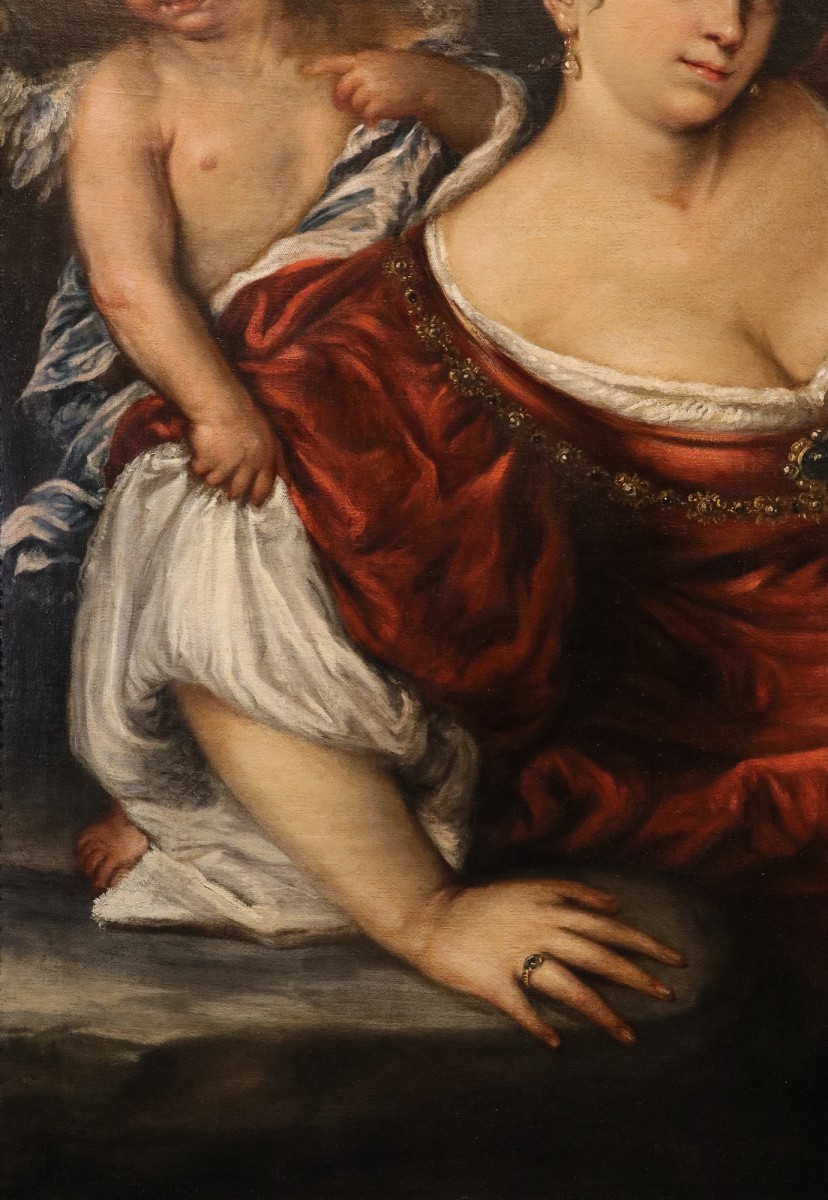
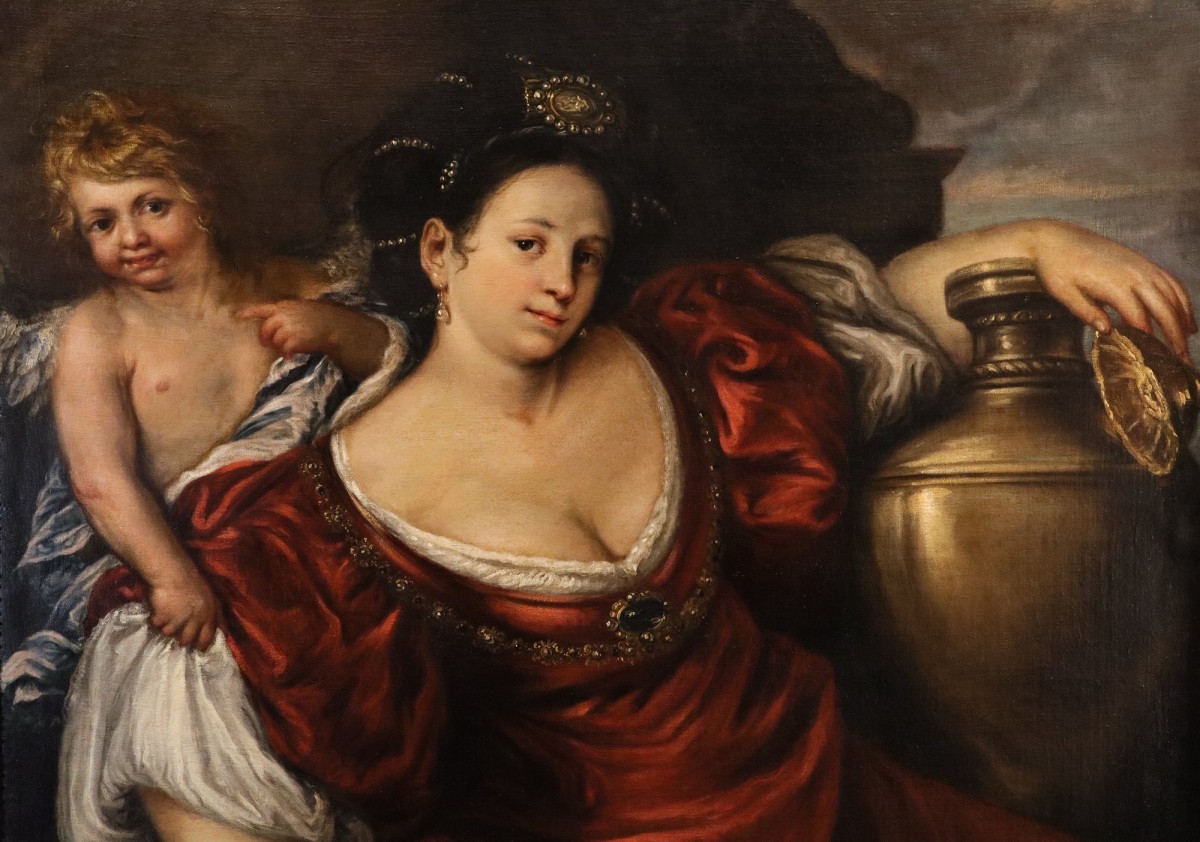
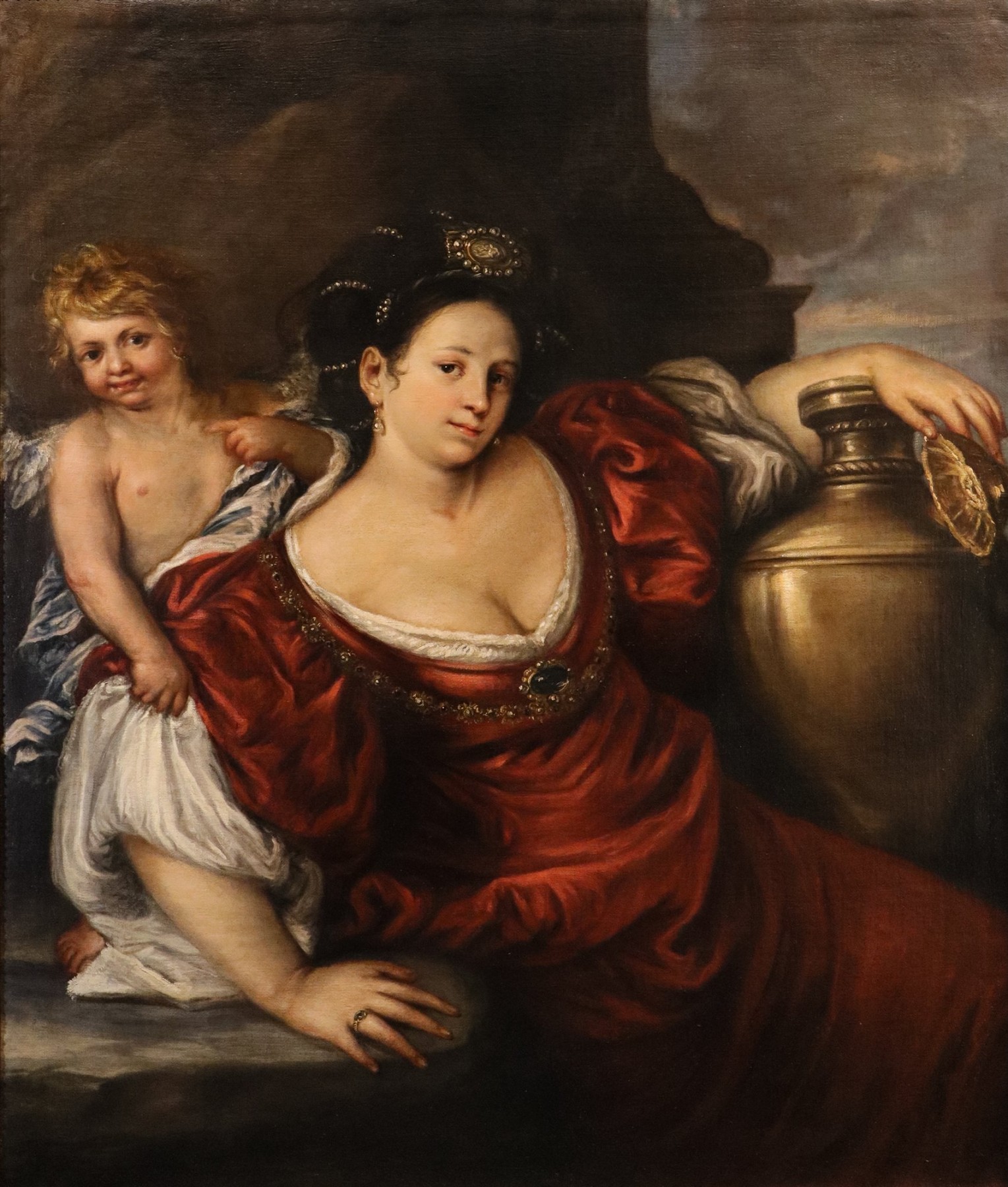
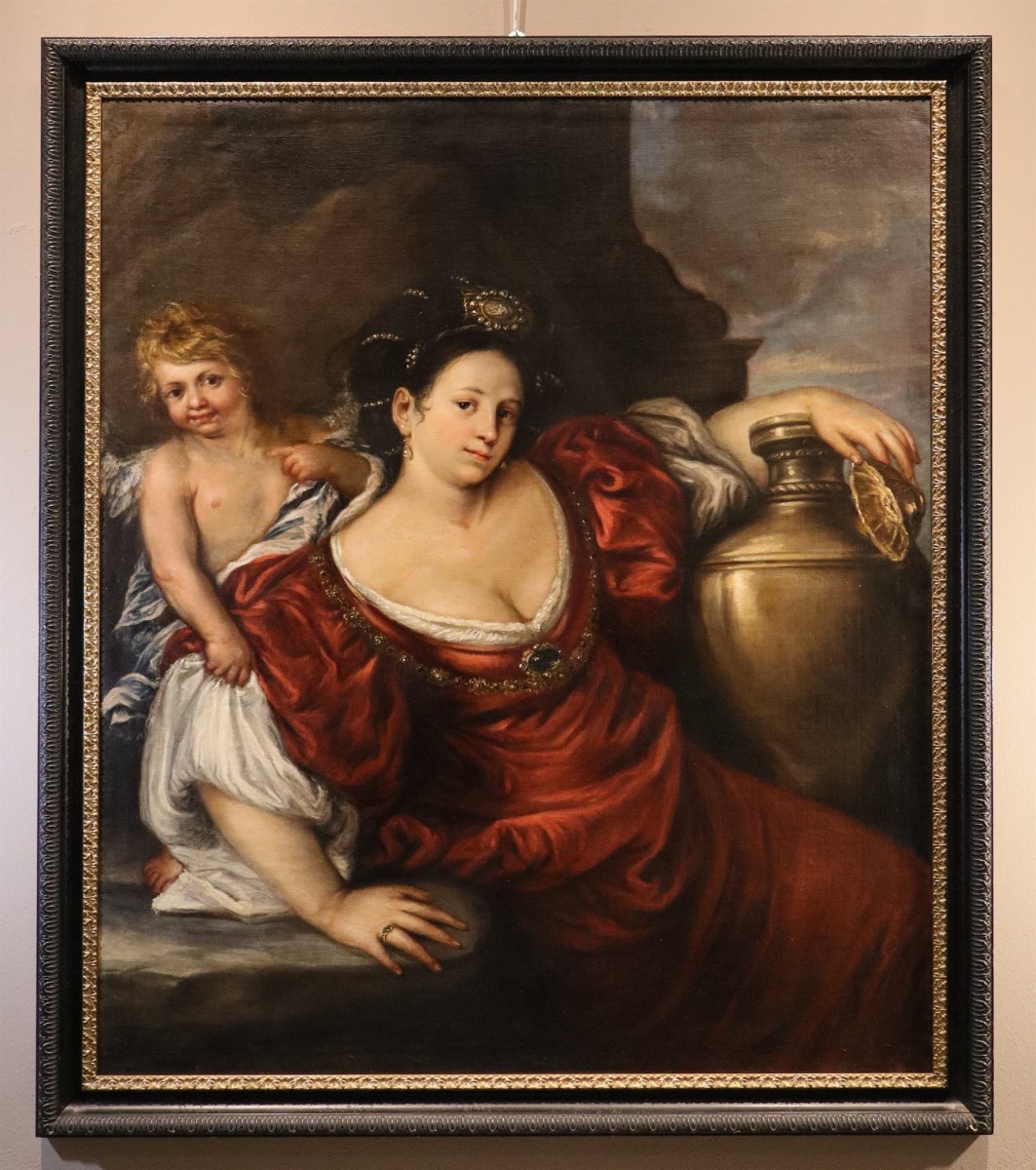
Queen Artemisia with a Cupid
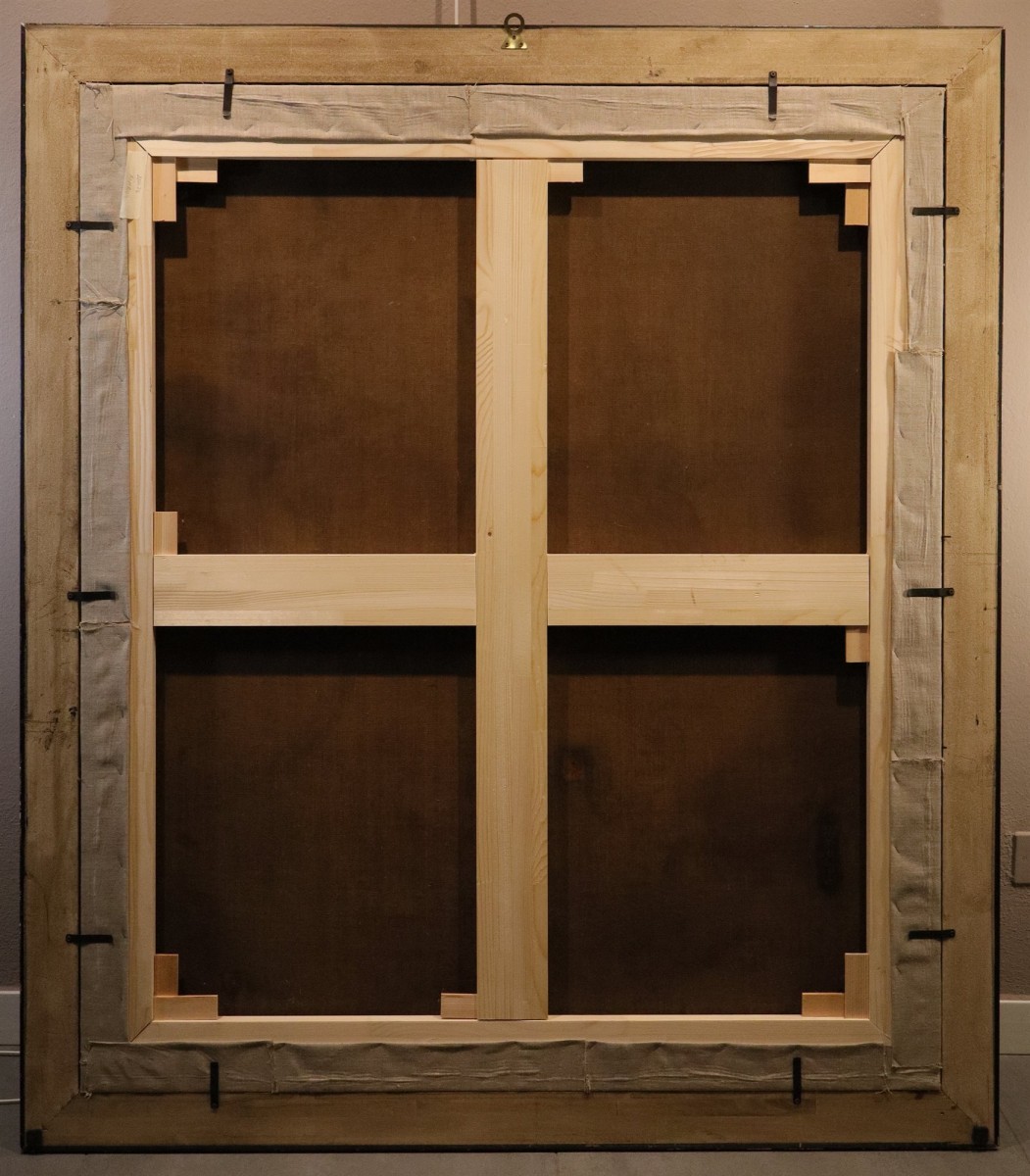
Oil on canvas 129 x 109 cm – Framed 143 x 125 cm.
Reference bibliography: Francesco Cairo 1607–1665. – Exhibition catalogue. – Publisher: Bramante Editore – Edizioni Lativa, Varese, 1983 (pp. 241–249, nos. 55, 63, 70, 110, 179, 183)
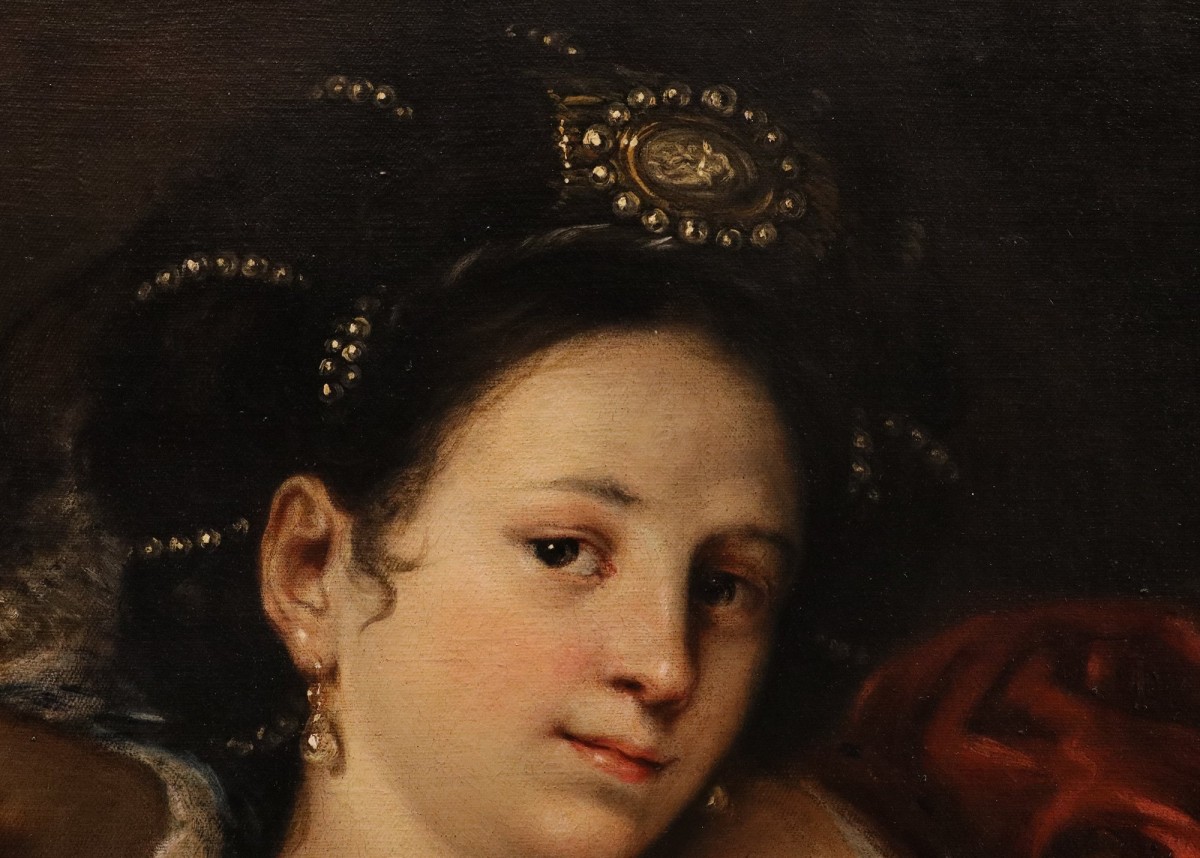
The extraordinary qualities of expressive power and theatricality typical of 17th-century Lombard Baroque painting are expressed in all their intensity in this splendid painting, which depicts the Greek queen Artemisia II of Caria, the devoted wife and sister of King Mausolus (352 BC).
Ancient historiography recounts that, upon her husband’s death, she conspicuously wielded power over the kingdom for several years, honouring her husband by commissioning the construction of the legendary Mausoleum at Halicarnassus, one of the Seven Wonders of the Ancient World.
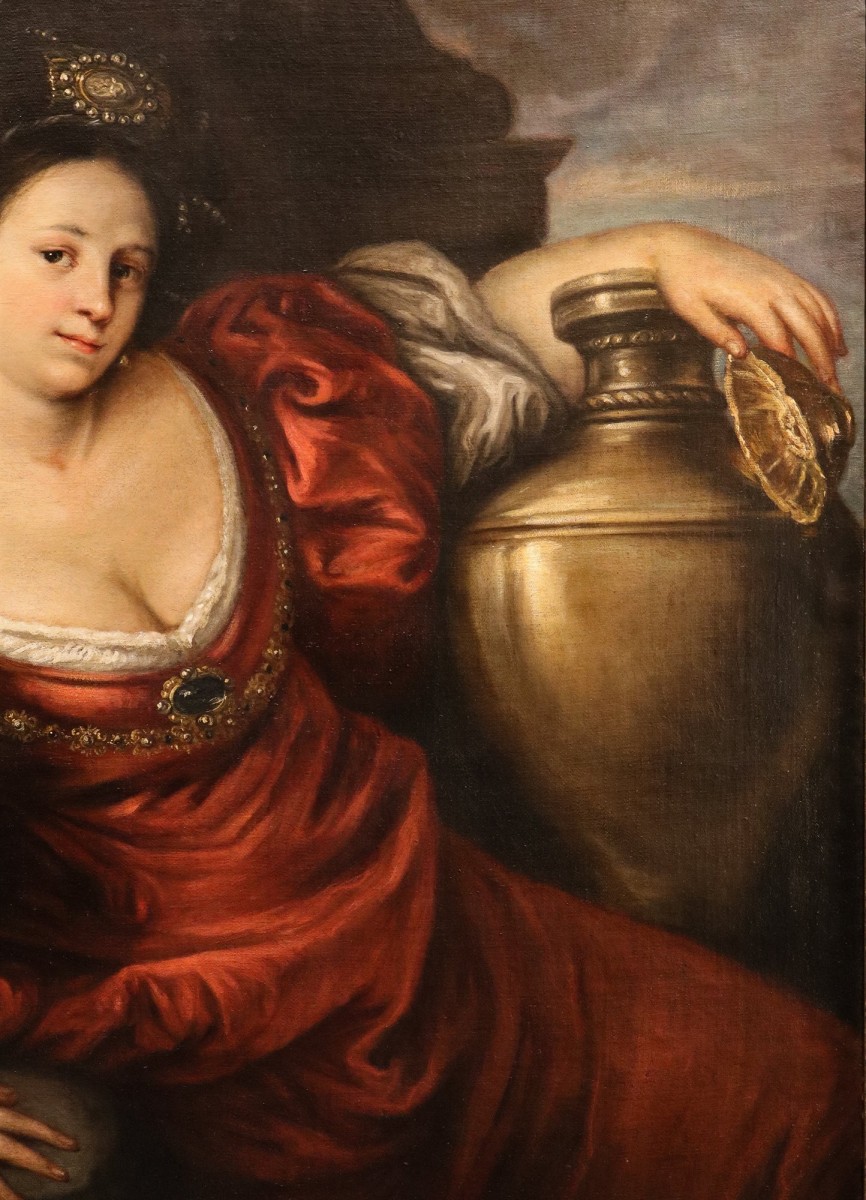
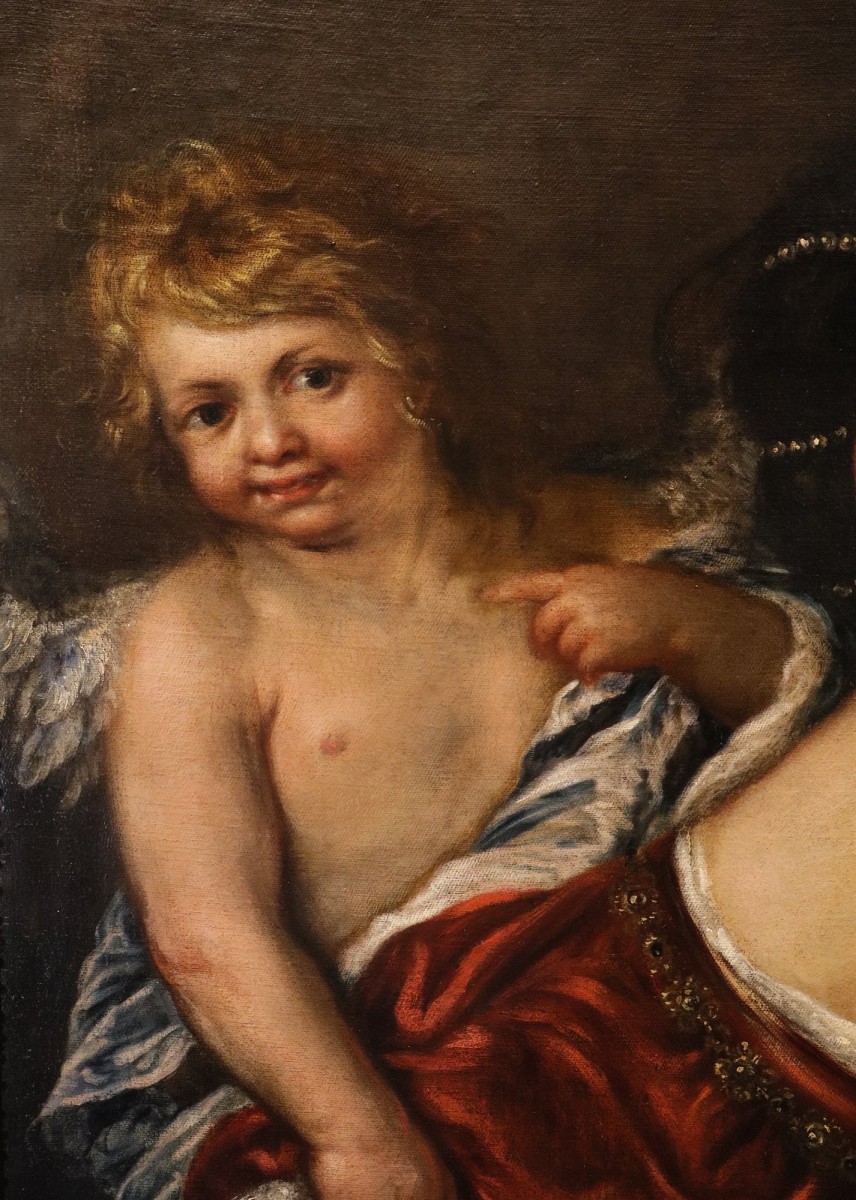
According to the myth, the queen decided to become the human tomb of her late husband herself, swallowing his ashes so that he might continue to live within her – an ultimate gesture of love, a sort of allegory of eternal conjugal love. Depicted here at her side is a small Cupid, who seeks to distract her from her melancholy thoughts.
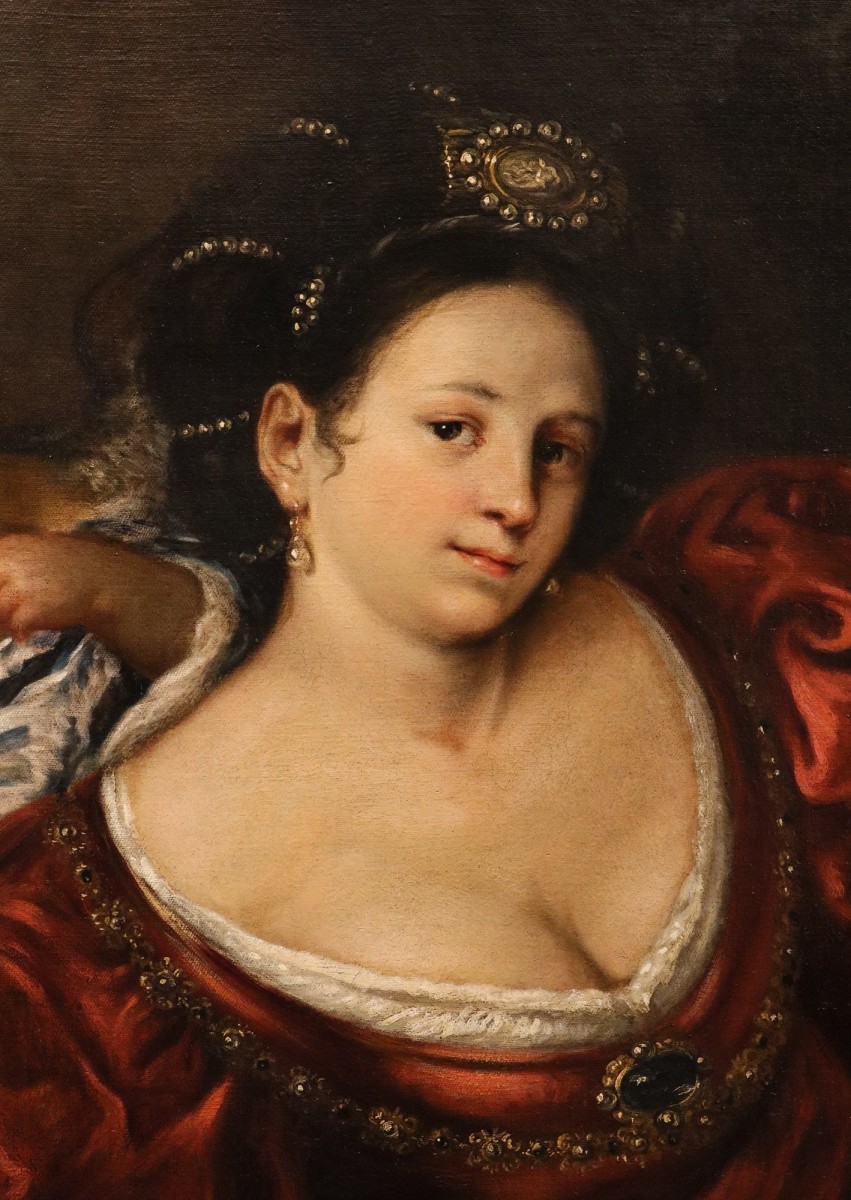
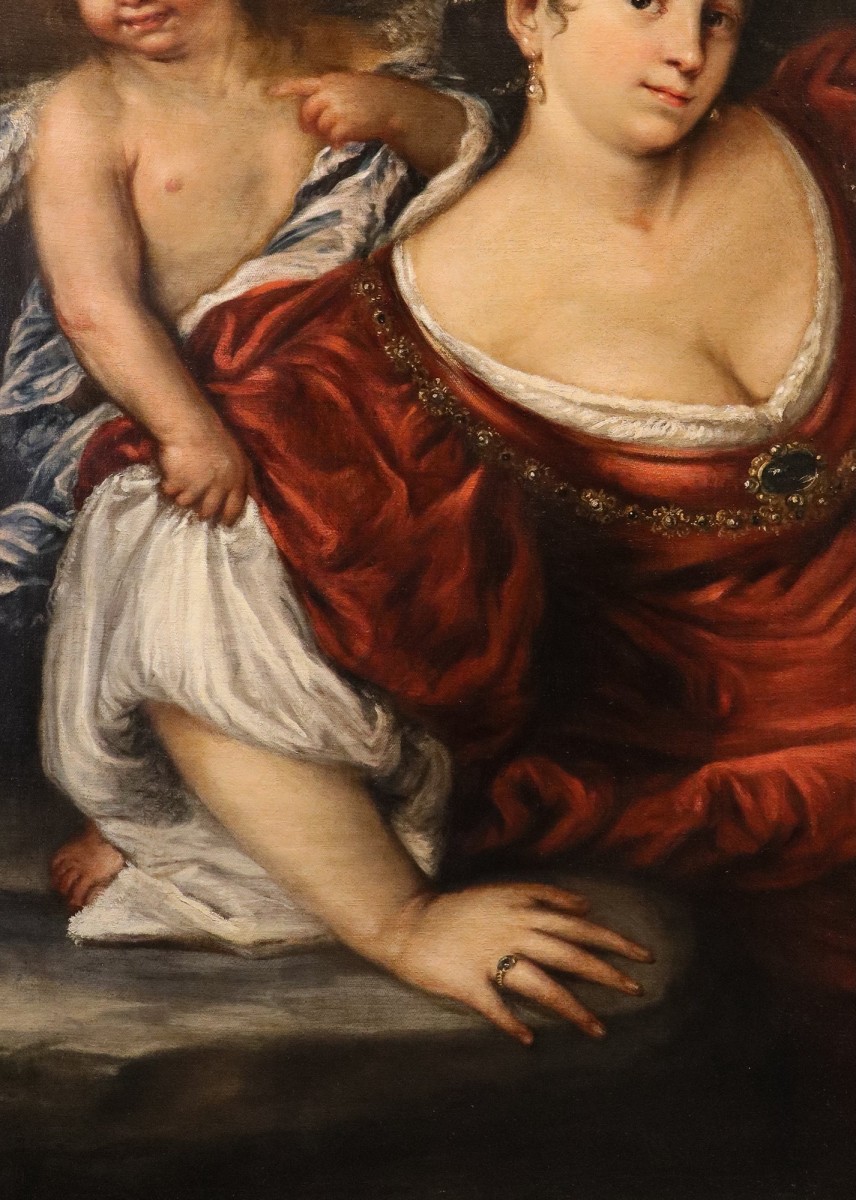
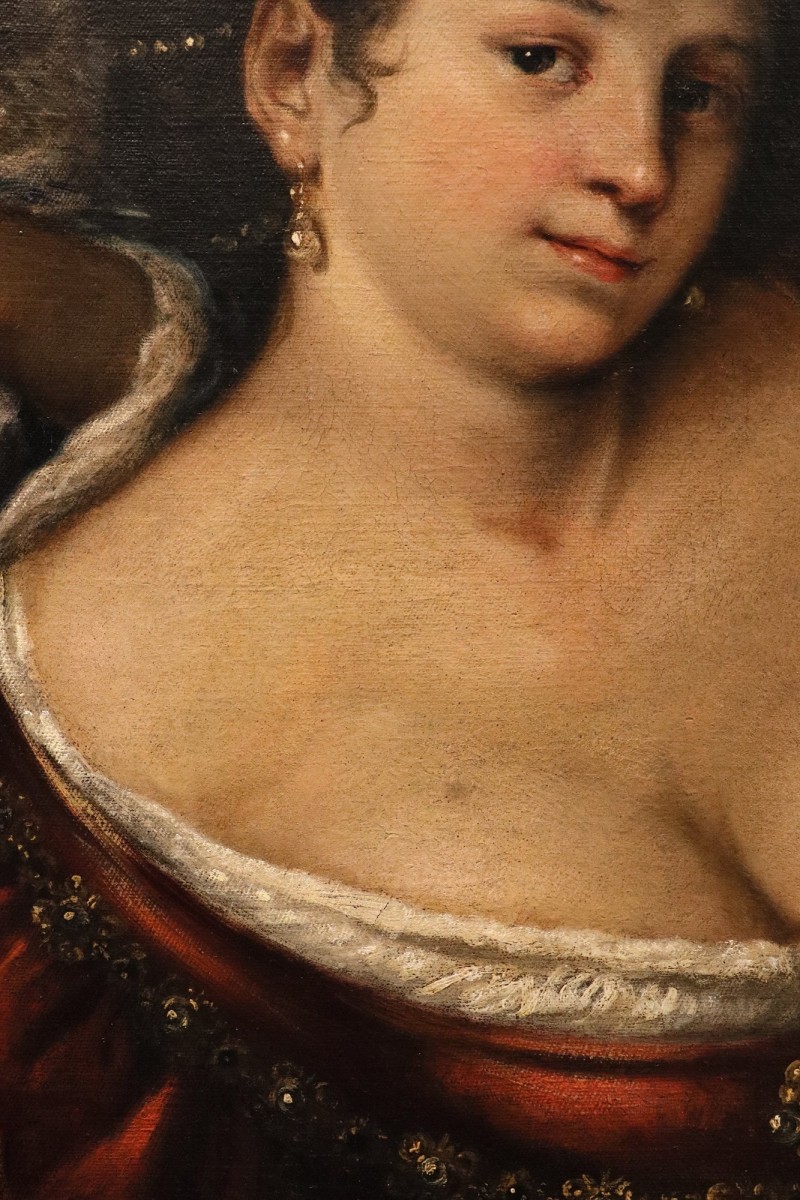
The young woman, utterly captivating, dominates the scene with her regal figure, portrayed in royal garments and accessories as she gazes directly at the viewer, and prepares to embrace the precious urn and the cup, which would become her identifying attributes.
Thanks to this extreme act, the heroine was depicted in Baroque iconography as a model of marital fidelity and virtuous behaviour: Artemisia fits into the thematic tradition of the ‘exempla virtutis’ (models of moral and stoic virtue, which include other female figures such as Lucretia, Cleopatra and Judith), in which women embody a tragic and earthly dimension, departing from classical and idealised academic beauty.
Furthermore, in seventeenth-century painting, stories of female heroism became a pretext for the sensual representation of the body, suggesting an erotic interpretation alongside the moral one offered by the theme. These women, always beautiful, were often depicted in ambiguous poses, as was fashionable at the time and much to the delight of the patrons.
A favourite theme of Italian Baroque painting, it finds in this canvas a dramatic yet intimate interpretation, executed with the scenic mastery of a painter who becomes a ‘skilful director of human emotional drama’.
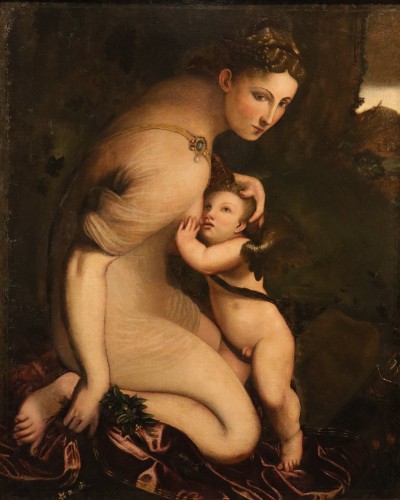
Our beautifully executed painting is based on the famous ‘Artemisia with a Cupid’ by the seventeenth-century painter Francesco Cairo, held at the Pinacoteca Malaspina (Civic Museums of the Visconti Castle in Pavia), which originated from the prestigious Milanese collection of Carlo Giuseppe di Firmian.
It is considered to be Francesco Cairo’s original version (dated circa 1648–1650), which was subsequently reproduced—in part with the assistance of his workshop—in numerous versions.
As indicated in the catalogue of the art exhibition dedicated to the artist Francesco Cairo (Francesco Cairo 1607–1665.
Exhibition Catalogue. Publisher: Bramante Editore – Edizioni Lativa, Varese, 1983), there are six versions, each differing from the others in minor details (pp. 241–249, nos. 55, 63, 70, 110, 179, 183), such as the absence of the cherub in no. 110 of the catalogue, or no. 70, which is larger in size and is thought to correspond to the ‘print proof’ of the original prototype that remained in the painter’s studio.
The painting we are proposing, which does not correspond to any of the six versions mentioned above, is a further variation on the subject which, in terms of the quality of its execution, psychological intensity and period, can, in our view, be readily attributed to an artist from the workshop who reworked the original prototype with minor variations.
Every detail of the composition reflects Cairo’s artistic vision, with a style that blends Venetian and Flemish influences: the queen’s sensuality and the sumptuous setting evoke the Baroque Genoa of Rubens and Van Dyck, whilst the dense, concise brushwork recalls the teachings of Titian and Veronese, combined with the Caravaggesque opulence typical of the seventeenth century.
Francesco Cairo, also known as Cavalier Cairo (Milan, 1607–1665), was an important 17th-century Italian painter.
Trained under the influence of Morazzone, he distinguished himself through a dramatic style, steeped in chiaroscuro and intense pathos.
This composition in particular is undoubtedly one of the highlights of his interior-decorative output, with its red, jagged and textured drapery enveloping the woman’s opulent forms, the almost brazen expansiveness of her pose and the winking cupid.
Delevery information :
We take care of and organise the transport of the purchased works, both for Italy and abroad, through professional and insured carriers.
We take great care We personally take care of the packaging, to which we devote a great deal of care: each work is carefully packed, first with arti- cle material, then with a custom-made wooden box.
Should you have the desire to see this or other works in person, we would be happy to welcome you to our gallery in Riva del Garda, Viale Giuseppe Canella 18, we are always open by appointment only.