Offered by Galerie Nicolas Lenté

Allegory of Summer
Studio of Hendrick Van Balen (Antwerp, 1575–1632)
Antwerp School, early 17th century
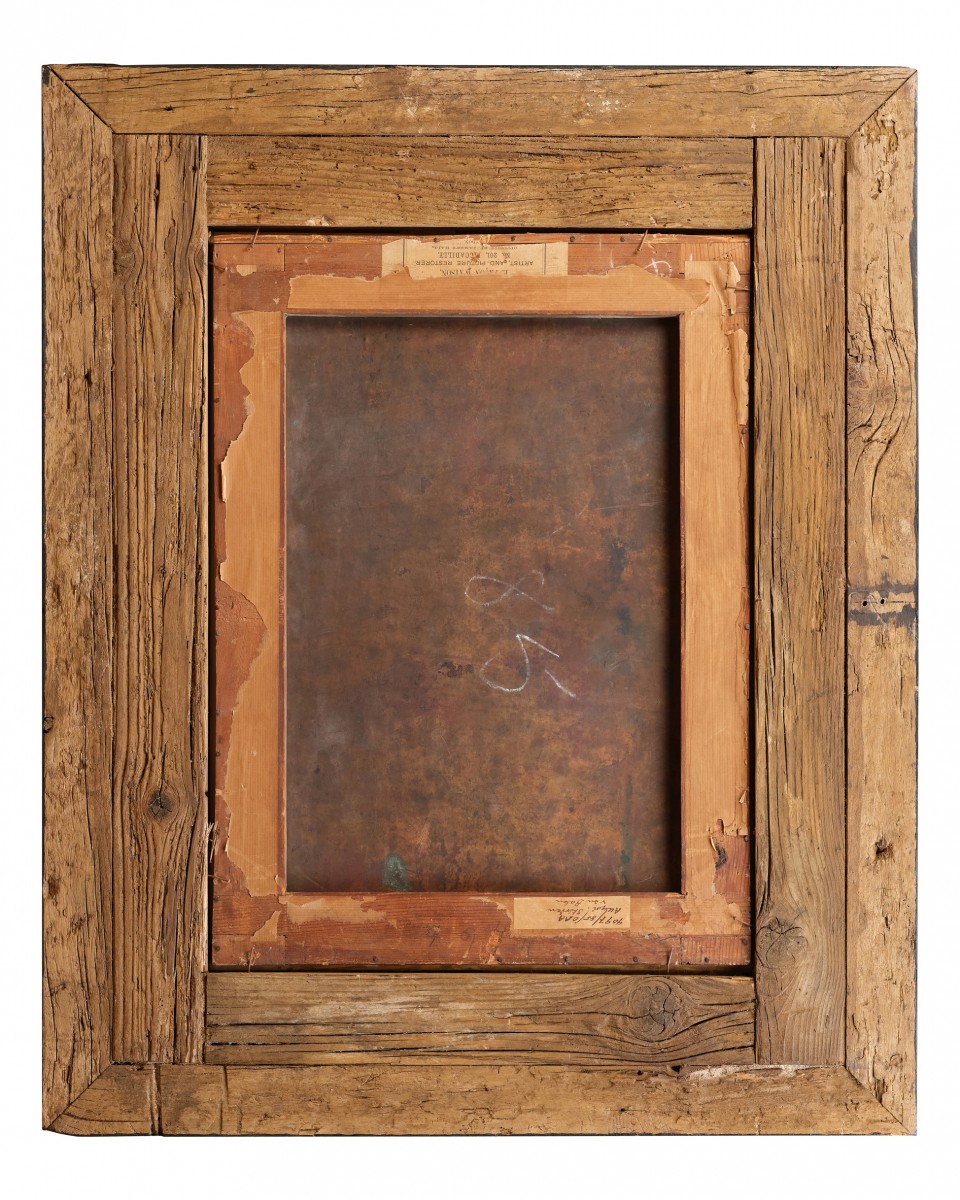
Oil on copper,
Dimensions: h. 54 cm, l. 40cm
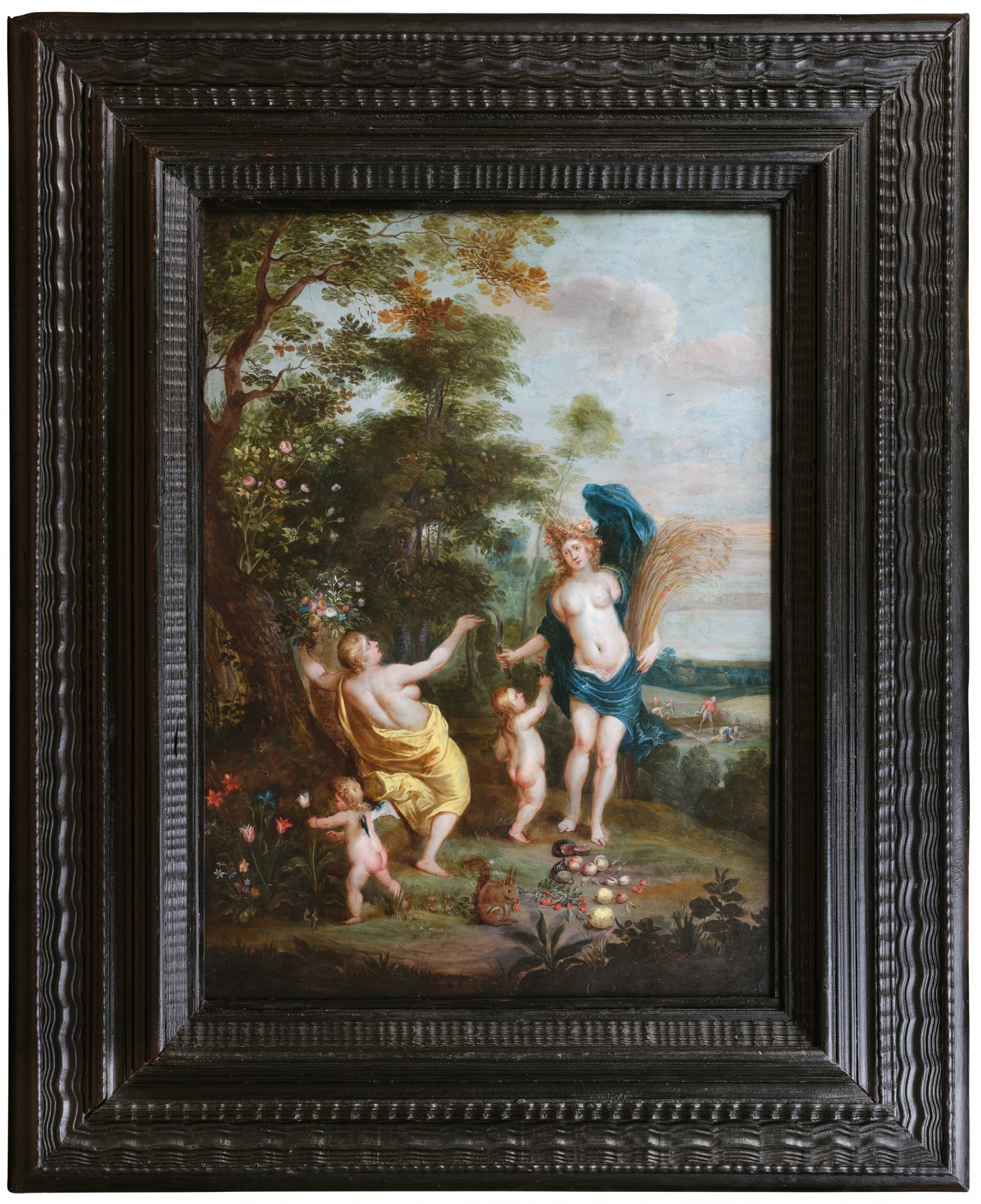
Ebonised wood frame with moulded and guilloché decoration, in dutch style
Framed dimensions: h. 80 cm, l. 66 cm
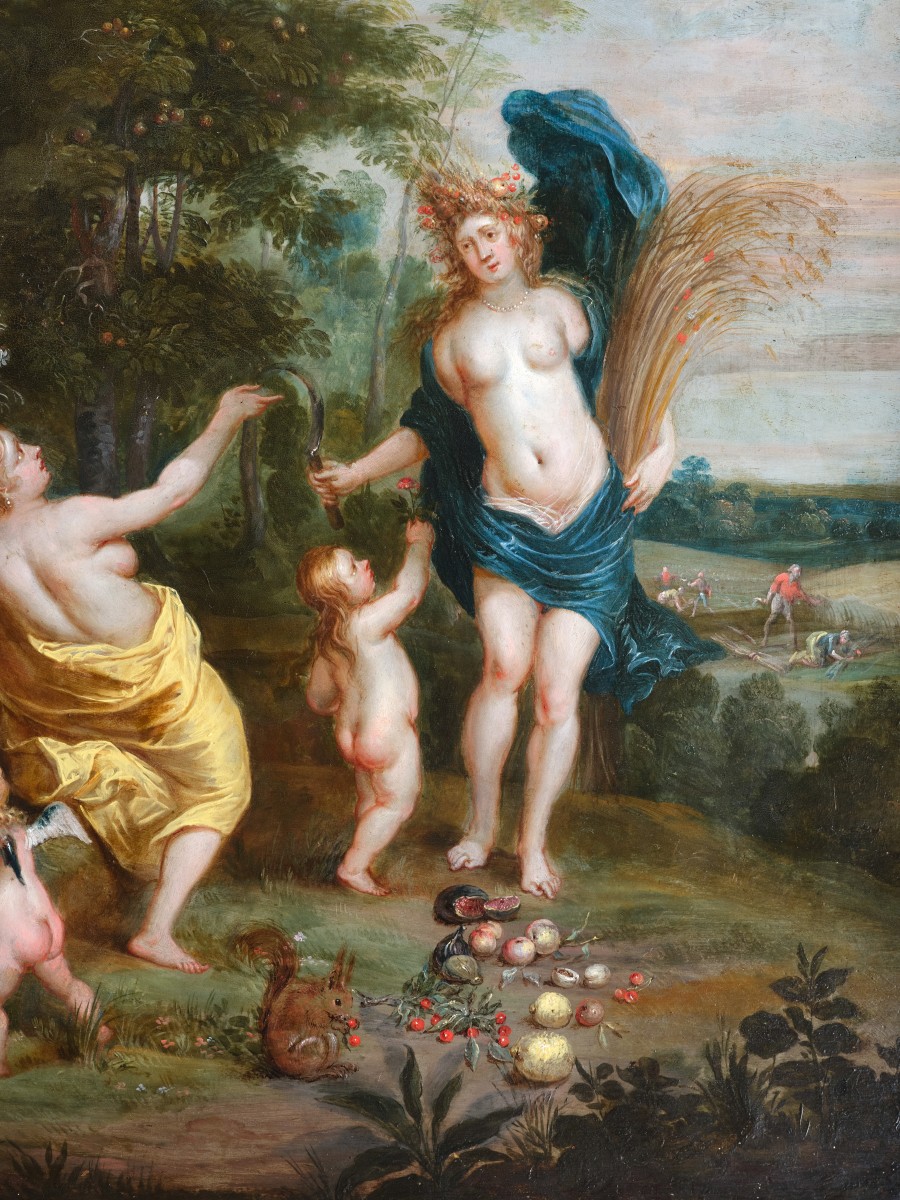
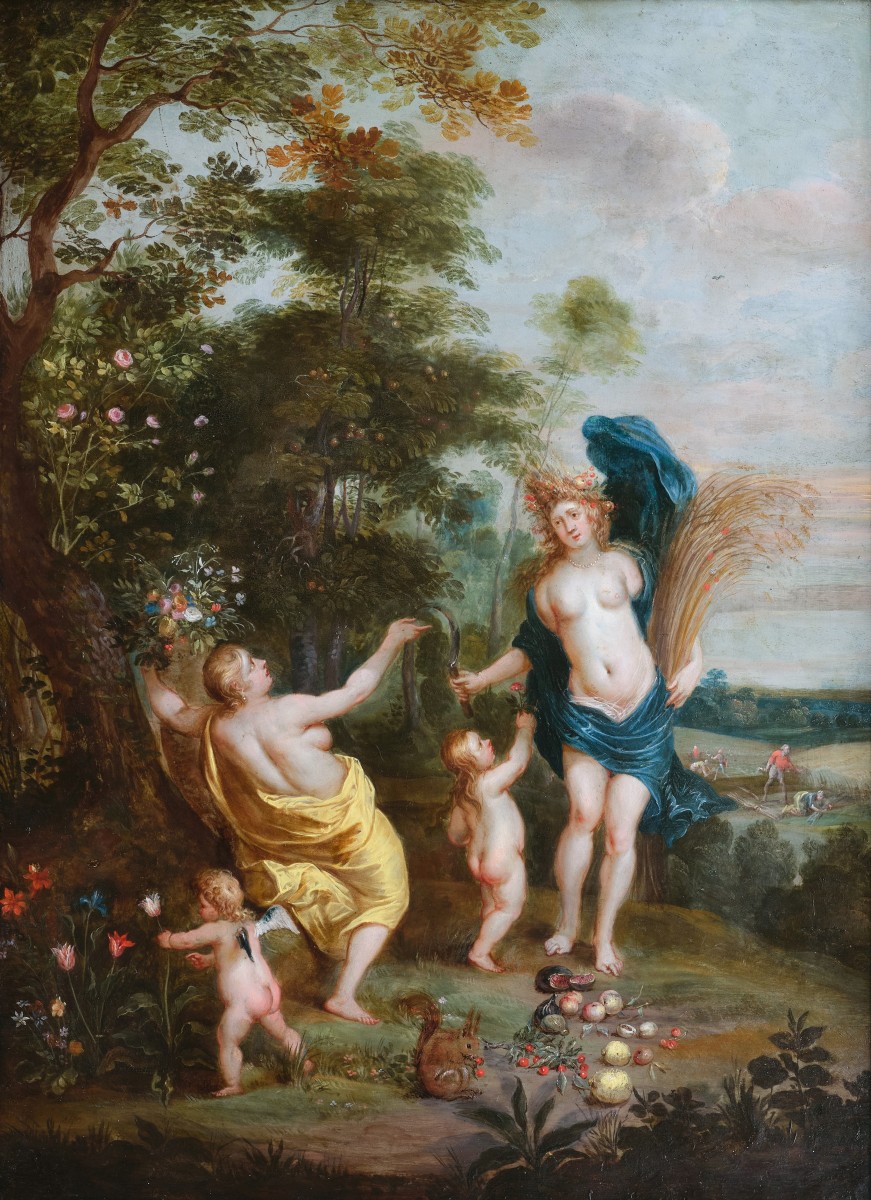
This finely executed oil on copper belongs to the rich tradition of allegorical and mythological painting that flourished in Antwerp during the early seventeenth century. Hendrick van Balen and Jan Brueghel the Younger were among the leading exponents of this artistic genre, whose workshops produced numerous compositions depicting the Seasons, the Elements, the Senses, and the gods of Olympus, set within luxuriant landscapes populated by animals and mythological figures.
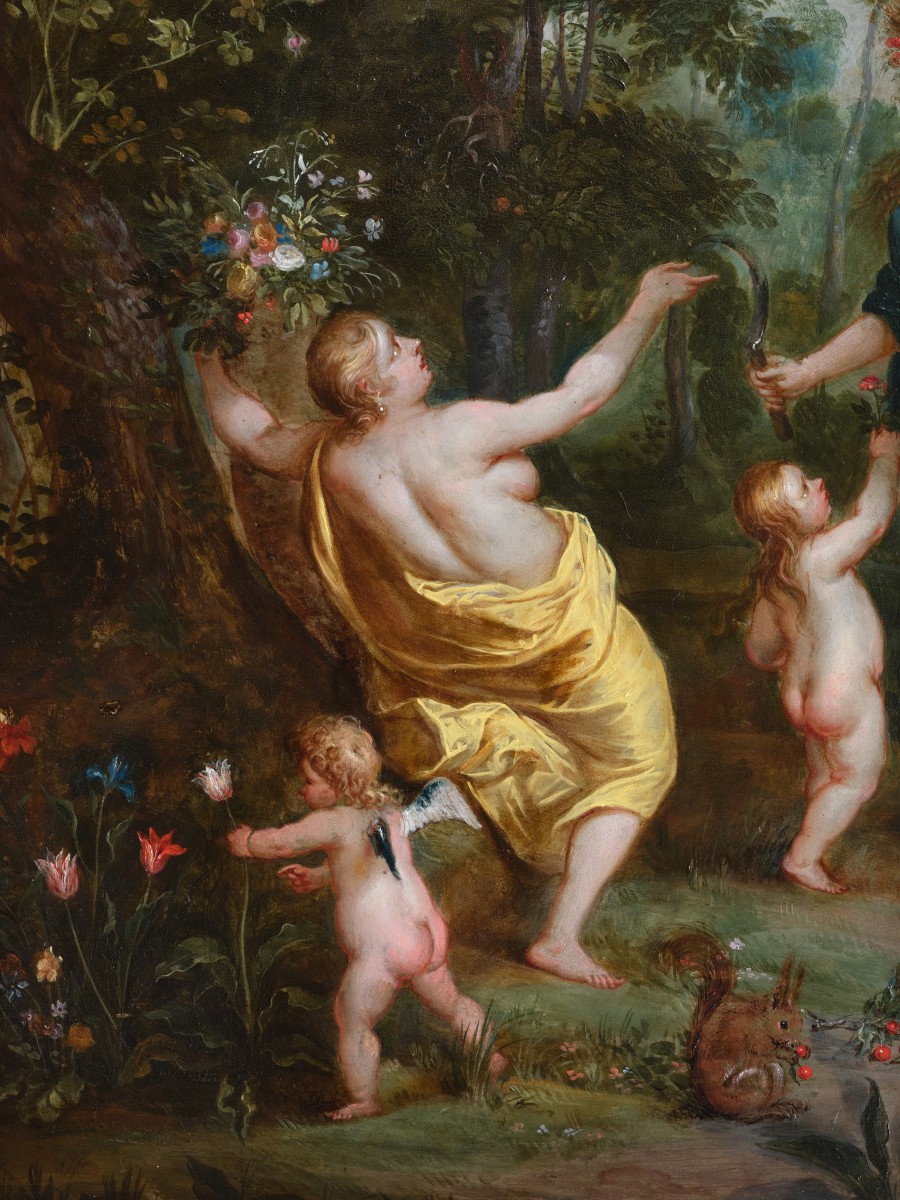
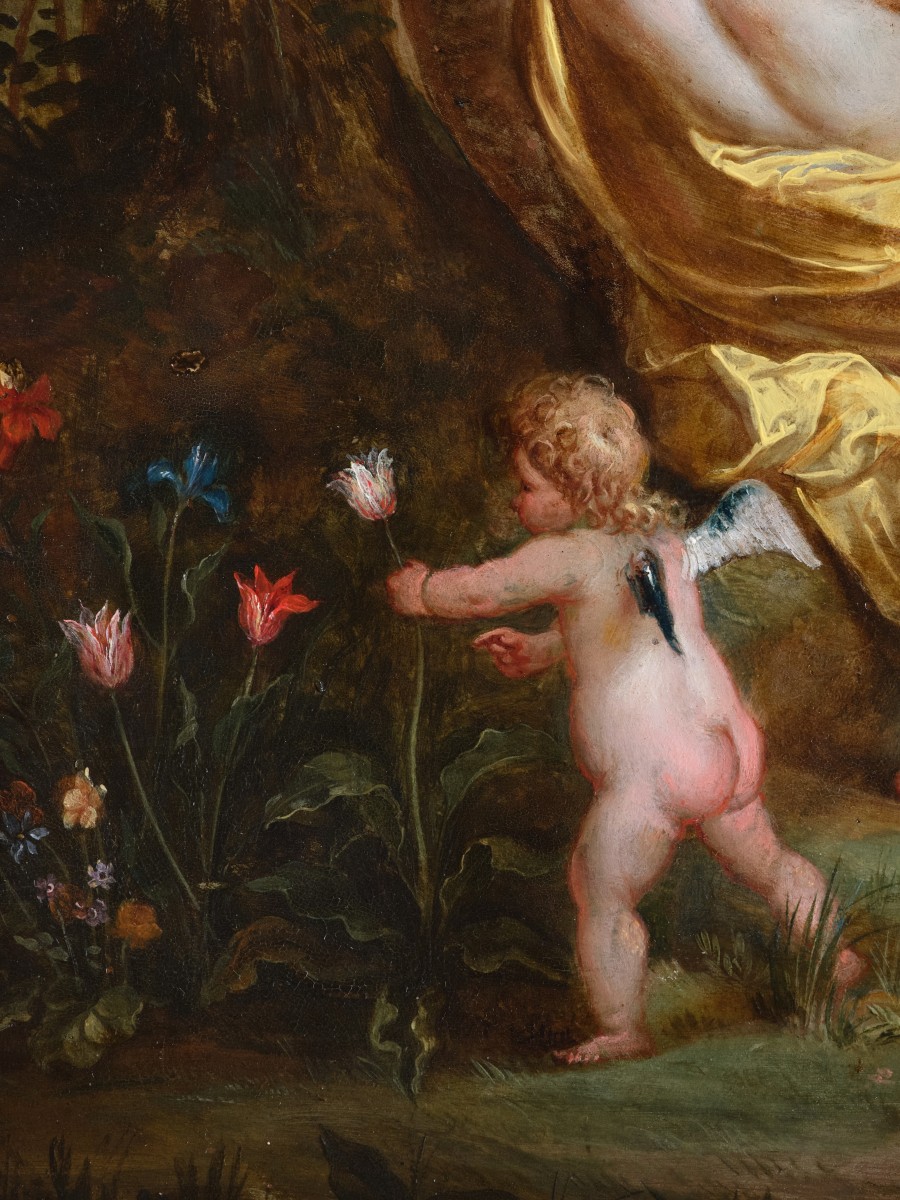
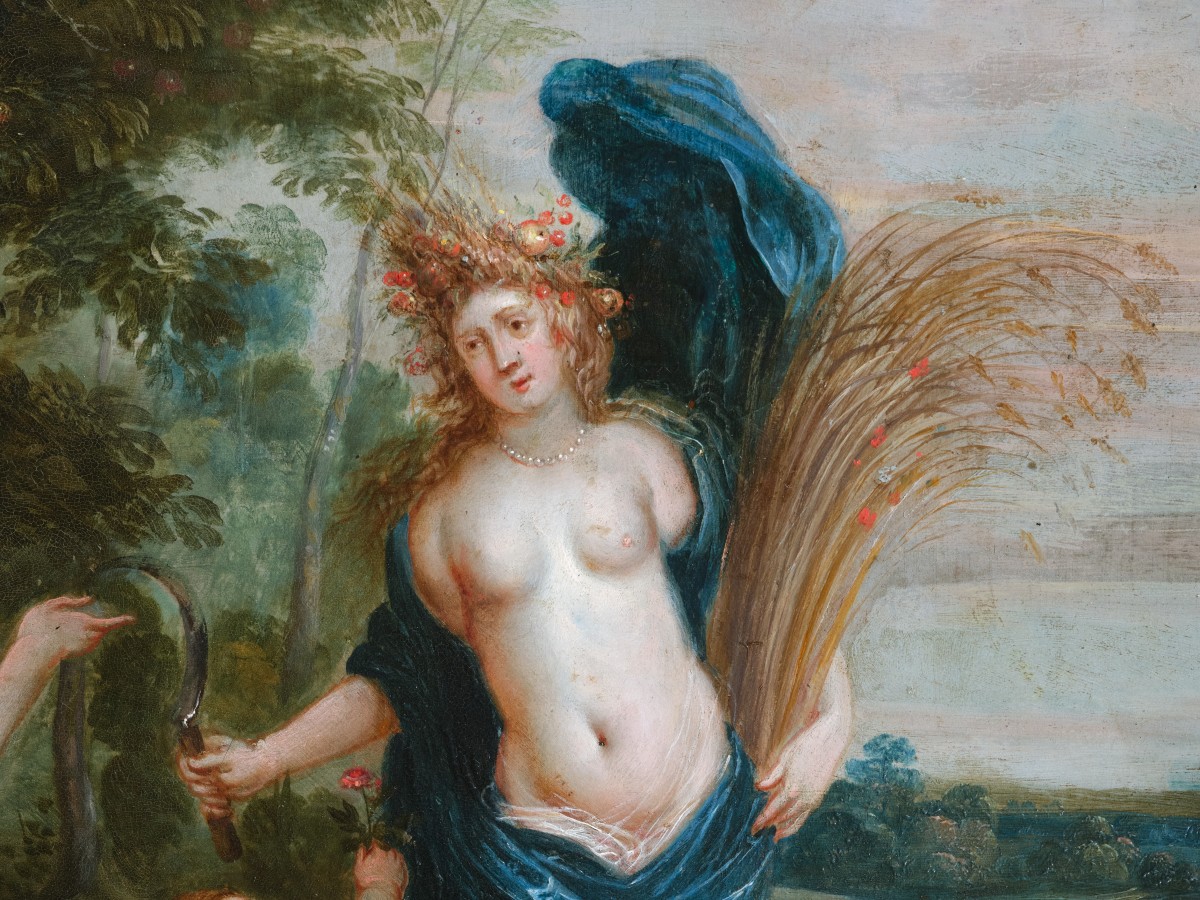
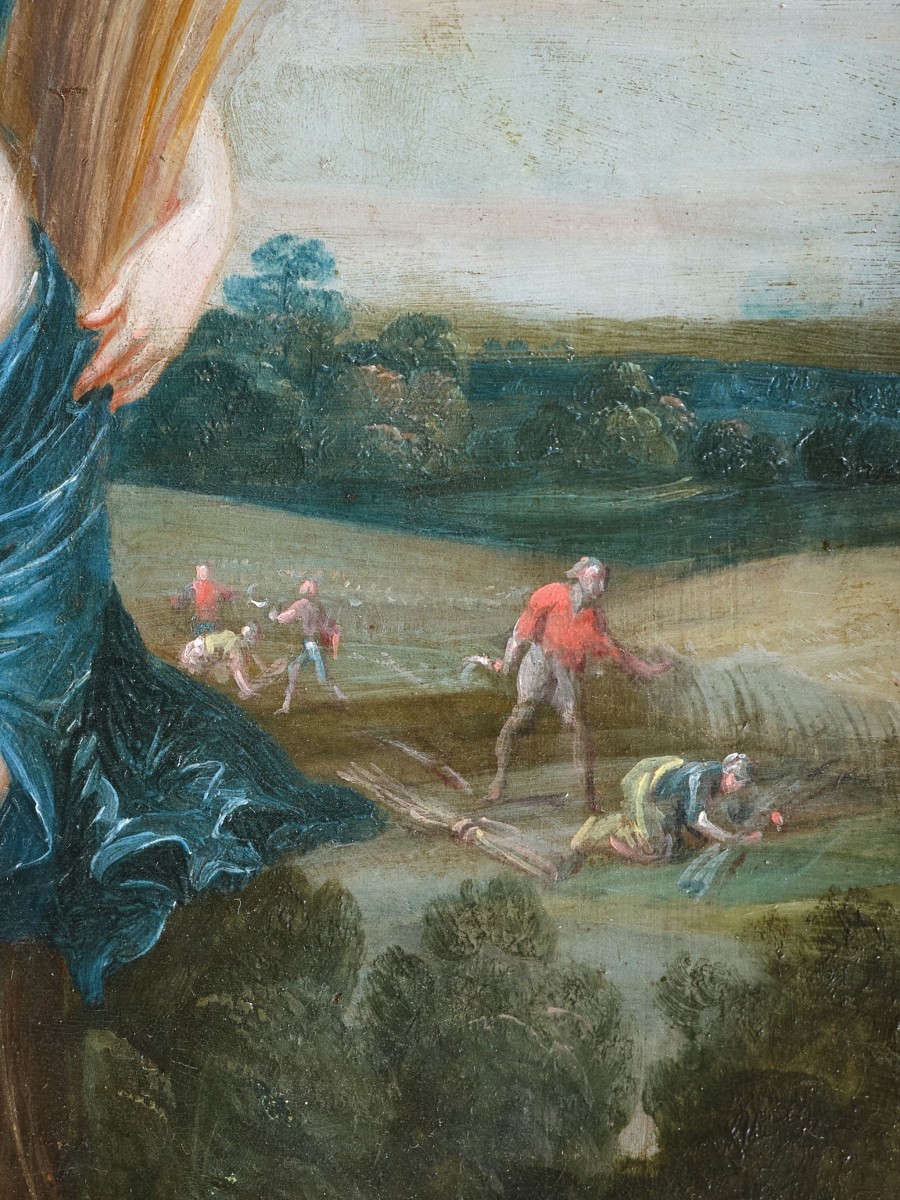
At the centre of a verdant landscape dominated by a flourishing apple tree stands Ceres, the Roman goddess of the Earth, agriculture, and the harvest. Partially draped in a flowing blue garment, she wears a crown of wheat ears, her traditional attribute. In her right hand she holds a sickle and carries sheaves of wheat, symbols of fertility and abundance. Beside her, a nymph presents a cornucopia while playful putti gather and offer flowers.
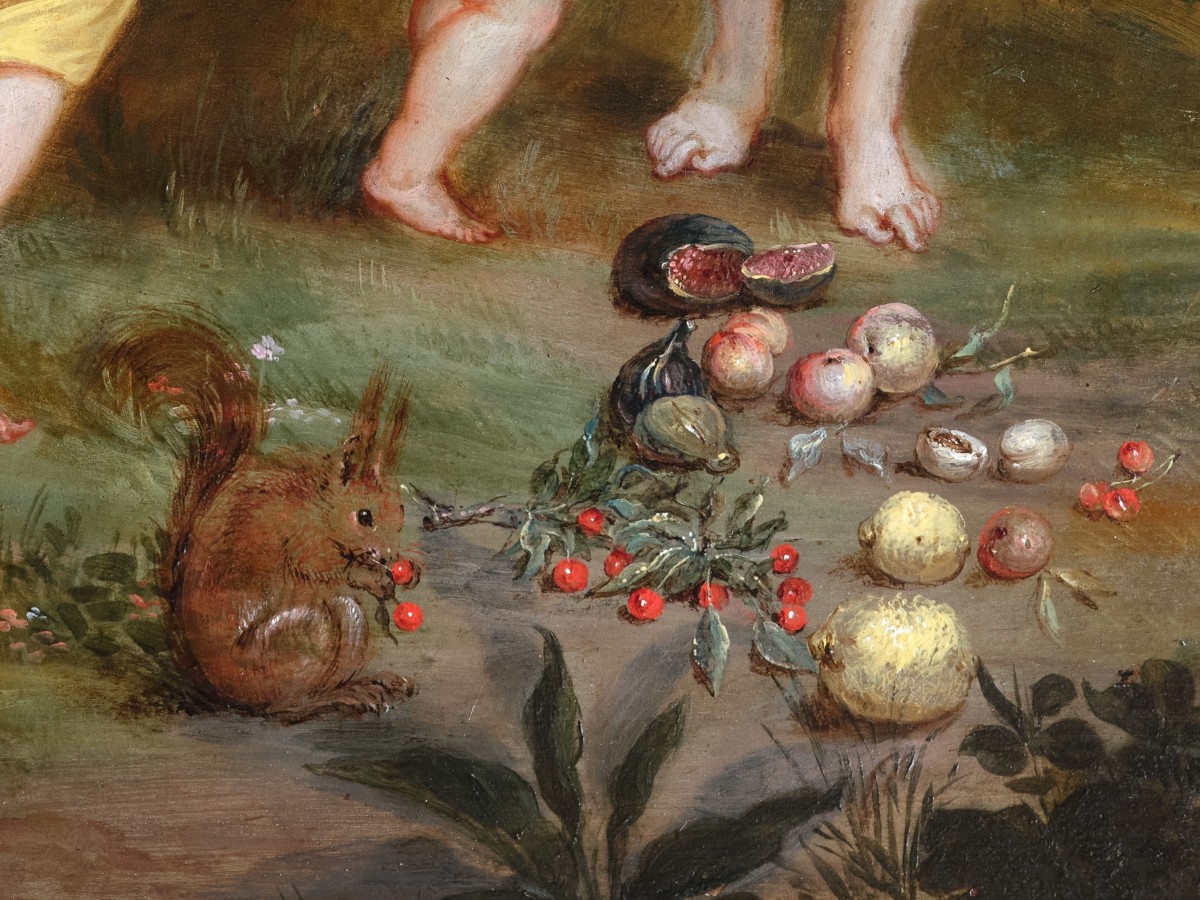
The foreground celebrates the bounty of summer through an abundant still life composed of figs, cherries, apples, and lemons. A squirrel nibbling cherries symbolizes diligence and foresight, virtues echoed by the harvesters working in the wheat fields visible in the distance.
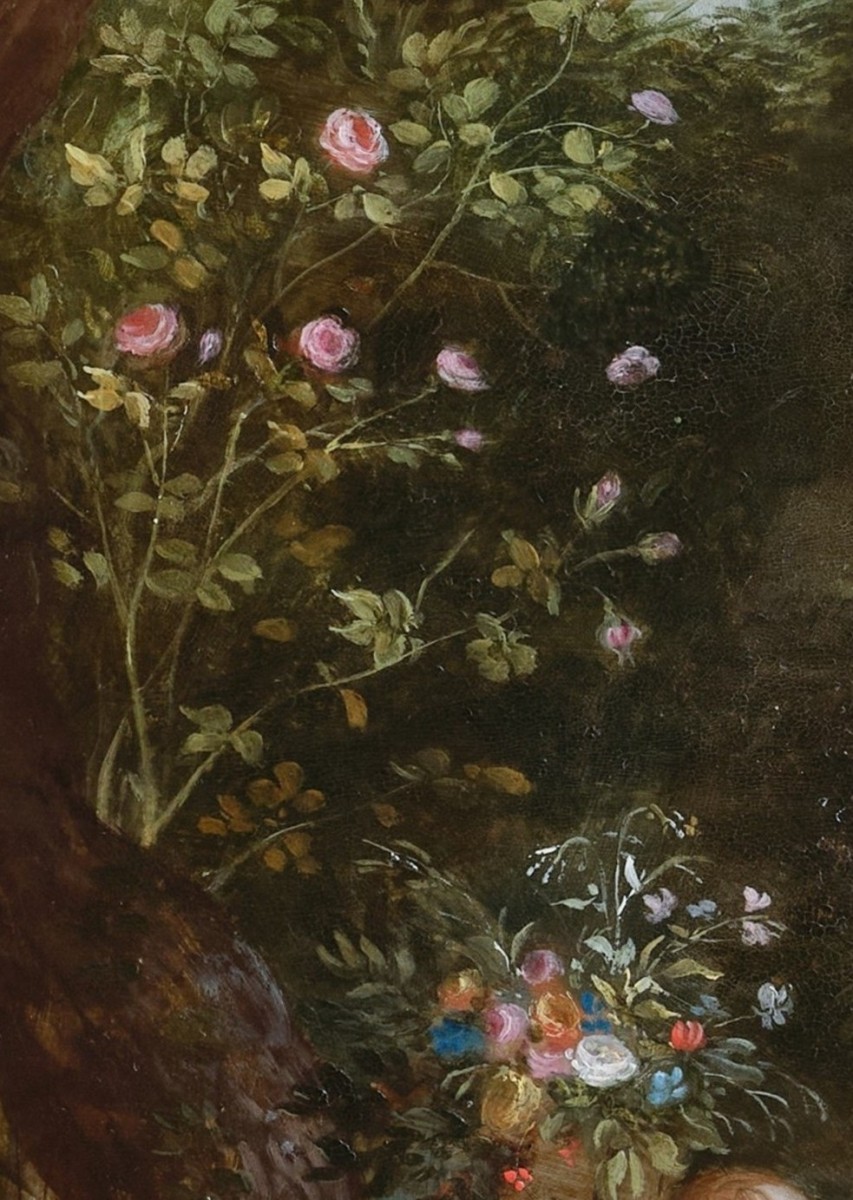
The background unfolds in a profusion of vegetation: to the right, a wild rose bush rises against the trunk of a tree, while the centre is animated by majestic trees with silvery-green foliage.
The artist, likely a pupil or close follower of Hendrick van Balen, draws direct inspiration from the master's repertoire. The nymph in the yellow drapery seen from behind—a recurring figure in Van Balen’s compositions—is a particularly telling example. The graceful gestures, luminous flesh tones, and wind-swept draperies further reflect the master's distinctive style. The influence of Jan Brueghel the Younger can be seen in the meticulous rendering of the trees, flowers—particularly wild roses and tulips—and in the richly detailed still life with animals in the foreground.
Throughout Europe, there was considerable demand for these virtuoso compositions, in which mythological figures served as a pretext for the refined depiction of nature and its abundance. This painting is a charming and accomplished example of that tradition, combining elegant storytelling, technical refinement, and rich iconographic content.
Delevery information :
We organize the shipping and delivery of our artworks worldwide, working with specialized fine art carriers as well as DHL Express for the secure shipment of small and medium-sized works (up to 120 cm).
Each artwork is carefully packed and shipped in a custom-made transport crate to ensure optimal protection. All shipments are fully tracked and insured.
We pay the utmost attention to every stage of the shipping process to ensure fast, reliable delivery. Shipments via DHL Express are generally dispatched within approximately 7 days of purchase.
All of our artworks can be viewed at our Paris gallery and may also be collected in person.