Offered by Galerie Nicolas Lenté
REQUEST INFORMATION
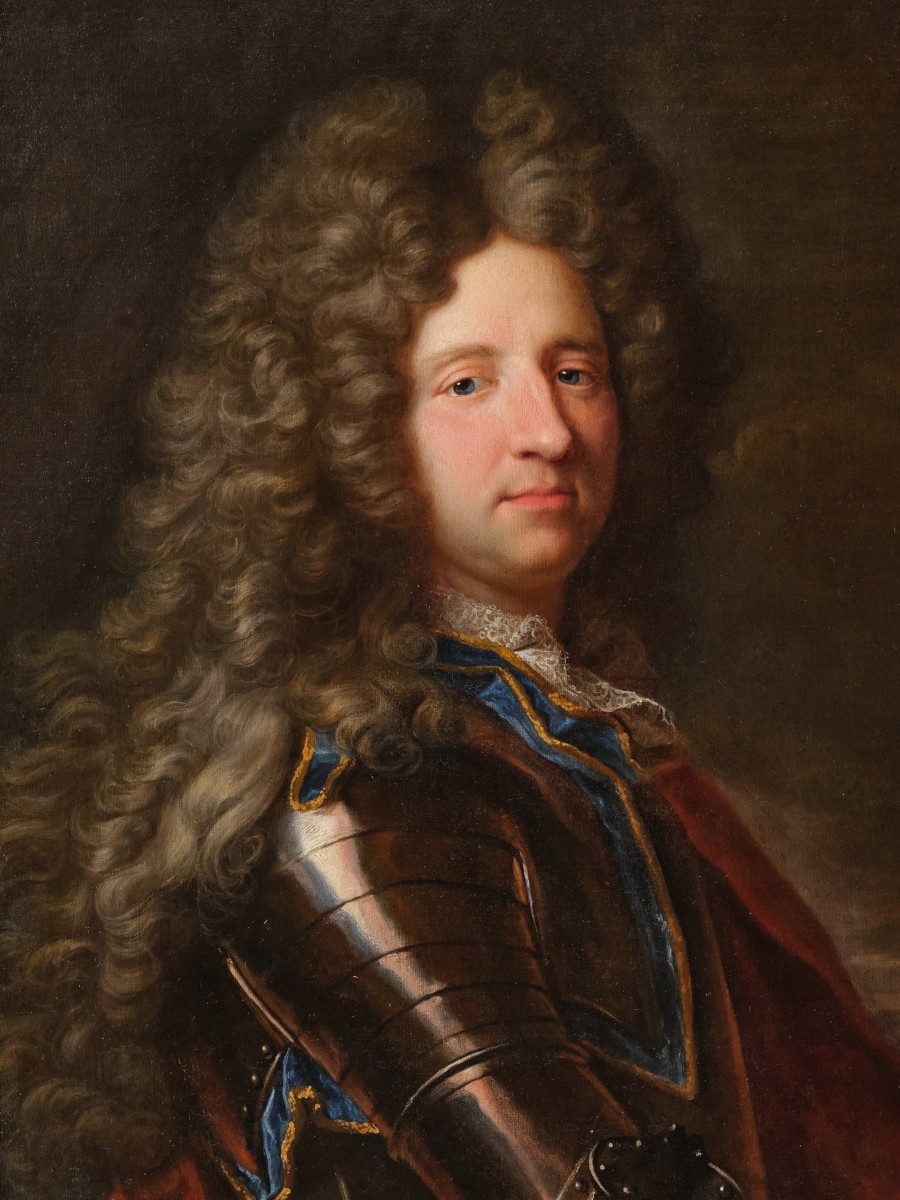
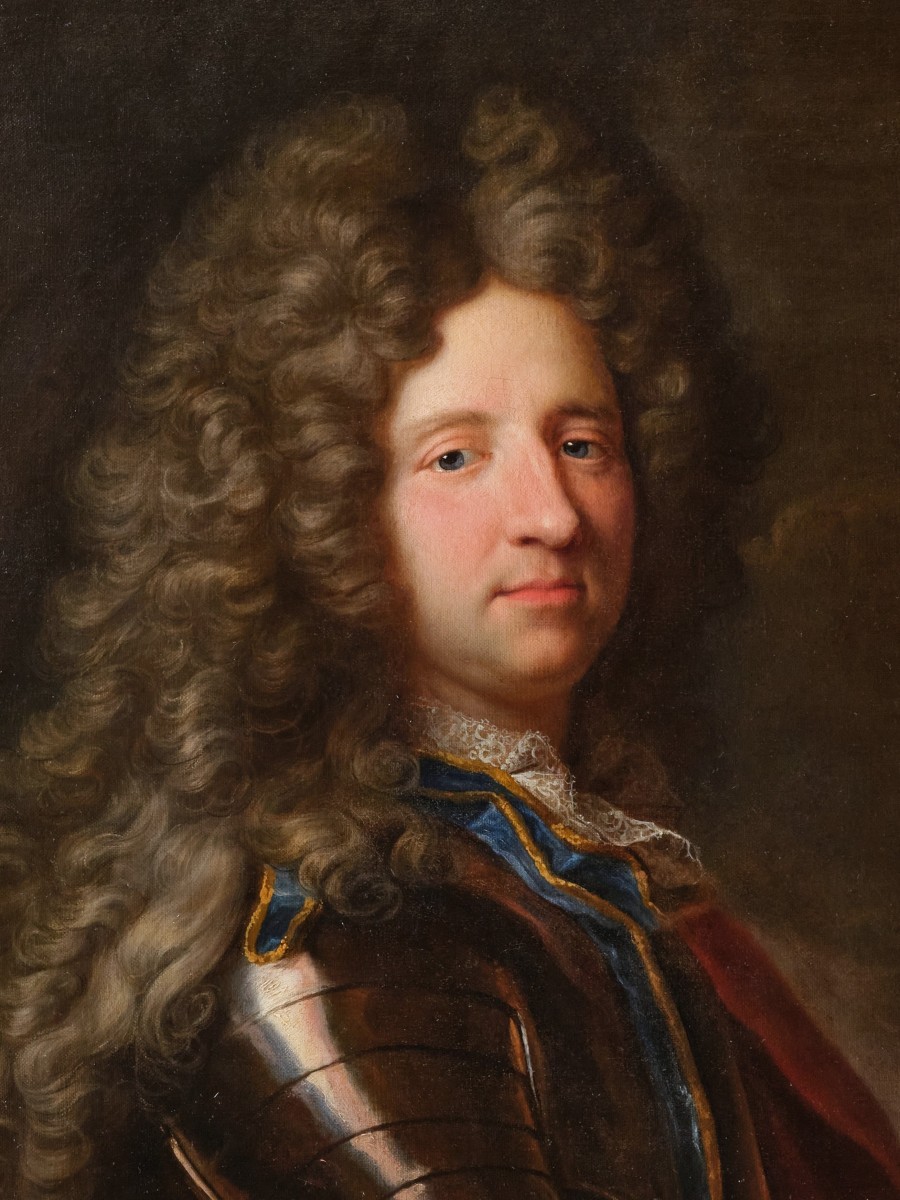

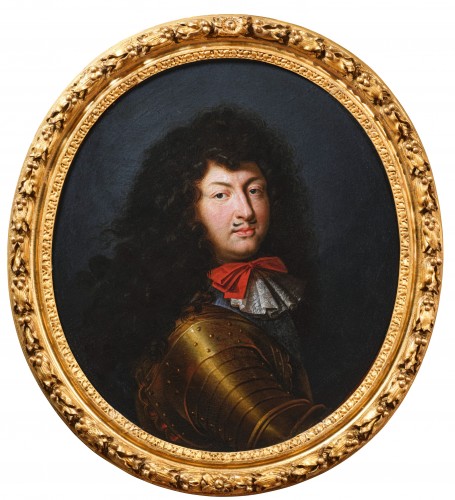
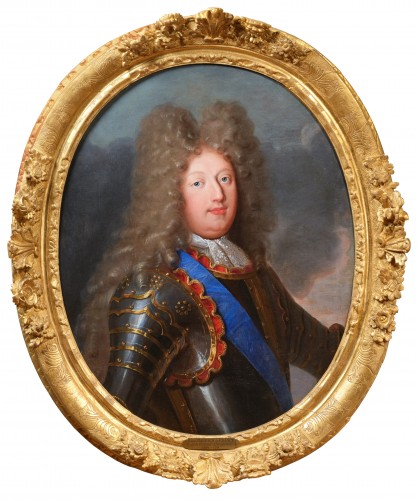
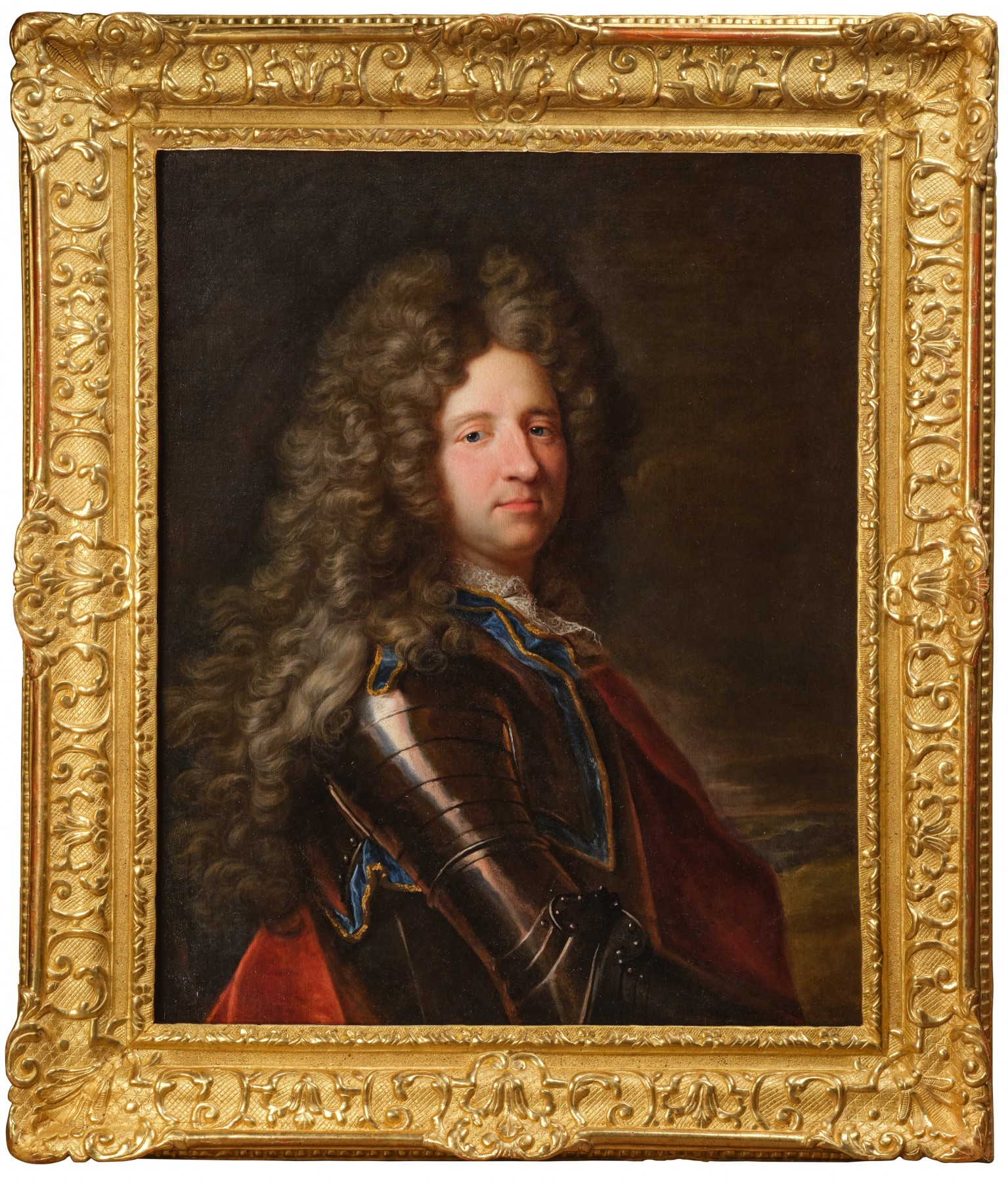
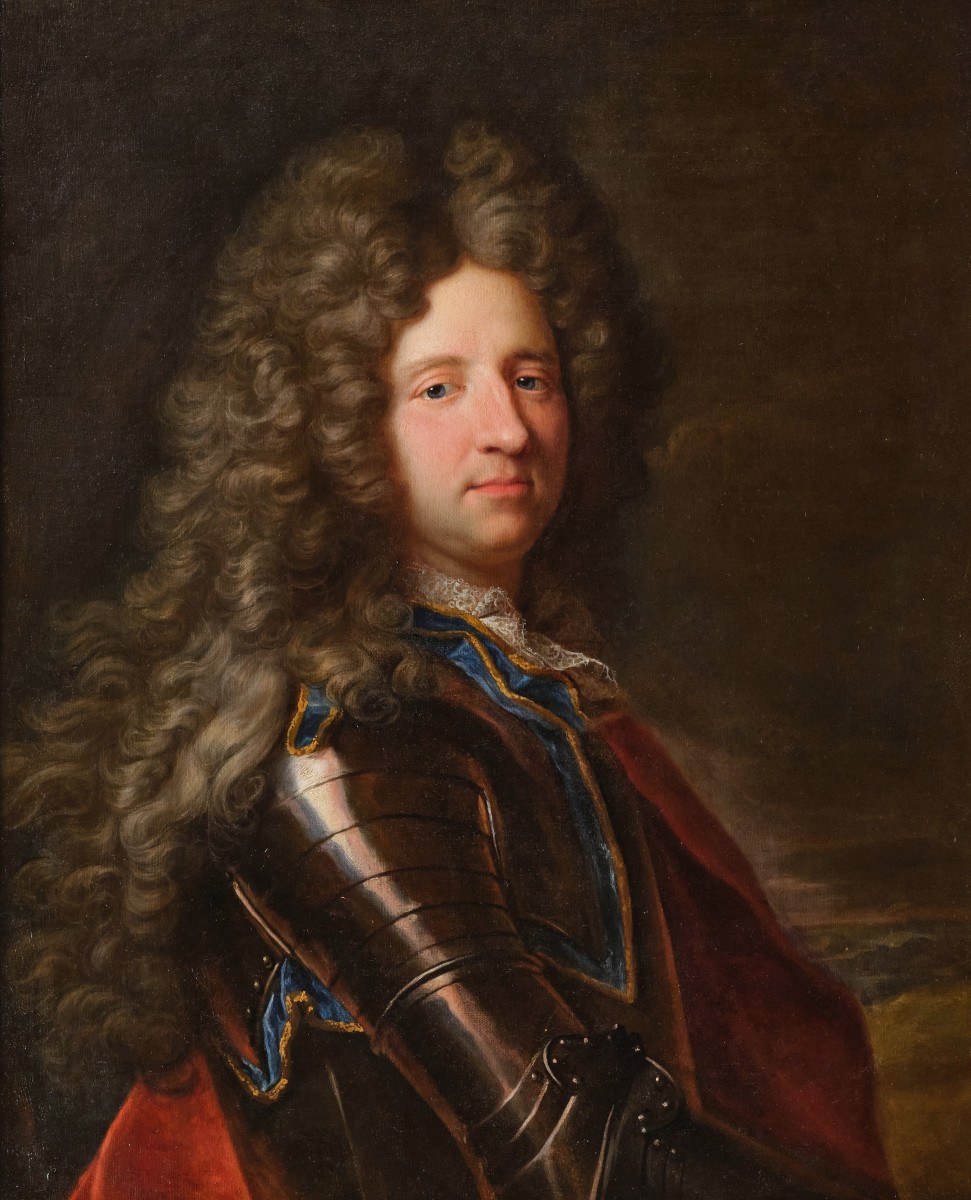
Portrait of Marc de Beauvau, Prince of Craon
Studio of Hyacinthe Rigaud (1659–1743), circa 1710
Oil on canvas, dimensions: H. 80 cm; W. 63 cm
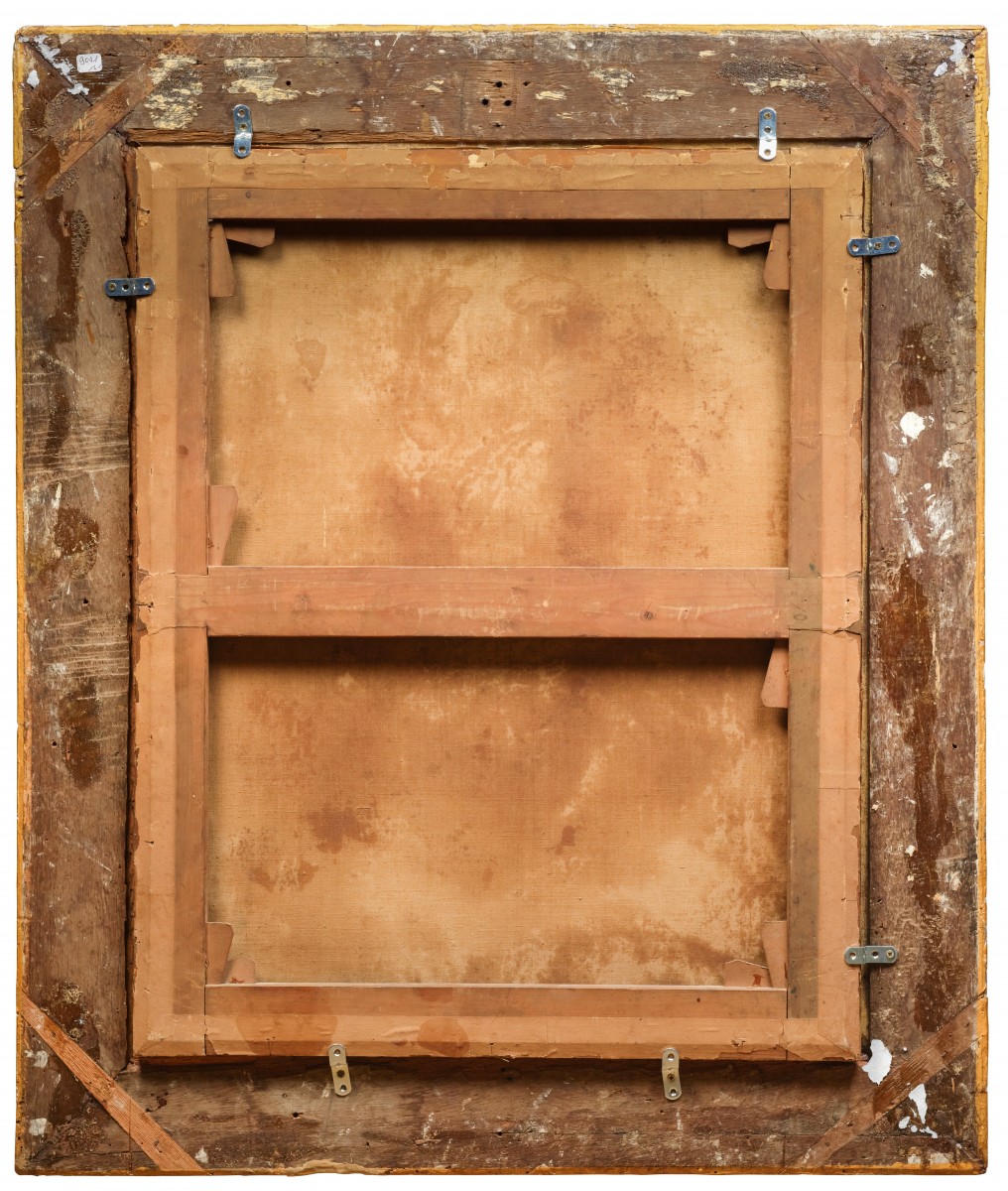
18th century period Louis XIV carved and giltwood frame
Framed dimensions: H. 105 cm; W. 87 cm
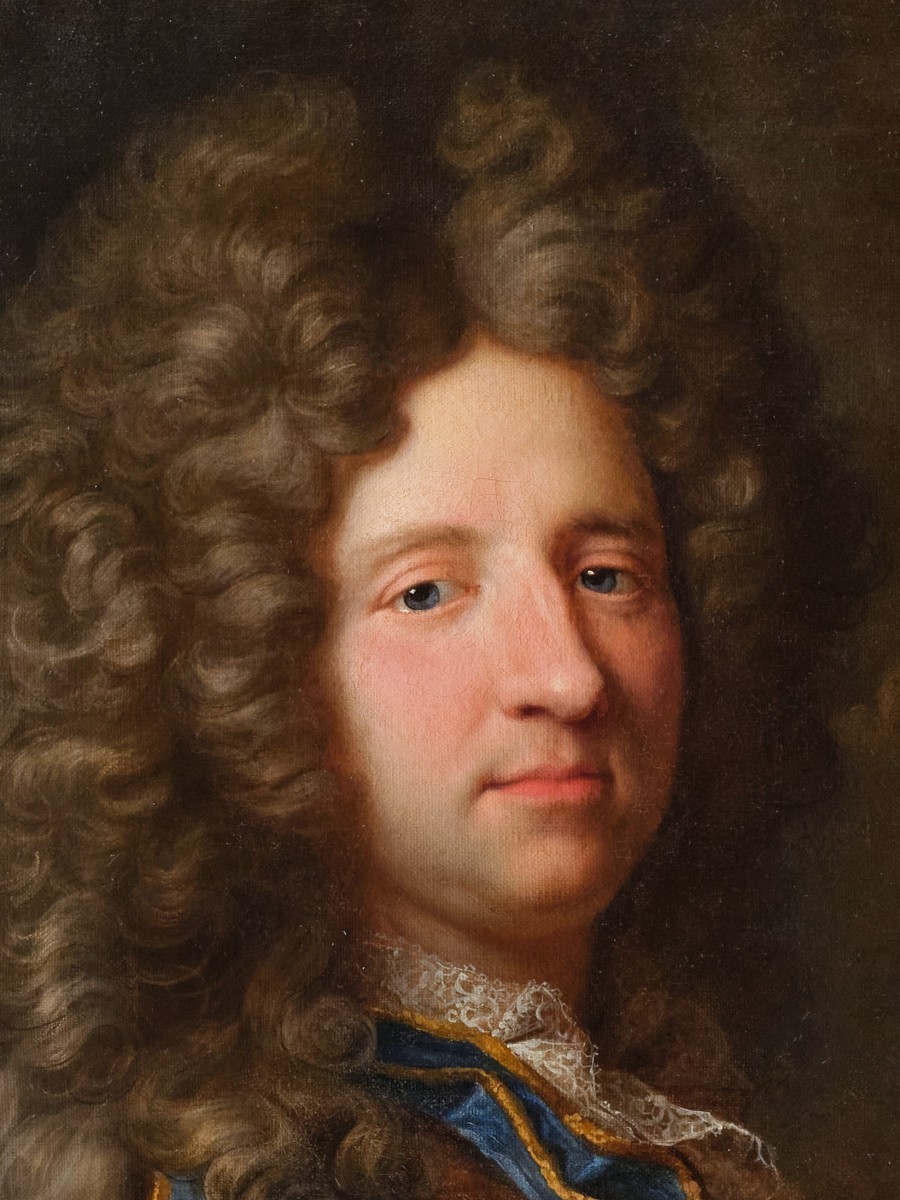
Our portrait depicts Marc de Beauvau-Craon (1676–1754), Marquis of Beauvau, Prince of Craon and of the Holy Roman Empire, Marquis of Haroué and Craon, Grand Constable of Lorraine, Grandee of Spain, and Viceroy of Tuscany. Born in Nancy on 2 April 1676 and deceased at the Château d'Haroué on 10 March 1754, he was one of the foremost members of the Lorraine nobility of his time and occupied a privileged position at the court of Duke Leopold of Lorraine, serving as one of his closest favourites and advisers.
This painting is a studio version derived from the three-quarter-length portrait by Hyacinthe Rigaud, now preserved in the Musée Lorrain, Nancy. It faithfully reproduces the master's composition while illustrating the dissemination of his celebrated models within his workshop.
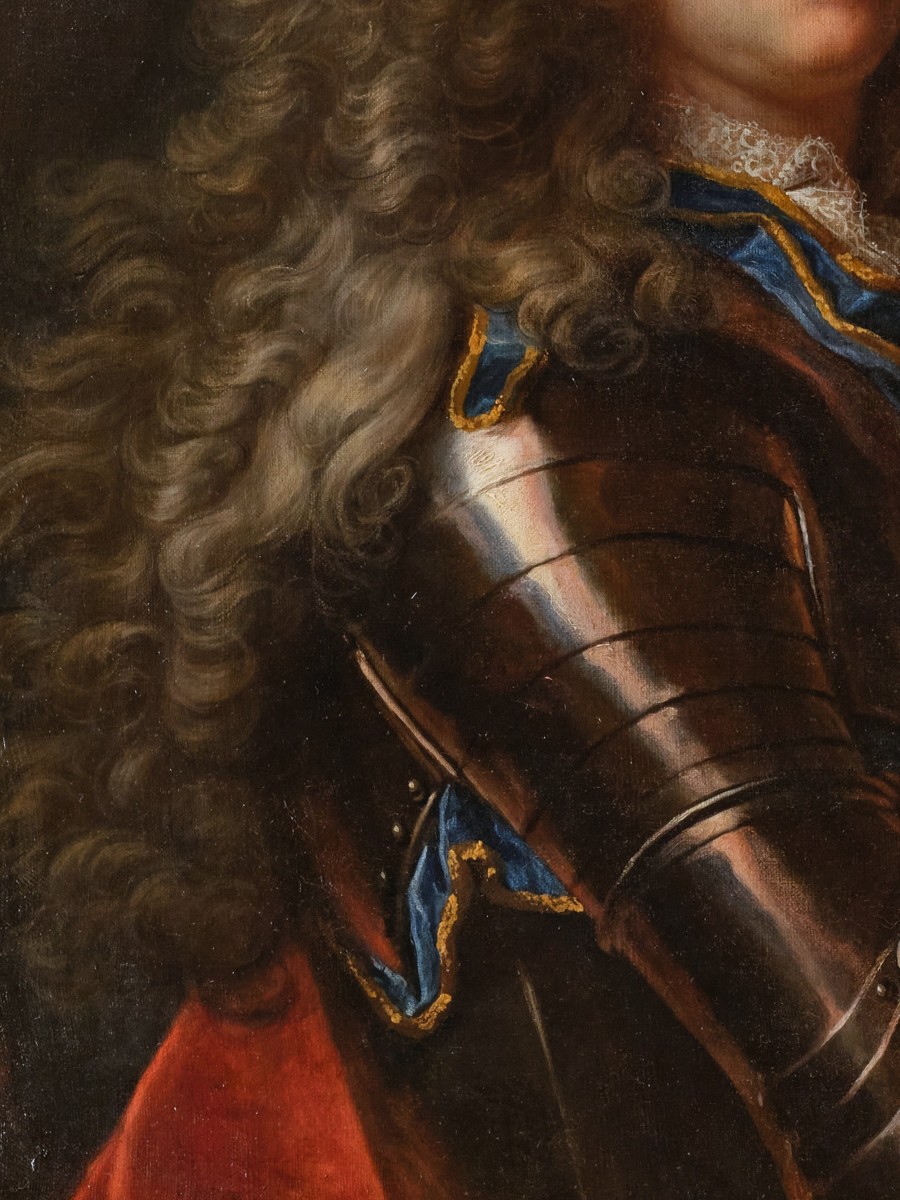
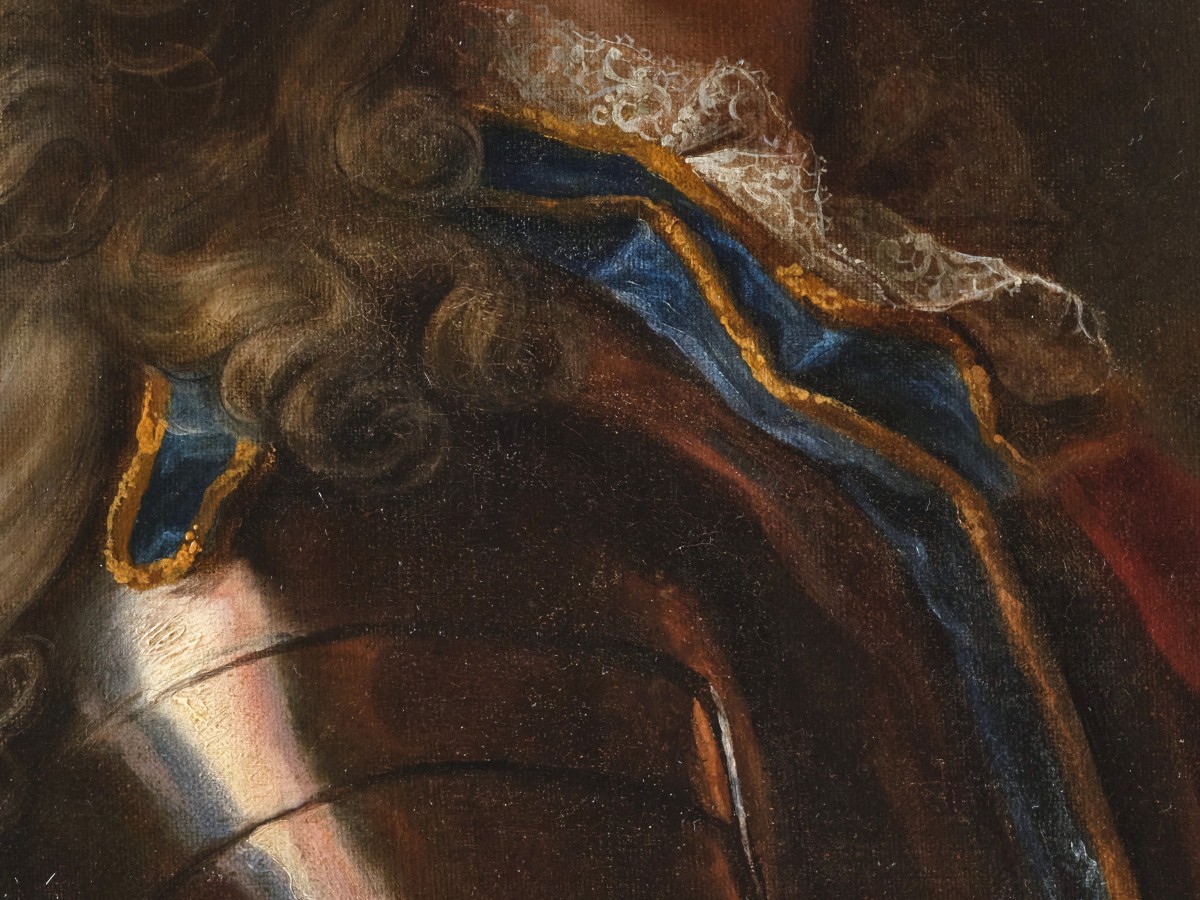
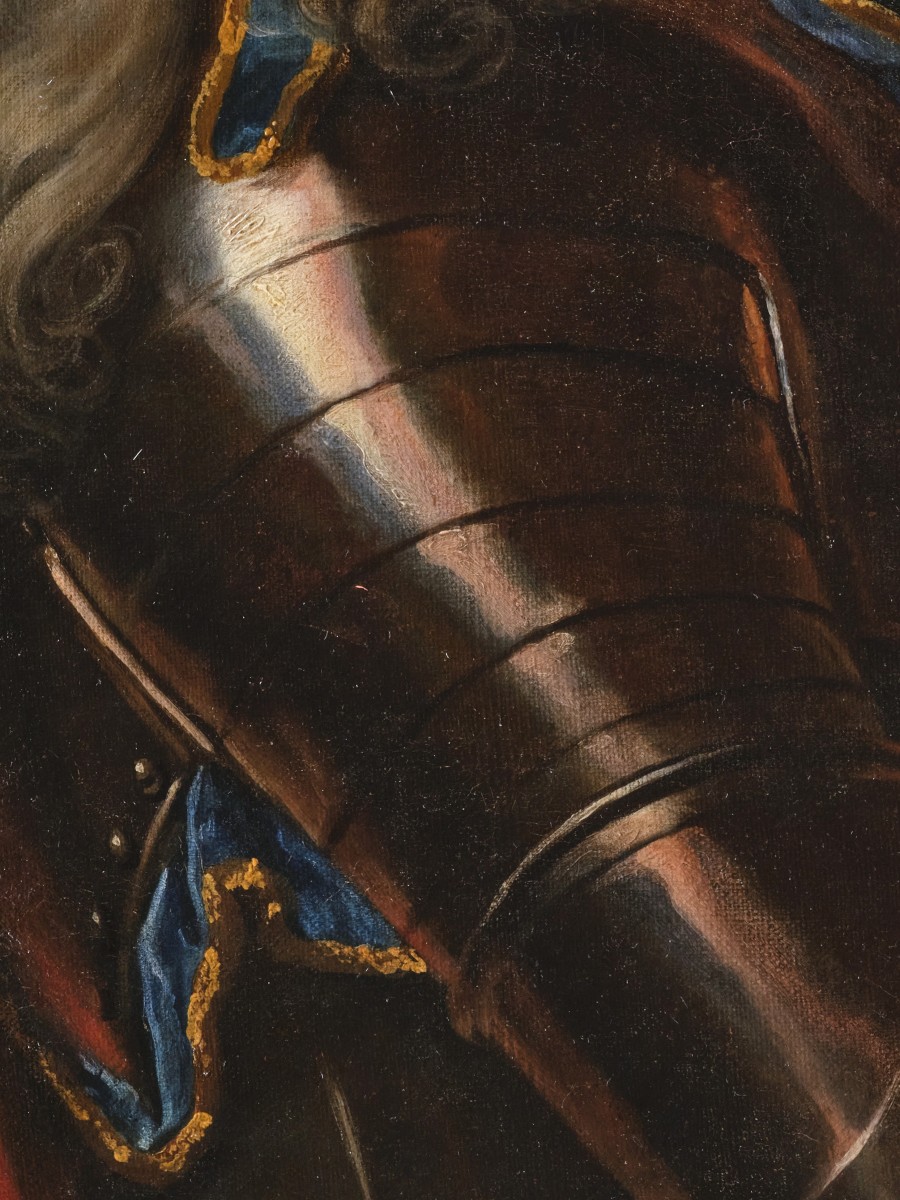
Marc de Beauvau-Craon is portrayed in ceremonial military dress, emphasizing both his rank and his official functions. He wears a richly decorated parade armour, whose pauldrons and vambraces are rendered with remarkable precision. The artist skilfully captures the pearly reflections of the polished steel, contrasting luminous highlights with deep shadows to convey the richness and brilliance of the metal.
A long, full-bottomed wig, emblematic of aristocratic fashion during the reign of Louis XIV, frames his face and cascades over his shoulders and back. Its abundant volume and carefully rendered curls enhance the sitter's imposing presence and underscore his exalted status.
The armour is partially draped with a red velvet mantle, whose rich colour contrasts elegantly with the gleaming steel. Blue velvet facings trimmed with gold braid further enrich this ceremonial attire, contributing to the sumptuous character of the portrait.
The martial pose reinforces the image of a military commander, while the sitter's direct gaze conveys calm authority and determination. Characteristic of Hyacinthe Rigaud's military portraits, this attitude celebrates the virtues of leadership, courage, and loyalty to the sovereign.
Through this portrait, Marc de Beauvau-Craon emerges as one of the leading figures of the Lorraine court. His armour, dignified pose, and confident gaze proclaim both his high rank and his military virtues.
This portrait represents a rare opportunity to acquire the likeness of one of Lorraine's most distinguished aristocrats.
Related Works:
- Hyacinthe Rigaud, Portrait of Marc de Beauvau-Craon, oil on canvas, H. 139 cm; W. 105 cm, Nancy, Musée Lorrain, inv. 2005.5.1.
- Studio of Hyacinthe Rigaud, Portrait of Marc de Beauvau-Craon, oil on canvas, H. 135 cm; W. 110 cm, Hôtel de Lauzun, Paris.
Delevery information :
We organize the shipping and delivery of our artworks worldwide, working with specialized fine art carriers as well as DHL Express for the secure shipment of small and medium-sized works (up to 120 cm).
Each artwork is carefully packed and shipped in a custom-made transport crate to ensure optimal protection. All shipments are fully tracked and insured.
We pay the utmost attention to every stage of the shipping process to ensure fast, reliable delivery. Shipments via DHL Express are generally dispatched within approximately 7 days of purchase.
All of our artworks can be viewed at our Paris gallery and may also be collected in person.