Offered by Galerie Nicolas Lenté
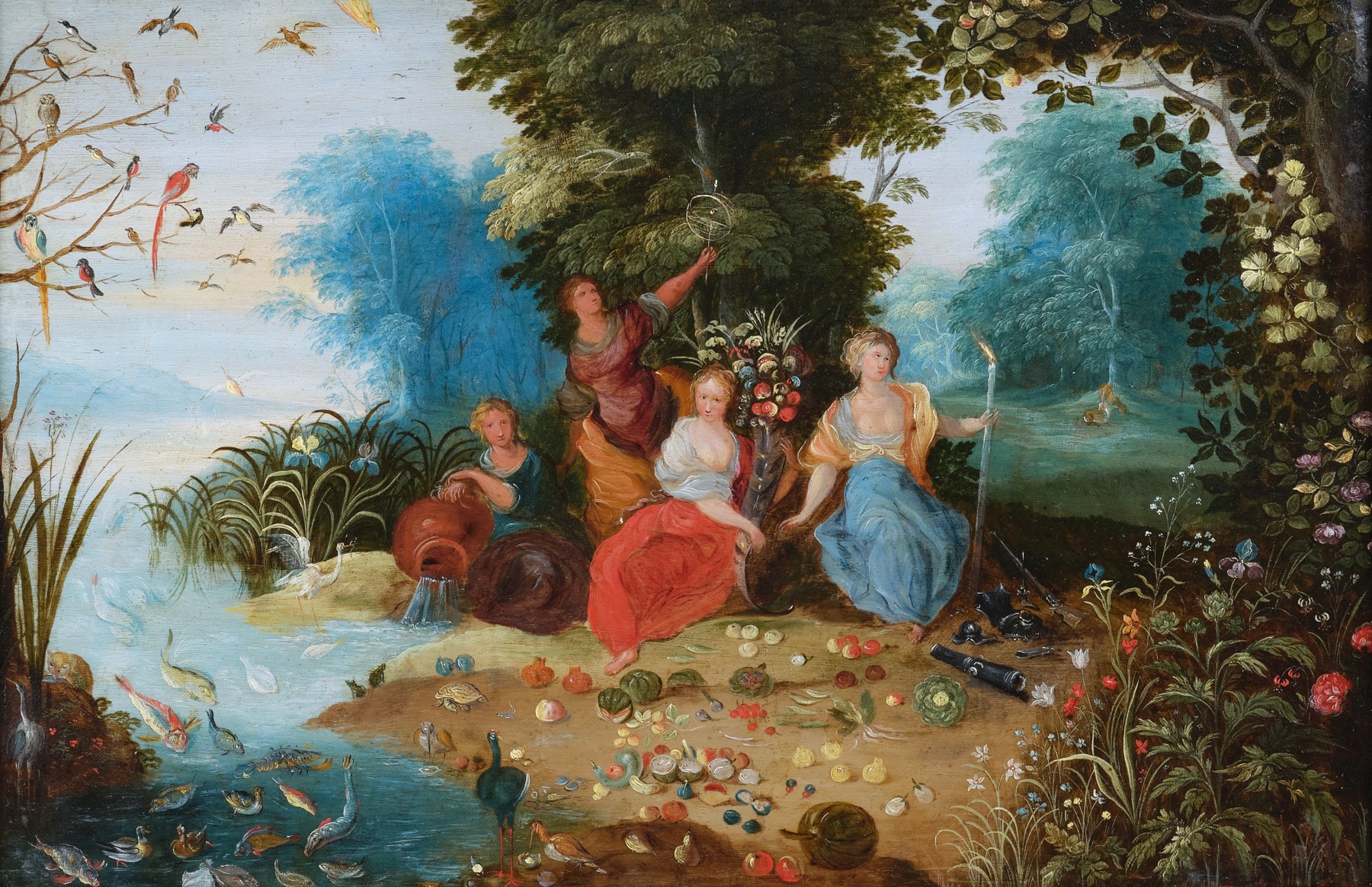
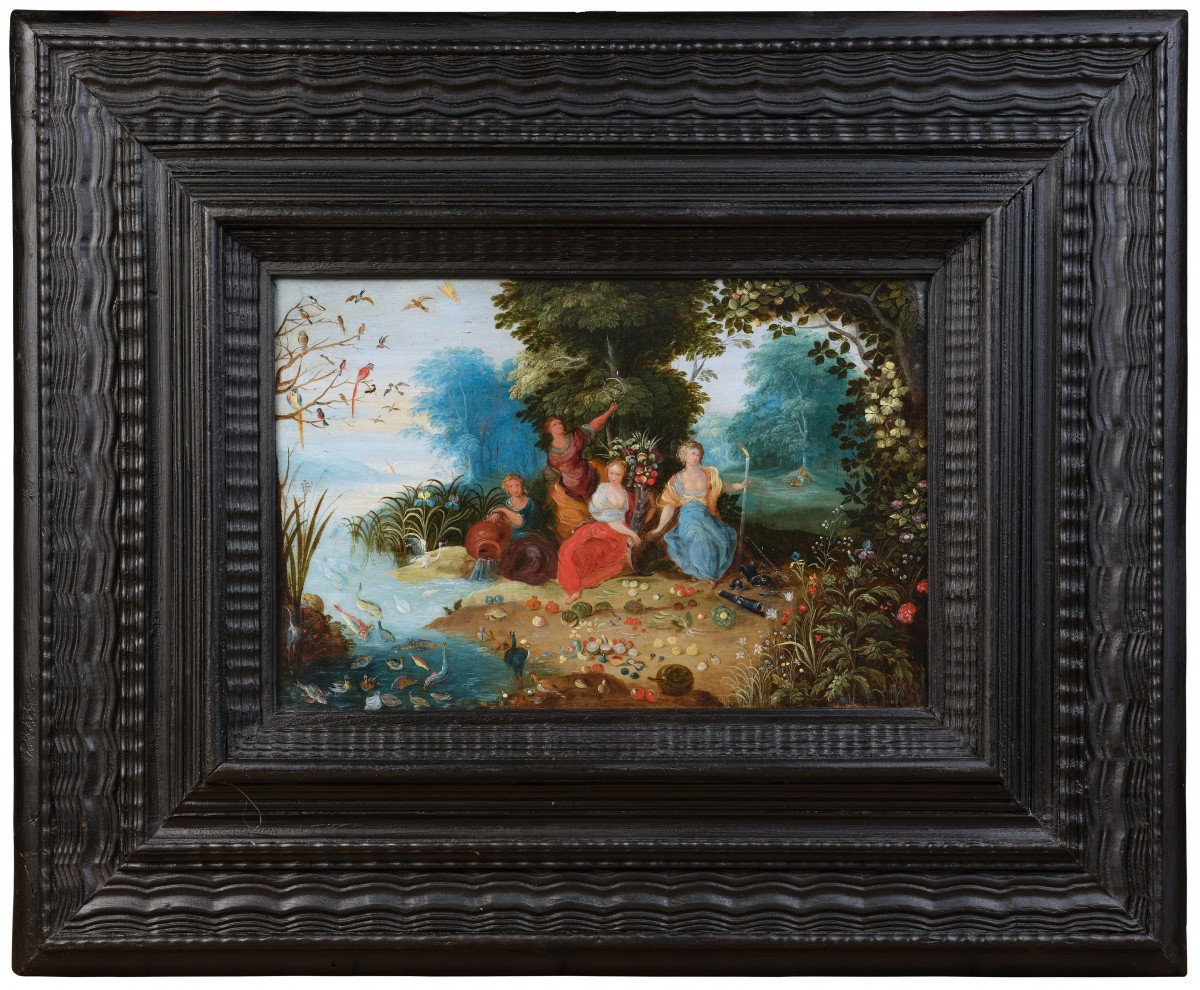

Allegory of the Four Elements
Studio of Jan Brueghel the Younger (Antwerp, 1601–1678)
The figures attributed to a student of Frans Francken II (Antwerp, 1581–1642)
Antwerp, 17th century
Oil on copper
Dimensions: h. 21 cm, w. 32 cm
Mounted in an ebonised wood frame with moulded and guilloché decoration, in period style
Framed dimensions: h. 47 cm, w. 59 cm
This exquisite oil on copper belongs to the most refined tradition of seventeenth-century Antwerp cabinet painting, where a taste for learned allegory is combined with an encyclopaedic vision of nature. The theme of the Four Elements, particularly prized by Flemish collectors, here provides the pretext for a composition of extraordinary decorative richness and naturalistic abundance.
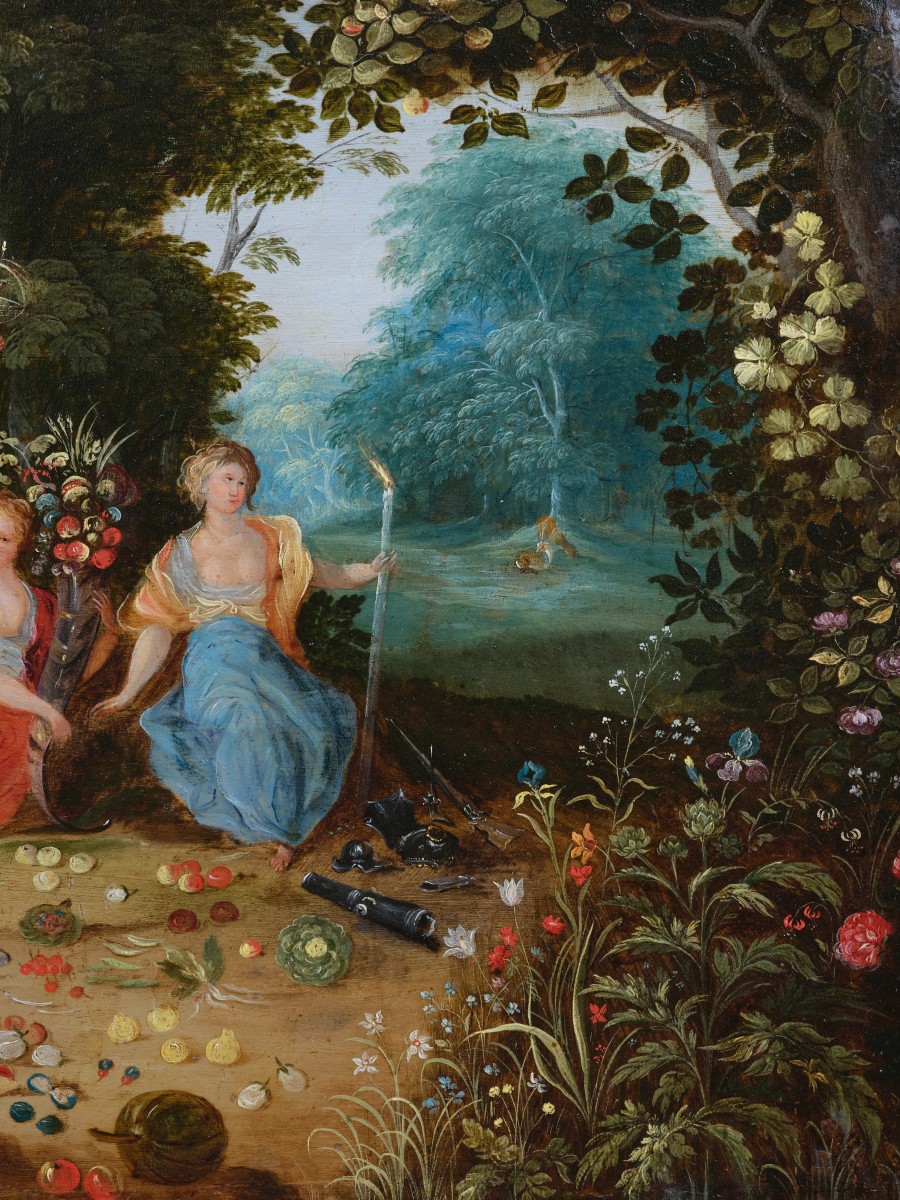
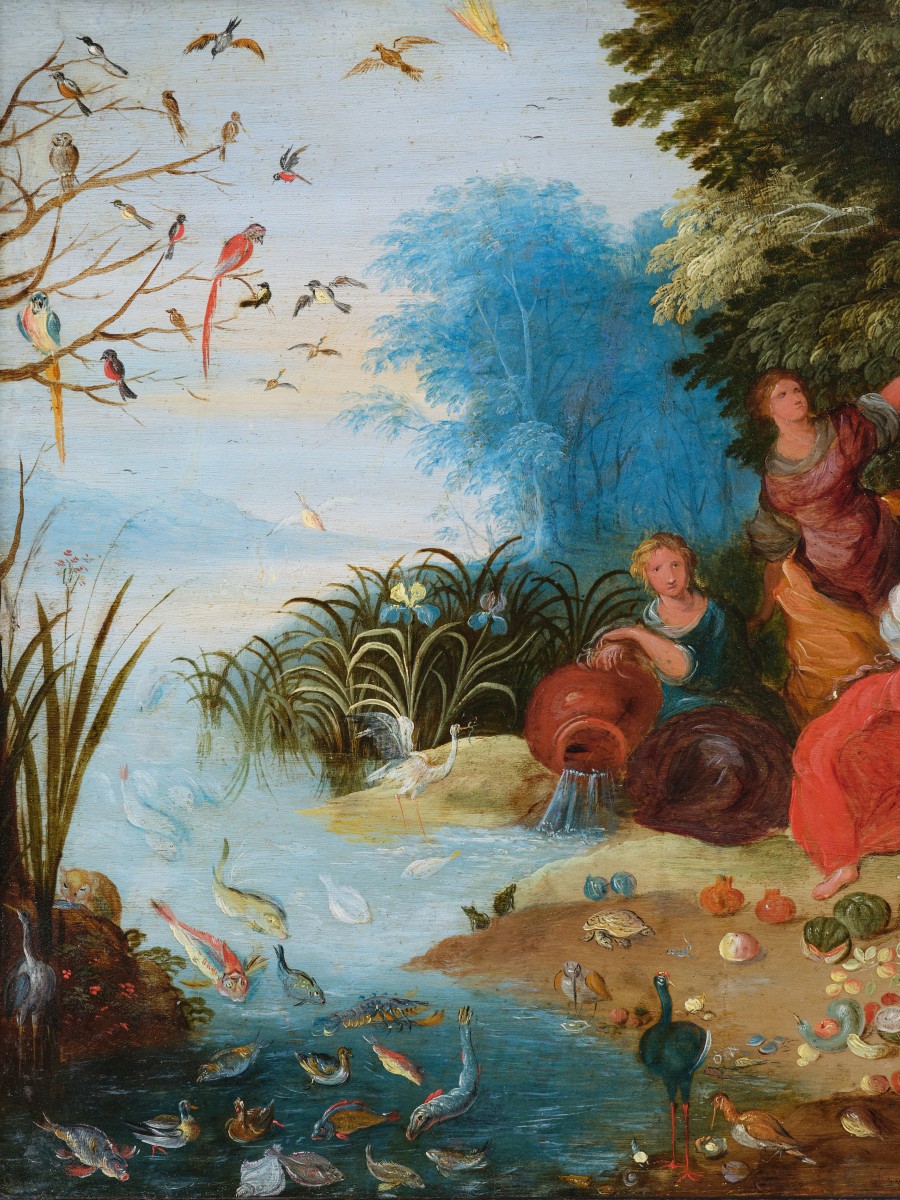
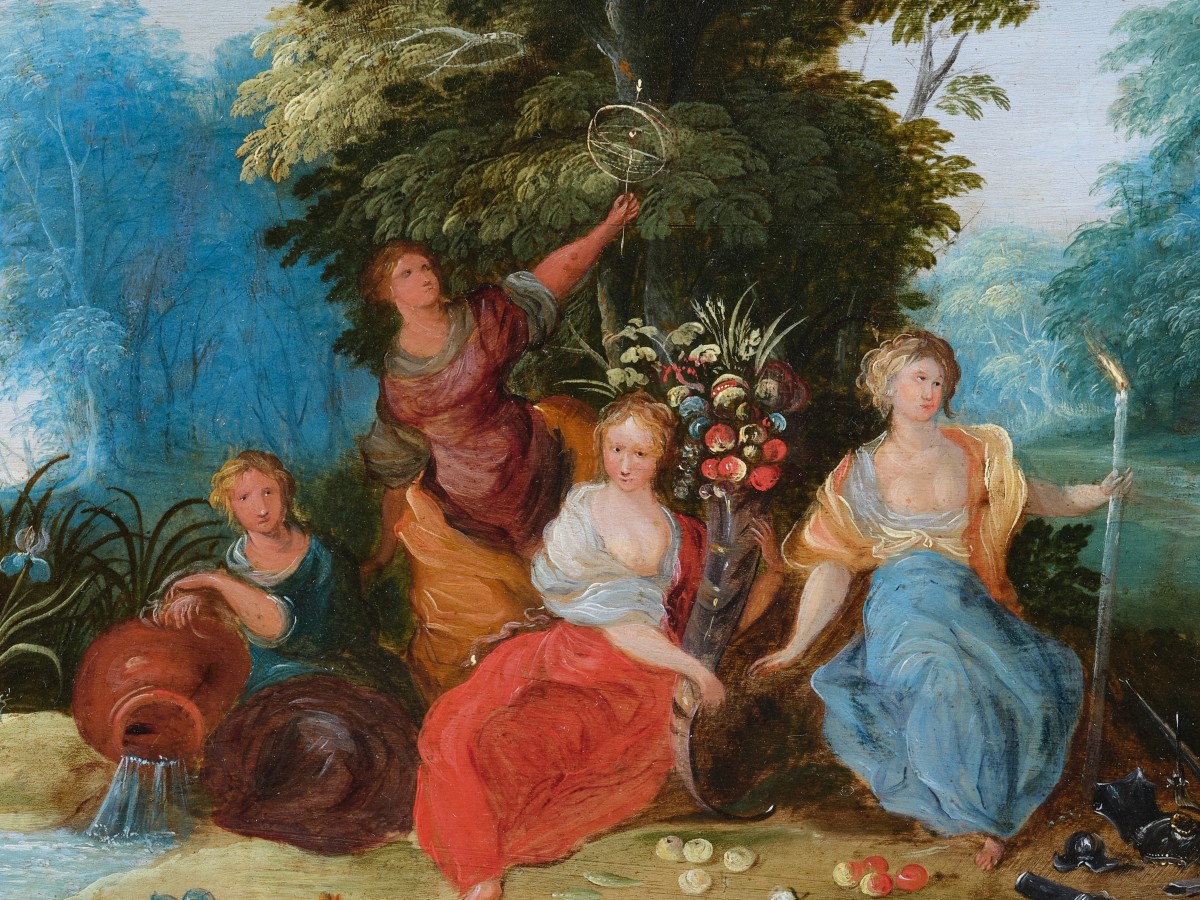
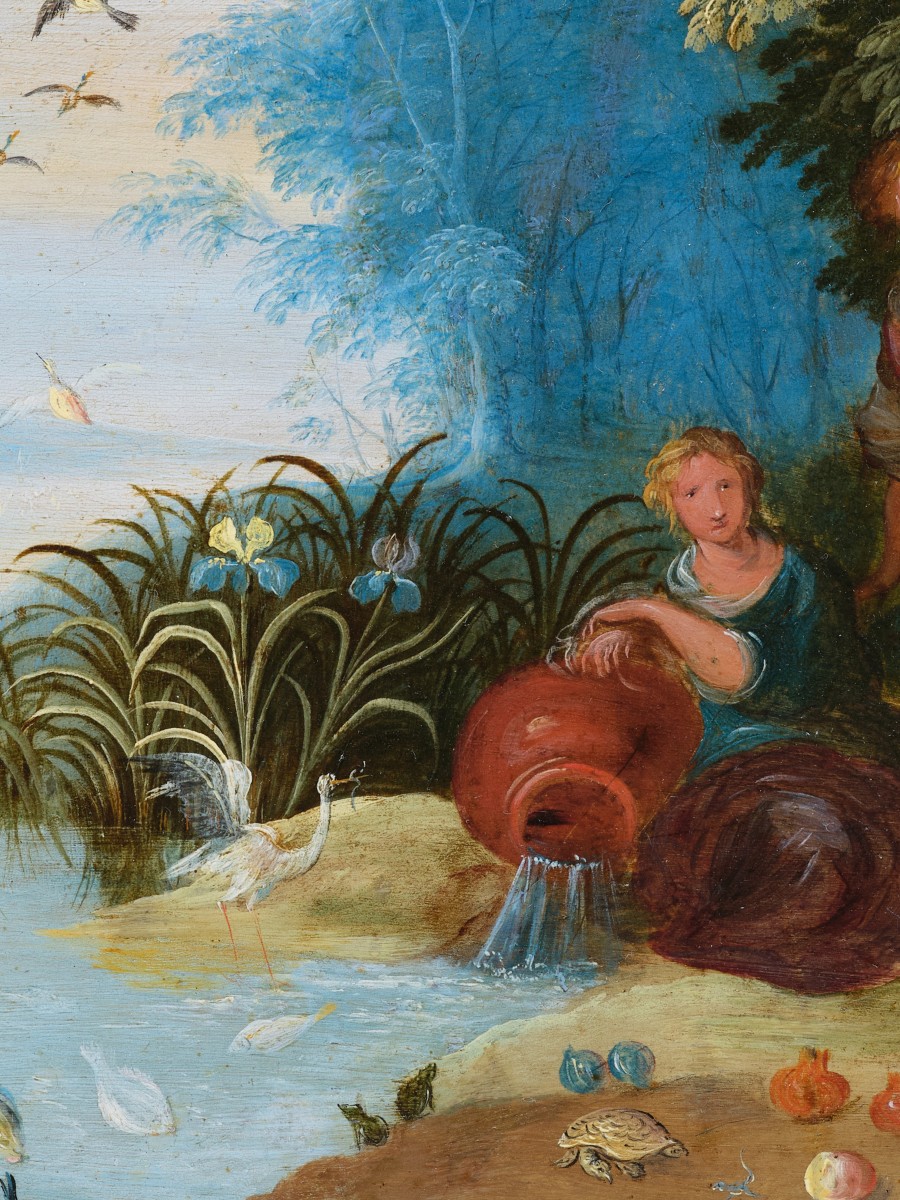
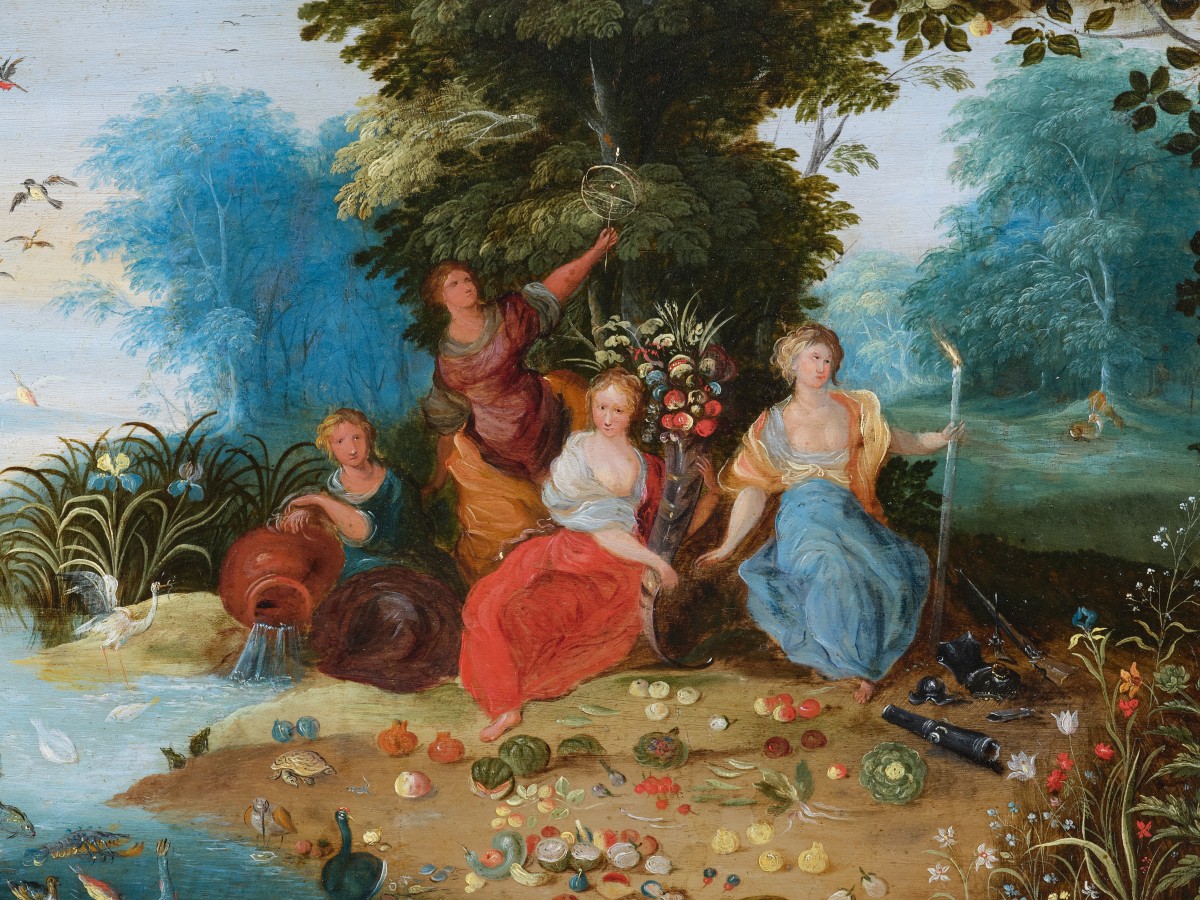
At the centre of the composition, four elegantly arranged female figures set within a wooded landscape personify the fundamental elements of the universe. The Nereid Amphitrite, seated beside an overturned vase from which a spring gushes forth, represents Water; the Muse Urania, raising an armillary sphere towards the heavens, symbolises Air and cosmic harmony; the goddess Vesta, holding a flaming torch, embodies Fire; and finally Ceres, accompanied by her traditional cornucopia overflowing with fruits and flowers, personifies Earth and its nourishing bounty.
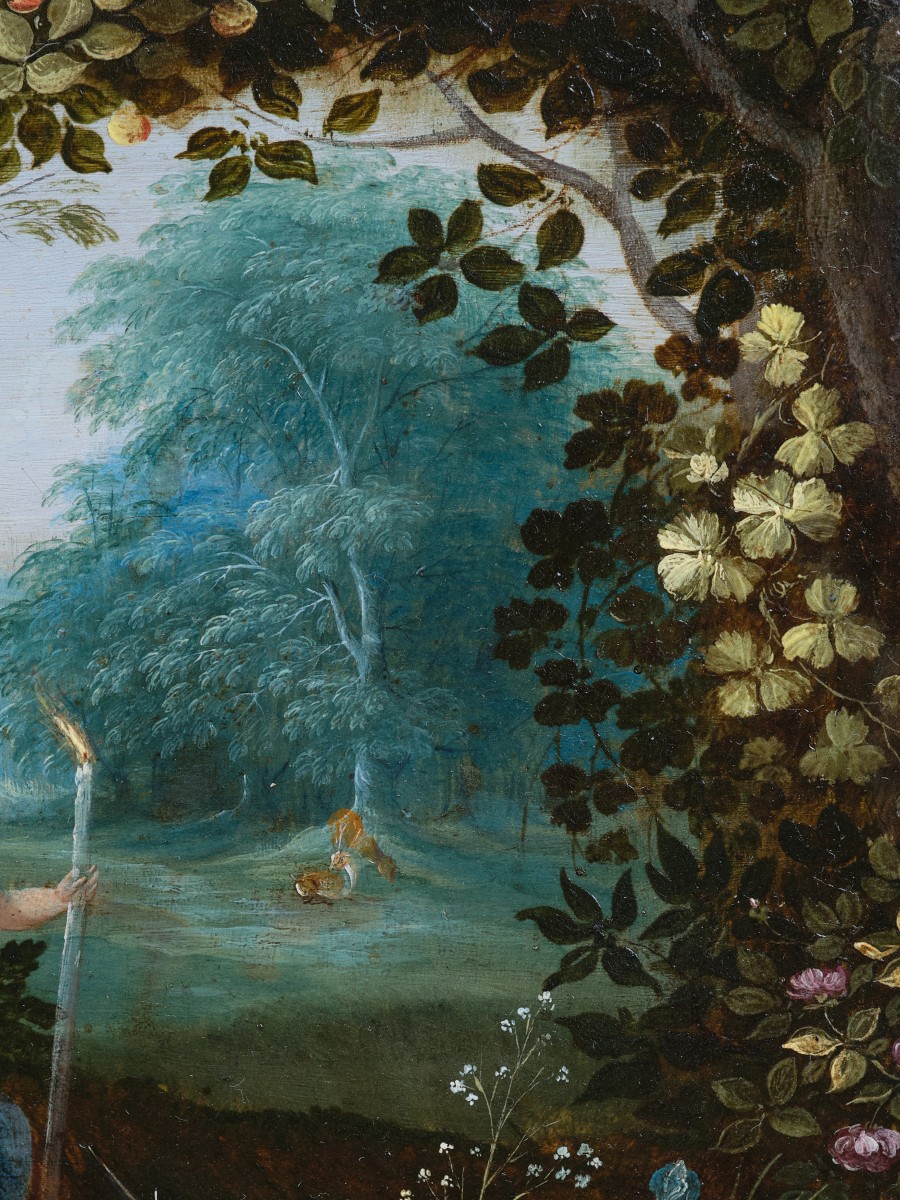
The painting fully reveals the influence of Jan Brueghel the Younger, particularly in its remarkably subtle treatment of landscape. Behind the large central oak, the wooded masses of the middle distance assume distinctly blue-turquoise tones, while the opposite bank gradually dissolves into a bluish-white haze. This delicate atmospheric perspective, inherited from the inventions of his father, Jan Brueghel the Elder, and perpetuated within his workshop, opens the composition onto misty distances and endows this small copper with remarkable depth and spatiality.
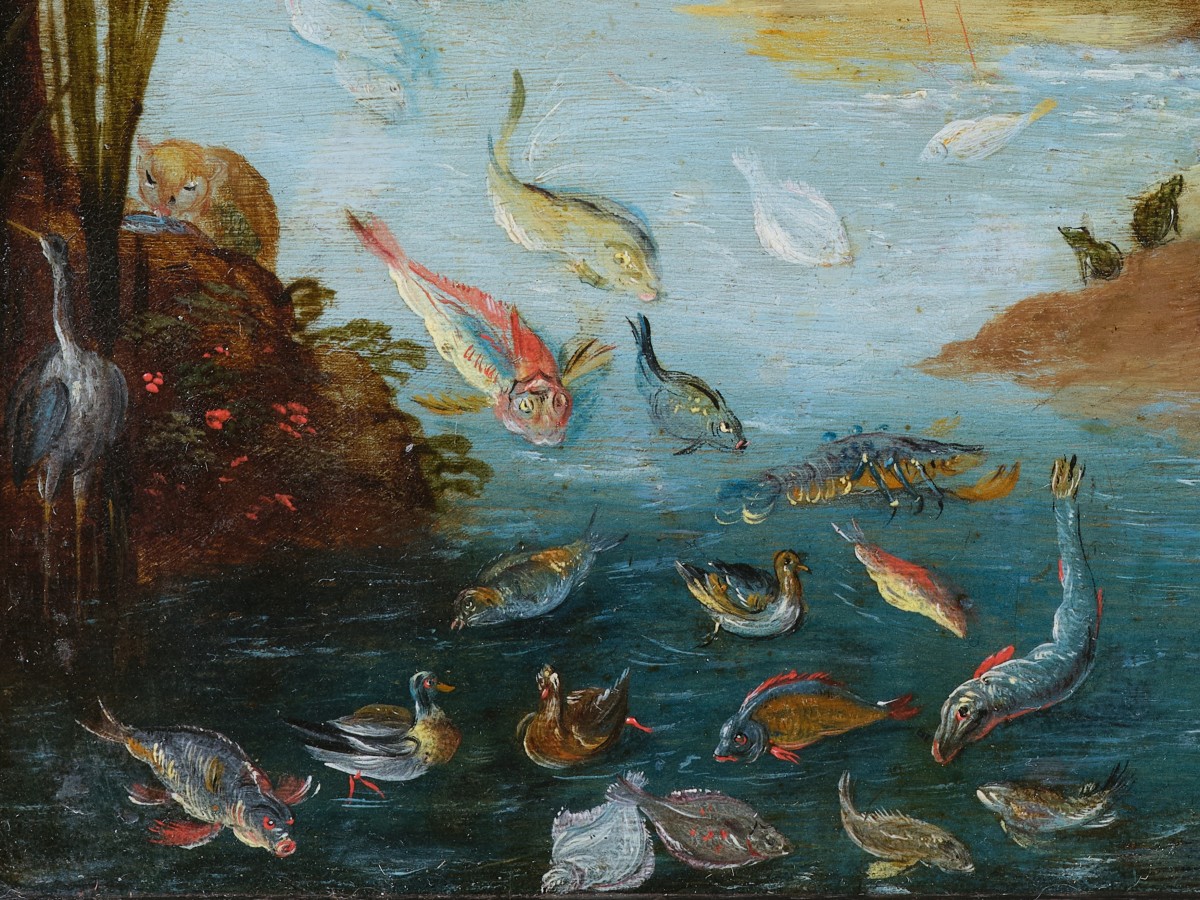
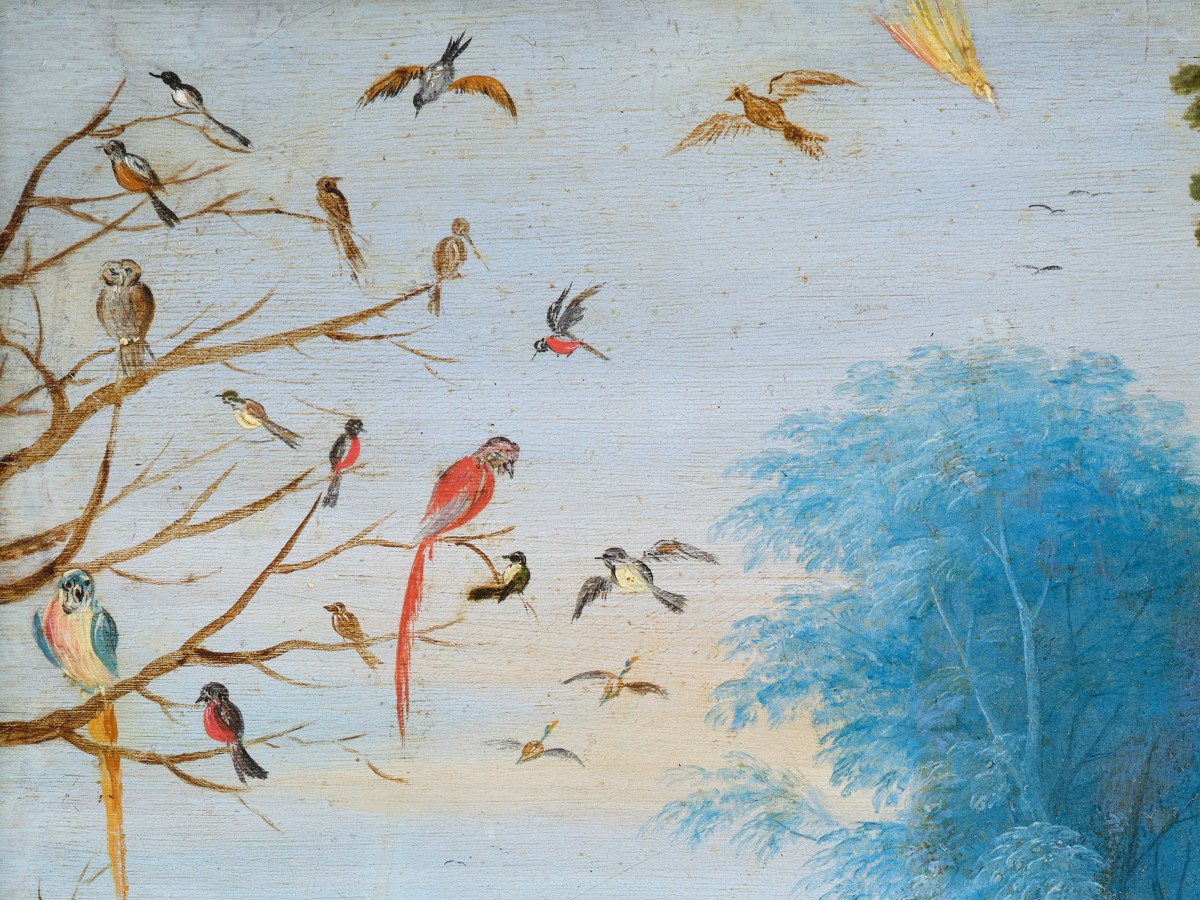
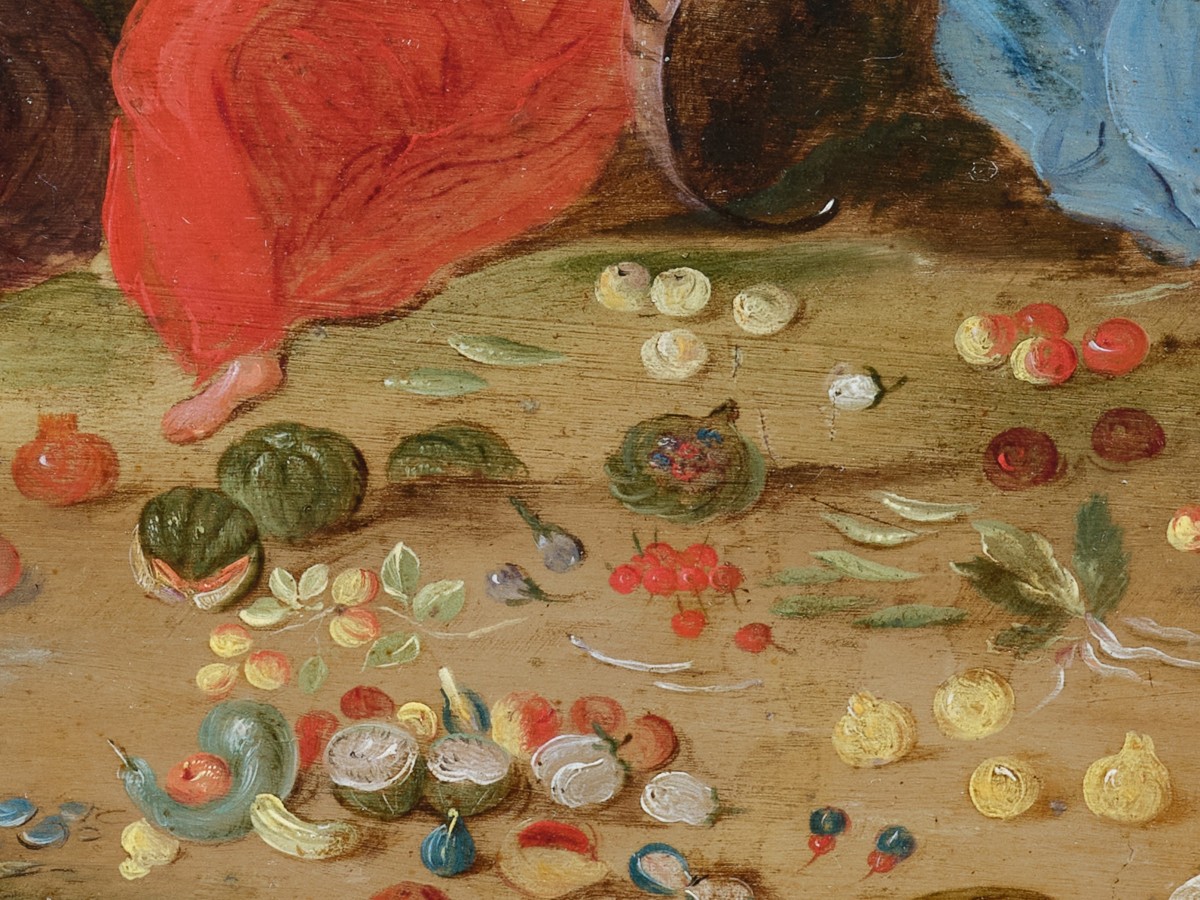
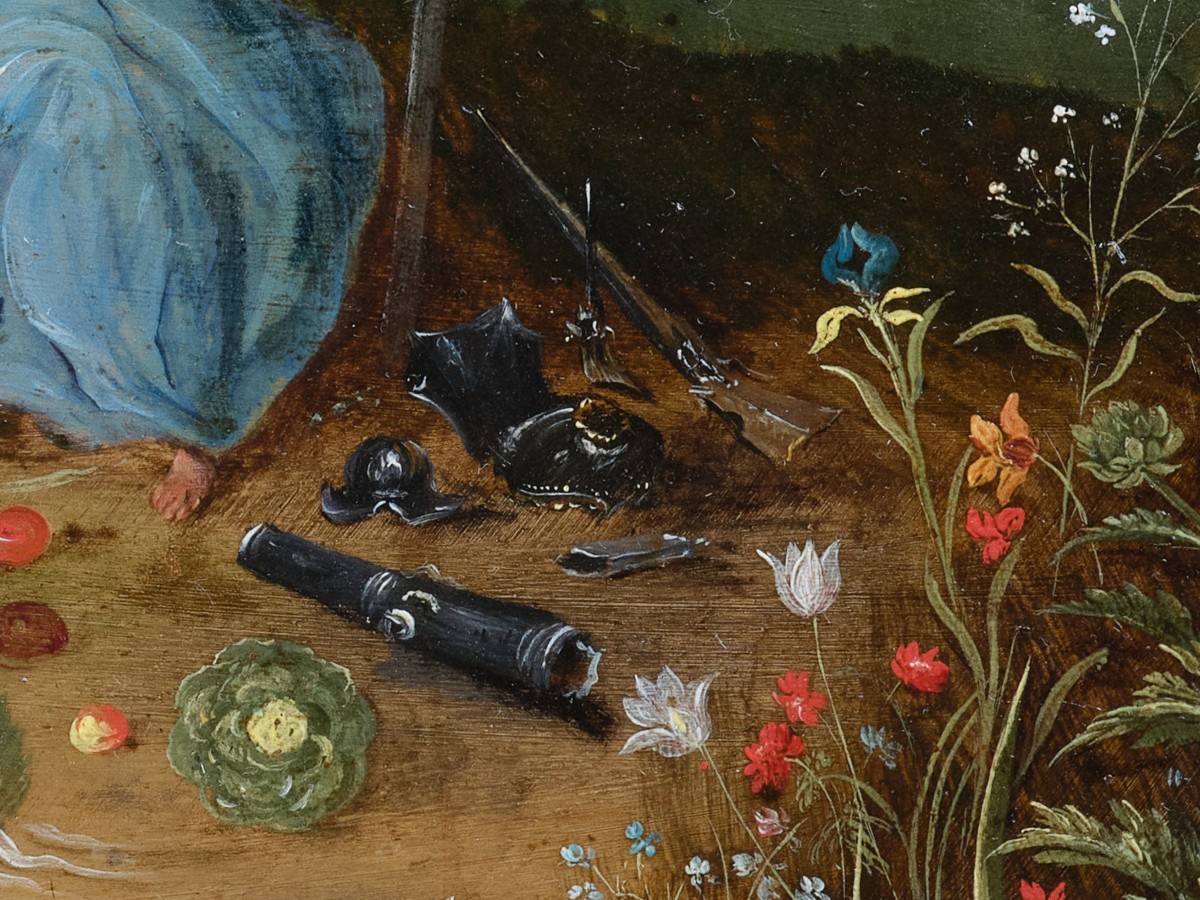
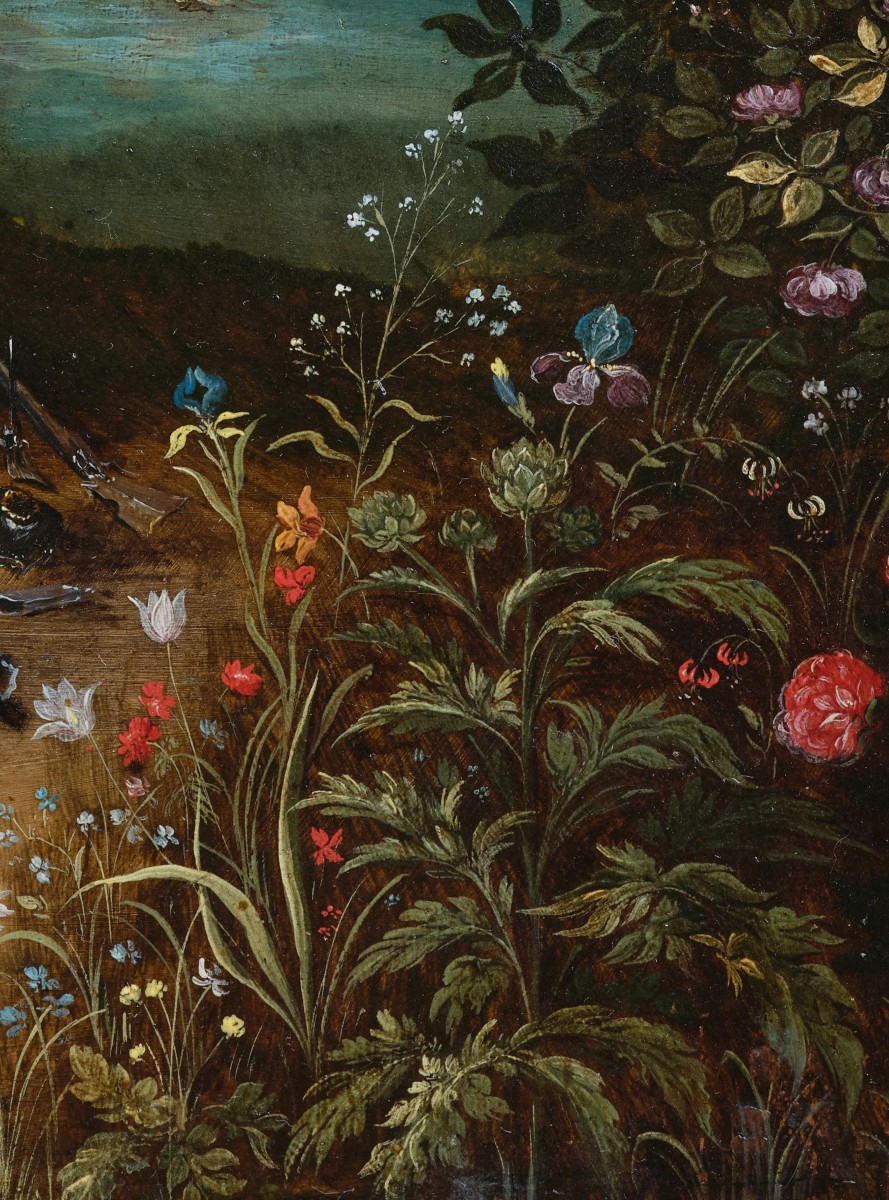
The richness of the work lies above all in its treatment of a luxuriant natural world, observed with almost miniaturist precision. Vegetation, fruits, vegetables, birds, fish and aquatic creatures all participate in the same encyclopaedic vision of Creation. The delicately nuanced foliage, aquatic plants and grasses along the shore correspond to the abundant harvest of fruits and vegetables displayed in the foreground, while the birds perched upon the dead branch to the left, the waterfowl and the fish inhabiting the pond together form a veritable inventory of fauna. To this ensemble are added, rendered with equal precision, pieces of armour, firearms and a cannon placed at the feet of Vesta, attributes of the element of Fire, here evoking human activity, metallurgy and the art of forging.
Each element is individualised with the utmost care and rendered with exceptional finesse of touch and remarkable chromatic freshness. This skilfully orchestrated accumulation of animals, plants and objects, combining naturalistic observation with learned delight, is characteristic of the studio of Jan Brueghel the Younger and imbues the composition with the distinctive atmosphere of a painted cabinet of curiosities, where the abundance of the natural world becomes a source of contemplation and wonder.
The figures, conceived in a more narrative and theatrical spirit, are entrusted to a follower of Frans Francken II, in keeping with the Antwerp workshop practice of paintings executed “à deux mains”, whereby a figure painter collaborated with a specialist in landscape and animated still-life elements.
The choice of copper as a support contributes greatly to the remarkable quality of the work. Its perfectly smooth surface permits an execution of incomparable delicacy, allowing for an exceptionally precise rendering of plumage, foliage and the innumerable miniature details that animate the scene.
Our painting is preserved in an exceptional state of conservation. The palette remains remarkably fresh: the blues and turquoises of the distant landscape, the deep greens of the foliage and the brilliant reds of the draperies, flowers and fruits have retained all of their original intensity. The paint surface is beautifully preserved, allowing an unimpeded appreciation of both the meticulous execution and the chromatic richness of the composition.
By virtue of its alluring allegorical subject, the precious quality of its execution on copper and the extraordinary profusion of its naturalistic details, this work constitutes an ideal collector’s piece for the discerning connoisseur of seventeenth-century Antwerp painting. Intended for close contemplation, it reveals new subtleties at every glance and condenses, within its intimate dimensions, the entire poetic, learned and wonderfully abundant universe of the studio of Jan Brueghel the Younger.
Related Works
• Sotheby’s, London, 10 July 2014, oil on canvas, 51 × 65 cm, Jan Brueghel the Younger & Frans Francken II
• Sotheby’s, London, 7 December 2001, oil on panel, 52.3 × 67.6 cm, Jan Brueghel the Younger & Frans Francken II
• J. Paul Getty Museum, Los Angeles, Jan Brueghel the Younger and Frans Francken II, oil on panel, 52.7 × 81.3 cm (inv. 71.PB.28), circa 1635
• Staatliches Museum Schwerin, studio of Frans Francken II, oil on panel, 31 × 42 cm.
Delevery information :
We organize the shipping and delivery of our artworks worldwide, working with specialized fine art carriers as well as DHL Express for the secure shipment of small and medium-sized works (up to 120 cm).
Each artwork is carefully packed and shipped in a custom-made transport crate to ensure optimal protection. All shipments are fully tracked and insured.
We pay the utmost attention to every stage of the shipping process to ensure fast, reliable delivery. Shipments via DHL Express are generally dispatched within approximately 7 days of purchase.
All of our artworks can be viewed at our Paris gallery and may also be collected in person.