Offered by Dei Bardi Art
REQUEST INFORMATION

Sculptures and works of art from the Middle Ages and the Renaissance
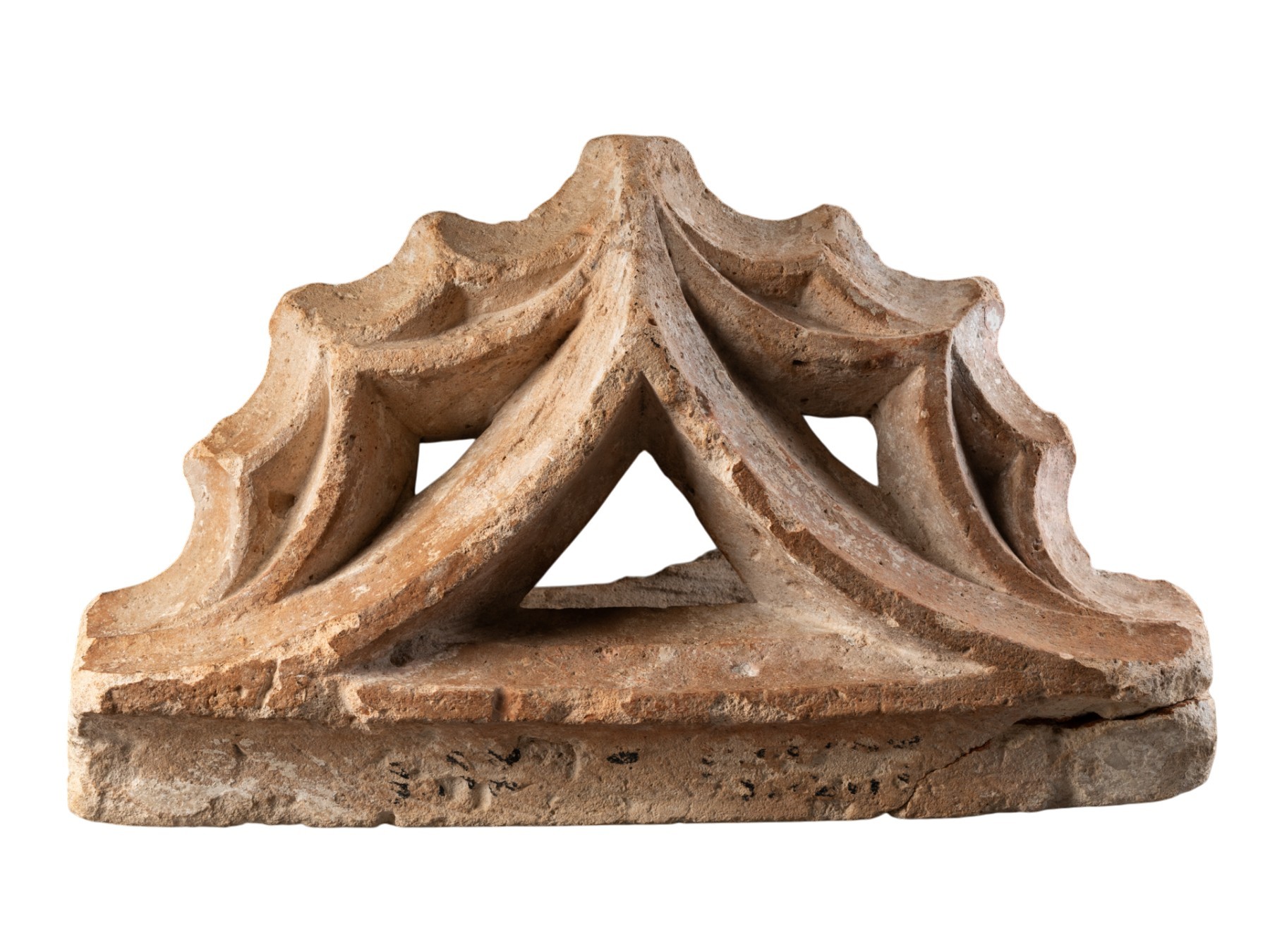
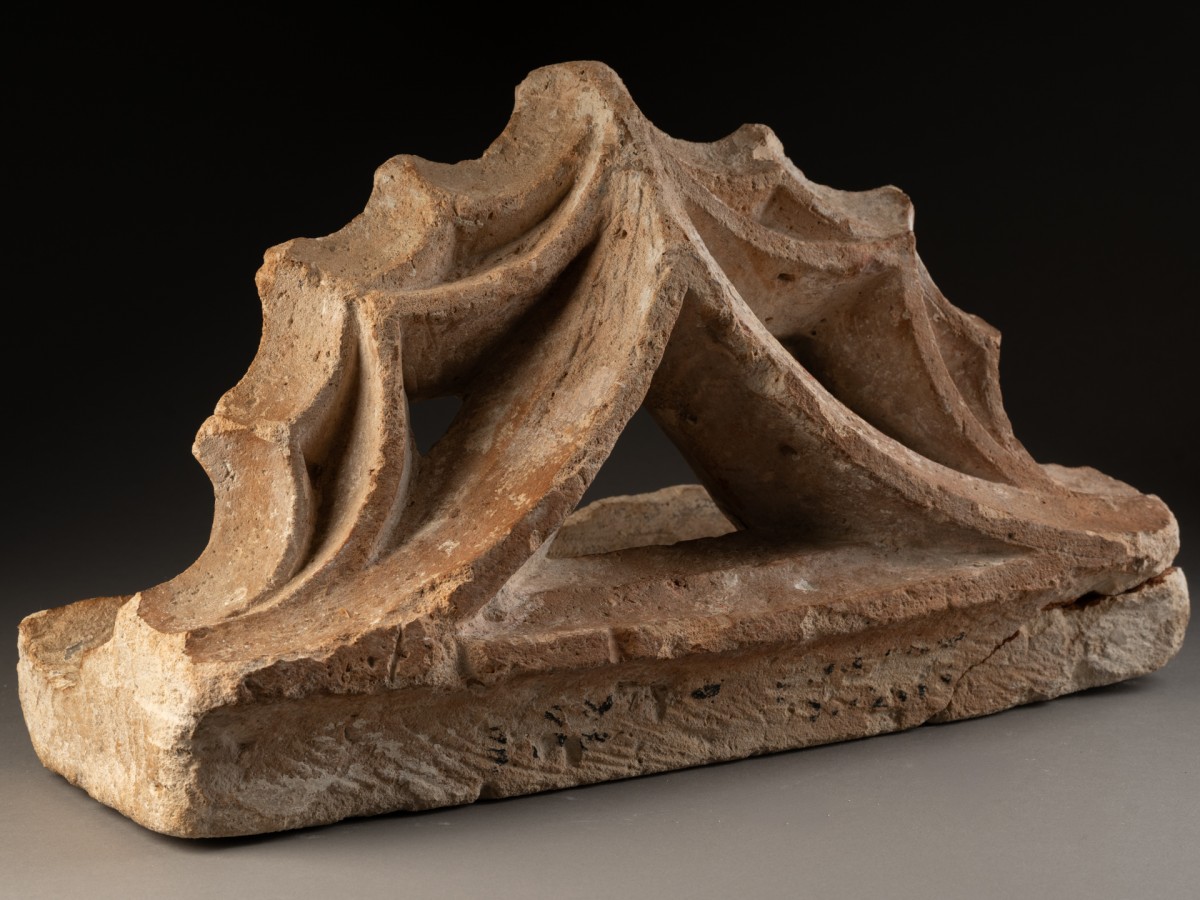
Trilobed Gable with Plain Copings
France, 14th century
Limestone
26 x 38 x 14 cm
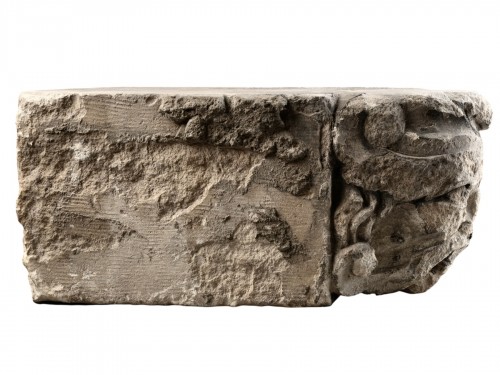
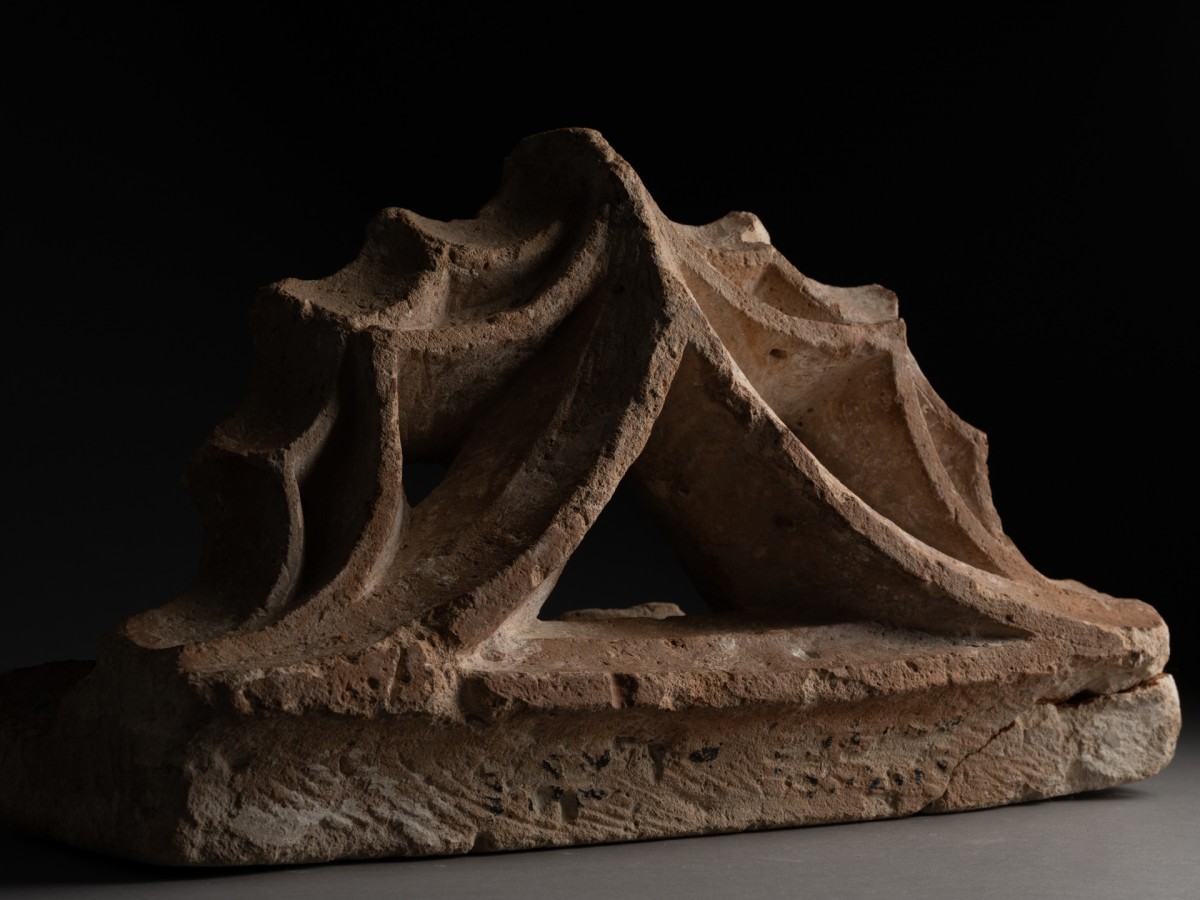
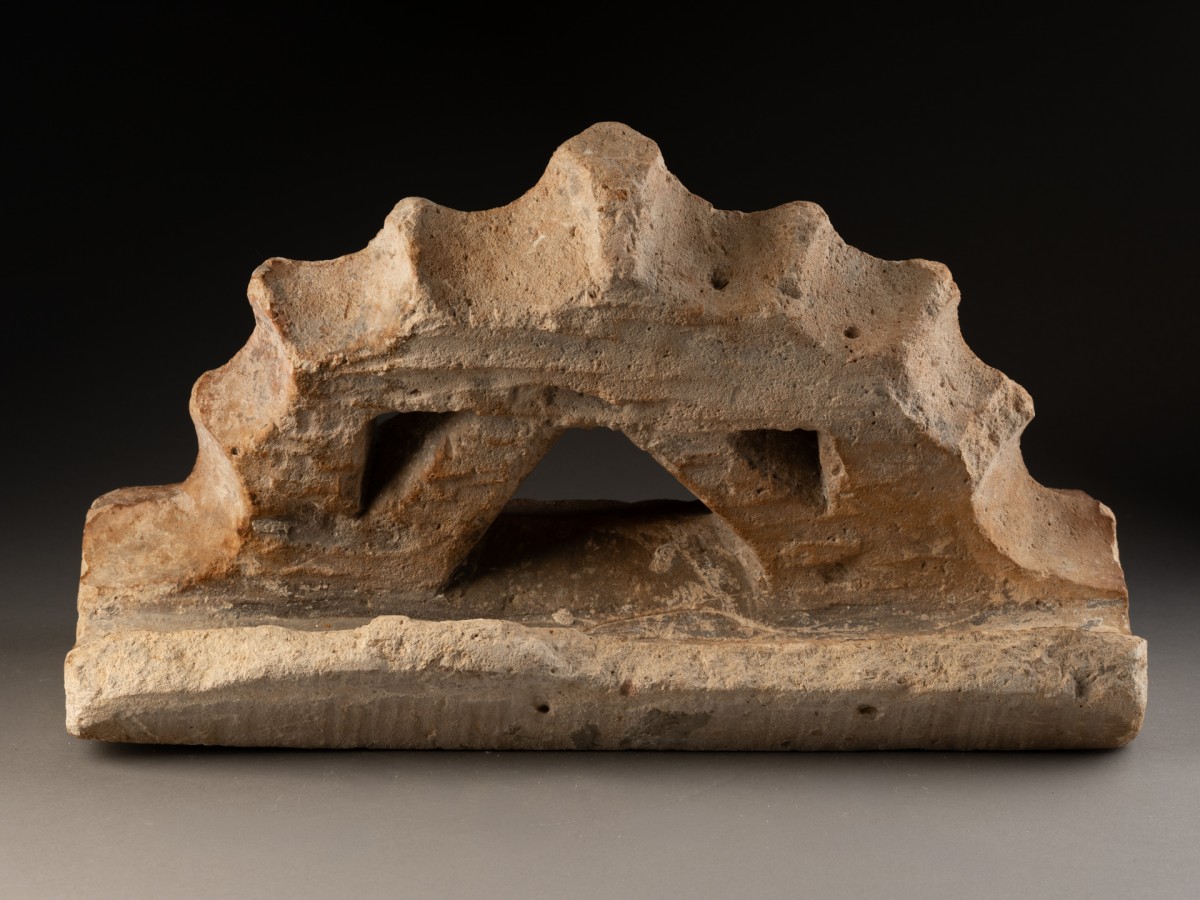
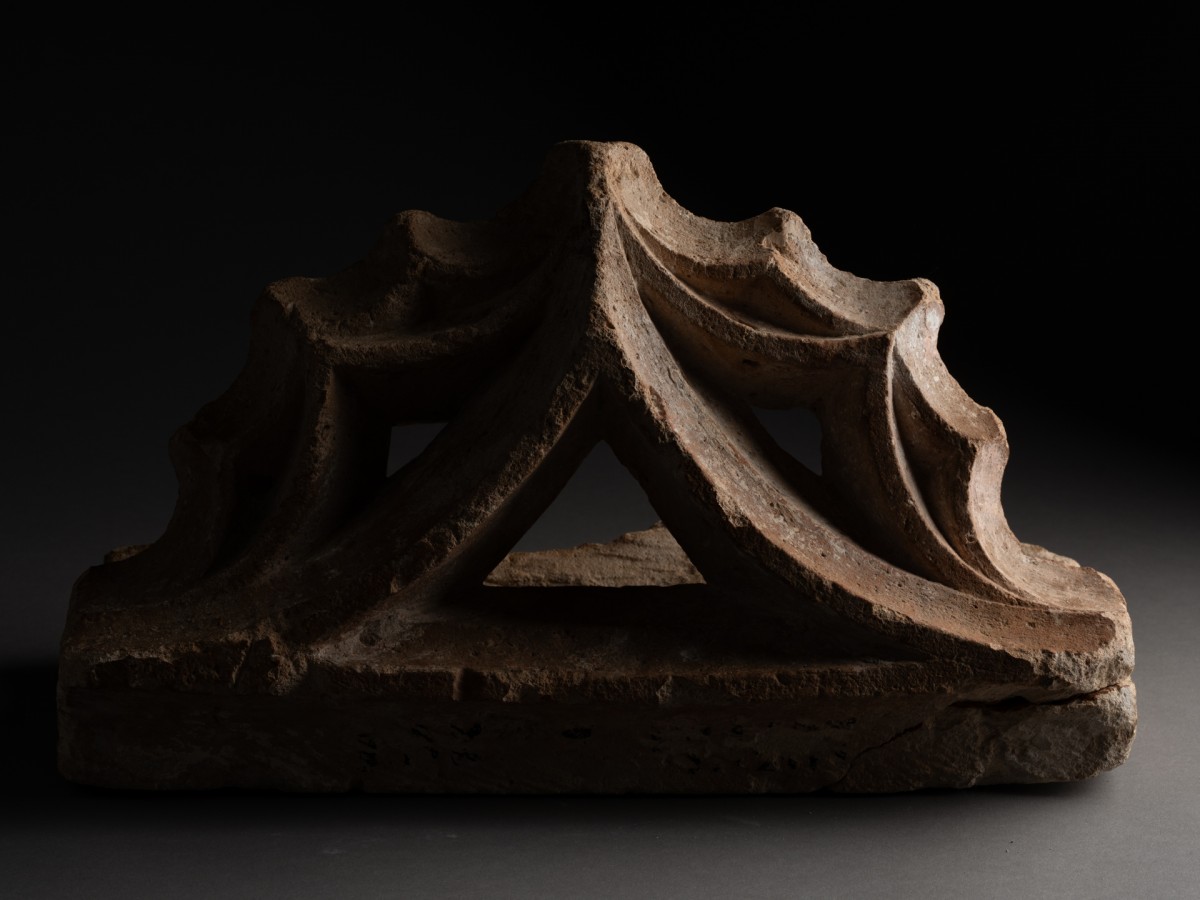
Architectural fragment in limestone, comprising a triangular gable with plain copings, distinguished by its remarkable formal purity. The gable— a triangular crowning element surmounting portals, windows, niches, or altarpieces—constitutes one of the most emblematic features of the Gothic architectural vocabulary.
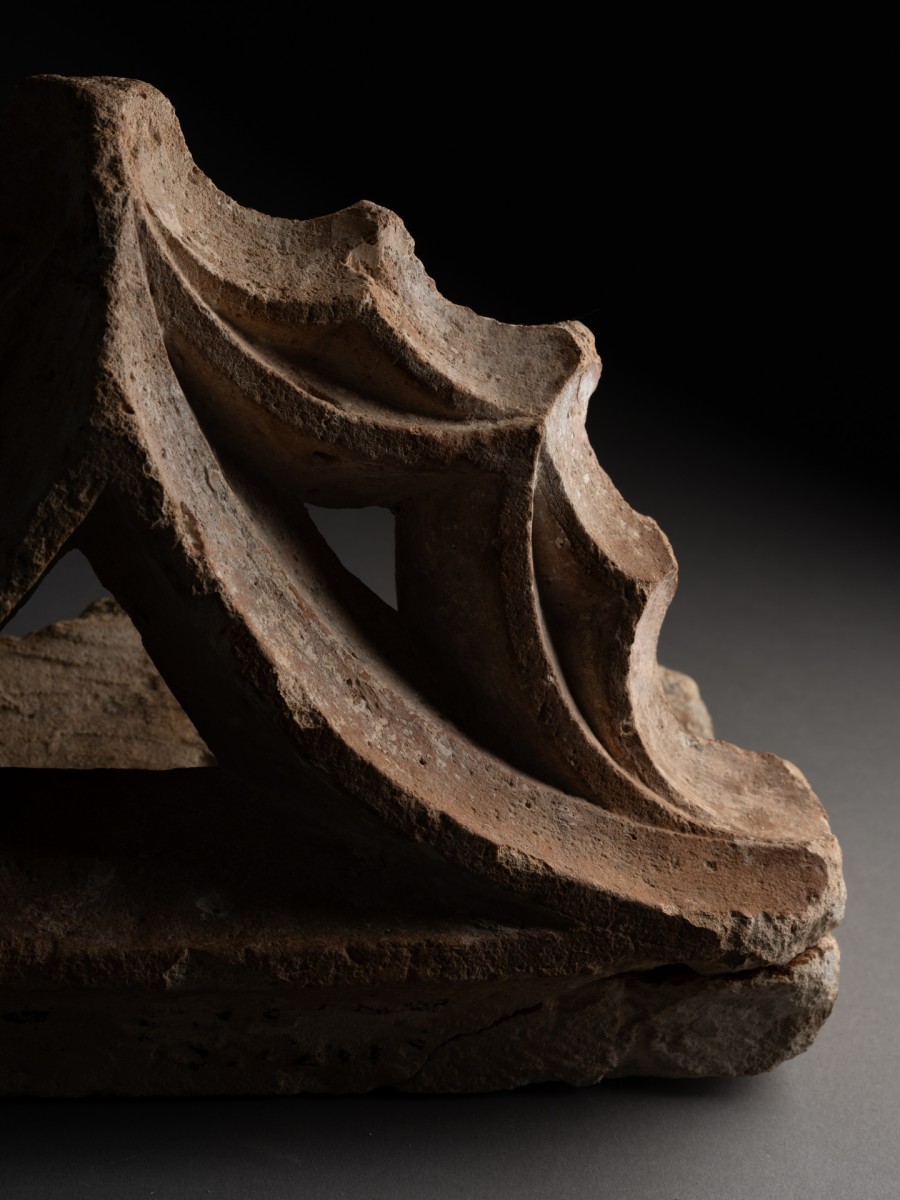
The composition, frontal and rigorously symmetrical, is organized around a central axis culminating in a pyramidal apex, from which two series of interlocking concave lobes unfold on either side, giving the whole a sinuous profile characteristic of the Rayonnant and Flamboyant Gothic repertory. The perfectly planar surfaces and sharply defined edges lend the work a profile of striking modernity.
It is precisely this complete absence of superfluous ornament—no crockets, foliage, or applied decoration—that gives the piece its singularity and visual force. The volumes succeed one another according to an almost abstract logic: the curves of the lobes answer each other in a play of solids and voids of considerable geometric tension. The structure rests on a rectangular base with double offsets, whose rough lower face, broken at the point of detachment, bears witness to the fragment’s original anchoring within a larger architectural ensemble. The interior of the gable forms an open triangular space whose purified geometry recalls the crowning elements of niches or canopies intended to shelter sculpted figures.
By virtue of its formal vocabulary, this fragment may be situated in the second half of the fourteenth century.