Offered by Galerie Ekinium
REQUEST INFORMATION
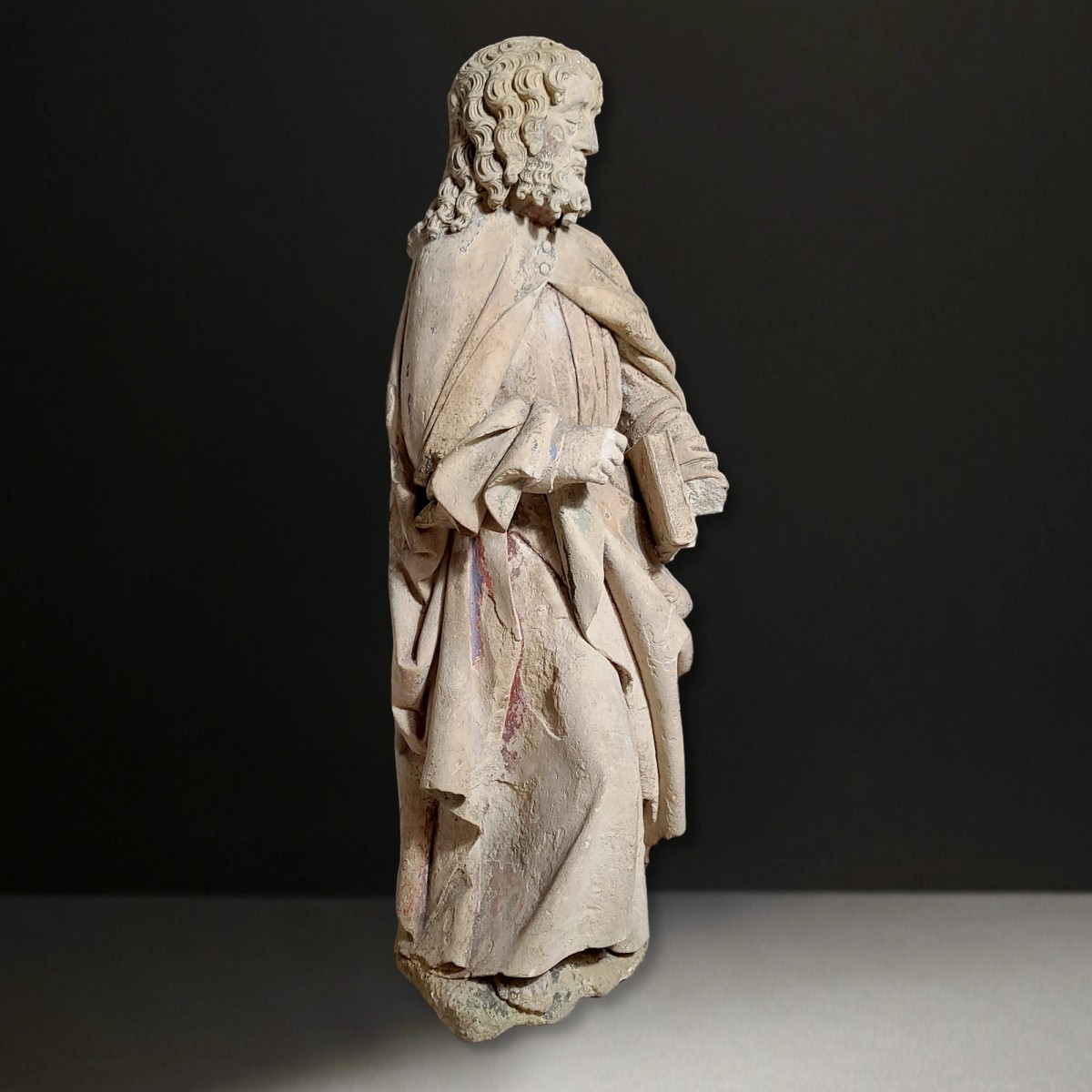

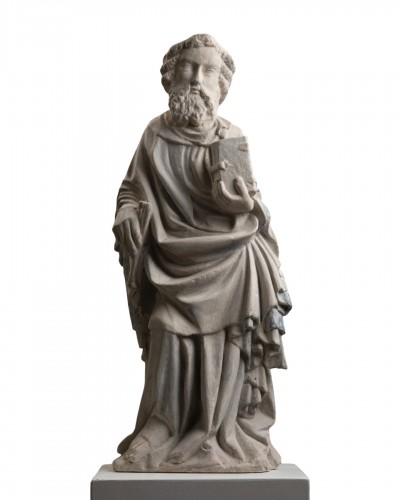
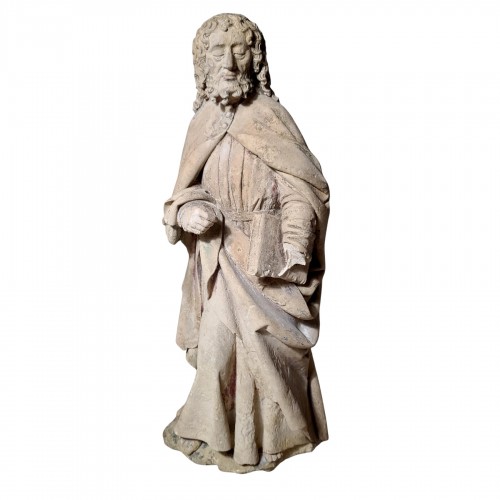
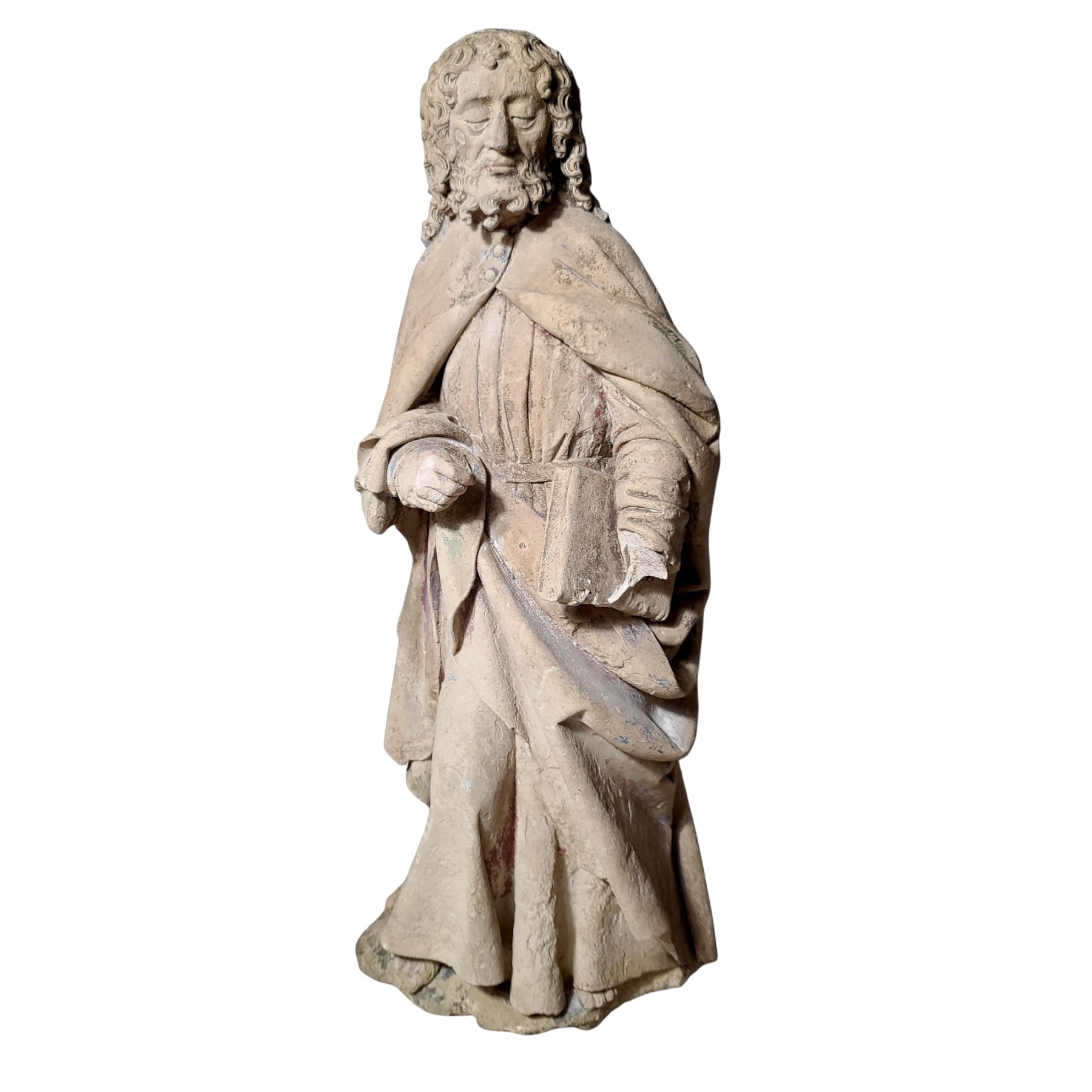
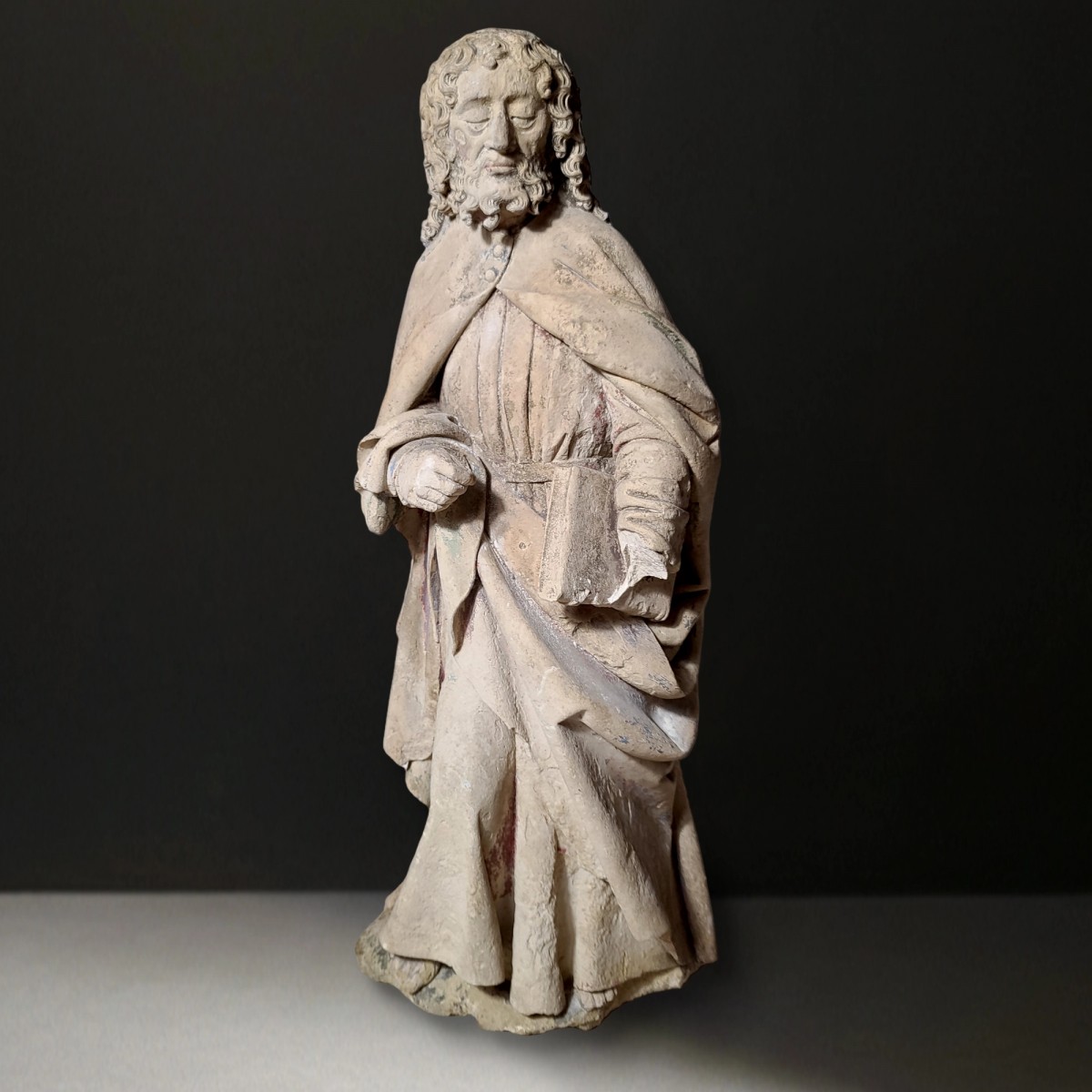
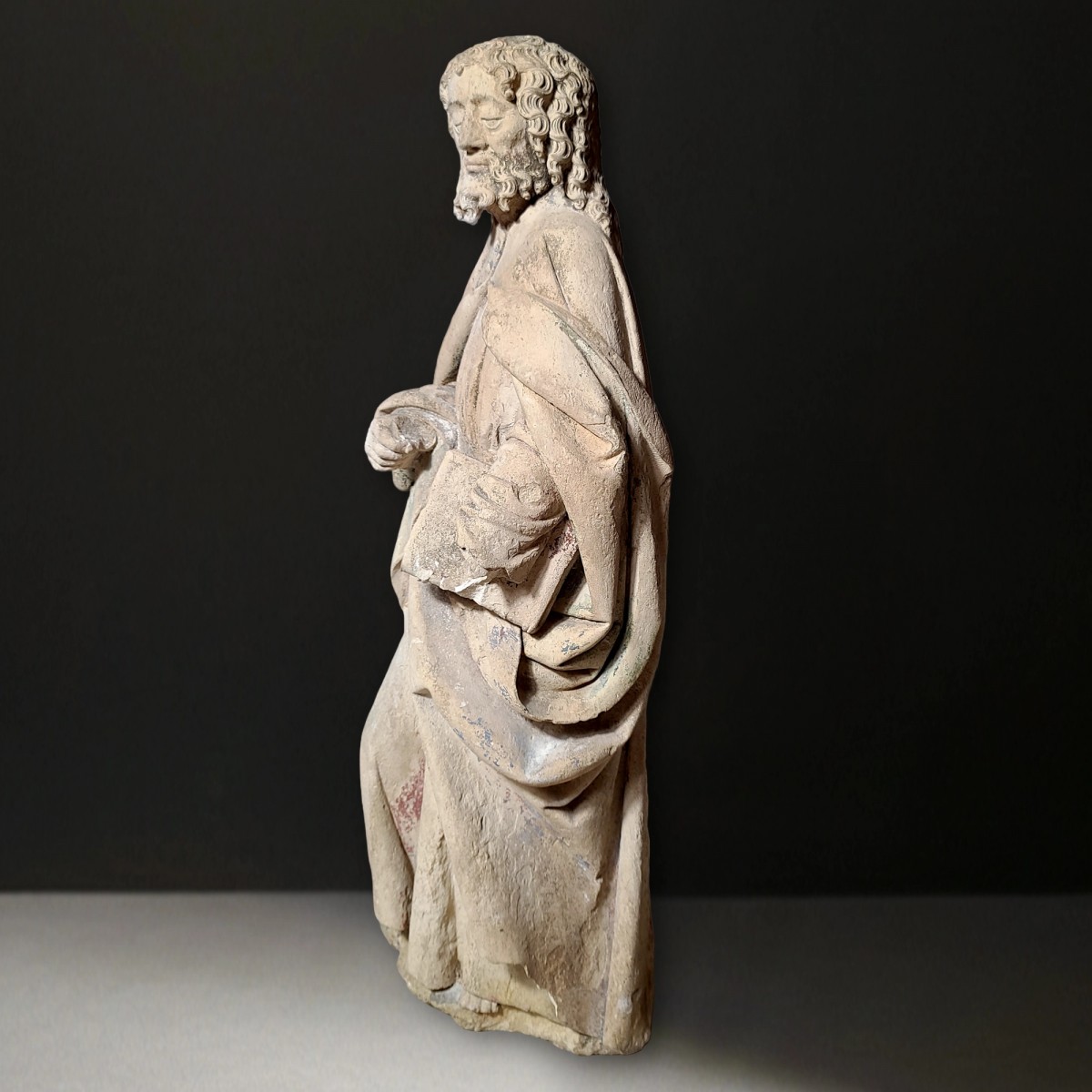
This fully carved sculpture in the round, executed in a light-colored, fine-grained limestone, depicts a standing male figure. Identified by his attributes and costume as an apostle—probably Saint Matthew—the figure adopts a frontal pose subtly offset by a slight contrapposto: the body’s weight rests on the left leg while the right leg, free, bends slightly forward, imparting a gentle movement beneath the heavy drapery. The saint wears a long tunic, buttoned high at the collar and belted at the waist, and a large cloak, one panel of which returns to drape the front of the body like an apron before being held under the left arm. This sculpture can be attributed to the circle close to Antoine Le Moiturier, in Autun, circa 1470–1480.
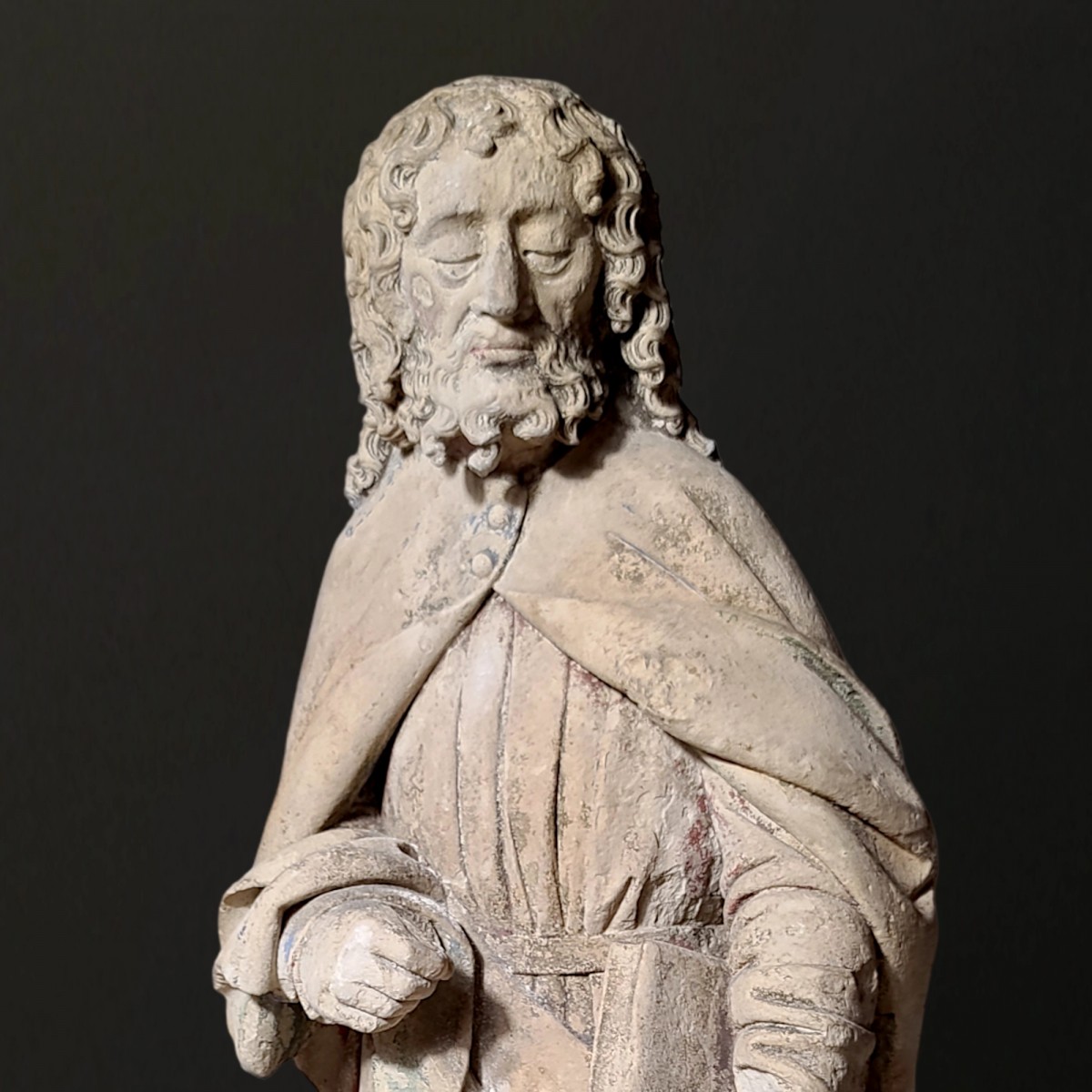
The artist favored heavy fabrics, whose materiality is conveyed through deep, smooth folds, sometimes broken into sharp “beak-like” creases—characteristic of Burgundy at the end of the 15th century. These weighty draperies are found in works attributed to Antoine Le Moiturier or his close circle, such as the Entombment at Semur-en-Auxois, where one also notes parallels in facial morphology and the inwardness of expression; and Saint Stephen in the Louvre (Inv. RF 1371), which likewise displays this “turning” dynamism of drapery. Close analysis of the face reveals great finesse of execution. The use of a drill to hollow the centers of the curls in the beard and hair creates a play of light and shadow that animates the stone surface—a technique frequently employed in high-quality Burgundian workshops. The treatment of the hair recalls the Saint John the Baptist of Bussy-la-Pesle, but even more so the hair of the flying angel in the Louvre and of the lectern angel in the Musée Rolin. The curls and their sequencing are very close. The comparison with the circle of Antoine Le Moiturier gains particular strength through a parallel with the mane of a lion on the tomb effigies of John the Fearless and Margaret of Bavaria: the carving of the mane’s curls and their arrangement are strikingly similar to the curls of our apostle’s hair, notably with a characteristic “spoon-shaped” hollowing.
Delevery information :
Shipping is carried out after full payment has been confirmed, including all applicable fees (customs, transport, insurance).
Risks related to transportation are transferred to the buyer once the artwork is handed over to the carrier.
The buyer may take out additional insurance to cover transport.
We are committed to packing each artwork with the utmost care to ensure optimal protection.