Offered by Galerie Paris Manaus
REQUEST INFORMATION

Decorative Arts of the 20th century
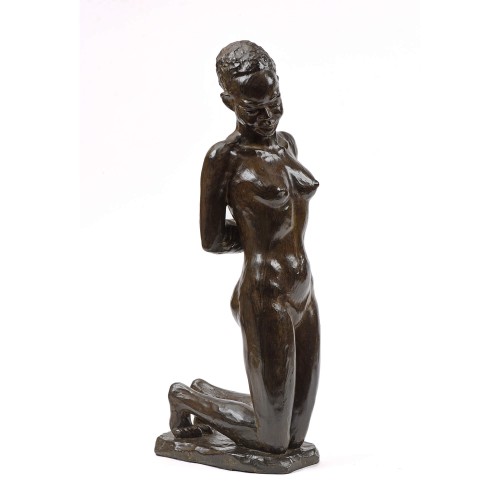
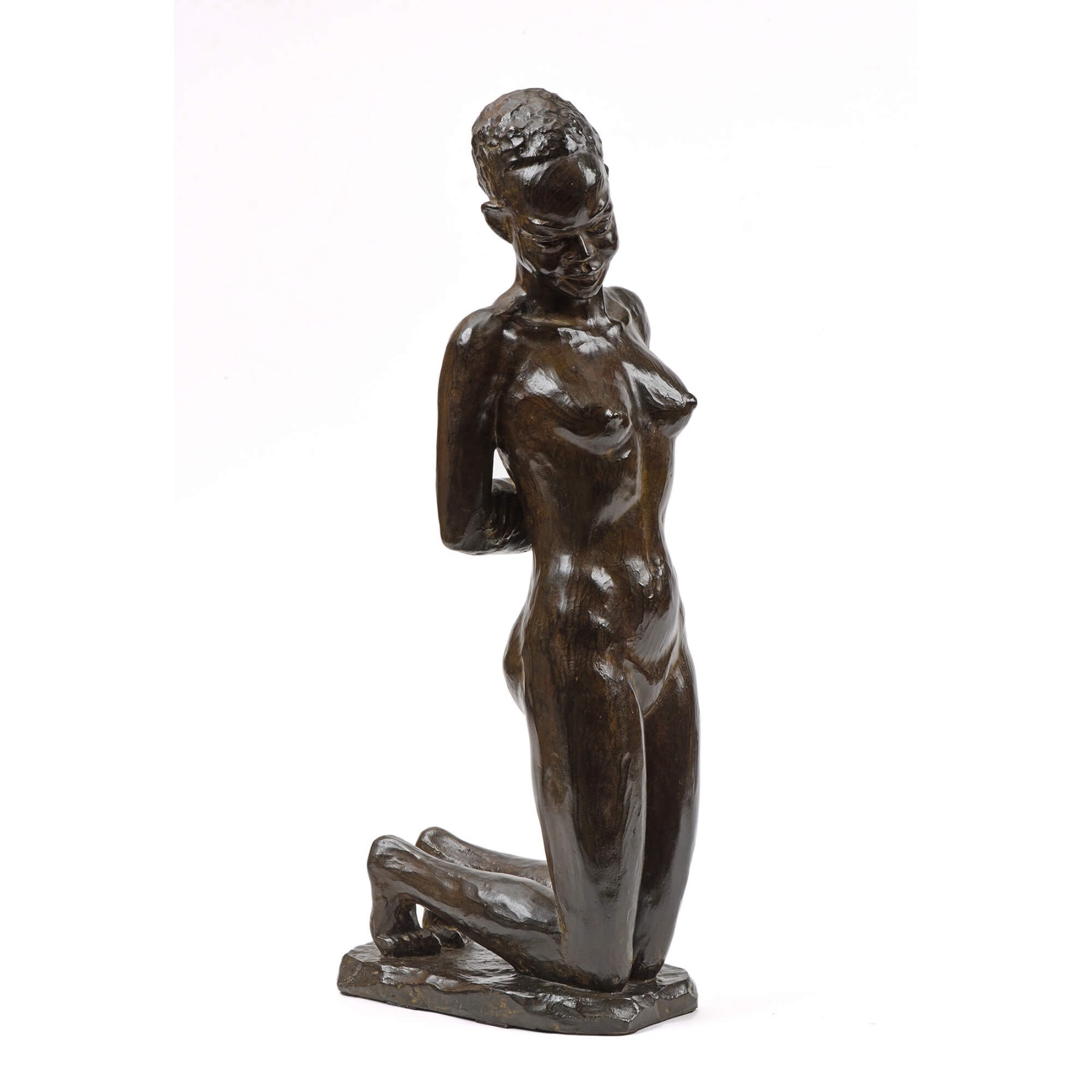
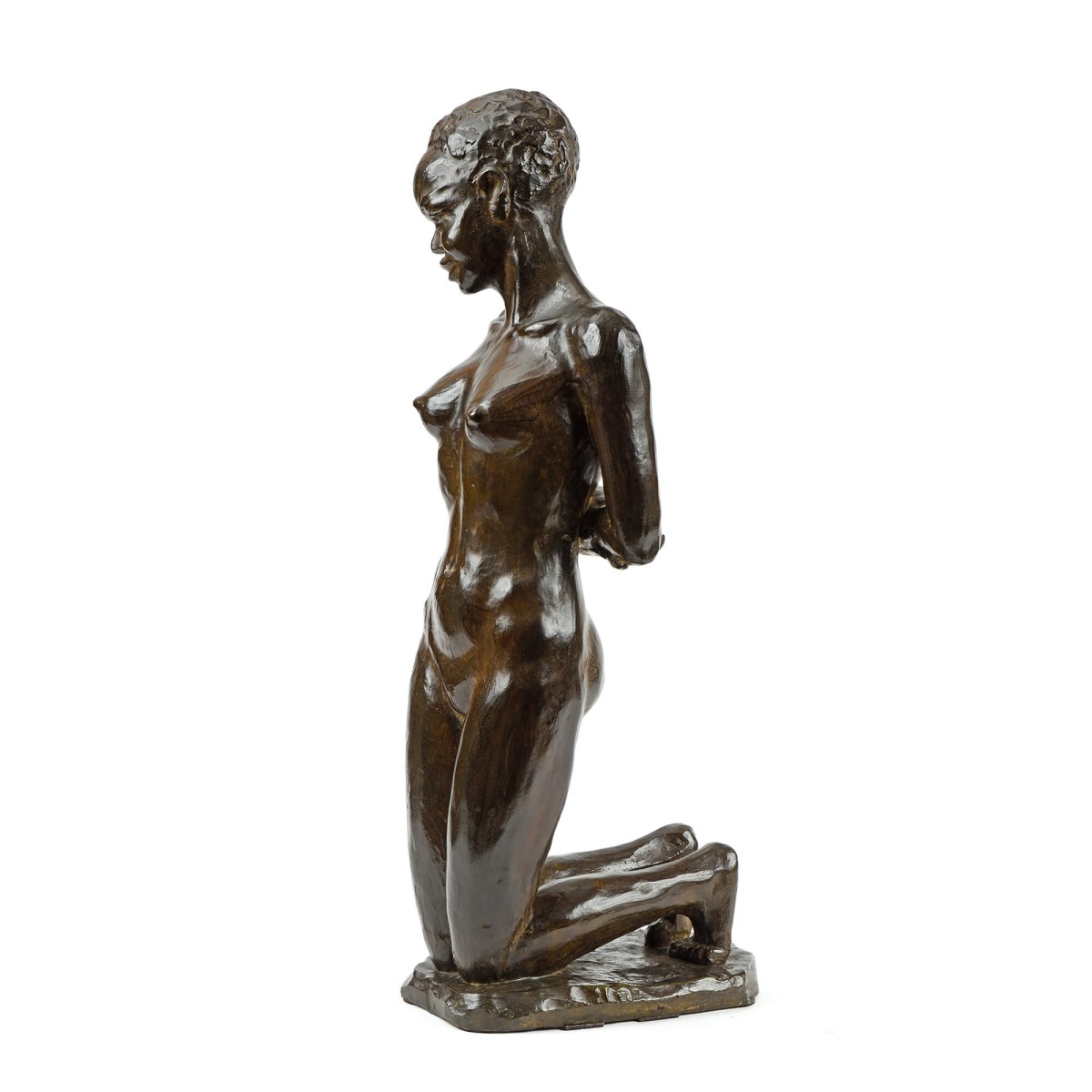
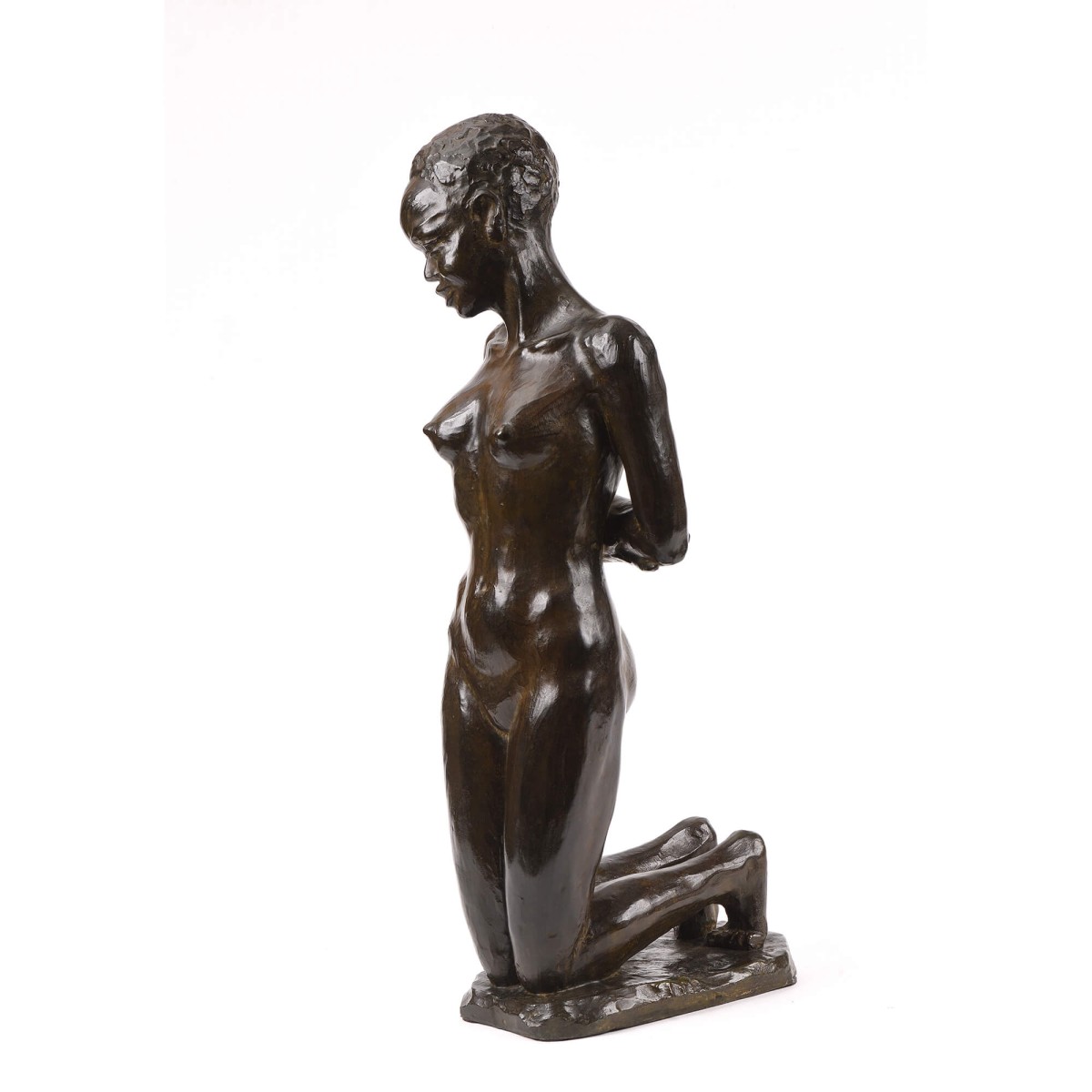
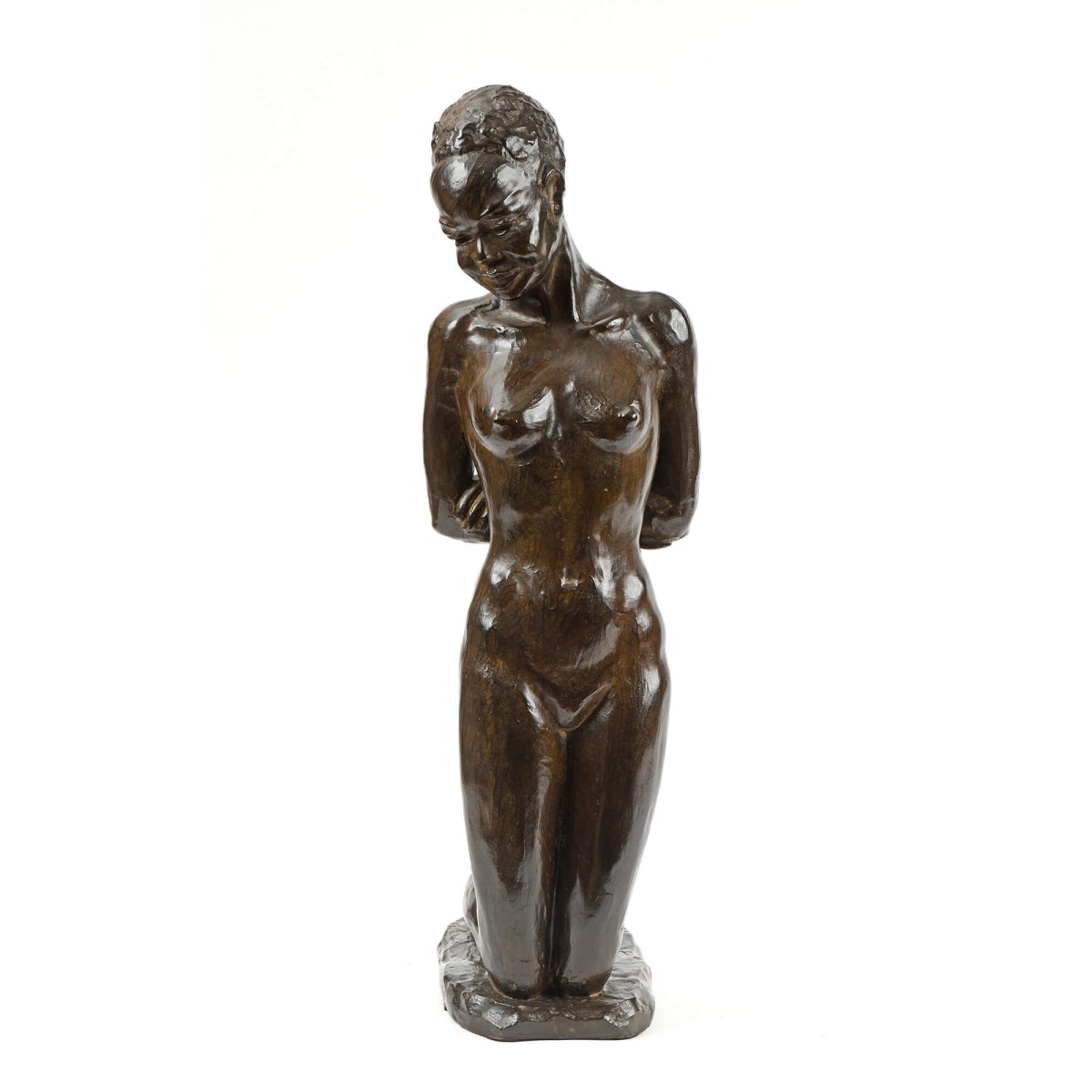
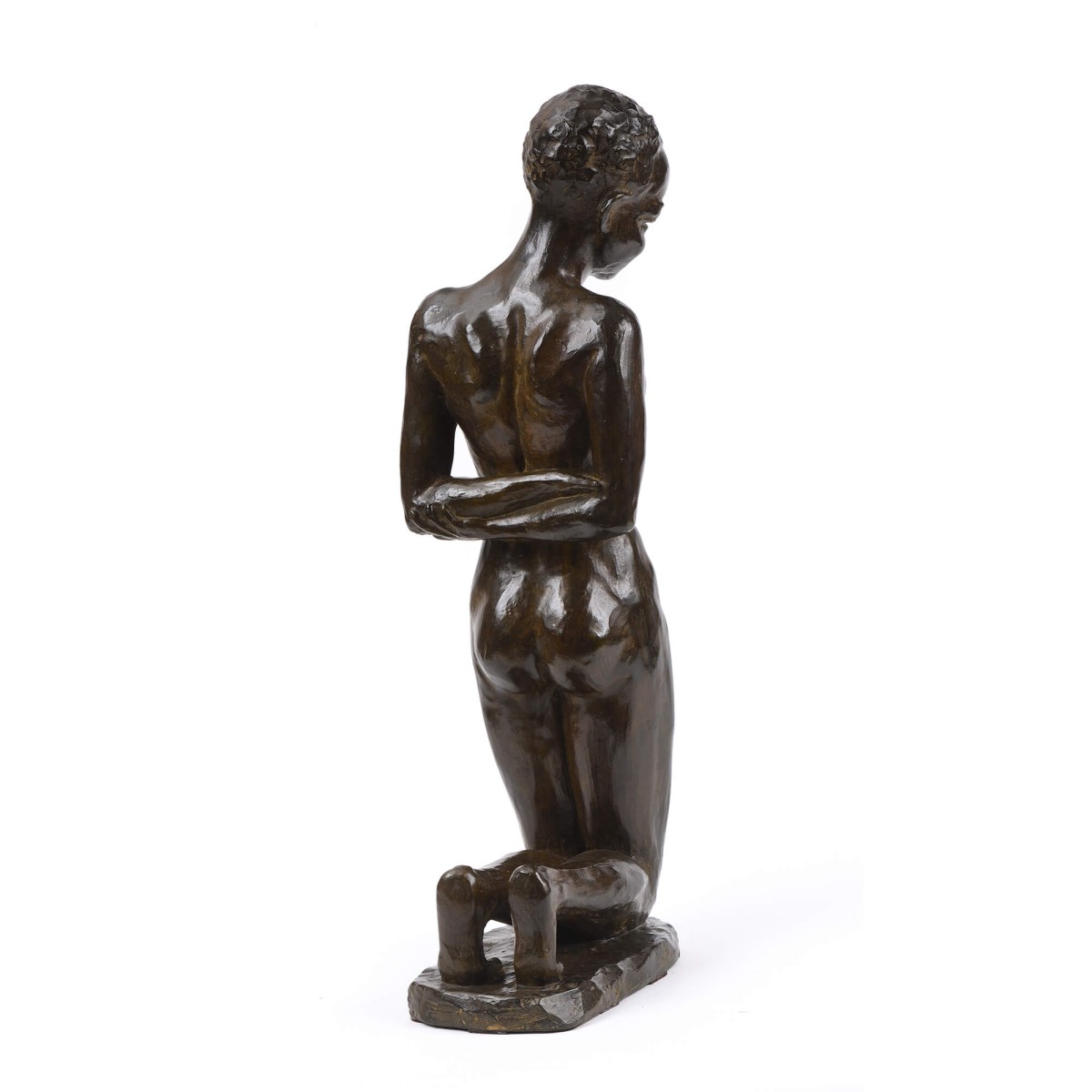
Bronze cast with a variegated brown patina.
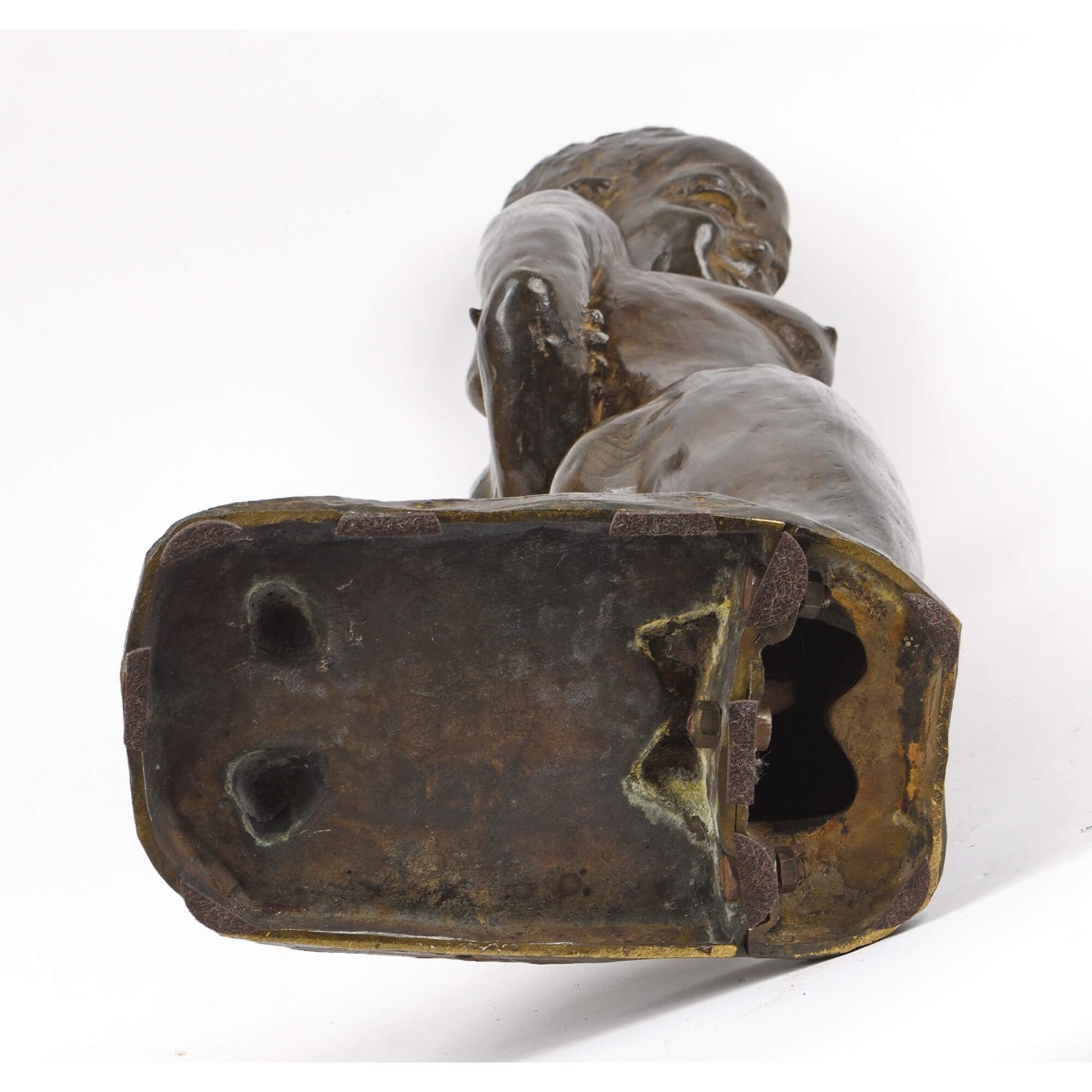
Sand casting, probably produced by the Compagnie des Bronzes in Brussels.
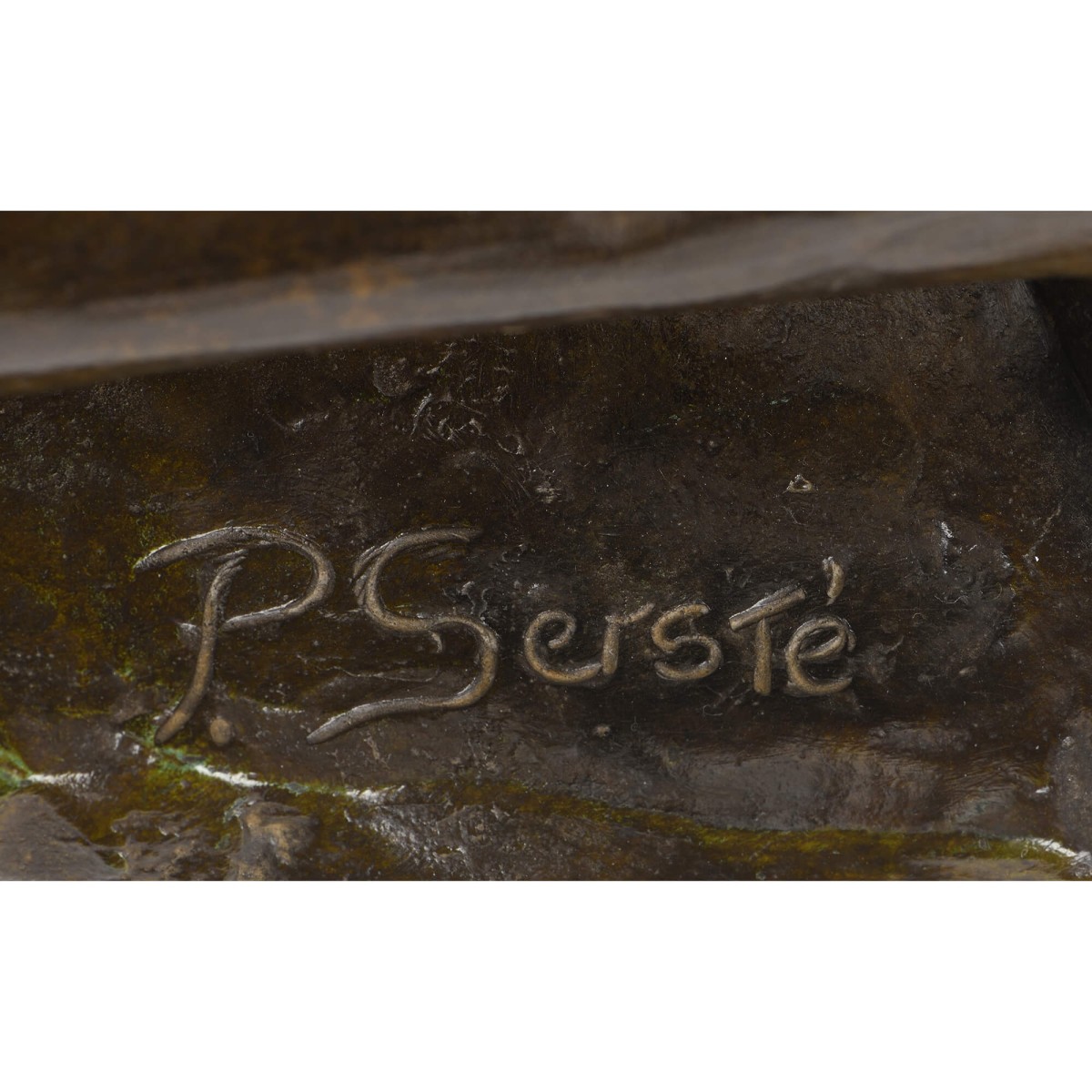
Signed “P. Sersté” on the left side of the base.
Circa 1950.
Dimensions:
Height: 59 cm\
Width: 17 cm – Depth: 23 cm
Elegant representation of a kneeling young woman, in a pose imbued with modesty and serenity.
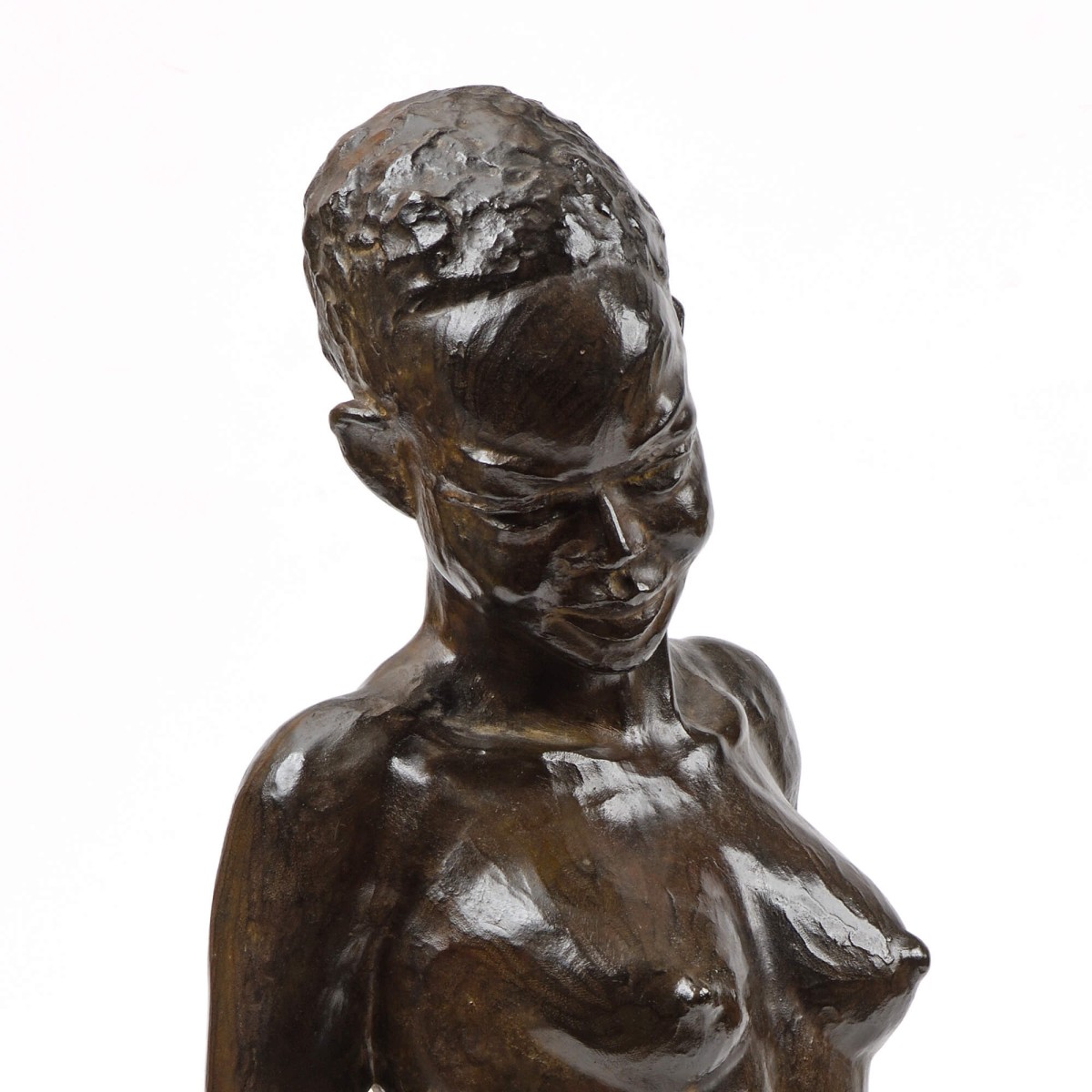
Paul Sersté reveals his full sensitivity in the treatment of the female body. The slender, harmonious silhouette is distinguished by the delicacy of its modeling, the softness of its lines and the expressiveness of the inclined face.
The treatment of the material alternates between polished surfaces and freer textures, particularly visible in the hair and the modeling of the base. The brown patina with golden-brown highlights subtly emphasizes the volumes and lends the sculpture a beautiful sense of depth.
This sculpture reflects Paul Sersté's interest in the human figure and representations of African people.
Biography:
Belgian School.
Paul Sersté was a Belgian sculptor born in Anderlecht on September 17, 1910. Raised in a family environment receptive to creativity and craftsmanship, he showed an early aptitude for drawing and sculpture. His father was an inventor, while his grandparents were timber merchants in Dilbeek, providing an environment that seems to have encouraged his interest in forms and materials.
Encouraged in his artistic aspirations, he attended the Royal Academy of Fine Arts in Brussels for one year before pursuing a professional career that did not prevent him from continuing his creative work. After spending his days working in a bicycle shop, he devoted his evenings to sculpture, producing small terracotta figurines and animals at home, which he sold through various shops.
This production quickly met with a certain degree of success. As his activity expanded, he moved with his wife, Andrée Renée Paule Vanderlinden, whom he married in 1941, into a more spacious workshop on Place Sainctelette in Molenbeek-Saint-Jean. There, he installed a kiln for firing his works.
Gradually, the workshop developed into a genuine family business. His wife participated in the glazing and finishing processes, while his brother handled sales and his sister-in-law managed the accounts. Increasing production led to the employment of three assistants. The models were then produced in small series, generally limited to twenty examples.
Paul Sersté's work is primarily characterized by figurative sculpture devoted to the representation of the human form. He created female nudes, young women with youthful figures and muscular male figures. From the 1950s onwards, his repertoire expanded to include figures inspired by Africa, reflecting the broadening of his subjects and his interest in depicting different human types.
Terracotta was the preferred material for his work. His sculptures were frequently covered with white glazes, applied either over the entire piece or in selected areas, as well as pastel shades that gave them a distinctive decorative presence. Certain compositions were also cast in bronze, notably by the Compagnie des Bronzes in Brussels. These include The Crouching Archer and The Javelin Thrower.
Paul Sersté exhibited his works at several venues, including the Fondation Pierre-Paul Hamesse, the Carrefour des Arts in 1989 and the Galerie La Gerbe in Anderlecht.
In 1985, he ended his career as a sculptor and closed his workshop. He then turned to watercolor painting, working particularly from photographs.
He died on August 21, 2000, in Molenbeek-Saint-Jean, leaving behind a predominantly figurative body of work, characterized by glazed terracotta sculptures and a particularly distinctive artisanal and family-based production structure.
Very fine state of preservation.