Offered by Galerie Magdeleine
REQUEST INFORMATION

Paintings and drawings from the 17th to the 19th century
Alexandre Marie COLIN (Paris, 1798 – Paris, 1875)
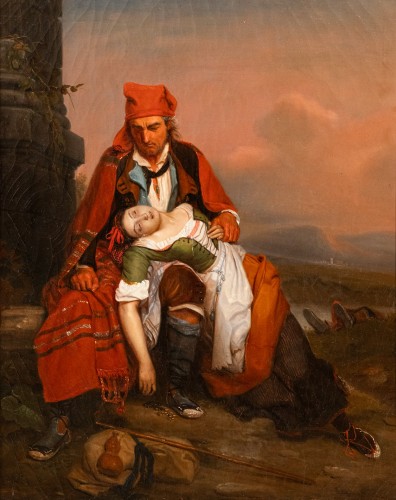
Massacre of Greeks
Circa 1825–1827. Oil on canvas. H: 63; W: 50 cm.
Exhibition: Salon des Artistes Vivants, Paris, 1827, no. 1443: “Massacre of Greeks”.
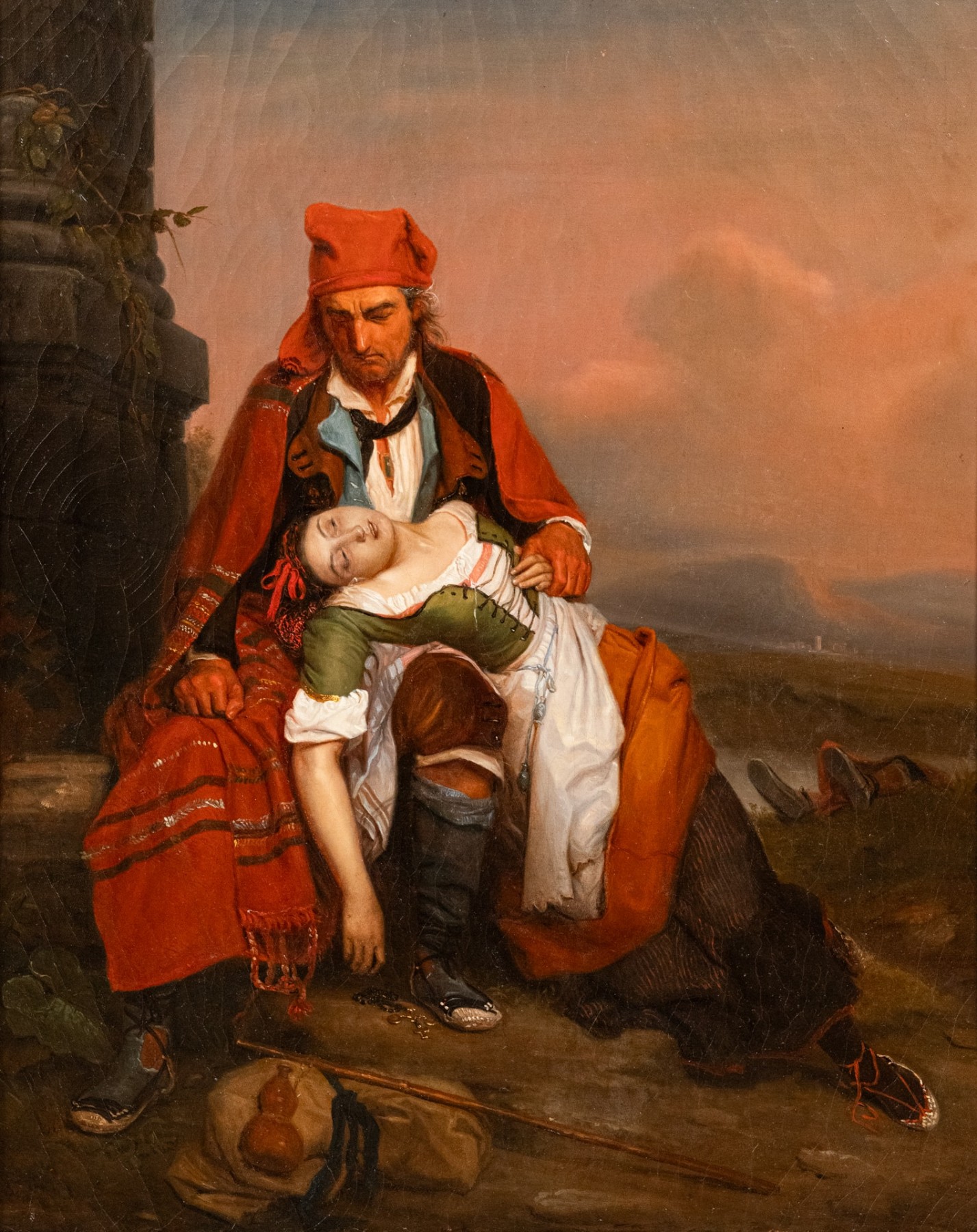
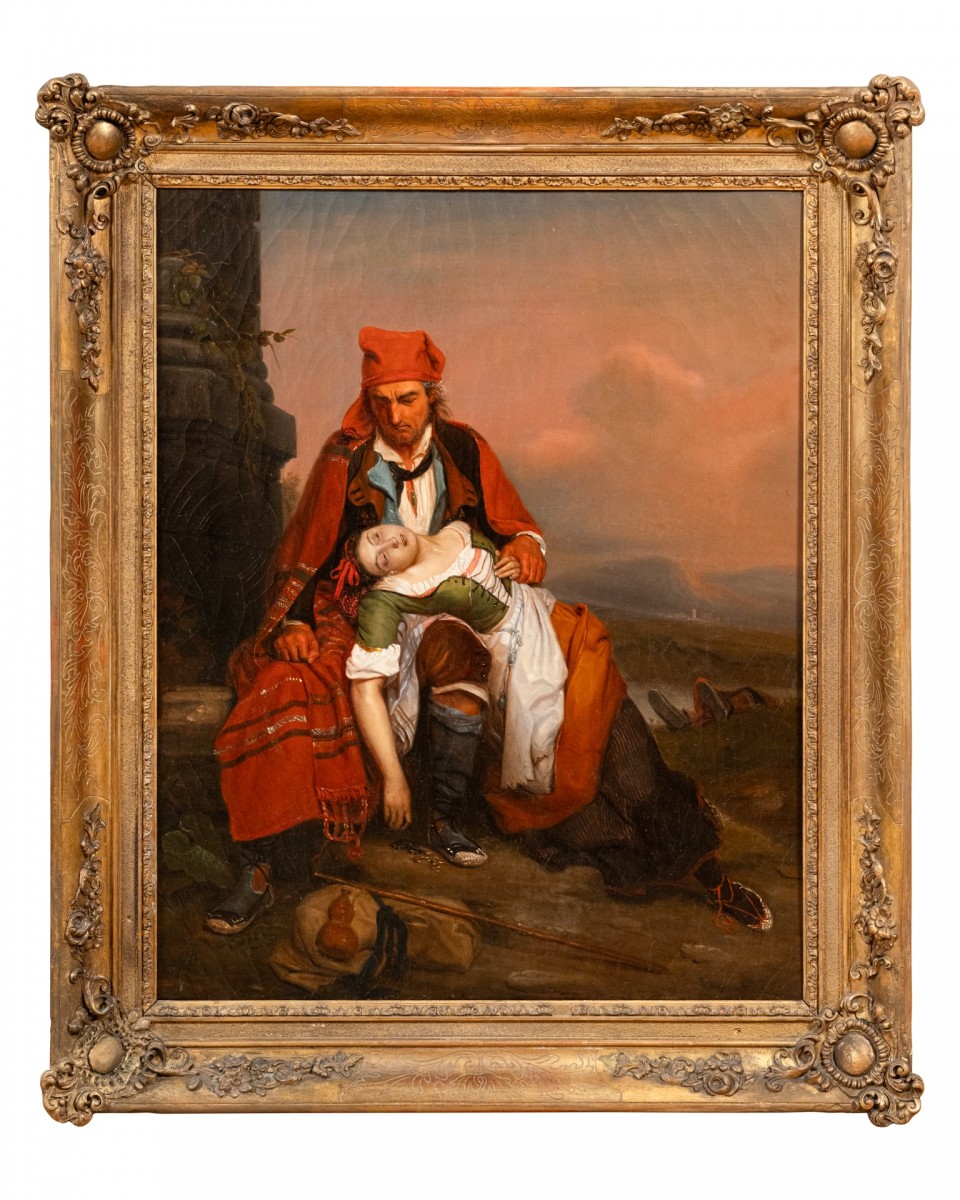
The scene depicts an elderly man seated, wearing traditional Greek costume. He holds a dying young woman in his arms, probably his daughter. In the background, a second man is depicted dead. We thus understand that the elderly man is the sole survivor of a massacre of civilians during a war.
The composition emphasizes not so much the collective horror as the pathos, dignity, and resignation of the survivor.
The work belongs to the Philhellenic movement that developed in Europe in the early 19th century. The Greek War of Independence of 1821–1829 against the Ottoman Empire aroused immense emotion among Western public opinion. The massacres of Chios in 1822, brought to public attention by Eugène Delacroix's celebrated painting The Massacre at Chios (1824), became a symbol of the brutality and suffering endured by the Greek people, inspiring European solidarity.
Colin, a contemporary and friend of Delacroix, was part of this movement. He chose to depict individual grief in the face of the collective tragedy of war.
This intimate approach to the Philhellenic theme focuses on human suffering. Unlike Delacroix, who depicts a multitude of victims, Colin reduces the scene to two figures, thereby heightening its dramatic intensity.
Through these two figures, he personifies the idea of a heroic people sacrificed for their freedom.