Offered by Galerie Magdeleine
REQUEST INFORMATION

Paintings and drawings from the 17th to the 19th century
Paul Claude-Michel CARPENTIER (Rouen, 1787 – Paris, 1877)
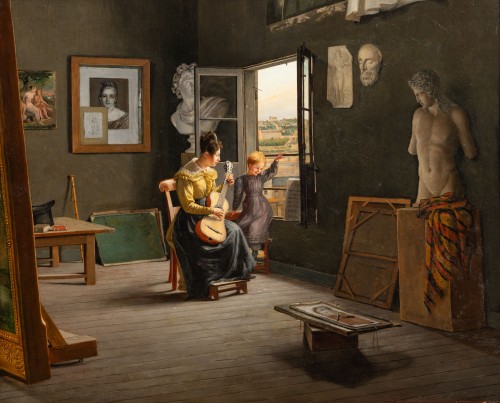
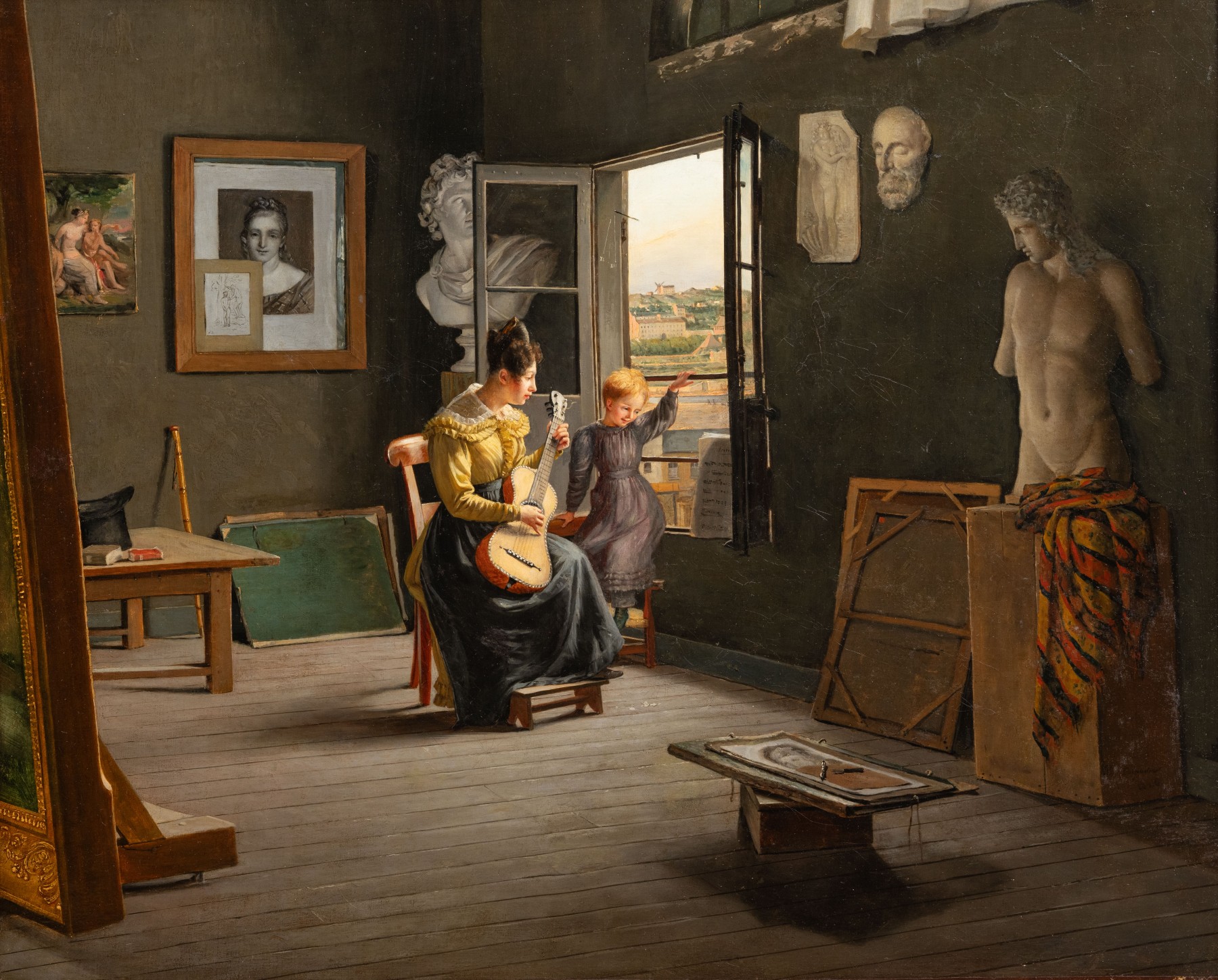
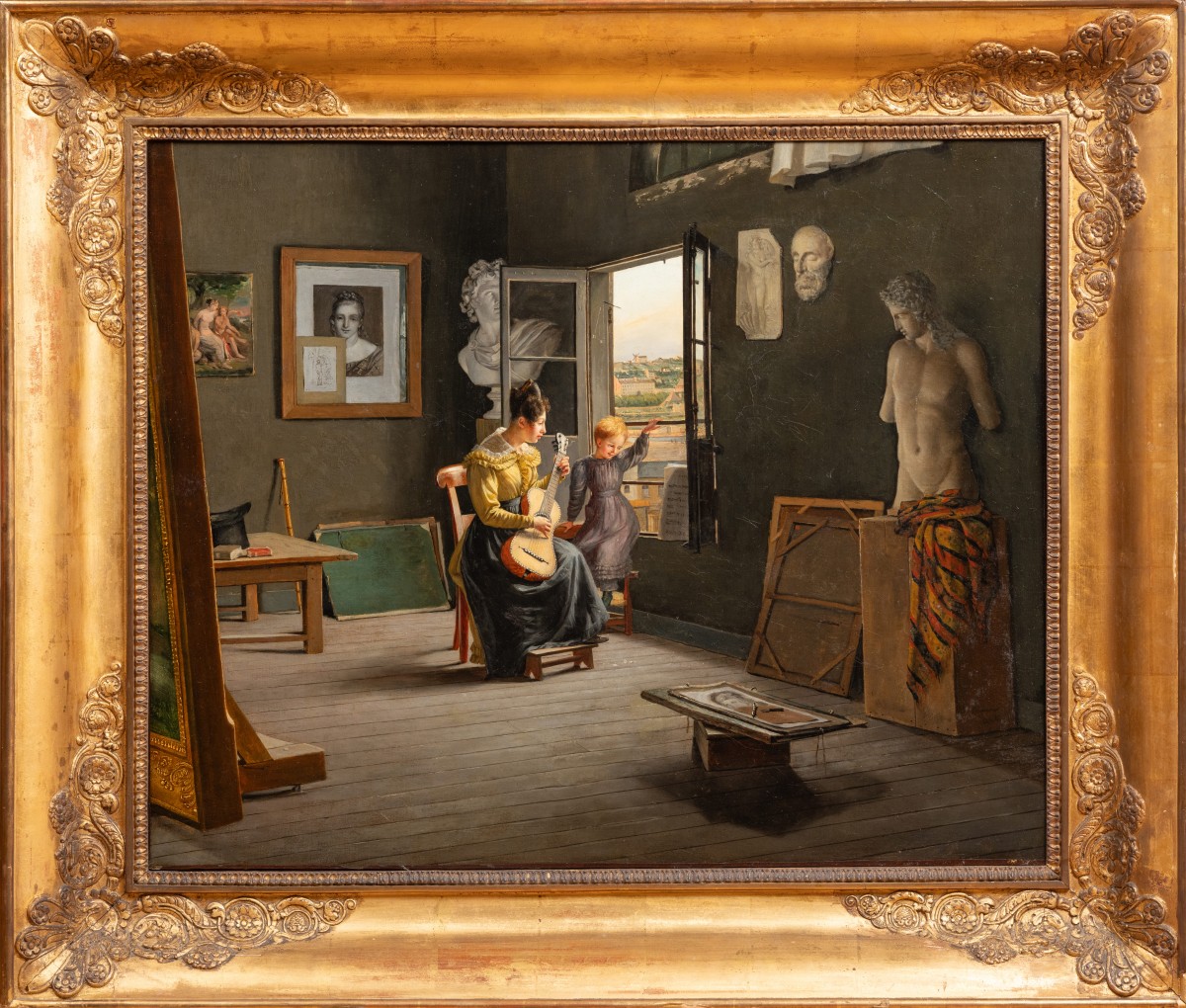
The Artist’s Family in His Studio
1826\. Signed and dated lower right: Carpentier / 1826. Oil on canvas. H: 58; W: 72 cm.
Exhibition: Salon des Artistes Vivants, Paris, 1827, no. 653: “Interior of a Painting Studio”.
Provenance: By descent through the artist’s family.
Dressed in the fashion of the Restoration period, she embodies the figure of the domestic muse.
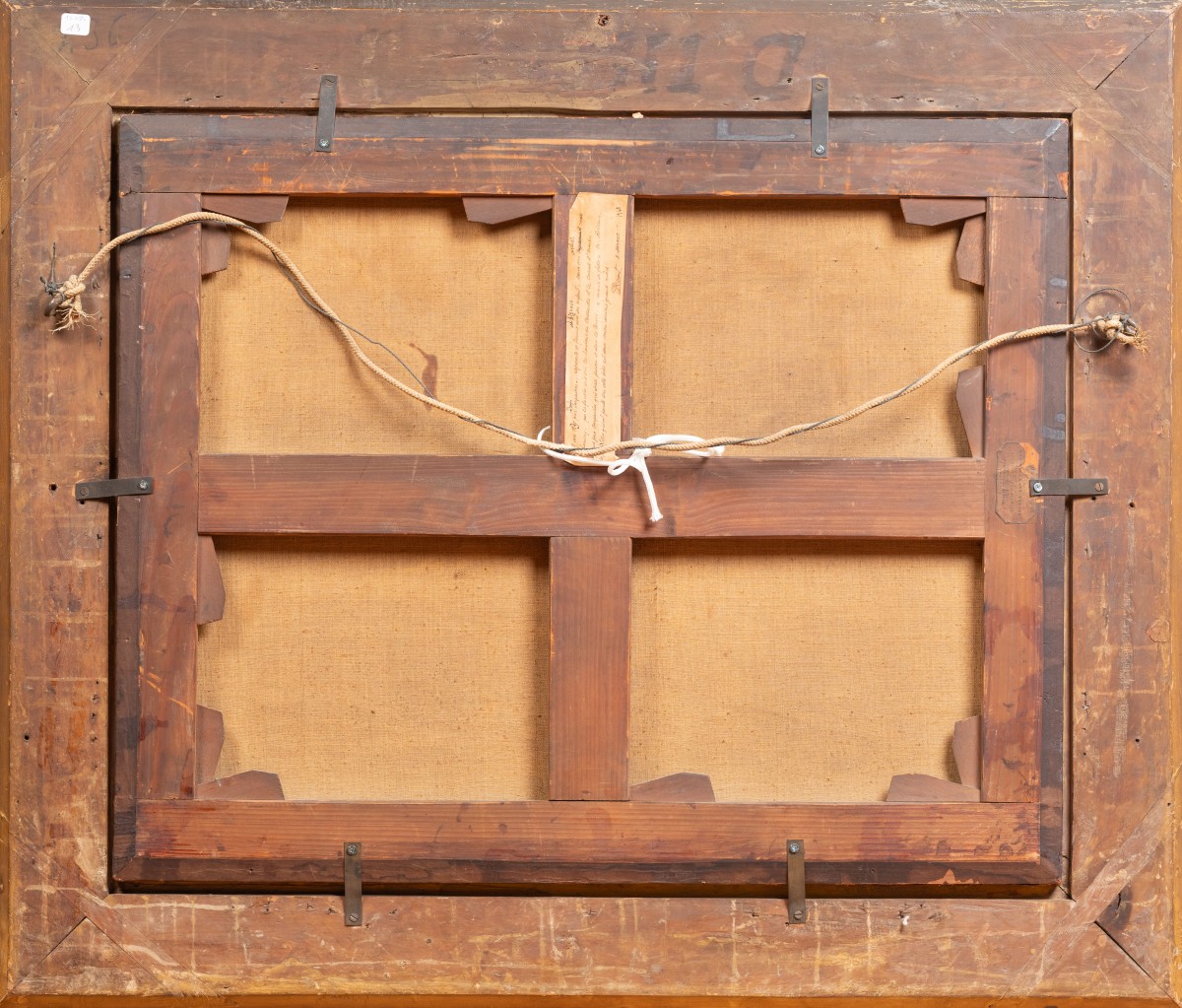
Beside her, her young daughter Clémence stands on a low stool to look through the open casement of the large window. This motif of the open window, characteristic of Romantic aesthetics, offers a visual opening onto a rigorously identifiable urban background. The historical label attached to the stretcher indicates that the view overlooks the heights of Belleville and the Canal Saint-Martin.
The inclusion of the Canal Saint-Martin is of considerable historical significance: opened to navigation in 1825, it was a brand-new modern infrastructure when the painting was executed in 1826. By choosing to incorporate this rapidly developing industrial landscape at the edge of his domestic space, Carpentier contrasts the timeless calm of the artist’s studio with the rhythms of Parisian technological modernity.
A brilliant pupil of Jean-Jacques Lebarbier and, for a short period, of the leading figure of the Neoclassical school, Jacques-Louis David, Carpentier settled permanently in Paris around 1817. Although his early works display great academic rigor, he soon turned toward genre painting and intimate portraiture, finding inspiration in the bourgeois interiors depicted by Martin Drölling.
Although this oil on canvas from 1826 demonstrates a perfect mastery of traditional binding media and the layering of glazes to render the velvety texture of fabrics and the flesh tones of faces, Carpentier subsequently distinguished himself through extensive physical and material research into the longevity of art. Alarmed by the premature deterioration of his contemporaries’ oil paintings, he devoted himself to rediscovering cauterized wax.
This approach led him to write an important theoretical work on encaustic painting in 1875, inspired by the research of his friend Jacques-Nicolas Paillot de Montabert.
The abrupt interruption of his painting career in 1839, following the immense fortune inherited from his wife's family, did not extinguish his thirst for visual discoveries. A close friend of Louis Daguerre, he published the first reliable biography of the inventor of the diorama in 1855, establishing himself as one of the few academic painters to immediately understand the revolutionary significance of the daguerreotype for the future of the visual arts.