Offered by Seghers & Pang Fine Arts
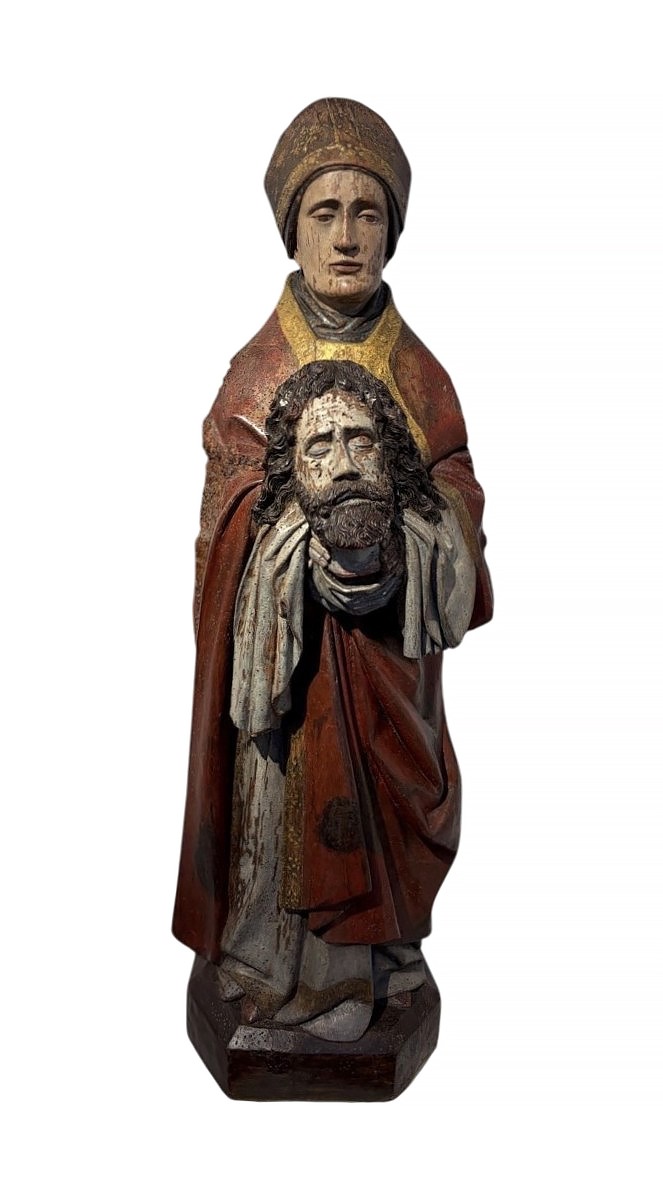
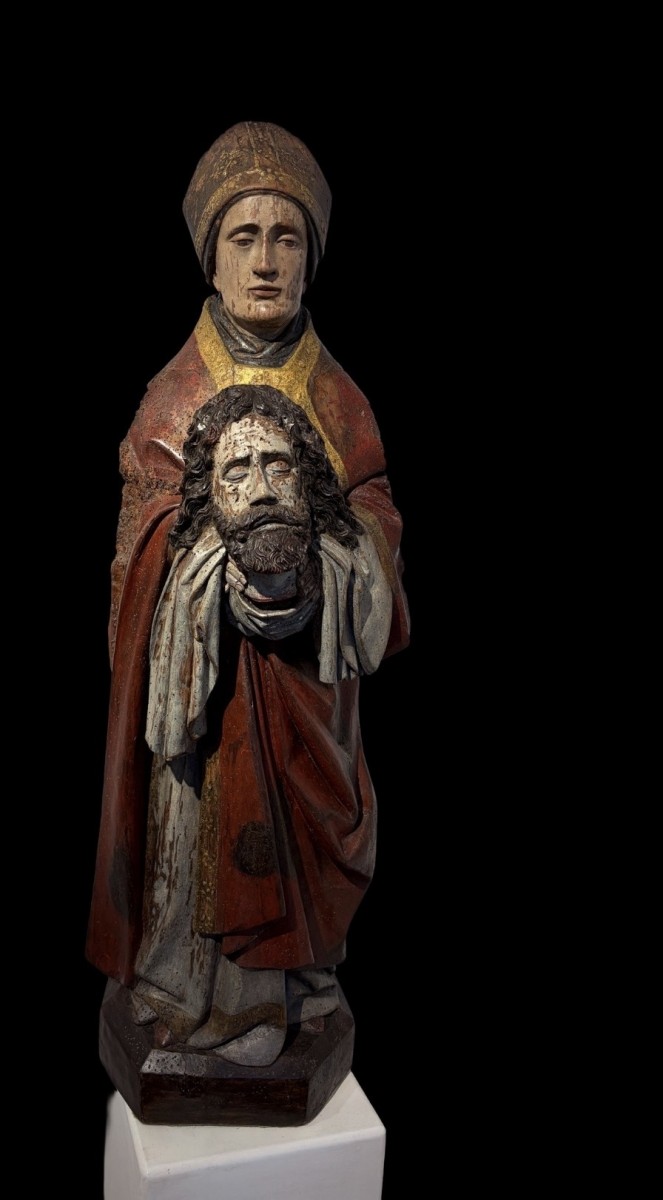
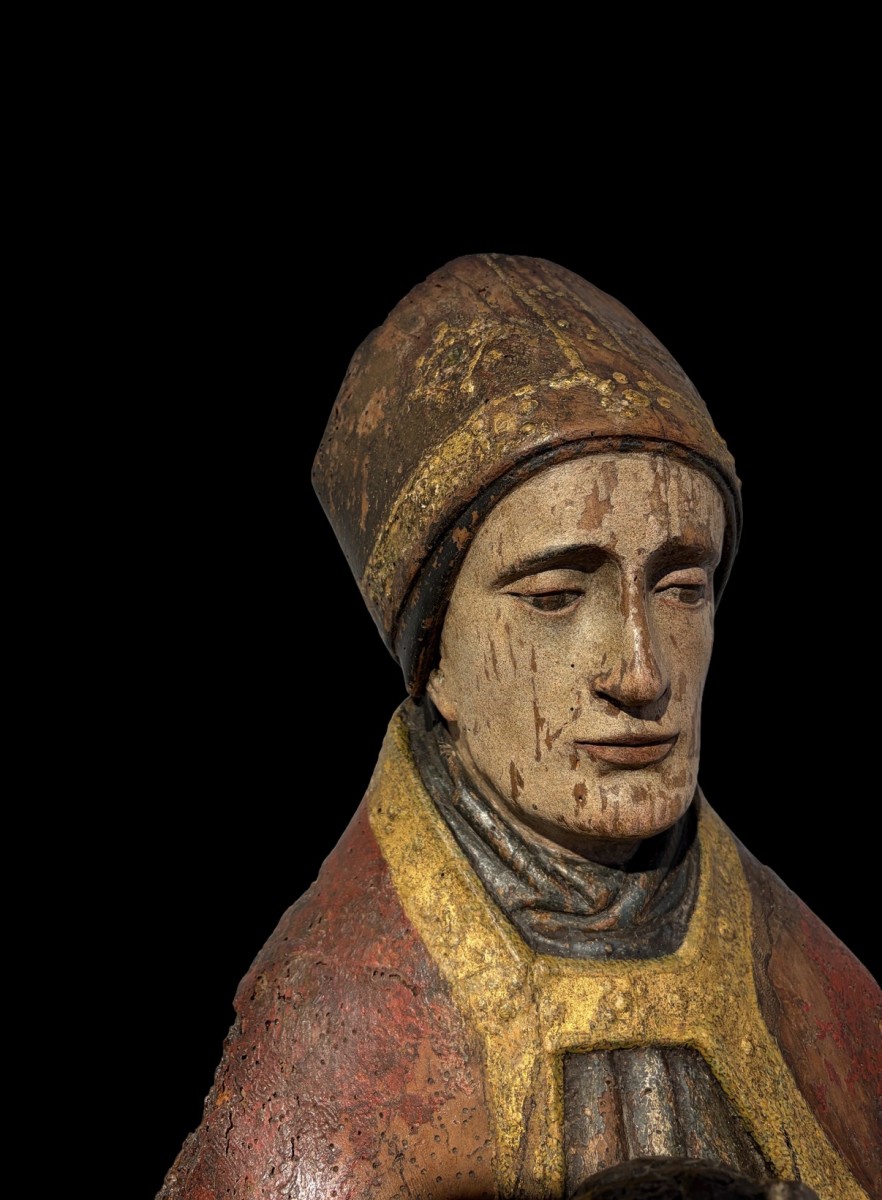
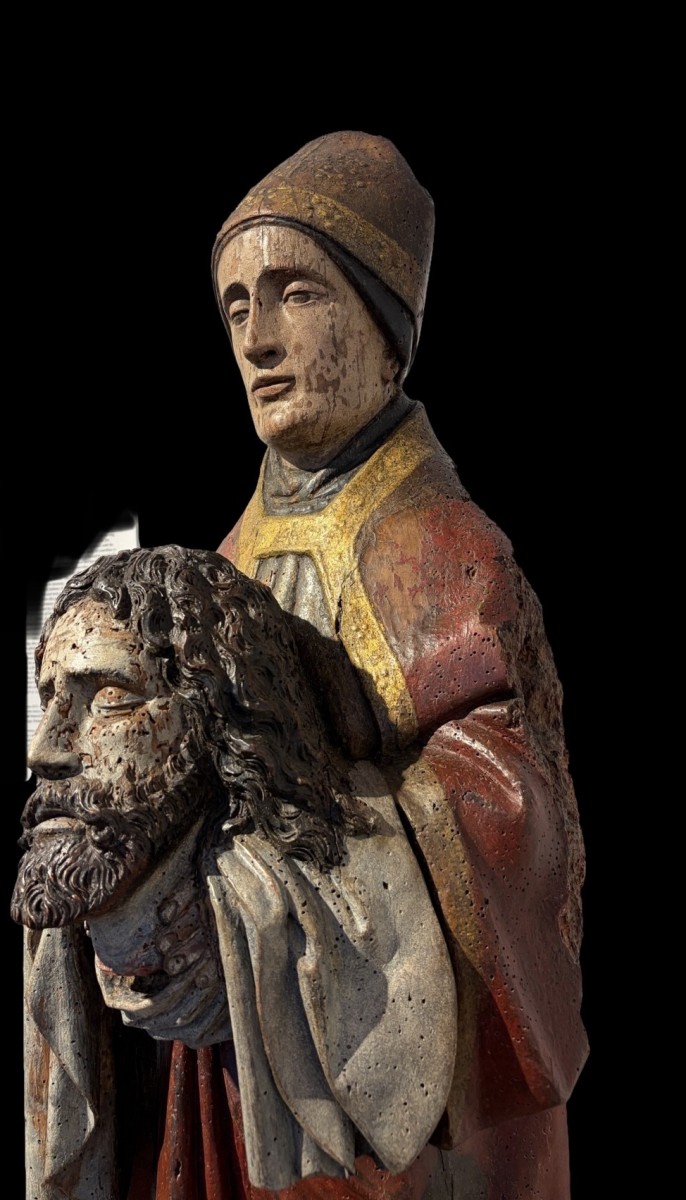
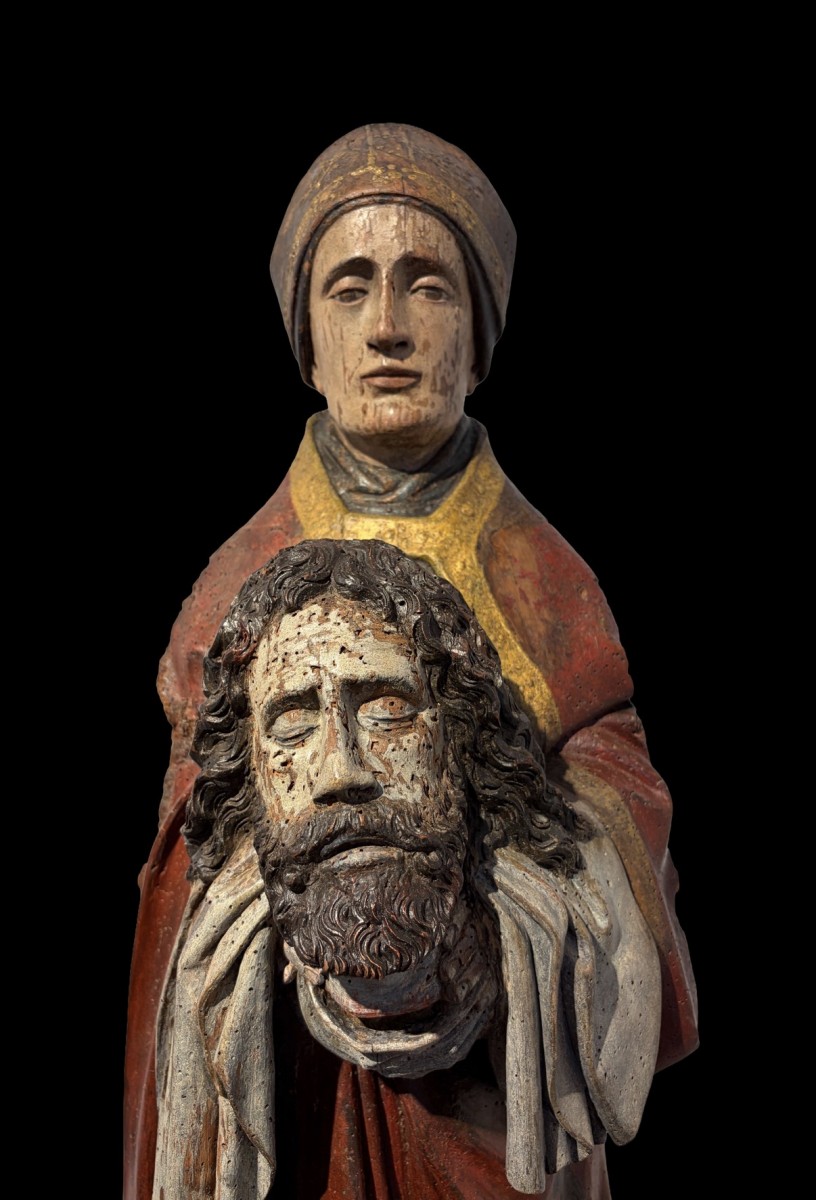

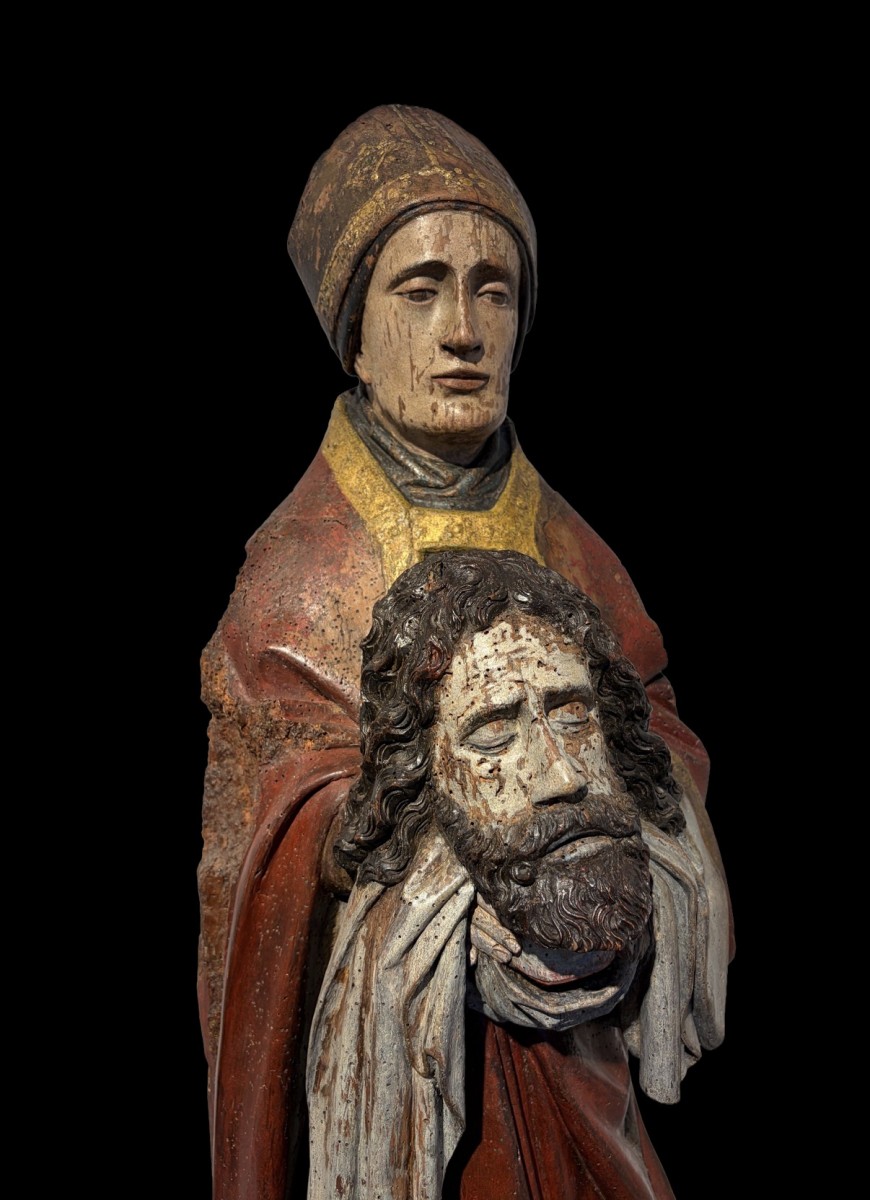
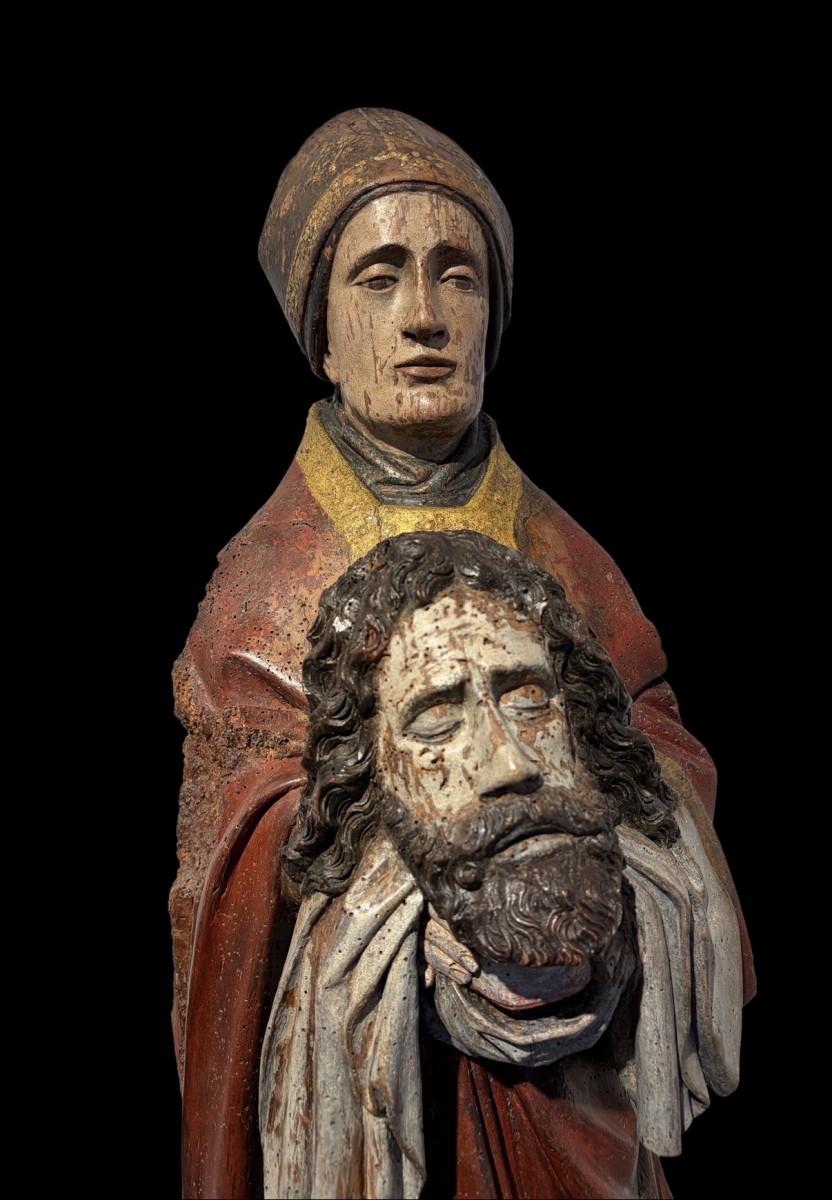
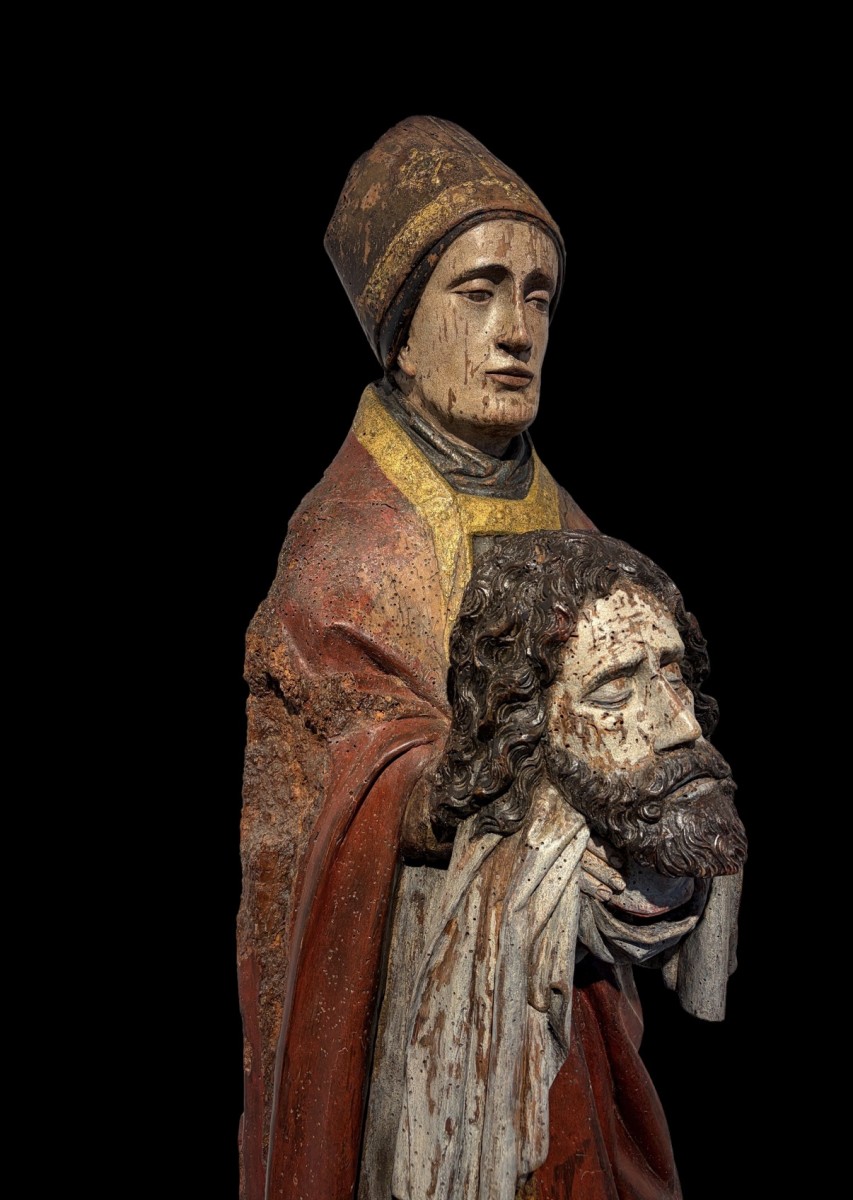
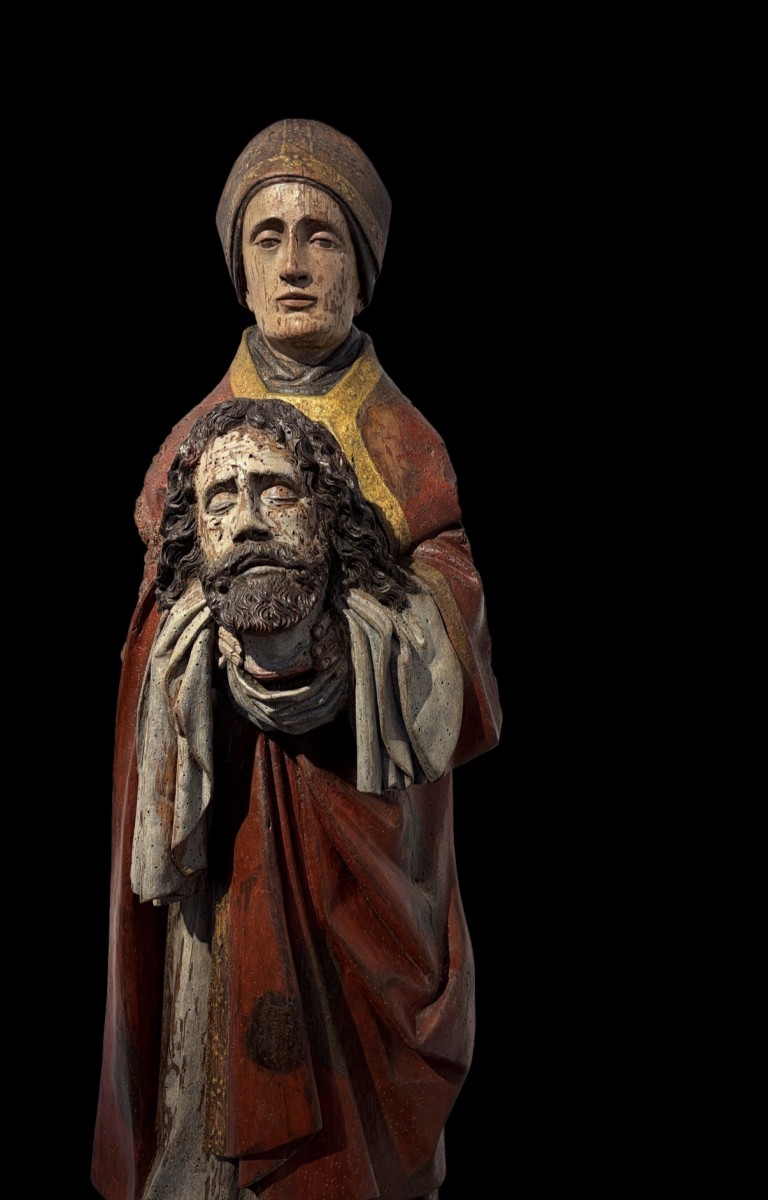
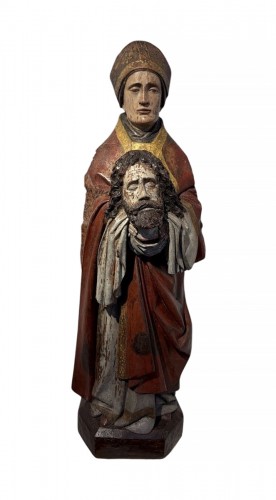
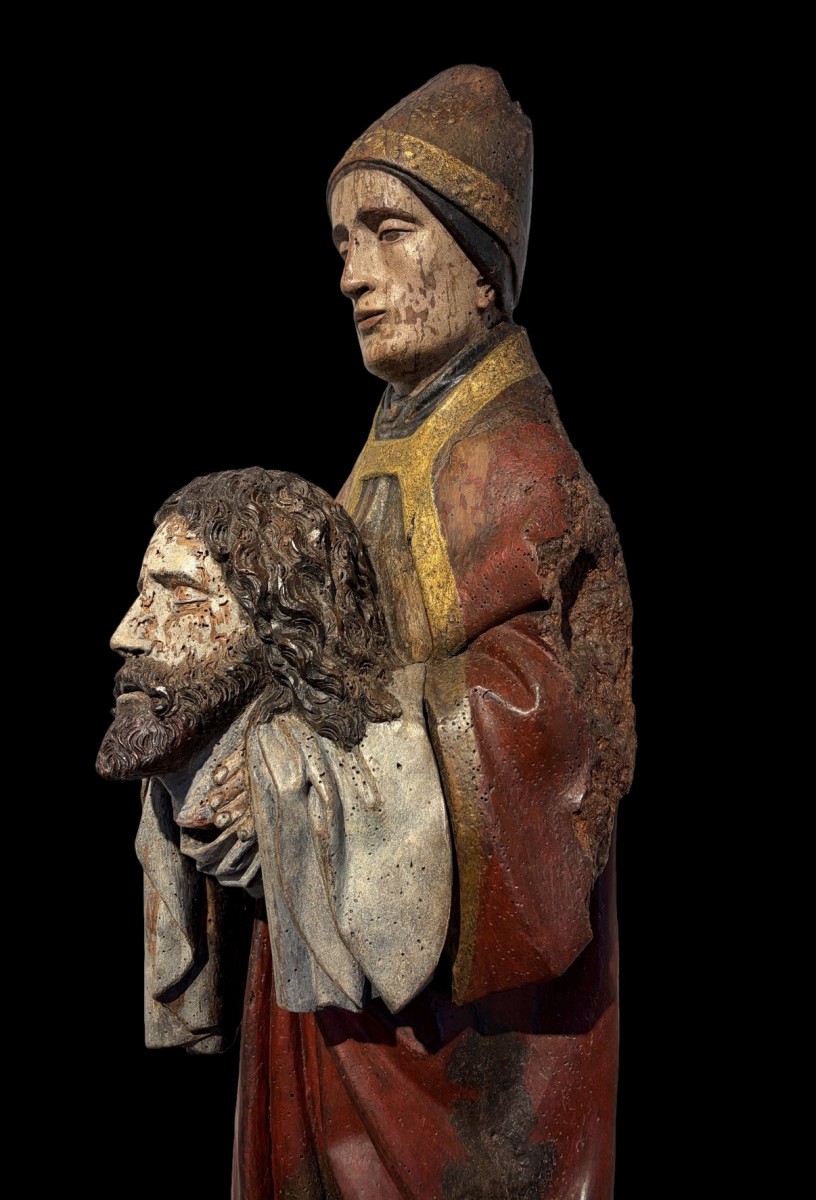
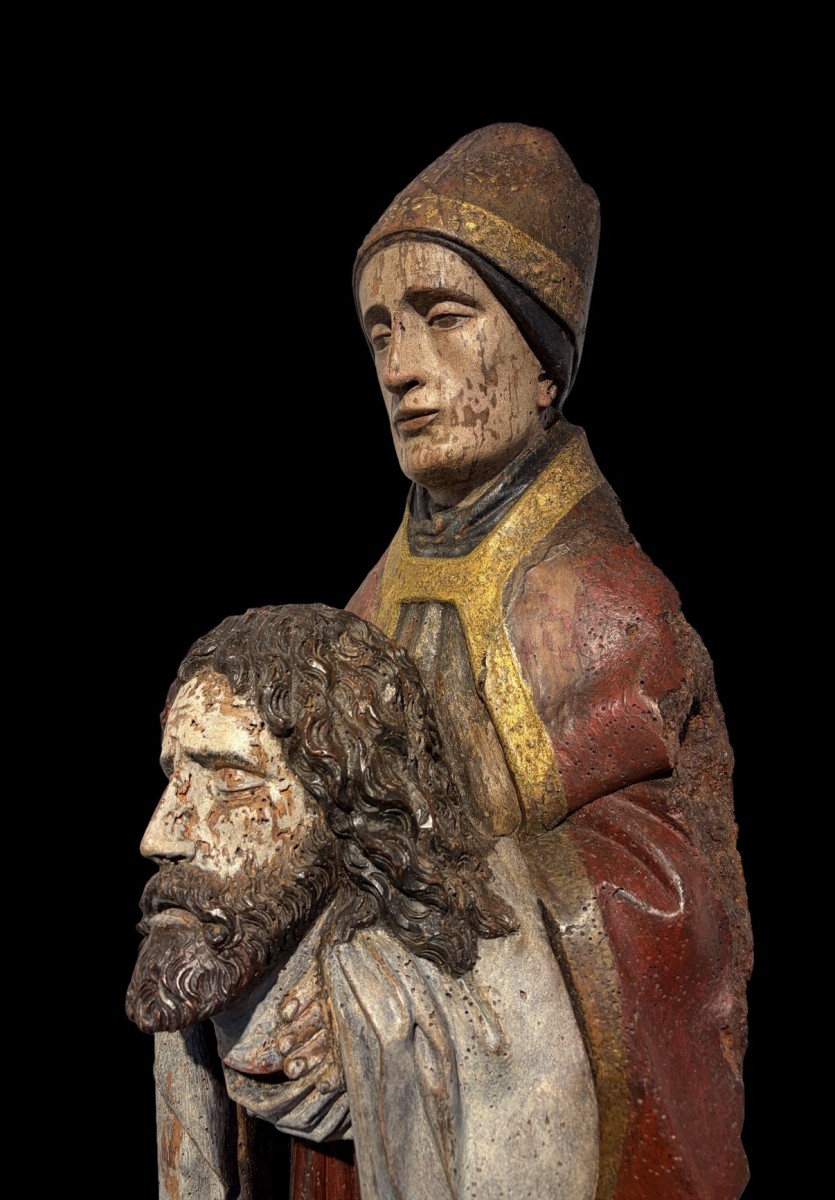
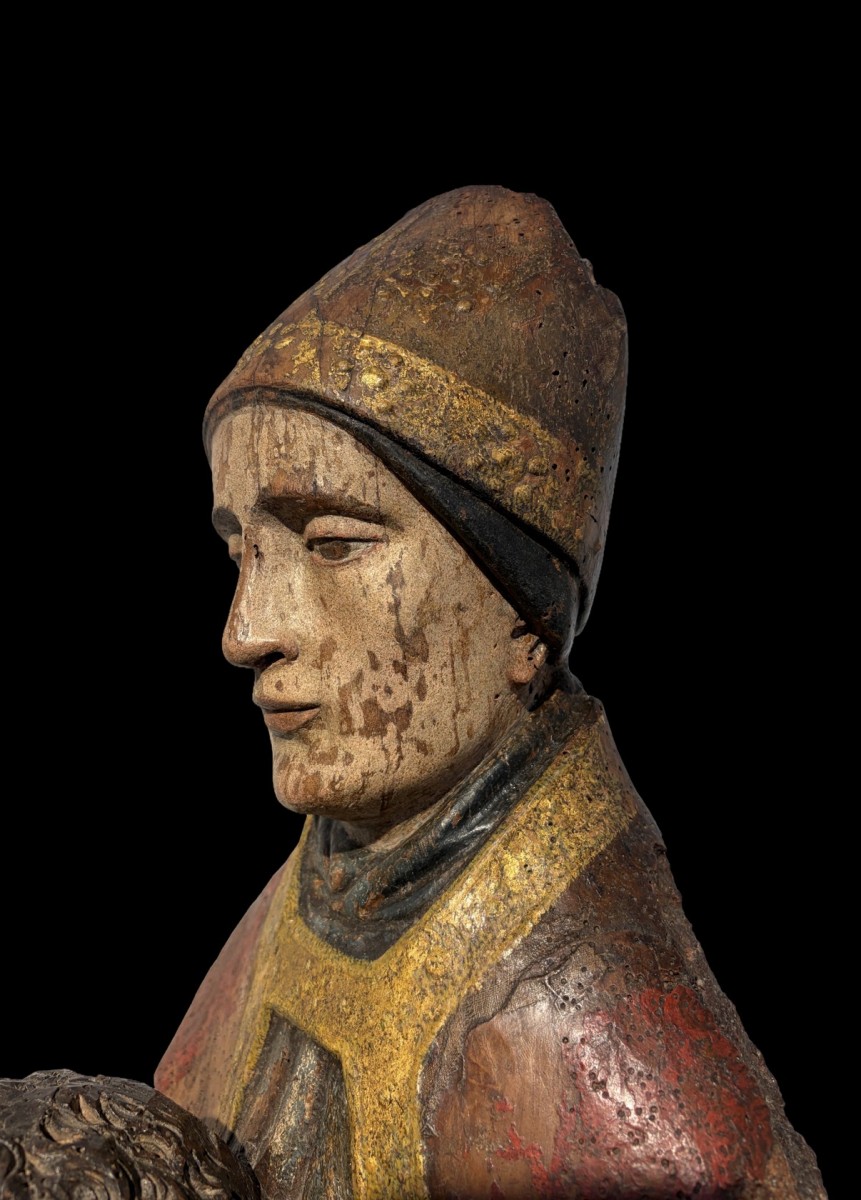
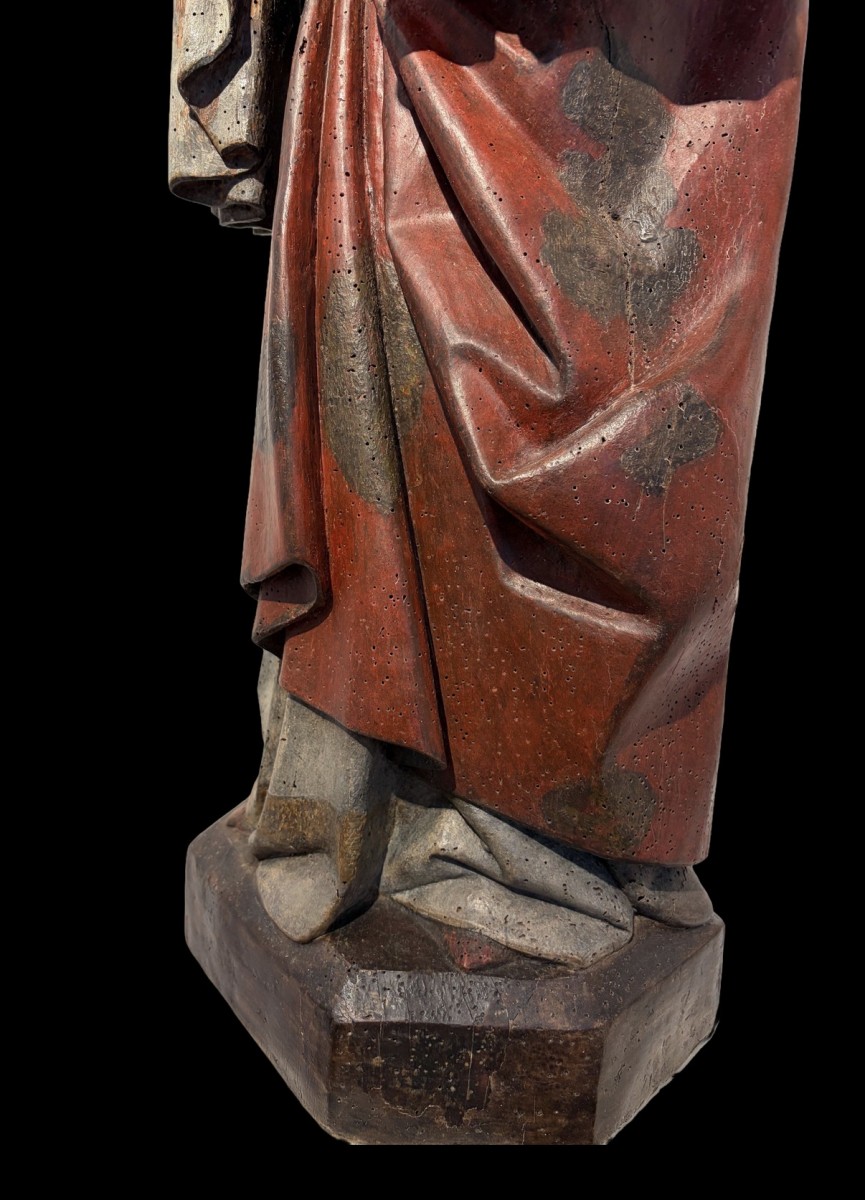
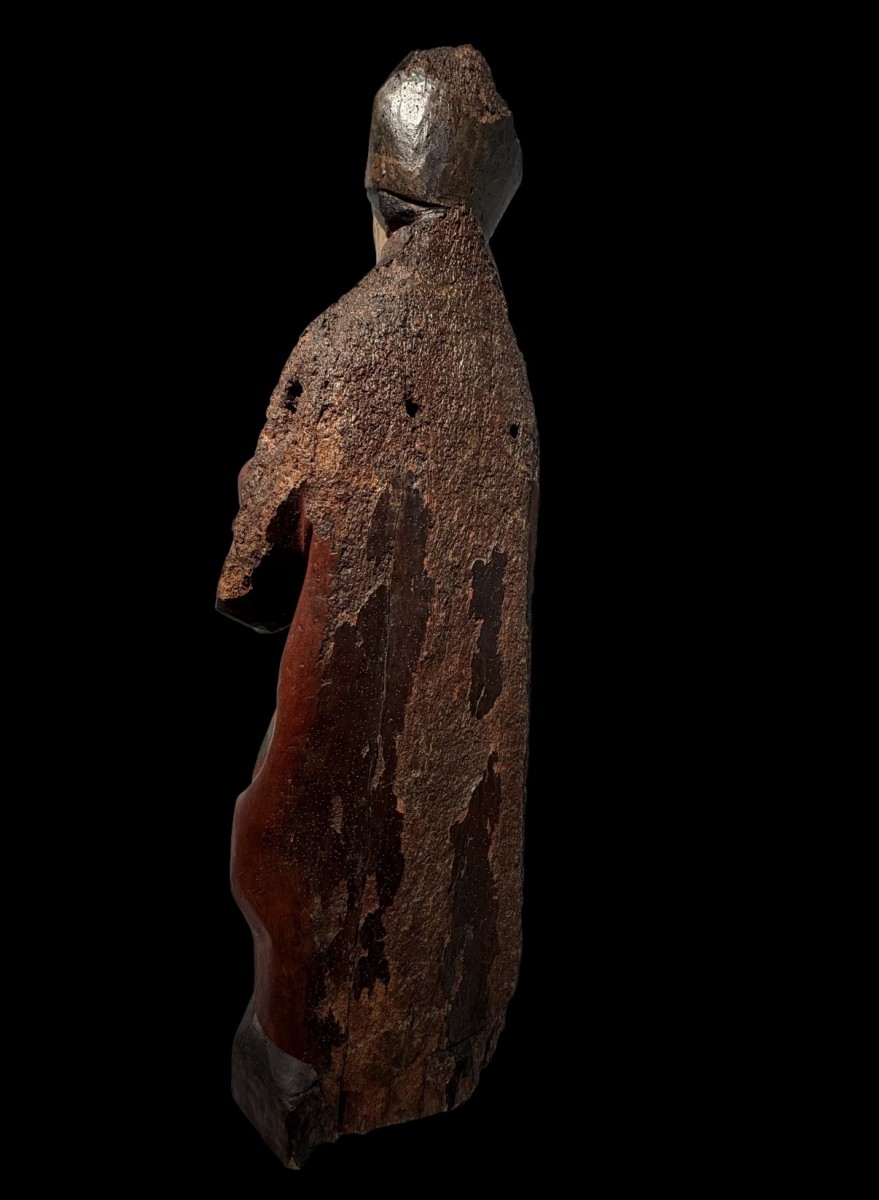
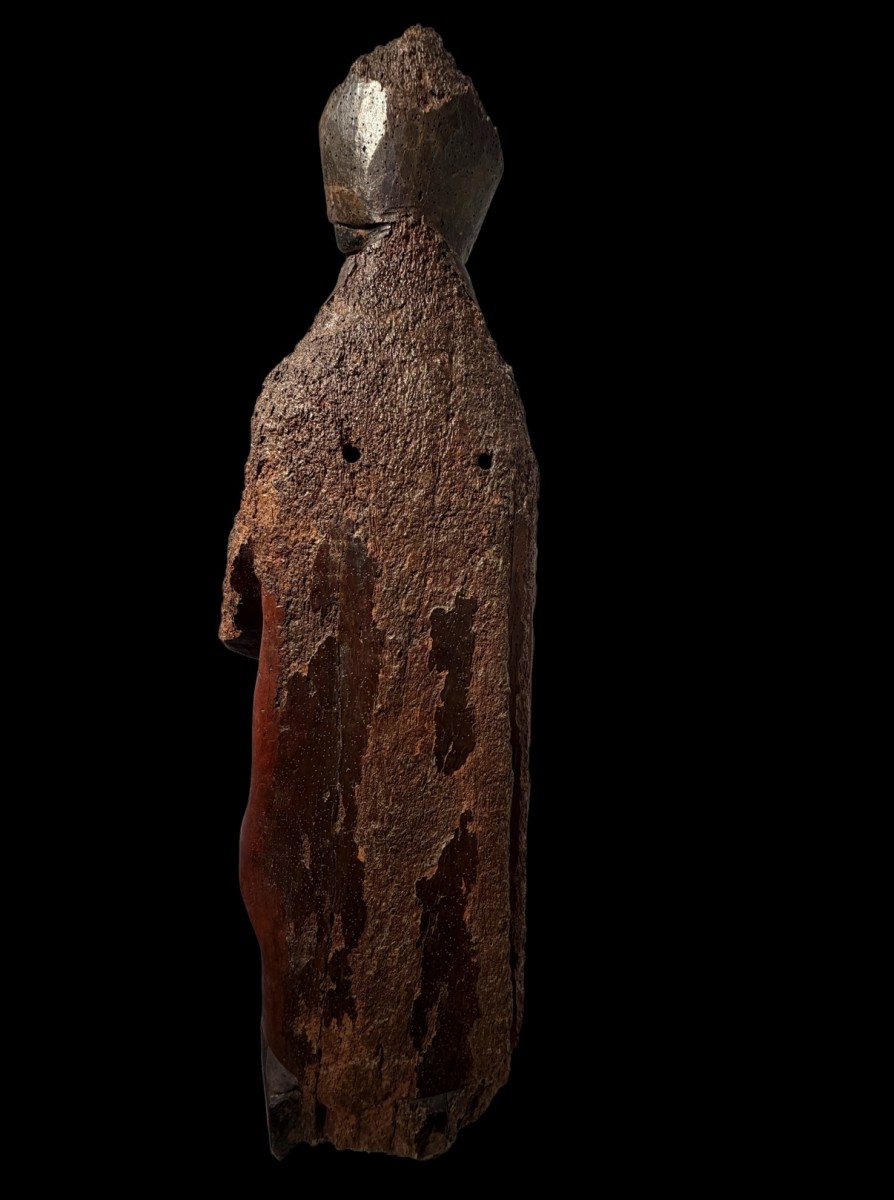
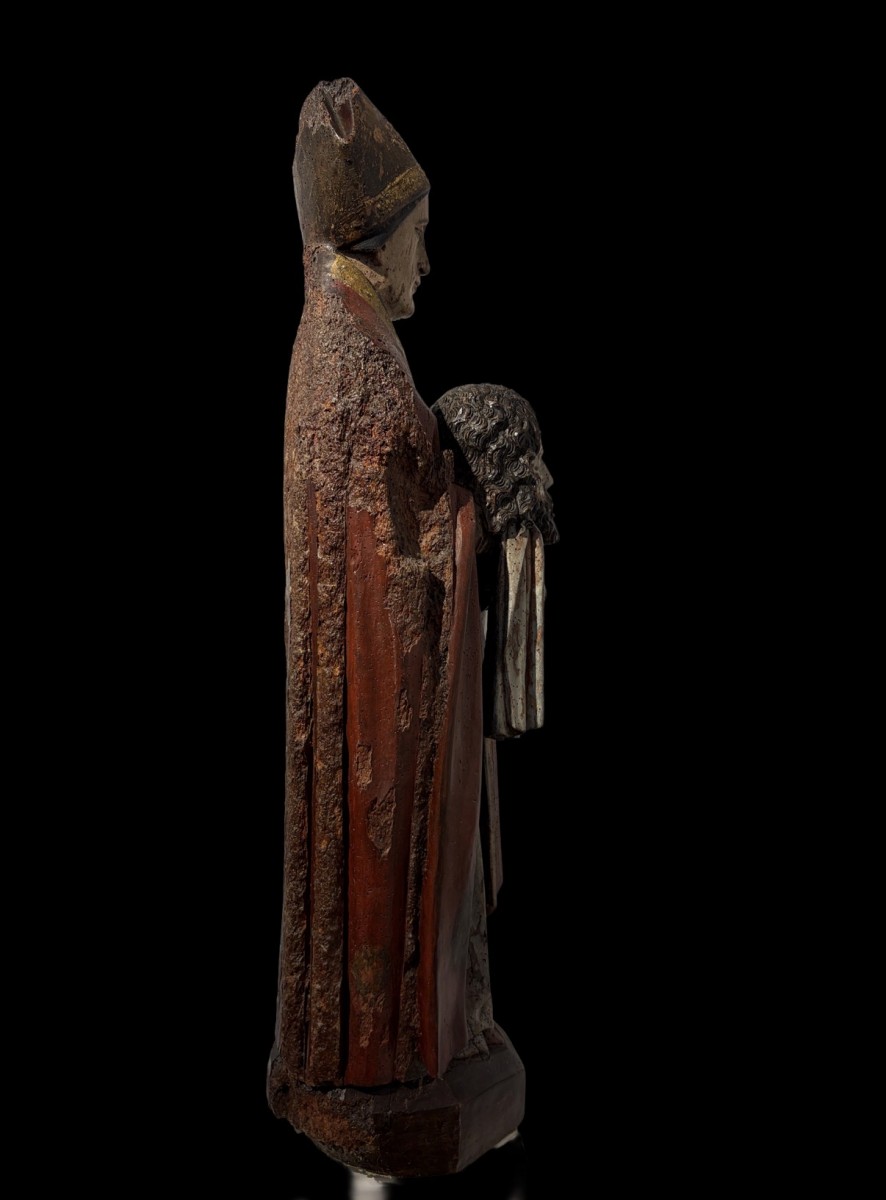
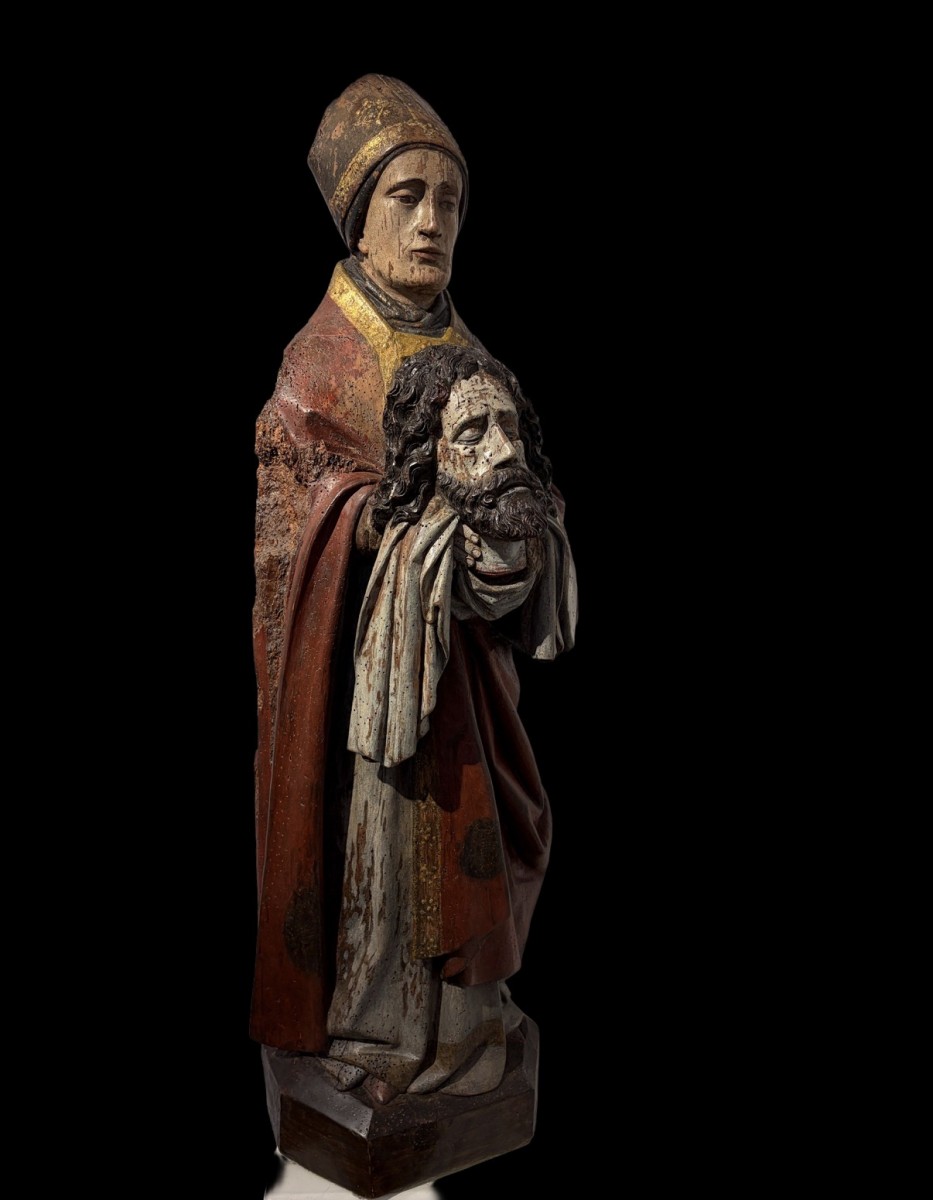
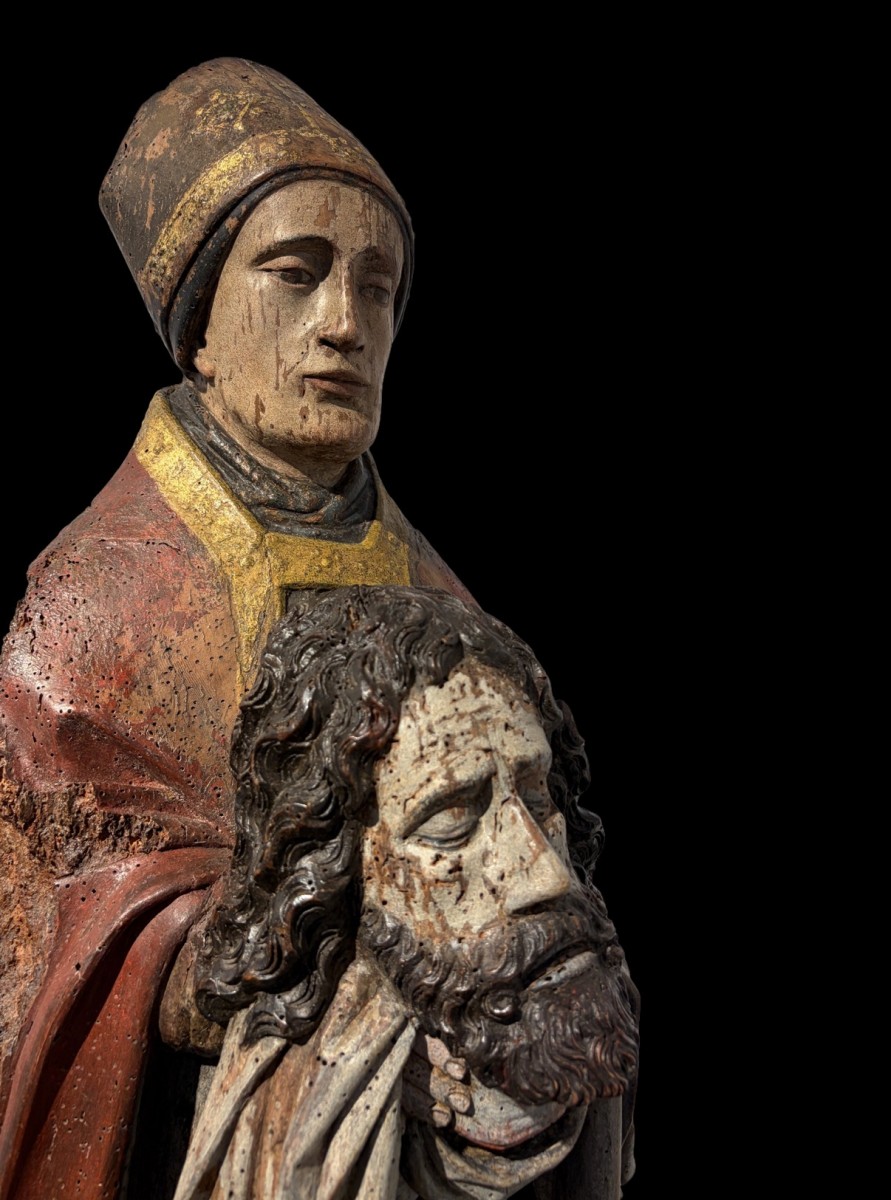
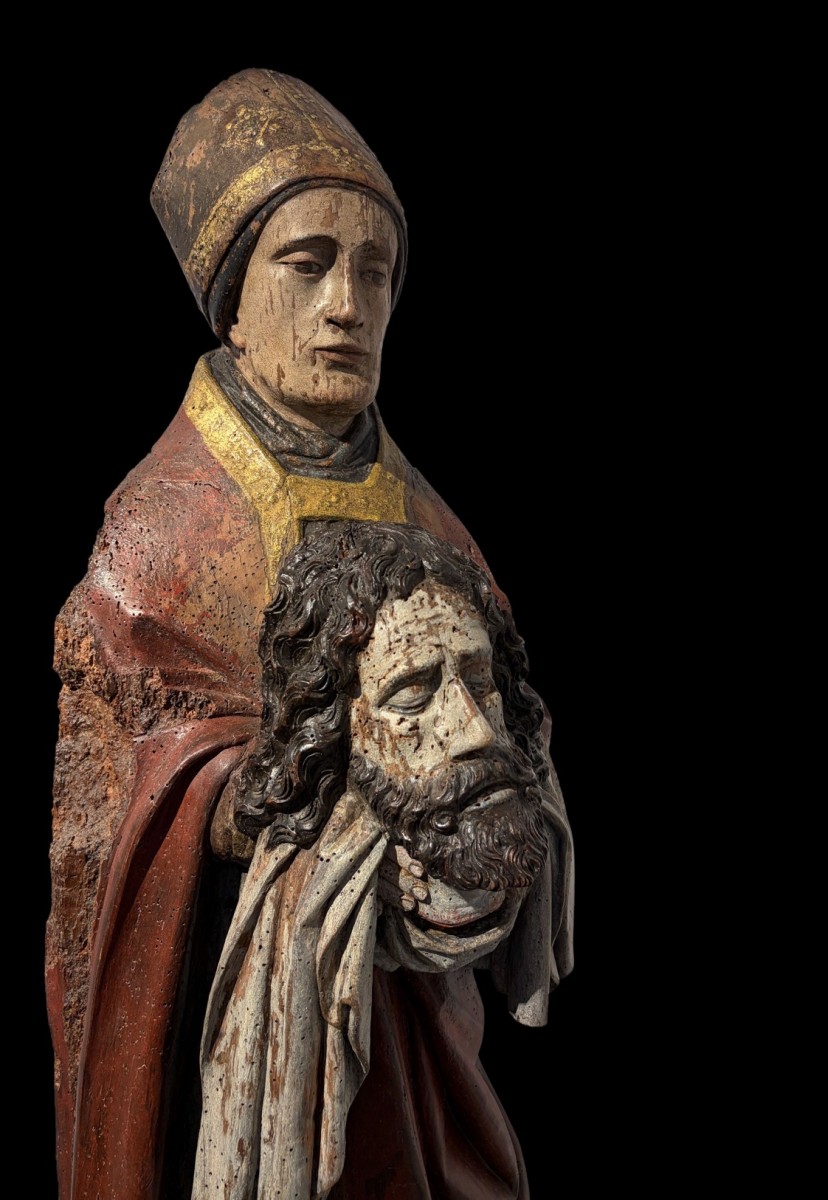
A rare sculpture of Saint Cuthbert (bishop of Lindisfarne 634-687) holding the head of King Oswald (604-641). Heavy oak, good size. Weathered consistent with its age, traces of xylophagi. Losses to the back of the upper part of the left arm. Dimensions: height 103 x width 27 x depth 32cm. Weight: 28kg.
The saintly bishop of Lindisfarne, St Cuthbert, is often depicted holding the head of the king and martyr, St Oswald. In 1104, when his shrine was transferred to the present cathedral of Durham, the saint's body was found to be incorrupt, and with it was the head of St. Oswald, which had been placed with St Cuthbert's body for safety (cf infra), hence they are often shown together in Christian art.
The historical facts as written on the Durham cathedral site: “The Northumbrian King Oswald, born 604, was killed in the Battle of Maserfield in 641 or 642. According to St Bede’s account of events, Oswald was dismembered and his head, hands, and arms were placed on stakes by his enemy, King Penda of Mercia (now the English Midlands).
Oswald’s successor King Oswiu (612-670) managed to take the body parts back with his army. Oswald’s hands and arms were taken to his royal city and they took the head to Lindisfarne, to be kept safe as a holy relic by the resident monks. Because Oswald had helped to bring Christianity to Northumbria, he was regarded as a saint.
When Viking raids forced the monks to flee Lindisfarne in 875, they put Oswald’s head in St Cuthbert’s coffin and carried it with them until they settled in Durham in 995. Today, Oswald still shares a tomb with Cuthbert in the Cathedral.” (Source: Durham Cathedral).
Although this story is lesser known on the continent nowadays, Saint Cuthbert was quite popular in continental Europe from the 11th to the 16th century: ‘his cult is remarkable for its rapid dissemination into mainland Europe. Willibrord, the Northumbrian missionary known as the ‘apostle to the Frisians’, brought Oswald’s cult (…) to Echternach in modern-day Luxemburg by the early eighth century. By the eleventh century, further relics were venerated at the Abbey of St Winnoc in Flanders, and at Weingarten in Bavaria, and by the High Middle Ages his cult was being celebrated all the way from Iceland in the north (where we find a late ‘Osvald’s saga’), through the German-speaking lands of central Europe, into Poland and Hungary.’ (Source: ‘A Tale of Many Heads: Oswald in Vienna’ by Christiania Whitehead published online in https://wp.unil.ch/regionandnation/2017/06/a-tale-of-many-heads-oswald-in-vienna/)
Delevery information :
Depends upon the type of object.
For non fragile objects we offer free shipment by post to maximum cost of 40 euro at the risk of the buyer.
For fragile and/or large/heavy objects we recommend the buyer to work with a shipping company at his cost.