Offered by Galerie Lamy Chabolle
REQUEST INFORMATION

Decorative art from 18th to 20th century
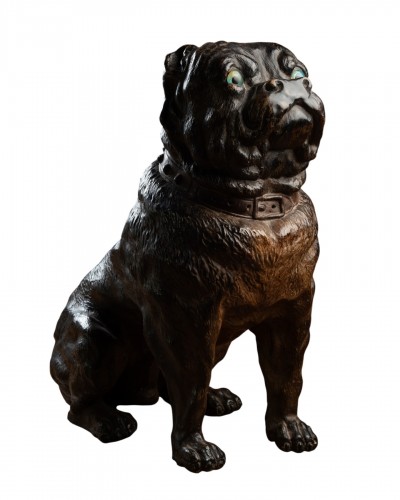
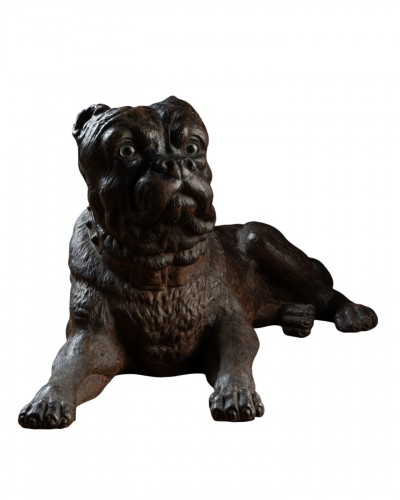
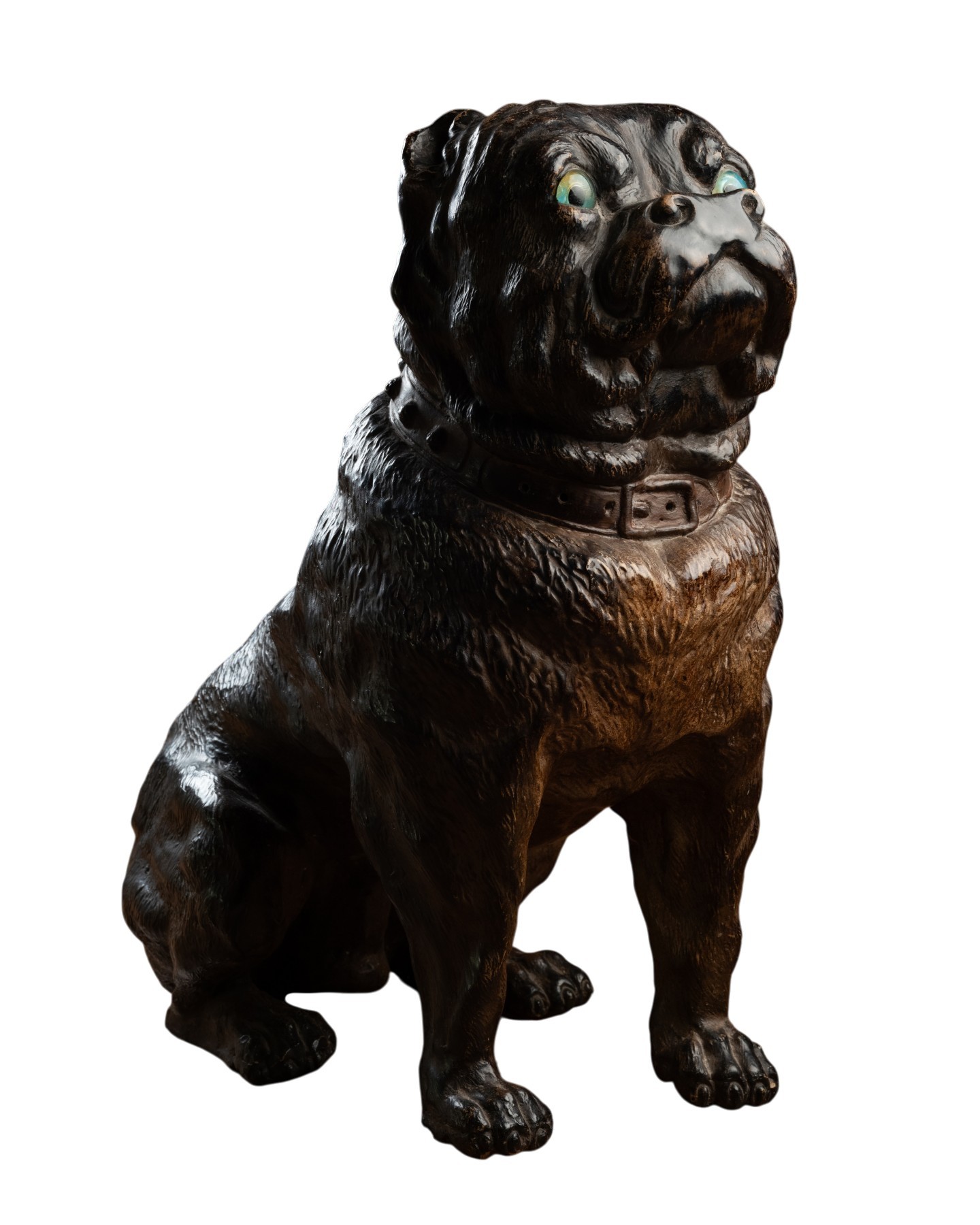
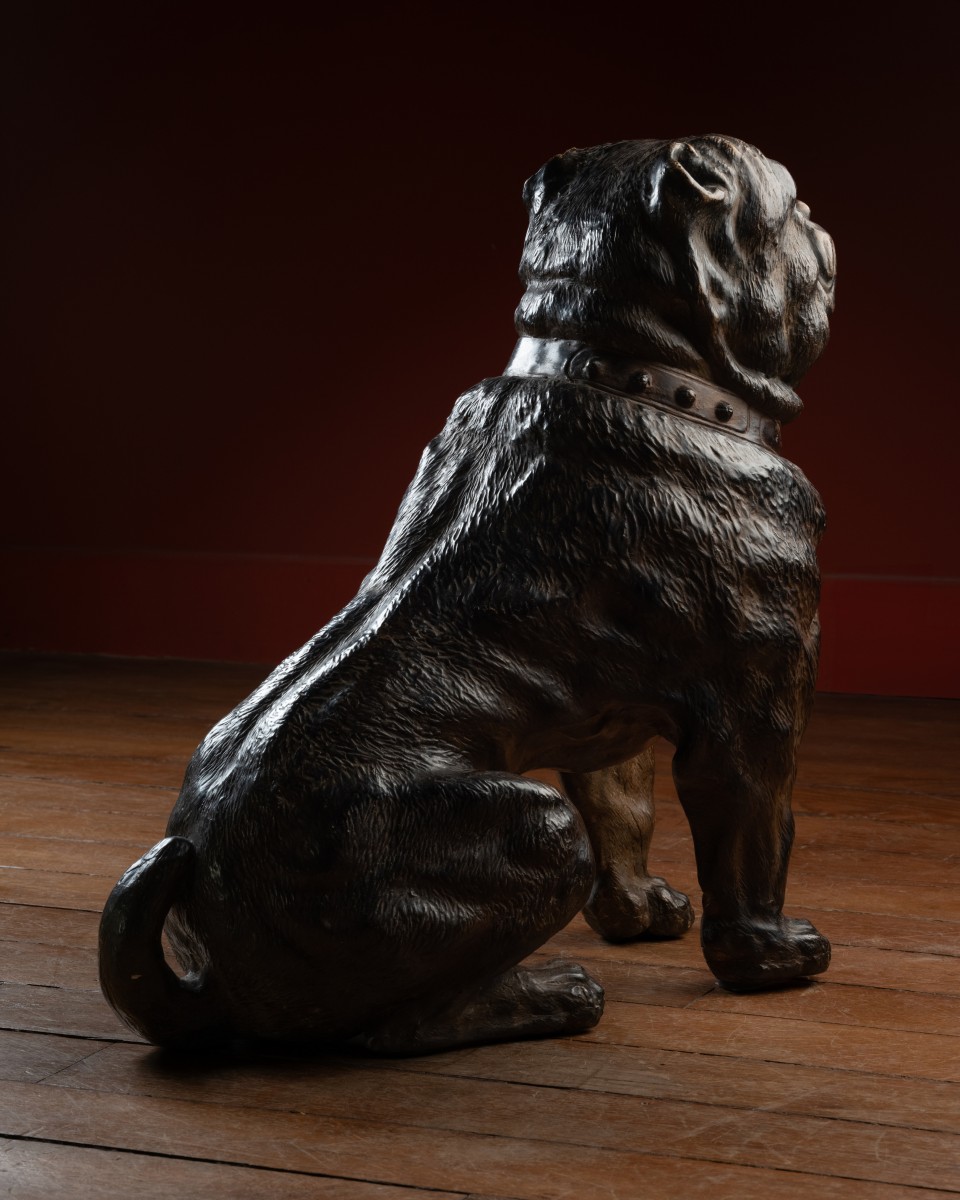
A painted terracotta pug
Terracotta and sulphide
Czechia
Late 19th century
52 x 45 x 25 cm (20.5 x 17.7 x 9.8 in)
The vague resemblance of these painted terracottas — most often depicting life-size bulldogs — to the animal figurines of Friedrich Goldscheider long suggested the notion of an Austrian origin, the Viennese house of Goldscheider having made its name, from 1885 onward, in precisely such terracotta subjects. The use of cristallo-cérame for the eyes should, however, have pointed toward a Czech manufacture: this is confirmed by similar terracotta dogs bearing the mark of Johann Maresch (1821-1914), a Bohemian ceramist whose manufactory was active in Ústí nad Labem — the German-speaking Aussig of the day —, near the present-day German-Czech border.
The use of cristallo-cérame, or “sulphide” — the incrustation of a ceramic form within molten crystal or glass — indeed belongs to a glassmaking tradition particularly strong in Bohemia, where the process had been experimented with as early as the late 18th century. That the Kingdom of Bohemia belonged, until the early 20th century, to the Austro-Hungarian monarchy moreover partly explains the Viennese reputation attached to these objects.