Offered by Galerie Lamy Chabolle
REQUEST INFORMATION
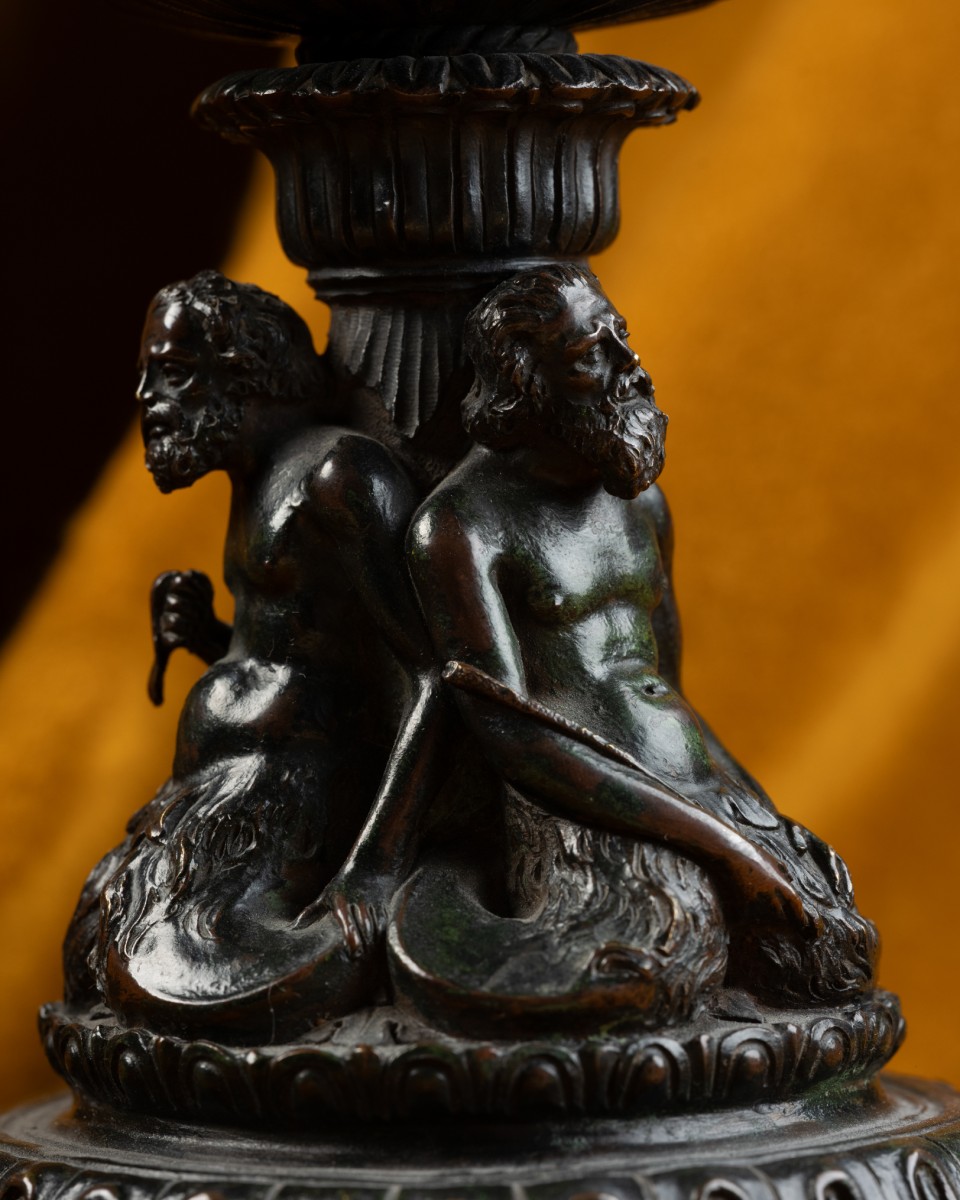

Decorative art from 18th to 20th century
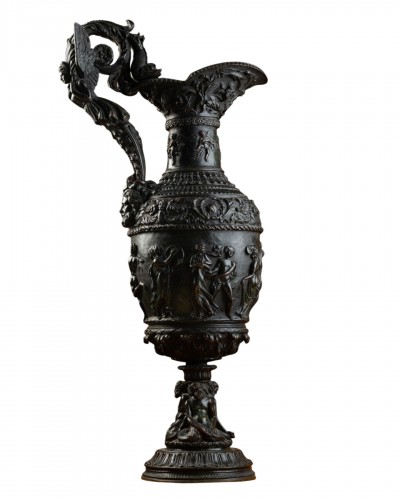
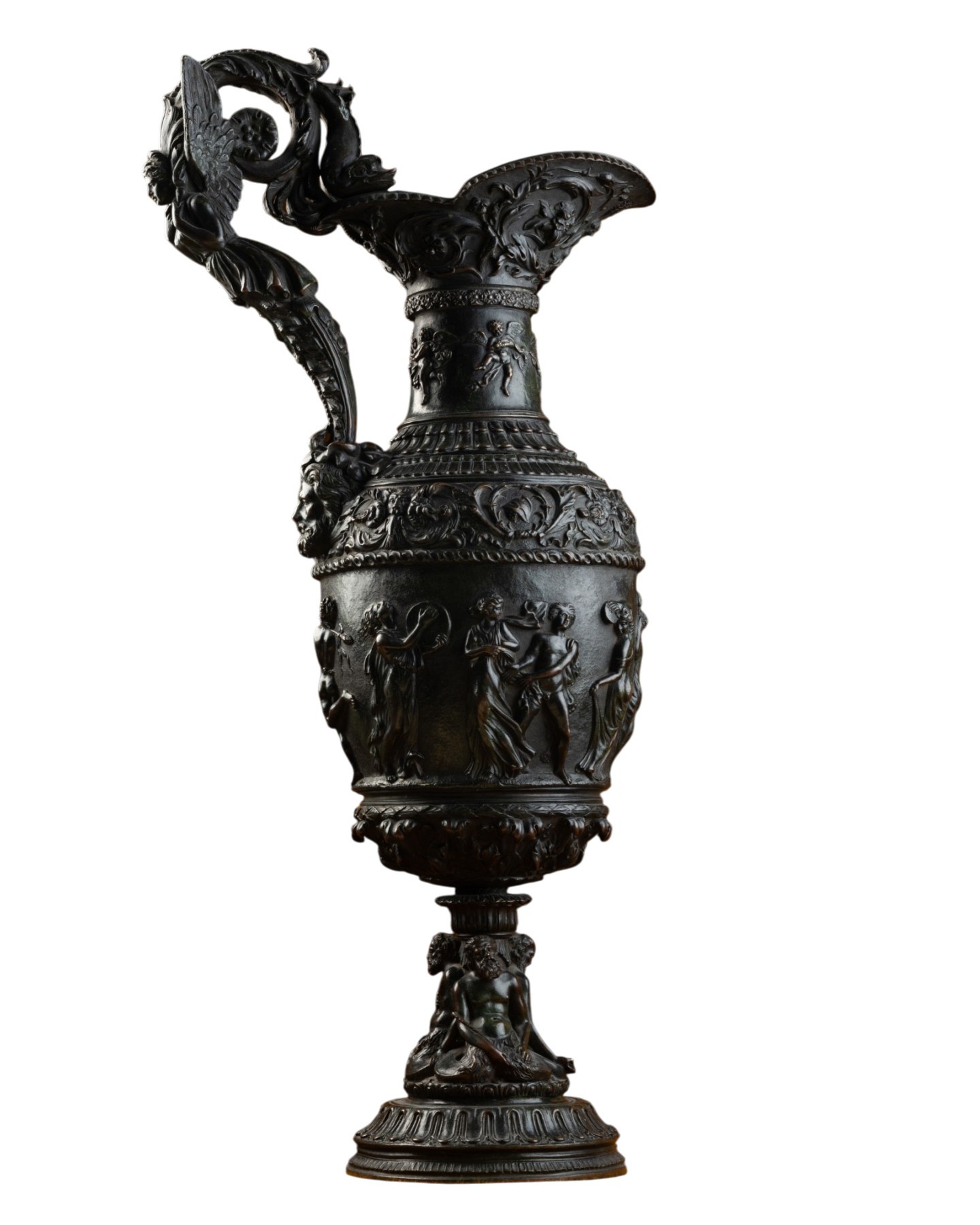
Borghese Ewer, by Giovanni Bellezza, after a model by Ferdinando Albertolli
Patinated bronze
Italy, Milan
ca. 1844
48 x 22 cm (18.9 x 8.7 in.)
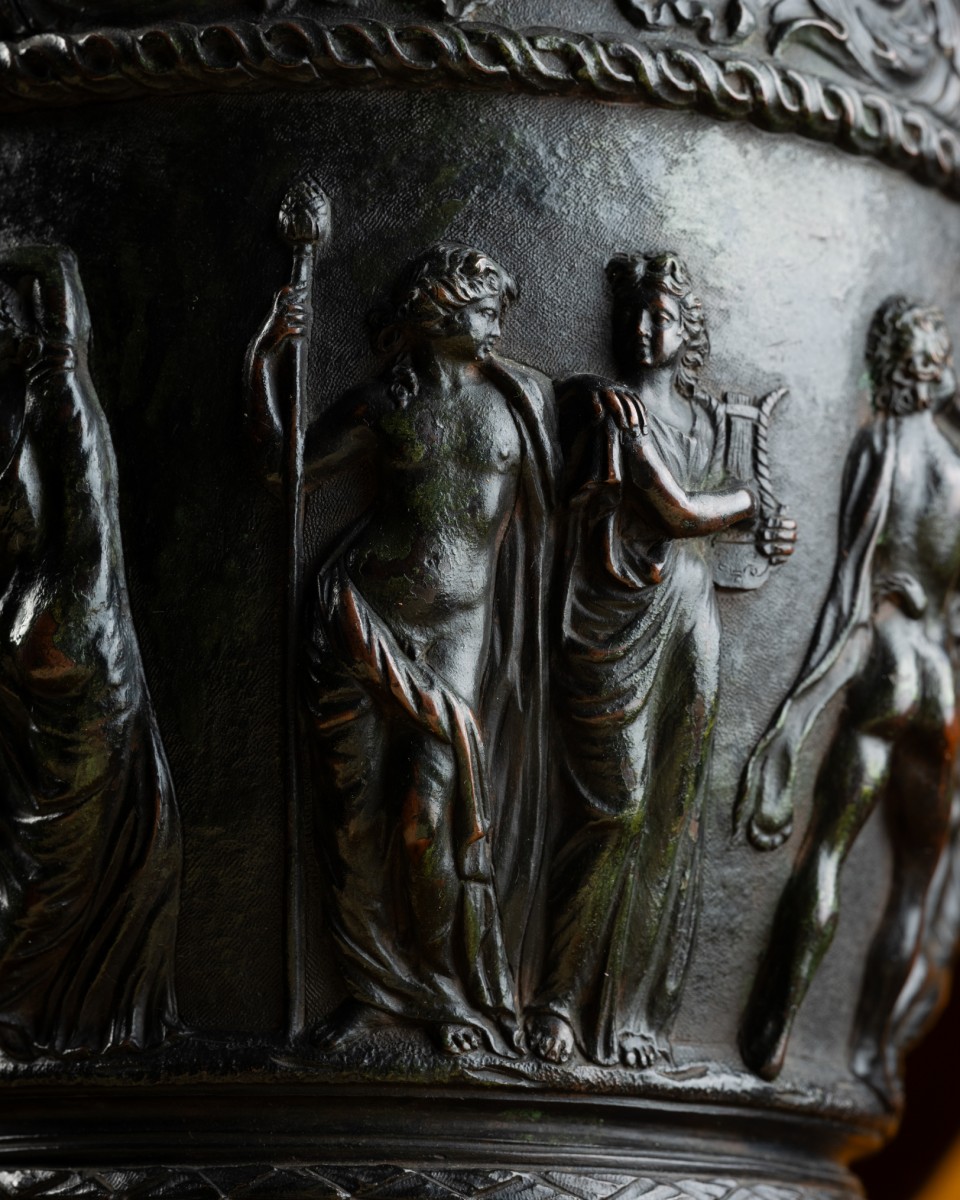
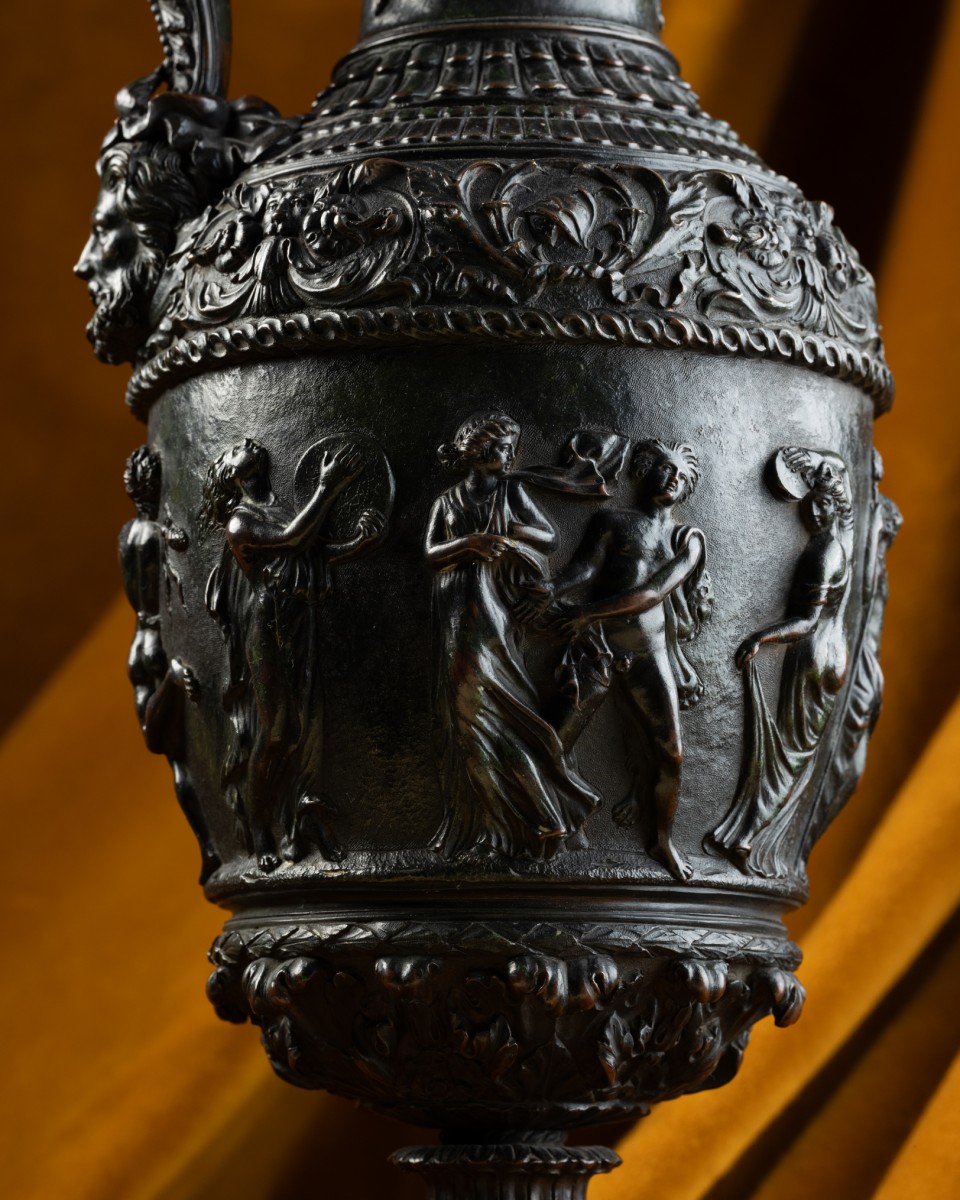
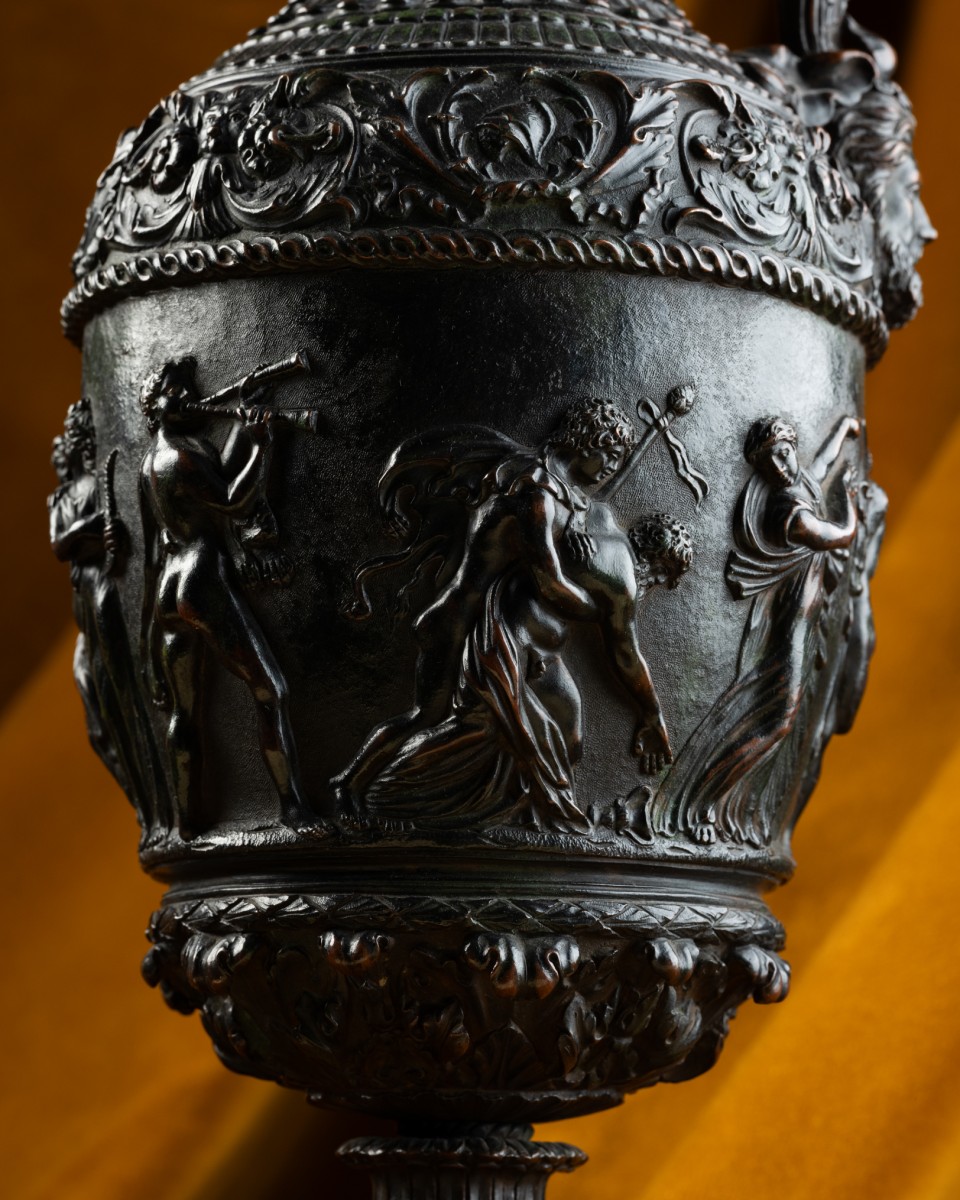
The colossal marble Borghese Vase, now in the Louvre, served as the source for the ornamental figures engaged in the bacchanalian scene on the body of this exceptionally chased bronze ewer, but with slight modifications introduced by its author, Milanese bronzier and silversmith Giovanni Bellezza. Two of the figures of the original, the satyr bearing the ritual thyrsus and the pardalis-clad satyr playing the aulos, have been intertwined (fig. 1-2), while in adapting the frieze that runs around the large circumference of the marble the author felt compelled to interpolate one small figure, a bacchante in a chiton playing the tympanum, taken from yet another ancient vessel, the so-called vase of Gaeta or Formia, signed by Salpion and held at the Museo archeologico nazionale in Naples (fig. 3-4).
This rather erudite addition, drawn from a vase far less celebrated than the Borghese or Medici vases, is matched by the archaeological precision of the modelling and chasing of the figures and their accessories, above all the bacchante playing the crotales, the last figure of the scene on both the ewer and on the Borghese Vase. This bacchante has only her right hand free to play, the left delicately holding the drapery of her chiton, so her instrument must be a pair of crotales, that is two tuned disks of brass struck against one another. The bronzier, in consequence, introduced an incision in the bronze to distinguish the two parts of the ancient instrument, in an undercut detail that could not have been moulded, and which is absent even from the Borghese marble.
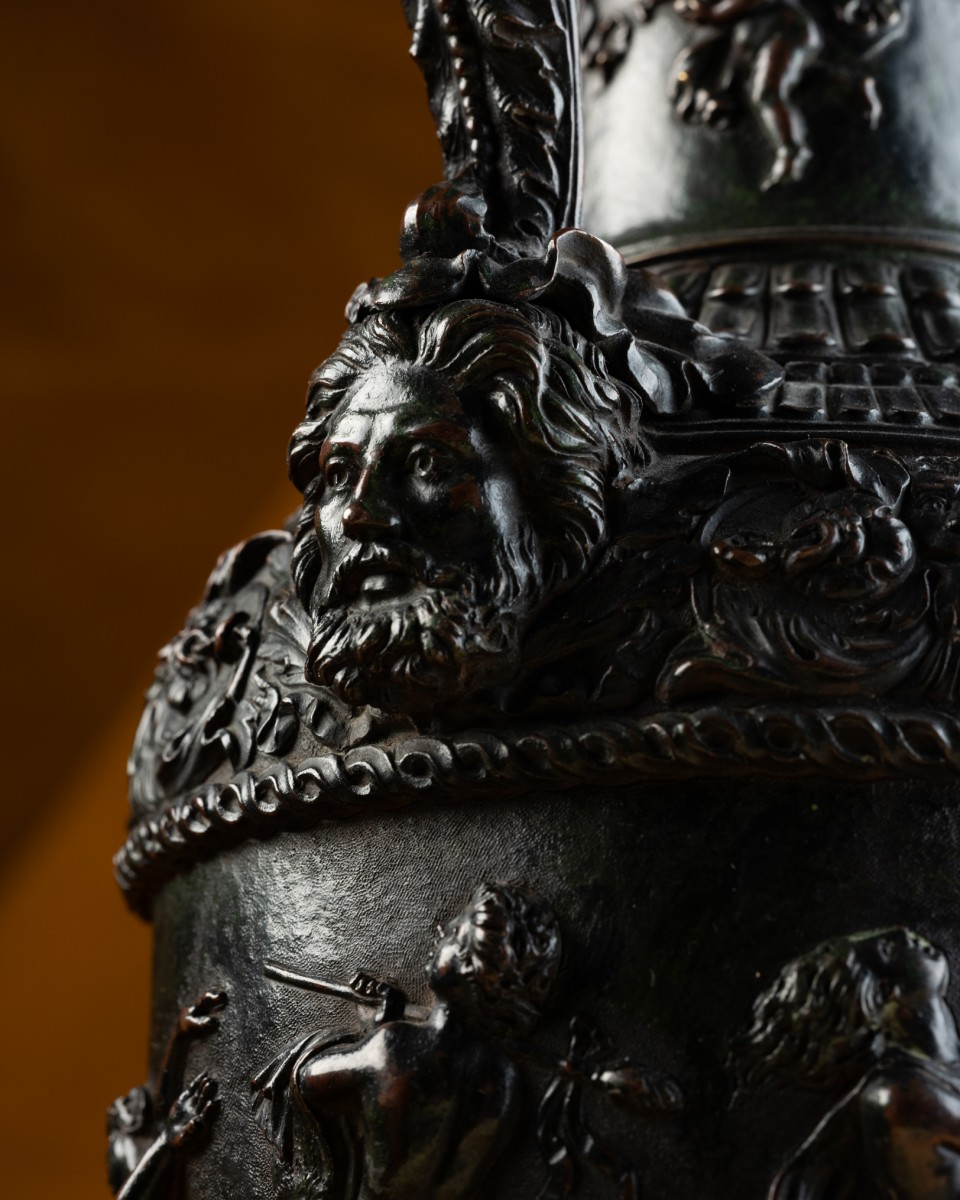
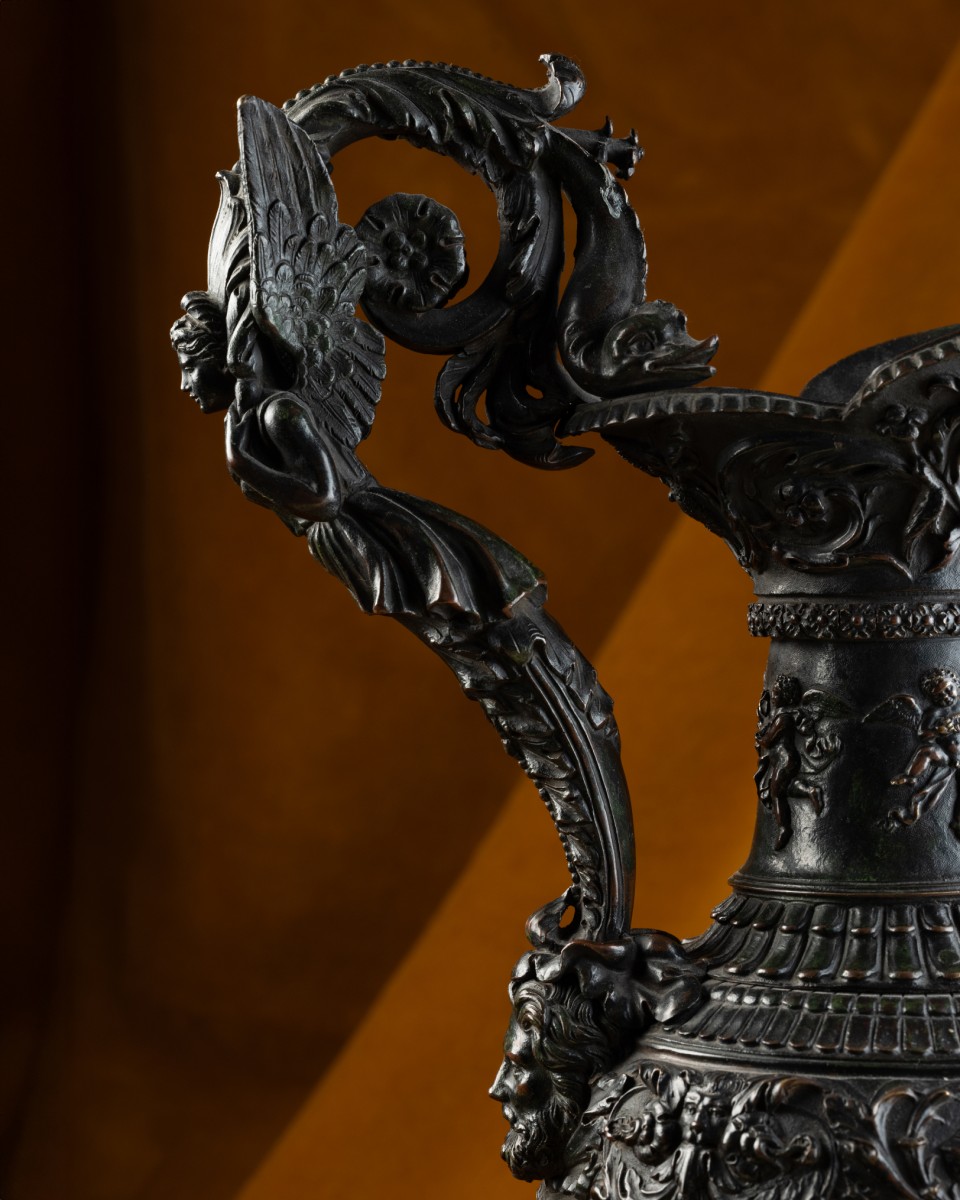
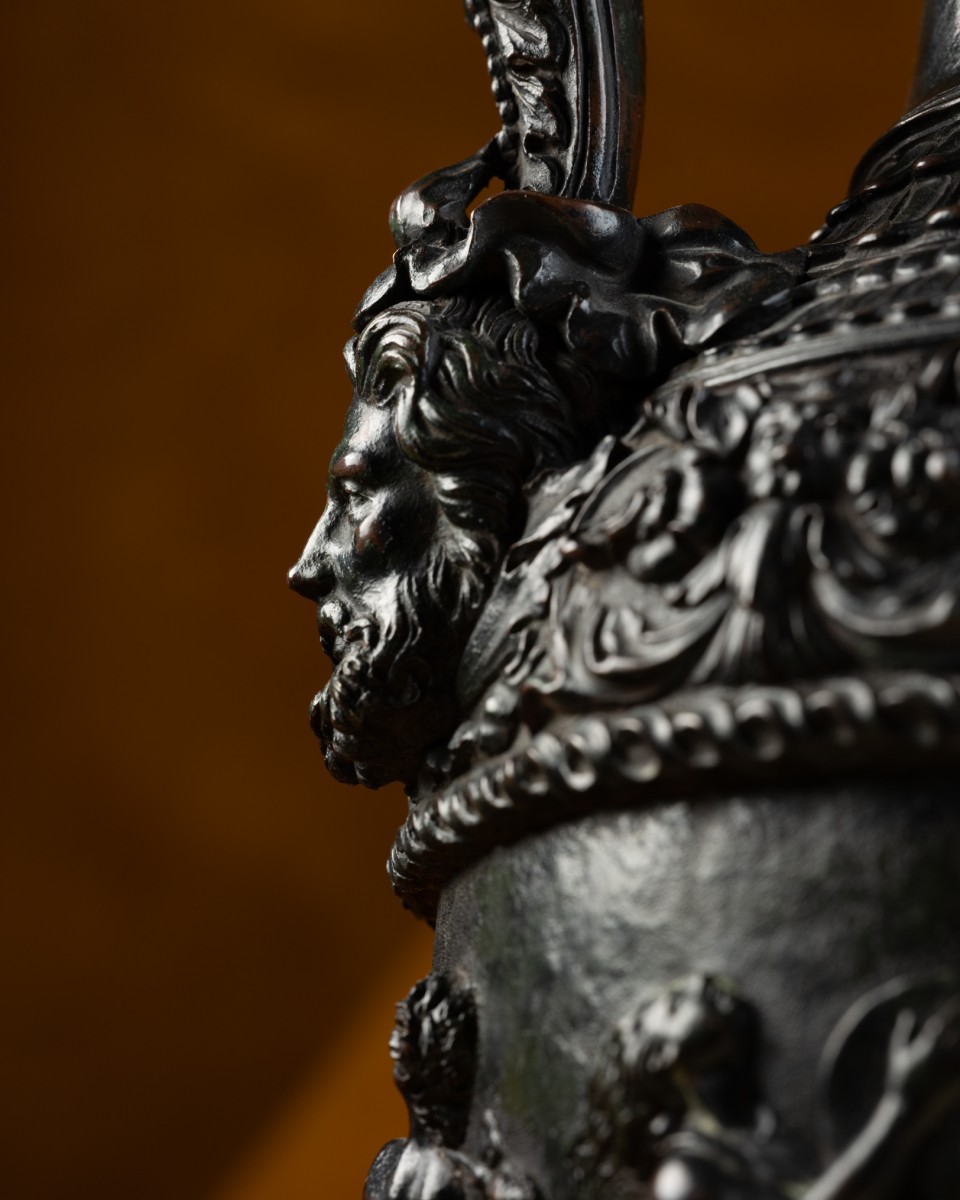
As for the other many ornaments on this vessel, they derive from those of a silver ewer executed in 1844 by Giovanni Bellezza and offered as a present to Adelaide of Austria on the day of her wedding to the future King of Italy, Victor Emmanuel II (fig. 5). The winged female figure forming the handle and springing from a bearded mask surrounded by grotesques; the superposed gadroons, inverted egg-and-dart, acanthus leaves in altorilievo, double-tailed tritons and dancing cupids are all subtle variations on the “vaghissimi ornati”, the most graceful ornaments designed by Ferdinando Albertolli and modelled by Benedetto Cacciatori, then chased and finished by Bellezza for the archduchess, the bacchanalian procession replacing on the Borghese Ewer the nuptial scene designed by Luigi Sabatelli.
Giovanni Bellezza (1807–1876) studied drawing and plastic modelling at the Accademia di Brera, where Albertolli and Sabatelli were professors when the silver ewer was commissioned. He then served an apprenticeship with the firm Strazza e Thomas before opening his own workshop in Milan in 1827. His first work to be praised was the binding of the album of drawings of the festivities that followed, in 1838, the coronation of Kaiser Ferdinand I of Austria as king of Lombardy–Venetia, offered by the Comune to the viceroy. Between 1845 and 1848 he executed ornamental works in the Colleoni chapel at Bergamo, as well as various works in bronze and silver. By the middle of the century his workshop, which had taken the place of the Manifattura Manfredini, was the busiest in Milan for public and private commissions, the most famous of which was the silver ewer mentioned supra.
Small areas of wear reveal three patinas: a warm brown; a near-black, probably inspired by the Veneto-Paduan bronzes of the Renaissance; and a third in subtle specks of green, the verde antico patina often used by the Roman bronziers of the late eighteenth century, which the Manifattura Manfredini, Bellezza’s predecessor in Milan, also advertised. Since even the parts of the ewer closest to the silver of 1844 show deliberate variations, the possibility of an overcast is definitely excluded, and the present ewer must therefore be seen as an original work by Bellezza, derived from the gift to the archduchess.
Literature
Enrico Colle et al., Bronzi decorativi in Italia. Bronzisti e fonditori italiani dal Seicento all’Ottocento, Milan, 2001. For the Borghese Vase, see Francis Haskell and Nicholas Penny, Taste and the Antique. The Lure of Classical Sculpture. 1500-1900, New Haven, 1981, p. 167, n. 81.