Offered by Galerie Lamy Chabolle
REQUEST INFORMATION

Decorative art from 18th to 20th century
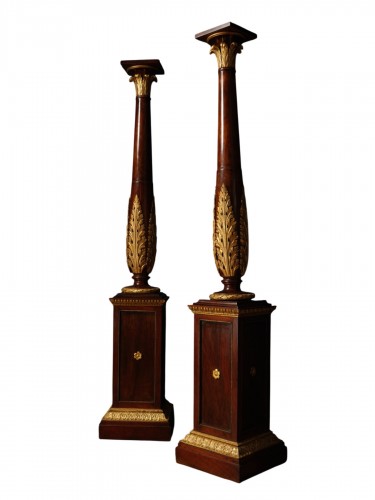
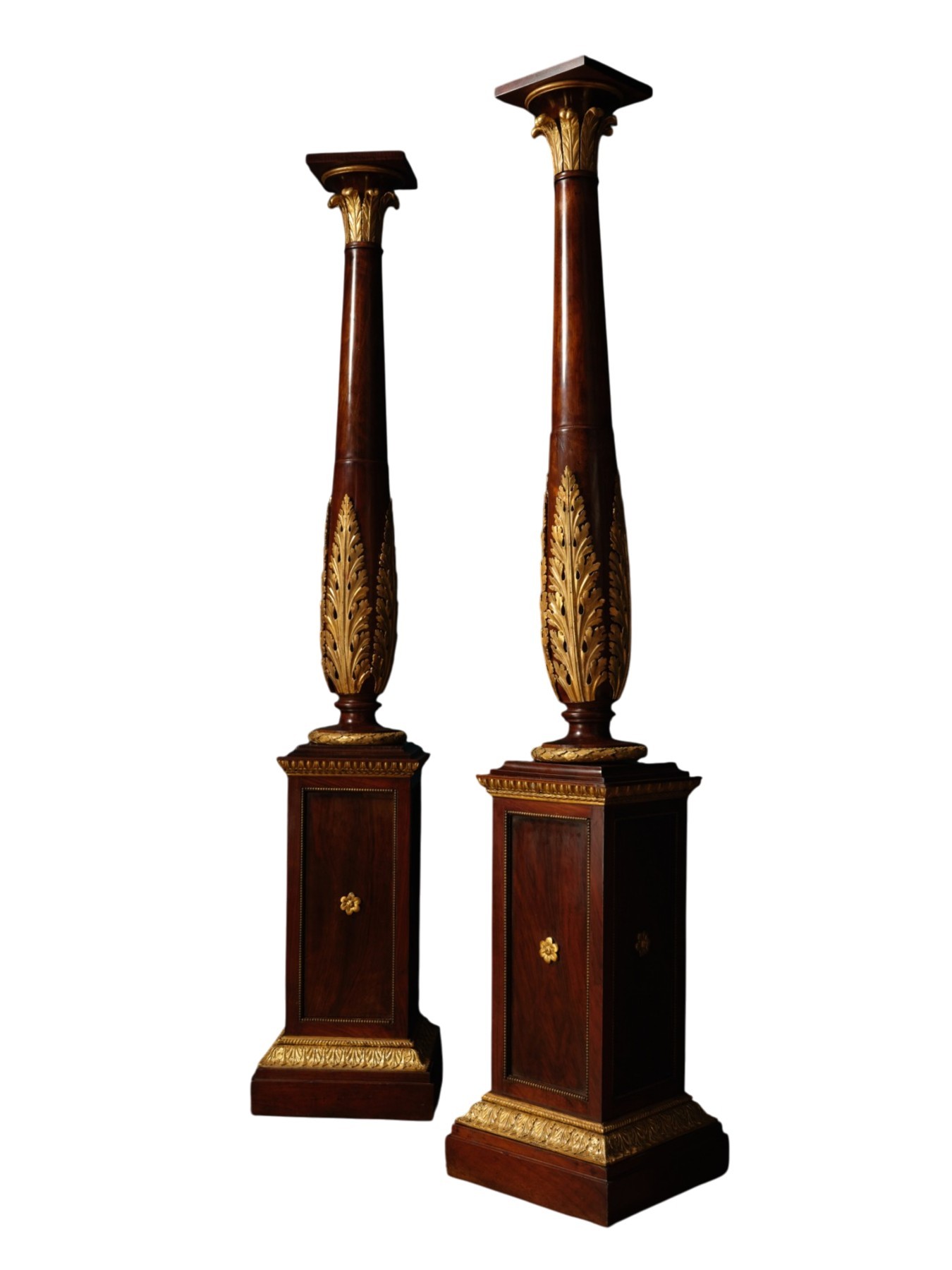
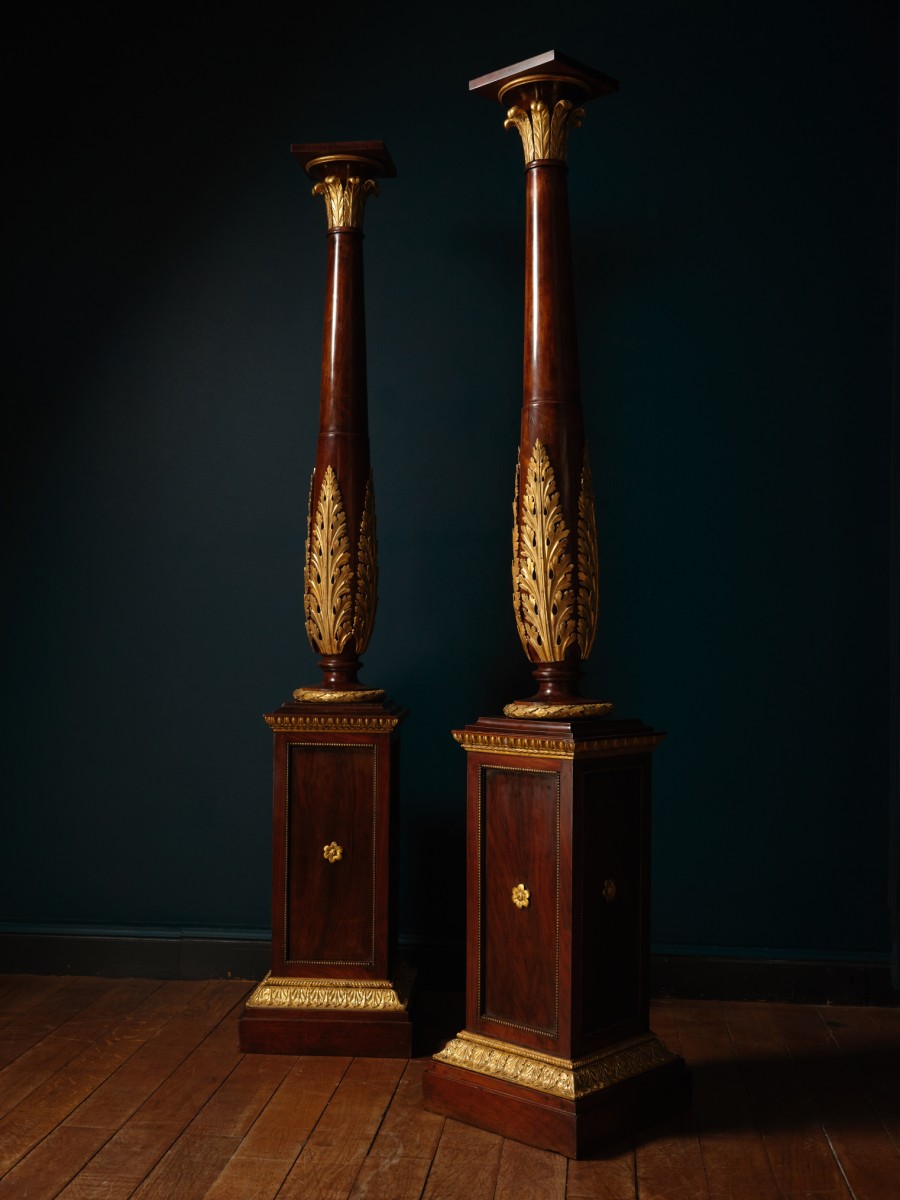
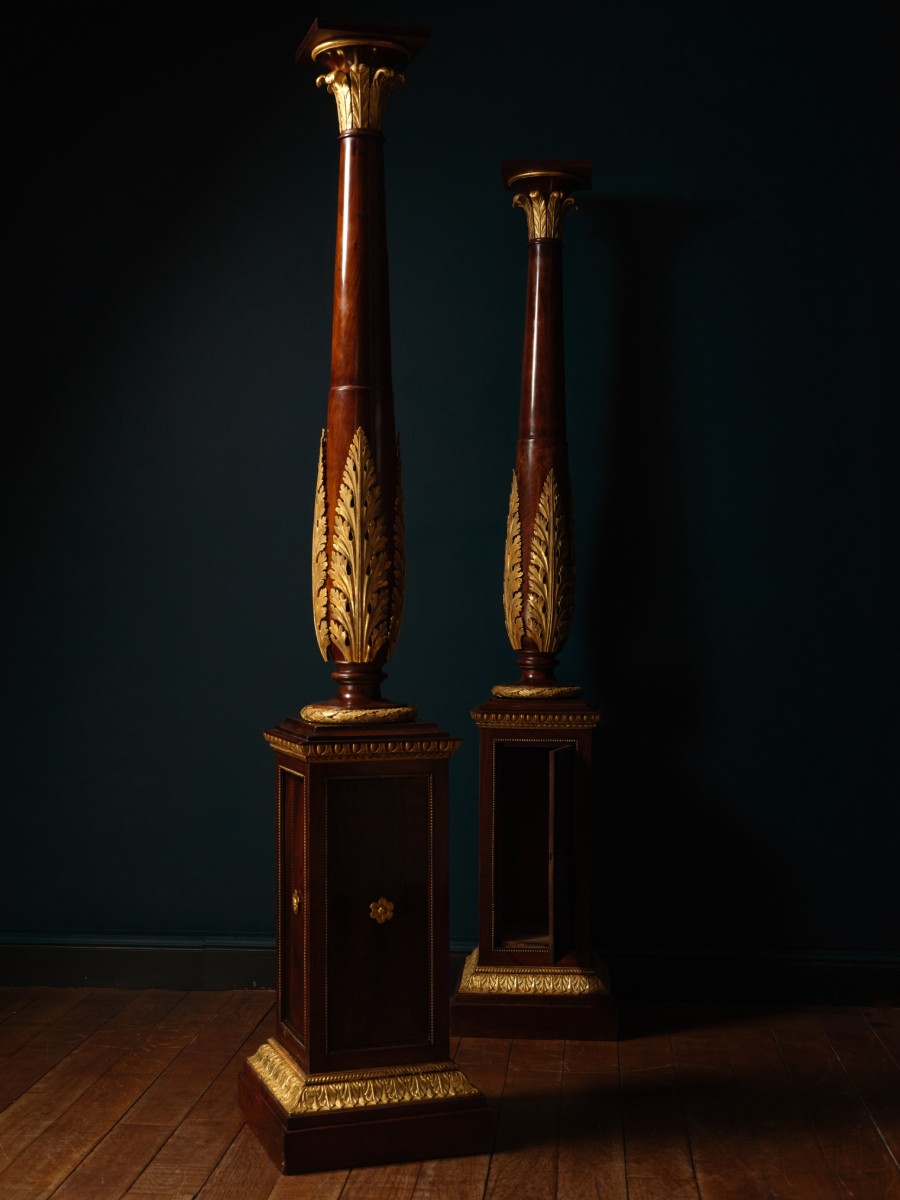
Pair of mahogany and gilt wood candlesticks
Mahogany, carved and gilt wood
Lombardy
First quarter of the 19th century
H. 170 cm (66.9 in.)
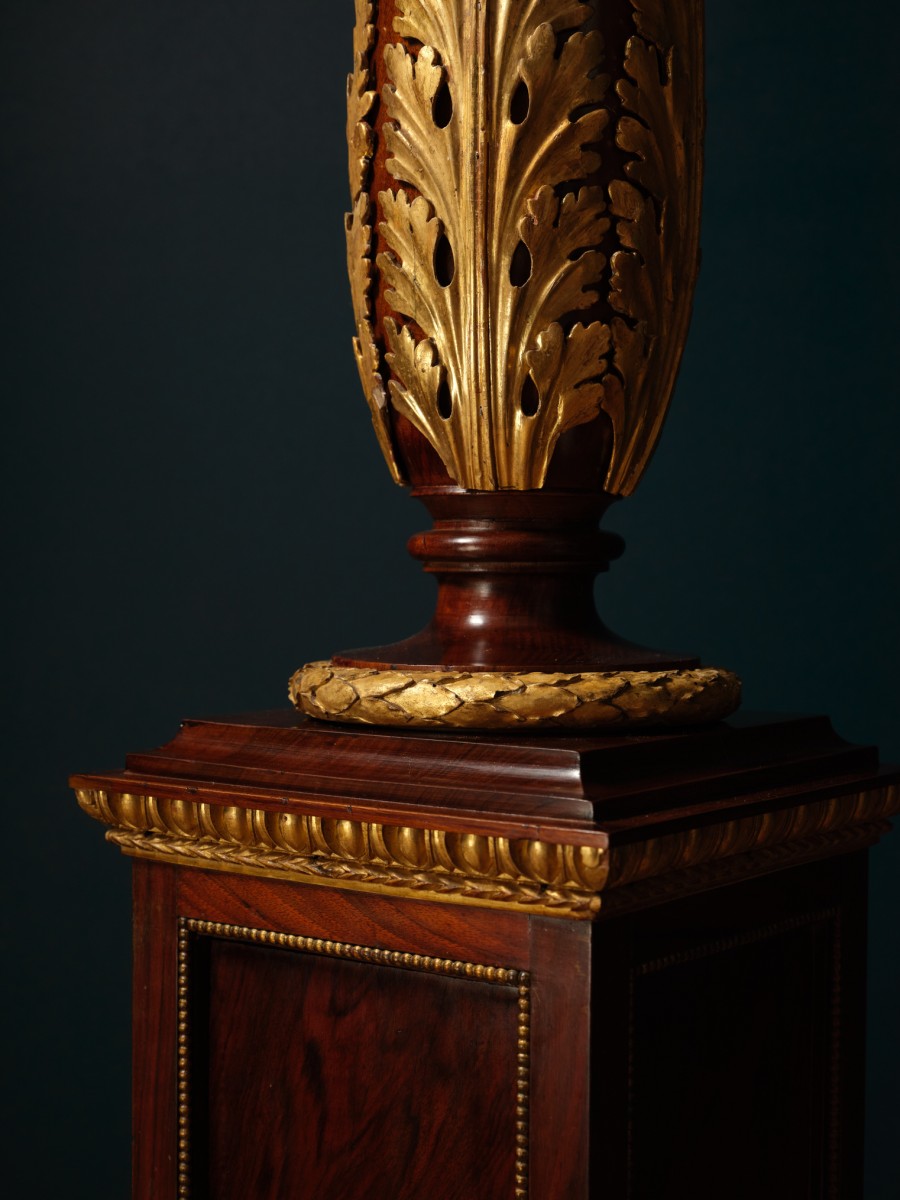
The quality of the craftsmanship in the gilt wood acanthus leaf motifs suggests a Lombard origin for these candelabra, whose style—a confident yet understated neoclassicism — might otherwise be mistaken for Florentine, that is, for the simplified Empire style popularized in Tuscany by the cabinetmaker Jean-Baptiste Youf (1762–1838), who was commissioned by Elisa Bonaparte — made Princess of Lucca and later Grand Duchess of Tuscany—to establish a workshop in Lucca capable of rivaling the furniture that was then the pride of Parisian cabinetmakers during the Empire.
The ribbed lobes of the acanthus leaves, delicately layered to recreate in gilded wood the effect that the alternation of matte and burnished sections would have achieved in bronze, point to the origins of these torch holders in northern Italy — either in Piedmont, where a virtuoso school of intagliato had established itself in the 18th century, or in Lombardy. The acanthus leaf motif is, in fact, very similar to that of a sgabello preserved at the Castello Sforzesco in Milan, executed after a model by Giocondo Albertolli by a Lombard workshop at the very end of the 18th century.
The base of one of the candlesticks conceals a secret compartment.
See Denise Ledoux-Lebard, Les Ébénistes du XIXe siècle. 1795–1889, Paris, 1984, and especially Adriana Boidi Sassone et al., Furniture. From Rococo to Art Deco, Cologne, 2000. For the furniture crafted by Jean-Baptiste Youf for Élisa Bonaparte, see Enrico Colle, Il mobile dell’Ottocento in Italia. Arredi e décorations d’interni dal 1815 al 1900, Milan, 2007.