Offered by Conservatoire Sakura
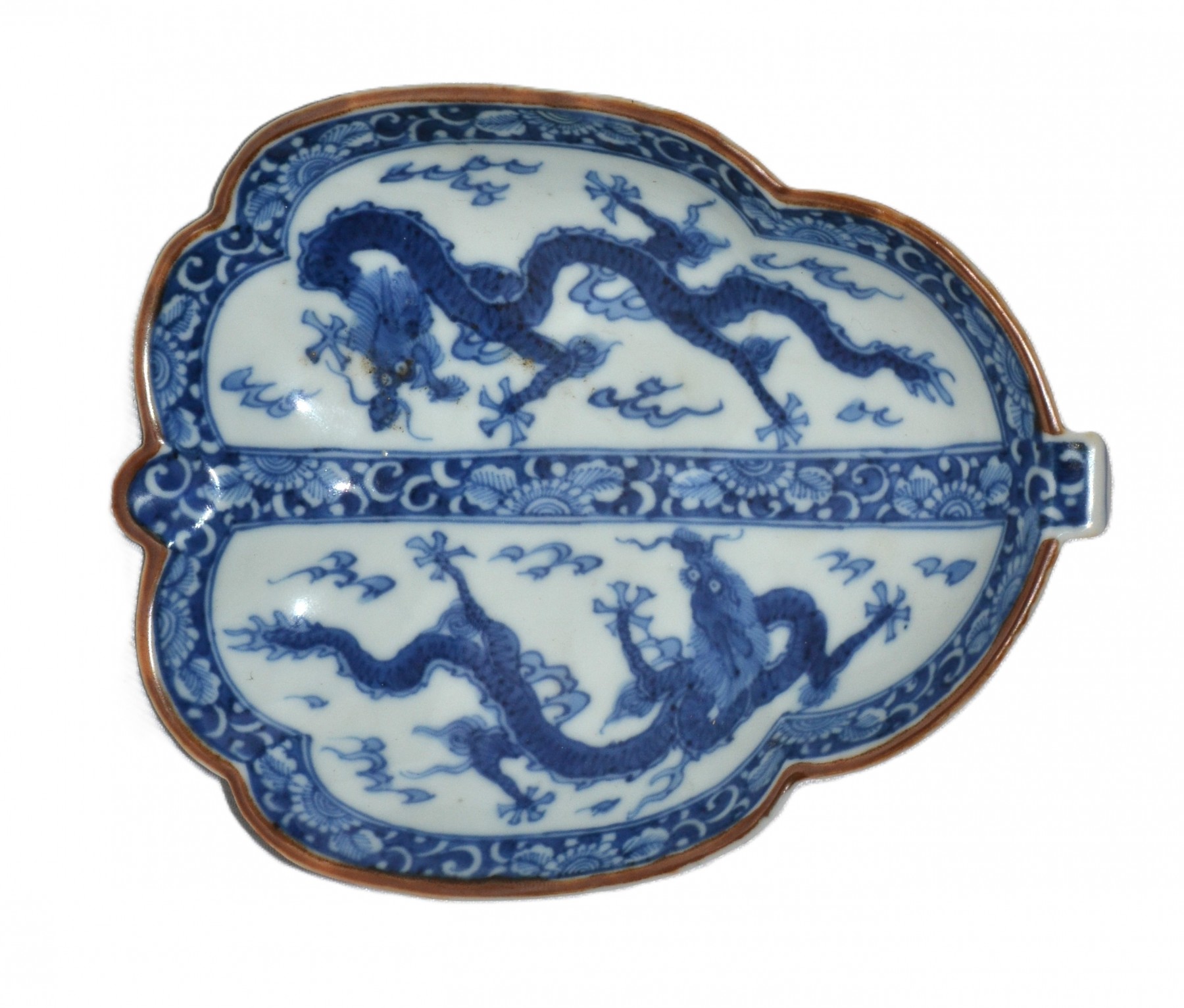
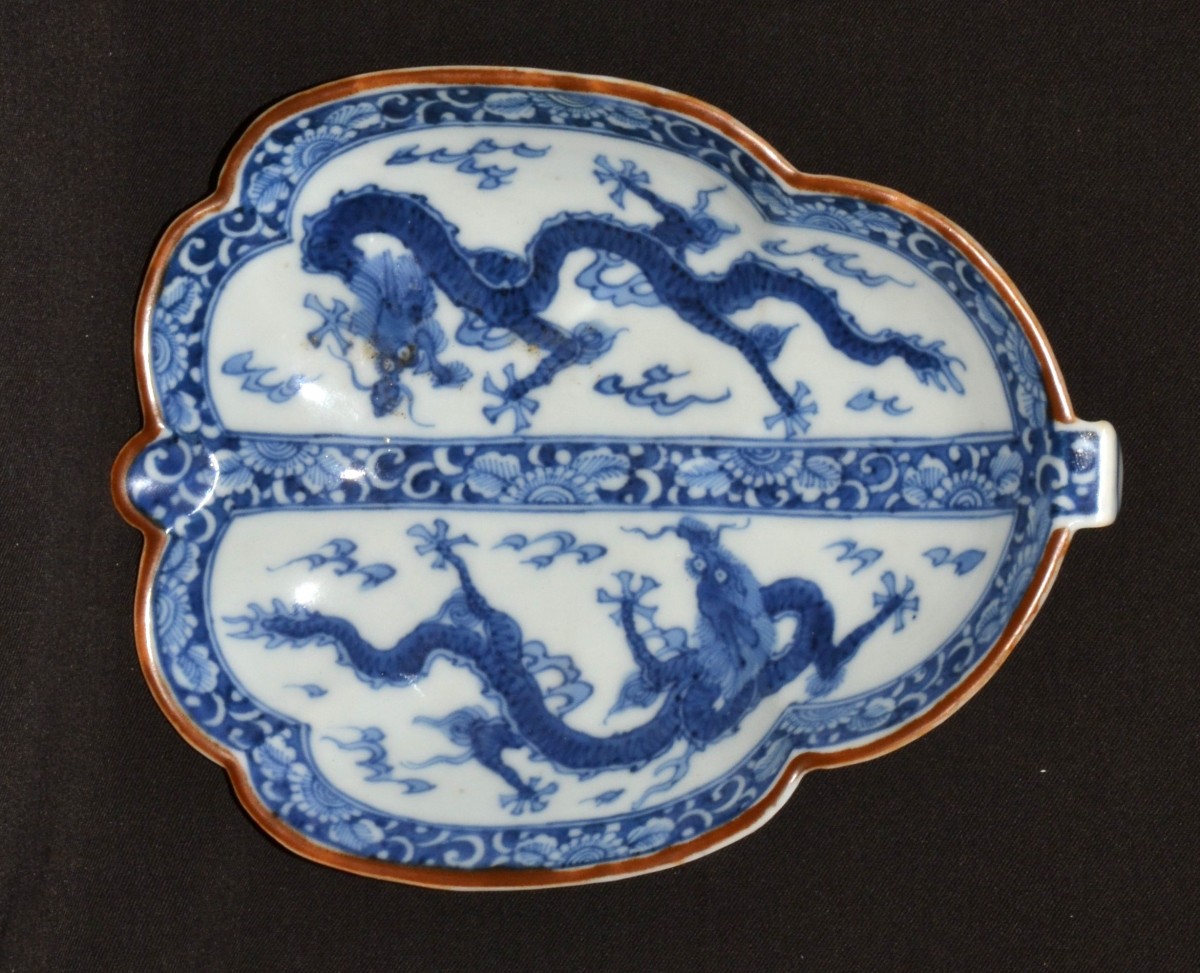
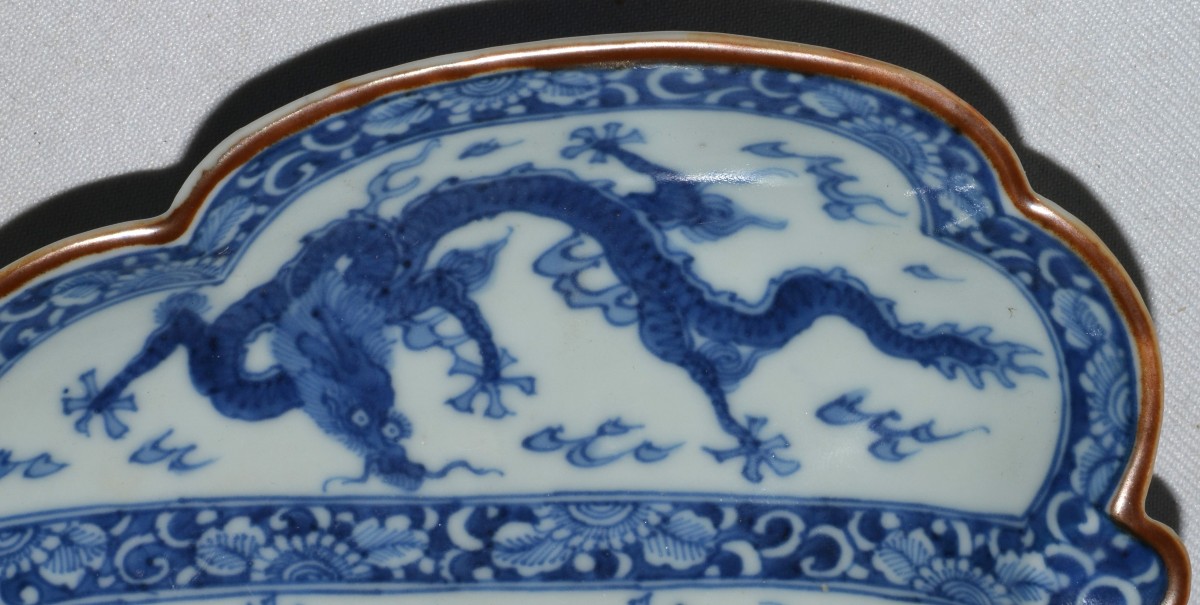
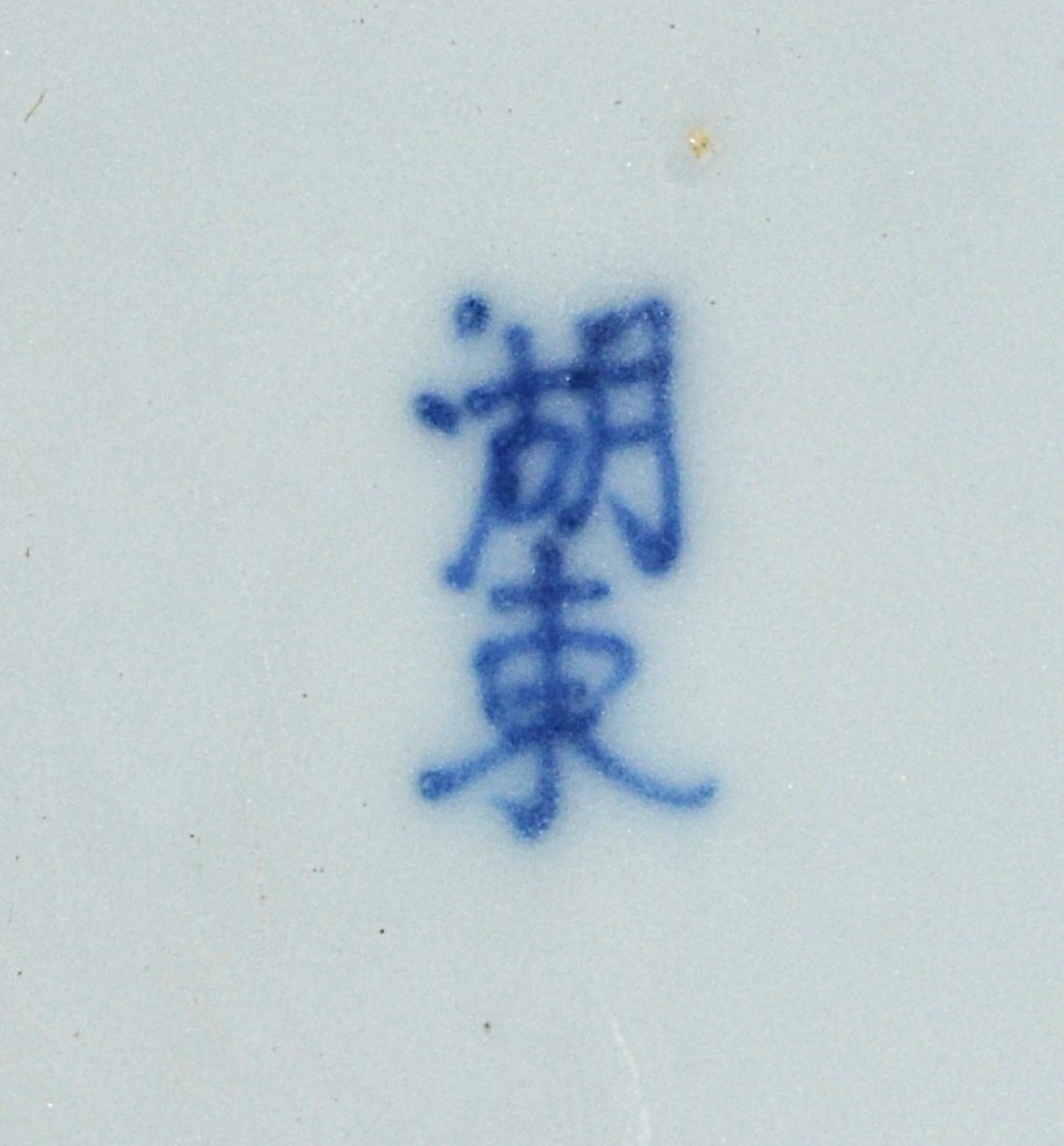
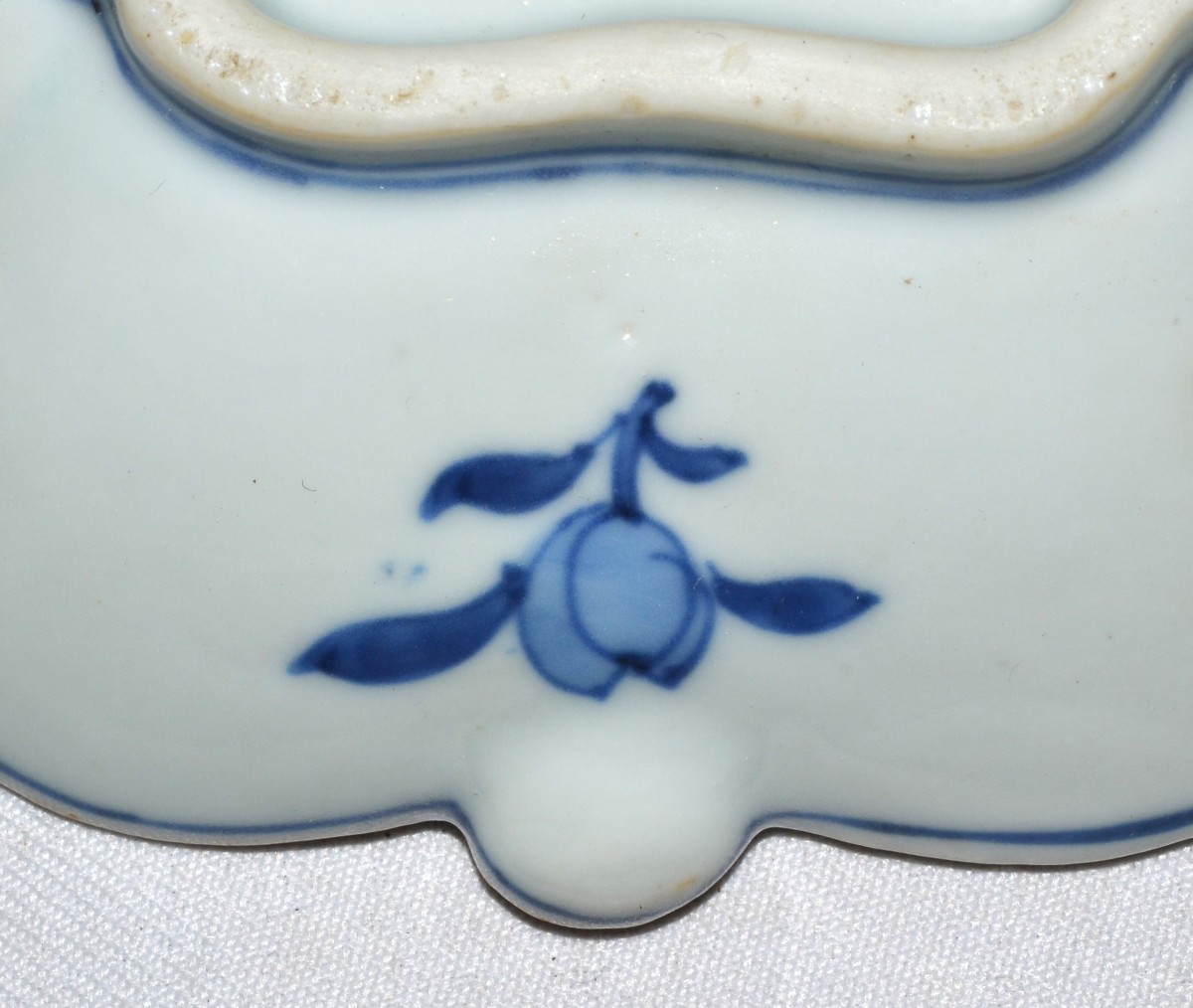

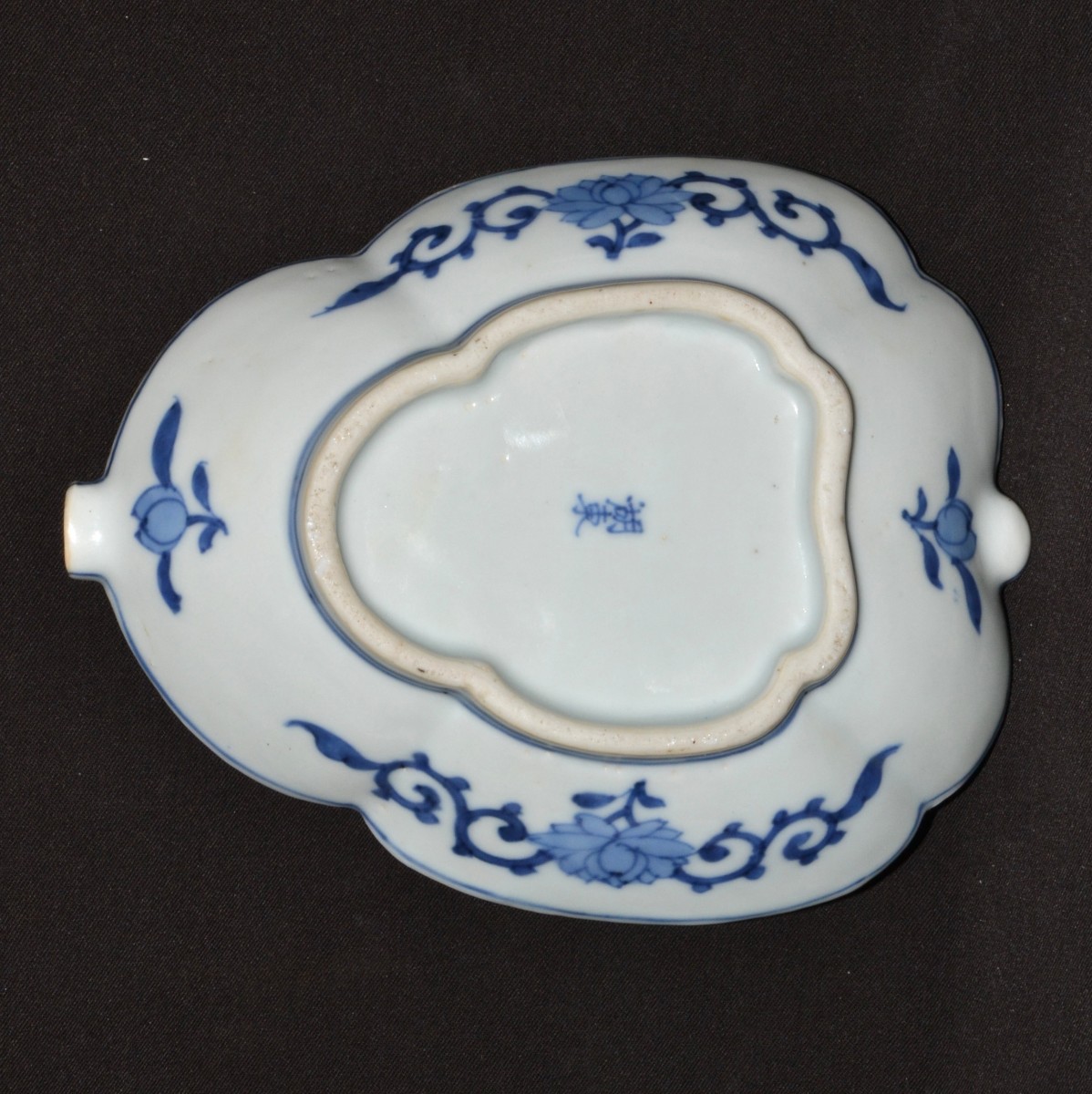
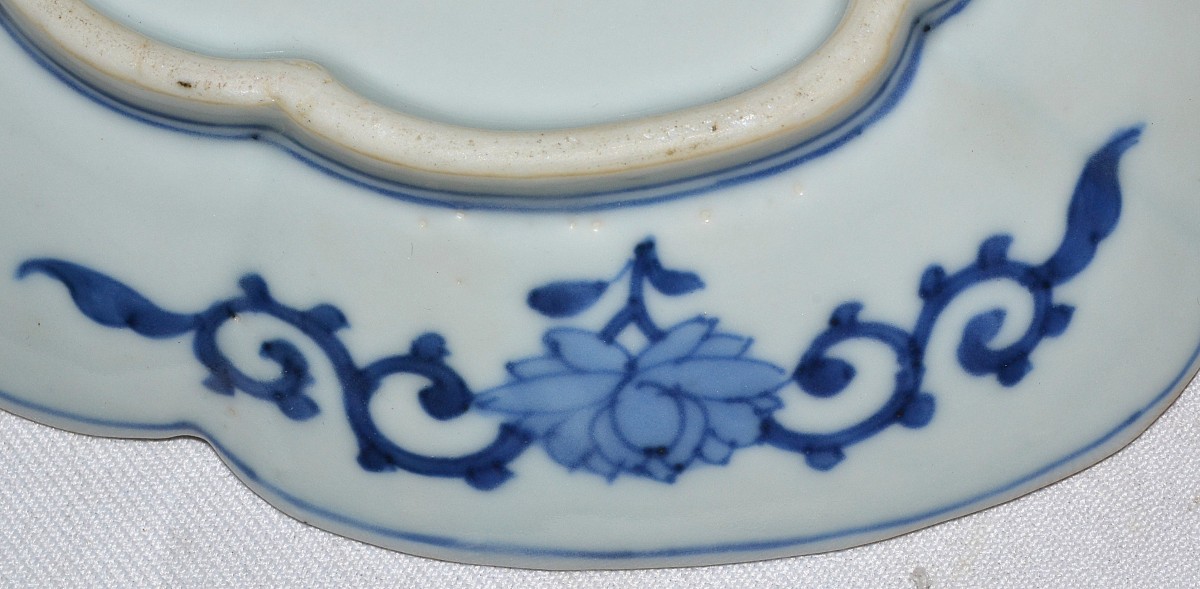
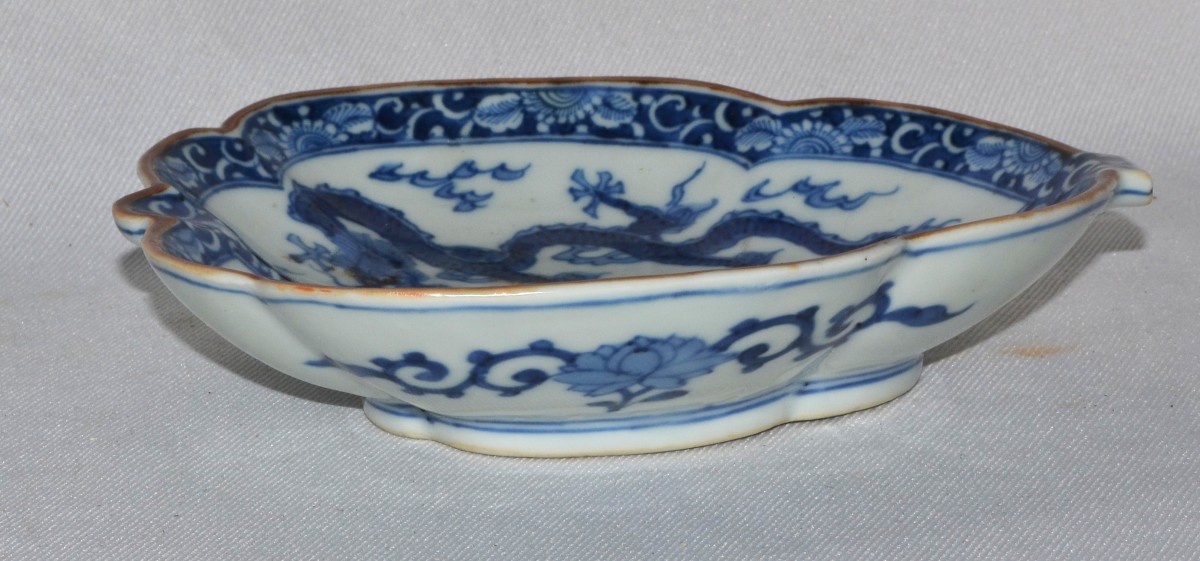
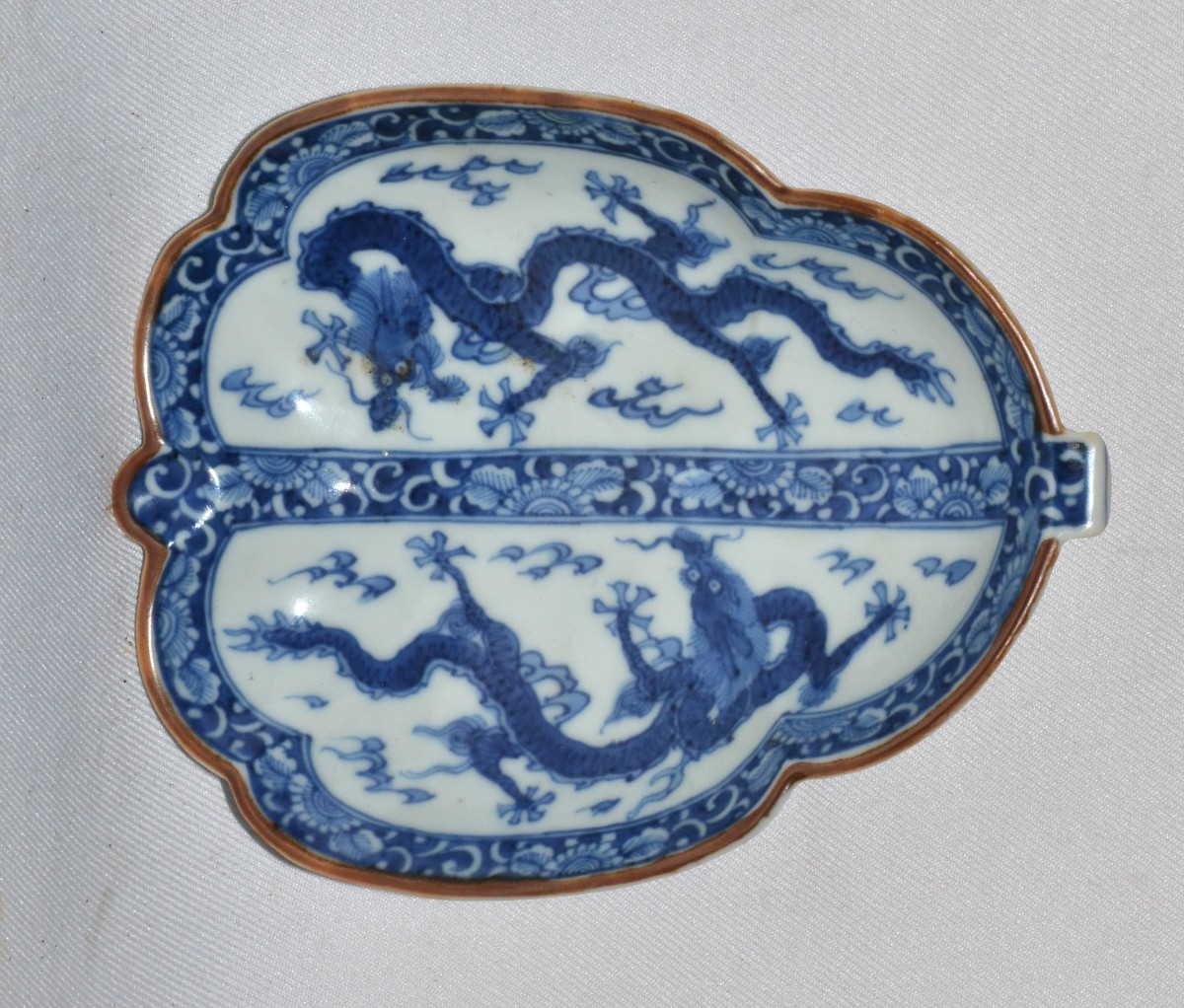
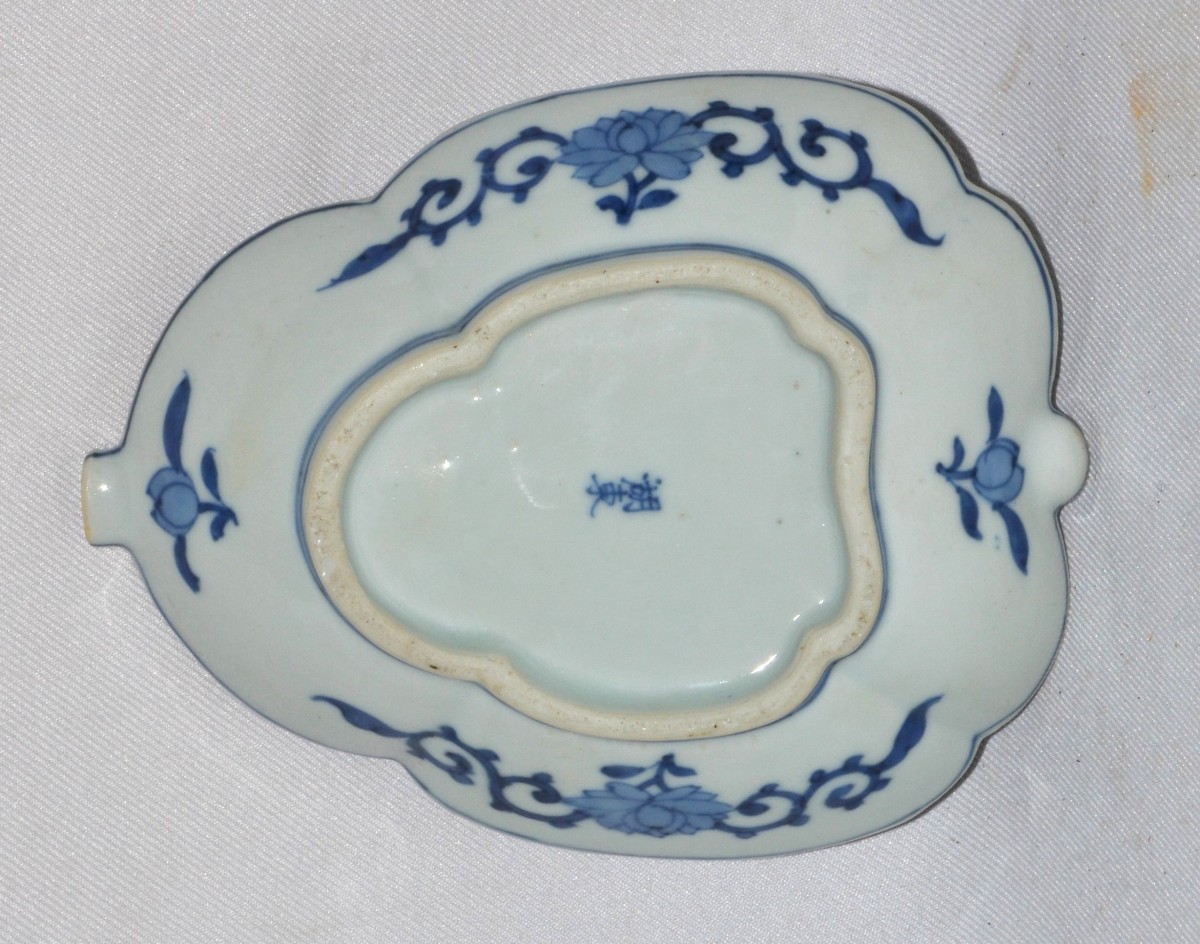
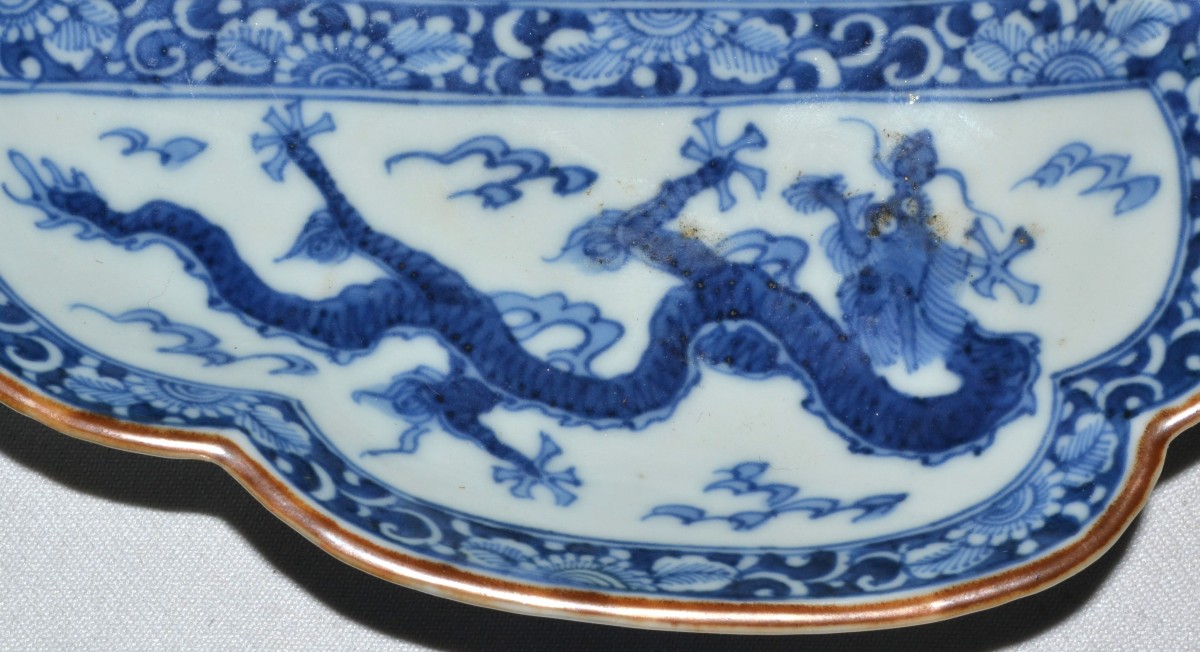
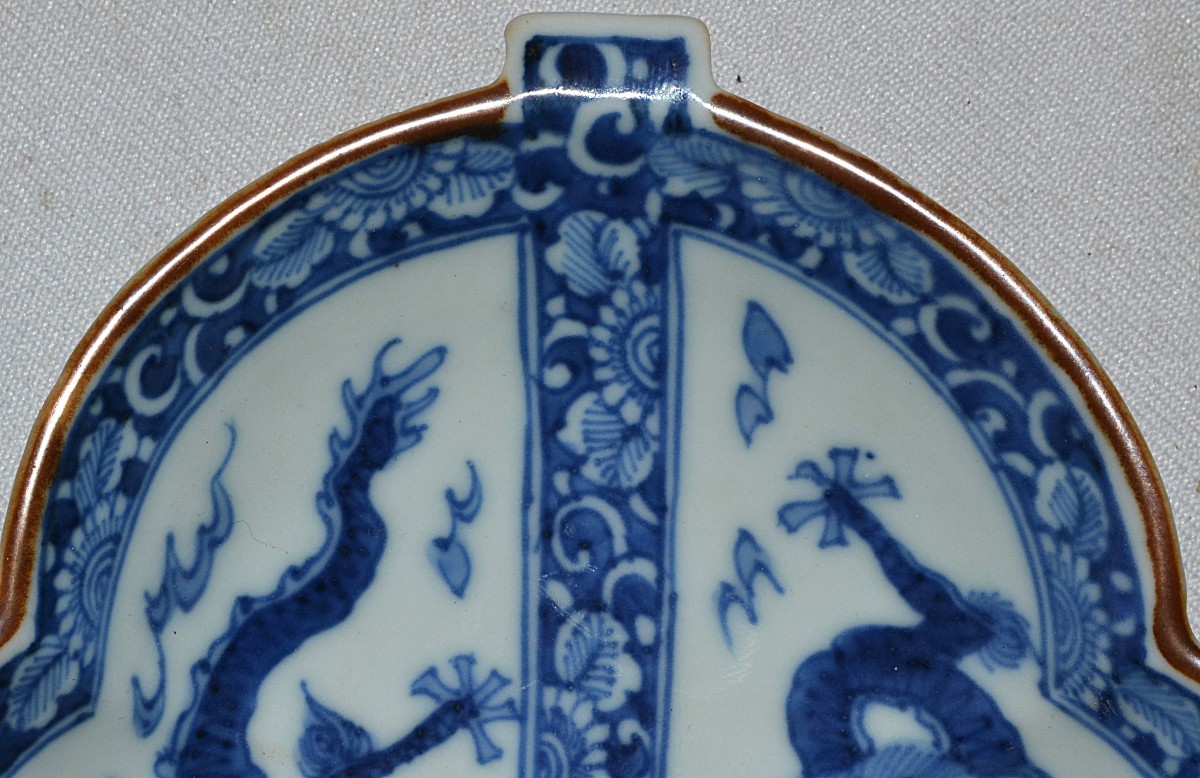
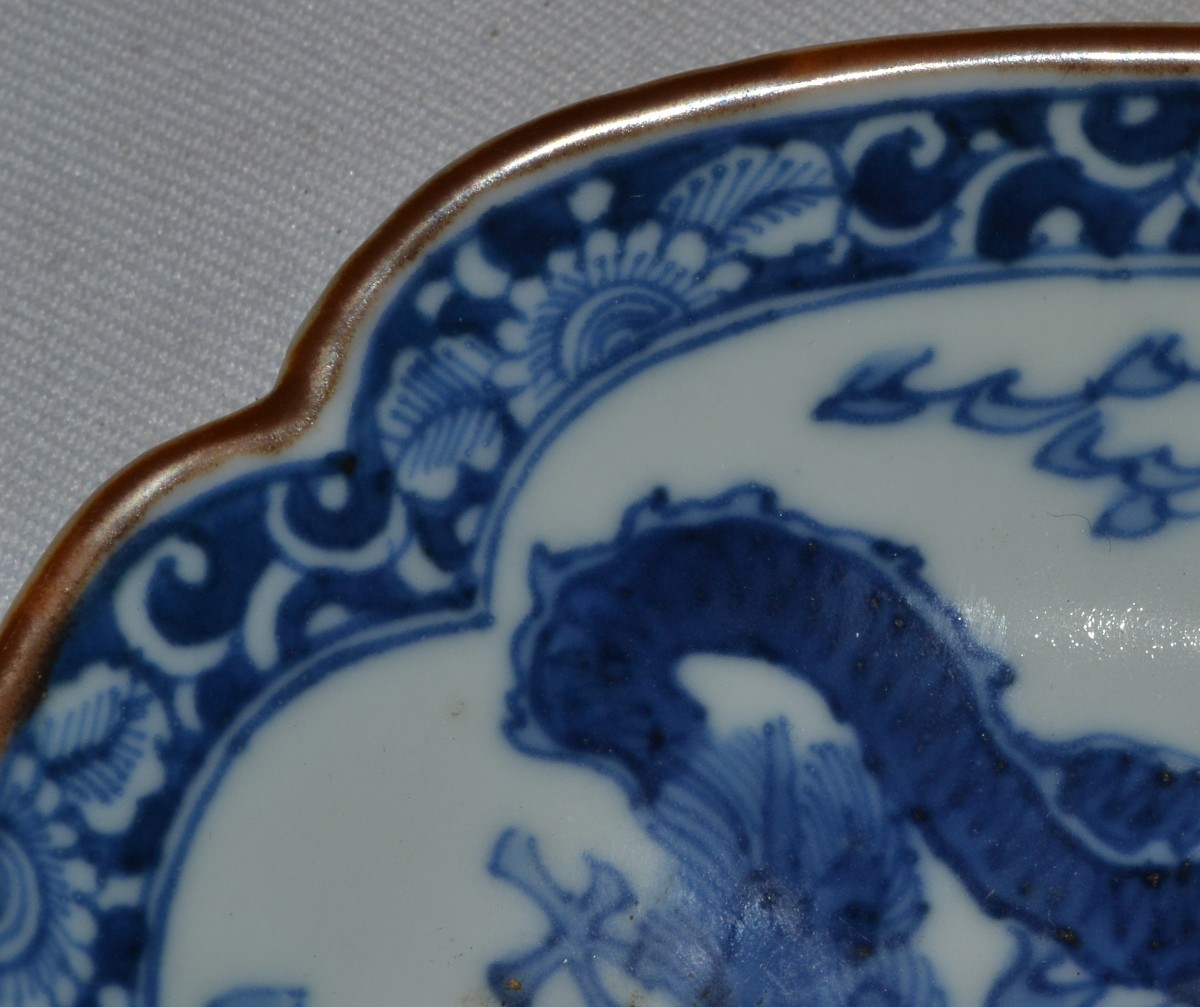
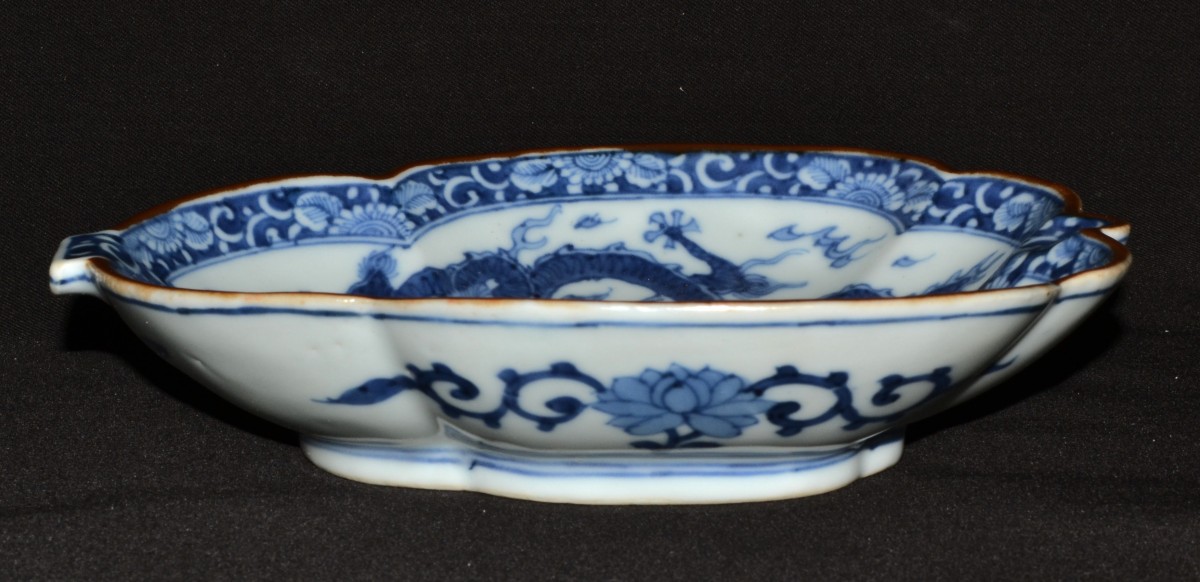
Hard-paste porcelain dish moulded in the shape of a Chinese fan. It is decorated with two dragons moving among flames, painted in underglaze cobalt blue. On the reverse are two Chinese characters pronounced “Koto” in Japanese.
This dish is a very rare example of Koto-yaki produced at the kiln of Hikone Castle, in Shiga Province, from the early 19th century under the patronage of Lord Ii Naoaki. Upon his death in 1850, his son Ii Naosuke, a great aesthete and devotee of the tea ceremony, further refined the production by inviting artists to the castle. Naosuke was assassinated in 1860. It was during these ten years of his rule that the finest Koto wares were created. After 1860, the kiln declined until its closure in 1895.
Many decorative styles were employed, including red and gold, celadon, monochrome, Kutani, Oribe and Ninsei styles. However, according to the shards uncovered by archaeologists, the sometsuke wares (underglaze cobalt blue), painted in the Chinese style, were the most finely executed and have always been the most highly prized.
The rarity of Koto-yaki has earned these wares the Japanese designation “maboroshi no yakimono”, or “phantom ceramics.”
Our dish, dating from this golden age of Koto production, combines all the hallmarks of excellence: an elegant and rare fan shape, Chinese-style decoration of dragons in cobalt blue, precise draughtsmanship, perfect firing producing a luminous blue, and the Koto mark (“east of the lake”).
This is a porcelain of exceptional quality and absolute rarity.
Japan. Koto-Yaki 1850-60.
Excellent condition. Length: 17 cm.
Delevery information :
International deliveries in the best conditions. Careful packaging. I travel with important items as needed.