Offered by Conservatoire Sakura
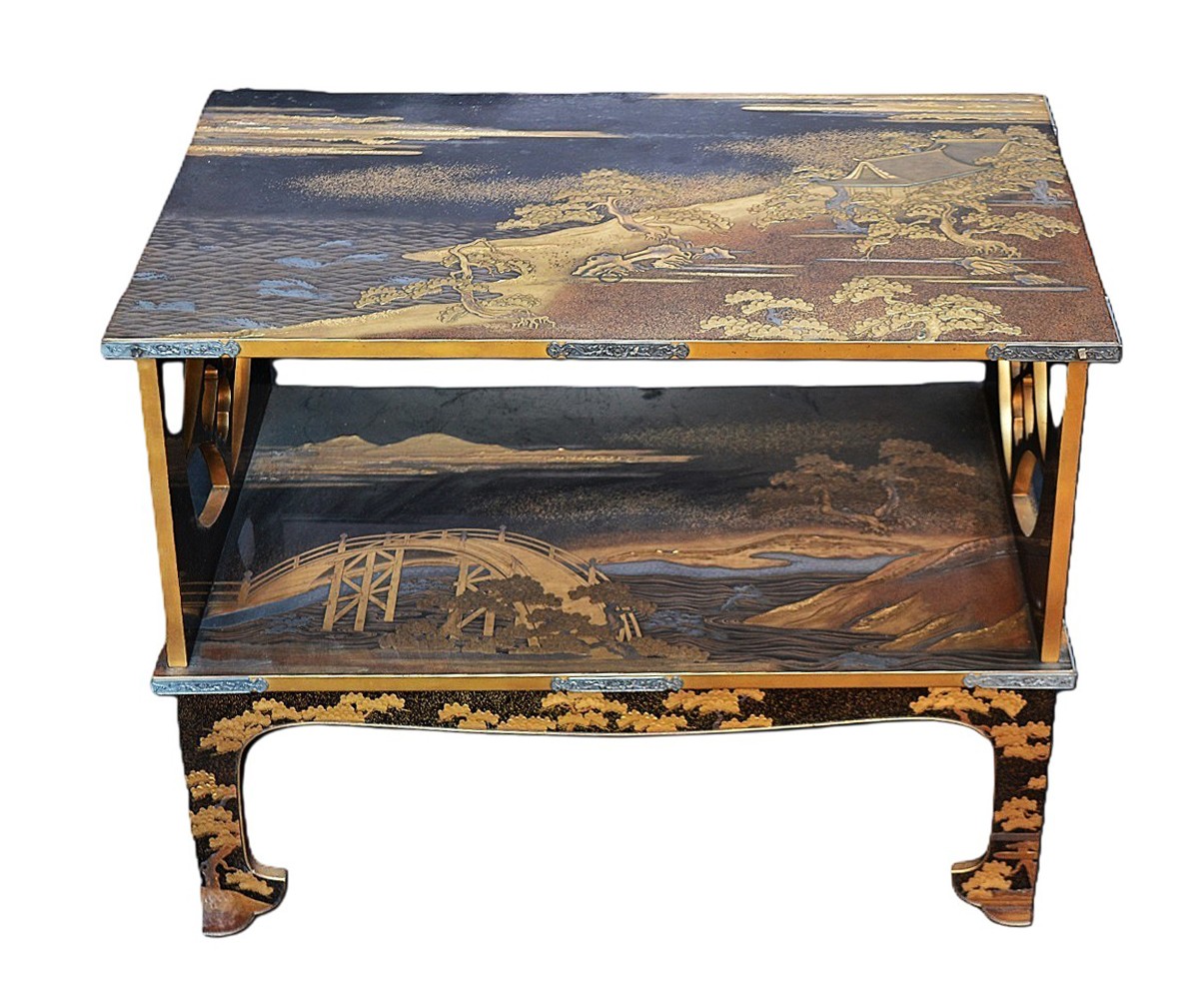
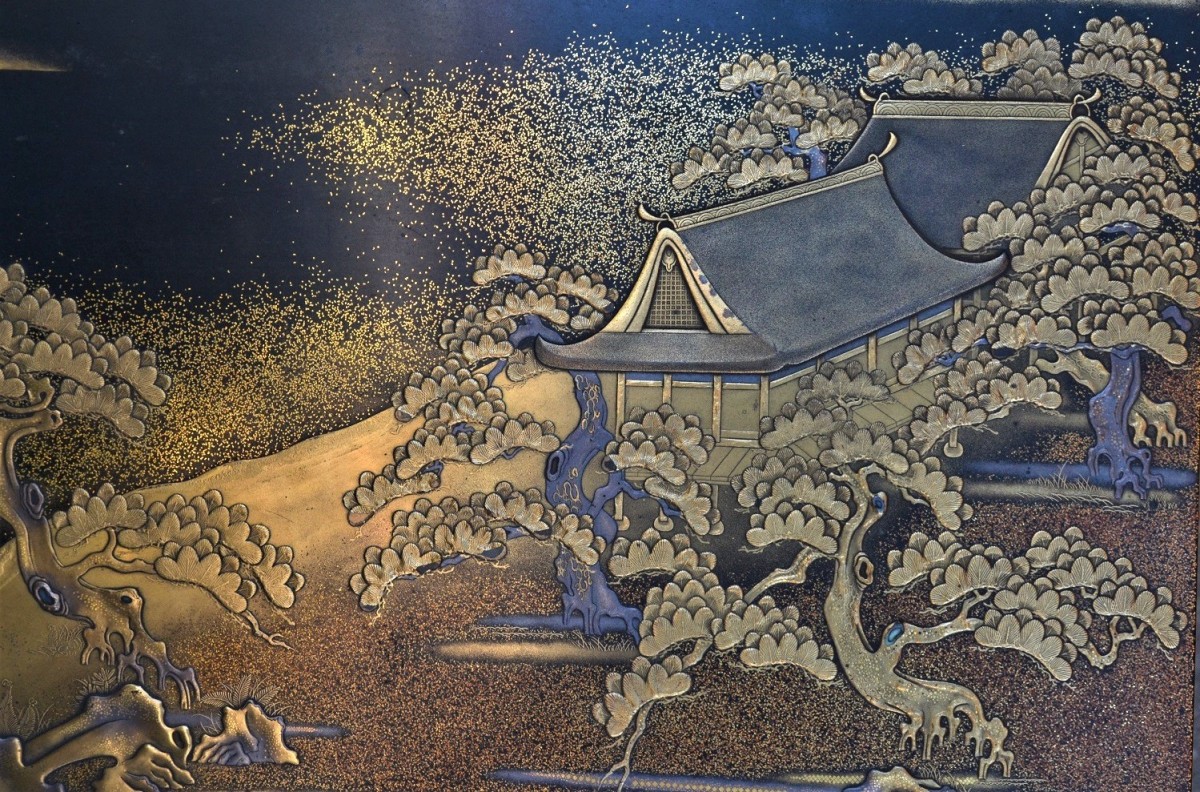
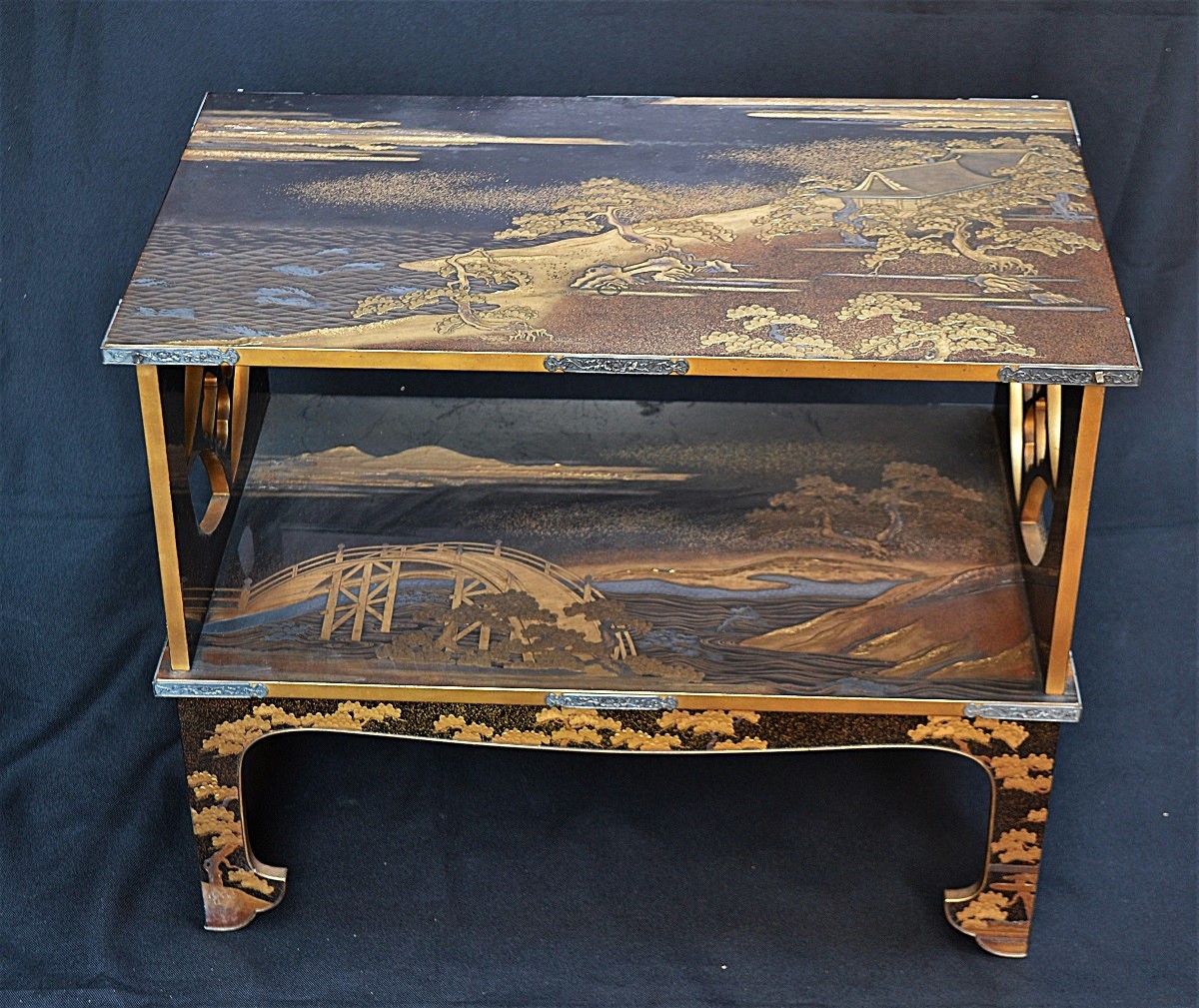
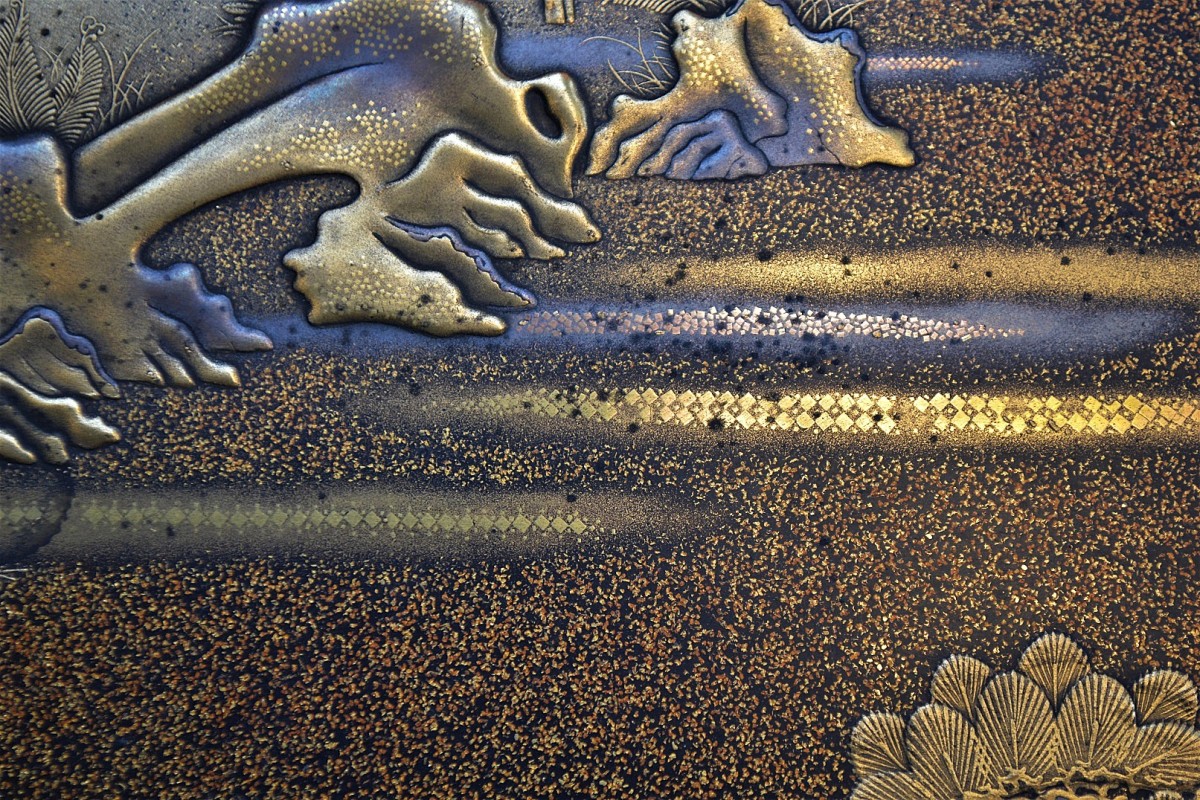

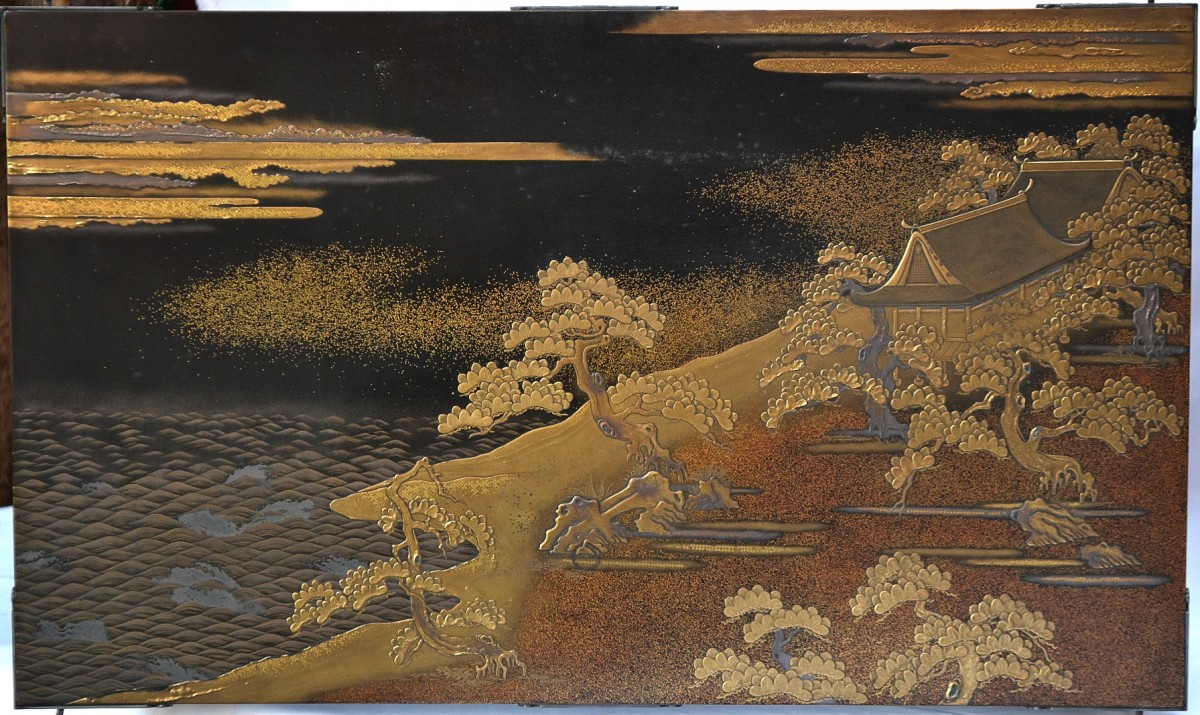
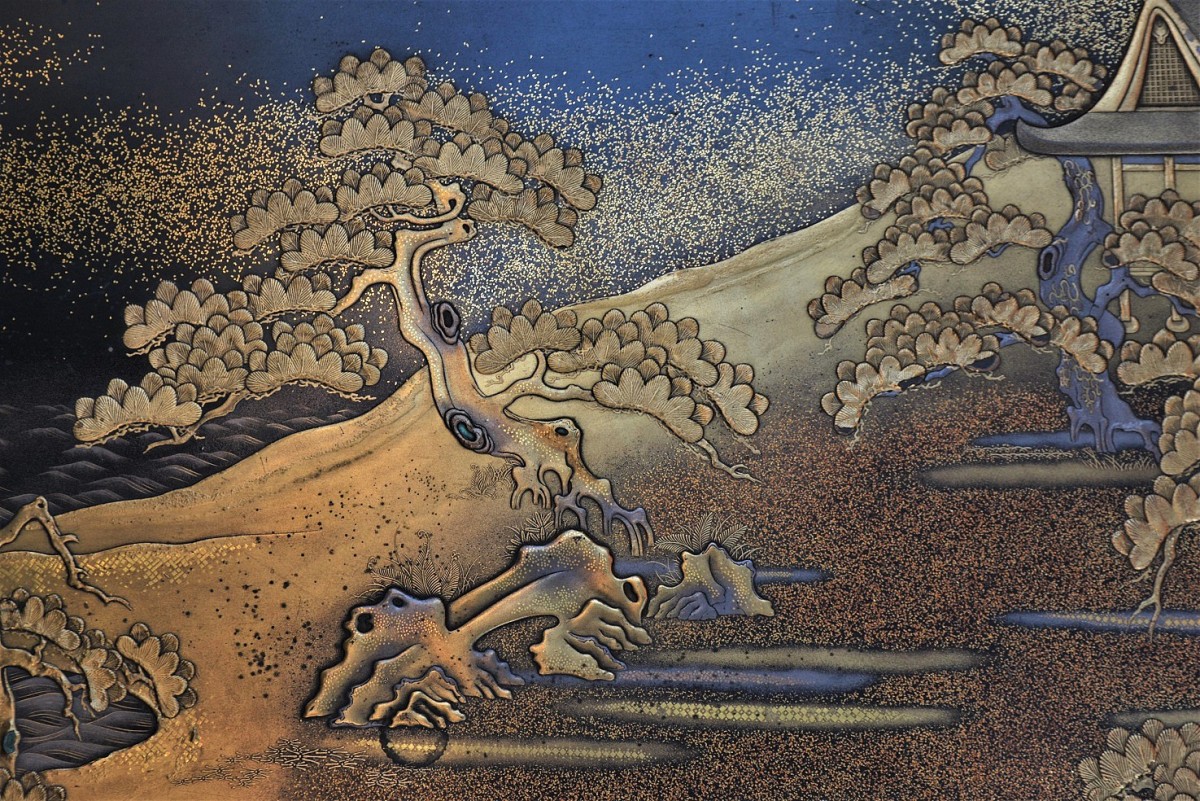
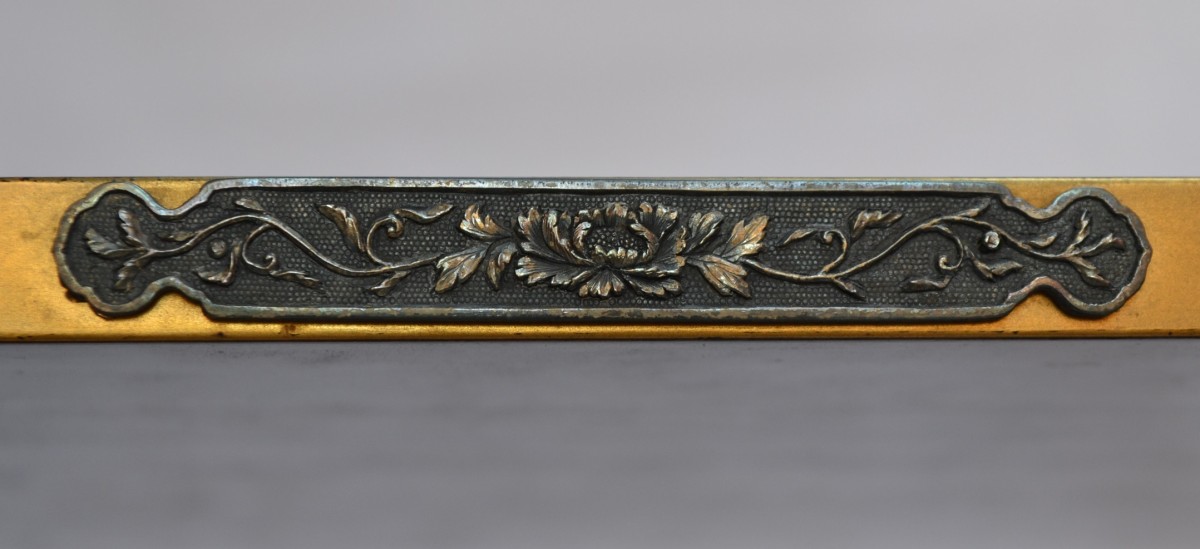
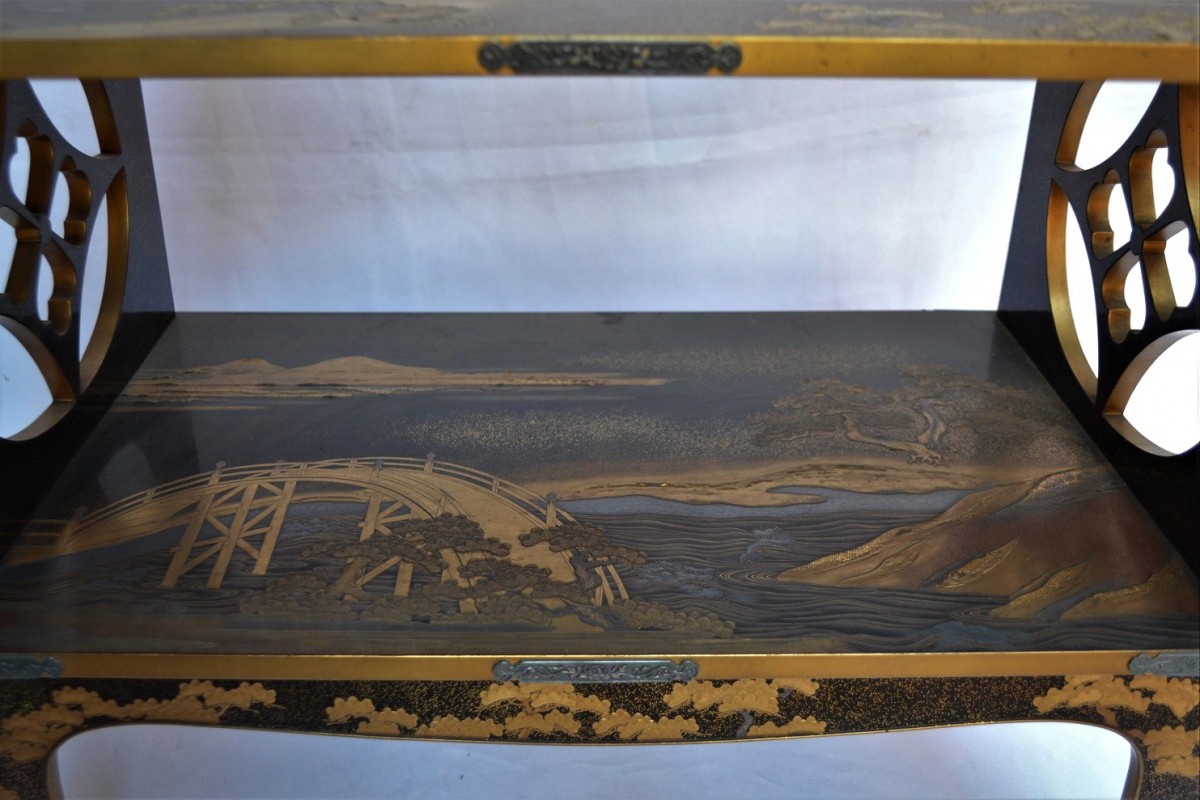
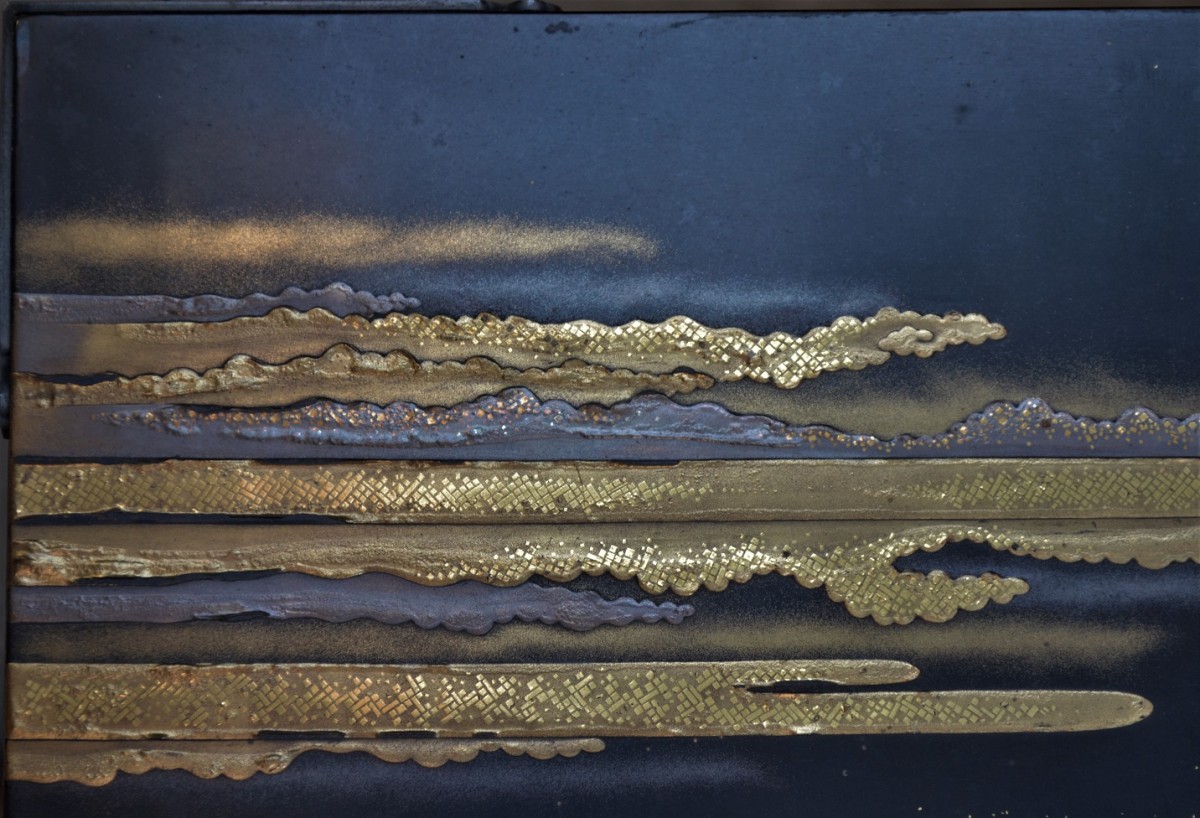
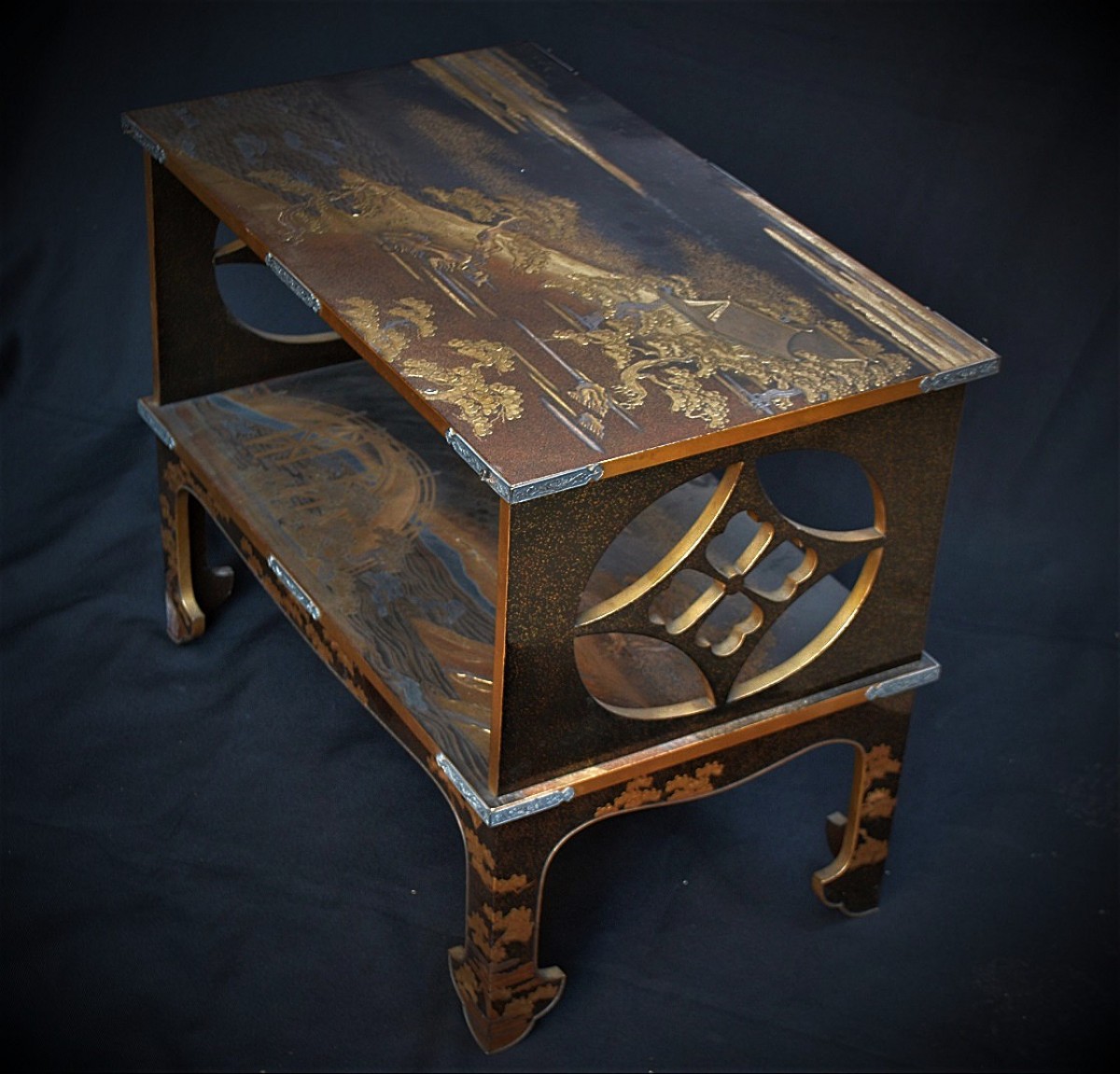
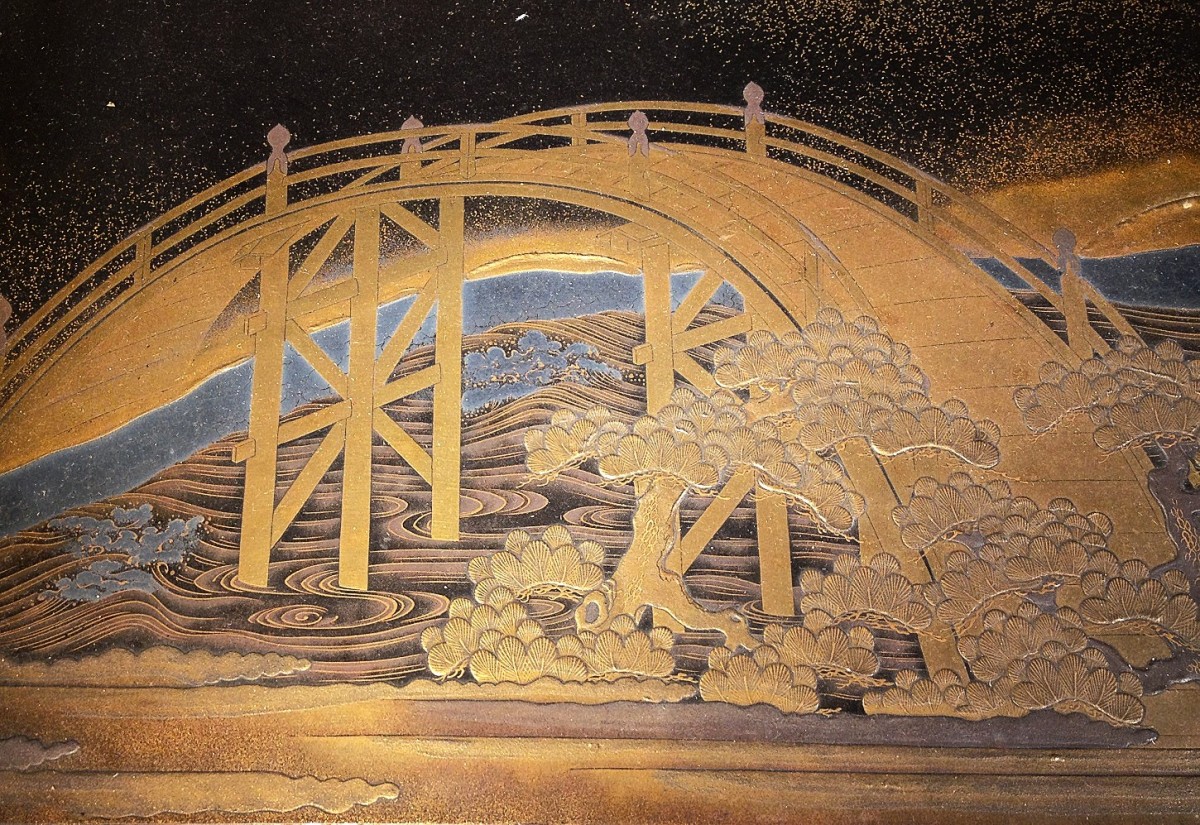
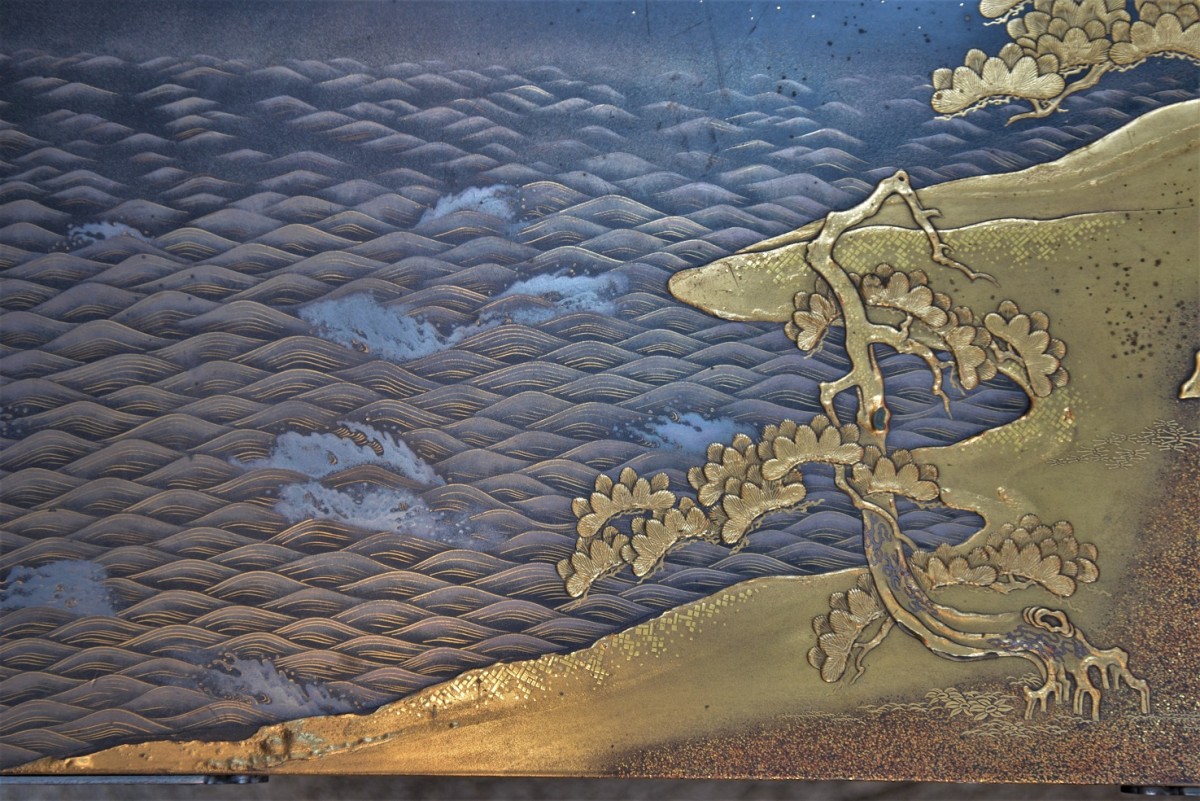
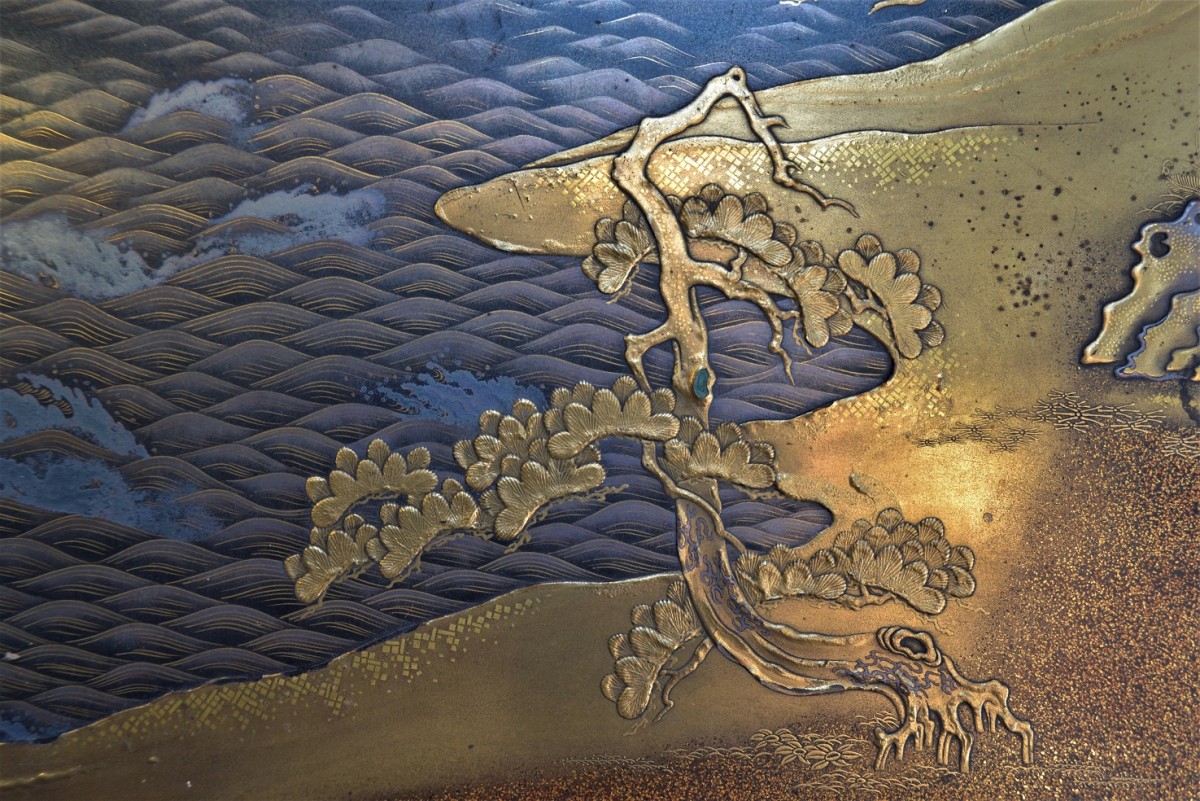
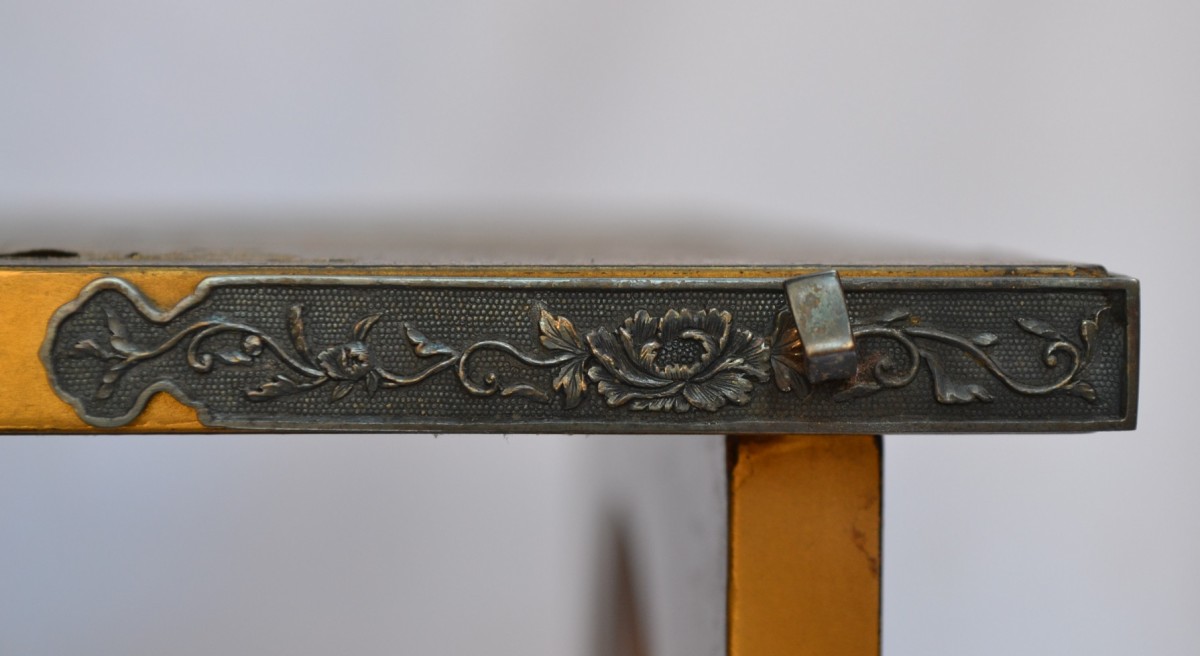
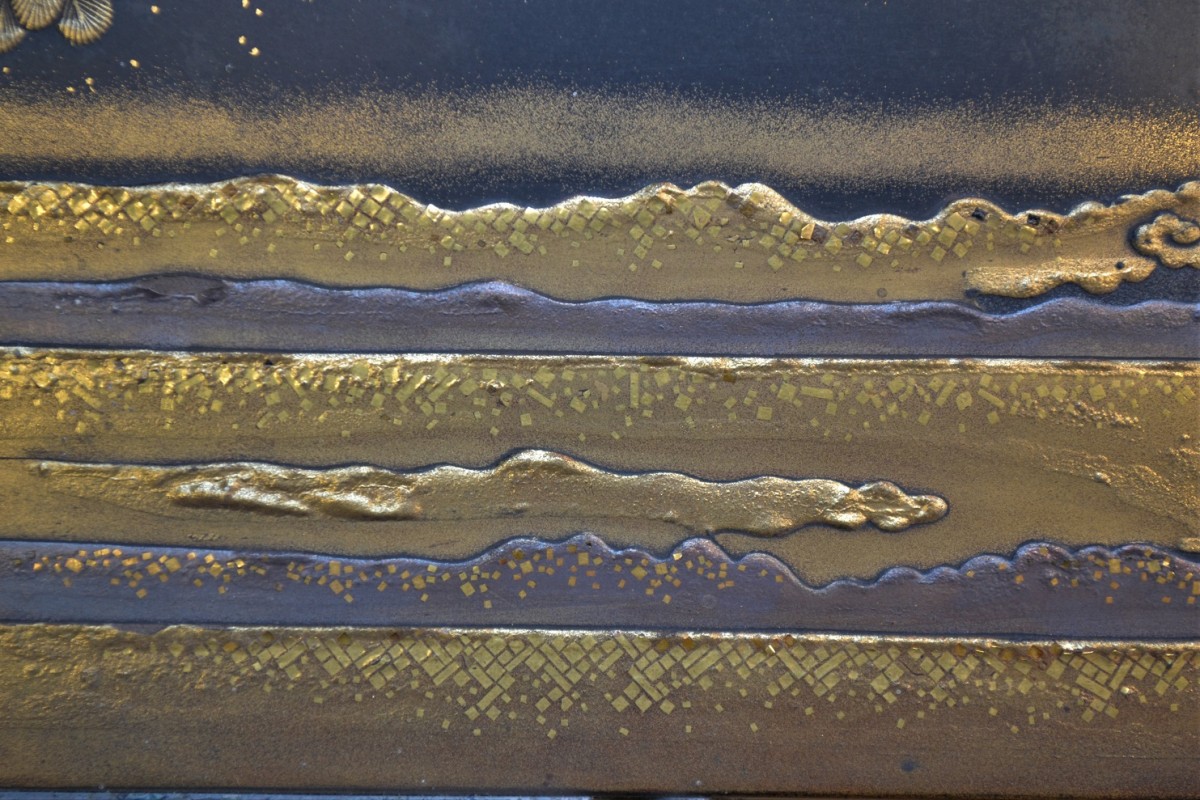
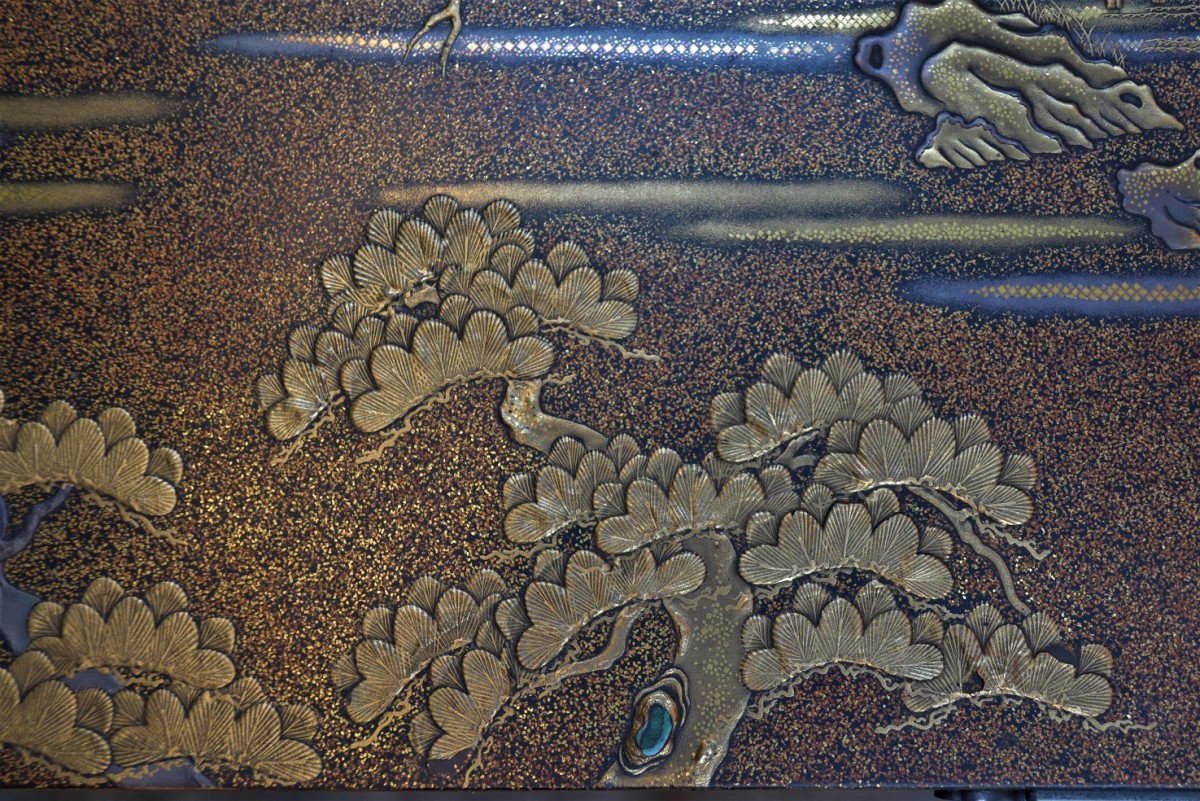
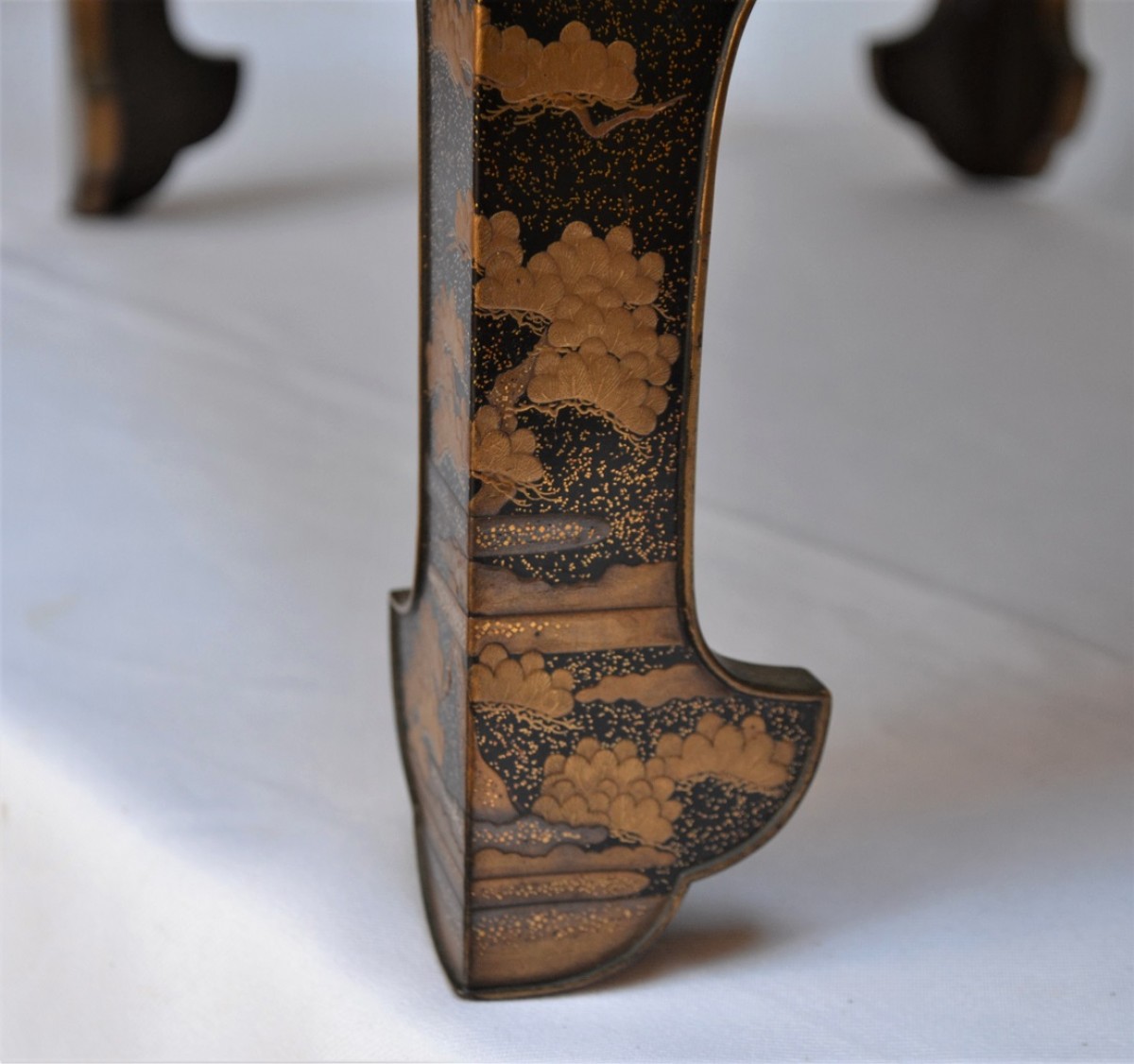
Two-tier wooden table covered with lacquer (urushi) and decorated with gold and silver powders. Against a background of black lacquer (roiro), the upper panel depicts pavilions and ancient pine trees in slight relief (takamaki-e), while the lower panel depicts a bridge and further pine trees against a lakeside landscape. The rocks and clouds are scattered with gold and silver mosaics (kirikane); very rare inlays of bluish mother-of-pearl (aogai) gleam discreetly, while an island can be seen in the distance. The sides are pierced with a motif that may be a mon (a feudal heraldic crest). The table is fitted with cast silver reinforcements, chiselled in high relief with peonies.
This is a work of the highest quality, executed during the golden age of Japanese lacquer in the second half of the 17th century. The decoration is not merely ornamental; it conceals a story. The bridge, although in the background, is essential, as are the profusion of pine trees, the presence of the buildings and Awaji Island in the distance. To an educated Japanese person of the 17th century, it would have been obvious that this was the venerable Sumiyoshi Taisha near Osaka, one of the most famous Shinto shrines in Japan, which was built at the beginning of the 17th century, around 1600, at the initiative of Yododono, Hideyoshi's widow, in order to secure divine protection for their son Hideyori. In vain, for Hideyori was defeated and died, while his seven-year-old son was executed a few years later on the orders of Ieyasu, who thus became the undisputed temporal ruler of Japan. Crossing the bridge allows one to purify oneself before entering the shrine; this bridge is a representation of the celestial Shinto “rainbow”, a bridge linking heaven and earth. Its strongly arched form caused it to be called the “drum bridge” (taikobashi), because, together with its reflection in the water, it forms a circle.
This specific type of two-tier table (Kanmuri-dana) was a piece of furniture used for imperial ceremonial purposes. The ritual court headdress, the kanmuri, was placed on the upper tier, while the lower tier held the accessories: shaku (ceremonial tablet), hi?gi fan, folded papers and other items of dress accompanying the imperial costume (sokutai). The piece was thus used during ceremonial dressing and undressing. Such events were very rare: solemn audiences with the Emperor, major court festivals and rituals, certain Shinto ceremonies in which the Emperor participated, and the coming-of-age ceremony of a boy of the nobility.
These tables are very rare and sacred; some are regarded in Japan as Important Cultural Properties. They should not be confused with nikaidana, which also have two tiers but are longer and less precious, as they did not receive the sacred headdress.
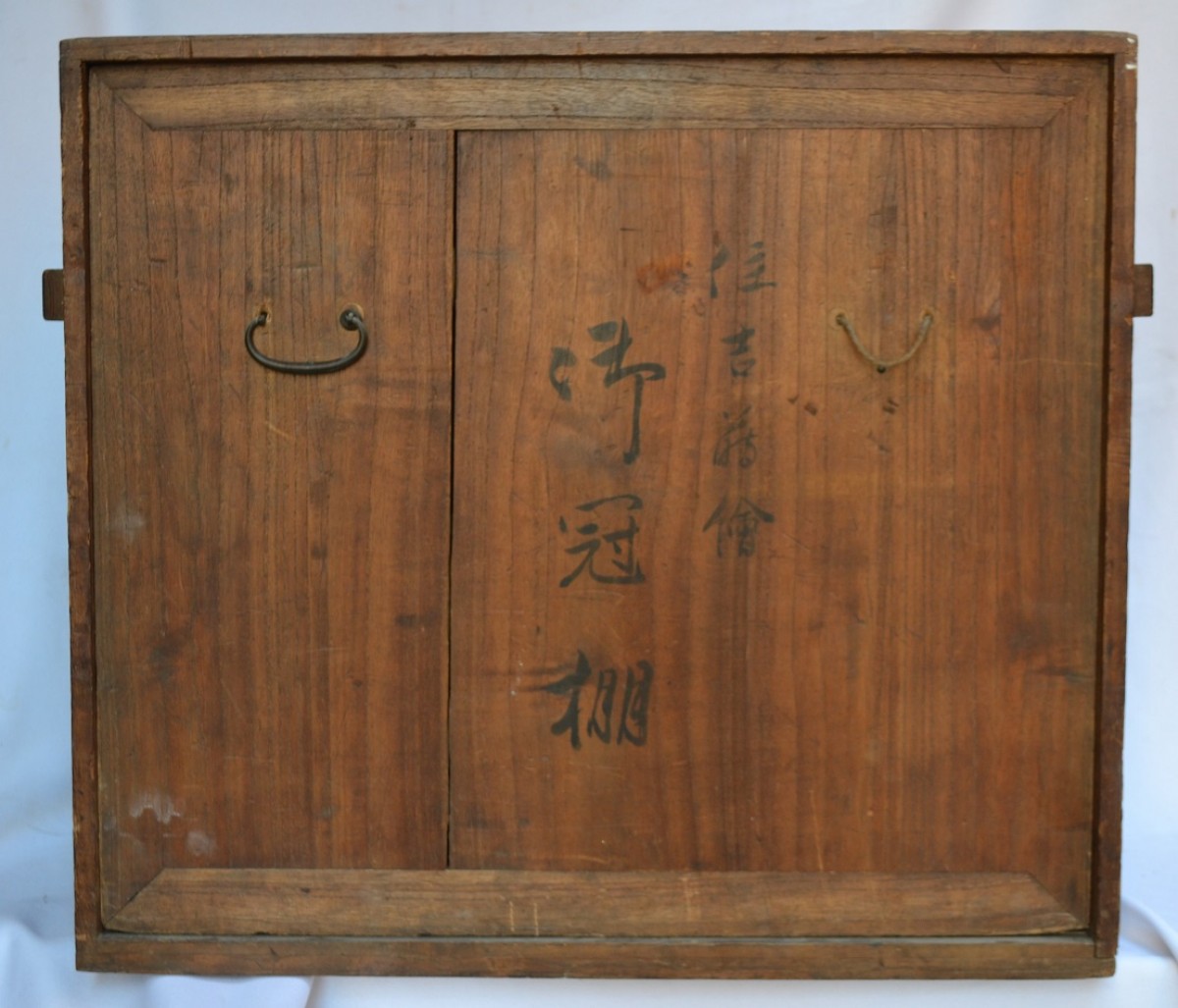
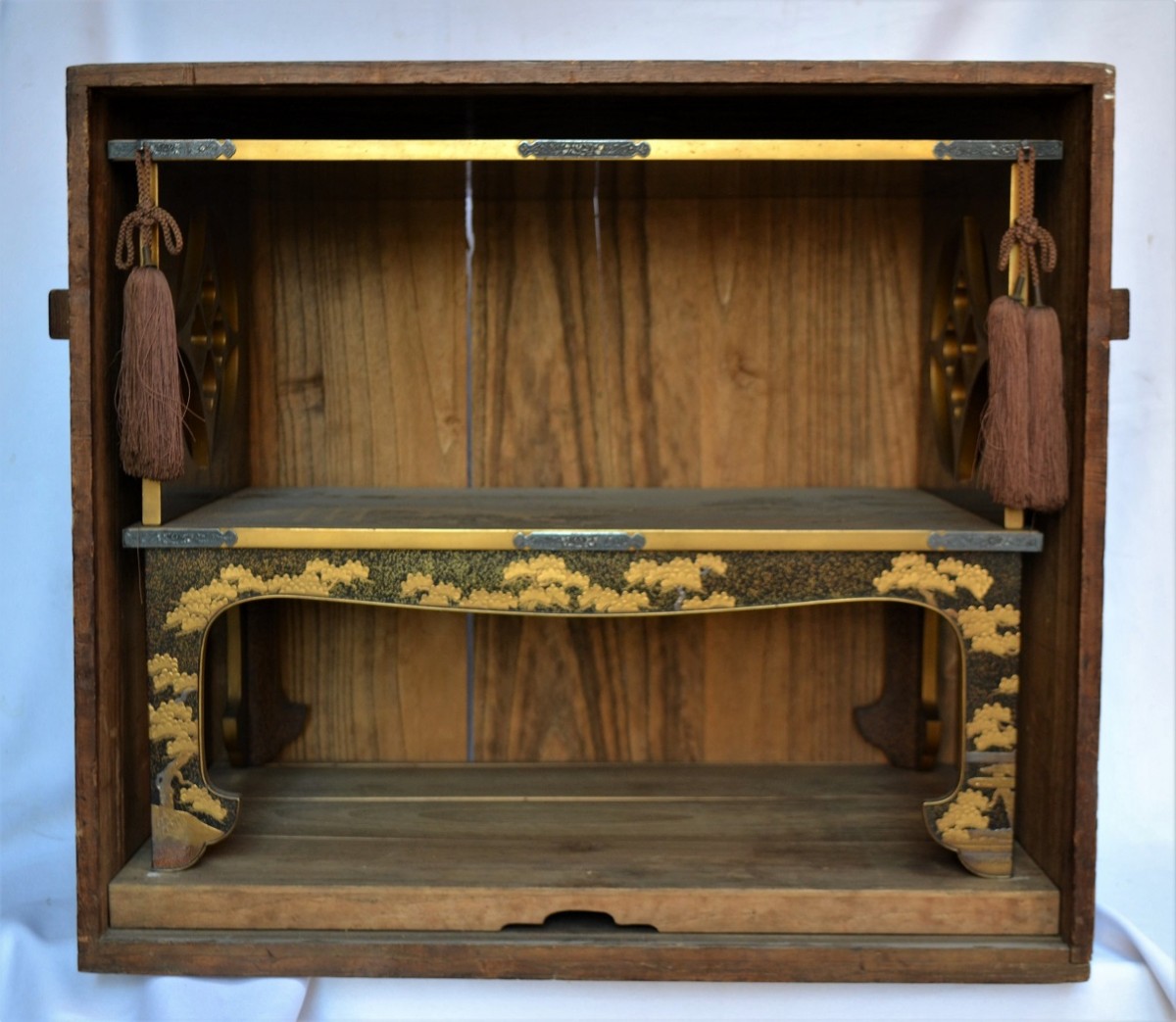
The state of preservation of this table is remarkable, as its use was very limited and it was protected in a case probably made at the end of the 19th century for its “journey” to Europe. Characters painted in ink on the case specify: “Table for the precious headdress” and “Lacquer image of Sumiyoshi Temple”.
We know of no other two-tier table from this period. The Victoria & Albert Museum possesses a scholar's table of equal quality and from the same period, but it is a single-tier table. Likewise, the Tokyo National Museum possesses another, also a scholar's table and also single-tiered, which is designated an “Important Cultural Property”. Two other two-tier tables, but of later date, are held in the Imperial Collections of His Majesty the Mikado. Other Japanese museums (Suntory, Fuji Art and Fumon-in) house three more, but these too are later, dating from the 18th–19th centuries. These five other tables bear purely decorative designs, without the symbolism and excellence of the 17th century.
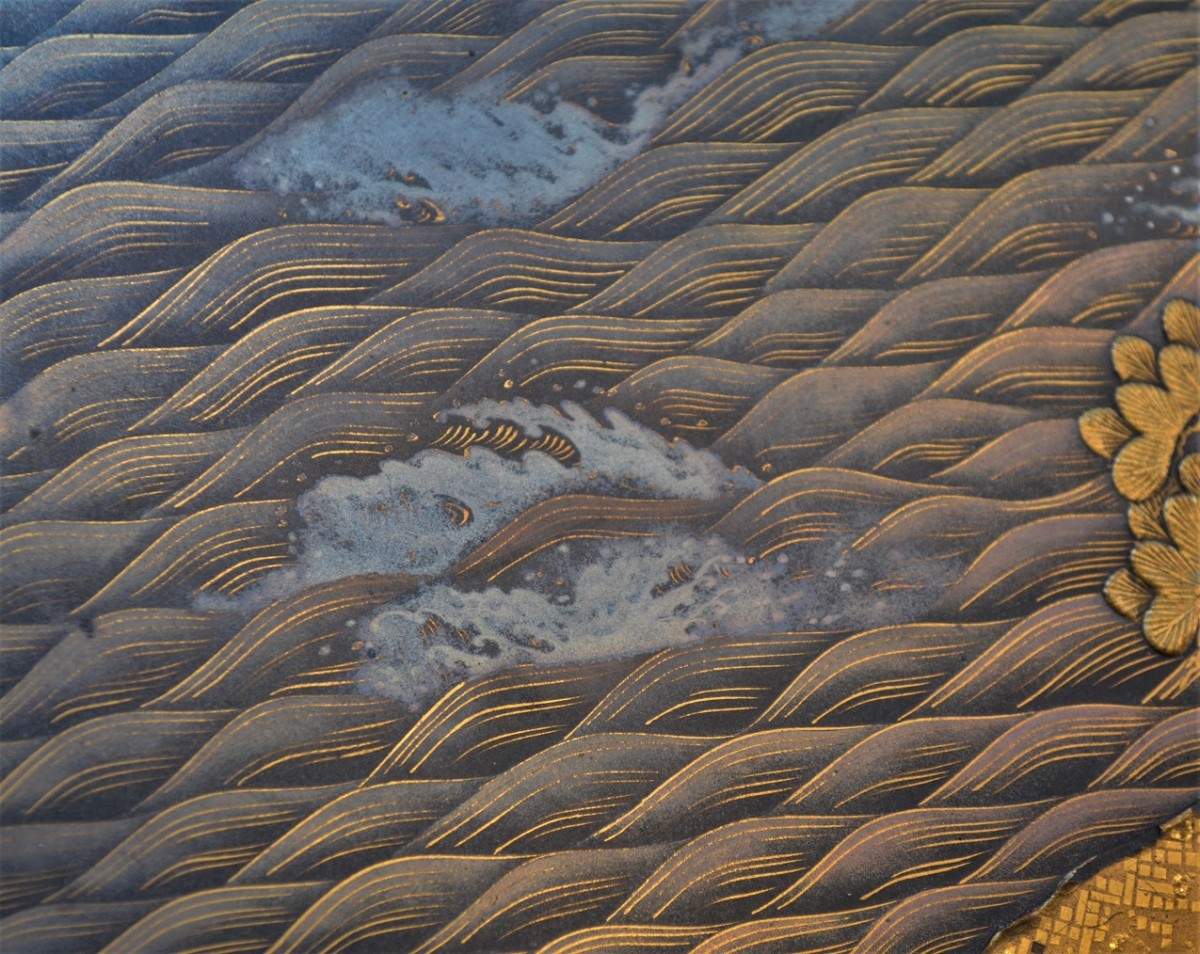
Excellent condition. In a few isolated areas along the edges of the waves, the urushi is blistering and flaking, as can be seen in some of the macro photographs. No restoration. Its four tassels, which are very old and fragile, are still suspended from it.
Dimensions approximately: 60 × 40 × 45 cm.
This is not merely an object, but an exceptional work of art.
The Kyoto National Museum preserves a 15th-century inkstone case entitled Inkstone Case with Poetic Scene of Sumiyoshi. Its decoration includes precisely the pine trees along the shore, a building, the Sumiyoshi Shrine and an arched bridge, with Awaji Island in the distance. The museum explains that this decoration constitutes an allusion to a poem and emphasizes that the use of poetry in the form of pictorial motifs was characteristic of medieval maki-e lacquerware
Delevery information :
International deliveries in the best conditions. Careful packaging. I travel with important items as needed.