Offered by Conservatoire Sakura
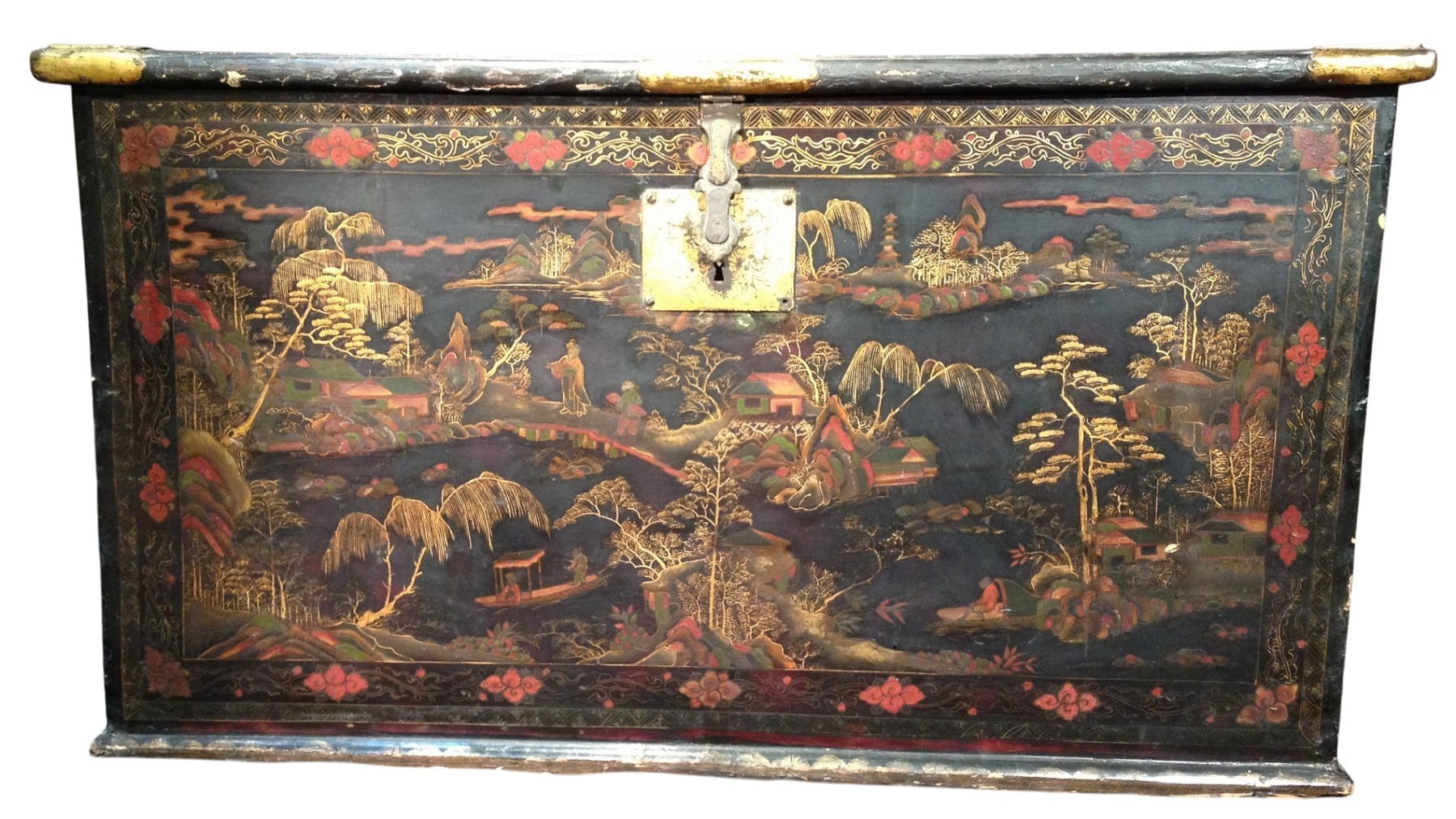
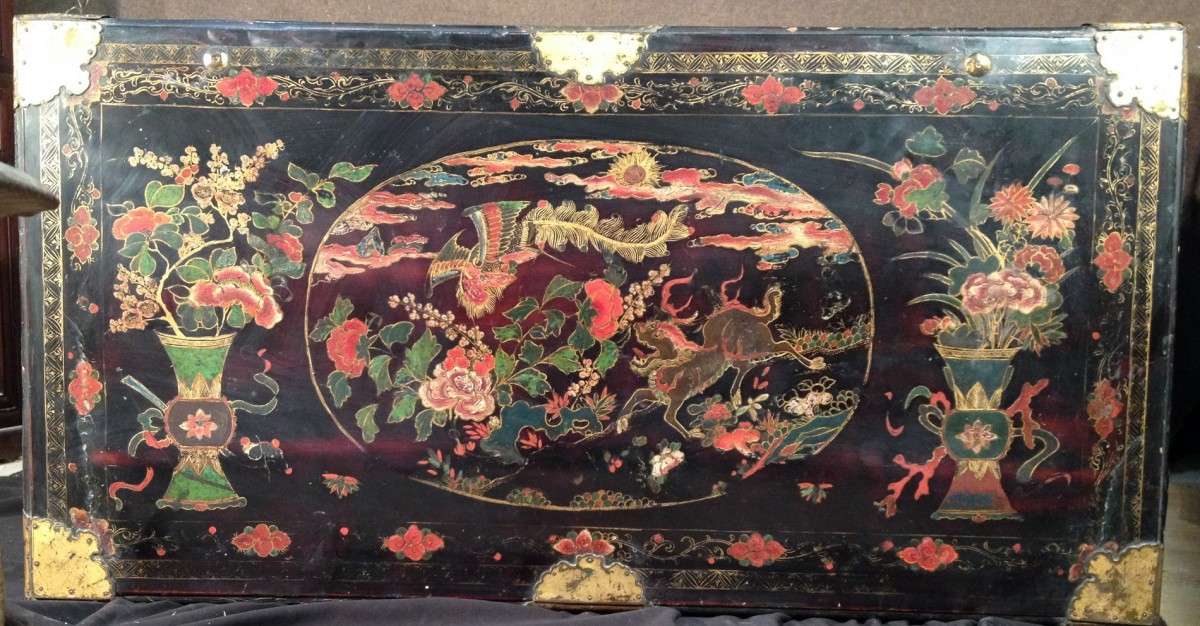
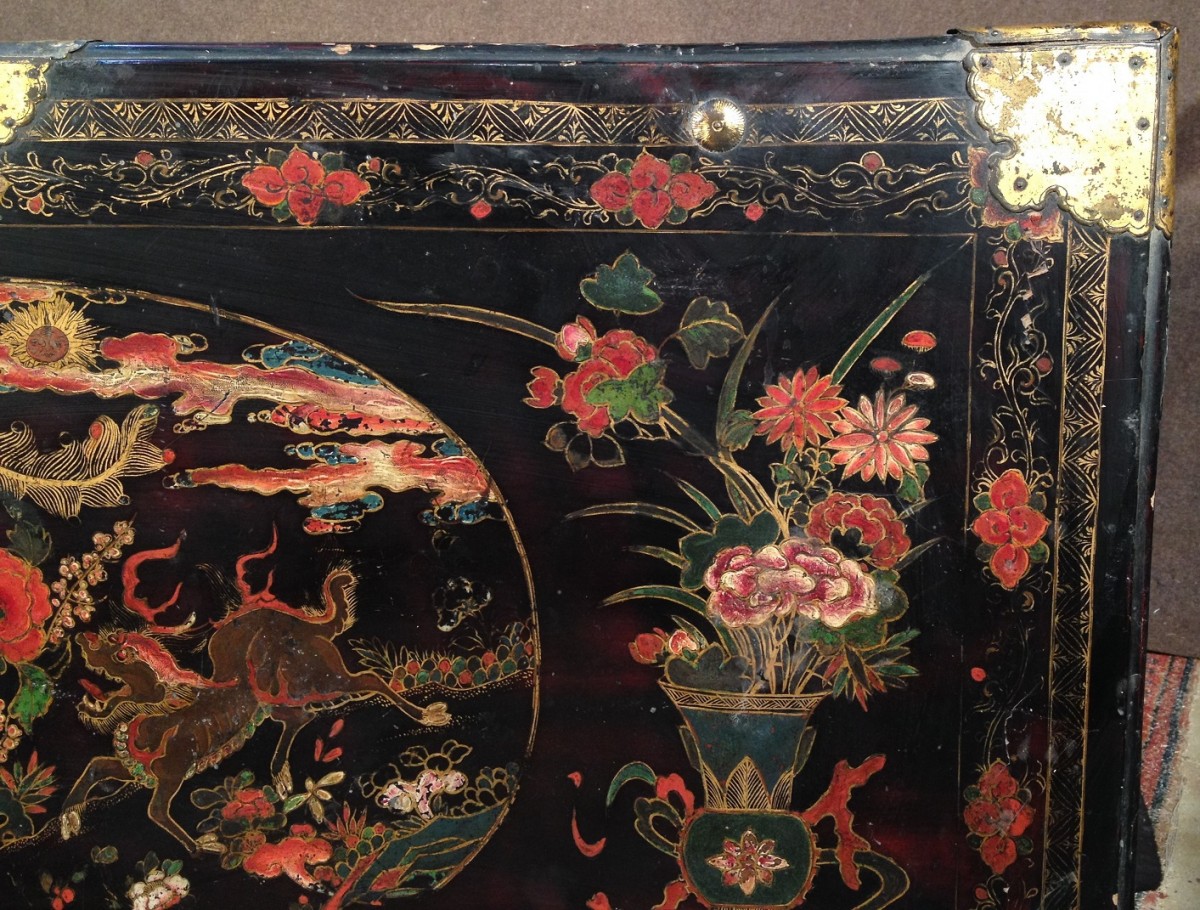

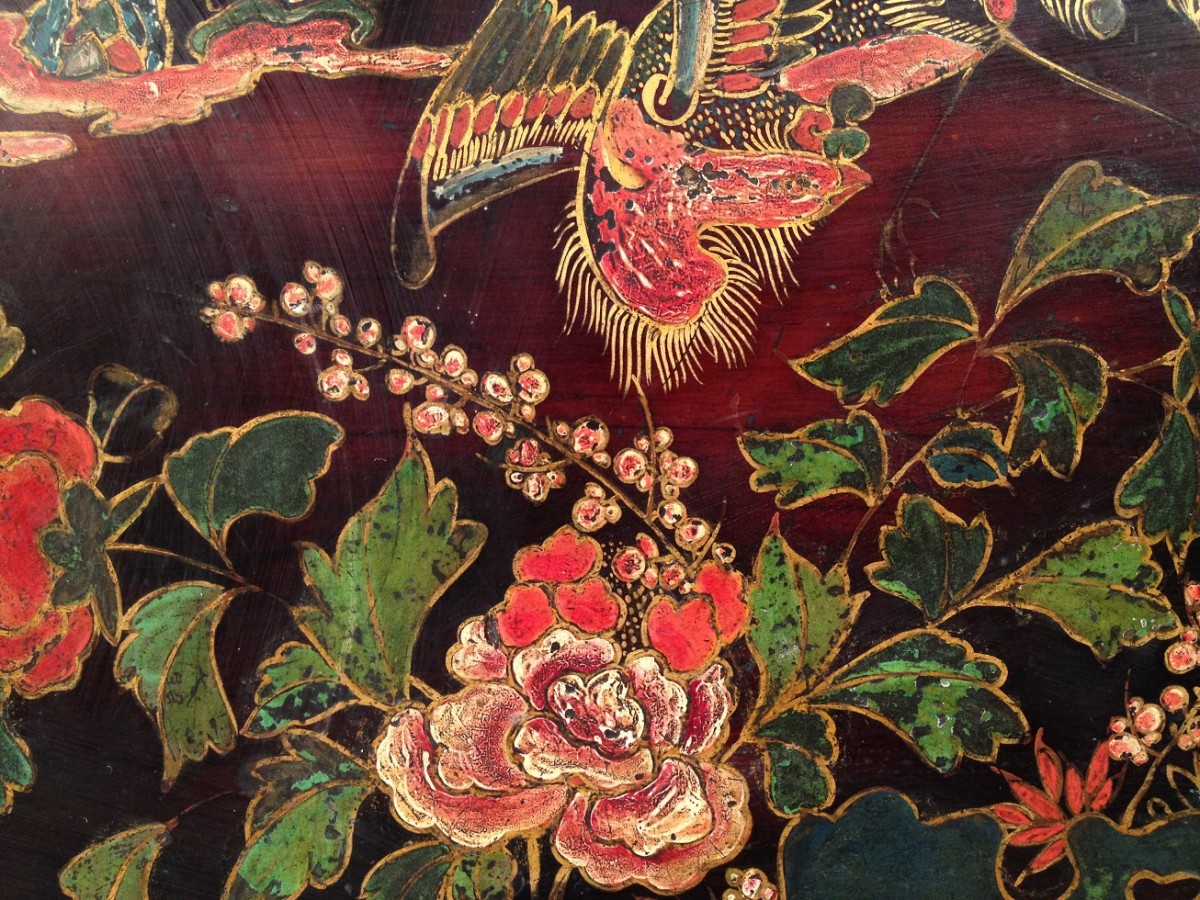
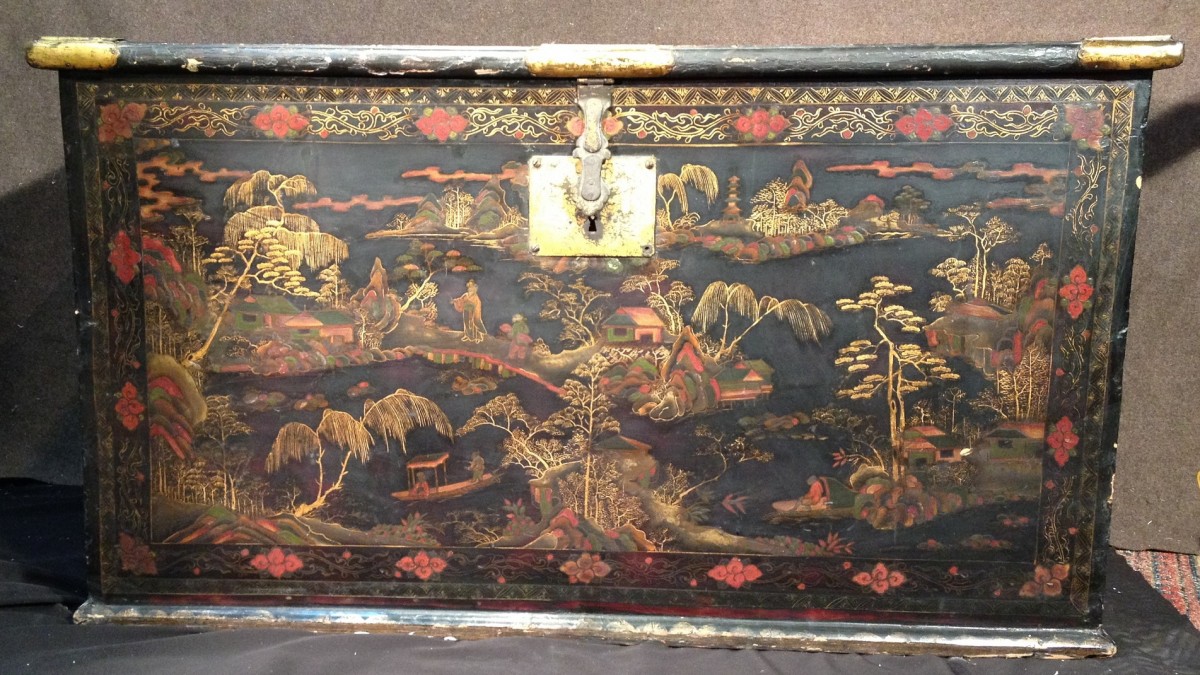
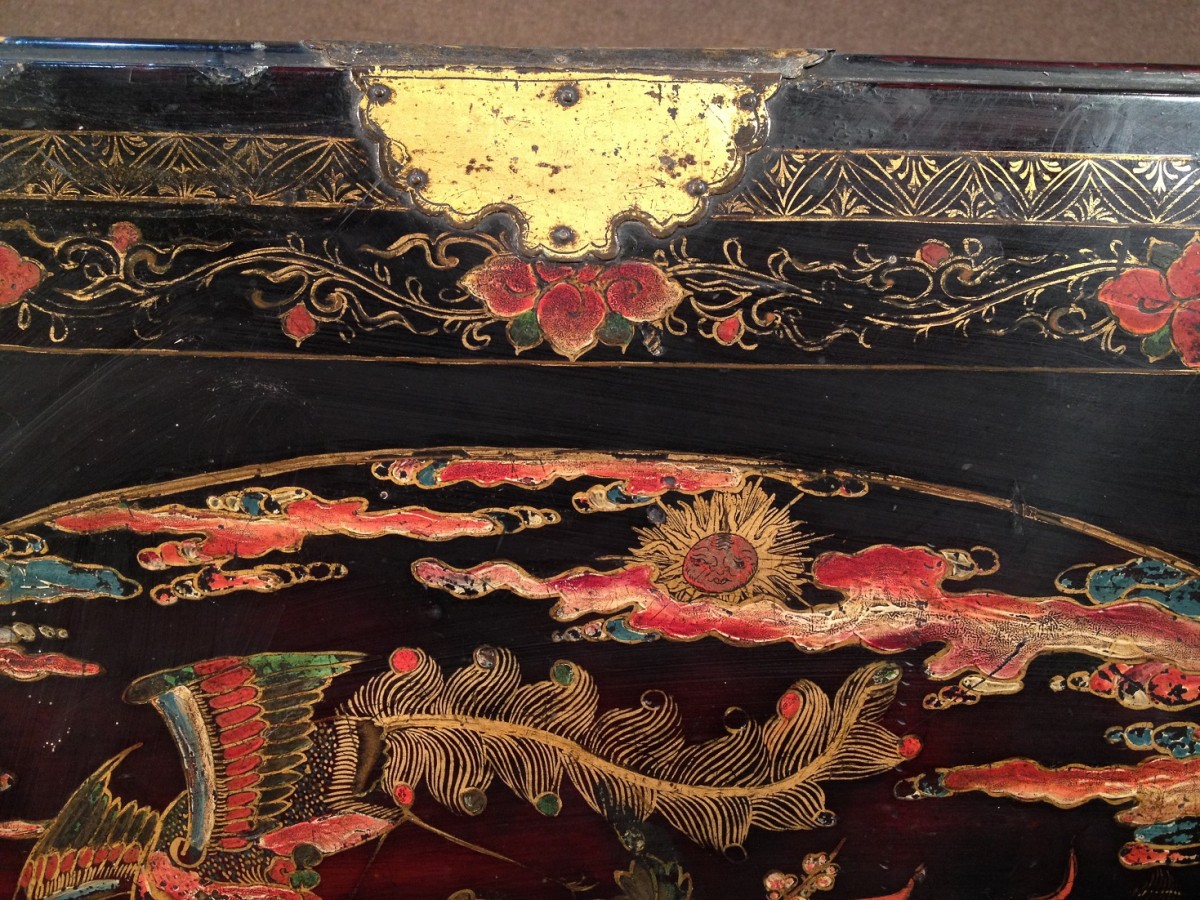
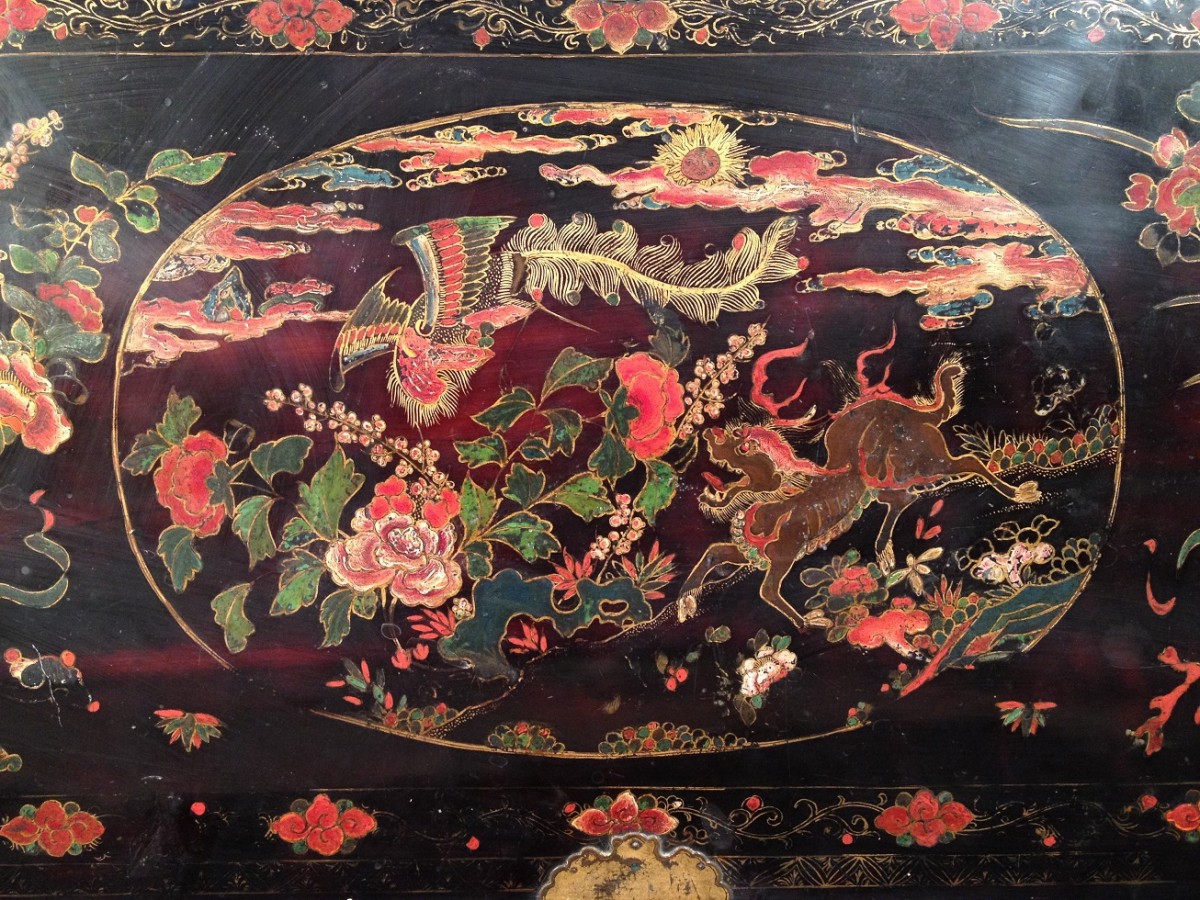
Wooden chest covered with black urushi lacquer, decorated in polychrome and gold lacquer, with gilt-copper mounts. On the top, within an oval reserve, a kirin and a h?-? move through a flowering landscape of peonies. Curiously, in the cloudy sky appears a radiant sun of an unmistakably European style. This oval cartouche is flanked by two vases of flowers.
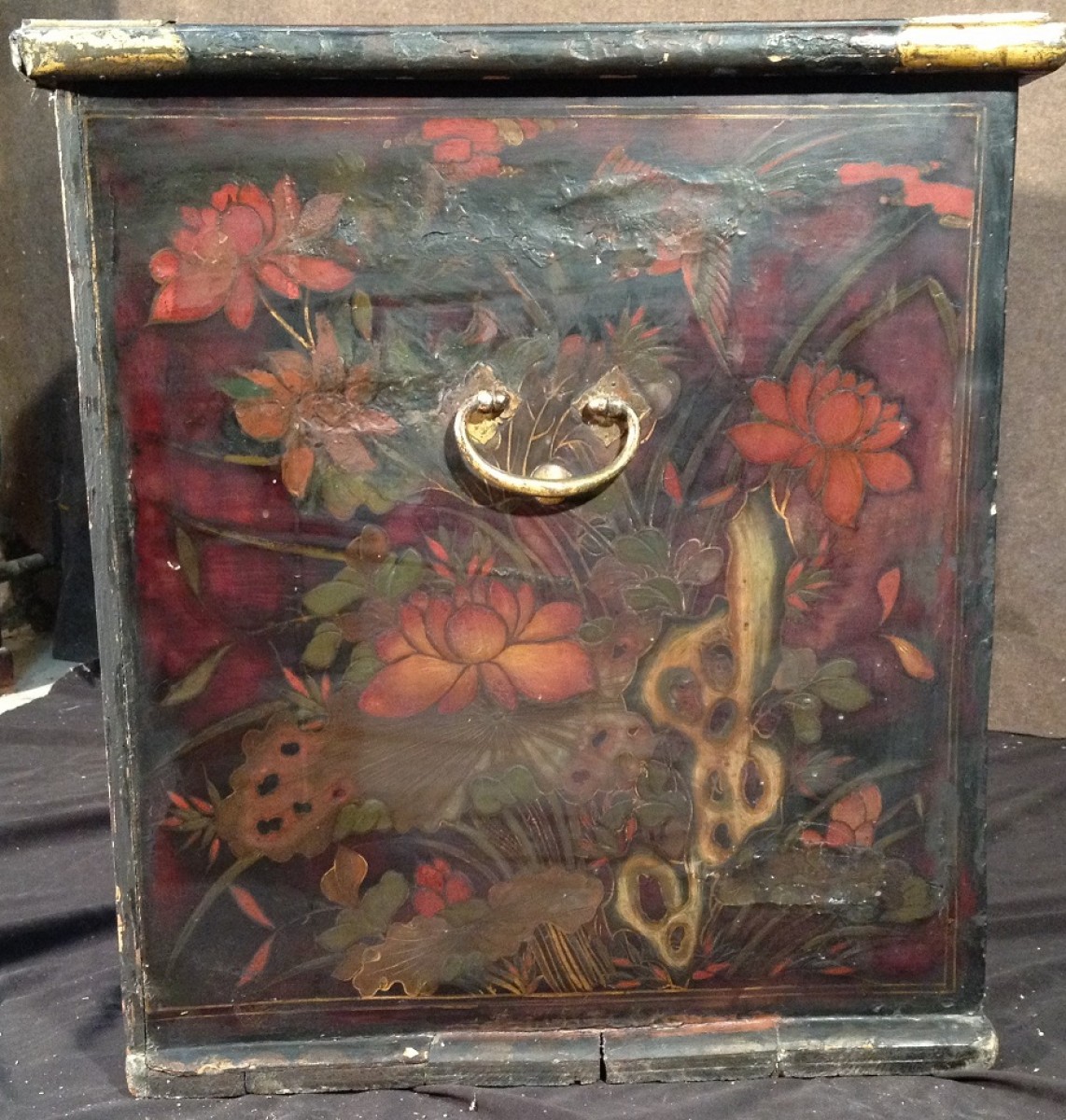
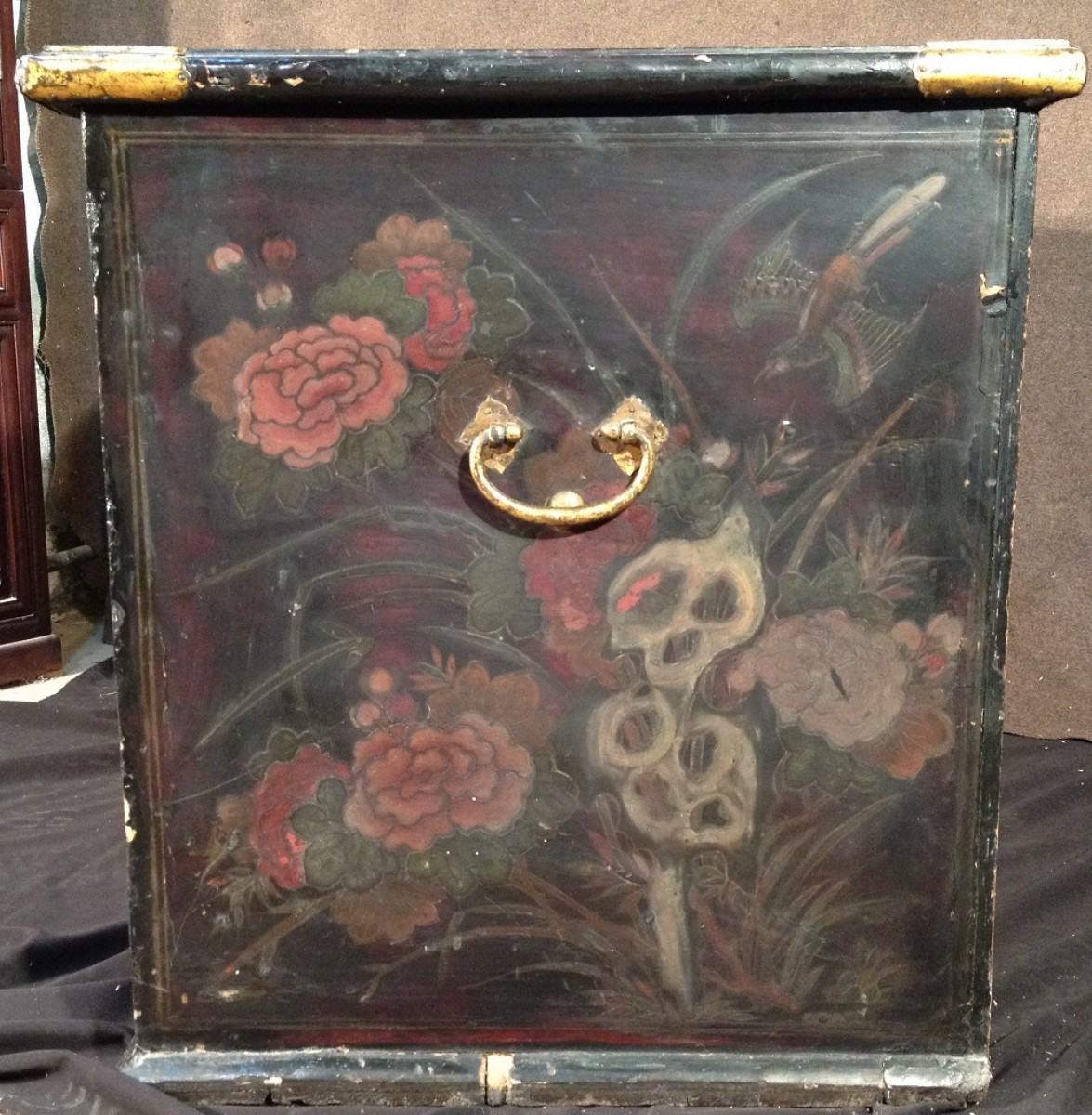
The front is richly decorated over its entire surface with a lakeside landscape animated with figures. On the sides are lotus and peonies, artistically drawn.
Large chests of this form are well known. They were made in the mid-17th century for the European market and are generally decorated with gold-sprinkled motifs against a black ground. Their quality varies considerably according to the financial means of those who commissioned them. The finest examples have details in red lacquer, mother-of-pearl inlays and sometimes gold, as on the famous “Mazarin Chests”. We know of no other chest with comparable polychrome decoration.
However, in our collections we have an earlier travelling chest, dating from the 16th century, Momoyama or perhaps even Muromachi, lacquered in black and gold. It has lost much of its decoration, but its protected interior, which has remained intact, is entirely decorated with coloured landscapes similar to those on the present chest. The more naïve character of the drawings confirms a date almost a century earlier.
The colours of our chest are admirably preserved, largely thanks to a very thick and solid base of black urushi lacquer and also to the fact that, a very long time ago, the entire chest was coated with a European varnish, intended to restore its original brilliance and revive the gilding of the gold-decorated areas.
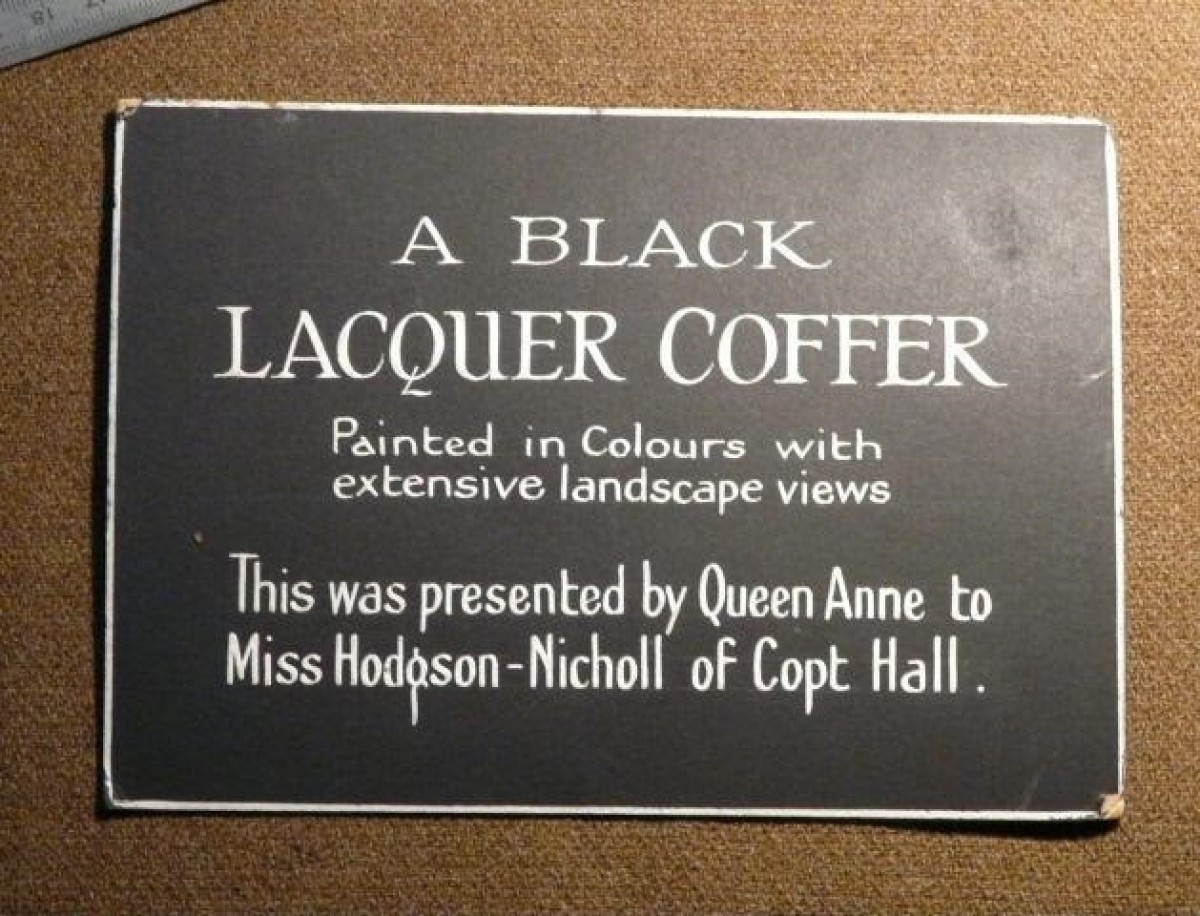
A small old collection label, written on scraped paper, stated that this chest had been presented by Queen Anne of England to a lady of her court, Miss Hodgson-Nicholl of Copt Hall. This label was subsequently lost or stolen, and only a photograph of it remains in our possession. Like any label, it does not in itself prove the provenance, but it provides an important indication that a specialist might be able to verify, beginning with a search for a possible inventory of the furnishings of Copt Hall or a royal document recording such a gift, which would presumably have been made around 1700.
At the beginning of the 20th century, the English magazine The Connoisseur reported the following auction result:
“Amongst the lace disposed of at Puttick’s was an old Italian rose-point bedcover, 9 ft. 5 in. × 9 ft. 2 in., which is said to have been given by Queen Anne to one of her maids-in-waiting, on the latter’s marriage to a Hodgson-Nicoll of Copt Hall. The hammer descended at a bid of £210.”
This account lends support to the information recorded on the label.
The European varnish may have been applied at the time of the gift, with the intention of reviving the gold decoration of a chest which, by around 1700, had already been in use for some fifty years.
While the decoration on the top and front appears to be original, we are not entirely certain that the decoration on the sides is. The colours are duller, and the manner in which the rocks are drawn raises some questions, although not enough to convince us that they are later additions. We have never cleaned the sides, which remain covered with poor-quality varnish, as their present condition provides evidence of the intervention of European varnishers. We could, however, undertake such cleaning upon request.
Approximate dimensions: 120 × 60 × 60 cm.
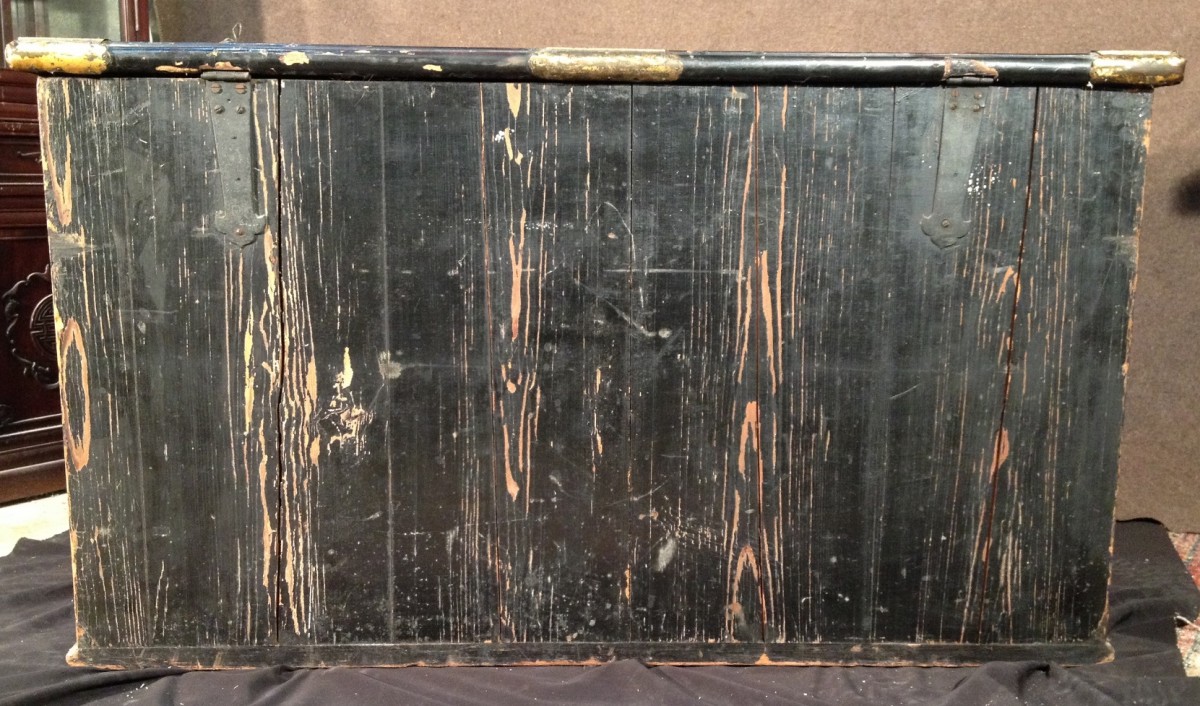
Interior simply lacquered in red. The back is covered with only a few layers of urushi which, being thinner, have not withstood the passage of time as well.
An exceptional object.
Delevery information :
International deliveries in the best conditions. Careful packaging. I travel with important items as needed.