Offered by Ars Antiqua

Old Masters paintings, furniture, sculptures and modern art
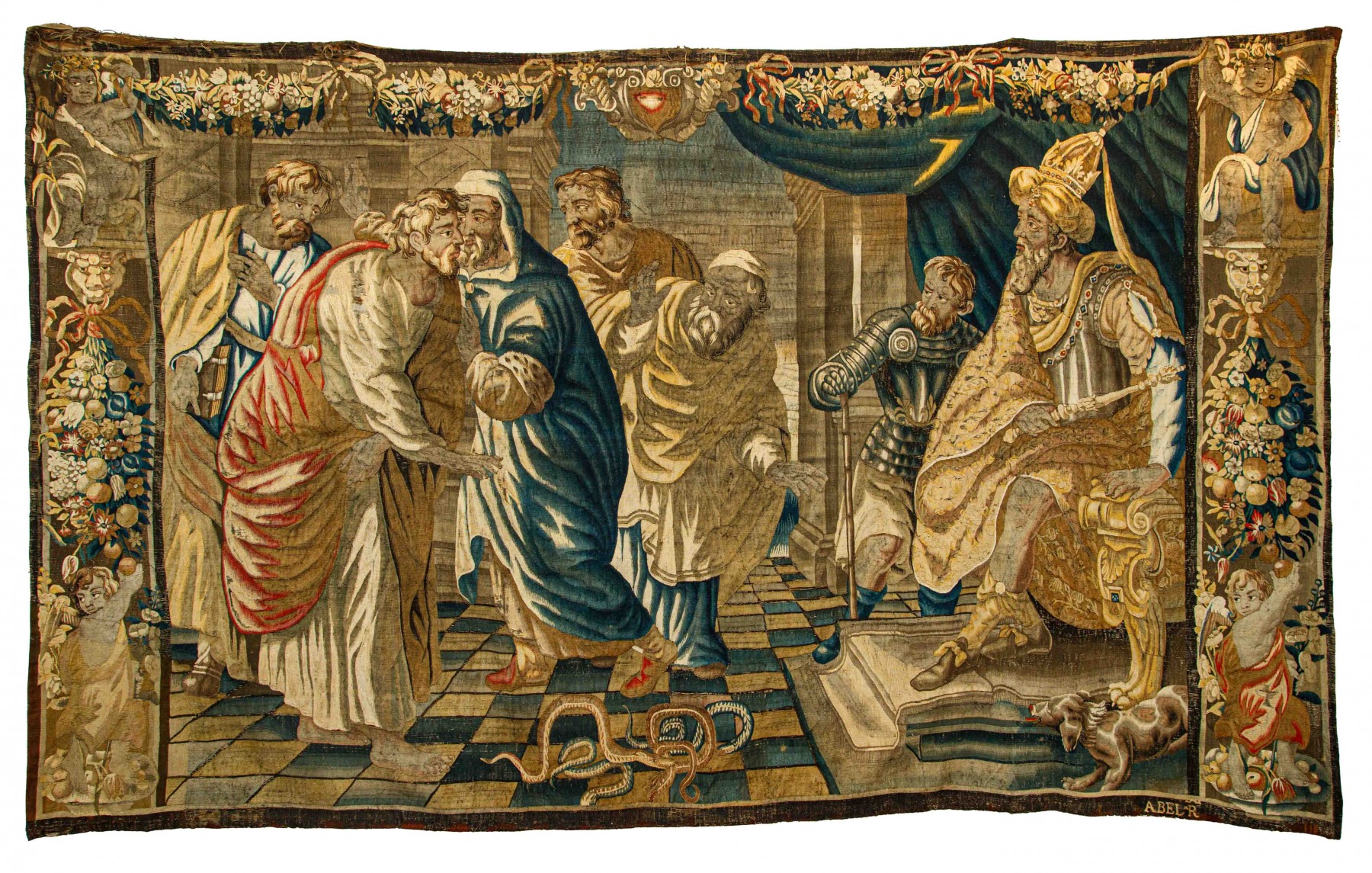
Aubusson Manufactory, late 16th century
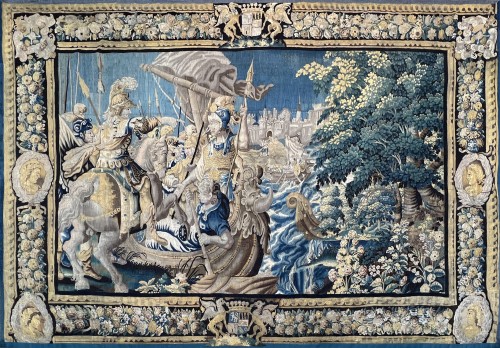
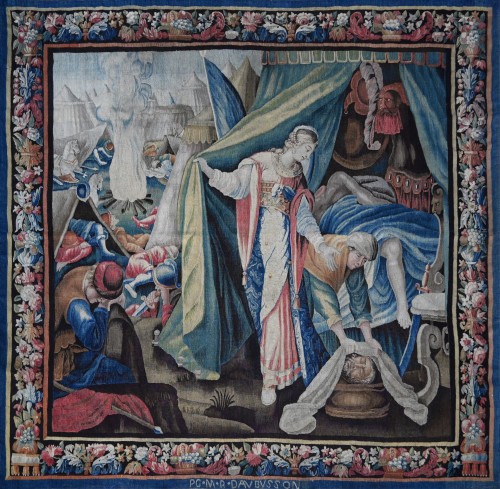
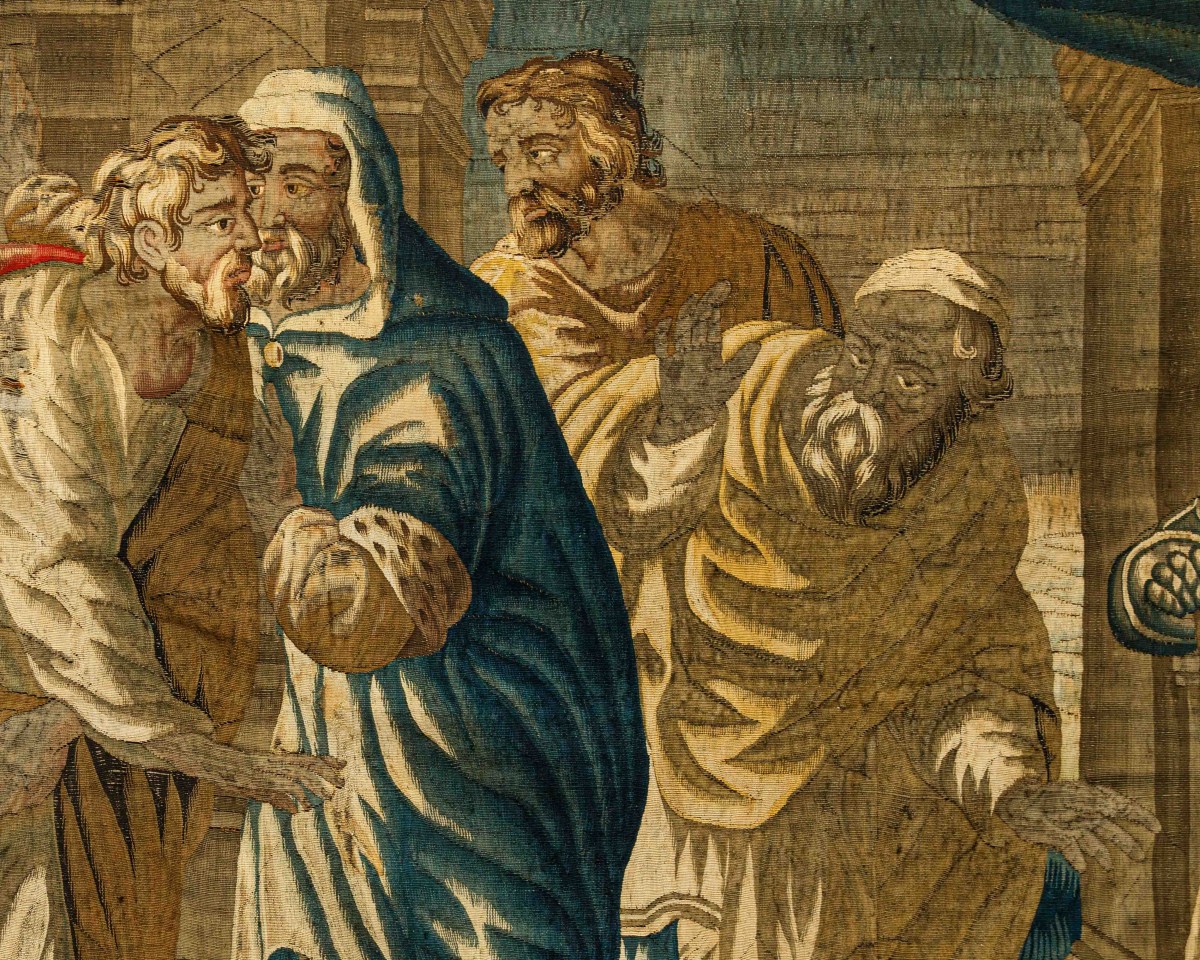
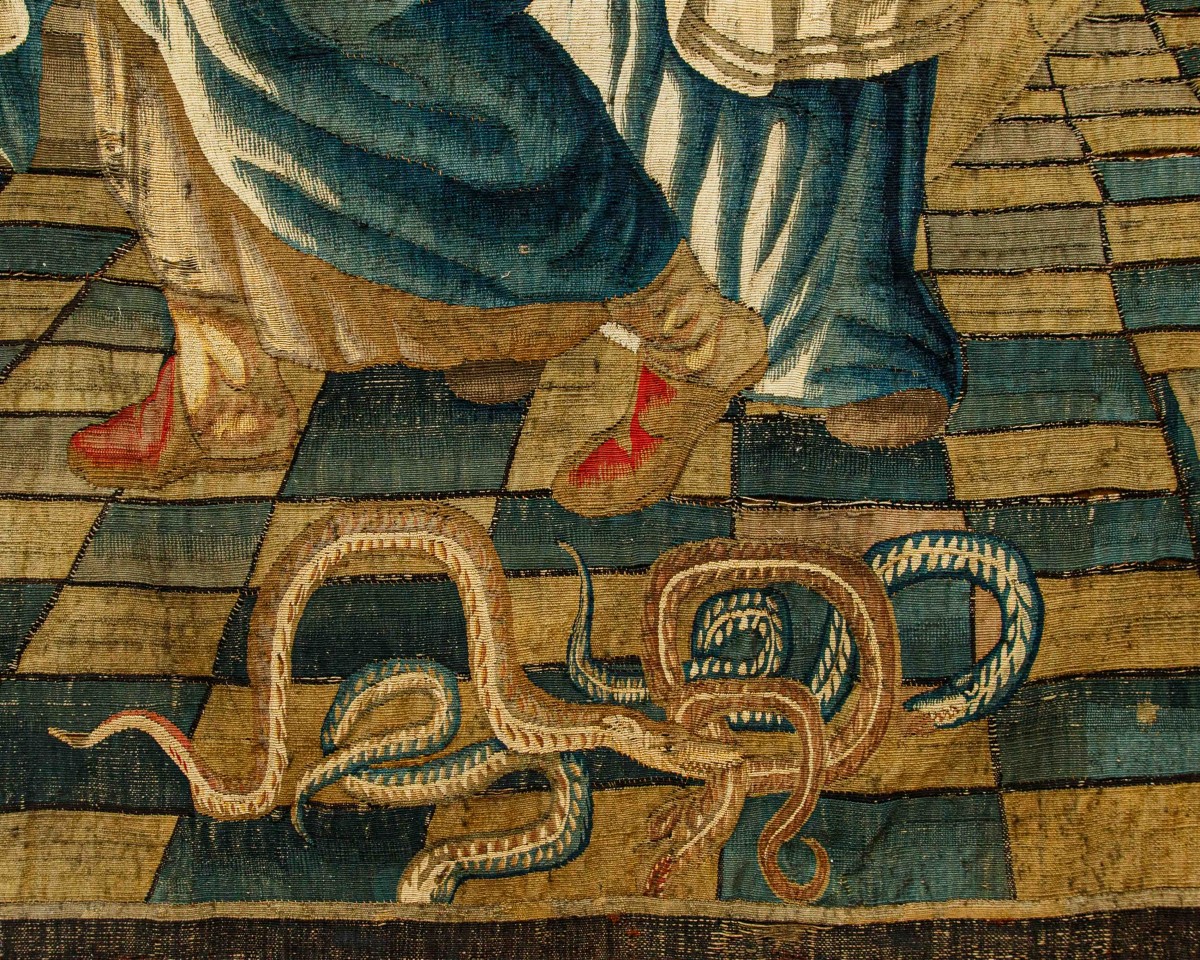
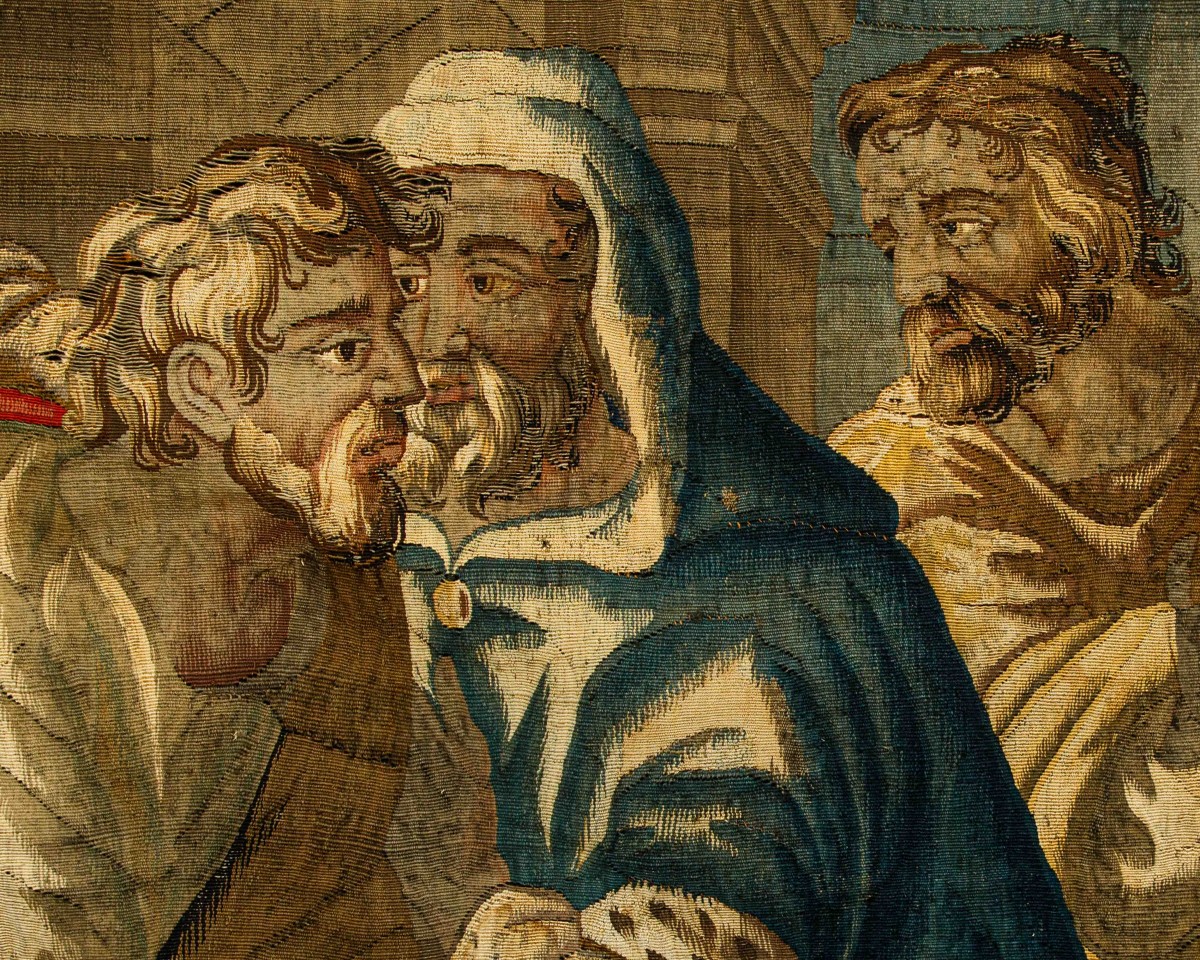
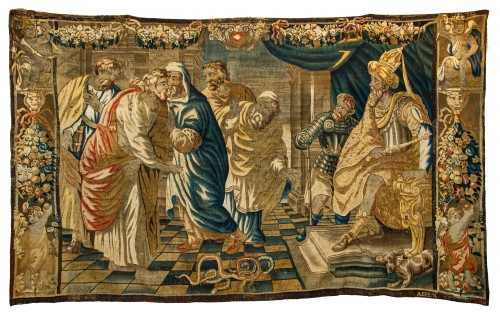
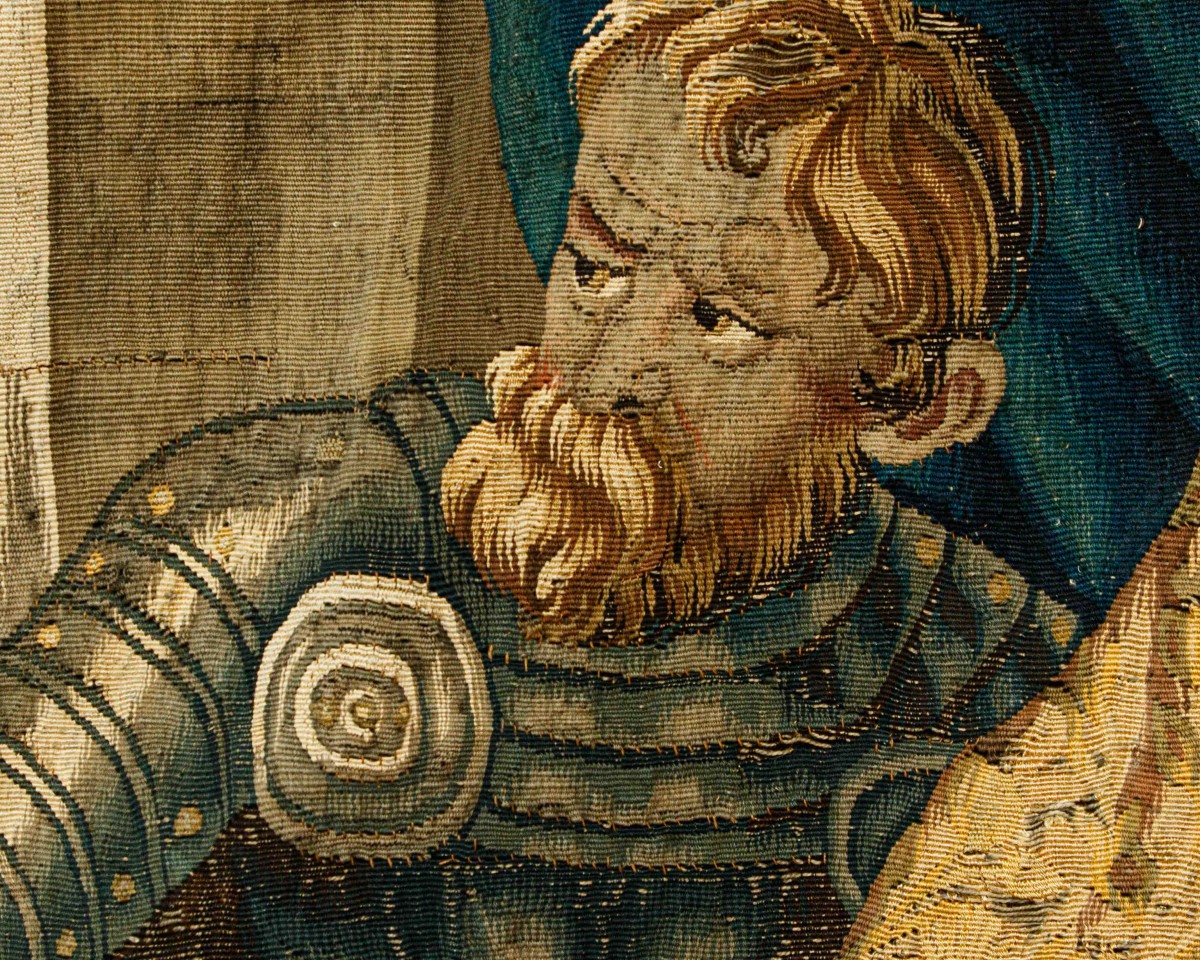
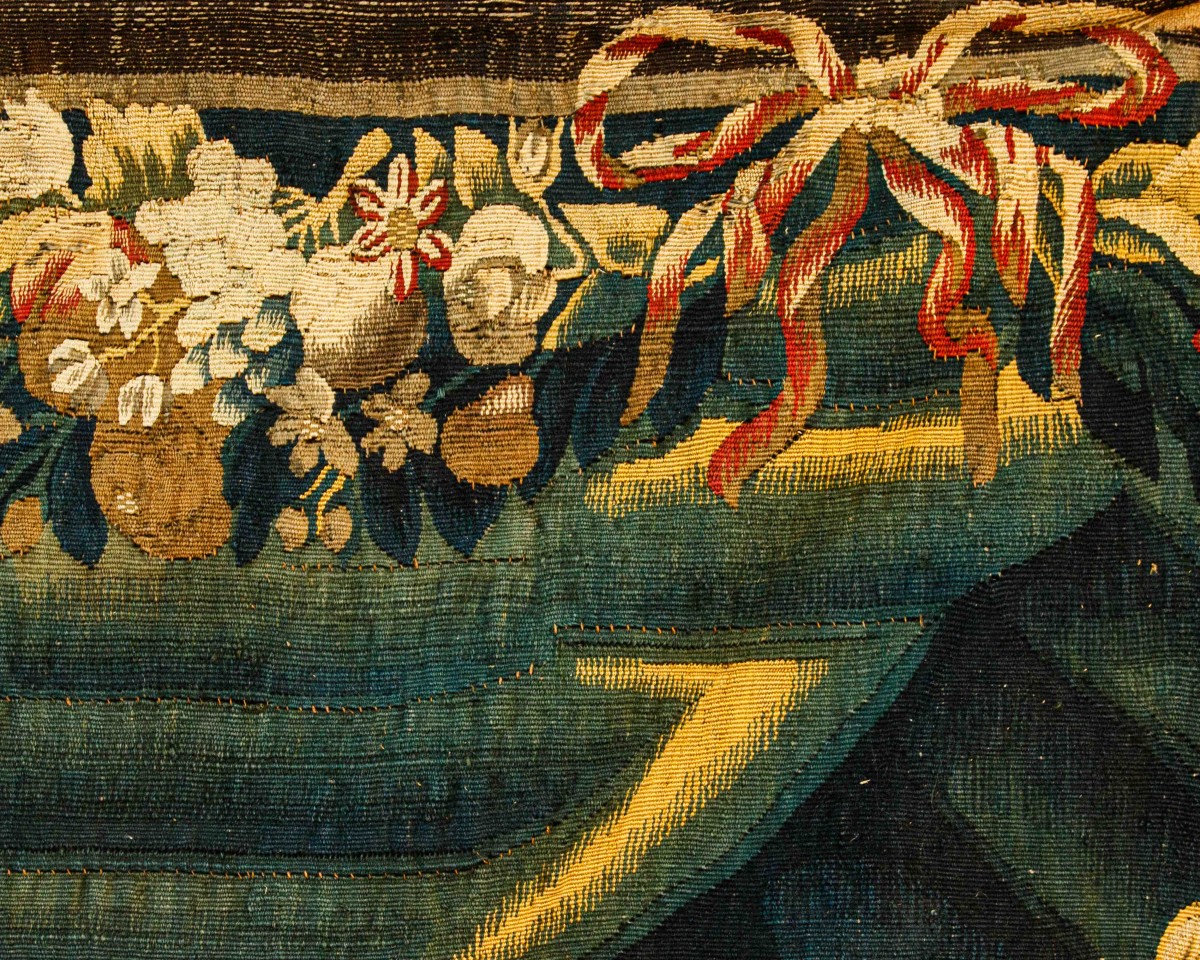
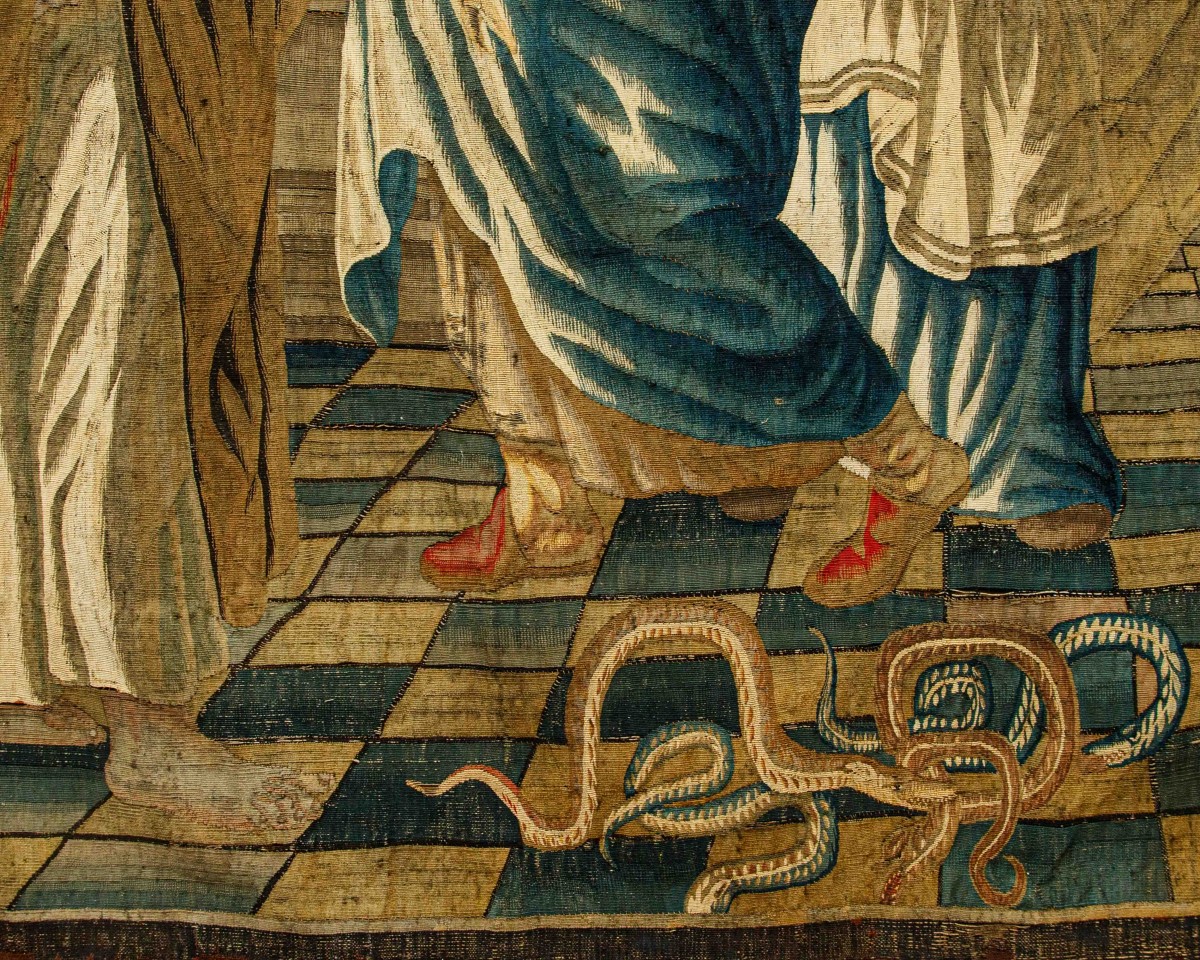
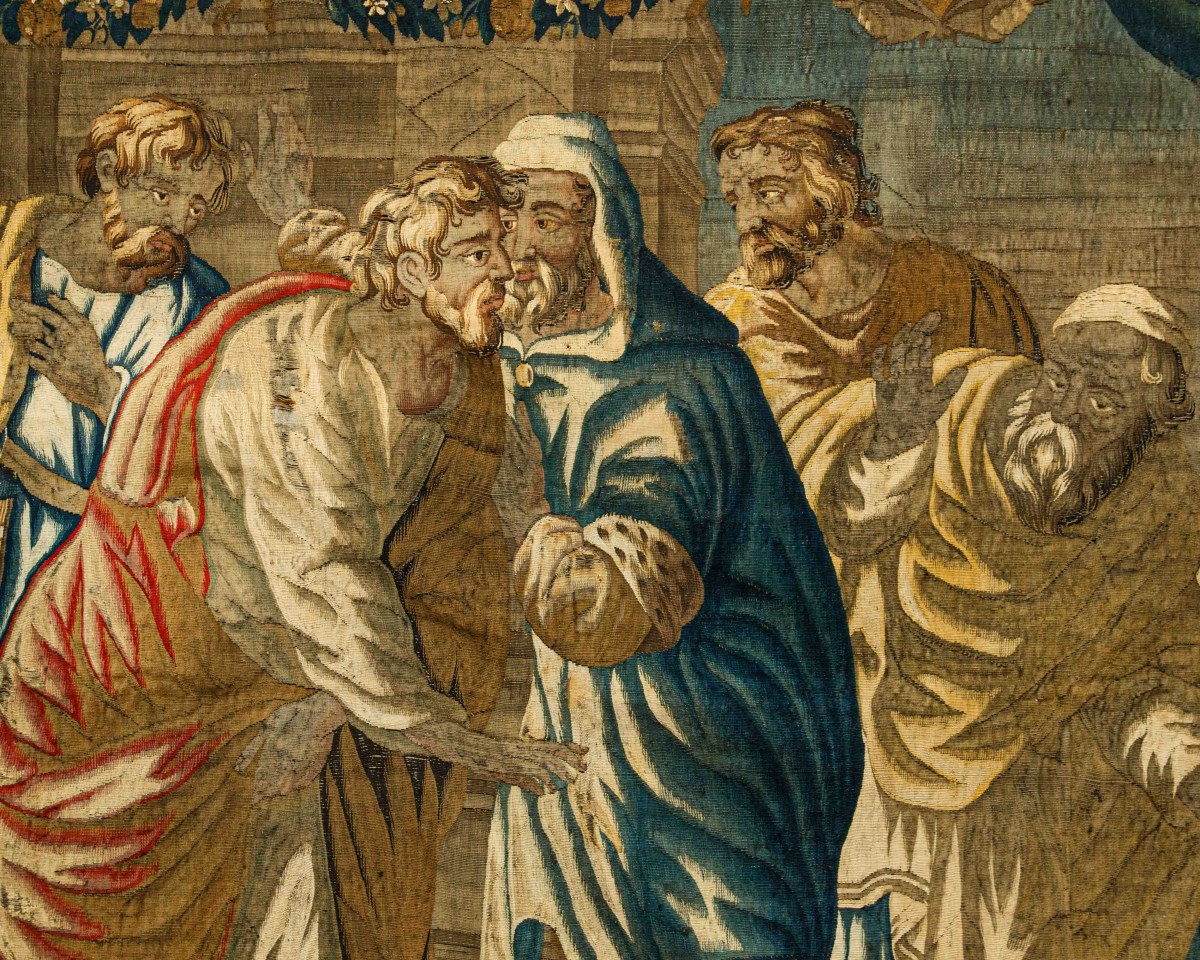
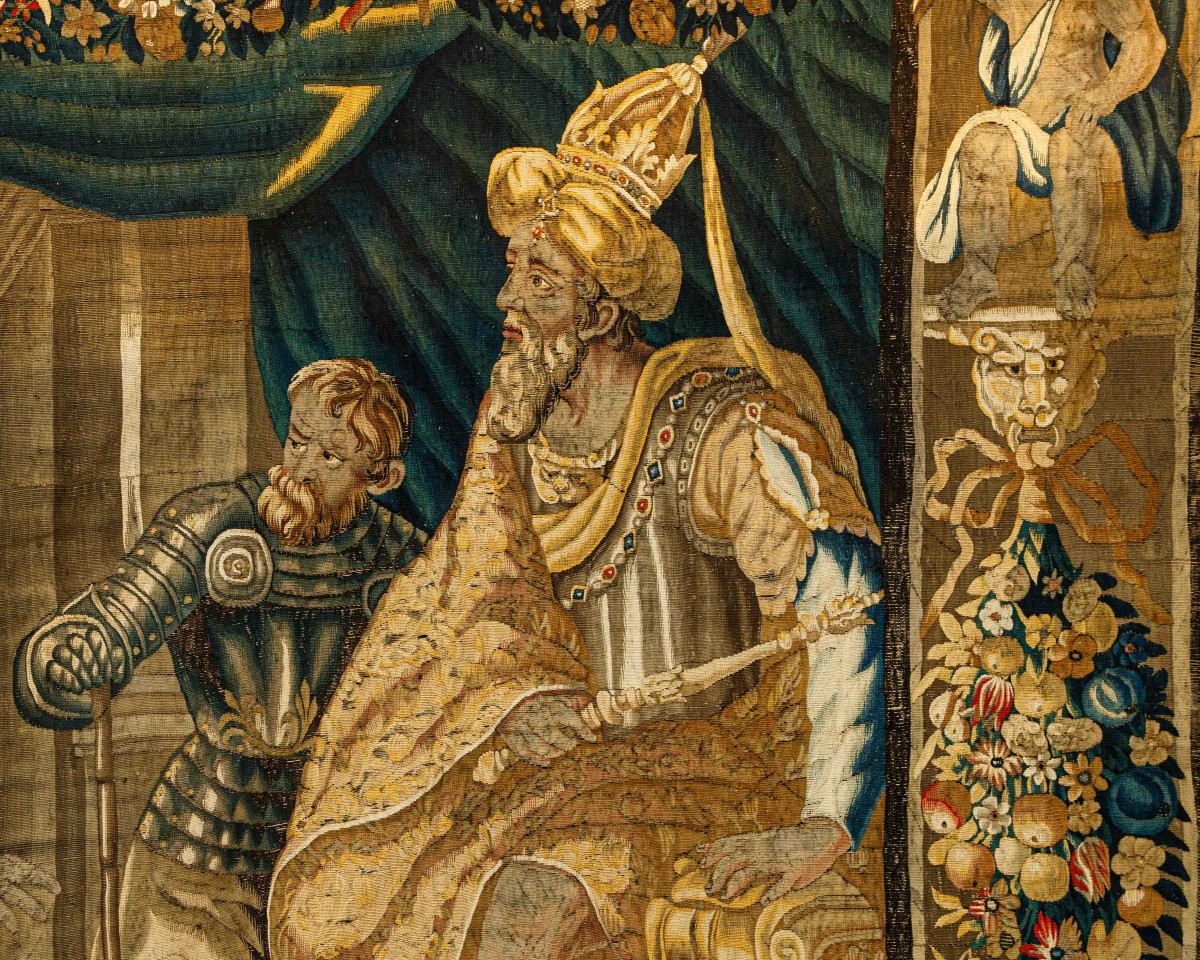
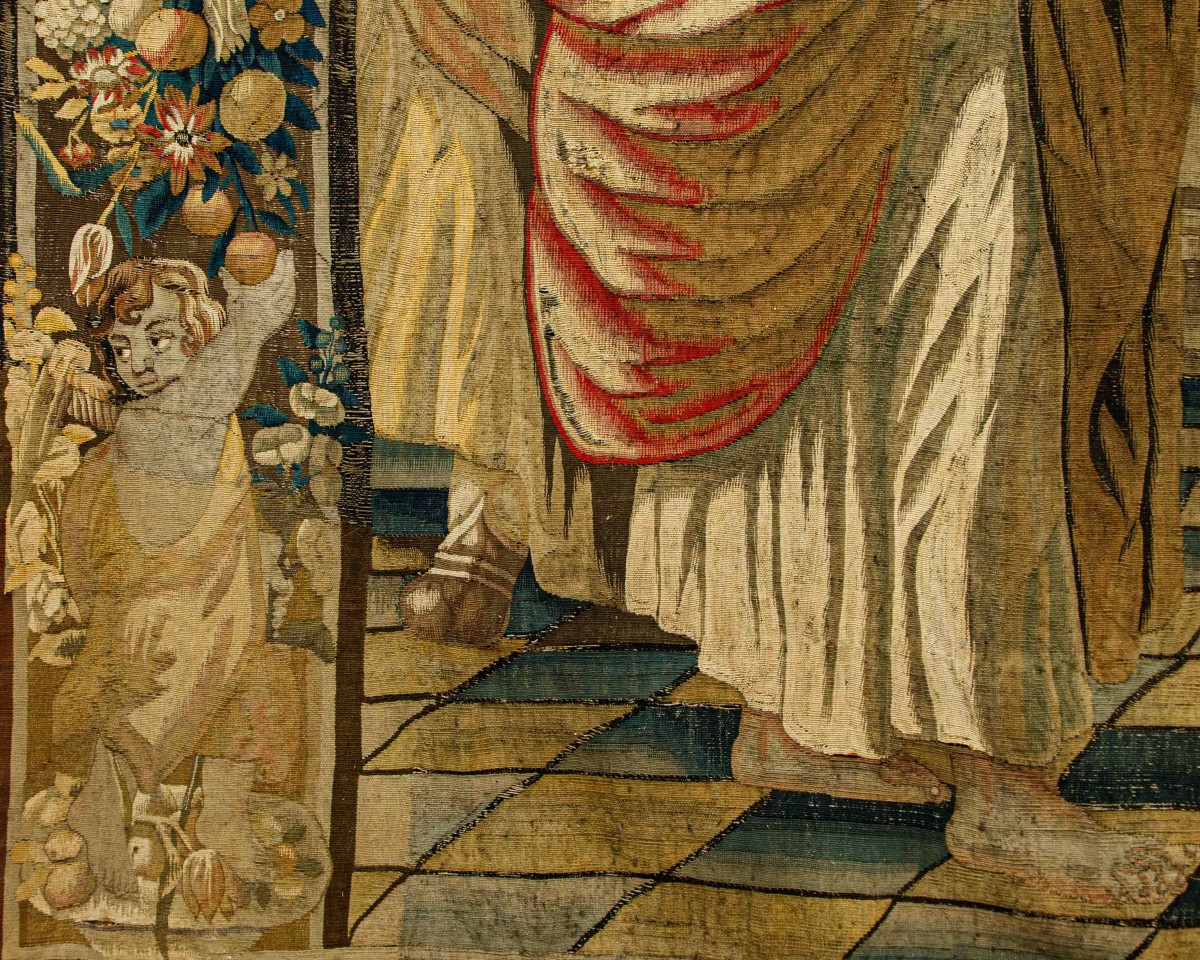
Tapestry depicting the confrontation between Moses and Aaron and the Pharaoh of Egypt
Wool, 237 x 395 cm
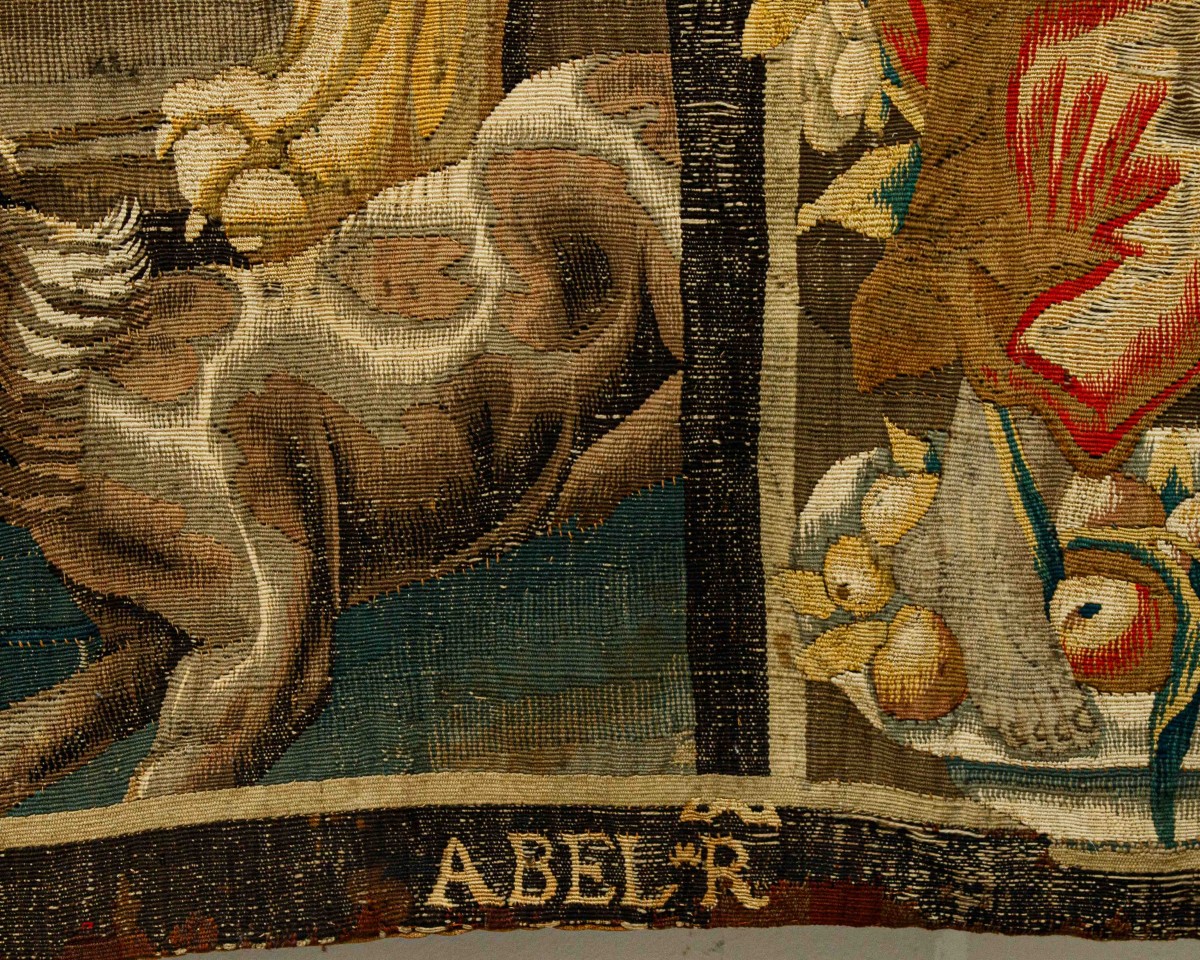
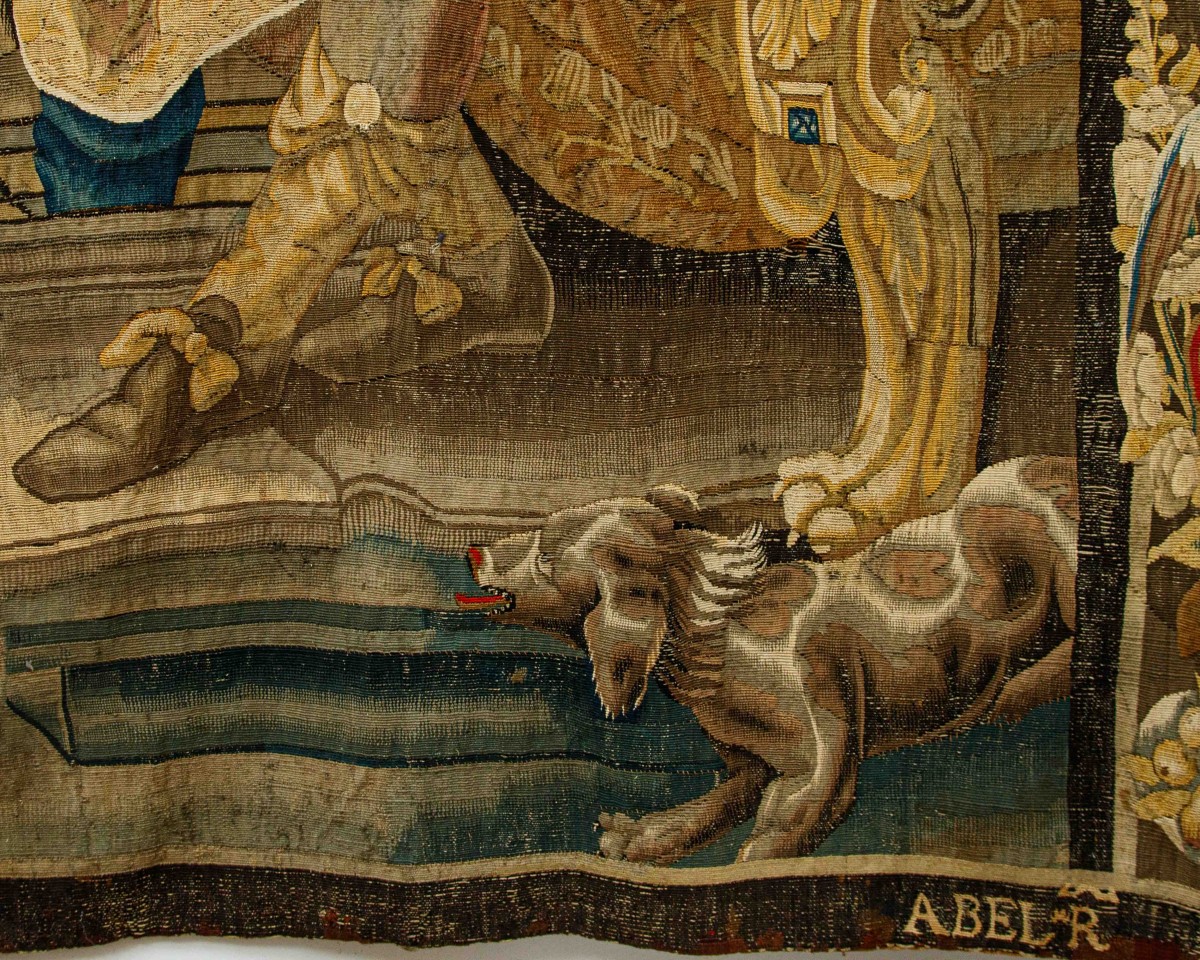
Signed ABEL R
This exquisite and valuable tapestry, masterfully crafted in wool, was produced in the 17th century by the renowned Aubusson Manufactory. Situated in France, Aubusson emerged as one of the world's most prolific centers for the ancient and enigmatic art of tapestry weaving.
The tapestry technique, originating north of the Alps in the late Middle Ages around the 13th century, spread widely throughout France and Flanders from the 14th century onwards. This dissemination was fueled in part by the patronage of the French royal family and the Burgundian court, which commissioned the exquisite cycle of tapestries for Angers Cathedral depicting scenes from the Apocalypse. By the early 15th century, Arras had become the most important center for tapestry production in Europe, giving rise to the English word "tapestry."
Technically, a tapestry is a predominantly weft-faced textile, handwoven on a loom and designed to adorn walls. The preparatory drawing – known as a cartoon – was created by a painter and then executed by skilled artisans. A prime example of this collaboration is the splendid cycle of tapestries depicting the lives of Saints Peter and Paul, produced in the workshop of the Flemish tapestry weaver Pieter van Aelst in Brussels. The cartoons for these tapestries, now housed in the Victoria and Albert Museum in London, were designed by Raphael.
The origins of the Aubusson Manufactory can be traced back to the 14th century. It is believed that a group of Flemish tapestry weavers settled in the Aubusson region, drawn by the waters of the Creuse River, which were ideal for washing and scouring their wool and preparing dyes. The abundance of local sheep further encouraged these weavers to establish themselves in the area. The Flemish influence on the Aubusson Manufactory was profound, evident in the use of the low-warp technique and the shared patronage of Saint Barbara. Initially, Aubusson produced verdure tapestries featuring landscapes with forests, which quickly became a hallmark of the manufactory. In the 16th century, the workshops began to weave hunting scenes depicting lions, boars, stags, and unicorns, as well as episodes from the Old Testament, mythology, and French history. In 1665, through the influence of the powerful minister Jean-Baptiste Colbert, the Aubusson Manufactory was granted the title of Royal Manufactory.
The scene depicted in this tapestry is the confrontation between Moses and Aaron and the Pharaoh of Egypt, as recounted in the Book of Exodus. In this episode, as a testament to divine power, the two prophets transform their staffs into serpents before the mighty Pharaoh: “When Pharaoh shall speak unto you, saying, Shew a miracle: then thou shalt say unto Aaron, Take thy rod, and cast it before Pharaoh, and it shall become a serpent.” Moses and Aaron went in unto Pharaoh, and did so as the LORD had commanded: and Aaron cast down his rod before Pharaoh, and before his servants, and it became a serpent. Then Pharaoh also called the wise men and the sorcerers: now the magicians of Egypt, they also did in like manner with their enchantments. For they cast down every man his rod, and they became serpents: but Aaron's rod swallowed up their rods” (Exodus 7:9-12). The iconographic theme of the confrontation between Moses, Aaron, and Pharaoh was frequently depicted during the 17th and 18th centuries, as exemplified by a painting of this biblical episode by Gaspare Diziani. The Aubusson Manufactory produced several other tapestries based on the stories of Moses and Aaron, such as "The Golden Calf" and "Moses and Aaron with the Tablets of the Law.
Delevery information :
Les frais d'expédition seront calculés au moment de la commande en fonction de la destination, des dimensions et du poids du tableau, ainsi que de l'assurance couvrant la valeur totale de l'œuvre.
For paintings purchased from abroad: following payment, the application process to obtain the export license (ALC - Attestato di Libera Circolazione) will be initiated. All antiques shipped abroad from Italy require this document, which is issued by the Ministry of Cultural Heritage. The procedure may take 3 to 5 weeks from the date of request; therefore, the painting will be shipped as soon as the document is obtained