Offered by Antiquités Simon
REQUEST INFORMATION
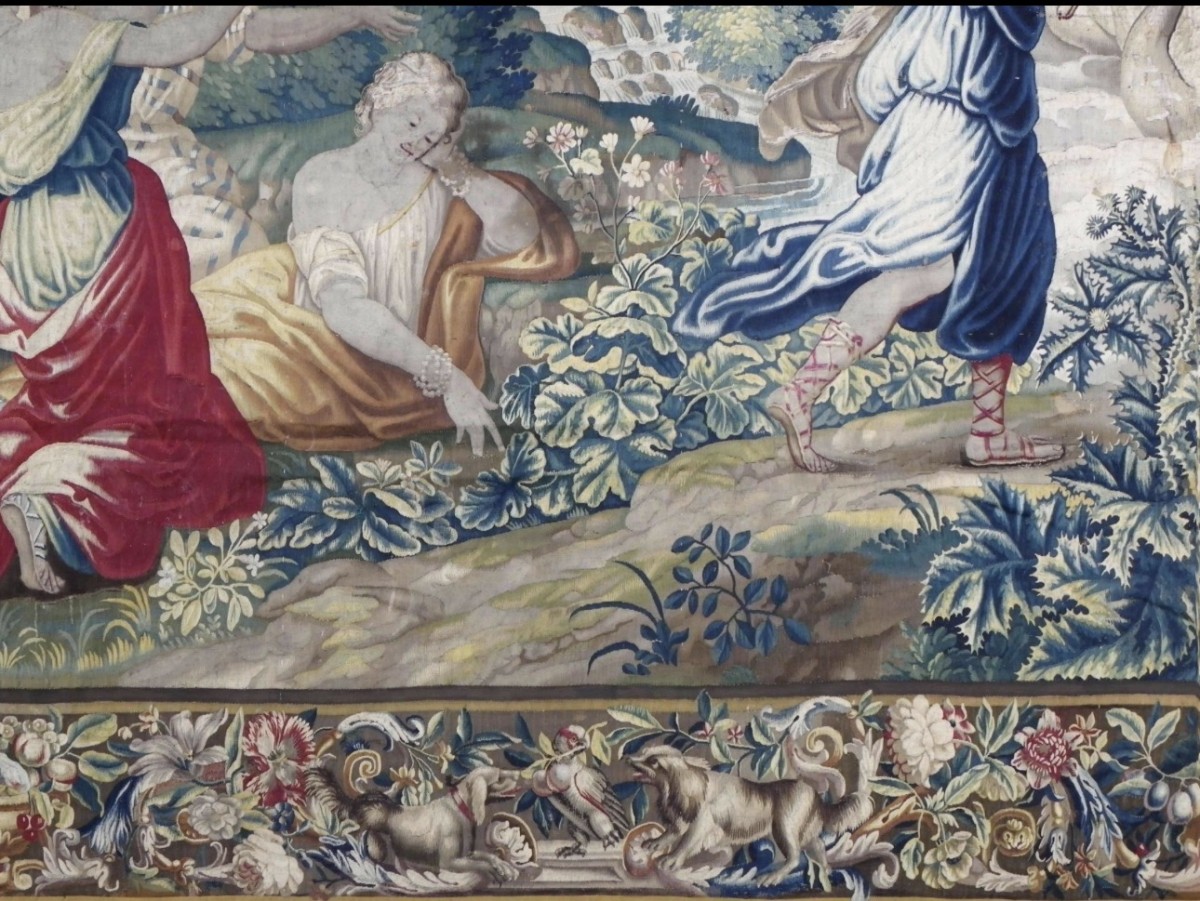
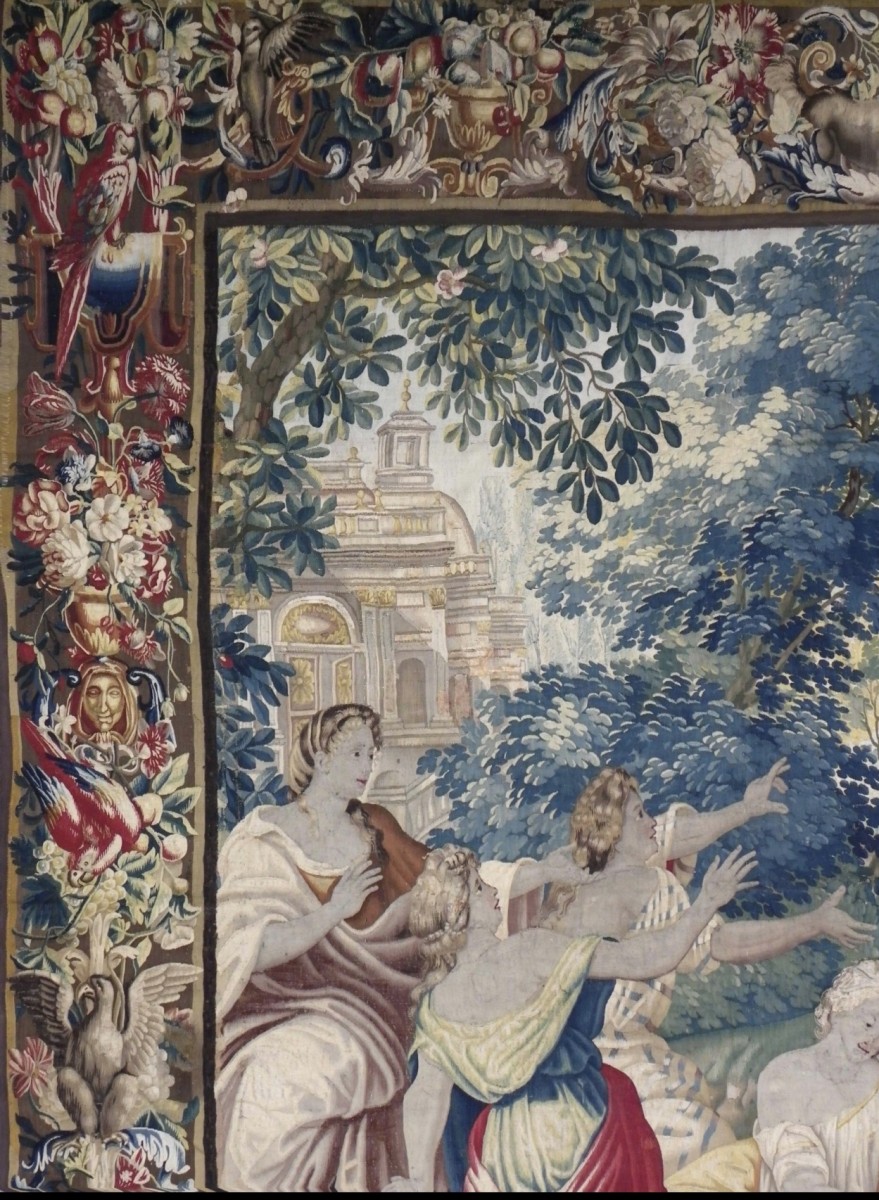
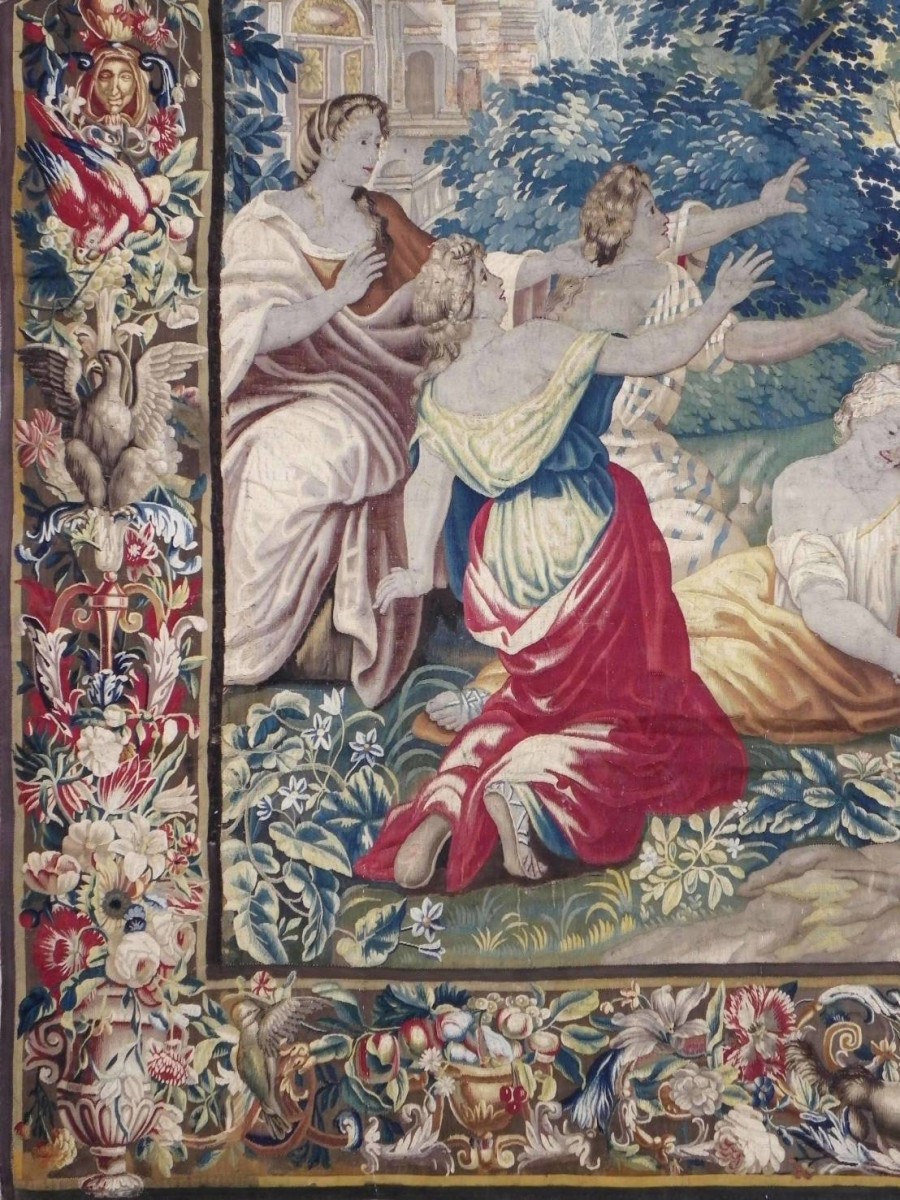

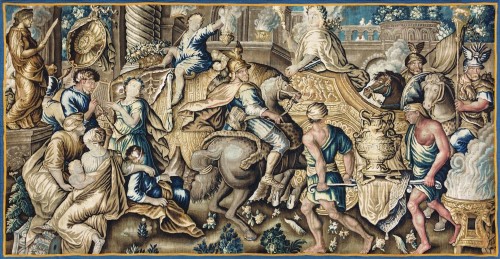
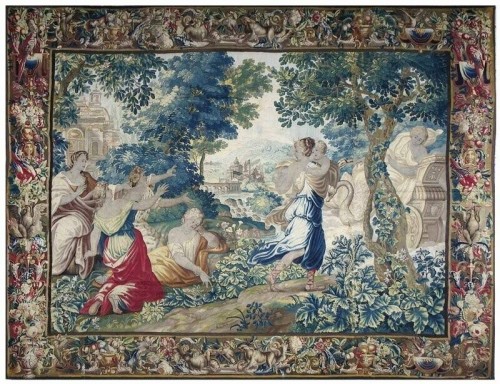
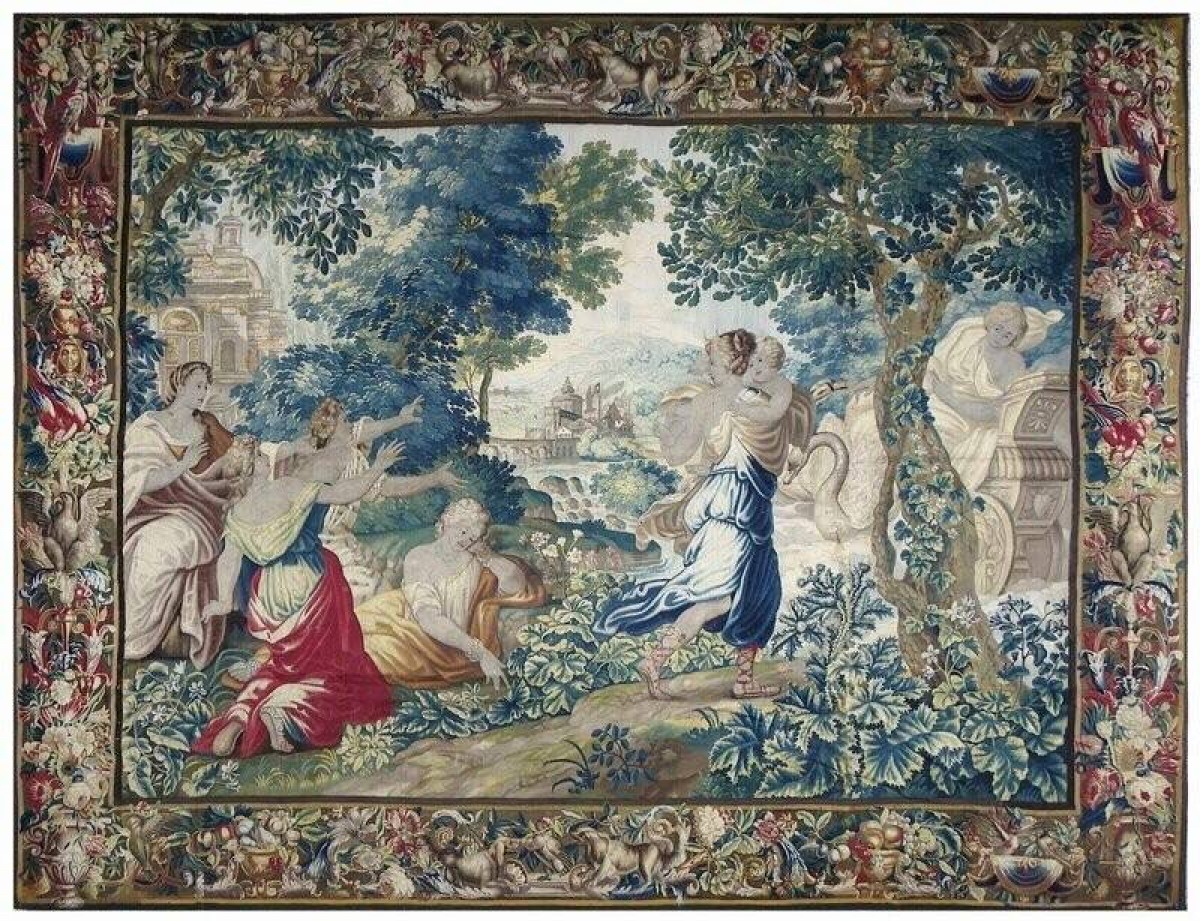
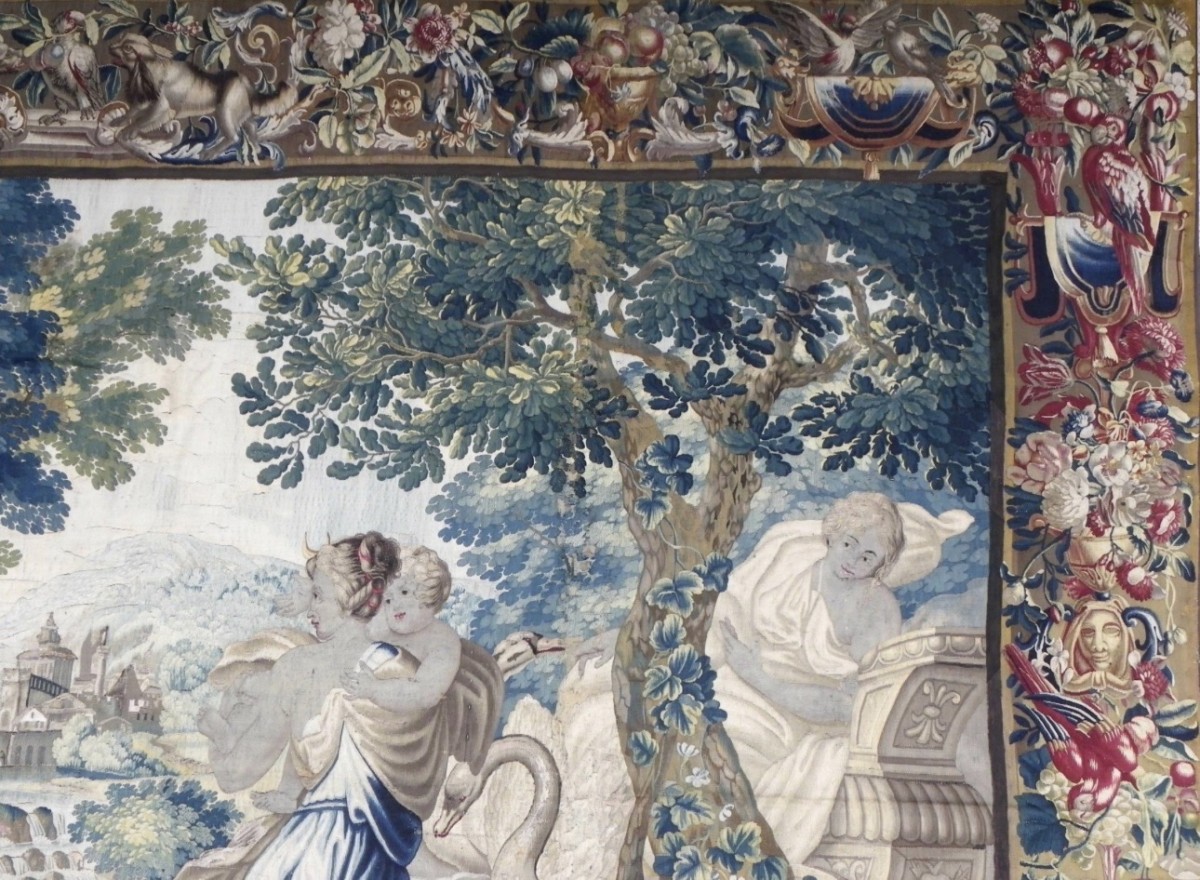
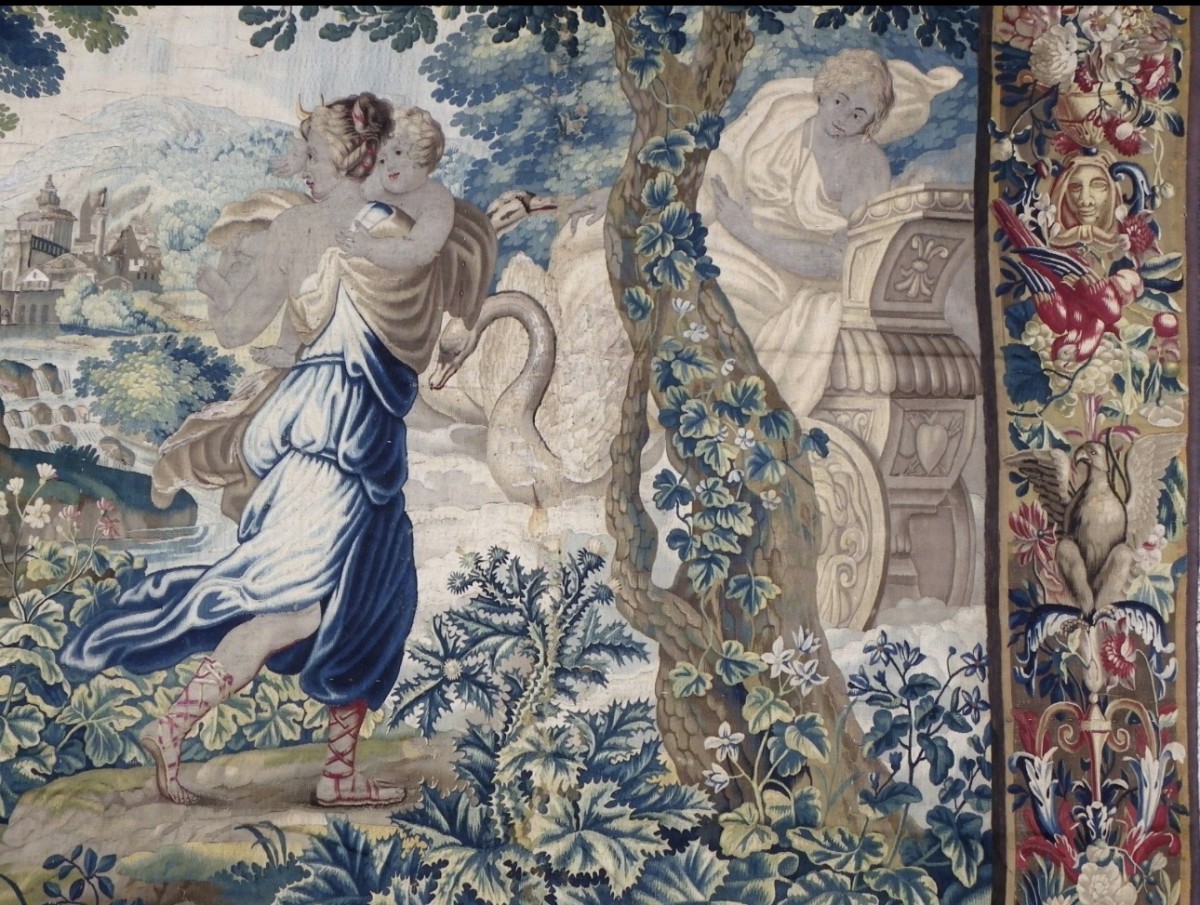
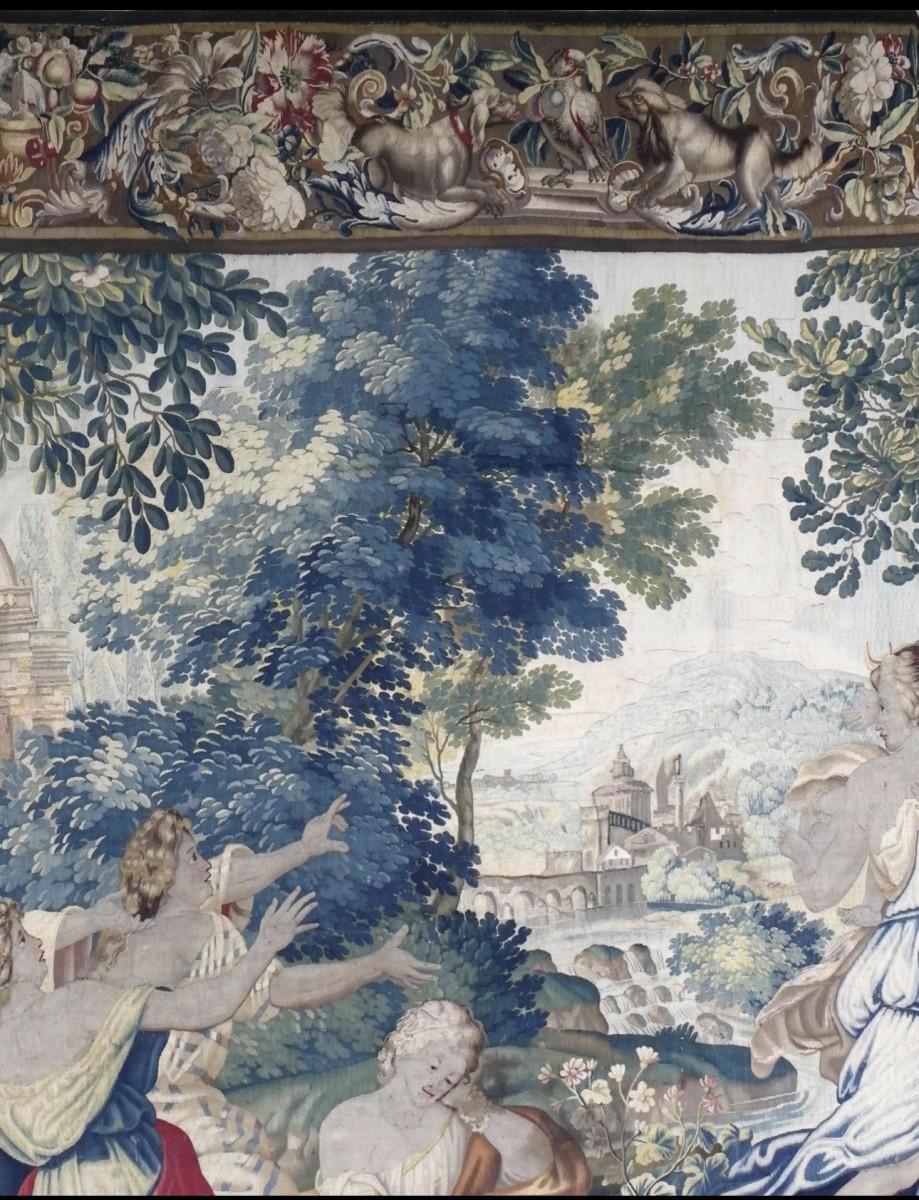
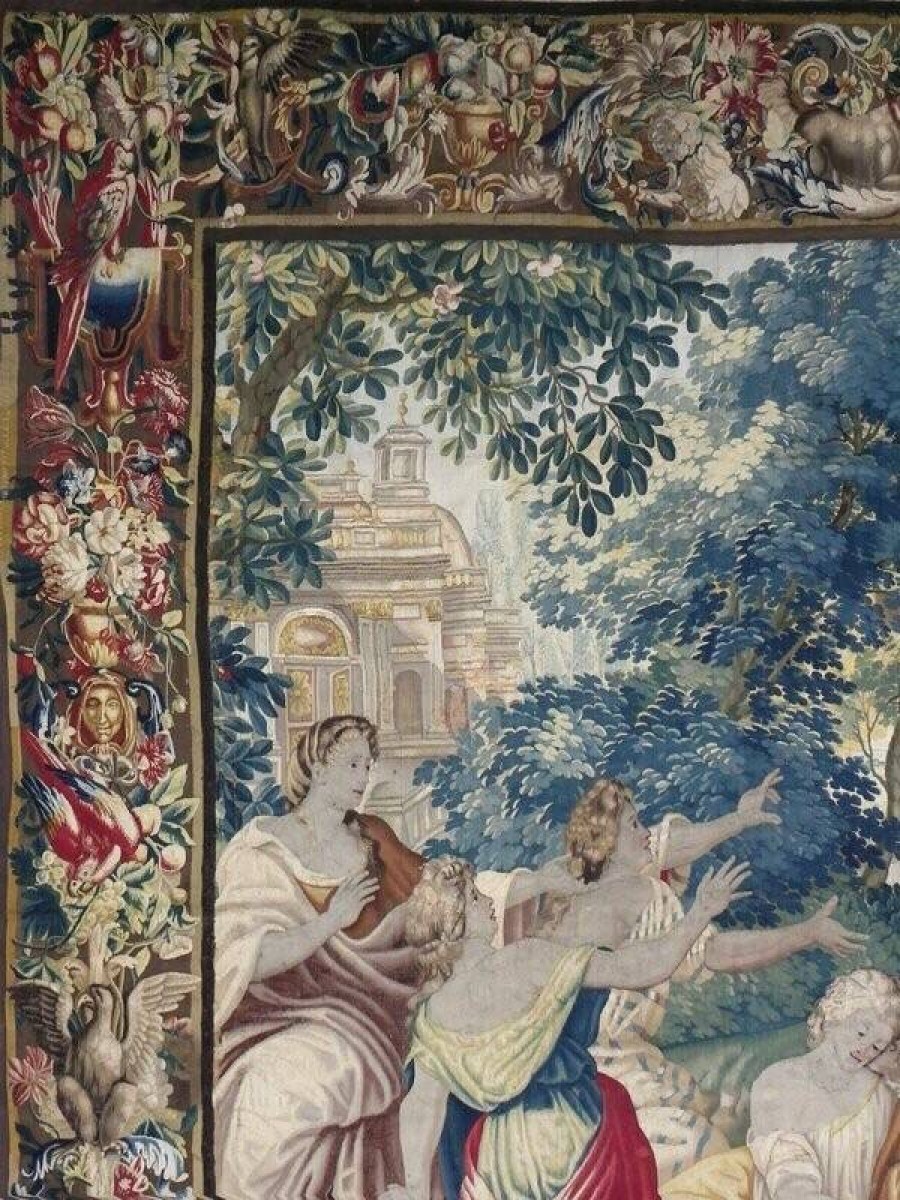
Brussels tapestry finely woven in wool and silk in the 17th century. Its subject is The Loves of the Gods – Apollo.
This tapestry is surrounded by a beautiful floral border.
Very fine state of preservation and beautiful colors.
As many scholars have pointed out, Apollo is paradoxically perhaps the most Greek of all the gods and has a long history in Greece predating the Classical period.
It is also possible that his origins go back to the Dorian people of the Peloponnese, who worshipped a god named Apéllôn, protector of herds and human communities; it would seem that the term derives from a Dorian word apélla, meaning “sheepfold” or “assembly.” The Dorian Apollo may have been a syncretic figure combining several local pre-Greek divinities, just as the Greek Apollo represents the fusion of several models.
Apollo, in Latin Apollo, is the Greek god of the arts, song, music, male beauty, poetry, and light. He is the leader of the nine Muses. Apollo is also the god of purification and healing, but can bring plague with his bow; finally, he is one of the principal gods endowed with the power of divination, consulted, among other places, at Delphi, where he delivered his oracles through the Pythia of Delphi. He was also worshipped by the Romans, who adopted him very early without changing his name. From the 5th century BC onward, they adopted him for his healing powers and built temples in his honor.
Shortly after Apollo’s birth, Zeus gives him a chariot drawn by swans and orders him to travel to Delphi. The god does not obey immediately, but flies aboard his chariot to the land of the Hyperboreans, which, according to some versions, is the homeland of Leto. There lives a sacred people who know neither old age nor disease; the sun shines there continuously. Apollo remains there for a year before departing for Delphi. He returns there every nineteen years, the period after which the stars have completed a full revolution (a Metonic cycle). From the spring equinox until the rising of the Pleiades, he dances there every night while accompanying himself on the lyre. According to other legends, he spends the winter months there every year, returning to his place of worship — Delphi or Delos — only with the arrival of spring.......