Offered by Ars Antiqua
REQUEST INFORMATION

Old Masters paintings, furniture, sculptures and modern art
19th Century
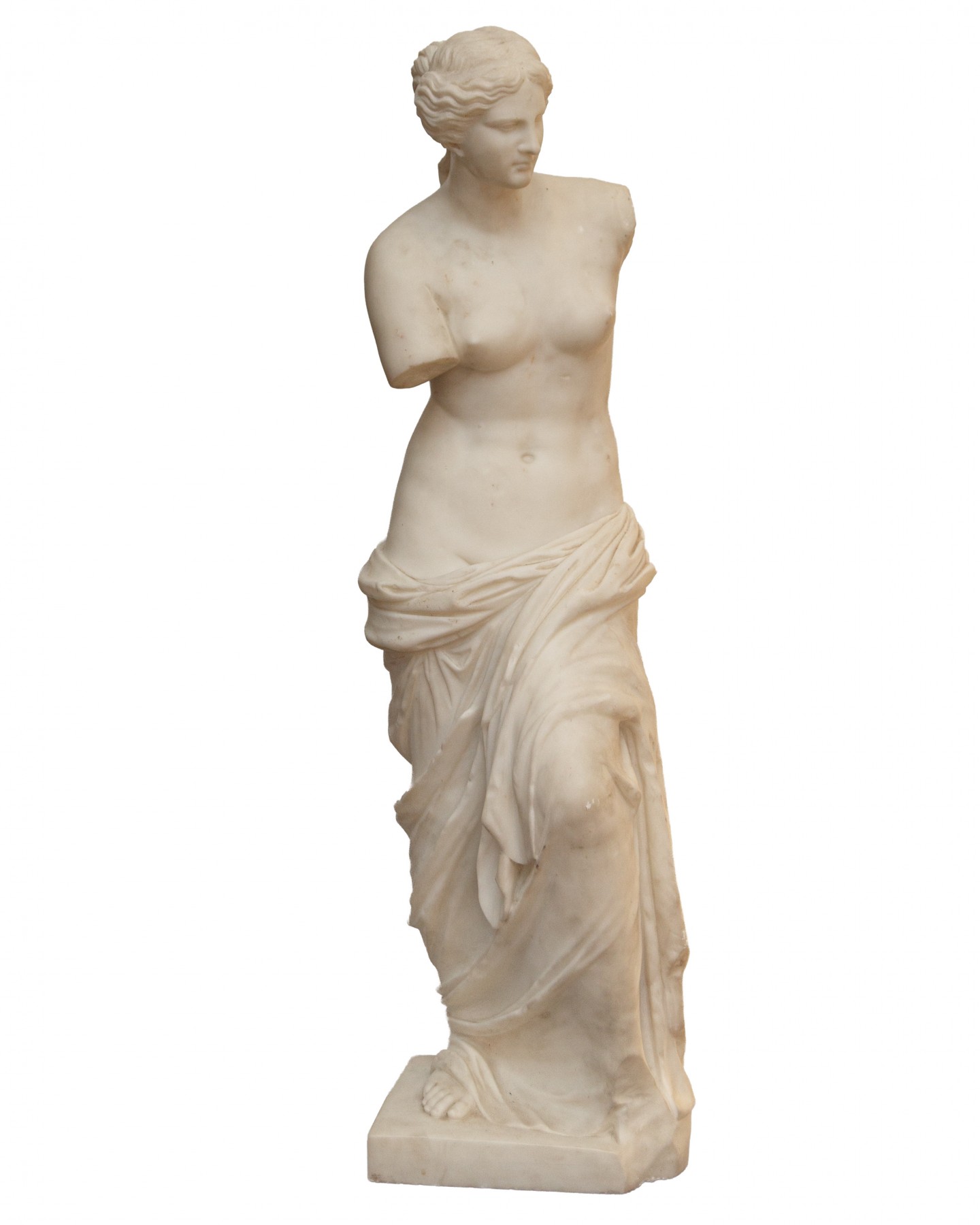
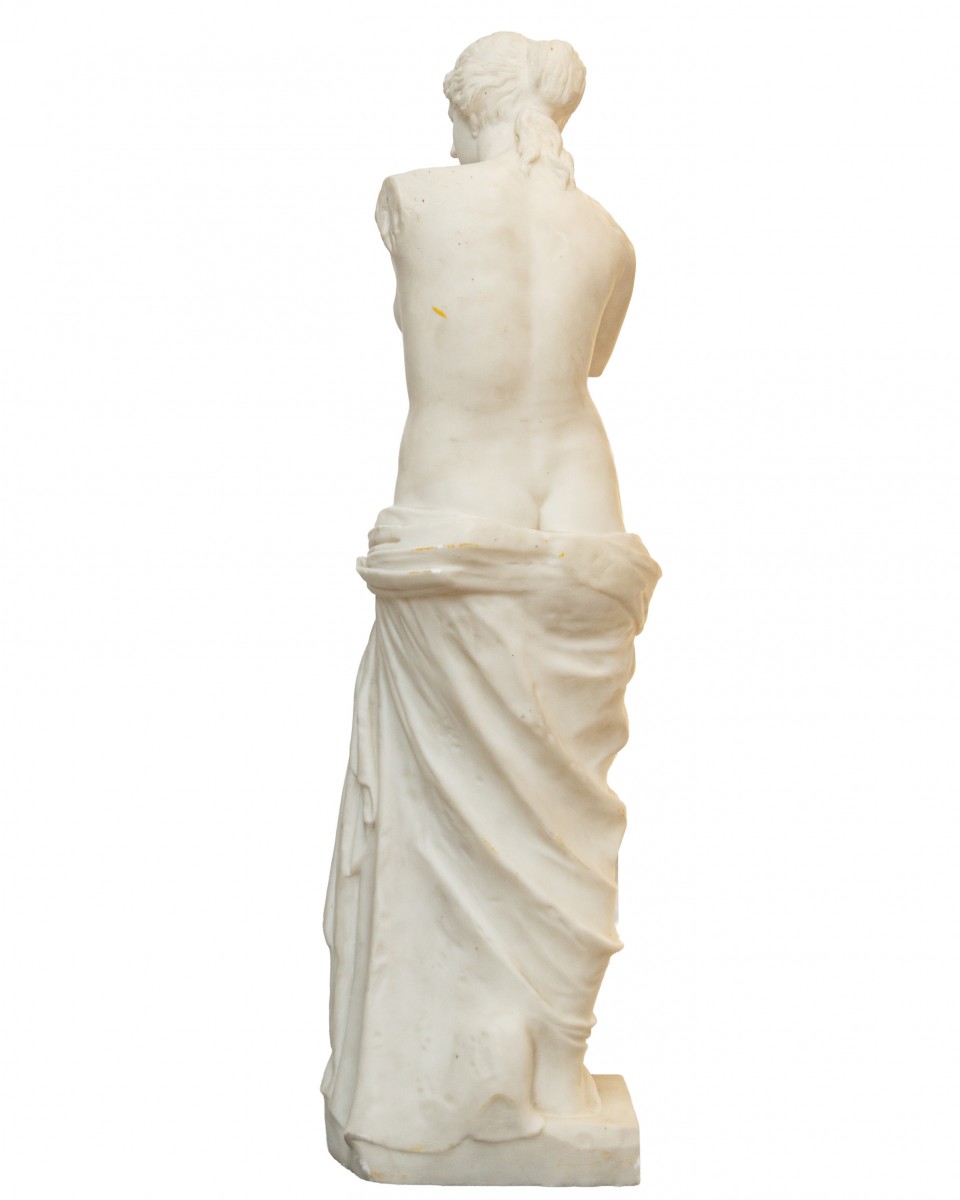
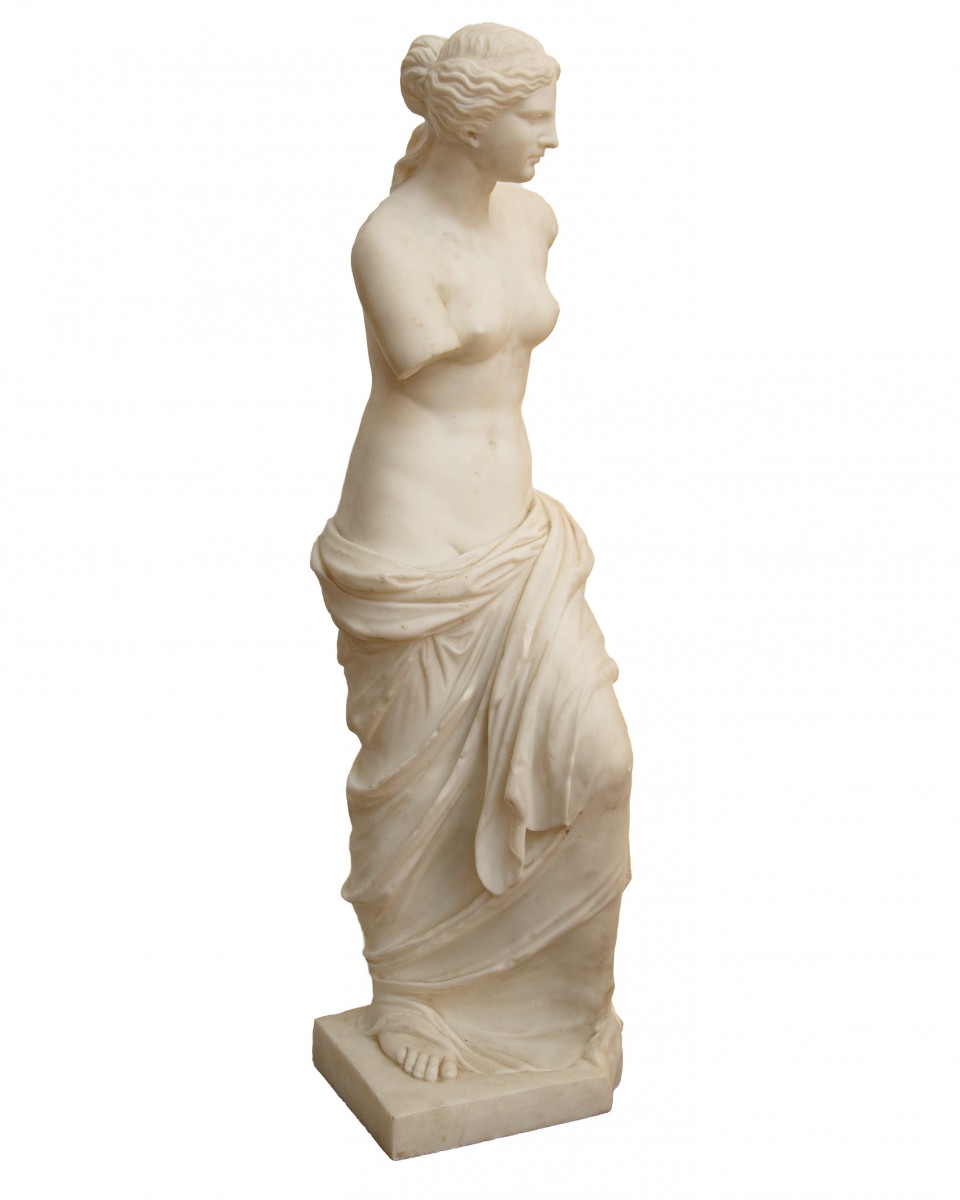
Venus de Milo
Marble, height 98 cm
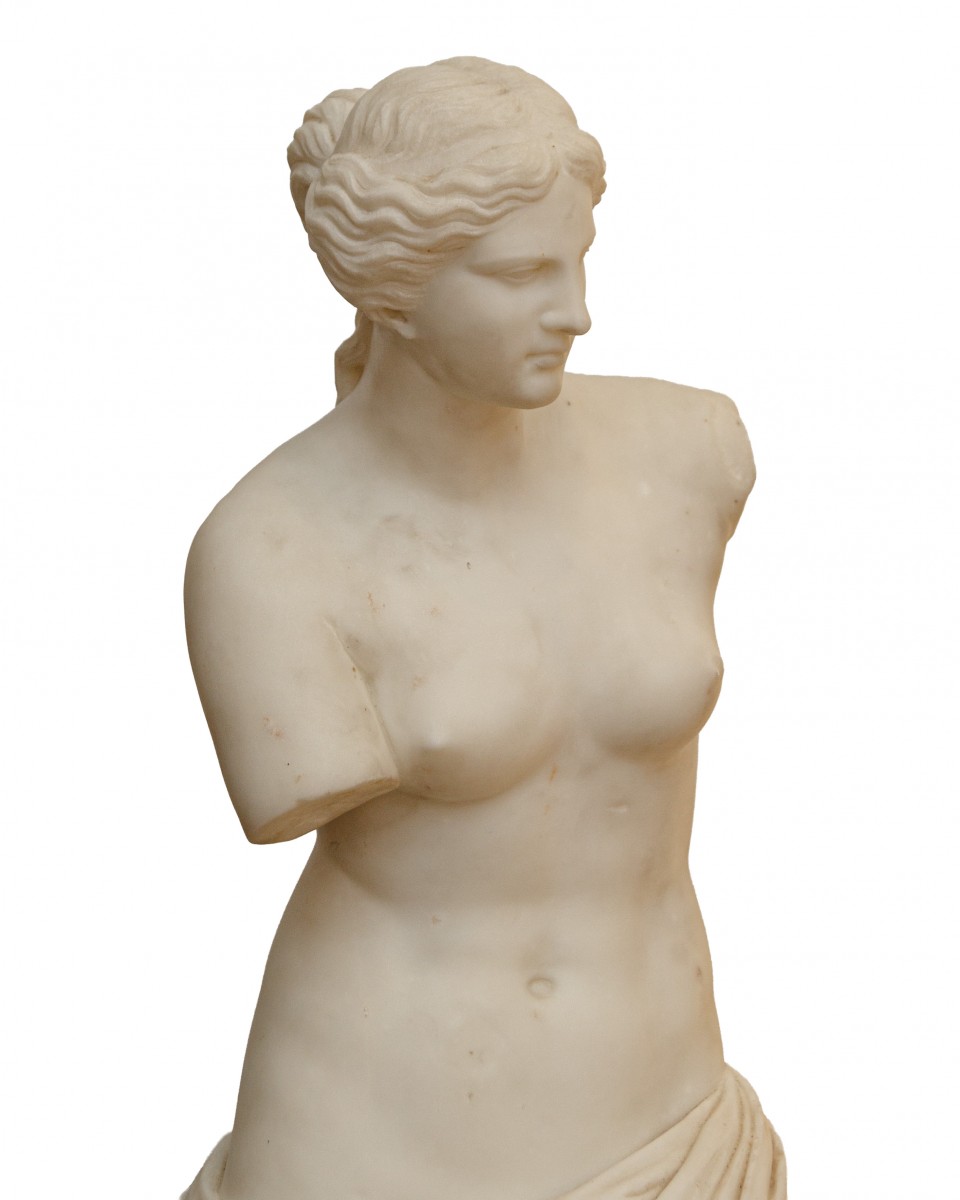
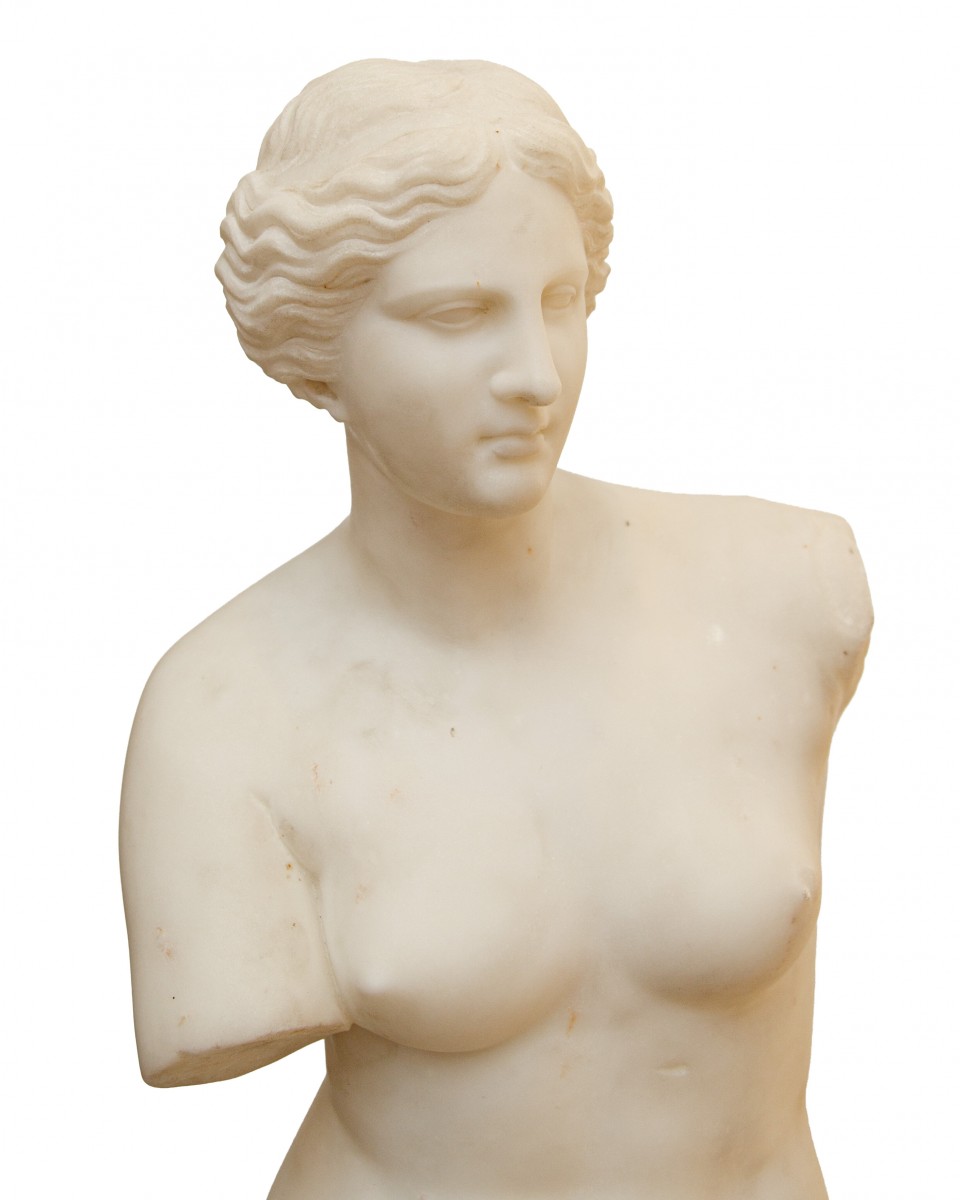
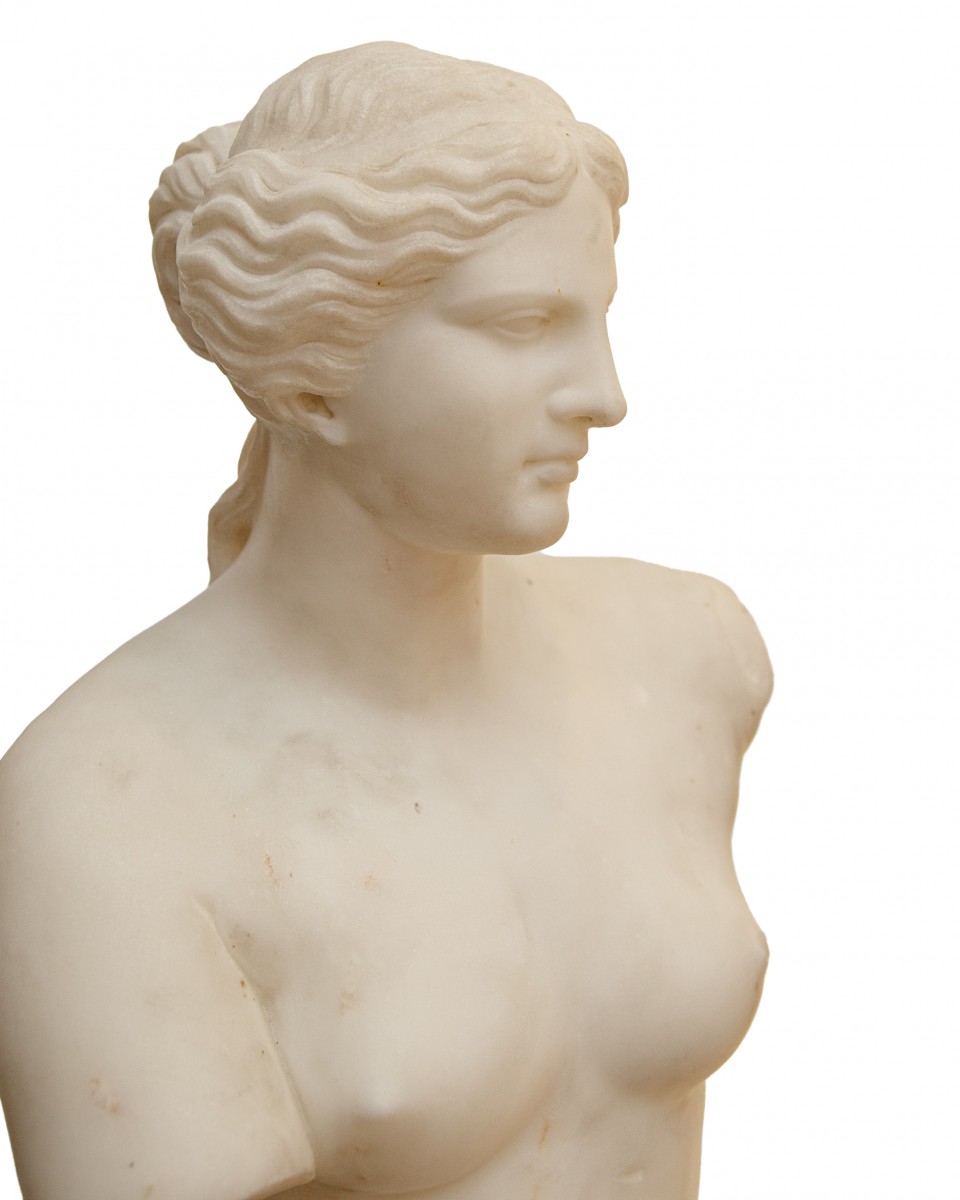
The sculpture in question is a refined 19th-century rendering in white marble of the famous Venus de Milo, one of the most iconic masterpieces of Greek statuary, currently preserved in the Louvre Museum in Paris. The original, dating to around 130 BC and discovered in 1820 on the island of Milos by a peasant and French officers, is conventionally attributed to the sculptor Alexandros of Antioch. The work belongs to the Hellenistic period, while skillfully fusing elements of the Classical tradition of the 5th and 4th centuries BC, such as the expressive composure of the Praxitelean face and the sinuous chiasmus posture derived from Lysippos. The goddess, originally identified as Aphrodite or perhaps Amphitrite, is depicted standing with a bare torso and rich drapery wrapped around her hips, falling downward in deep folds that emphasize the body's rotational dynamism. The absence of her arms—lost either at the time of discovery or during the chaotic transport to France—paradoxically became the defining feature of the work, transforming it into an absolute symbol of ideal beauty and evocative classical fragmentariness.
During the 19th century, the acquisition of the Venus by the French crown triggered a major cultural propaganda campaign led by the director of the Louvre, aimed at glorifying the work to overshadow the loss of the Parthenon sculptures returned to Britain and the masterpieces looted by Napoleon and returned to Italy. This institutional fervor soon translated into an extraordinary global dissemination of the iconography. The Venus de Milo became the quintessential educational and academic model, reproduced endlessly for art academies, museums, and private collections across Europe. While the molding workshops of the Louvre produced official plaster casts, specialized art workshops responded to the massive demand from the upper middle class by creating marble renderings of various sizes, often intended to adorn the grand reception rooms and winter gardens of private residences.
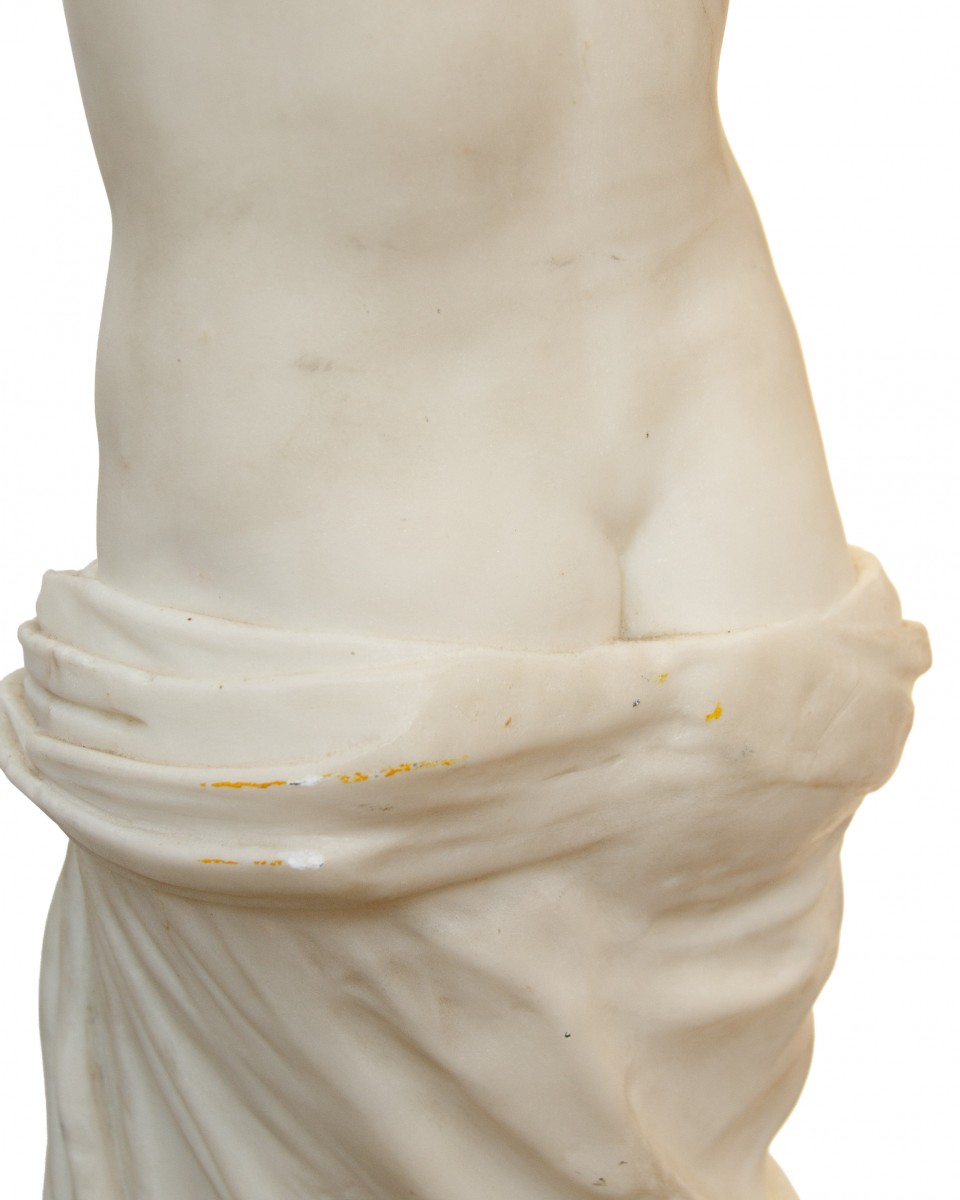
Standing at 98 centimeters in height, the present version fits seamlessly into this collecting phenomenon of the Grand Tour and the 19th-century Neoclassical revival, serving as a scaled reduction of exceptional technical skill. The 19th-century sculptor faithfully reproduced not only the characteristic loss of the arms—by then an integral part of the goddess's visual mythos—but also succeeded in rendering the softness of the marble skin in contrast with the chiaroscuro of the drapery, demonstrating how the cult of antiquity continued to shape the aesthetic taste and interior design of the era.
Delevery information :
Les frais d'expédition seront calculés au moment de la commande en fonction de la destination, des dimensions et du poids du tableau, ainsi que de l'assurance couvrant la valeur totale de l'œuvre.
For paintings purchased from abroad: following payment, the application process to obtain the export license (ALC - Attestato di Libera Circolazione) will be initiated. All antiques shipped abroad from Italy require this document, which is issued by the Ministry of Cultural Heritage. The procedure may take 3 to 5 weeks from the date of request; therefore, the painting will be shipped as soon as the document is obtained