Offered by Ars Antiqua

Old Masters paintings, furniture, sculptures and modern art
Giacomo Francesco Cipper, known as il Todeschini (Feldkirch, 1664 – Milan, 1736)
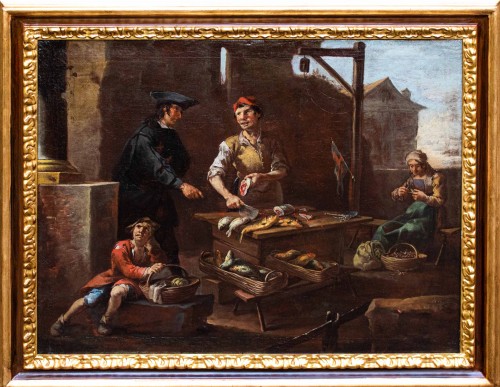
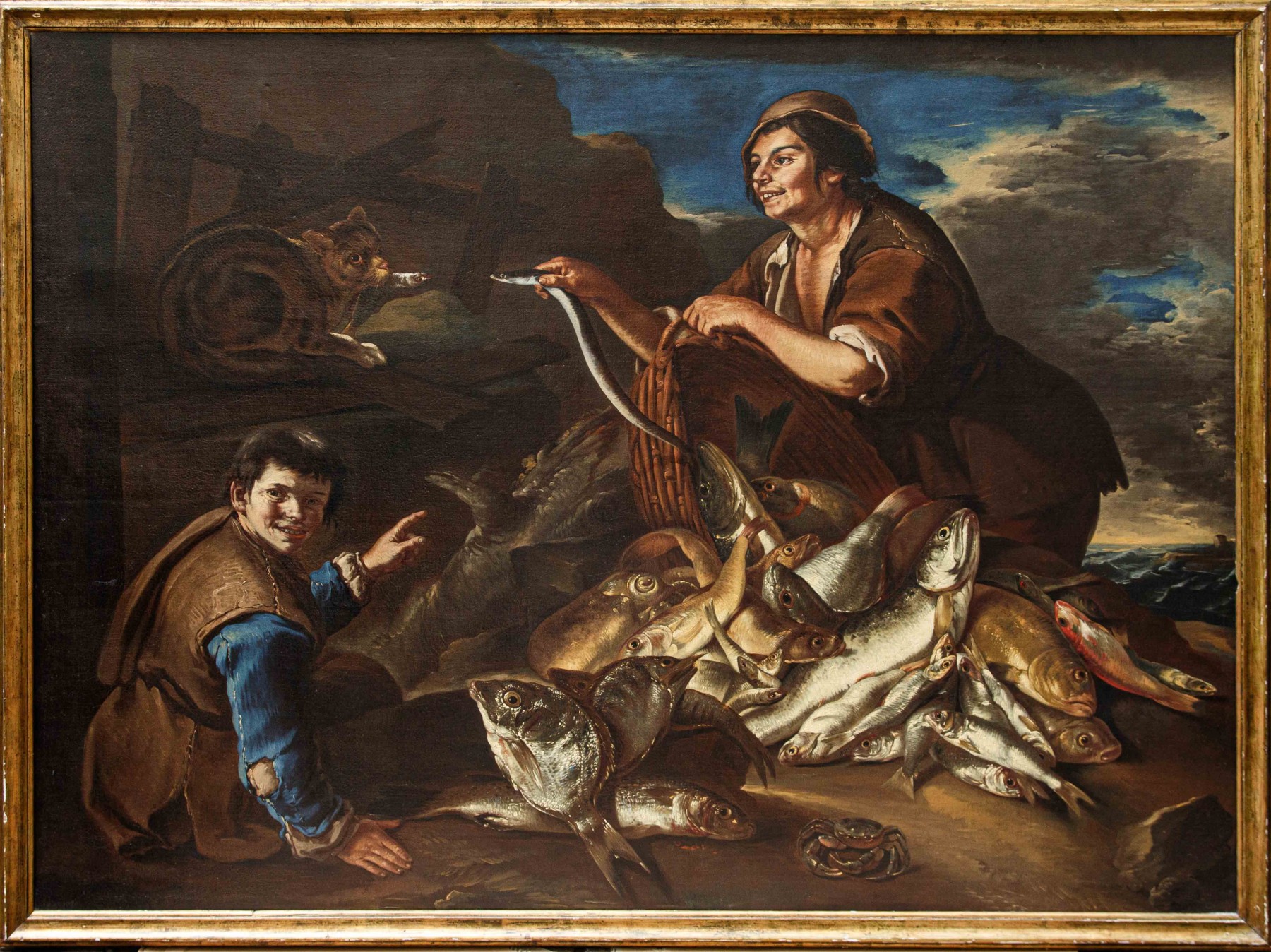
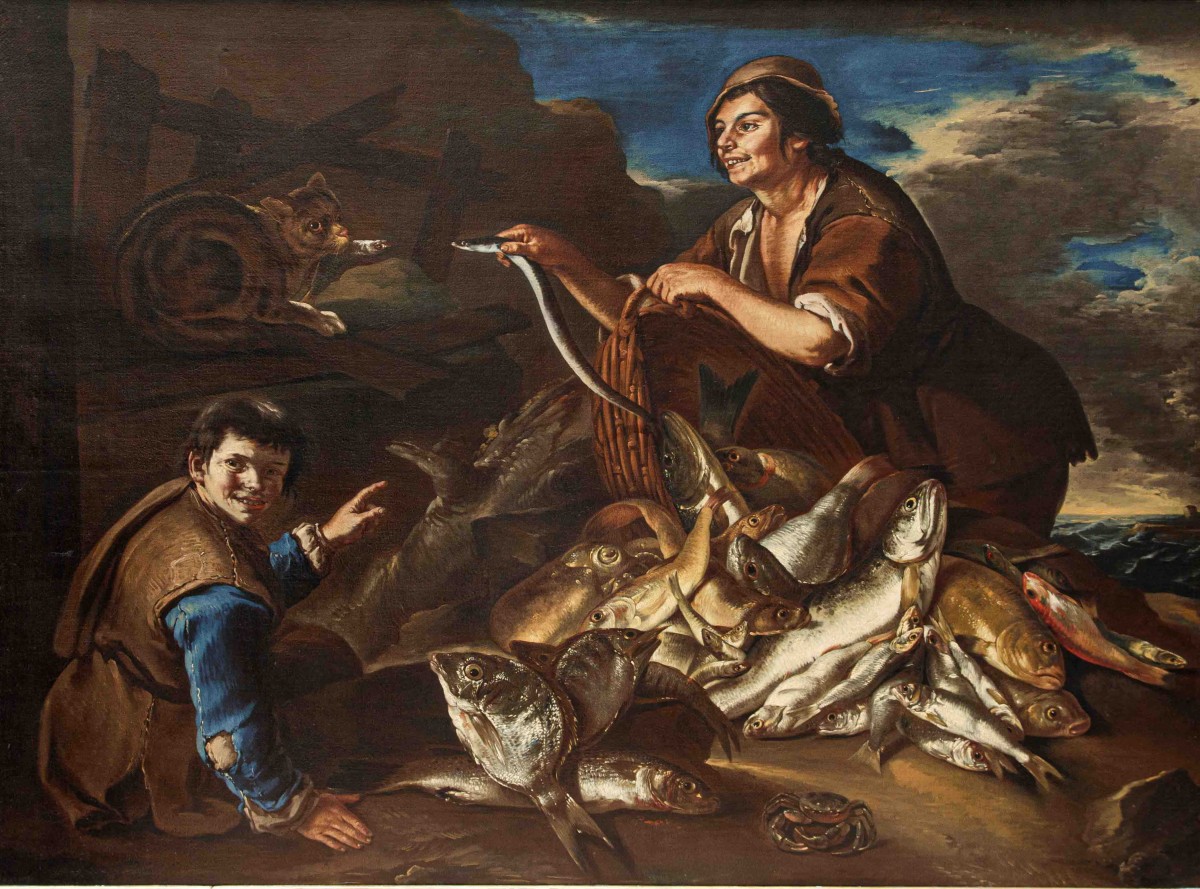
Scene with Fishermen
Oil on canvas, 130 x 175 cm
With frame, 142 x 187 cm
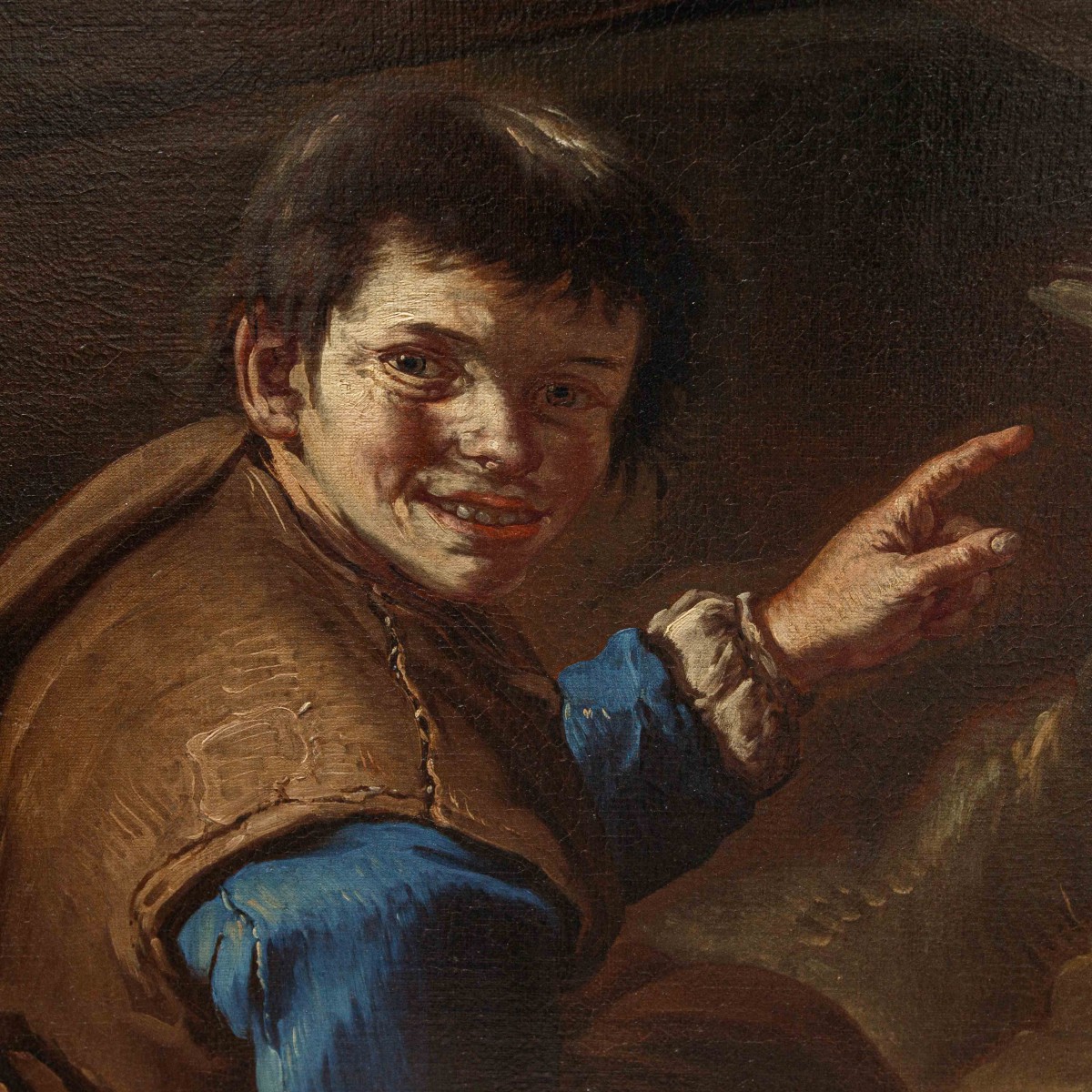
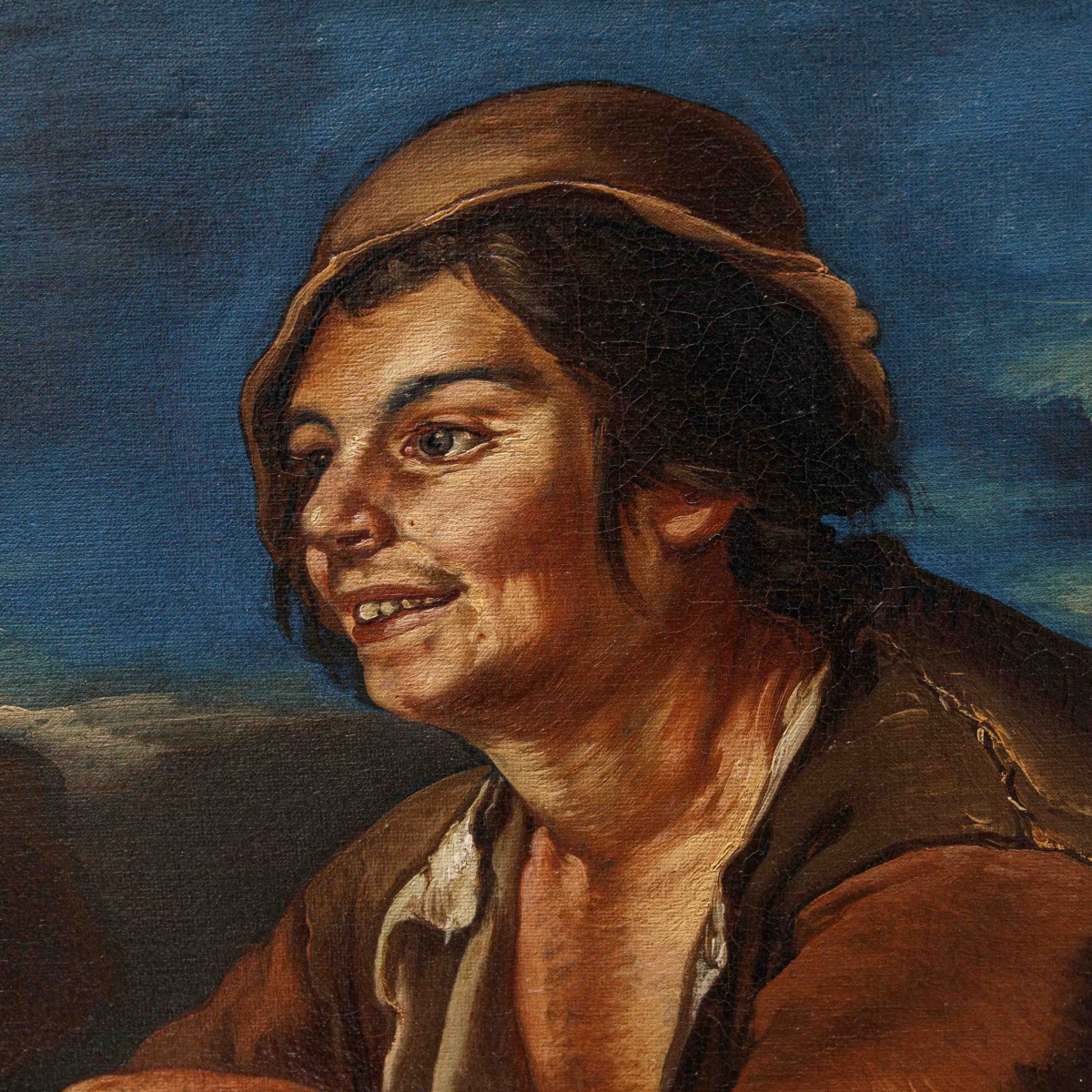
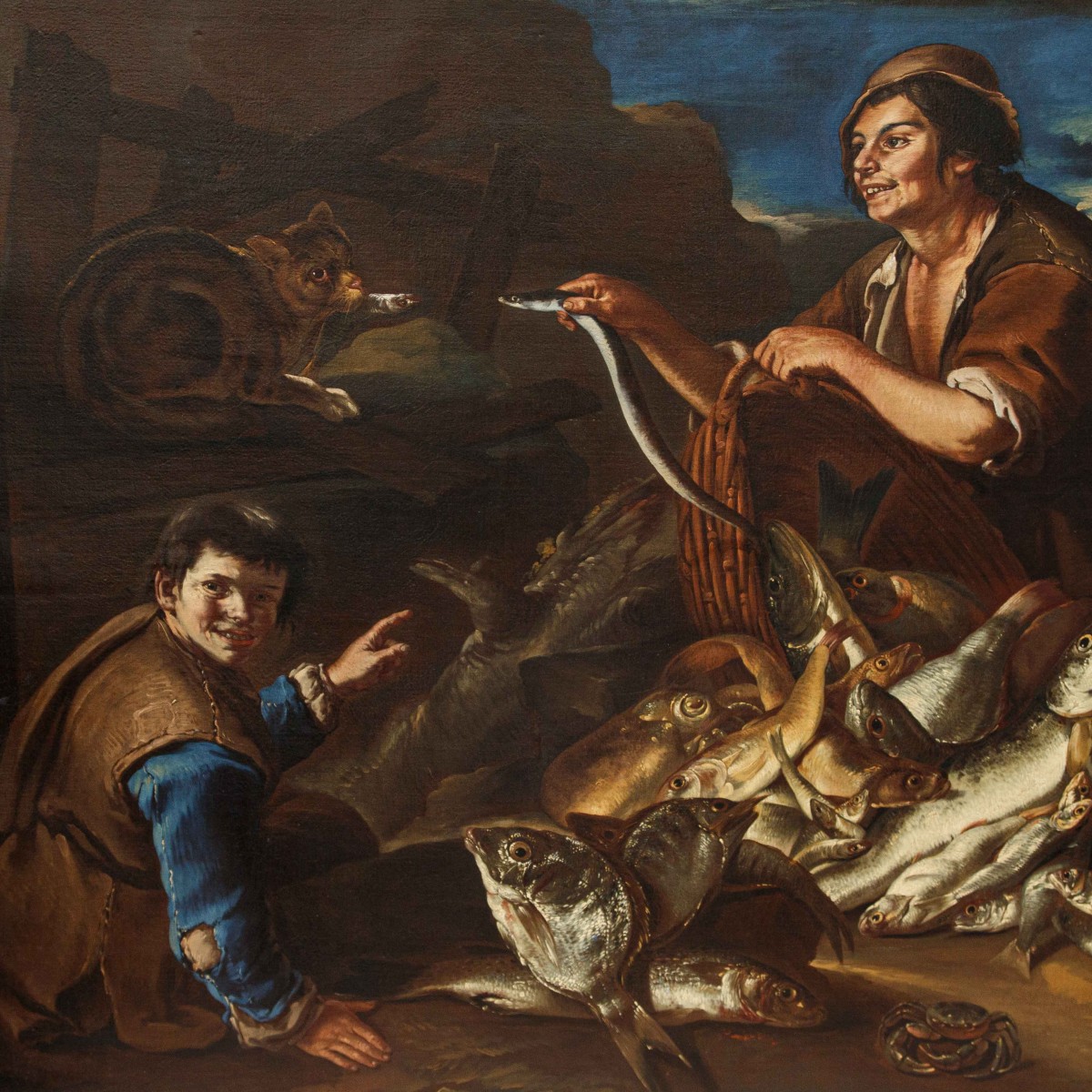
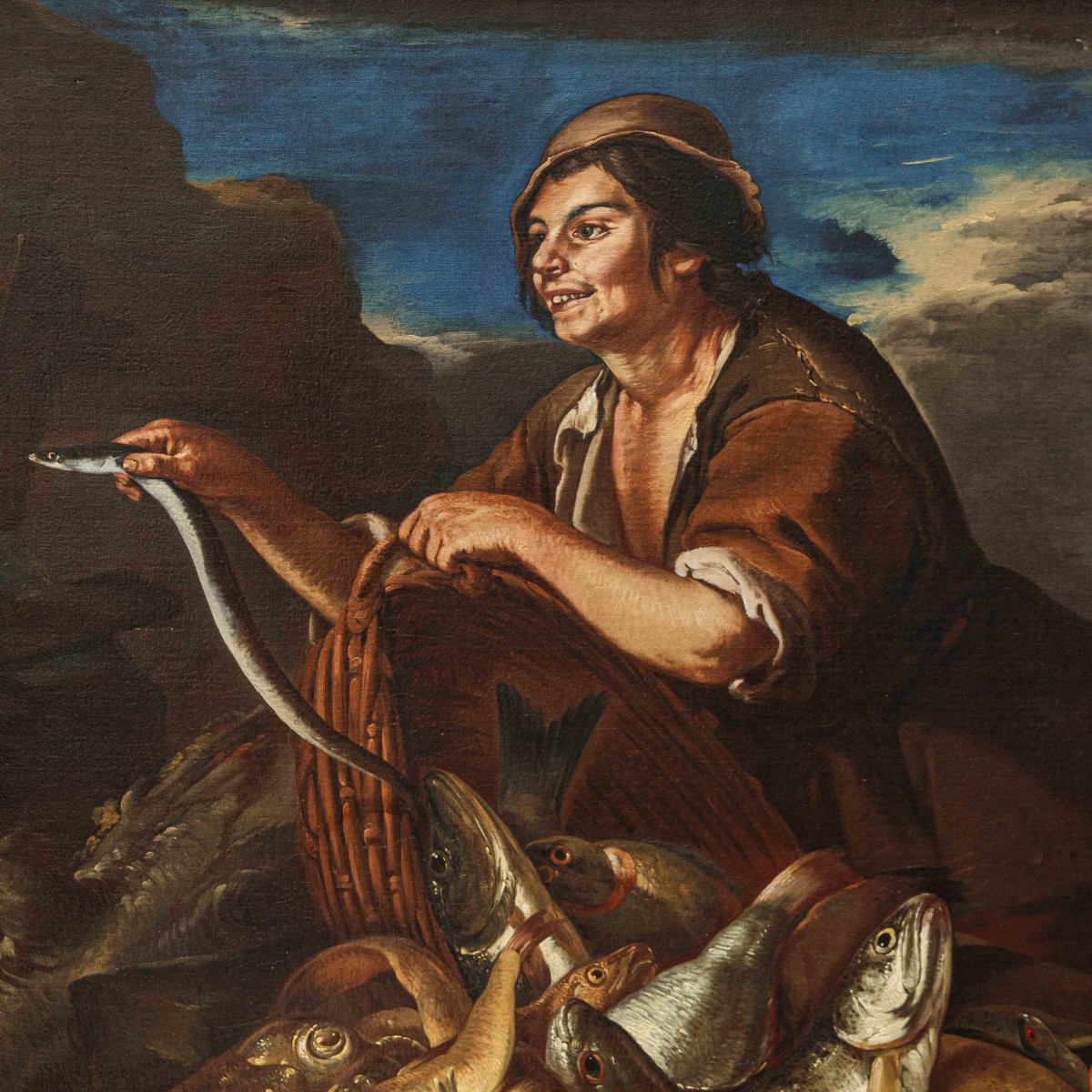
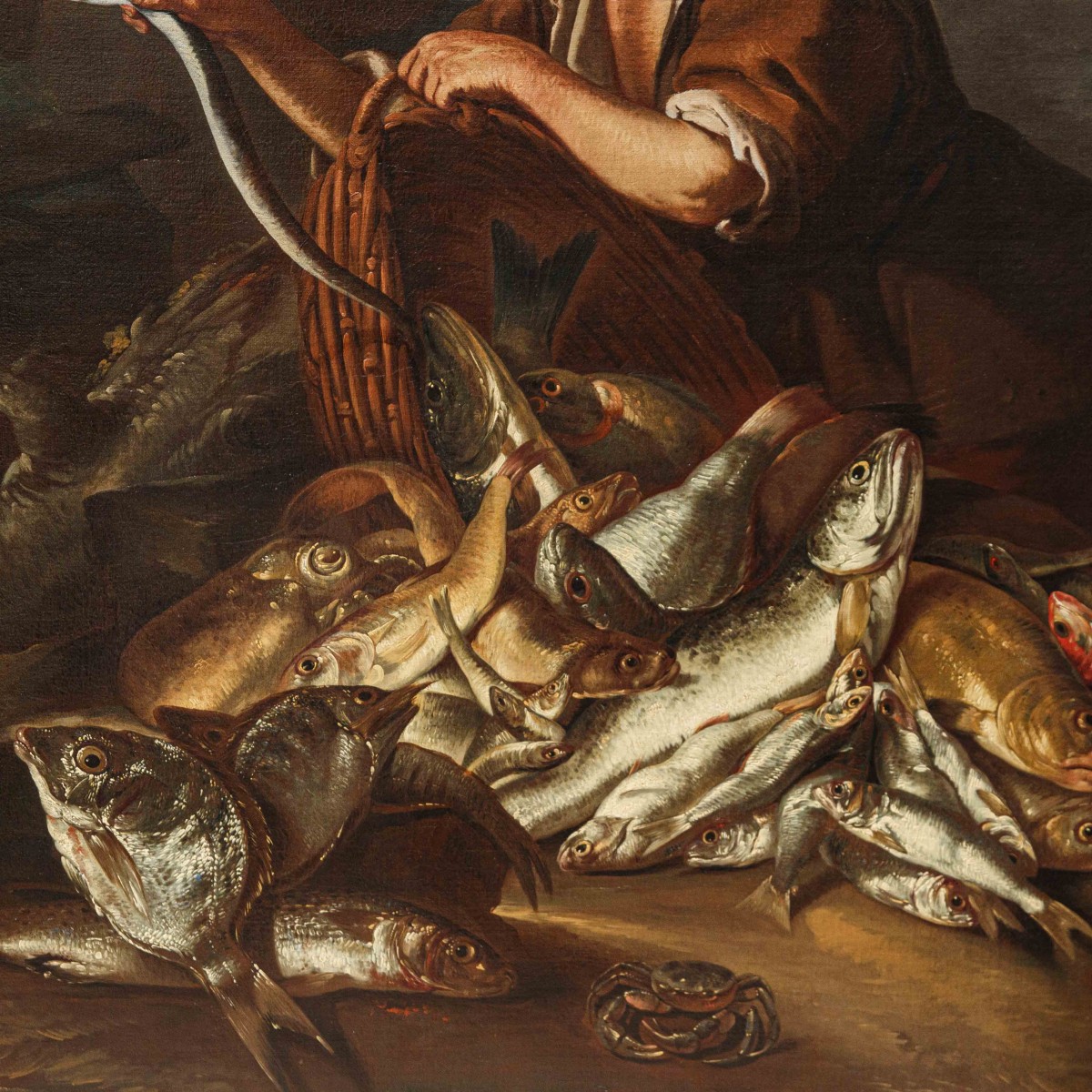
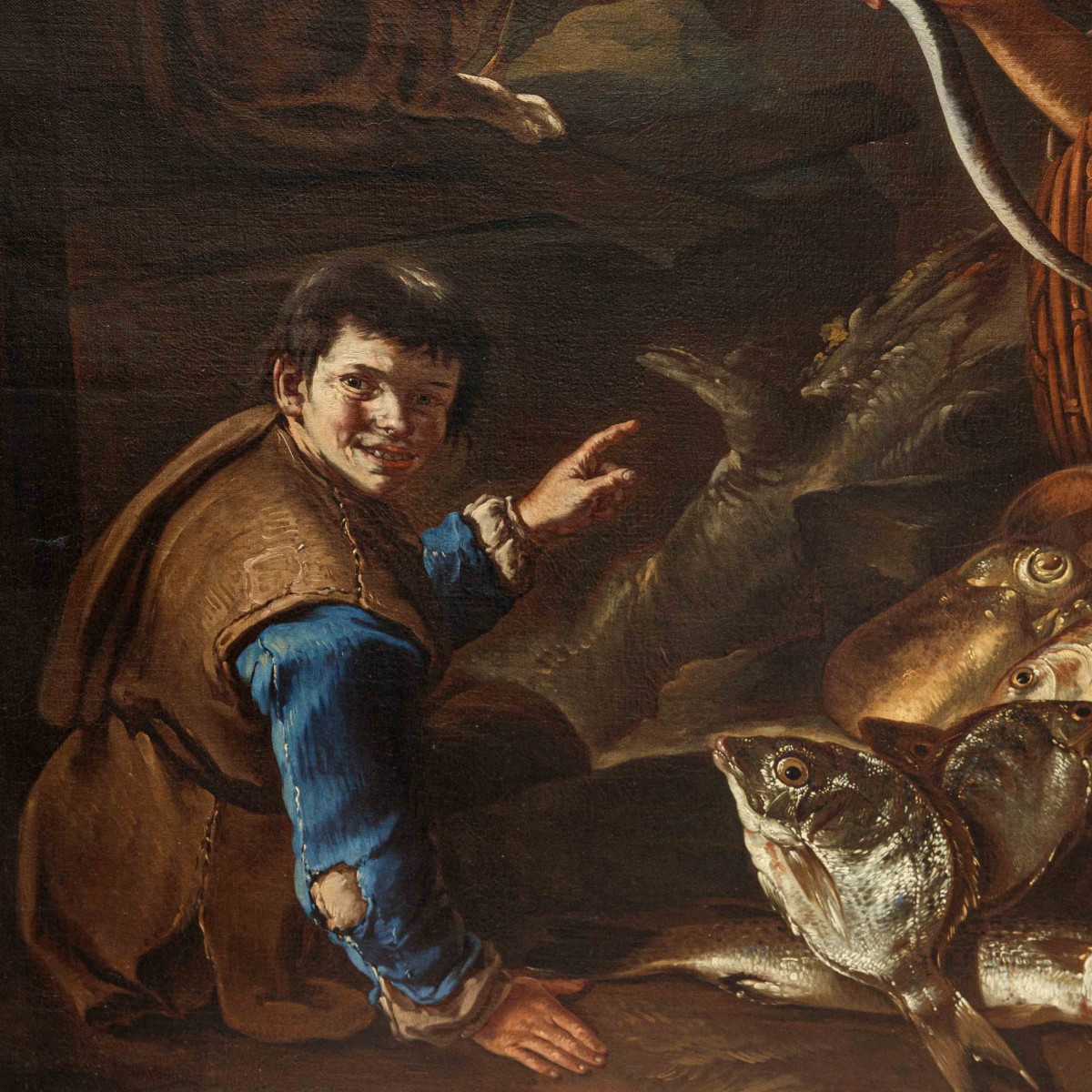
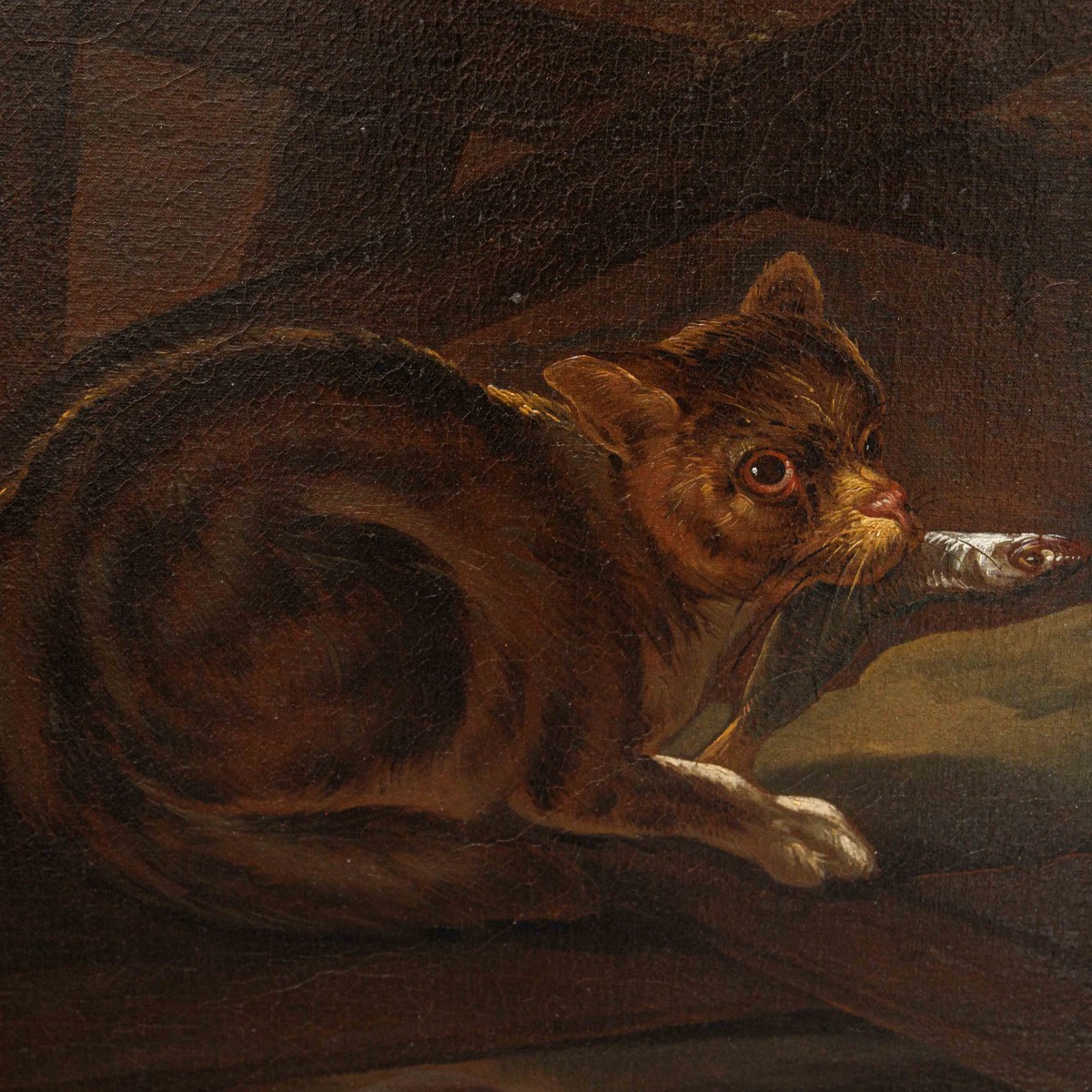
This oil-on-canvas work is a painting by Giacomo Francesco Cipper, known as "Il Todeschini." It depicts a young woman tipping the day's catch out of a large wicker basket while holding an eel close to a cat, which is stealthily perched on wooden planks waiting to grab a prey. Seated on the ground with his back turned is another young man, rotating his head toward the viewer and pointing to the scene. The painting is constructed with a great theatrical effect across two distinct perspective planes, characteristic of Todeschini’s typical style. The well-developed fish still life demonstrates the painter's remarkable achievements as a still-life artist.
Todeschini was born in Feldkirch in 1664 but settled in Milan, where he died in 1736. While details regarding his artistic training remain unknown, his influences are undeniable: one can trace debts to Eberhard Keilhau (1624–1687), known as Monsù Bernardo, a Danish-born artist active in Milan between 1654 and 1656 who dedicated himself to depicting the daily lives of humble folk. The artist’s Austrian roots and Lombard adoption encouraged contact with the contemporary lessons of the aforementioned Keilhau, as well as drawing inspiration from earlier figures such as Alessandro Allori (1535–1607), Onofrio Gabrielli (1619–1706), and Pasquale de Rossi (1641–1722). Cipper varied Keilhau’s models by borrowing his compositional format, which often placed figures seated in the foreground or occupying the entirety of the canvas, leaving less emphasis on the background—frequently rendered as an undefined space or, as in the work at hand, in small landscape views.
Todeschini's primary goal was to candidly portray peasants, artisans, or street vendors intent on their daily chores or moments of leisure. Certain themes recur frequently, such as market scenes—of which this canvas is a clear example—alongside peasants' meals, gaming scenes, or music lessons. These are presented through simplified layouts, where the protagonists are described with lively optimism. Furthermore, Cipper inherited a taste for allegorical and symbolic meanings from Nordic tradition and Keilhau, providing a subtext to scenes that are only seemingly trivial and lighthearted.
It is easy to compare Todeschini’s repertoire with that of Giacomo Ceruti, known as Il Pitocchetto, with whom he likely had close contact during the second decade of the 18th century following Cipper’s stay in Bergamo and Brescia. However, while the Austrian painter portrays humble people with deliberately stereotyped expressions meant to evoke laughter, Giacomo Ceruti presents a melancholic psychological investigation of the paupers (pitocchi).
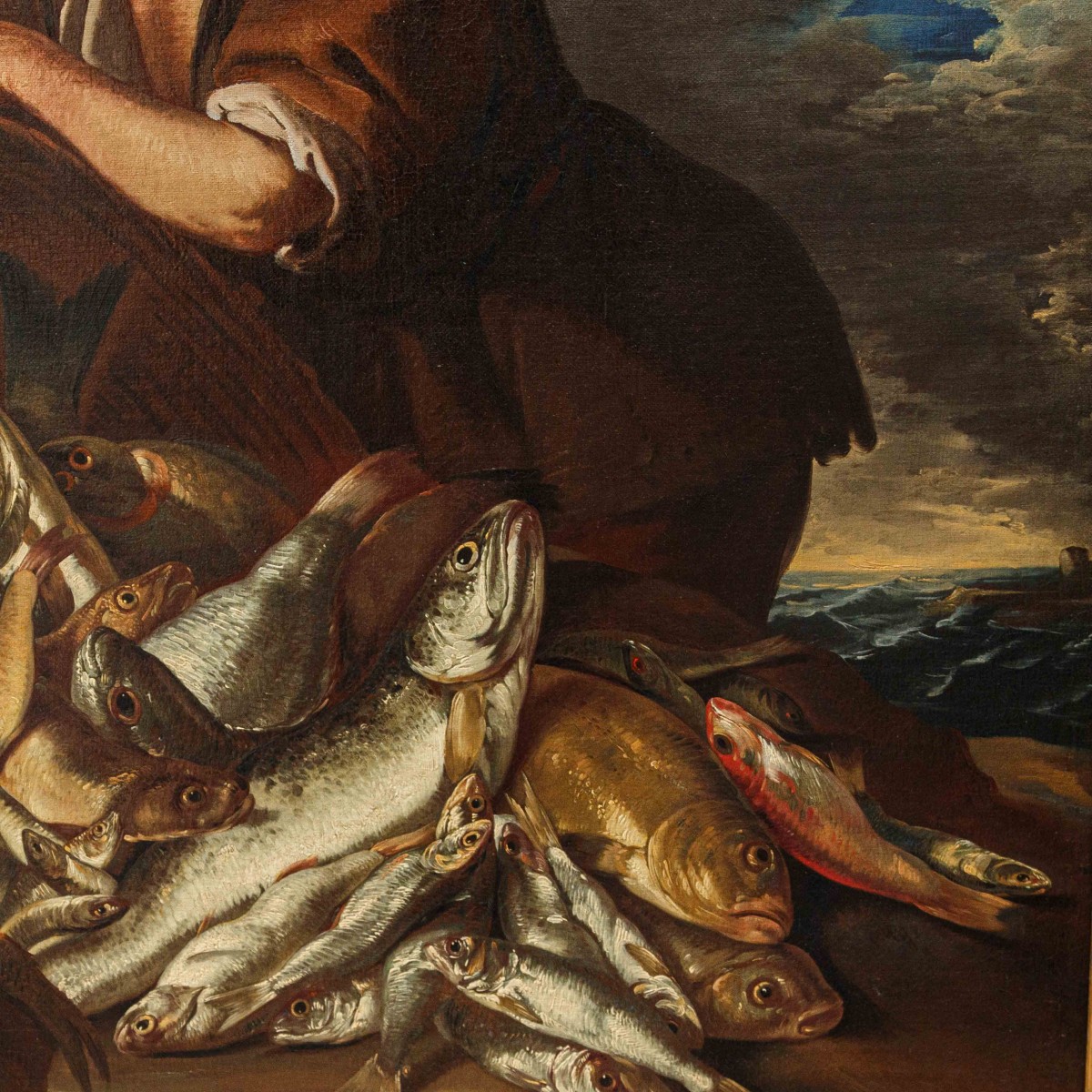
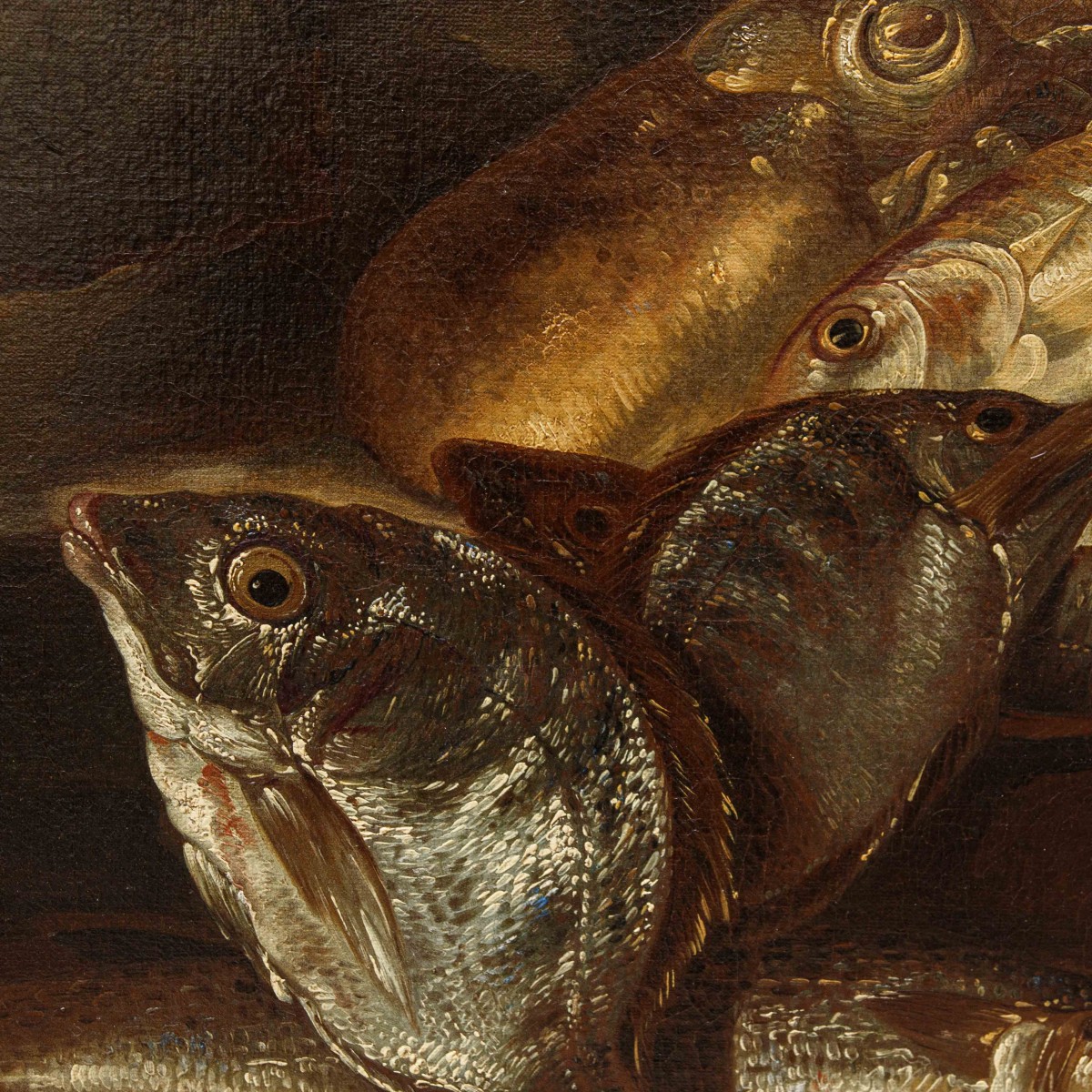
Within Todeschini's body of work, there are numerous depictions similar to the one presented here. These combine everyday life scenes featuring multiple characters—sometimes accompanied by animals—with displays of still lifes featuring fish, game, or fruit and vegetables, all described with vivid naturalism. Note, for instance, the heap of fish in the painting under examination, rendered in minute detail and particularly effective in the sheen of their scales.
Paintings by Todeschini similar to this one can be seen in Fish Vendors at the Wilanów Palace Museum; Market Scene in a private collection demonstrates Todeschini’s skill in multi-figure compositions (including full-length figures), though it is the gesture of tipping the fish out of the basket that directly recalls this scene with fishermen. Porter and Fish Still Life illustrates Todeschini’s habit of frequently incorporating quotes from his other paintings into his work: indeed, in that canvas from a private collection, we see the figure of a young man looking at the viewer and pointing out the porter and the fishmonger at the center of the composition. An animal appears here as well—this time a dog rather than a cat. Above all, it is the setting that is strikingly similar: to the right of both the canvas under examination and Porter and Fish Still Life, a view opens onto a choppy sea beneath a cloud-dense sky.
Delevery information :
Les frais d'expédition seront calculés au moment de la commande en fonction de la destination, des dimensions et du poids du tableau, ainsi que de l'assurance couvrant la valeur totale de l'œuvre.
For paintings purchased from abroad: following payment, the application process to obtain the export license (ALC - Attestato di Libera Circolazione) will be initiated. All antiques shipped abroad from Italy require this document, which is issued by the Ministry of Cultural Heritage. The procedure may take 3 to 5 weeks from the date of request; therefore, the painting will be shipped as soon as the document is obtained