Offered by L'Egide Antiques
REQUEST INFORMATION
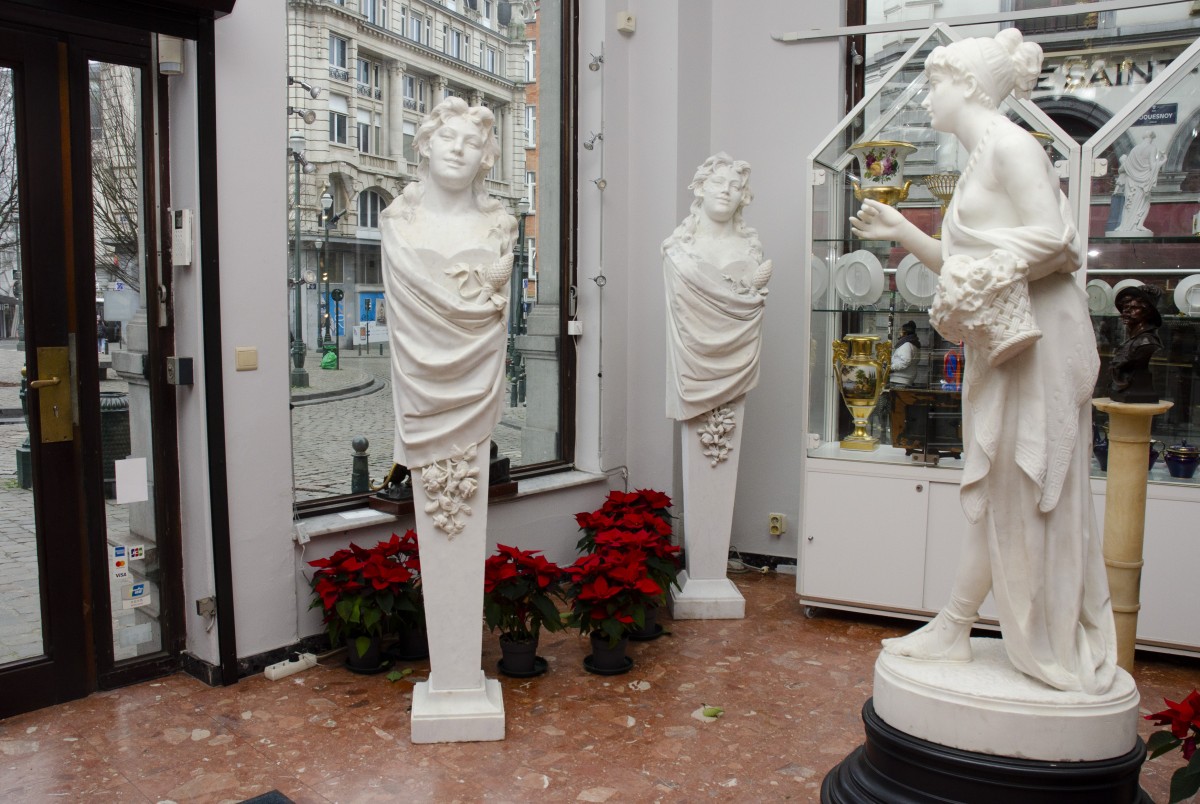

Porcelain, Scuptures, paintings and european Fine Arts, 18th and 19th century
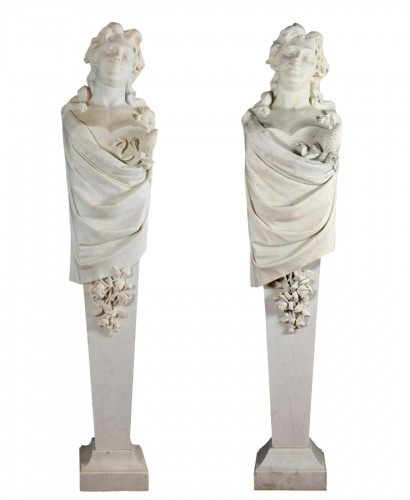
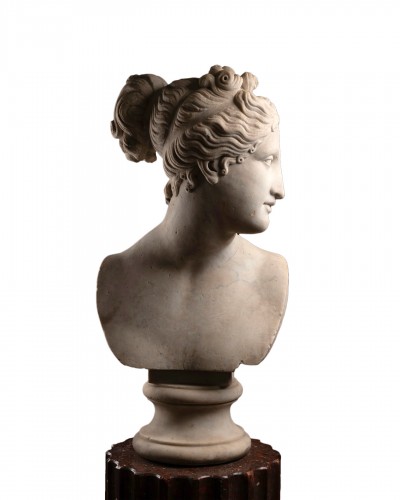
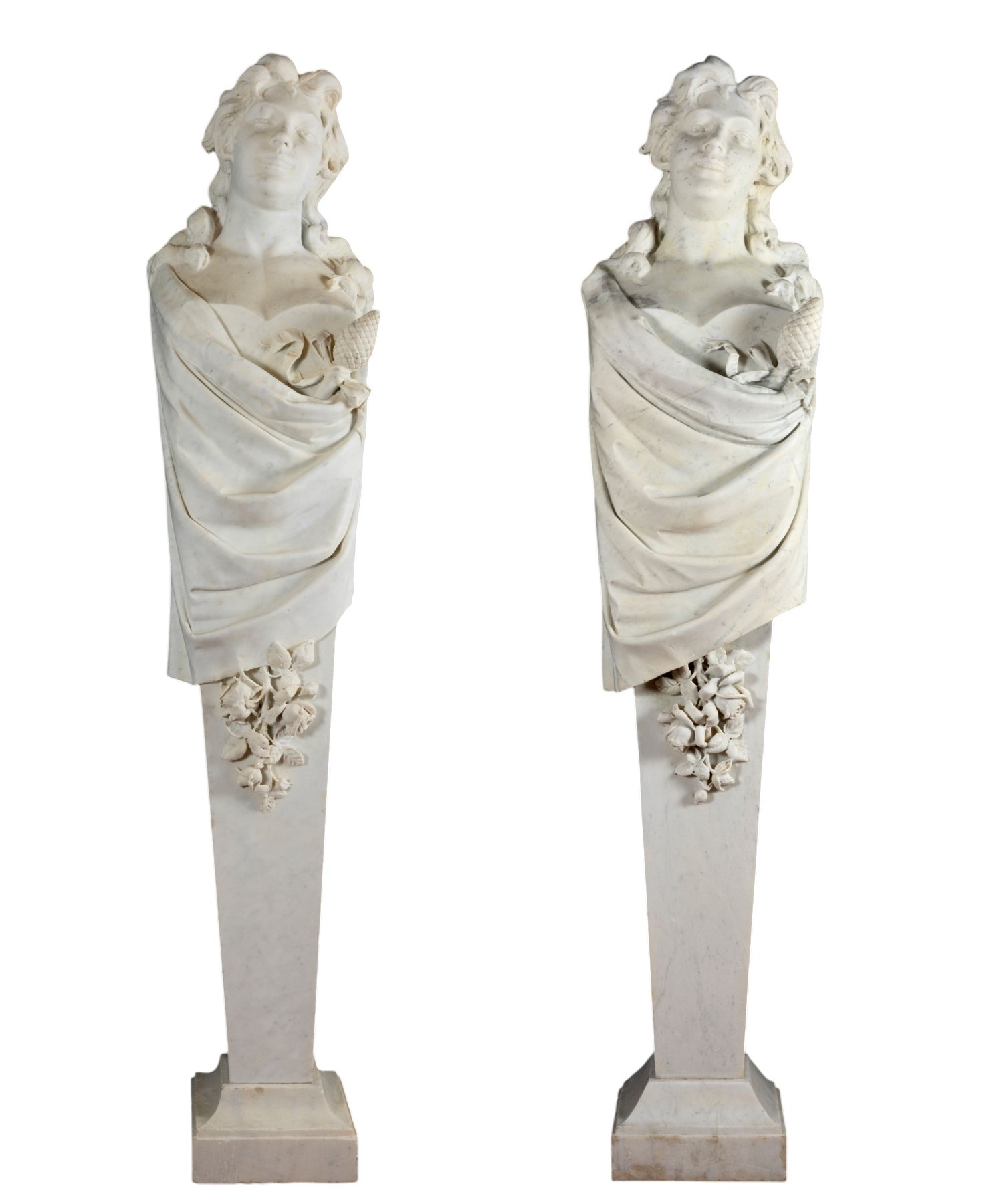
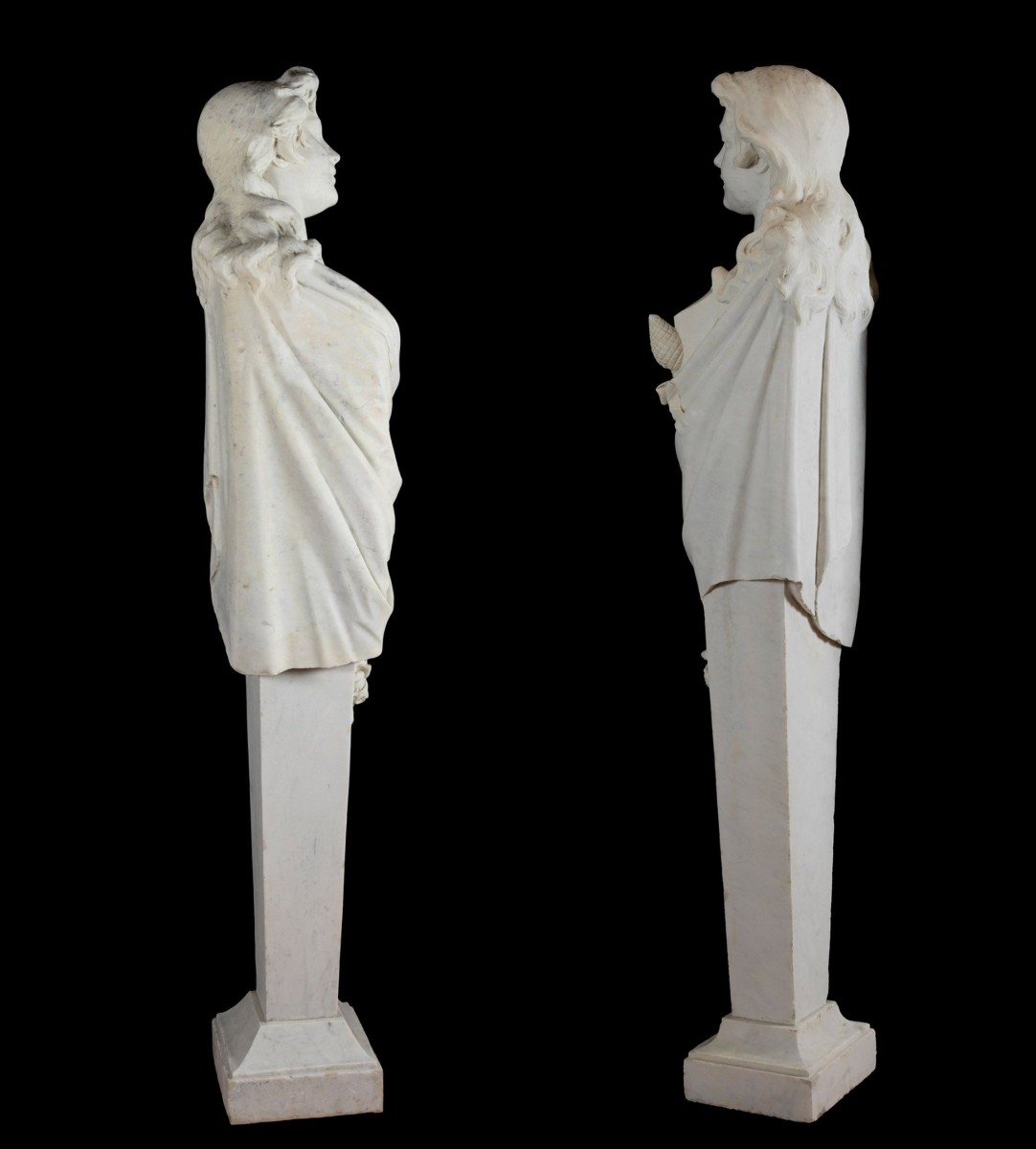
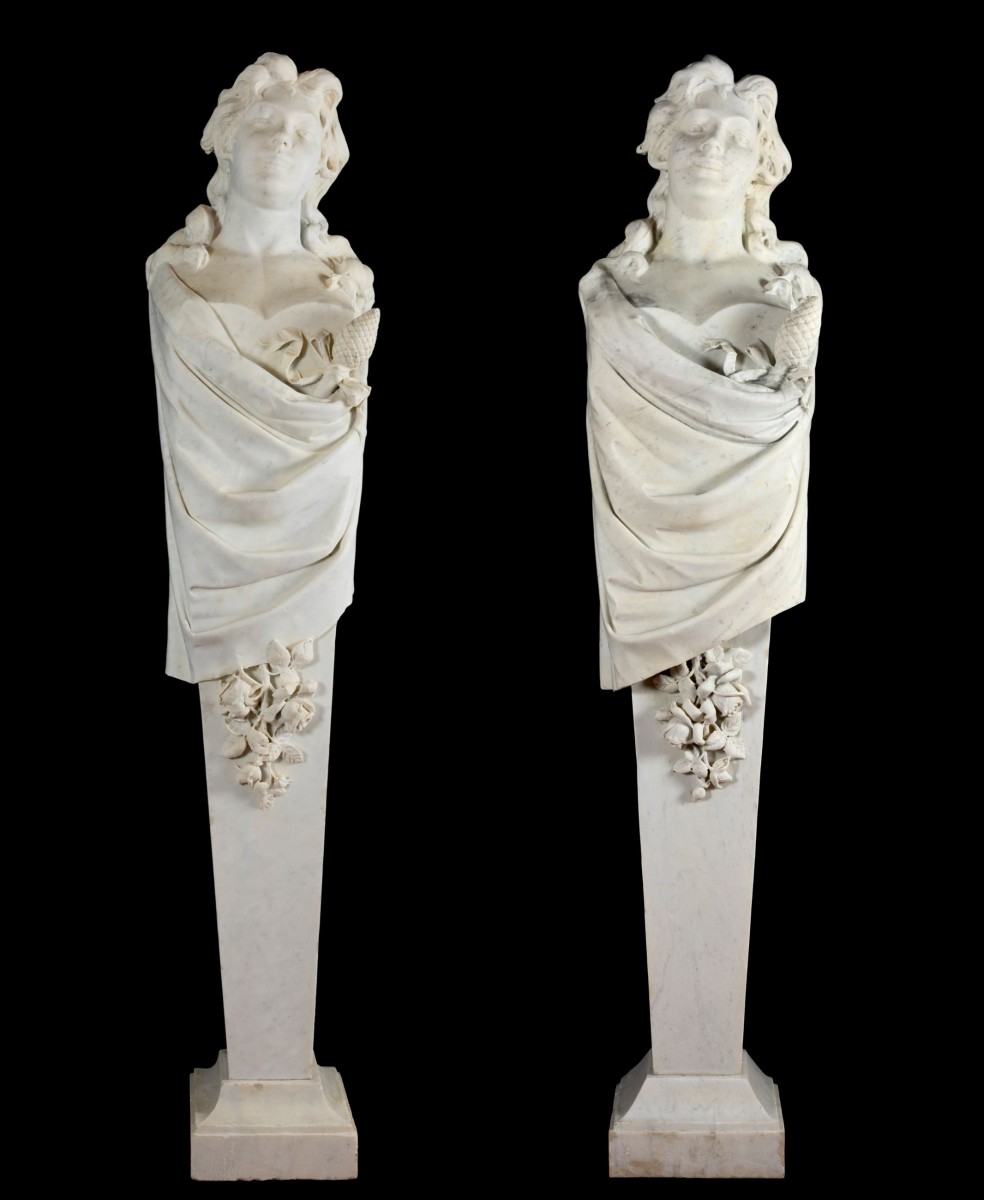
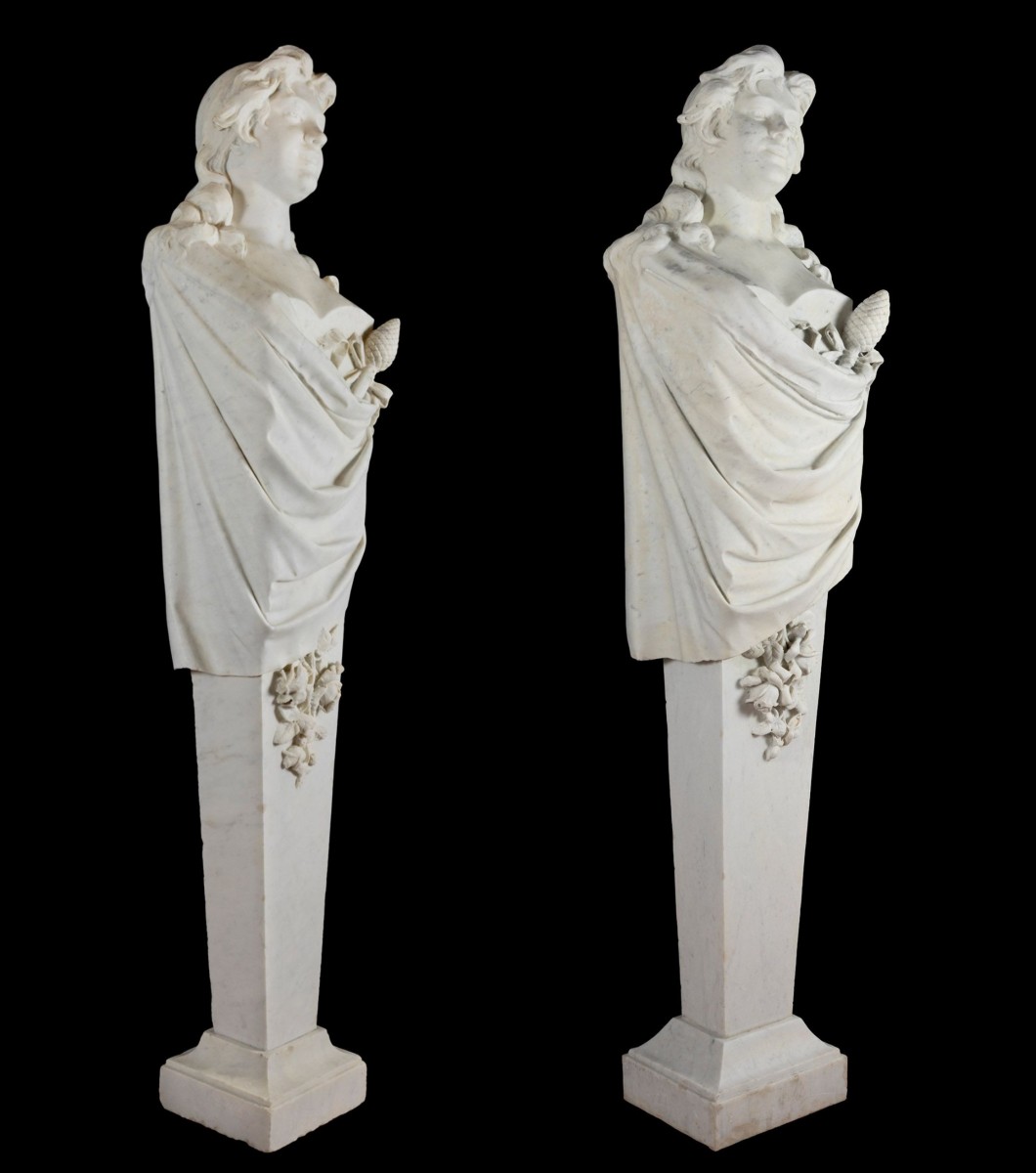
A pair of monumental Neoclassical Bacchante busts, carved in Carrara marble with a restrained elegance characteristic of the period. The serene Maenads, holding thyrses and flowers, are depicted enveloped in flowing cloaks that emphasize their verticality and the ideal of classical beauty. The treatment of their faces, with their absorbed and distant expressions, recalls models from ancient statuary and Greek allegorical figures reinterpreted by Italian sculpture during the transition between the 18th and 19th centuries.
Size: H 193 cm – W 45 cm – D 30 cm. Base 28 cm x 26 cm
Italy, early 19th century.
Provenance: Prestigious villa in Naples.
Lit: The Maenads (from the Greek mainades, "the madwomen") are the priestesses and companions of Dionysus (Bacchus to the Romans), God of wine, revelry, and mysteries. In ancient statuary, they are depicted in Dionysian poses, dressed in flowing himations, holding thyrsus (a staff crowned with ivy and pine) and surrounded by vine leaves, grapes, or flowers. Italian Neoclassicism at the end of the 18th century reinterpreted this motif, refining it: the Bacchic frenzy gives way to serene contemplation, the drapery becomes fluid and vertical, and the face is closed in, reflecting an inner expression.
This pair belongs to the Roman and Florentine Neoclassical movement of the years 1780–1820, influenced by the excavations of Herculaneum and Pompeii, by the writings of Winckelmann, and by the revival of the "Greek taste" promoted by Anton Raphael Mengs and Antonio Canova. Italian and Roman workshops produced large allegorical pairs for Grand Tour collectors, intended to adorn the vestibules, winter gardens, and galleries of palaces: maenads, muses, vestal virgins, and nymphs. Carrara marble, with its fine grain and white color, was favored for its ability to render flesh tones.
Ask us for a shipping quote.
Delevery information :
to be agreed with the customer depending on the object and the place of destination.