Offered by Ars Antiqua
REQUEST INFORMATION

Old Masters paintings, furniture, sculptures and modern art
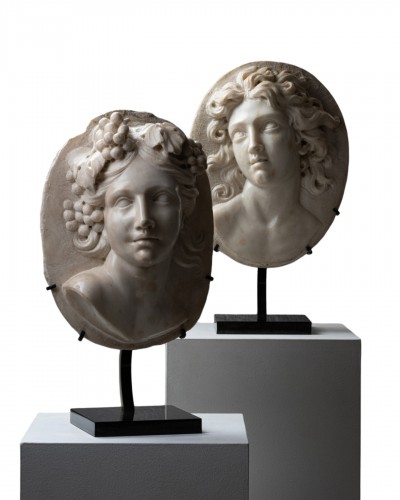
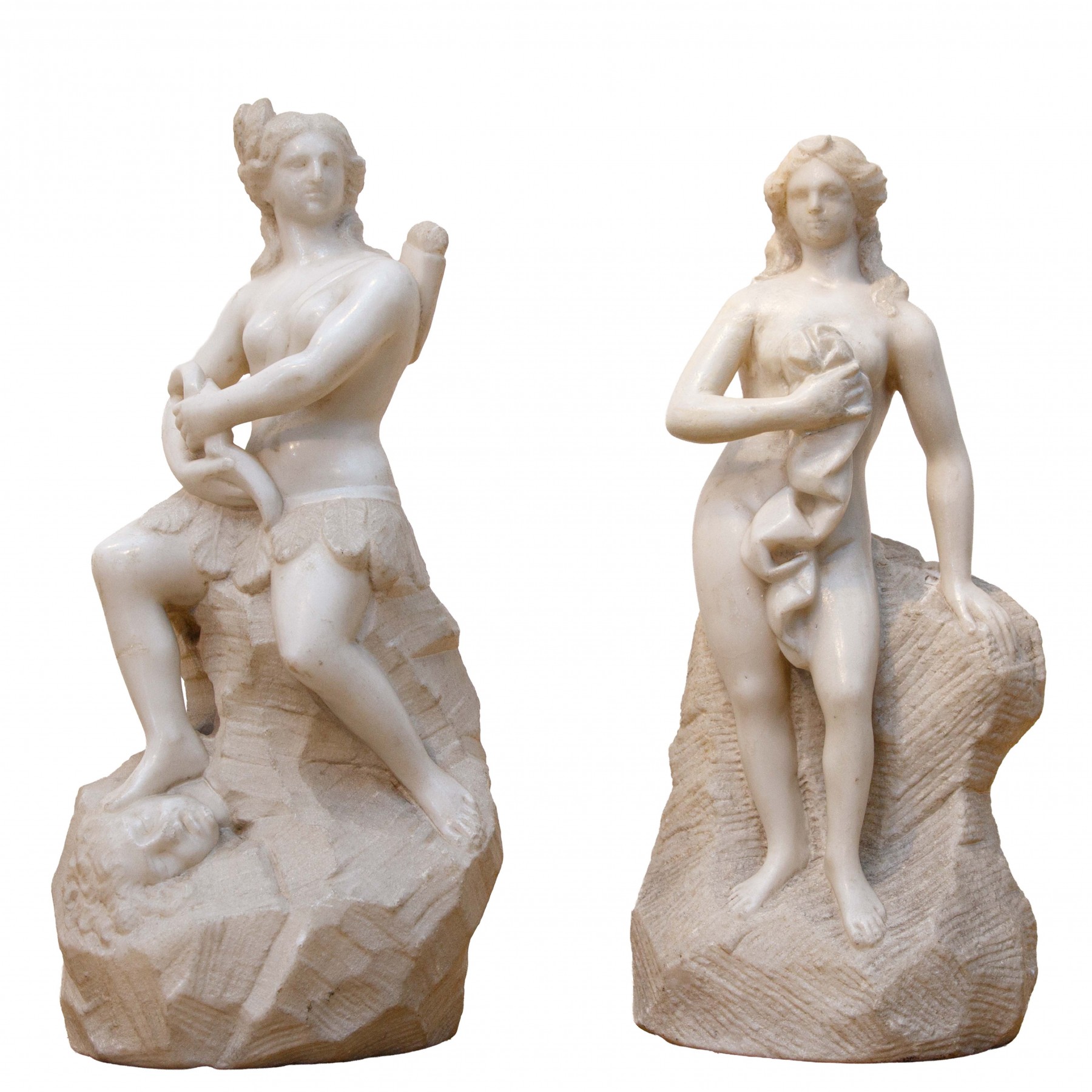
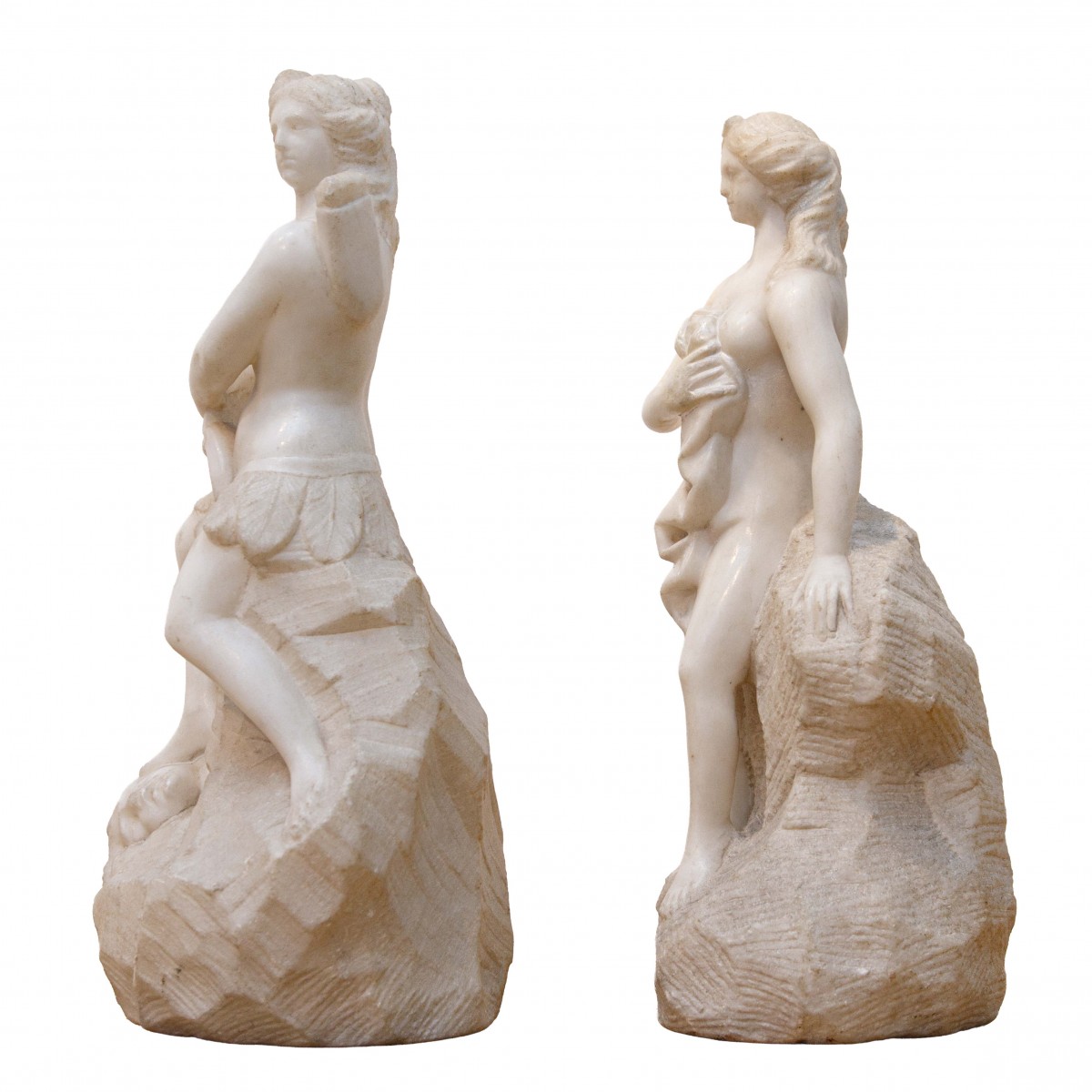
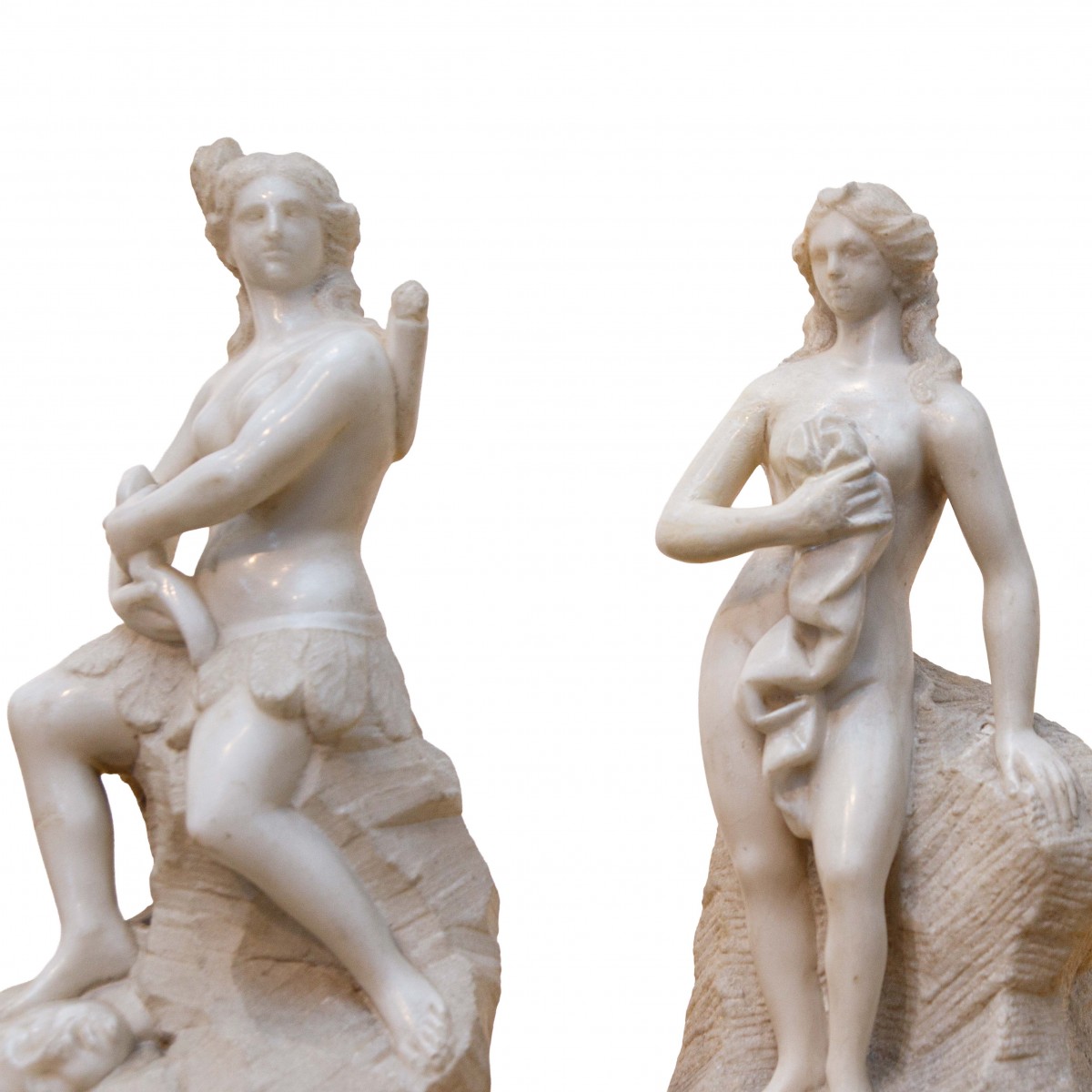
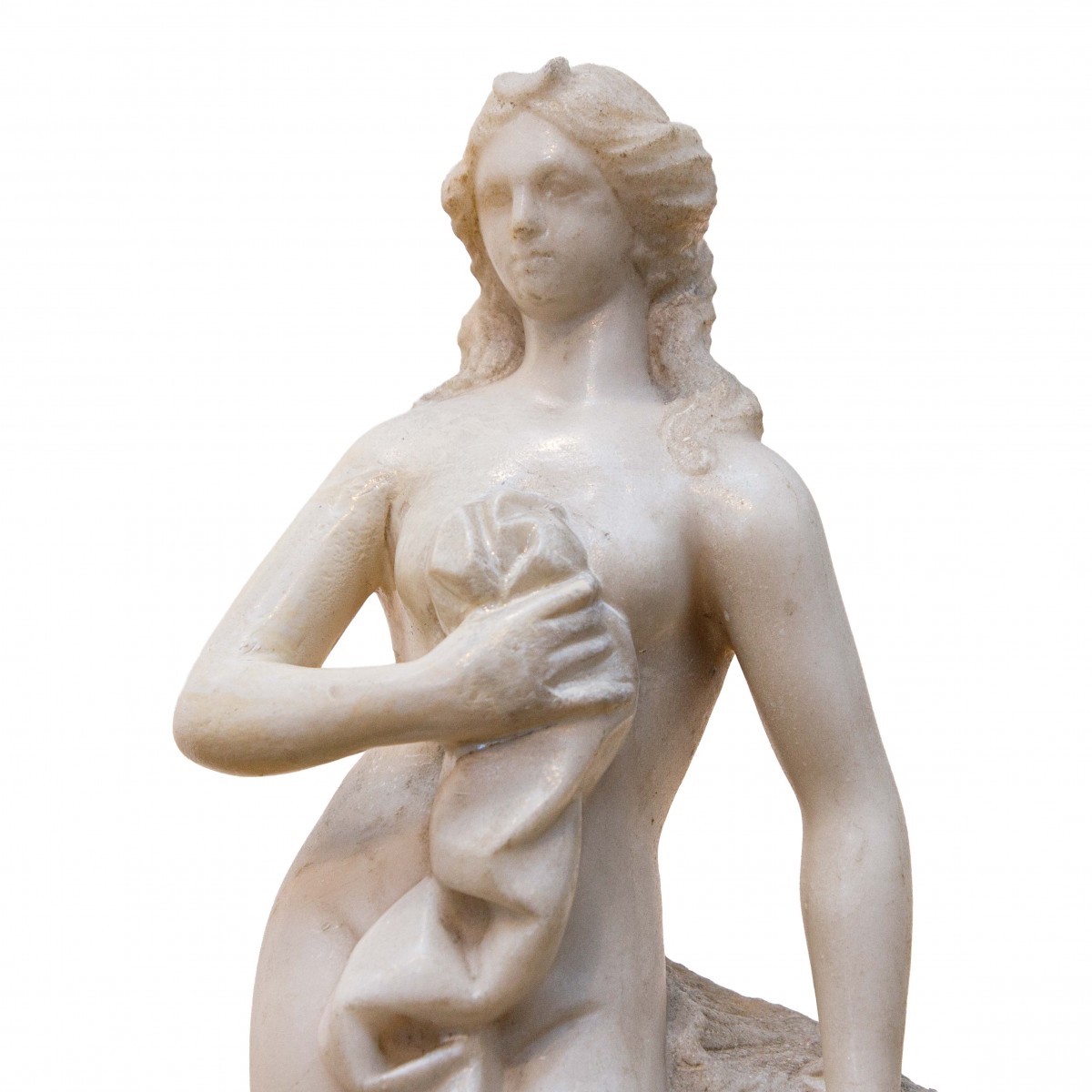
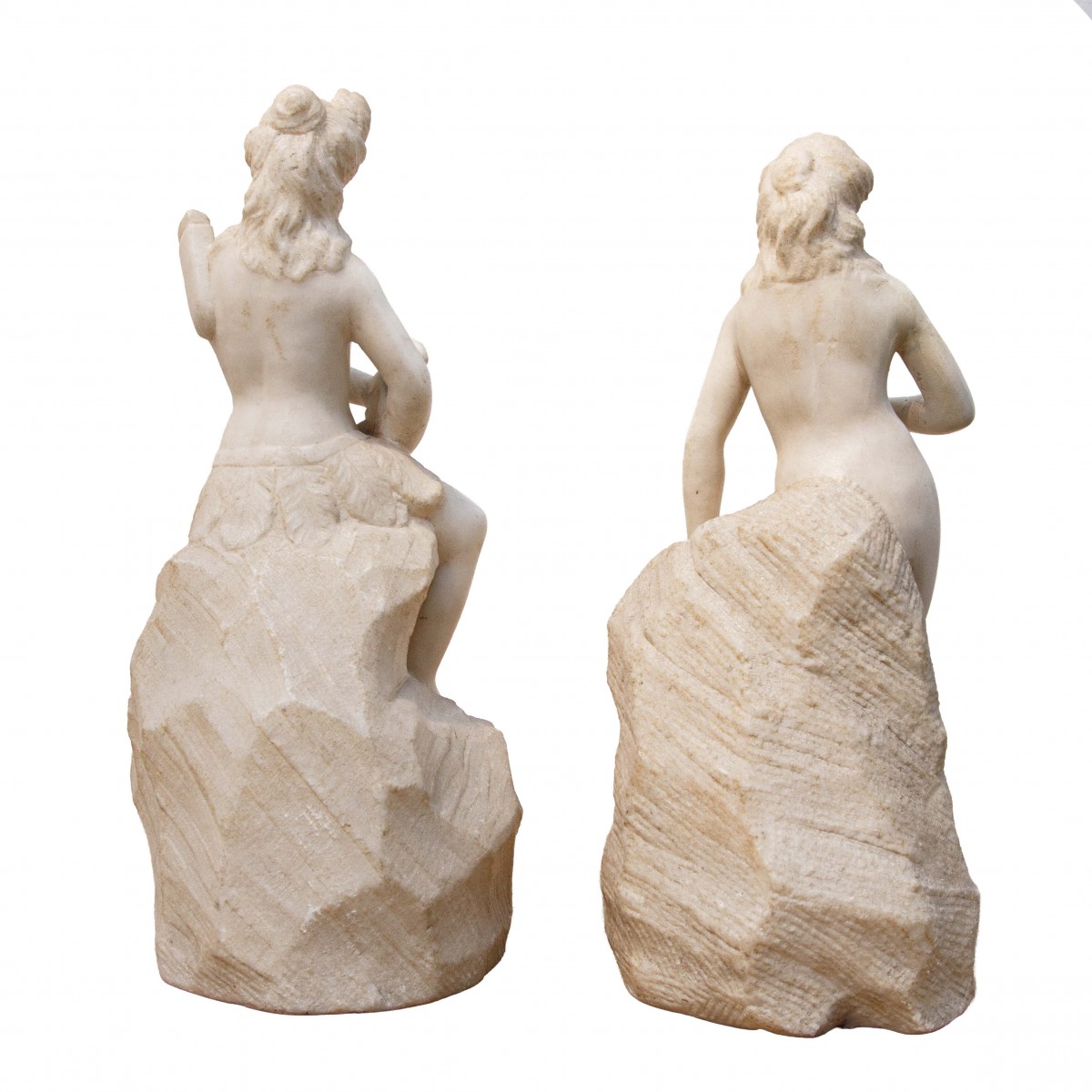
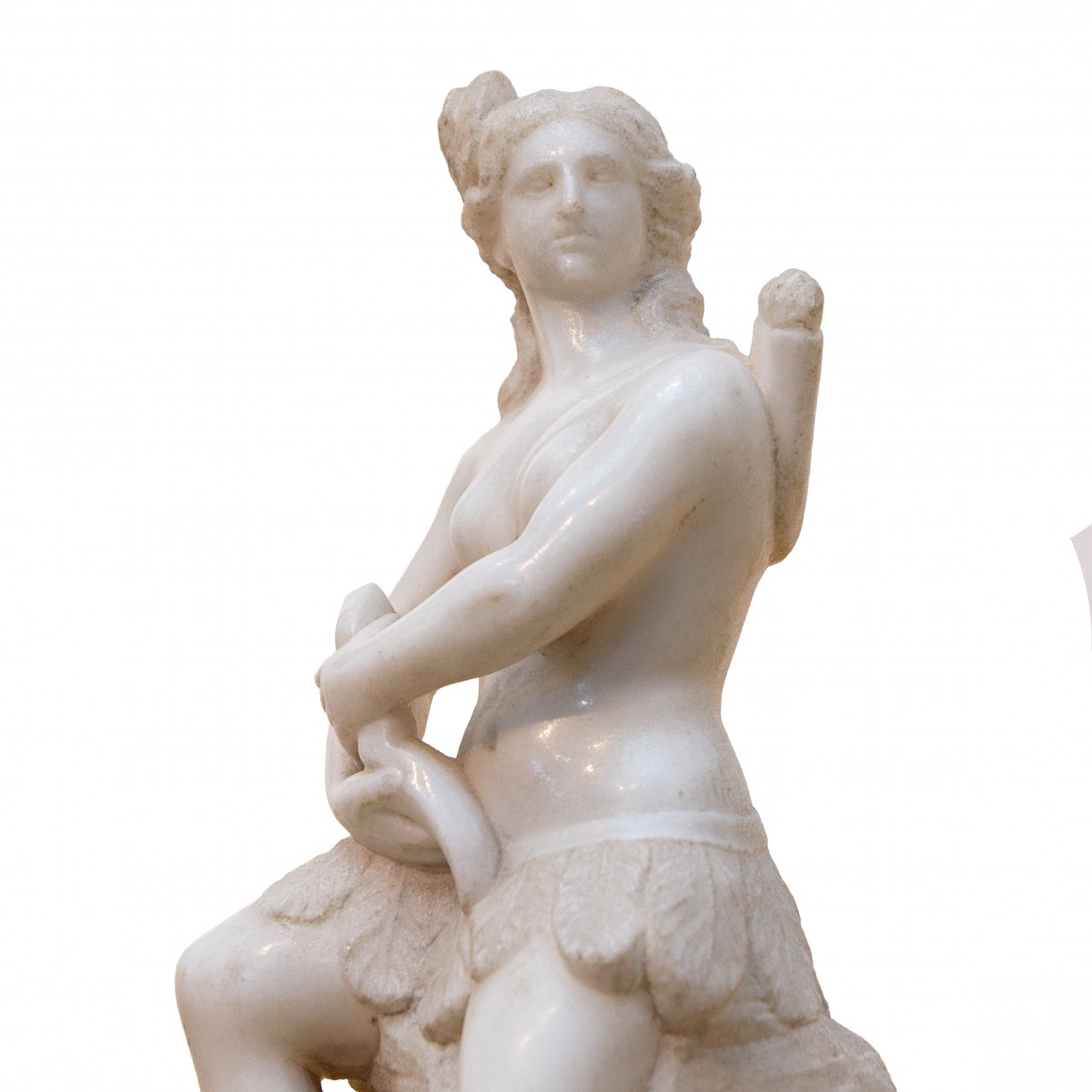
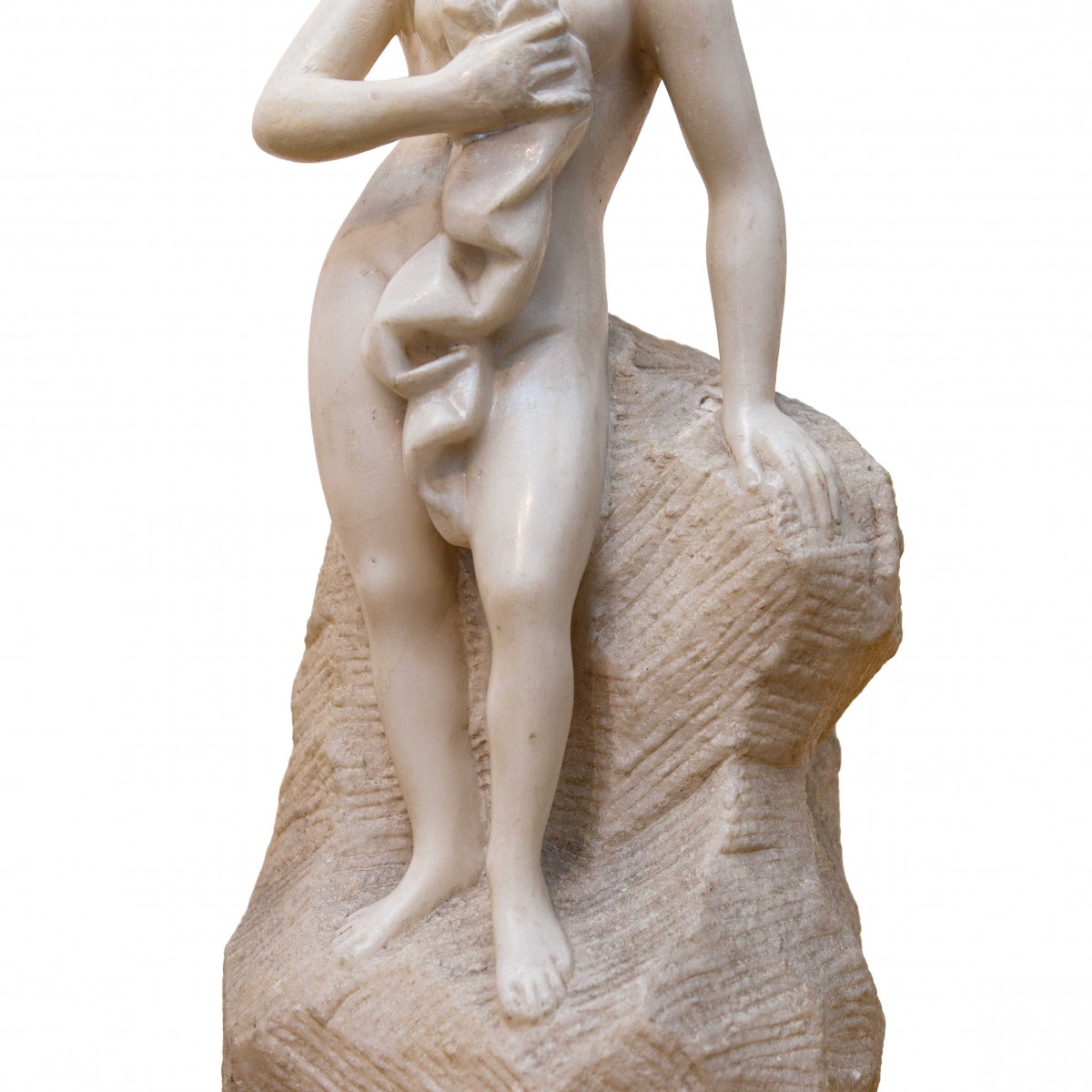
The pair of marble sculptures presented here belongs to the sphere of early eighteenth-century Venetian sculpture, specifically within the ambit of Francesco Bertos, a sculptor and founder born near Venice, specifically in Dolo, along the Brenta River Riviera. The reconstruction of his biography has been considerably challenging for scholars, making it impossible to definitively confirm the long-speculated hypothesis of a youthful journey to Rome. A more meticulous examination, conducted following new studies prompted by the recent exhibition dedicated to him at the Gallerie d'Italia in Vicenza, has instead deemed travels and experiences within the Venetian territory or the bordering Romagna area more plausible. This outlines a formative period rooted in his native land, where the workshop of Giovanni Bonazza, his contemporary and collaborator, operated. Bonazza was a pupil of the Flemish artist Giusto Le Court, active in Venice and an exponent of the virtuosity seen in seventeenth-century Flemish and German sculptors, which greatly inspired Bertos in his meticulous creation of small bronze and marble sculptural groups. Other sources of inspiration external to Venice include those from Tuscany, such as the works of the Florentine Giovanni Battista Foggini, a contemporary sculptor and architect in the service of the Medici, and the Mannerist-style compositions of Giambologna. Giambologna's works—such as the two-figure Rape (Ratto a due figure, 1579)—served as inspiration for Bertos's most original sculptures. Indeed, his reputation was established among major European patrons, including Tsar Peter the Great, King Charles Emmanuel III of Savoy, and Doge Alvise Pisani, thanks to small-format works rendered with meticulous detail and featuring compositions of extreme complexity, characterized by a dynamic structure that freely expands into space. Bertos's incredible technical skill astounded his contemporaries to the extent that this mastery was deemed almost superhuman, even attracting the attention of the Inquisition, which accused him of having made a pact with the devil. Beyond this much-lauded technical virtuosity, Bertos's sculptures conceal a sophisticated, allegorical, mythological, and symbolic dimension, allowing them to be interpreted as precious intellectual devices. This is also evident in this pair of statuettes, connected not only by genre but also by the hunting theme, which the artist explored in other sculptures, such as the Allegory of the Hunt at the Royal Palace of Turin. While one figure may be interpreted as Diana, the Roman goddess of the hunt, perhaps depicted here in the act of drying herself after bathing, the other appears to be a hunting deity closer to the allegorical representation of the American continent, often portrayed with a bow and arrows and in a vigilant, combative stance. The dynamic and fluid poses, the accuracy of the craftsmanship, the reduced format, and the subtlety with which the theme of the hunt is allegorically treated, thus appear as clear references to the art of this sculptor and to the culture of the period and the areas in which he lived and worked.
Delevery information :
Les frais d'expédition seront calculés au moment de la commande en fonction de la destination, des dimensions et du poids du tableau, ainsi que de l'assurance couvrant la valeur totale de l'œuvre.
For paintings purchased from abroad: following payment, the application process to obtain the export license (ALC - Attestato di Libera Circolazione) will be initiated. All antiques shipped abroad from Italy require this document, which is issued by the Ministry of Cultural Heritage. The procedure may take 3 to 5 weeks from the date of request; therefore, the painting will be shipped as soon as the document is obtained