Offered by Ars Antiqua
REQUEST INFORMATION

Old Masters paintings, furniture, sculptures and modern art
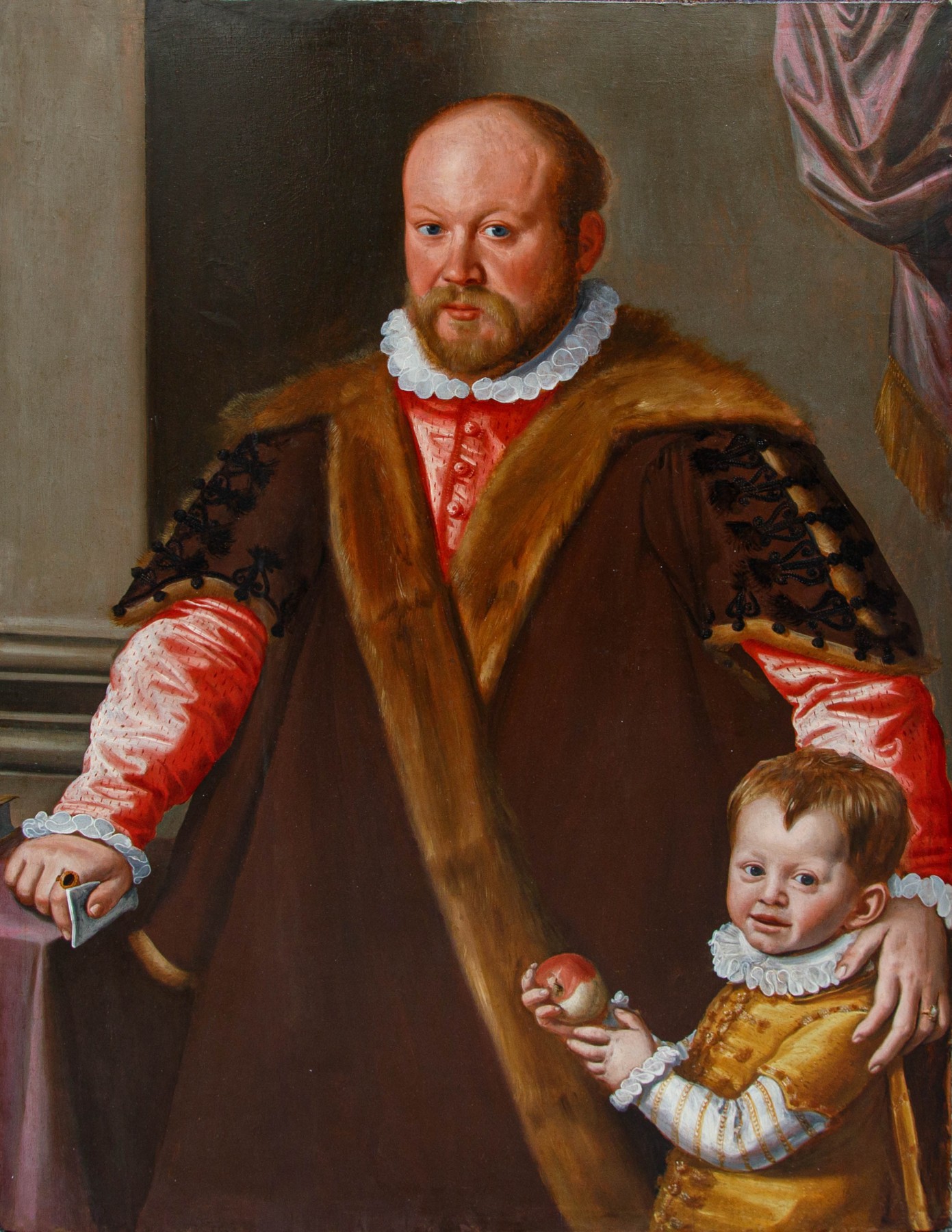
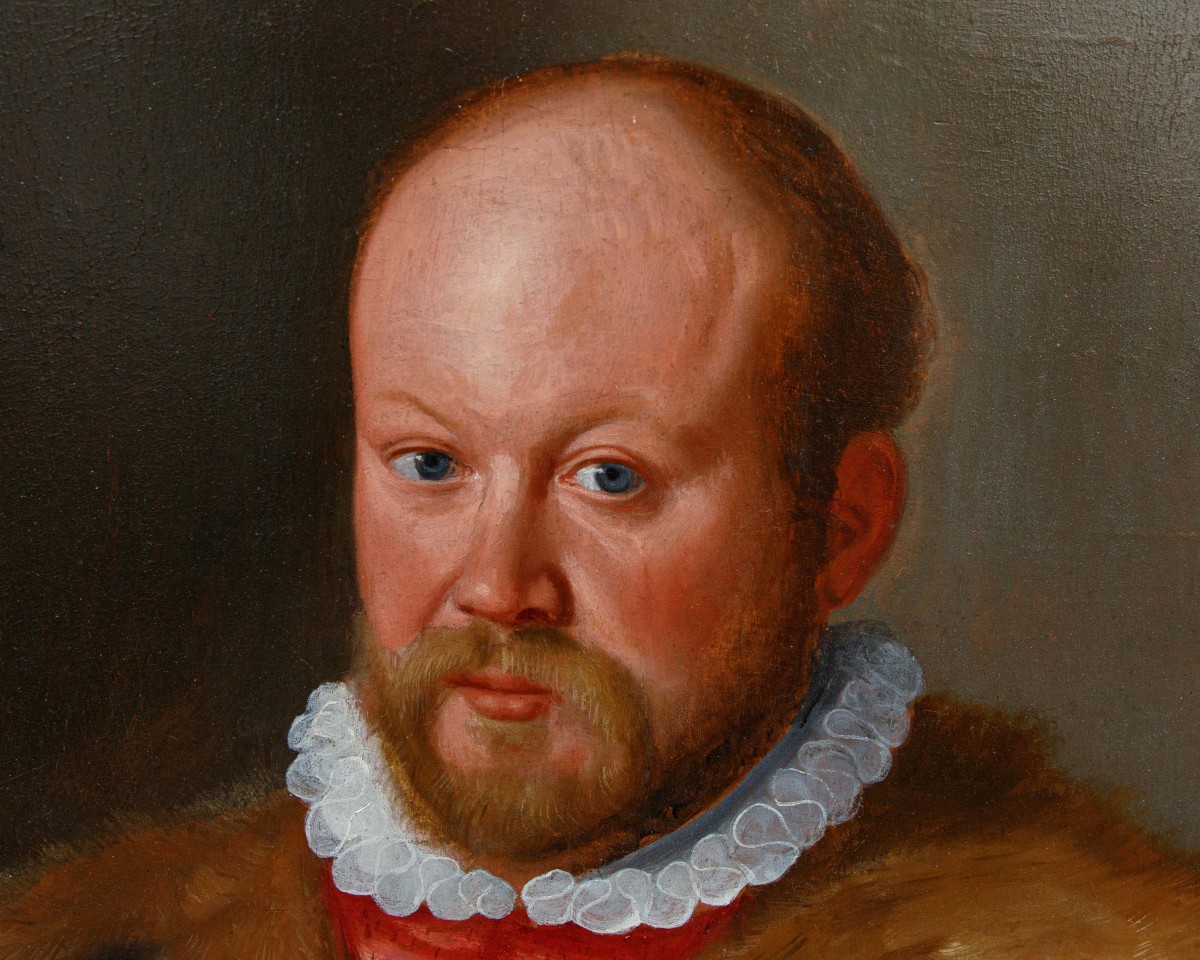
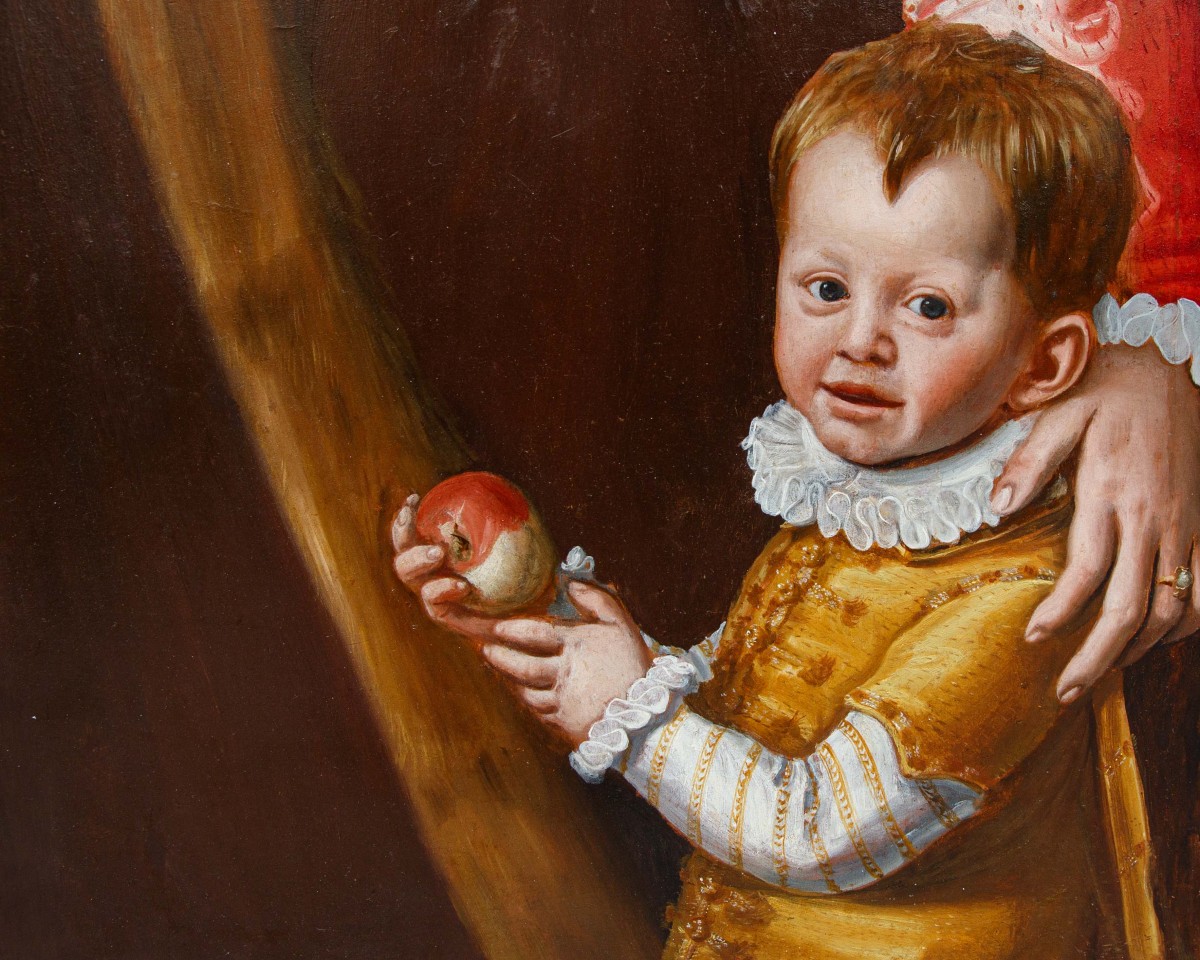
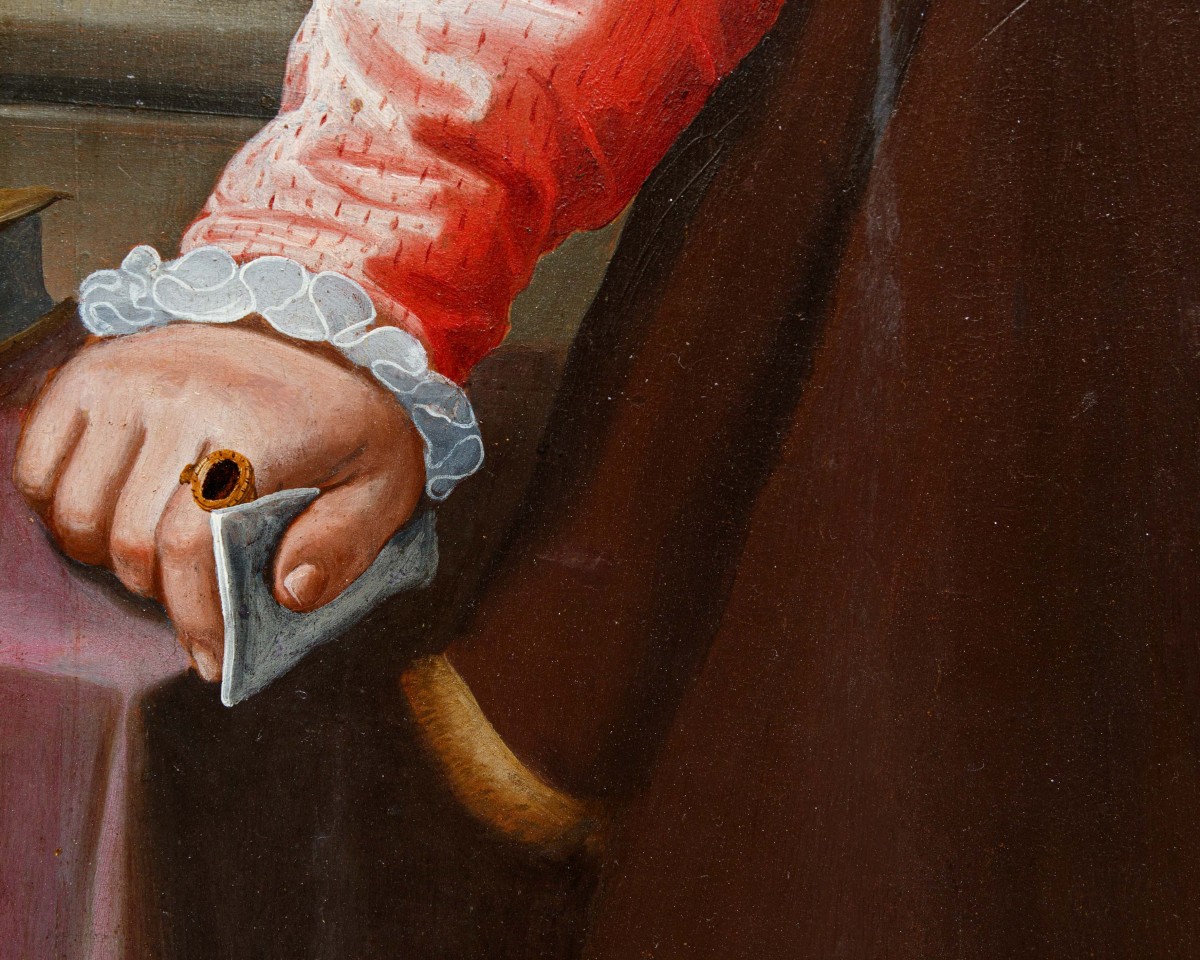
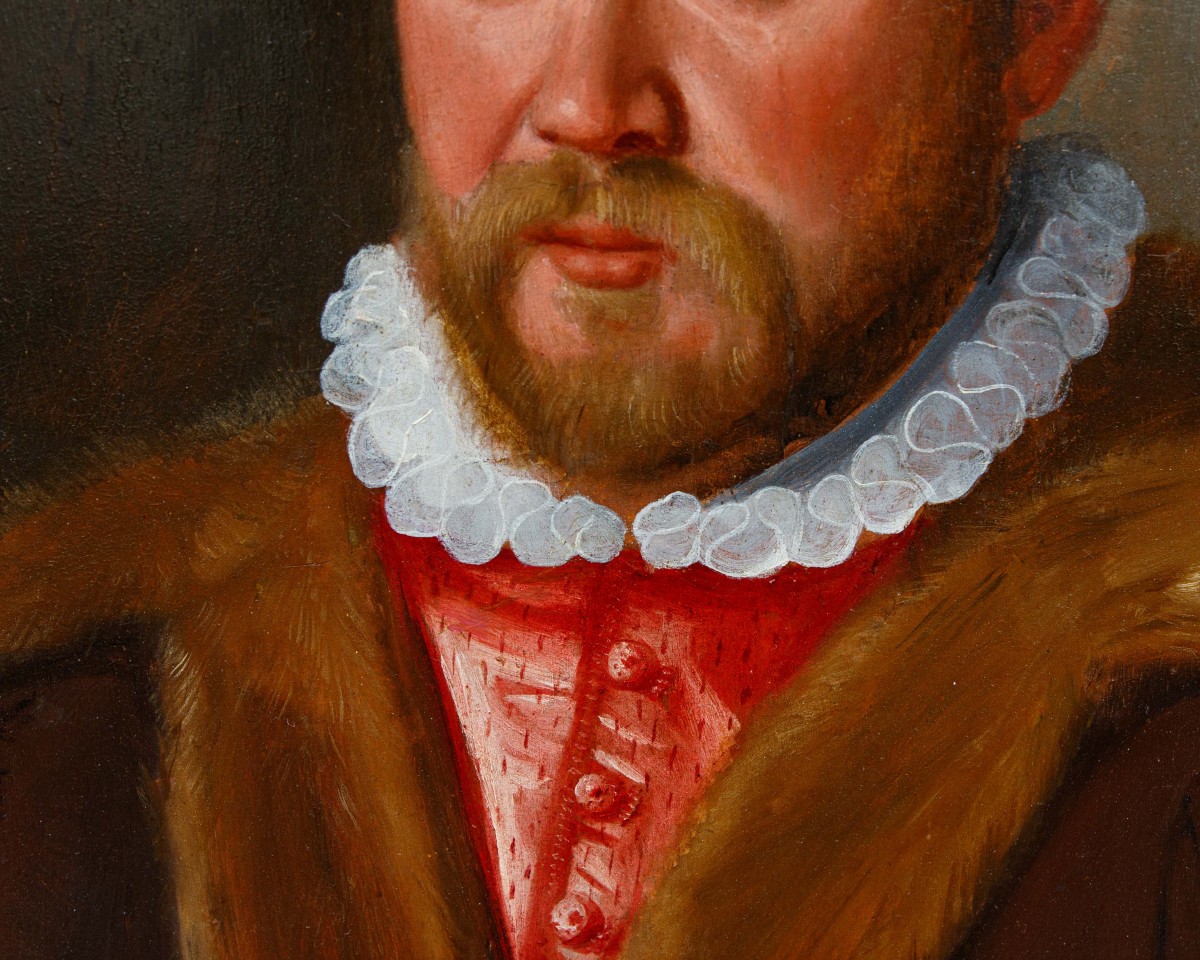
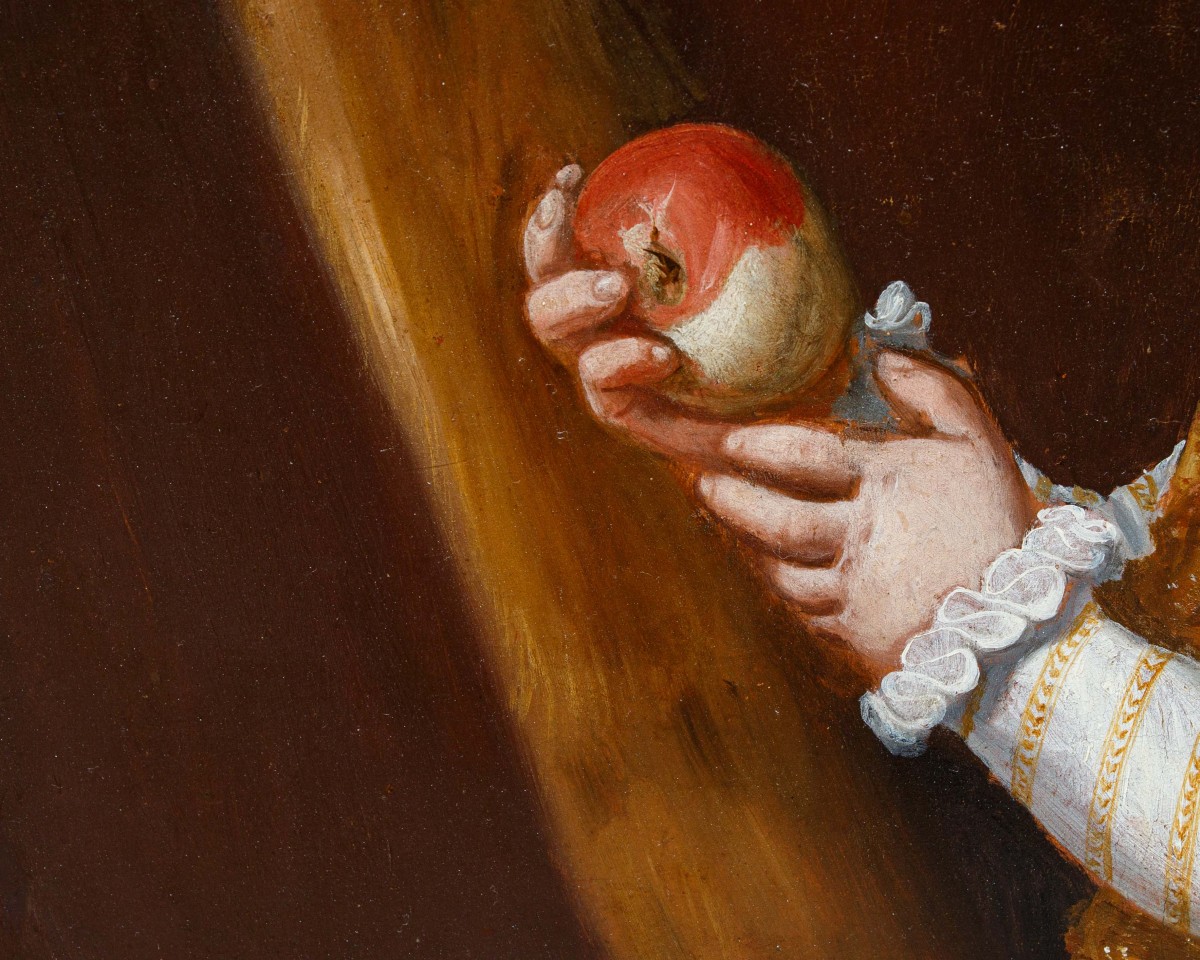
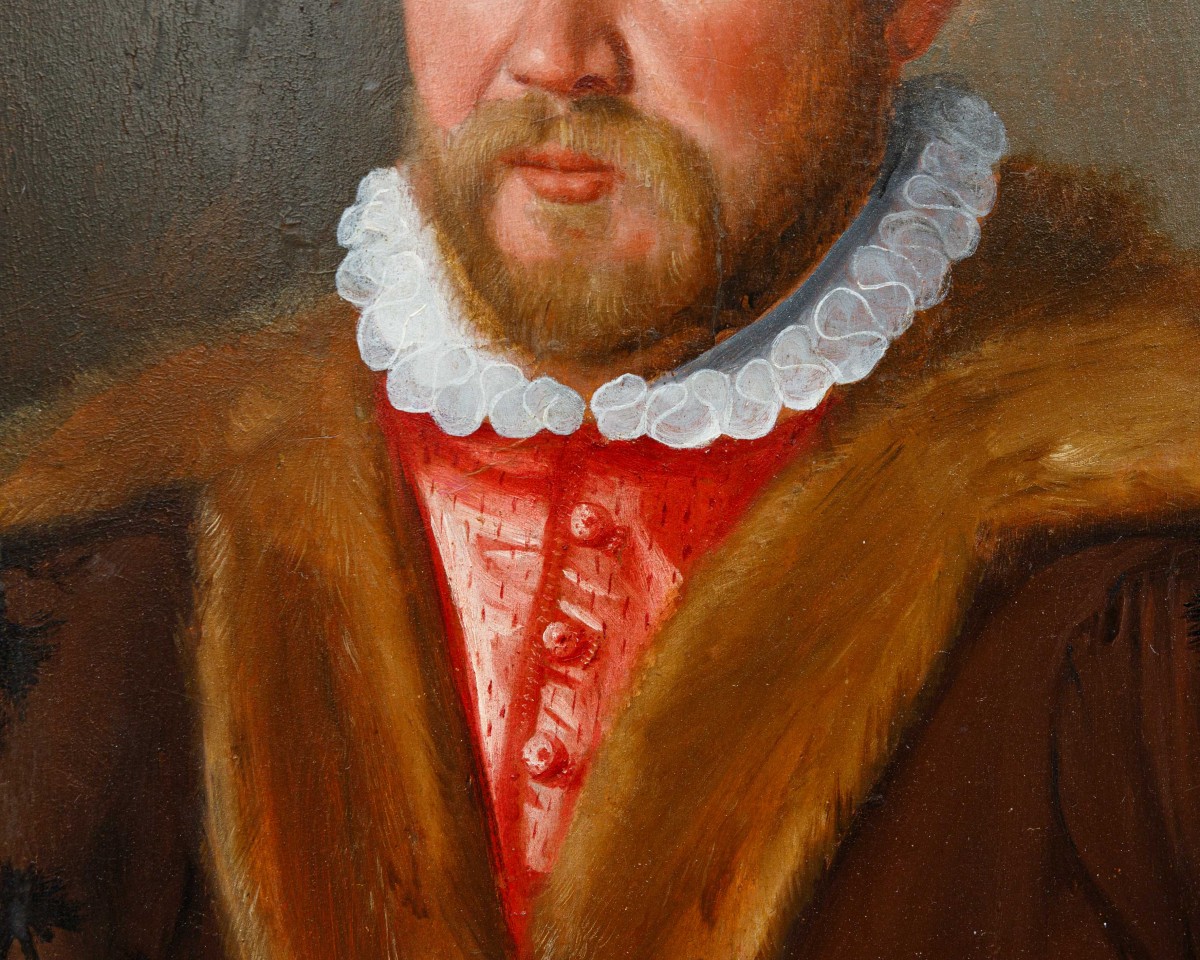
« He was driven by genius no less than by the desire for profit to paint portraits, as one who, possessing an extraordinary mastery of drawing, executed them with great ease, and as most striking likenesses from life ». With these words in Notizie de' professori del disegno da Cimabue in qua (1681), Filippo Baldinucci established Santi di Tito’s reputation as a portraitist of exceptional skill. The Portrait of Domenico di Lorenzo Passerini with his son Lorenzo fits perfectly within this production, offering an eloquent example of his ability to capture both the social status and the psychology of the sitters. The work presents a half-length depiction of an elegantly dressed man in a heavy black short-sleeved coat with buttoning lined with sable fur, next to whom appears a child wearing a golden-yellow silk ungherina (Hungarian-style tunic) holding an apple. The attribution of the painting to Santi di Tito was confirmed by Carlo Falciani on the occasion of its appearance at auction in 2013, while Nadia Bastogi has proposed a dating to the 1590s. This chronology aligns with the artist's period of full maturity; indeed, in 1593 he executed the Vision of Saint Thomas Aquinas in the church of San Marco in Florence, considered the pinnacle of his oeuvre.
Born in Florence in 1536, Santi di Tito is often remembered as “dal Borgo” due to the origins of his father, Tito di Santi di Bartolomeo, who came from Borgo Sansepolcro. Santi di Tito entered the Compagnia di San Luca in 1554 and stayed in Rome between 1561 and 1564, working in the workshop of Taddeo Zuccari, where the young Federico Zuccari and Federico Barocci were also active. Although trained in this Mannerist context, he developed an independent idiom, closer to the restraint of Agnolo Bronzino and Andrea del Sarto, yet updated with the clarity observed in the late works of Raphael and oriented towards a renewed adherence to nature.
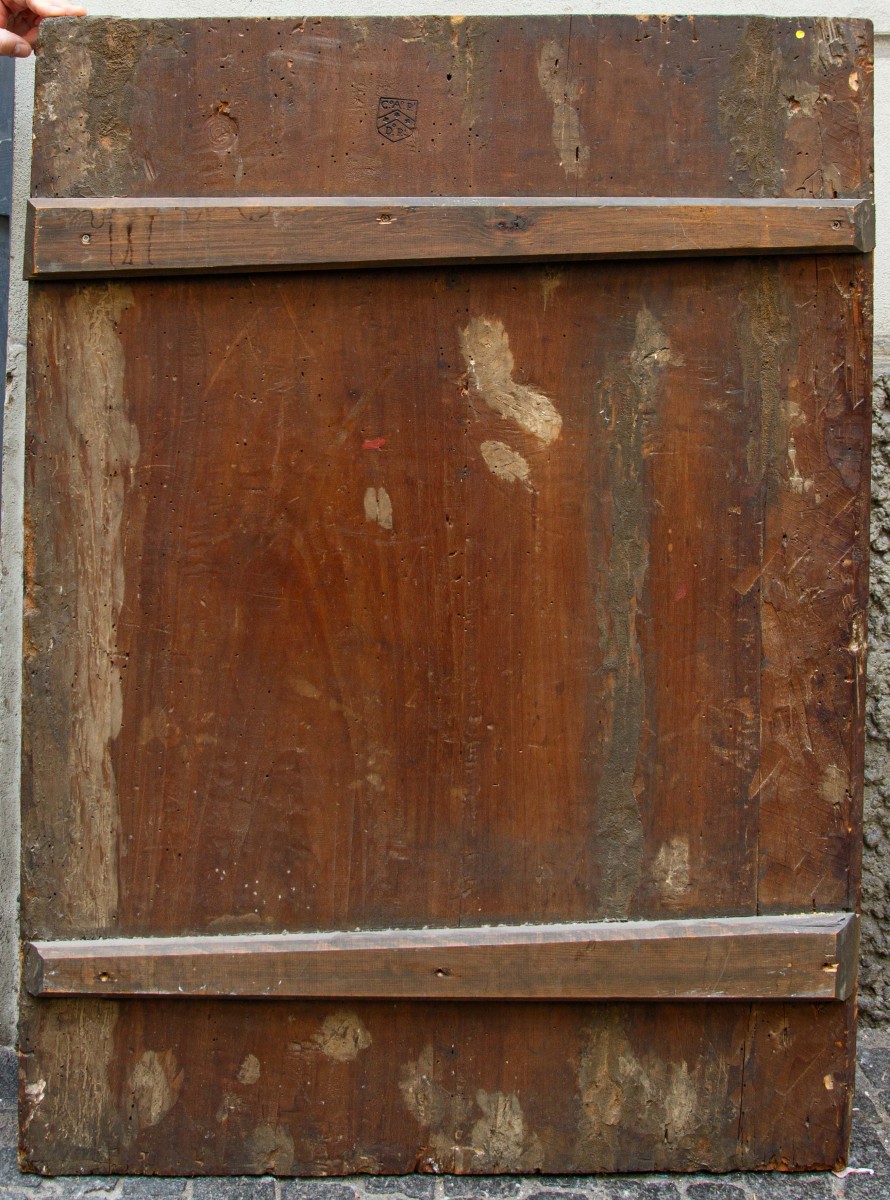
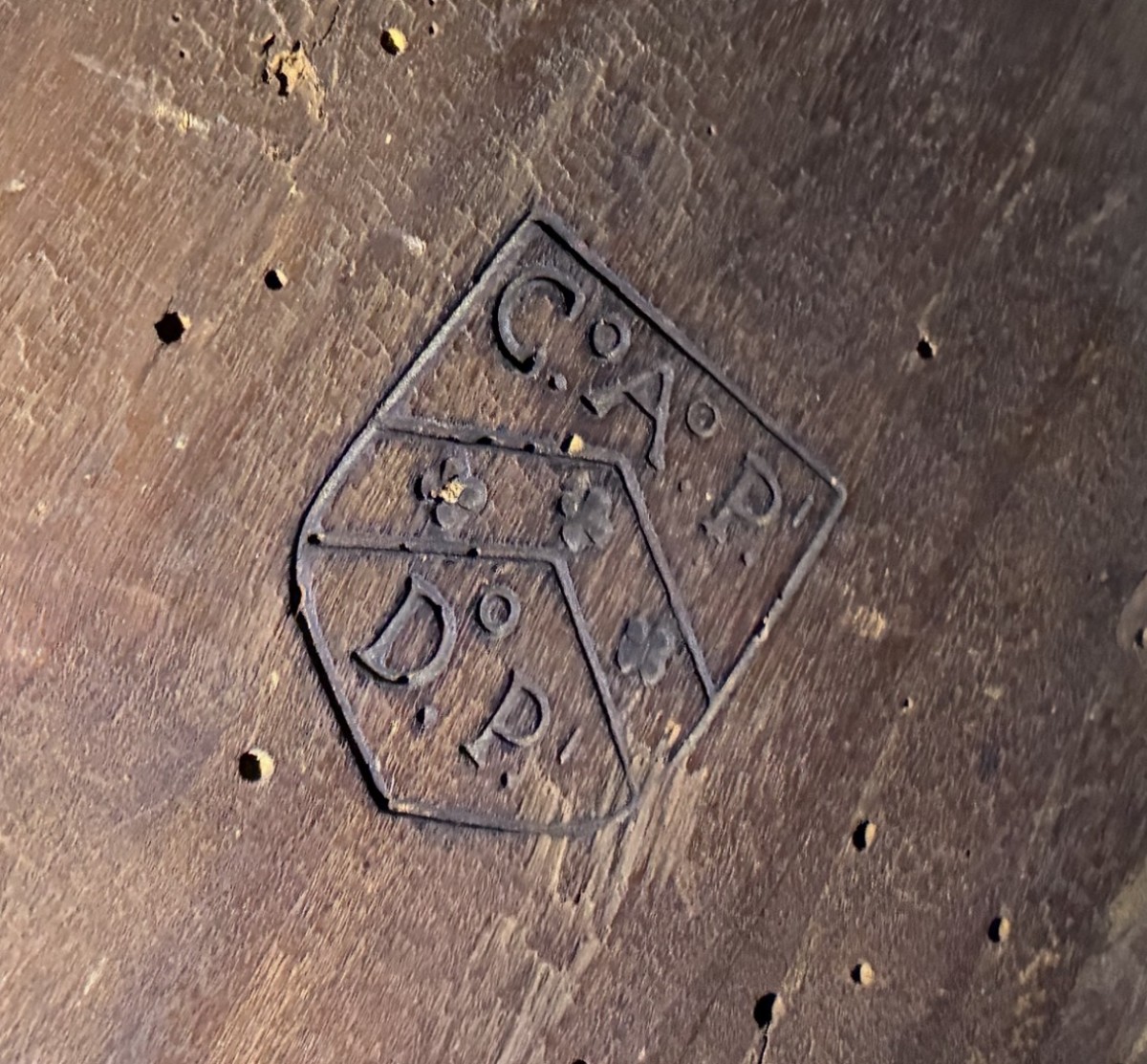
The painting also stands out for the importance of its patronage: the coat of arms of the Passerini family is branded onto the back of the panel, accompanied by identifying letters (“Co Ao Pi / Do Pi”) which attest that the work belonged to the family’s picture gallery in the 17th century. The epigraph, transcribed as “Capitano Alessandro Passerini / Domenico Passerini”, refers to the sons of Lorenzo, the child depicted here, who were responsible for applying the brand to celebrate the family's lineage. Alessandro was a commander in the Medici army and a man of letters, while Domenico became an abbot and satirical writer; their objective was to celebrate the glorious history of their house by displaying a series of portraits of their ancestors. The main subject of the portrait is indeed identified as Domenico di Lorenzo Passerini, podestà of Dicomano, an institutional office that entailed political and administrative control over a territory that also included San Godenzo, within the framework of the Vicariato del Mugello established in 1415. The letter he holds in his right hand constitutes a significant iconographic attribute, alluding to the public office he received, according to a custom widespread in sixteenth-century portraiture. Beside him is his son Lorenzo, born in 1591, depicted here at an age between three and five years old, an element that allows for a proposed dating around 1594.
During the last quarter of the 16th century, Santi di Tito established himself as one of the most highly regarded portraitists of the Florentine nobility, upper bourgeoisie, and clergy, distinguishing himself with a vast production reflected in works such as the Portrait of Carlo Pitti, now in the Philadelphia Museum of Art, the Portrait of Cardinal Ferdinando de’ Medici at the Museo Civico in Prato, and the Portrait of Piero de’ Medici preserved in the Uffizi. In this painting, one therefore fully perceives the artist’s ability to overcome Mannerist rigidities, offering a more naturalistic vision of the characters, in which the verisimilitude is not merely formal but also emotional. The Passerini portrait thus stands as a significant testament not only to the painter's individual talent, but also to the self-representation strategies of the late-sixteenth-century Florentine aristocracy, who constructed and handed down their family identity through images such as this.
Passerini family brand on the reverse
Delevery information :
Les frais d'expédition seront calculés au moment de la commande en fonction de la destination, des dimensions et du poids du tableau, ainsi que de l'assurance couvrant la valeur totale de l'œuvre.
For paintings purchased from abroad: following payment, the application process to obtain the export license (ALC - Attestato di Libera Circolazione) will be initiated. All antiques shipped abroad from Italy require this document, which is issued by the Ministry of Cultural Heritage. The procedure may take 3 to 5 weeks from the date of request; therefore, the painting will be shipped as soon as the document is obtained