Offered by Antichità Castelbarco

Maarten de Vos (Antwerp, 1532–1603) workshop
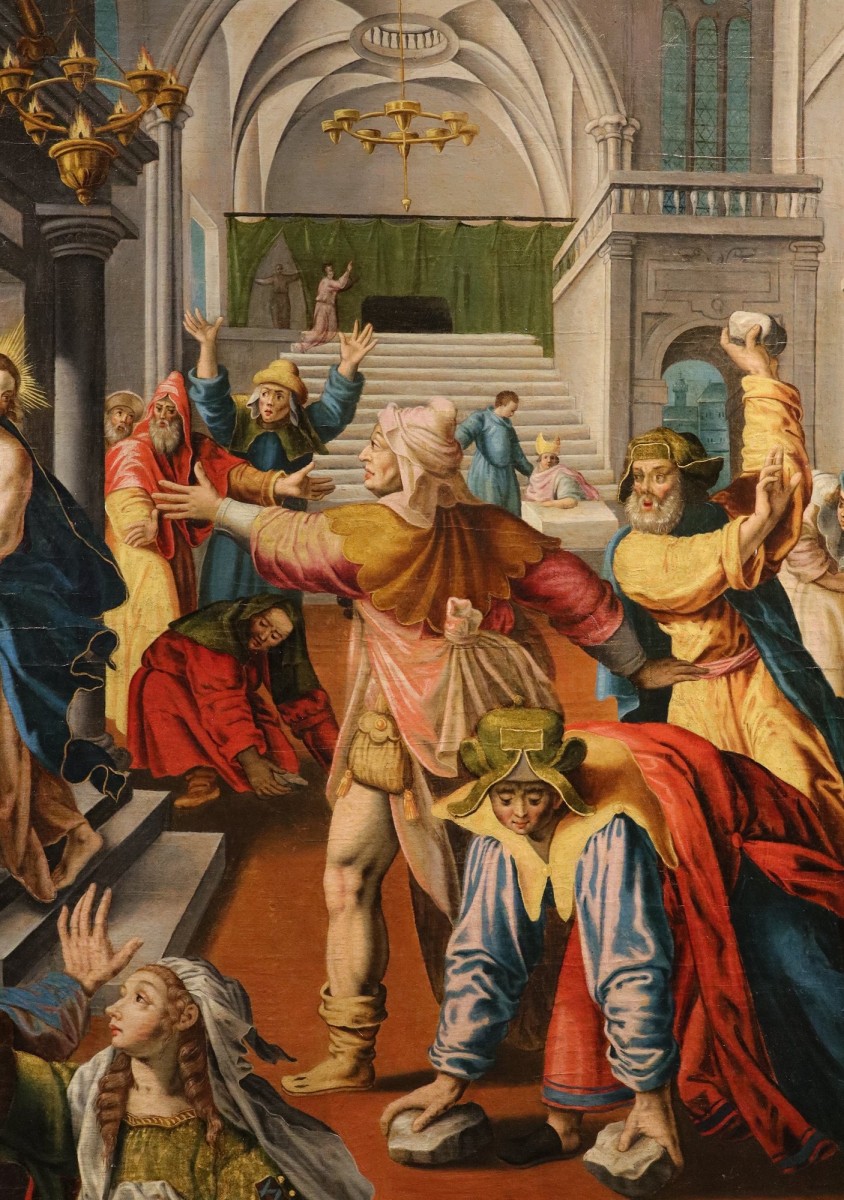
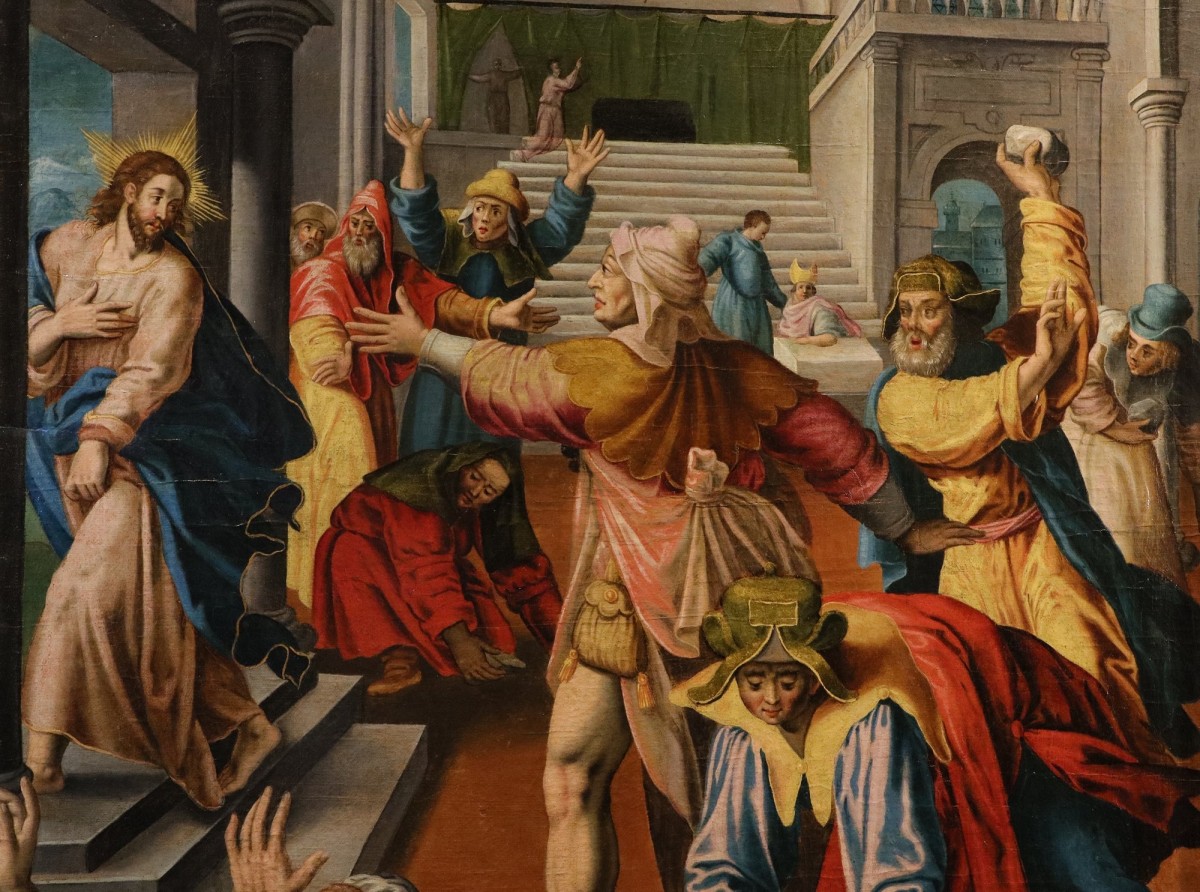
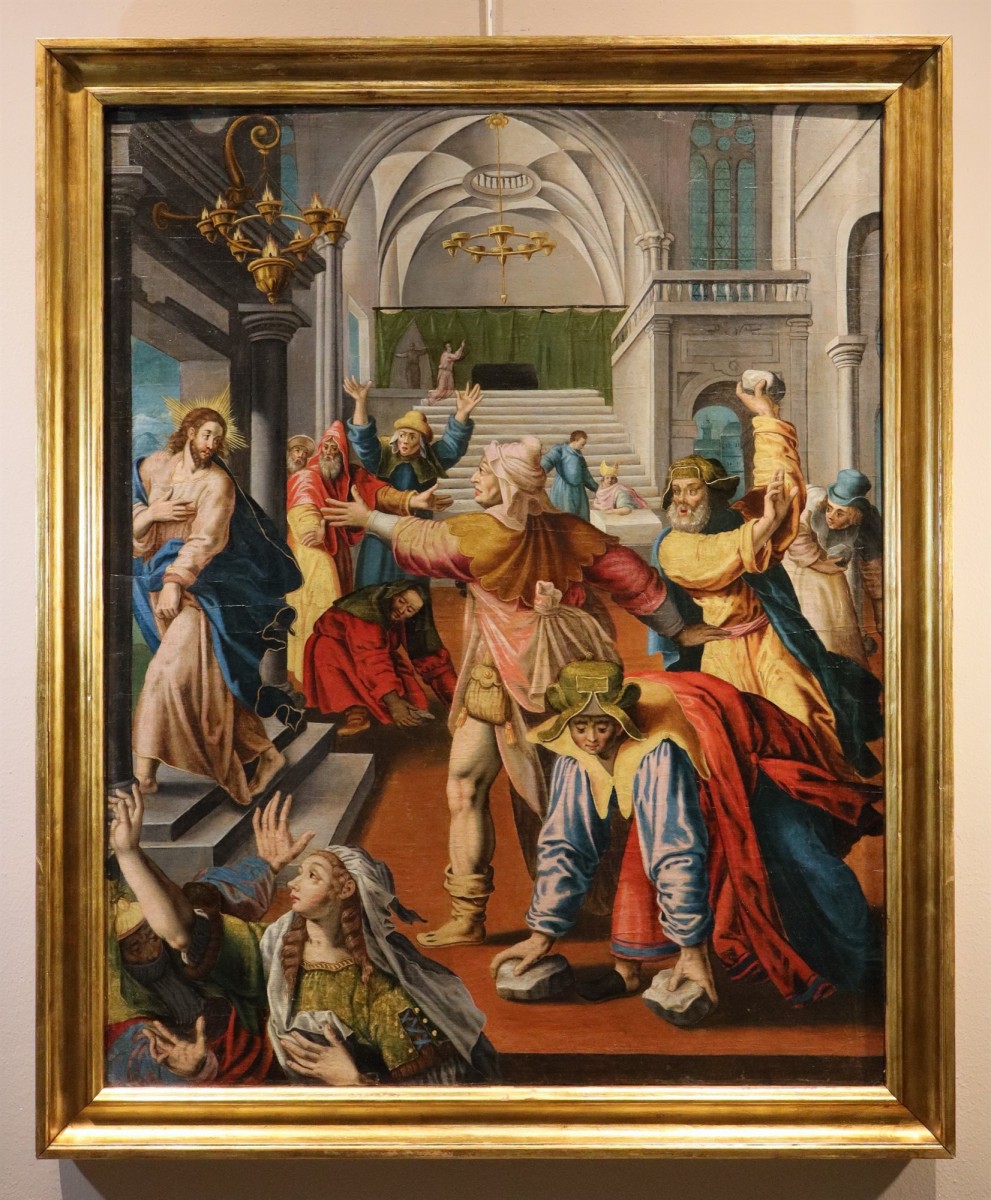
Christ Expelled from the Temple in Jerusalem (Or The Stoning of Christ)
Oil on canvas 109 x 86 cm. Framed: 121 x 97 cm.
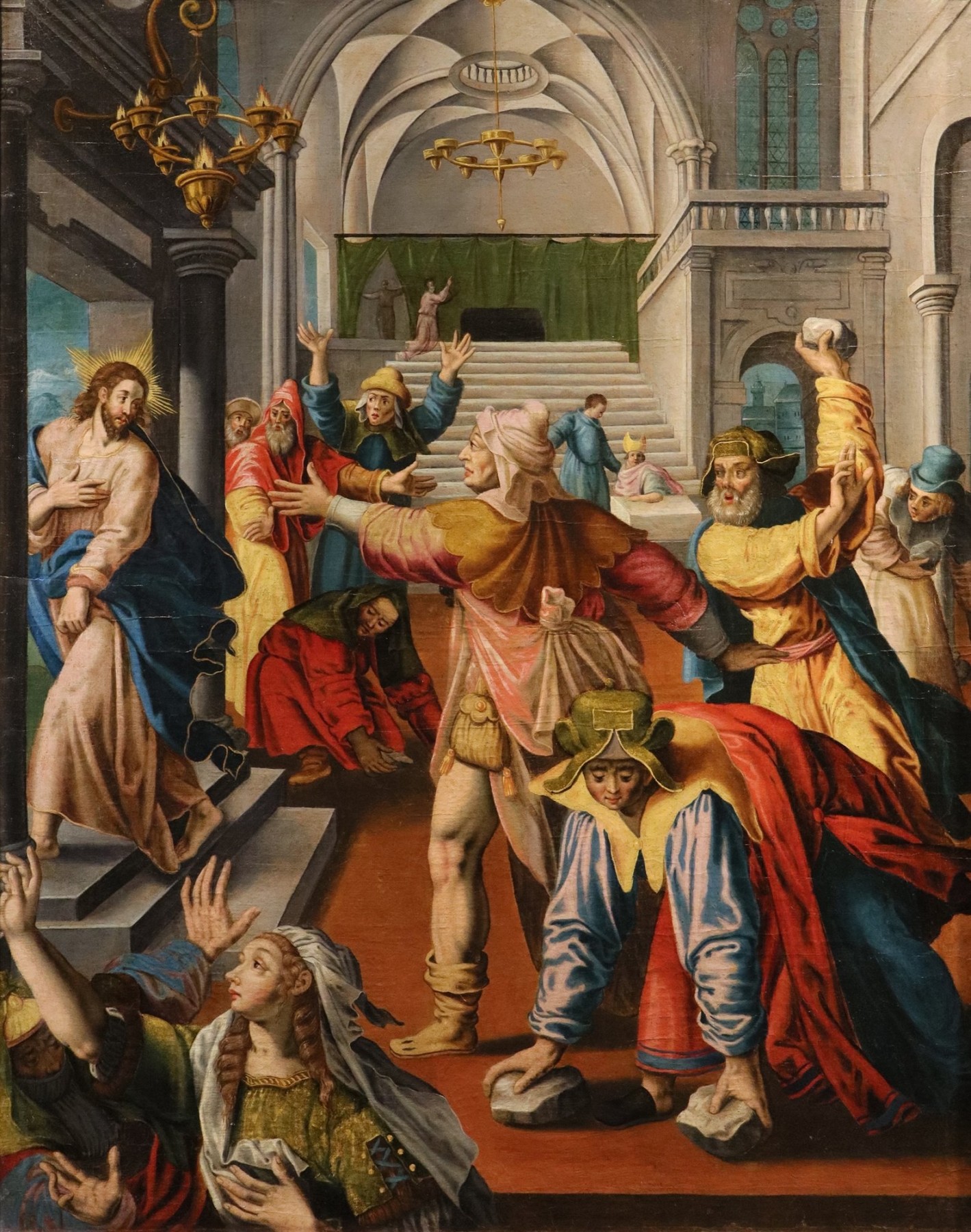
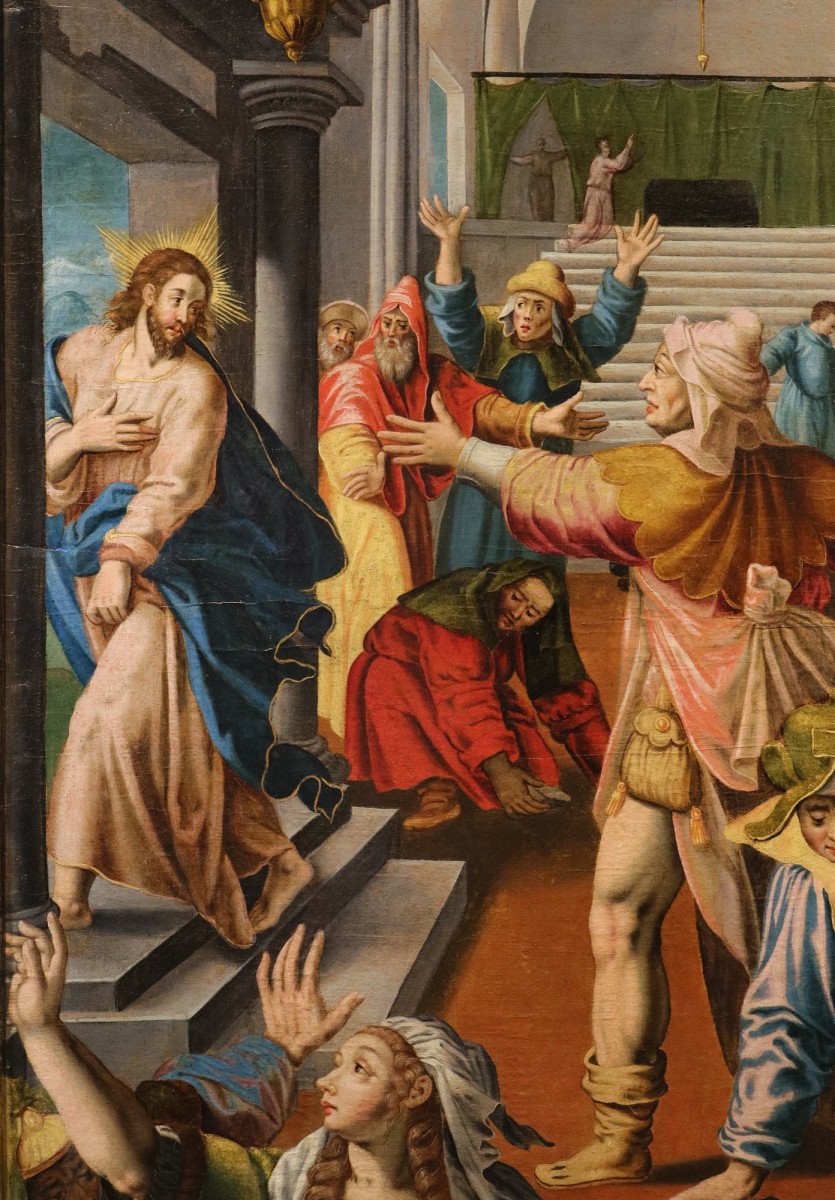
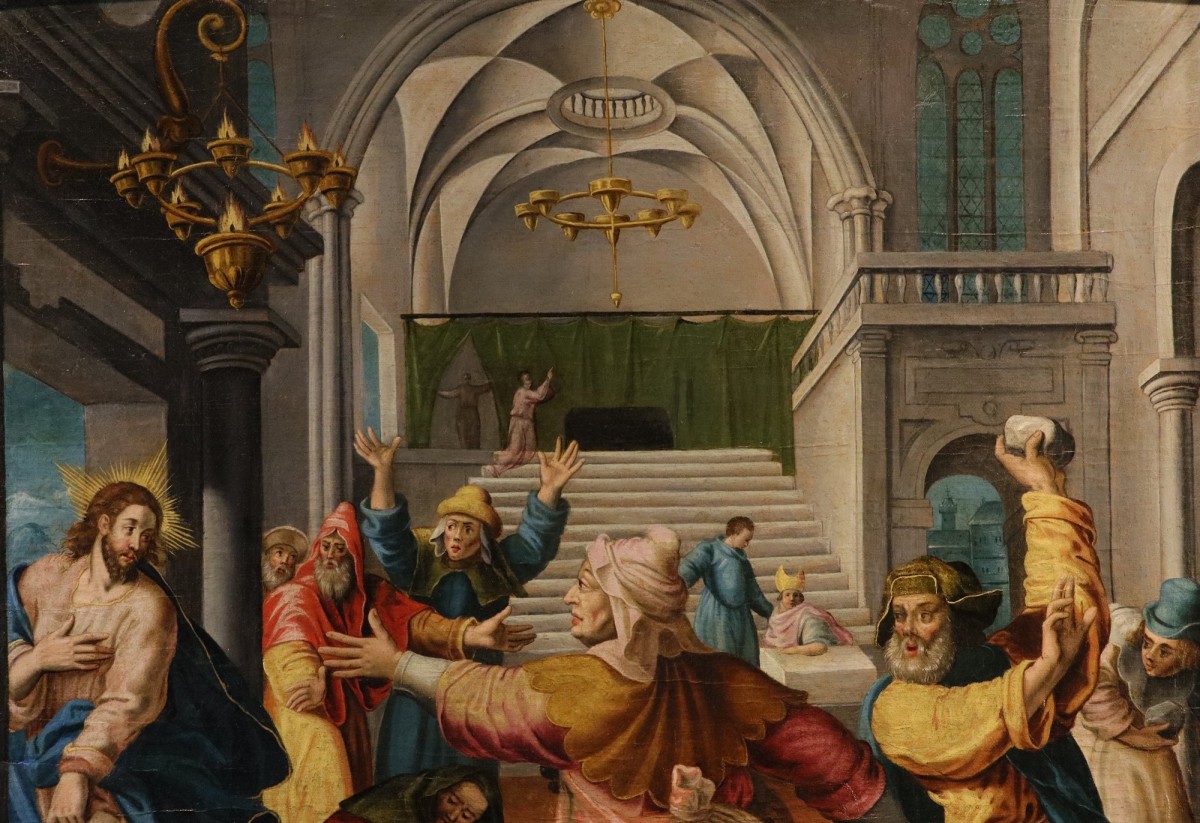
Anyone passionate about ancient works of art, especially religious painting, cannot help but be enchanted by this precious painting with its undoubtedly unusual subject matter, depicting a rare biblical episode narrated in the Gospel of John (John 10:22–39), centered on the fierce theological clash between Jesus—after he had openly proclaimed his divine nature—and a group of Jews.
Going into more detail about the episode, the scene takes place during the Feast of Dedication (Hanukkah), when Jesus, at Solomon’s Portico in the Temple in Jerusalem, is approached by some Jews to whom he proclaims: “I and the Father are one,” perhaps the most powerful and significant passage in the entire New Testament.
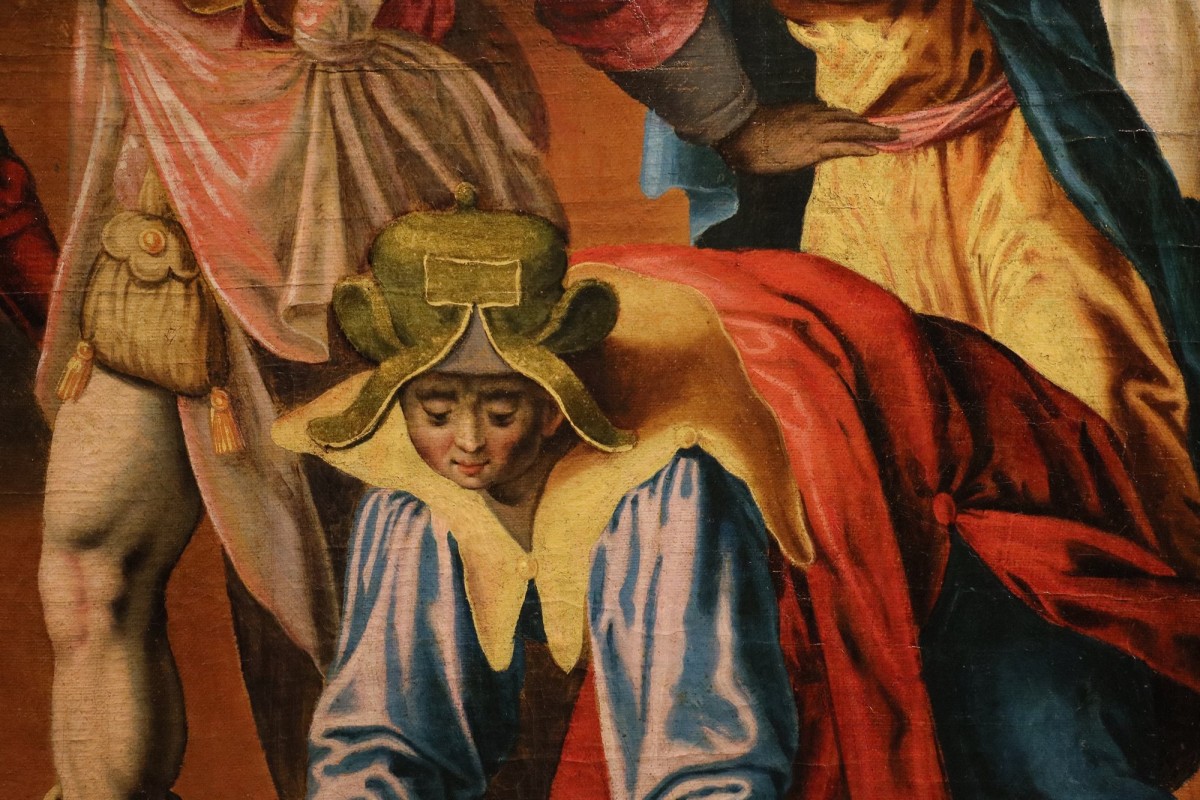
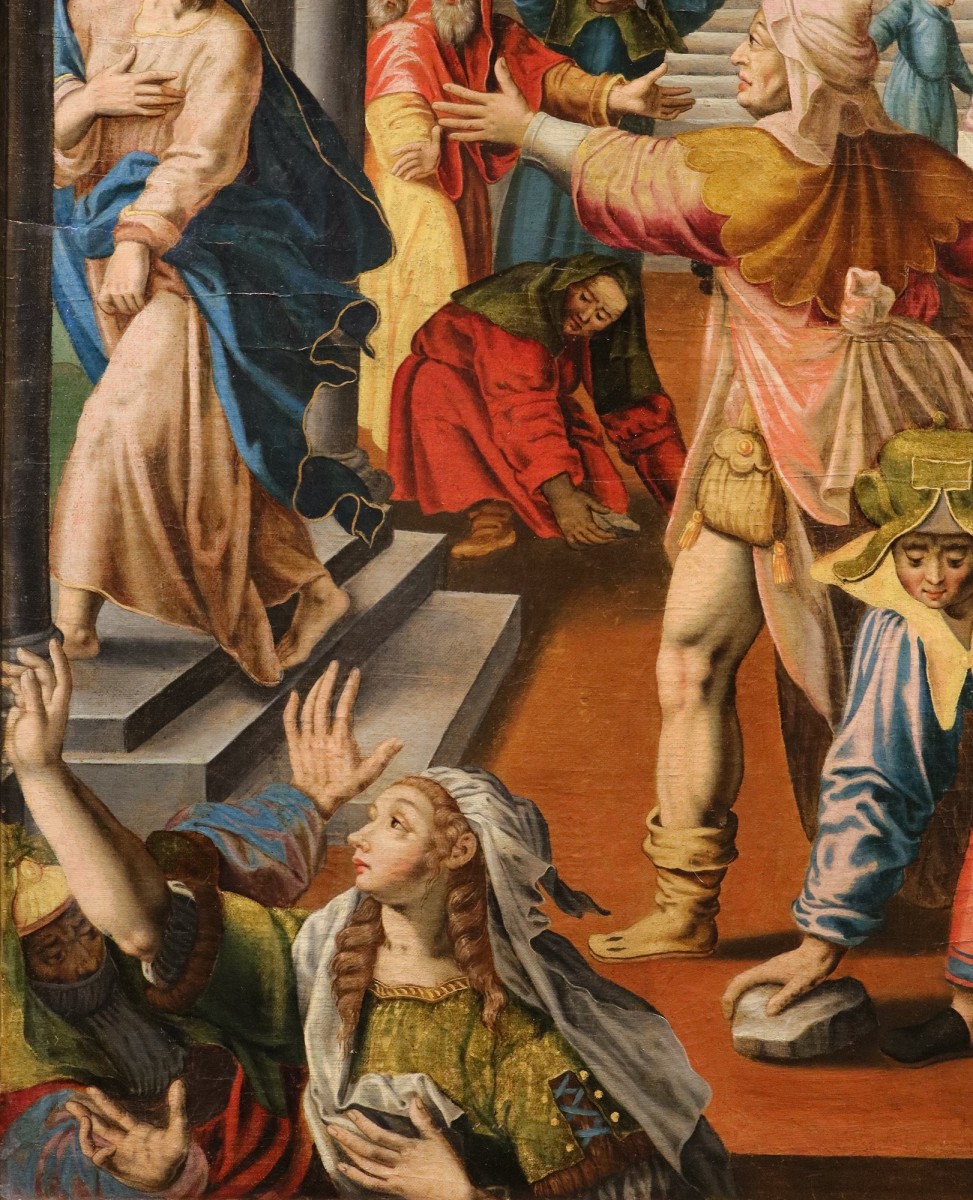
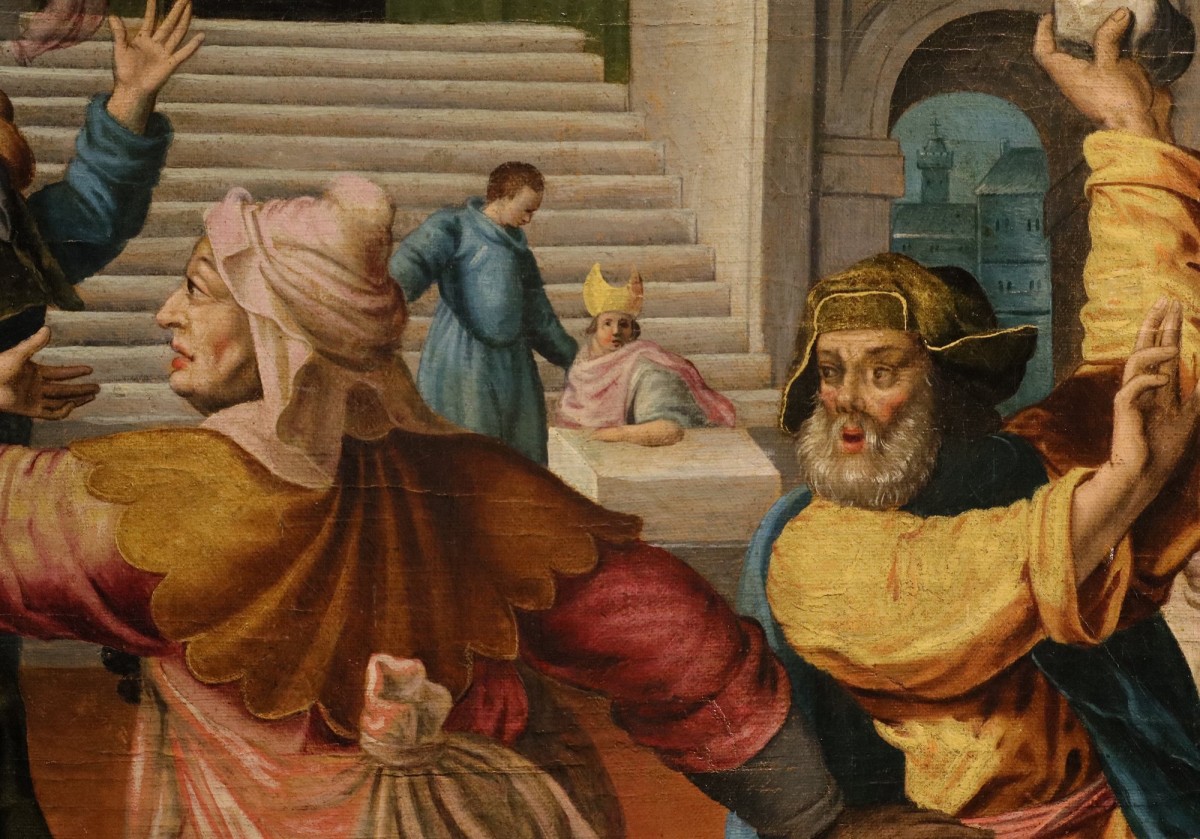
These words of Jesus are considered blasphemous by the Jews present, who, deeply enraged, pick up stones and attempt to stone him inside the Temple, forcing him to flee to safety.
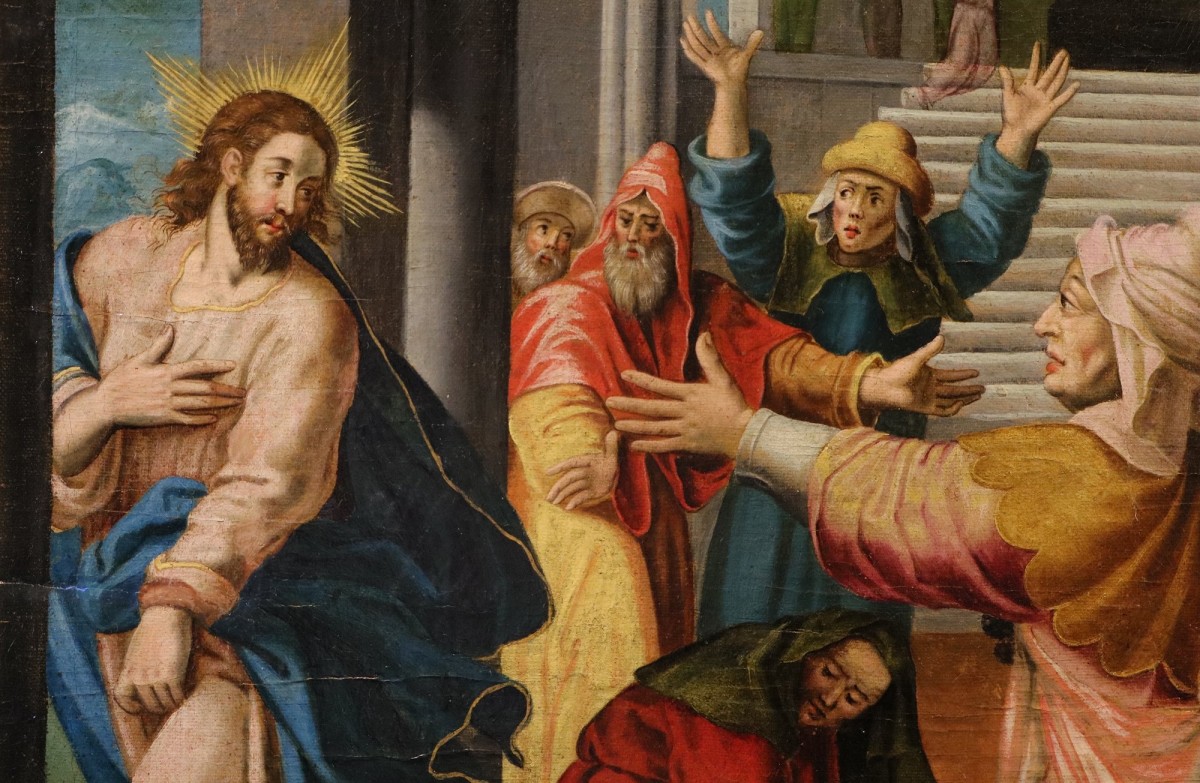
Christ’s statement thus causes such a scandal that it provokes violent reactions, foreshadowing what will be his final condemnation; we see him walking resolutely toward the exit; he turns back with a serene yet firm, almost regal expression, effectively revealing his divine nature.
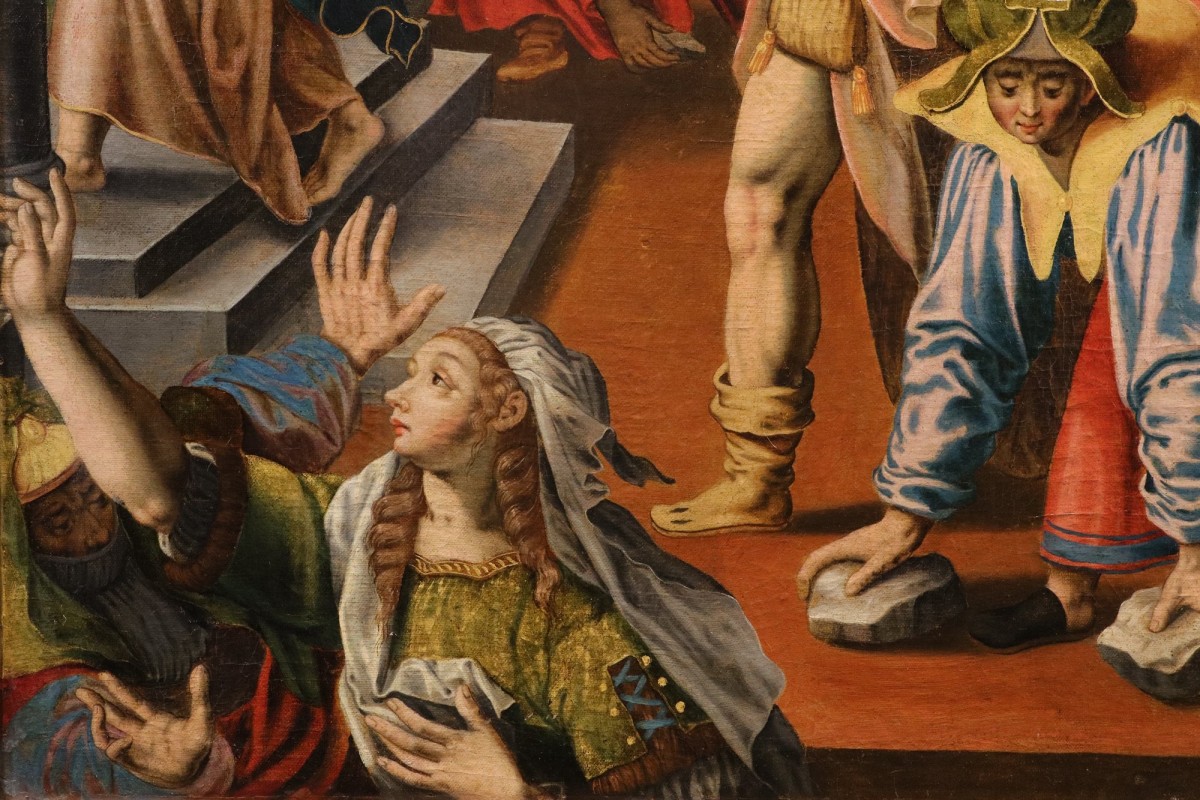
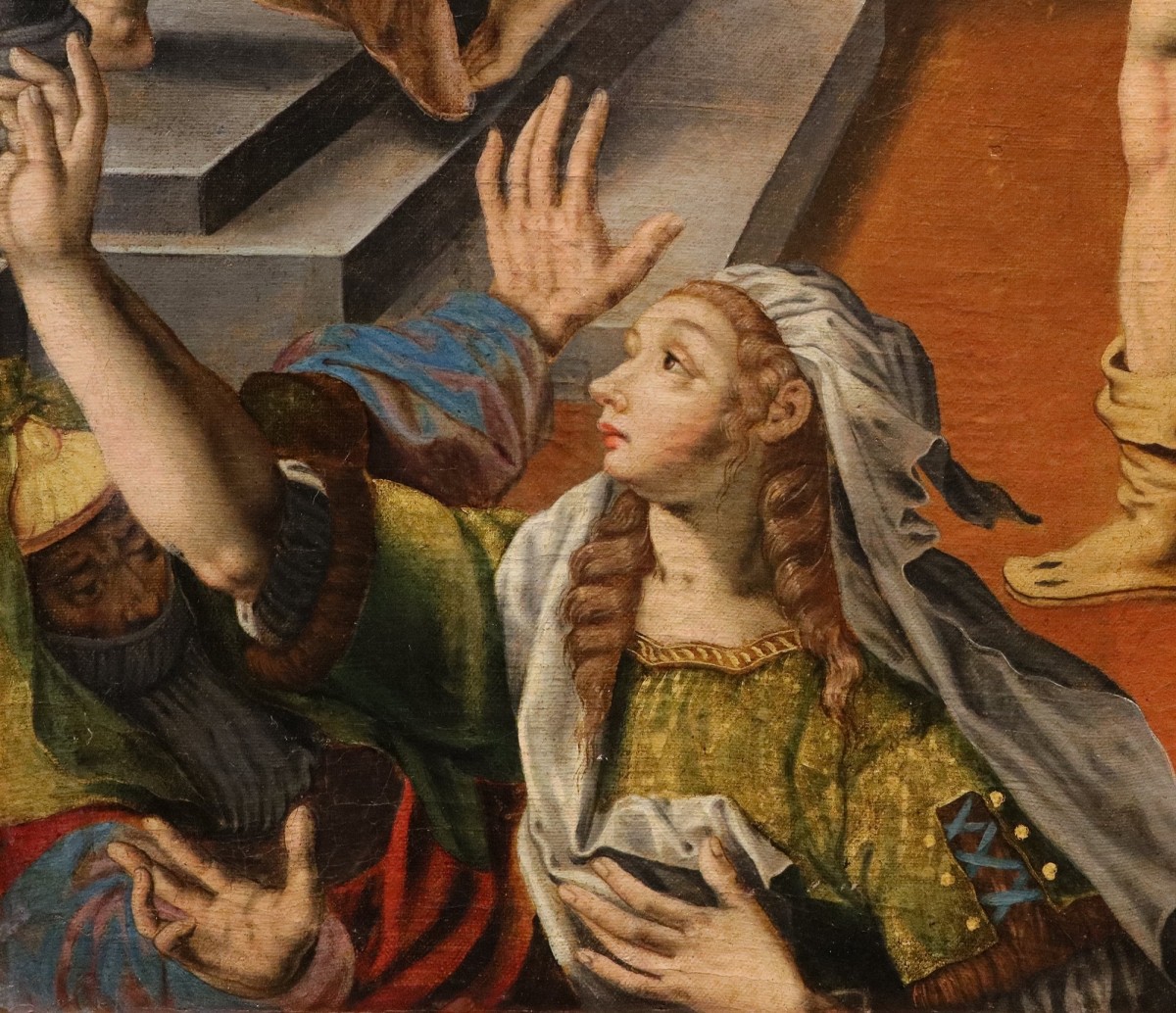
The detail in the lower left is beautiful: there is a female figure with her arms raised, her gaze turned upward in a supplicating expression, with long, wavy hair.
She could be Mary Magdalene, who, although not mentioned in this episode, will play a key role in the moments immediately preceding and following Jesus’ death, emerging as the most faithful and courageous disciple.
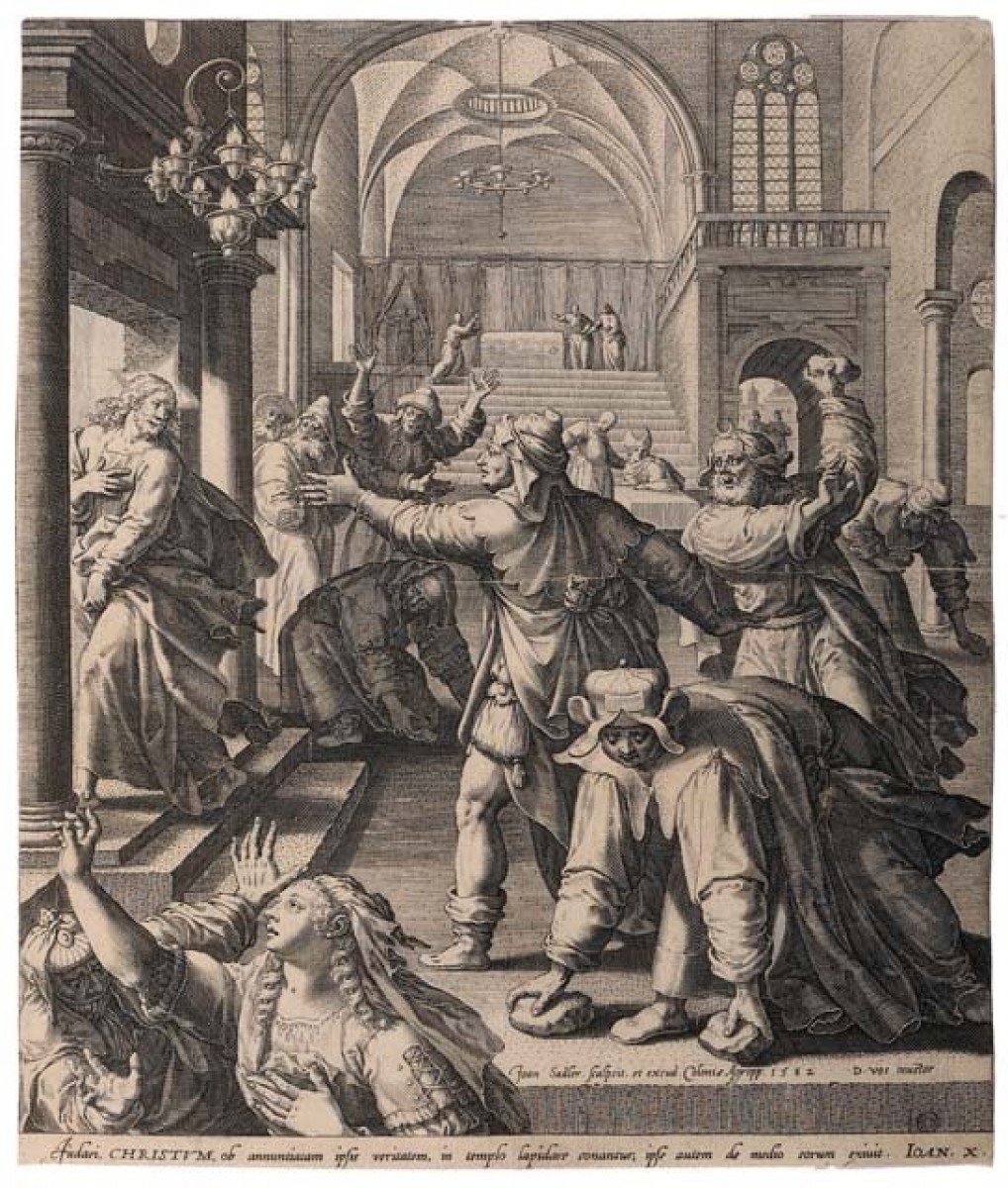
This work, in particular, is based on an engraving by Jan Sadeler (Brussels, 1550 – Venice, 1600, from 1582), which in turn was based on a composition by the Flemish painter Marten de Vos.
At the bottom of the print is a Latin caption taken from the Gospel of John: "Judaei, CHRISTVM, ob annuntiatam ipsis veritatem, in templo lapidare conantur, ipse autem de medio eorum exivit. IOAN. X." (The Jews, because of the truth he proclaimed, sought to stone Christ in the temple, but he went out from among them).
Our painting, in keeping with the typical characteristics of the Dutch Mannerist style, features muscular figures in dynamic poses and complex foreshortening, characterized by a crowded composition, strong dynamism, and a dramatic use of chiaroscuro.
The style of the work shows close affinities with the compositions of Maarten de Vos (Antwerp, 1532 –1603), who skillfully blended traditional Flemish taste with the characteristics of the Italian Renaissance, inherited from his apprenticeship in the workshop of Frans Floris and his travels in Italy.
The remarkable quality of the work, characterized by a soft painterly rendering and an intense color palette, suggests that it was likely created within the master’s workshop, that is, under his direction and possibly with his own involvement, given the technical mastery in the brushwork and the use of light.
Alternatively, it is possible that the work was created by a skilled painter belonging to the large group of students and followers active in Antwerp toward the end of the sixteenth century and strongly influenced by de Vos—in which case, the work was inspired by the etching by Jan Sadeler I (Brussels, 1550 – Venice, 1600).
Delevery information :
We take care of and organise the transport of the purchased works, both for Italy and abroad, through professional and insured carriers.
We take great care We personally take care of the packaging, to which we devote a great deal of care: each work is carefully packed, first with arti- cle material, then with a custom-made wooden box.
Should you have the desire to see this or other works in person, we would be happy to welcome you to our gallery in Riva del Garda, Viale Giuseppe Canella 18, we are always open by appointment only.