Offered by Antiquités Olivier Alberteau
REQUEST INFORMATION

General antiques dealer in Nantes
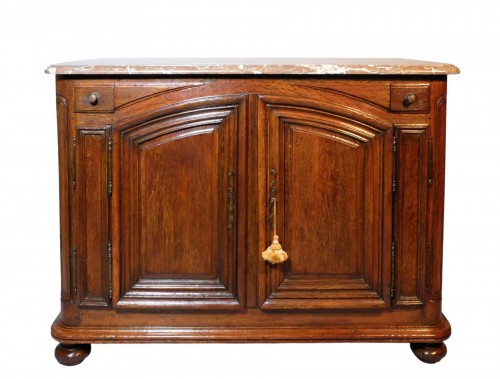
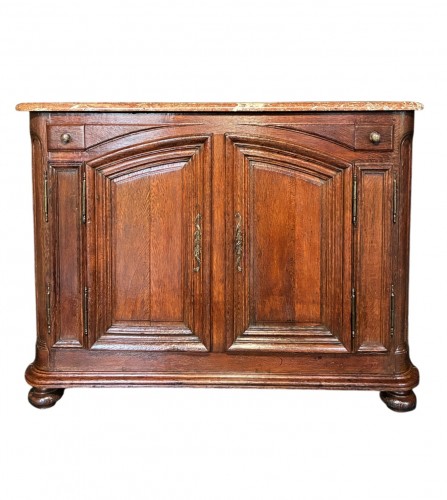
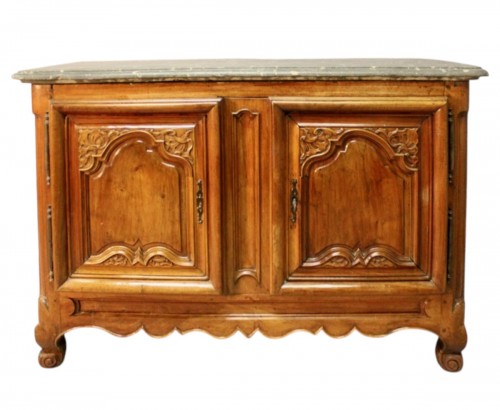
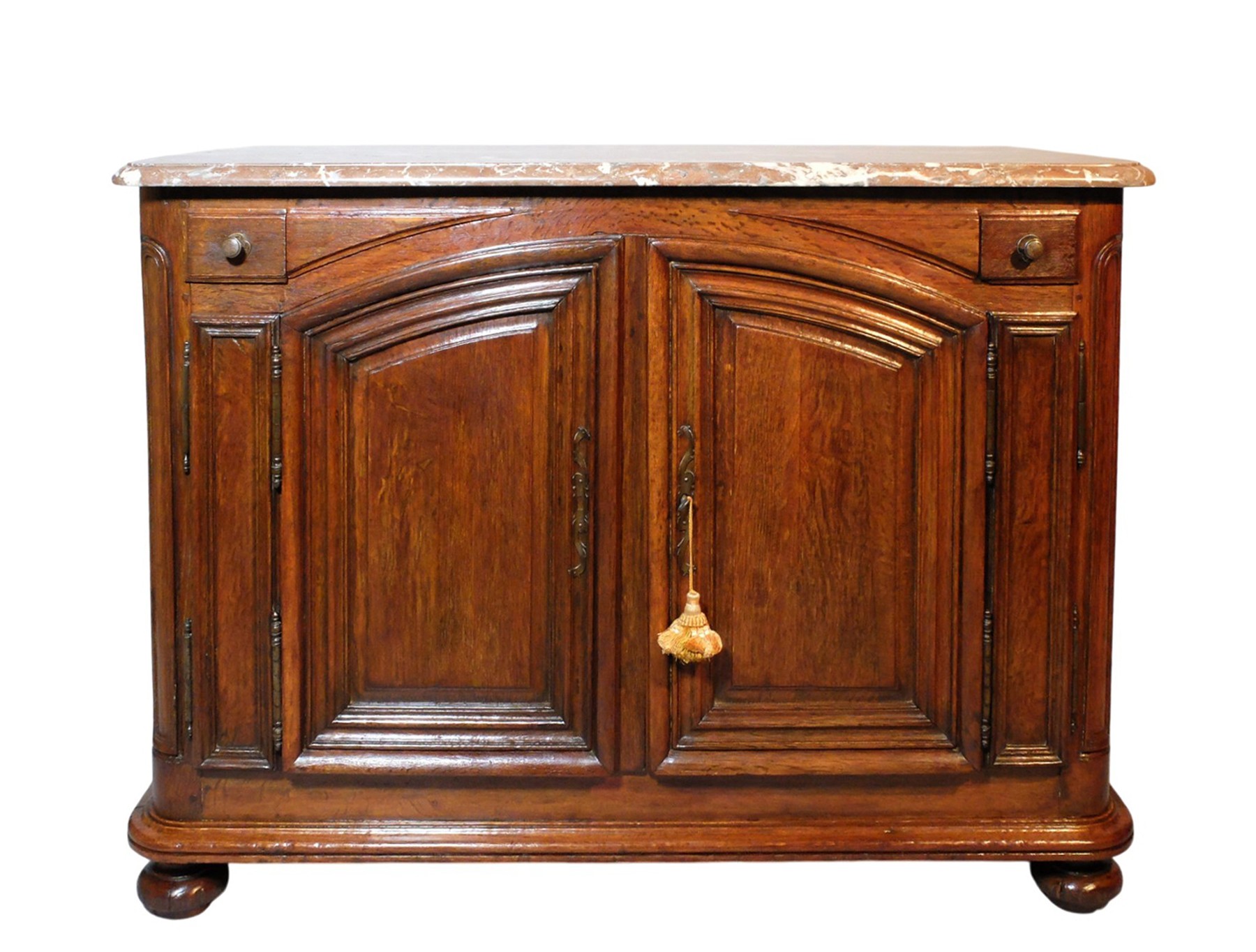
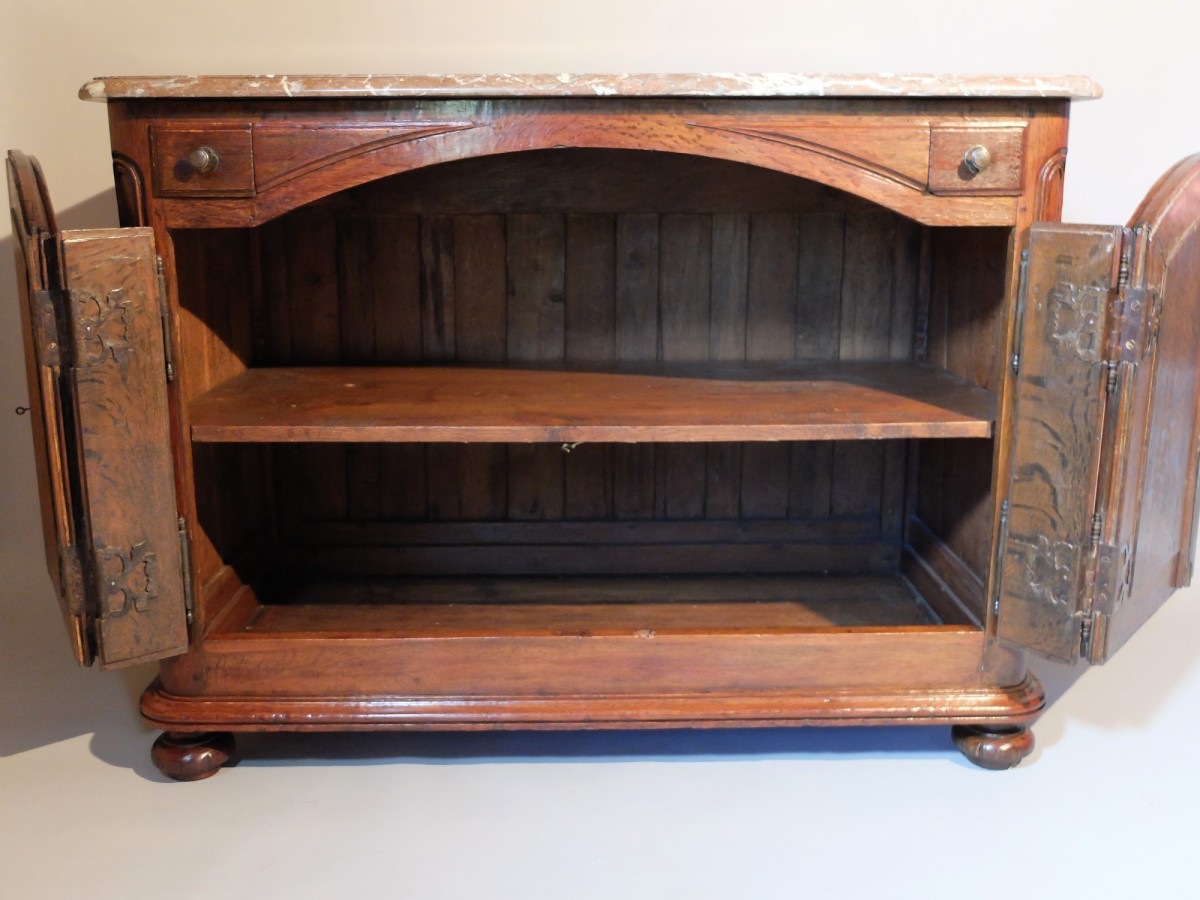
Oak hunting buffet, opening with two double-hinged doors.
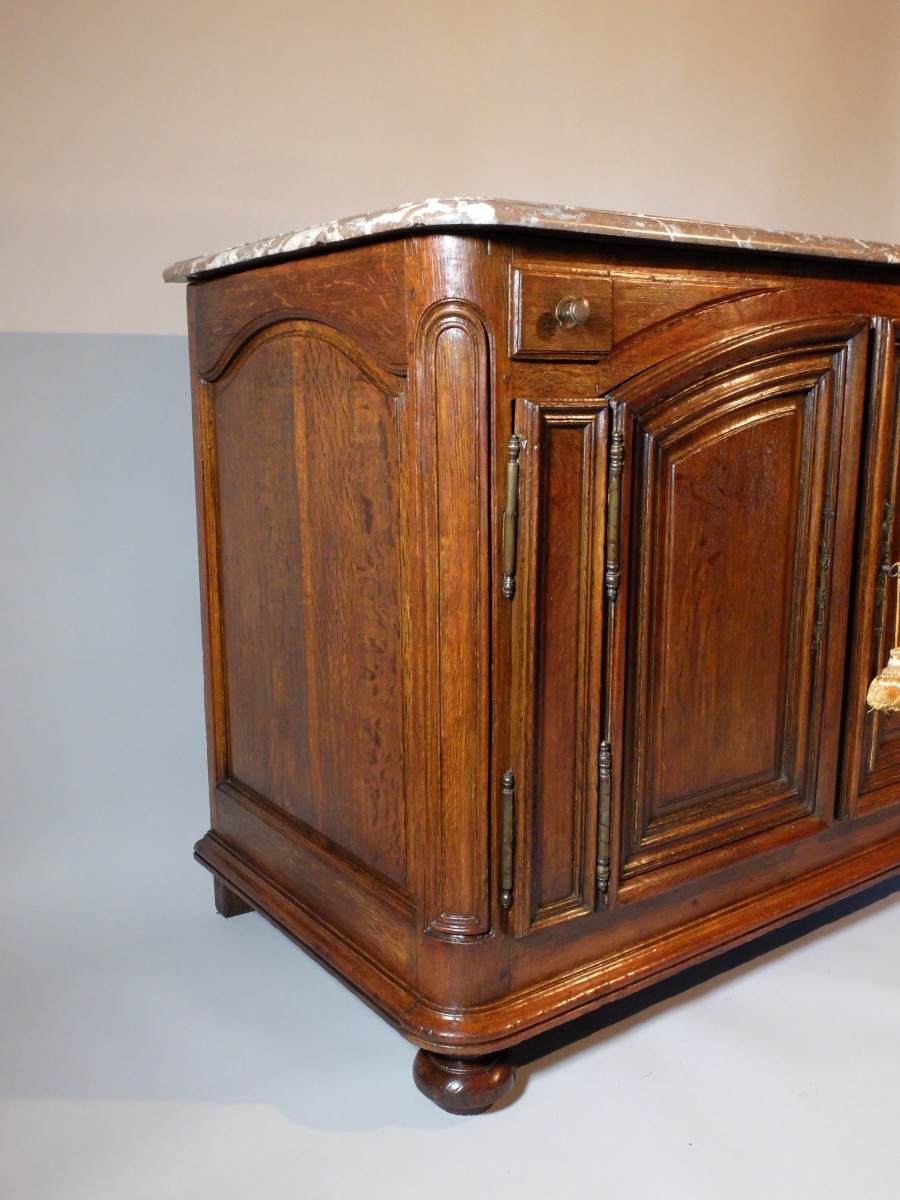
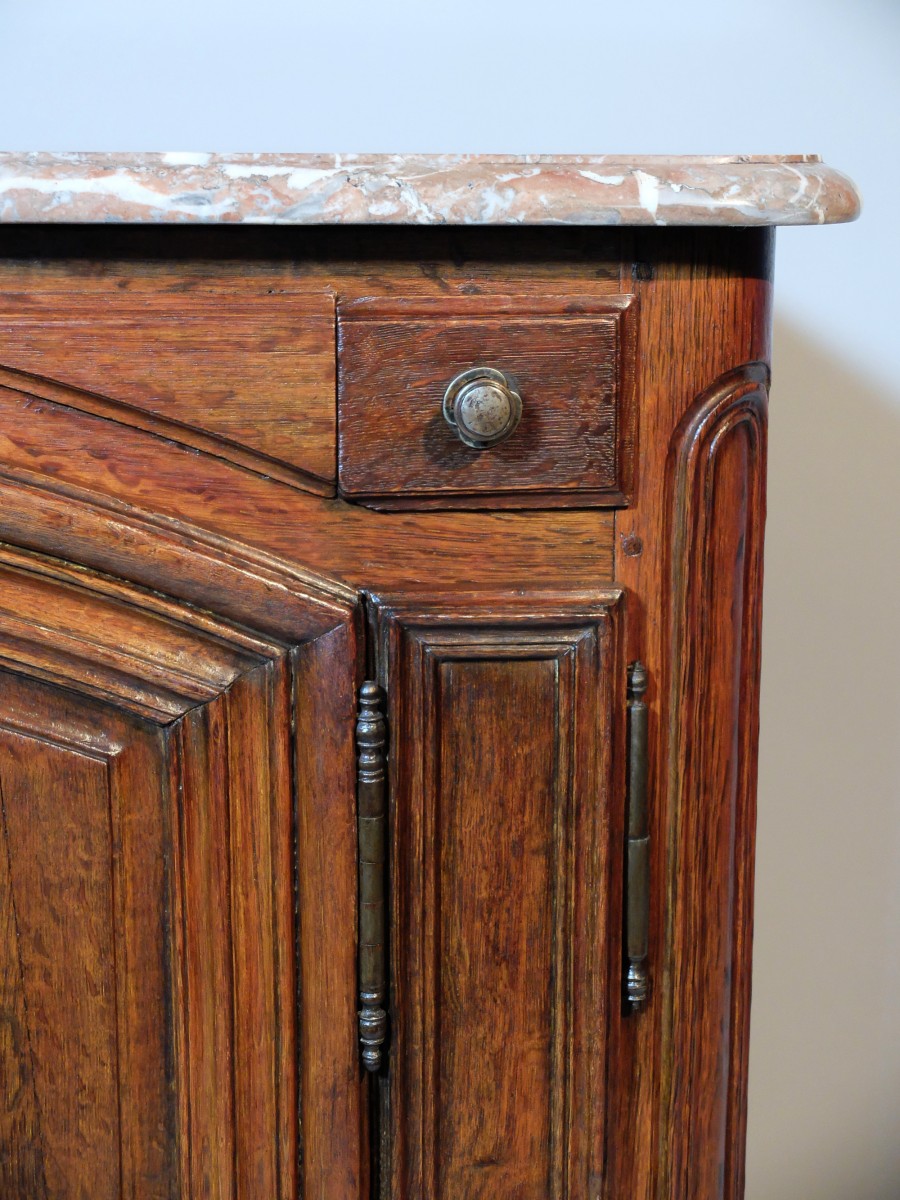
The heavily molded doors each consist of two hinged panels,allowing the door leaves to open fully and rest against the sides of the cabinet.
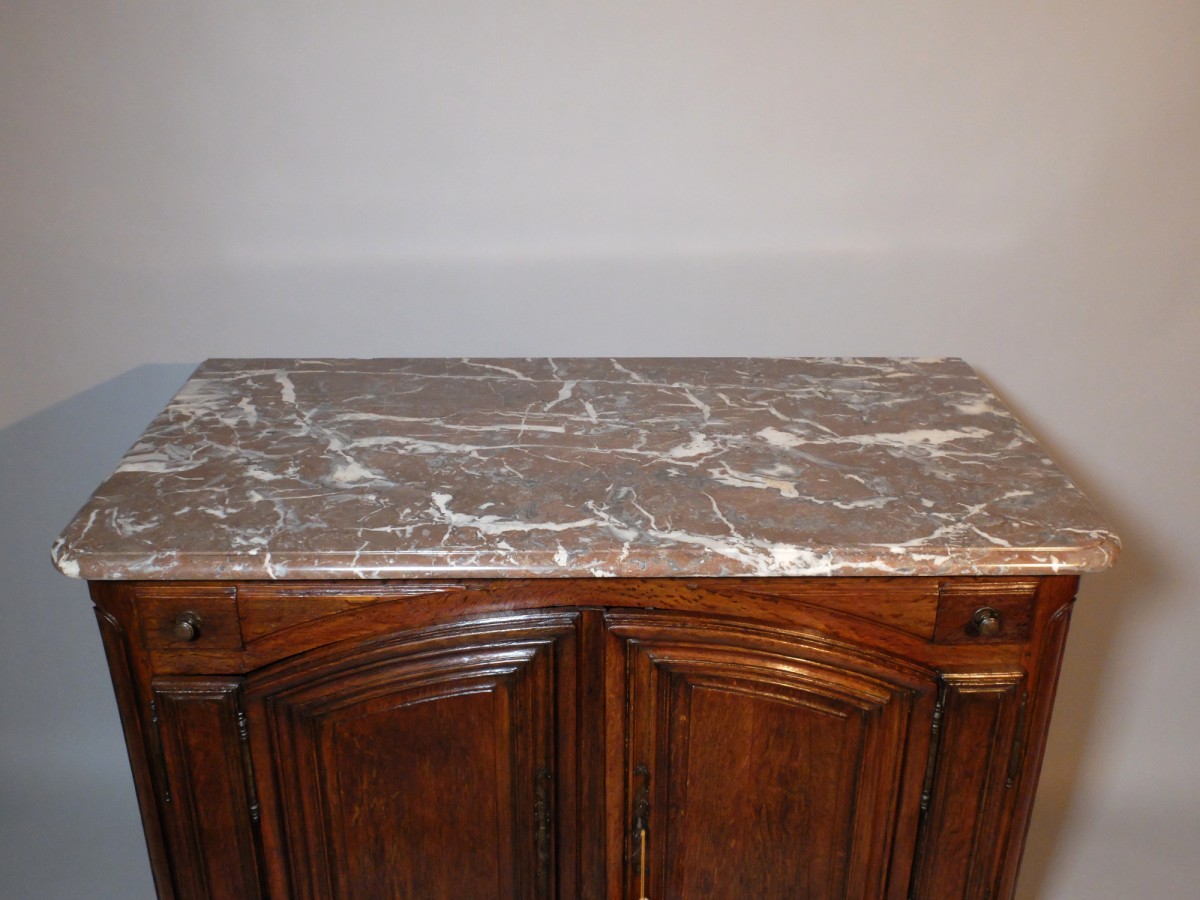
Two small drawers flanking each side of the cabinet are topped with a slab of Pyrenean marble.
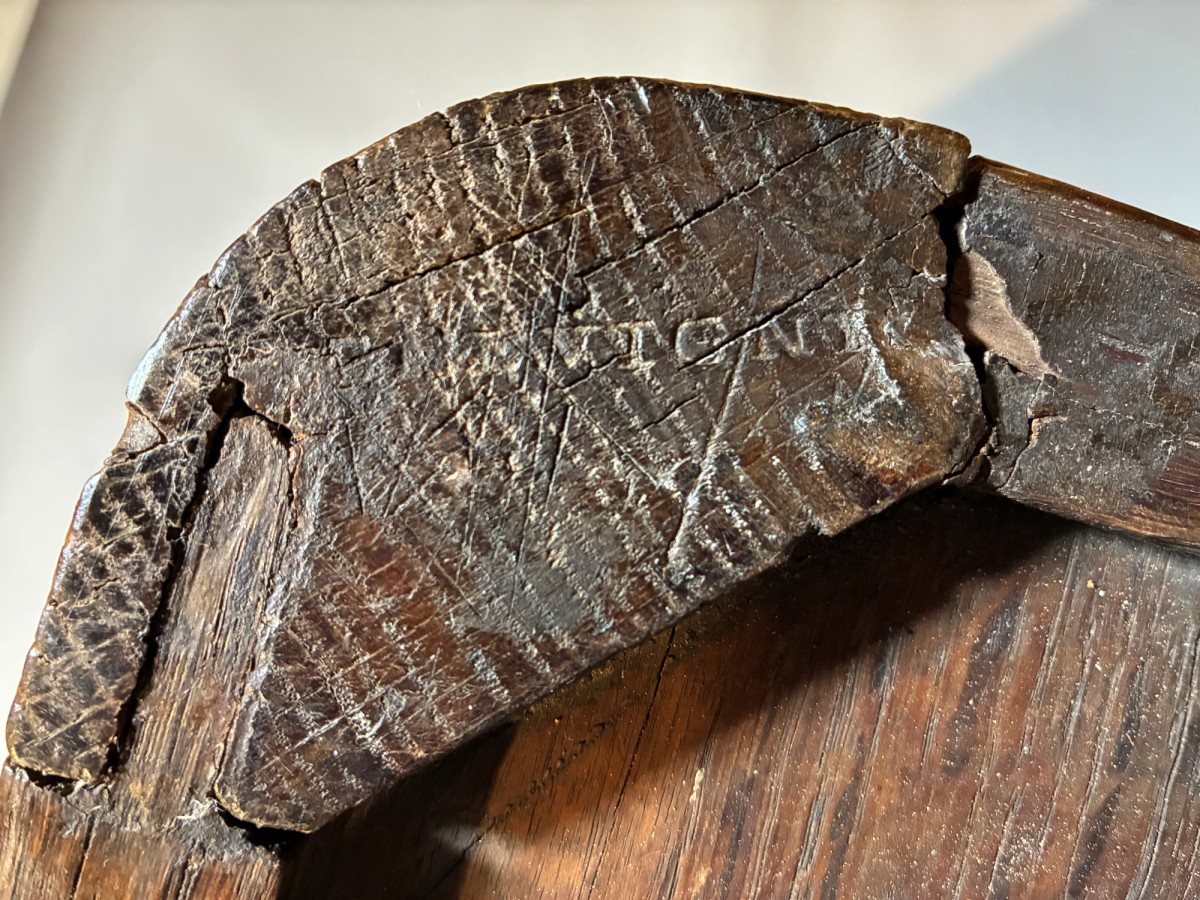
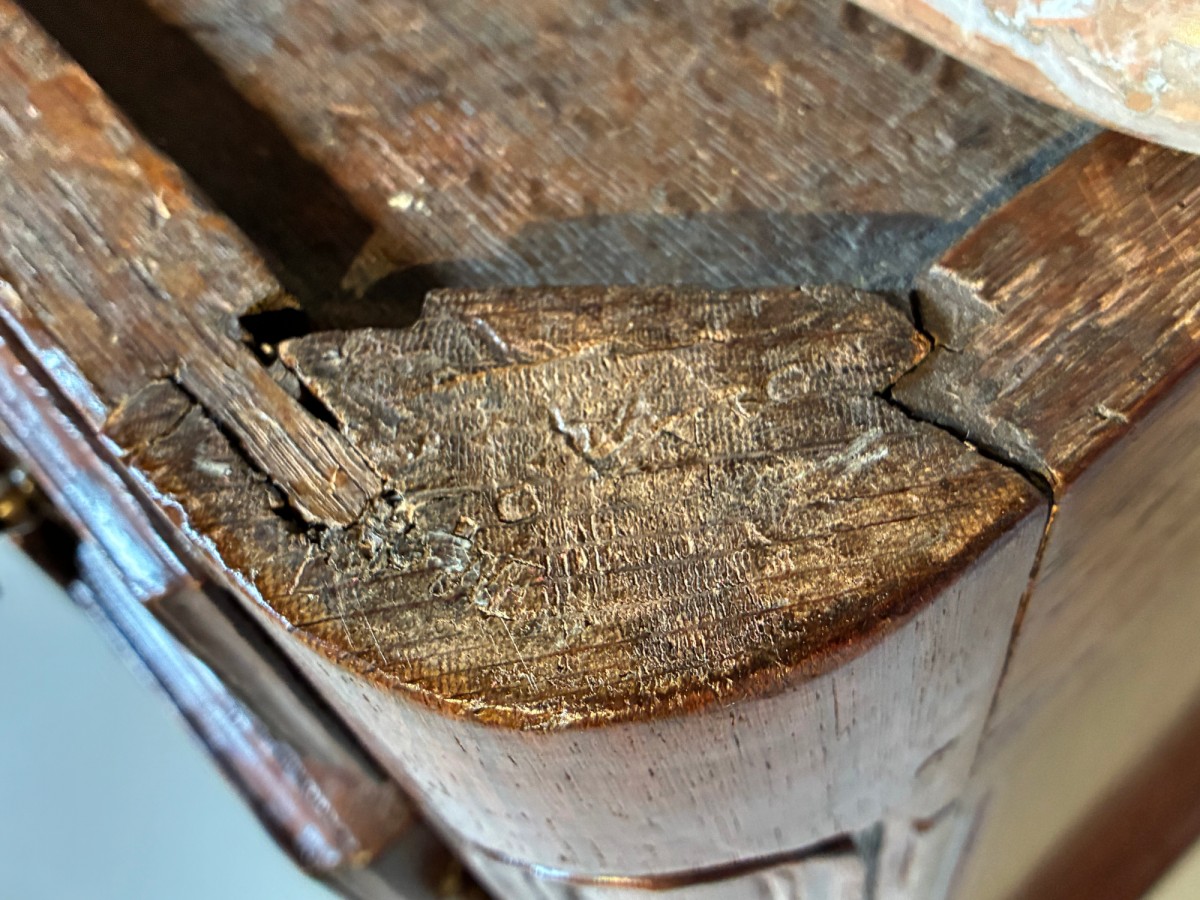
An 18th-century Parisian piece, stamped twice with “Claude Chevigny” and bearing the guild mark “JME.”
Length: 127 cm.
Depth: 65.5 cm.
Height: 93 cm.
Claude Chevigny was admitted as a master craftsman on April 27, 1768. An excellent cabinetmaker specializing in chairs, he worked on Rue de Cléry, where he produced chairs of exceptional quality, meticulously crafted, and delicately carved.
He worked for the Duke of Choiseul at the Château de Chanteloup and the Duke of Montmorency, among others.
Very few pieces of furniture by this cabinetmaker are known to us. Traditionally, cabinetmakers worked exclusively on chairs, but “under Louis XV, in 1751, the statutes governing these two professions were established and recognized.” Cabinetmakers often came from Flanders, the Netherlands, or Germany. The center of cabinetmaking was located in the Faubourg Saint-Antoine, while that of carpentry was in Bonne Nouvelle. At the time, carpenters crafted all types of fixed and movable furniture without veneer. A distinction was made between furniture carpenters and building carpenters. They could create carvings, moldings, or simple ornaments. They collaborated with other trades such as sculptors, woodturners
, gilders, upholsterers, passementiers, ornamentalists, and so on. Great importance was placed on the choice of fabrics used on the furniture. Cabinetmakers, on the other hand, create wooden furniture and panels that are
then veneered. The veneering technique involves applying sheets of precious wood or other materials (such as tortoiseshell) to the frame to conceal it." (Source: Educational booklet: The 18th Century: The Origins of Design. Key Figures in 18th-Century Cabinetmaking, Public Institution of the Palace of Versailles.)