Offered by Antiquités Philippe Glédel

18th Furniture, country french furniture
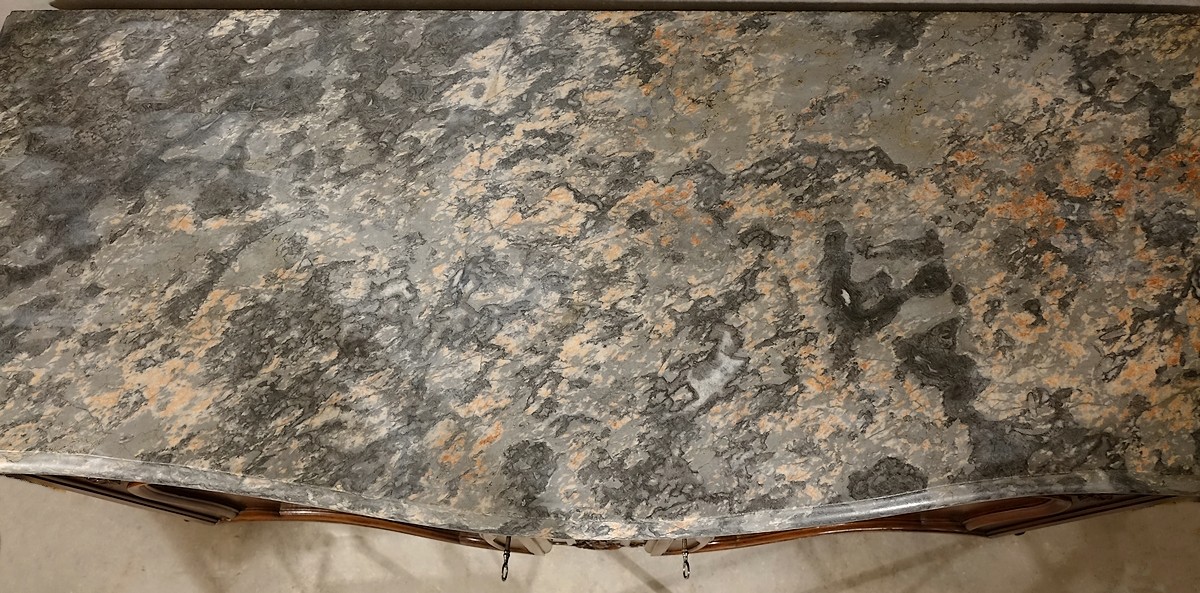
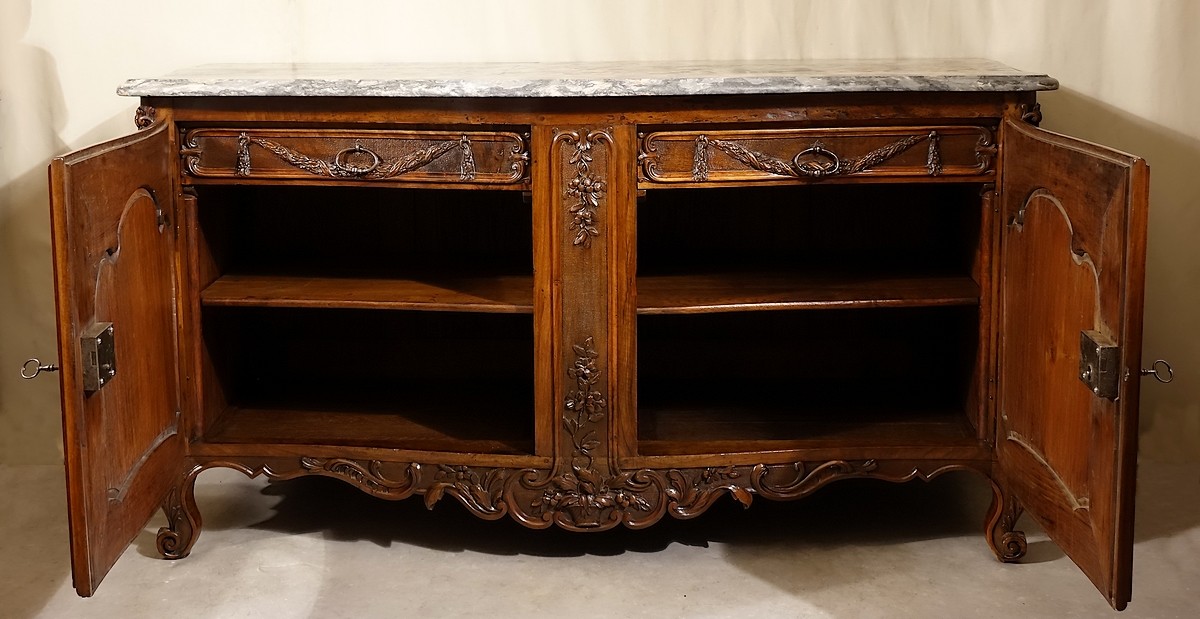
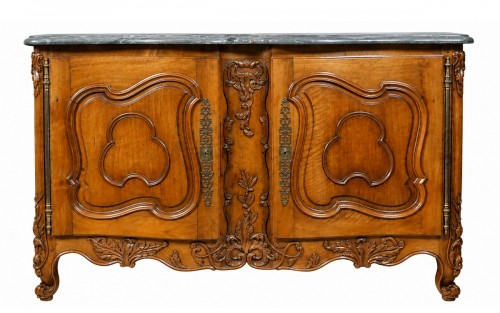
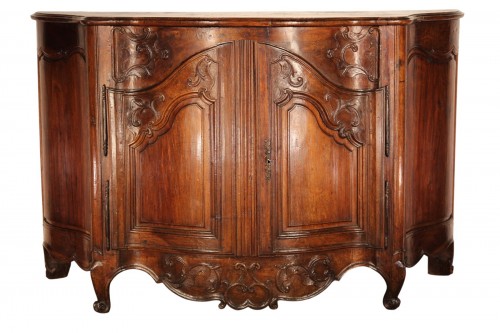
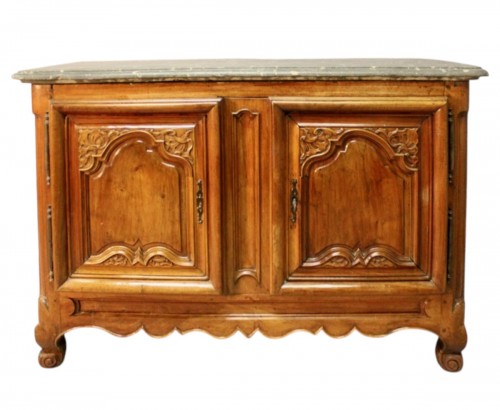
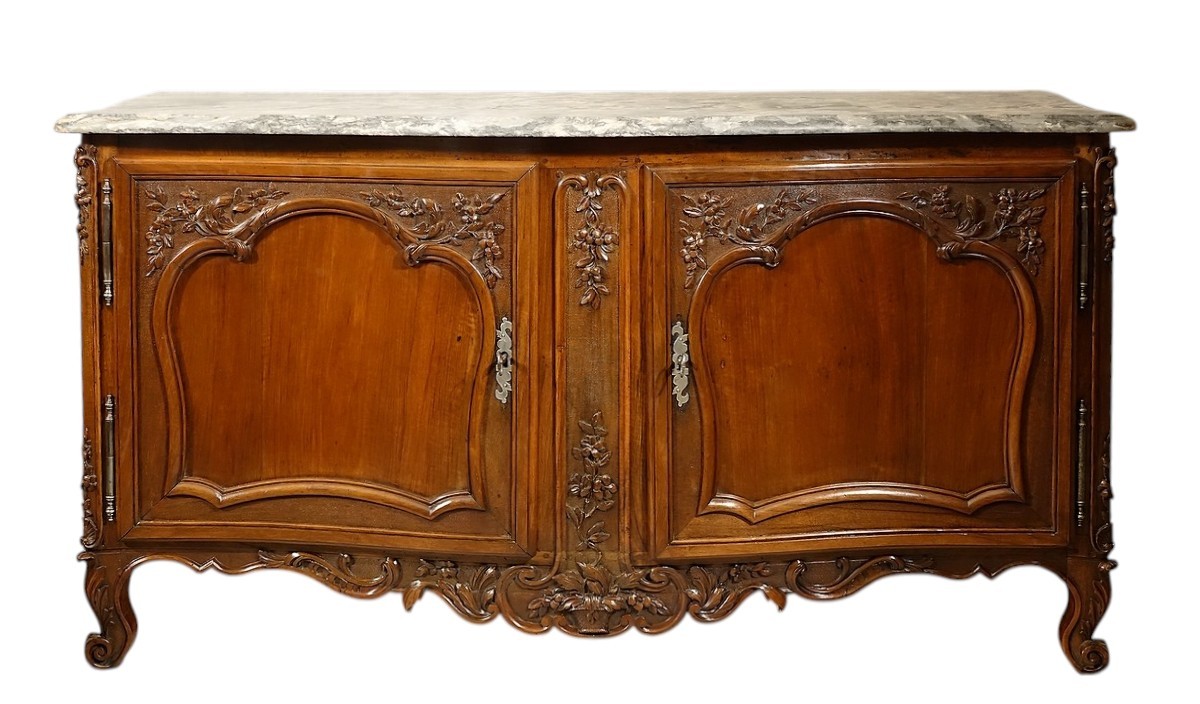
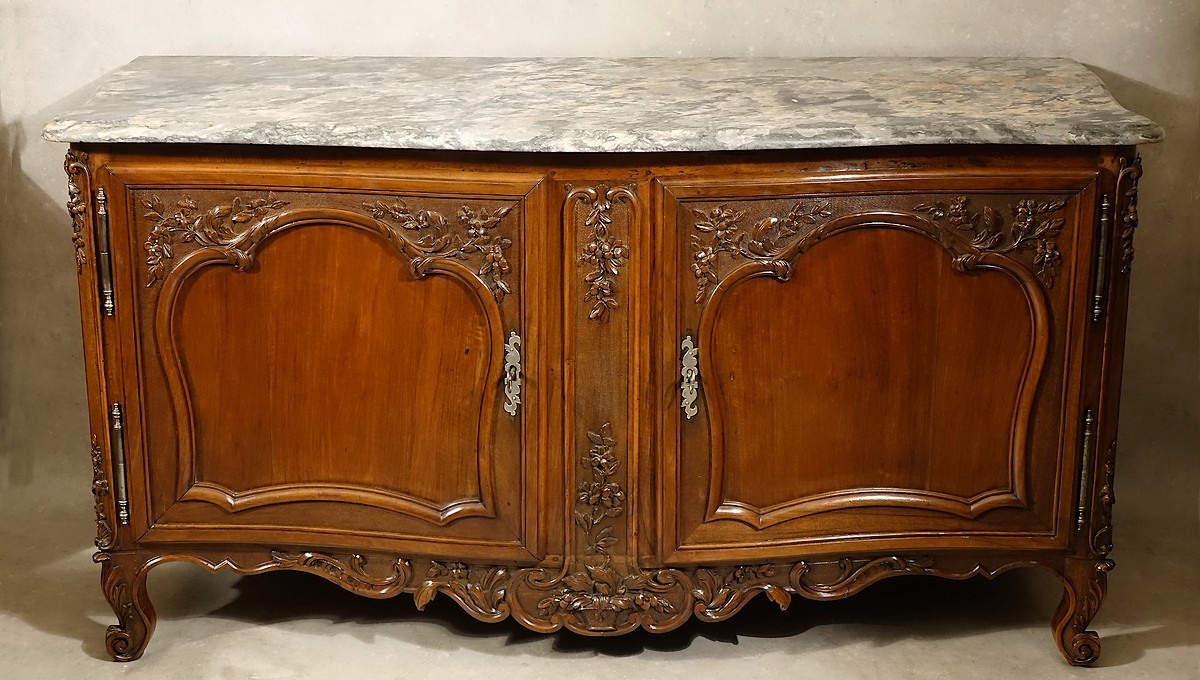
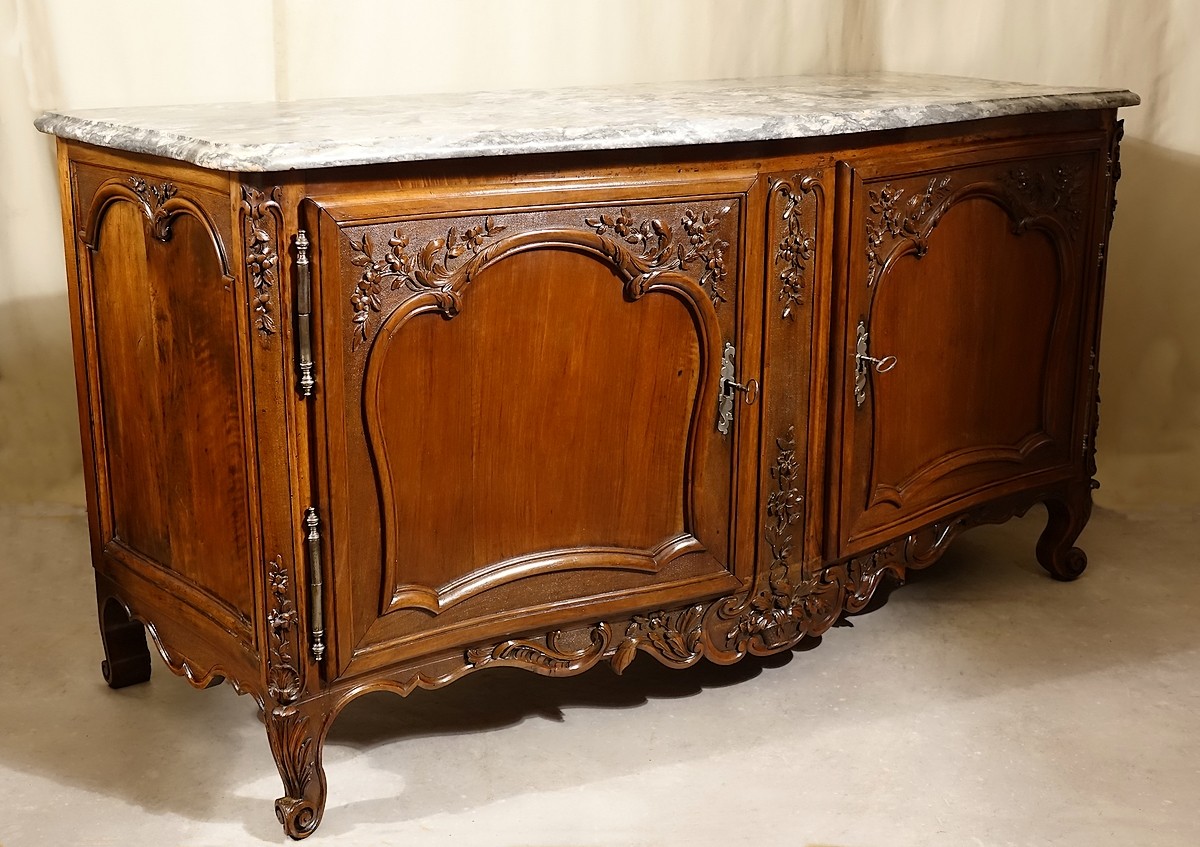
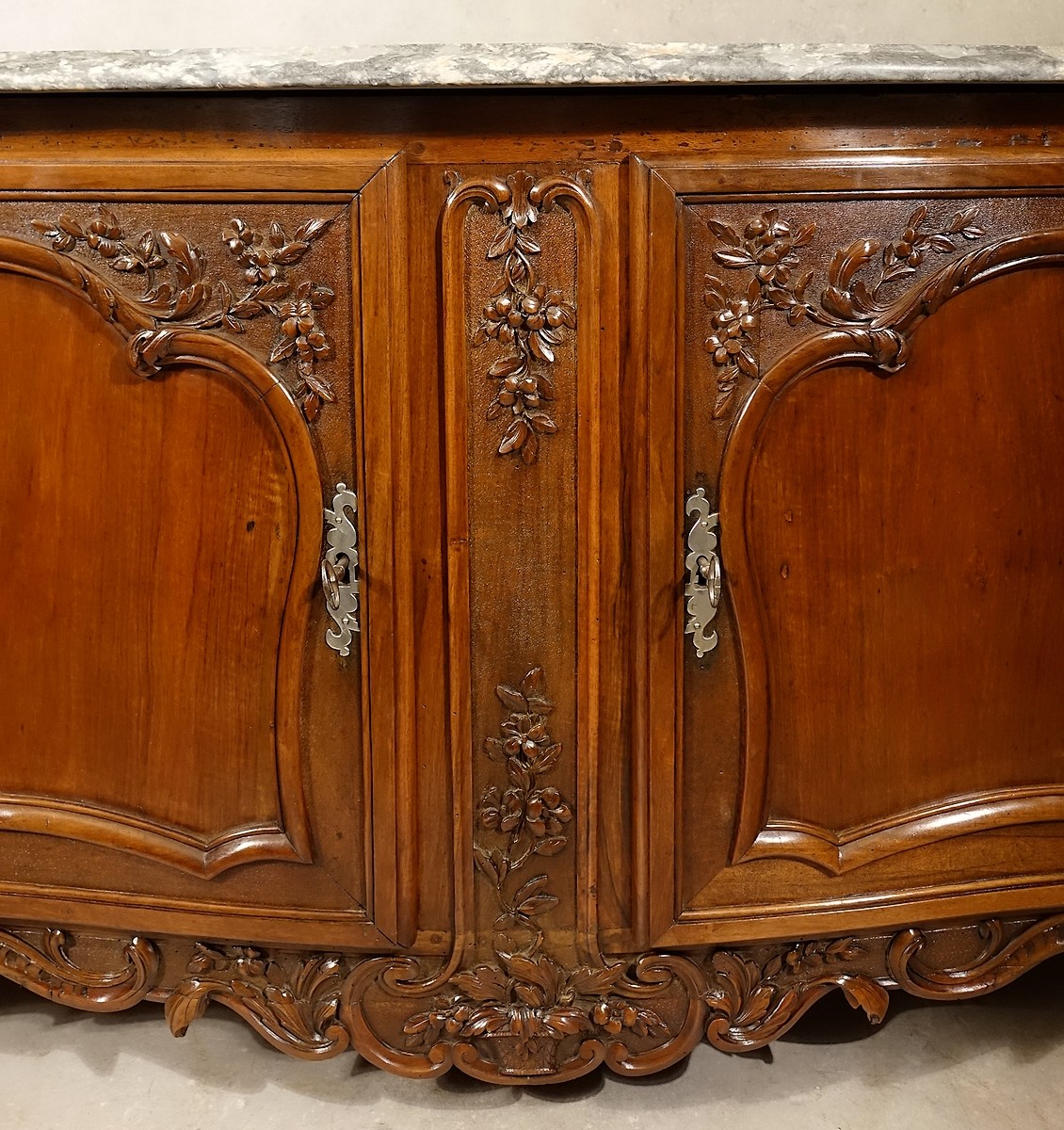
Important ceremonial sideboard in solid walnut, moulded and richly carved, serpentine on all sides and topped with a thick Caunes-Minervois marble.
Lower Languedoc, 18th century.
This rare and large sideboard—referred to in the 18th century as a bas d’armoire—stands out for both its quality and its dimensions, suggesting origins in a grand farmhouse (mas), a bastide, or even a château of the Languedoc region.
It combines the functions of a hunting buffet, a stone-topped serving piece, and a display cabinet for silverware and porcelain. A luxurious dining-room piece, it opens with two wide doors separated by a central stile to prevent excessive movement, while the interior is divided according to the principle described by André-Jacob Roubo: “The interiors of these buffets should be divided across their width into as many sections as there are pairs of doors.”
Particular features include:
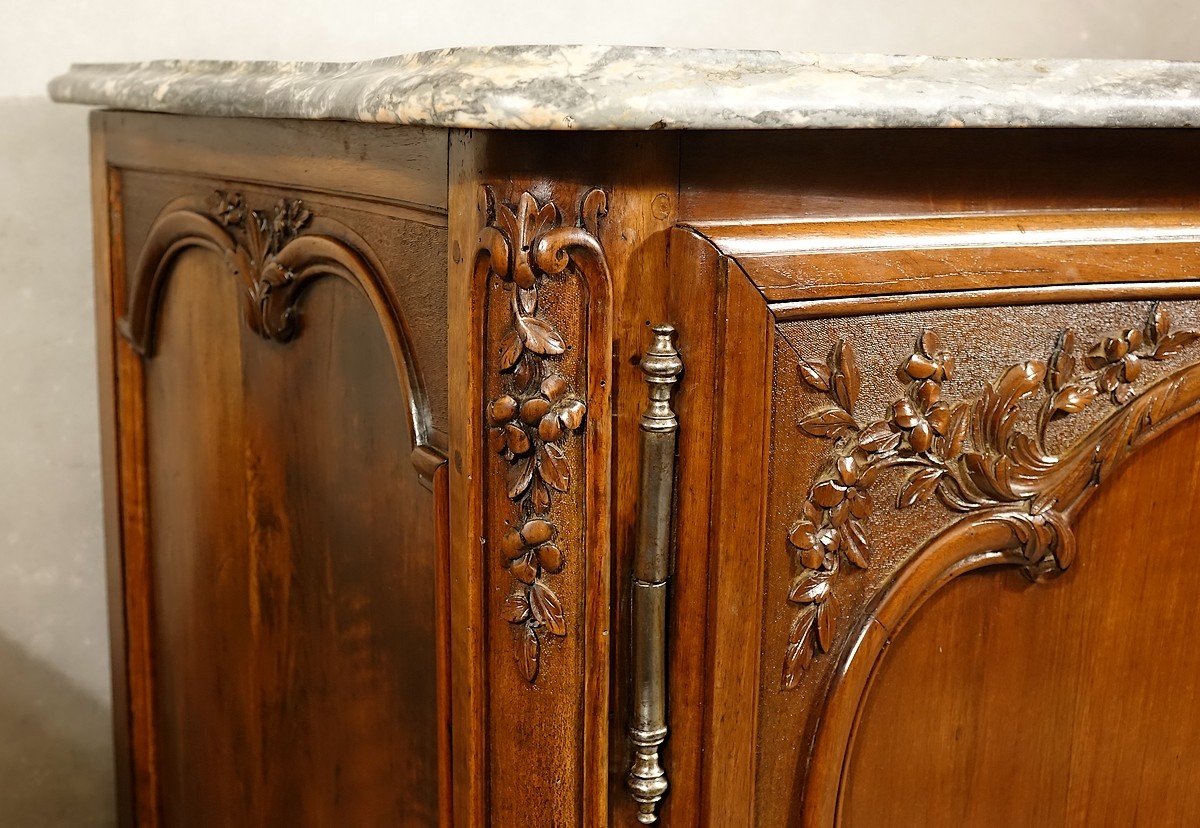
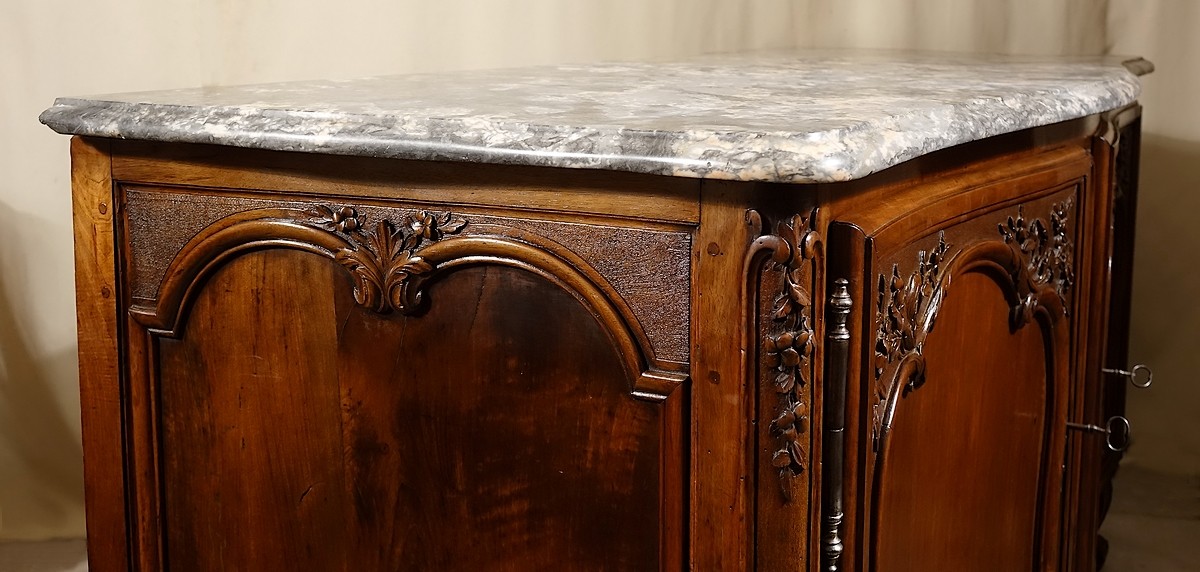
The pronounced serpentine curves of the façade, echoed on the sides.
The quality of the walnut and the substantial thickness of the timber sections, notably the uprights and curved rails (the lower rail is shaped from nearly 10 cm thickness).
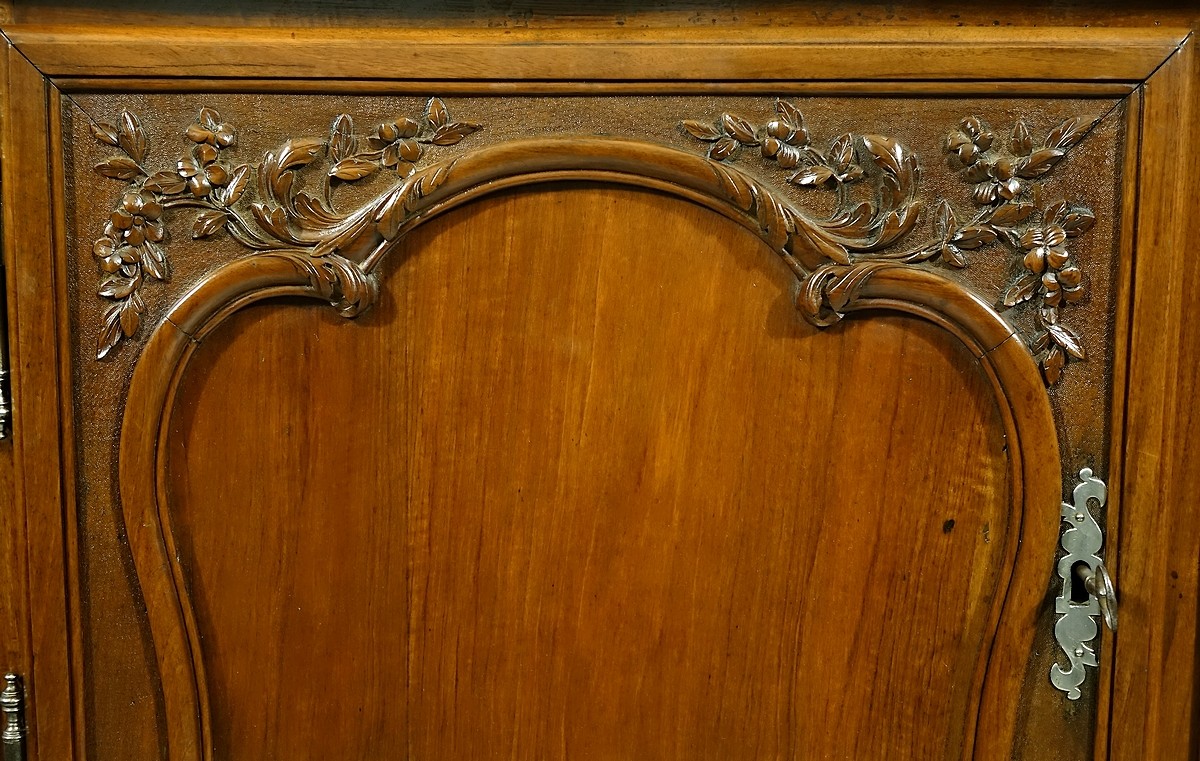
The elegance of the doors with large quadrilobed moulded panels.
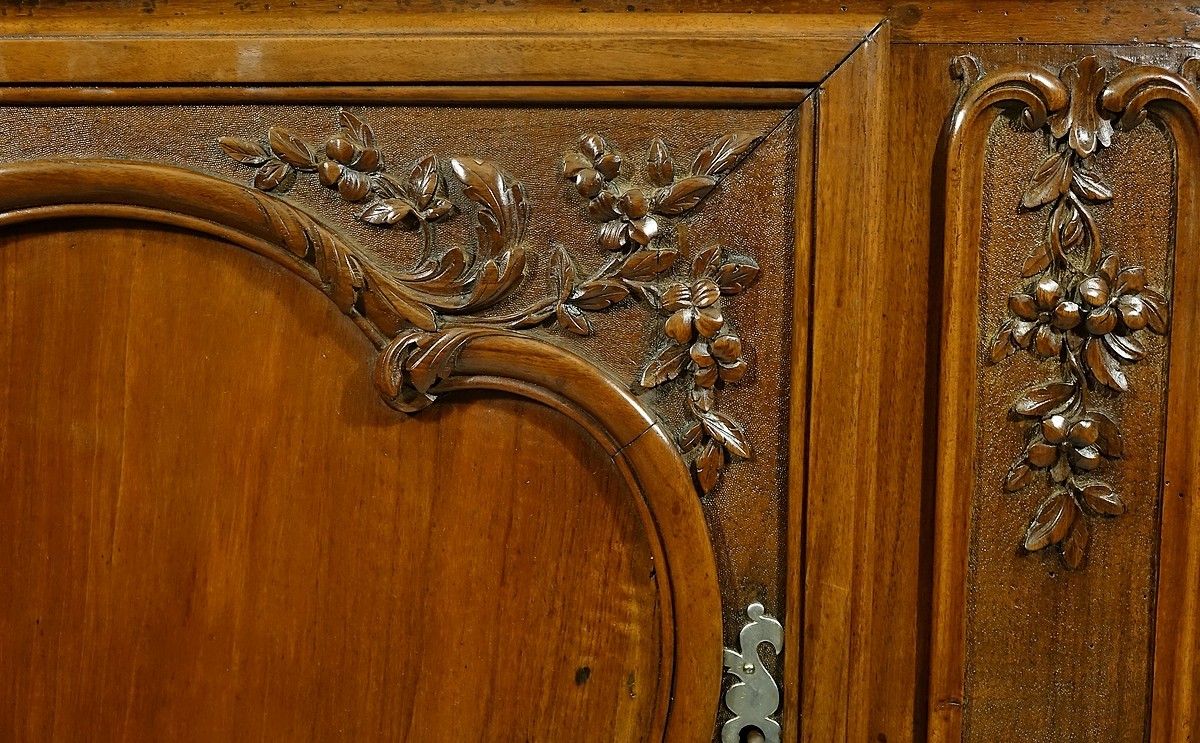
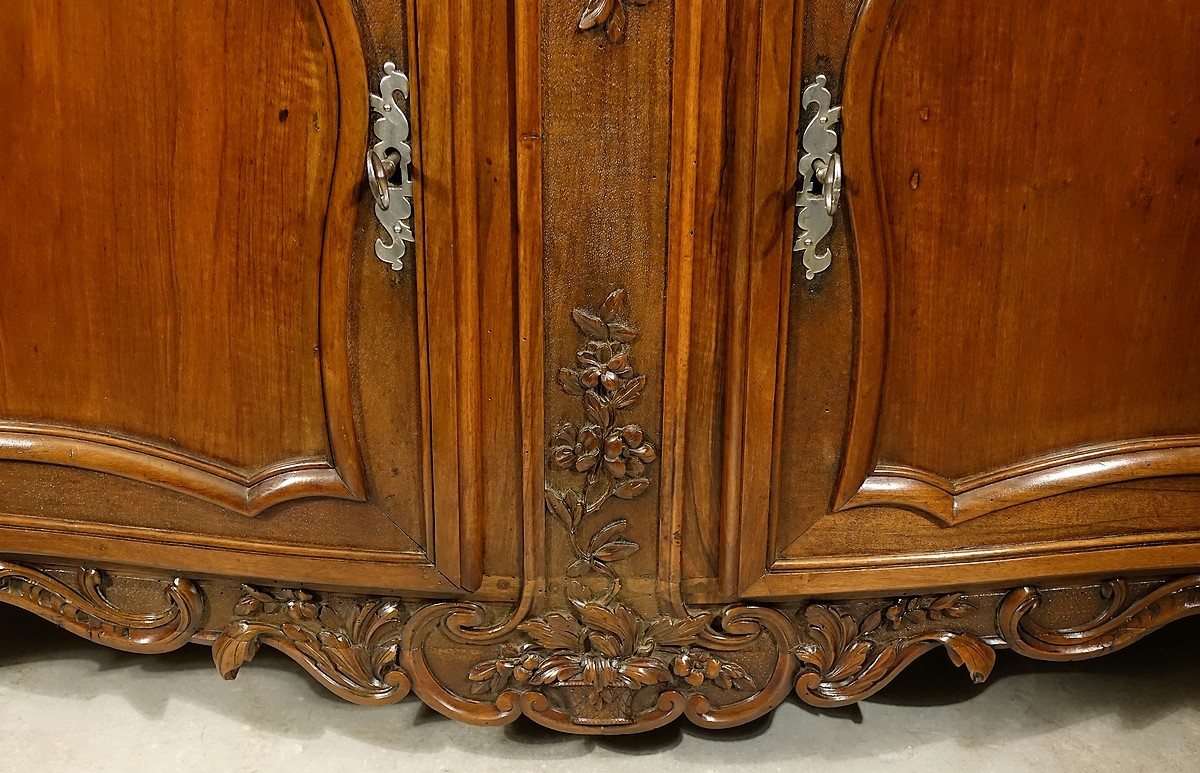
The richness and quality of the carved Louis XV ornamentation, highlighted by a granulated ground—both precise and powerful, deeply carved yet fluid and perfectly balanced—featuring palmettes, shells, scrolls, floral drops, veined leaves, gadrooned collars, cul-de-lamp motifs, basketry, crisp acanthus leaves, and C- and S-scroll motifs.
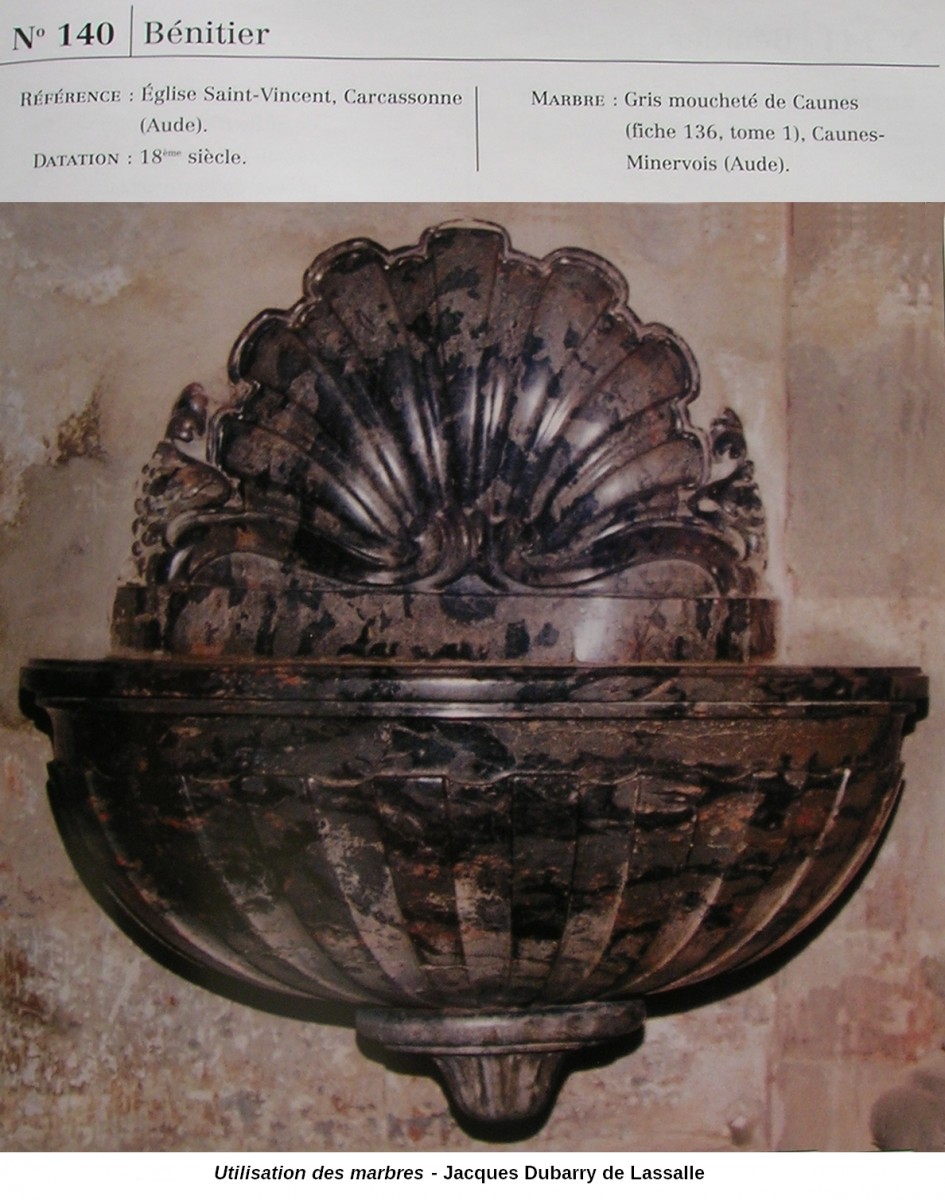
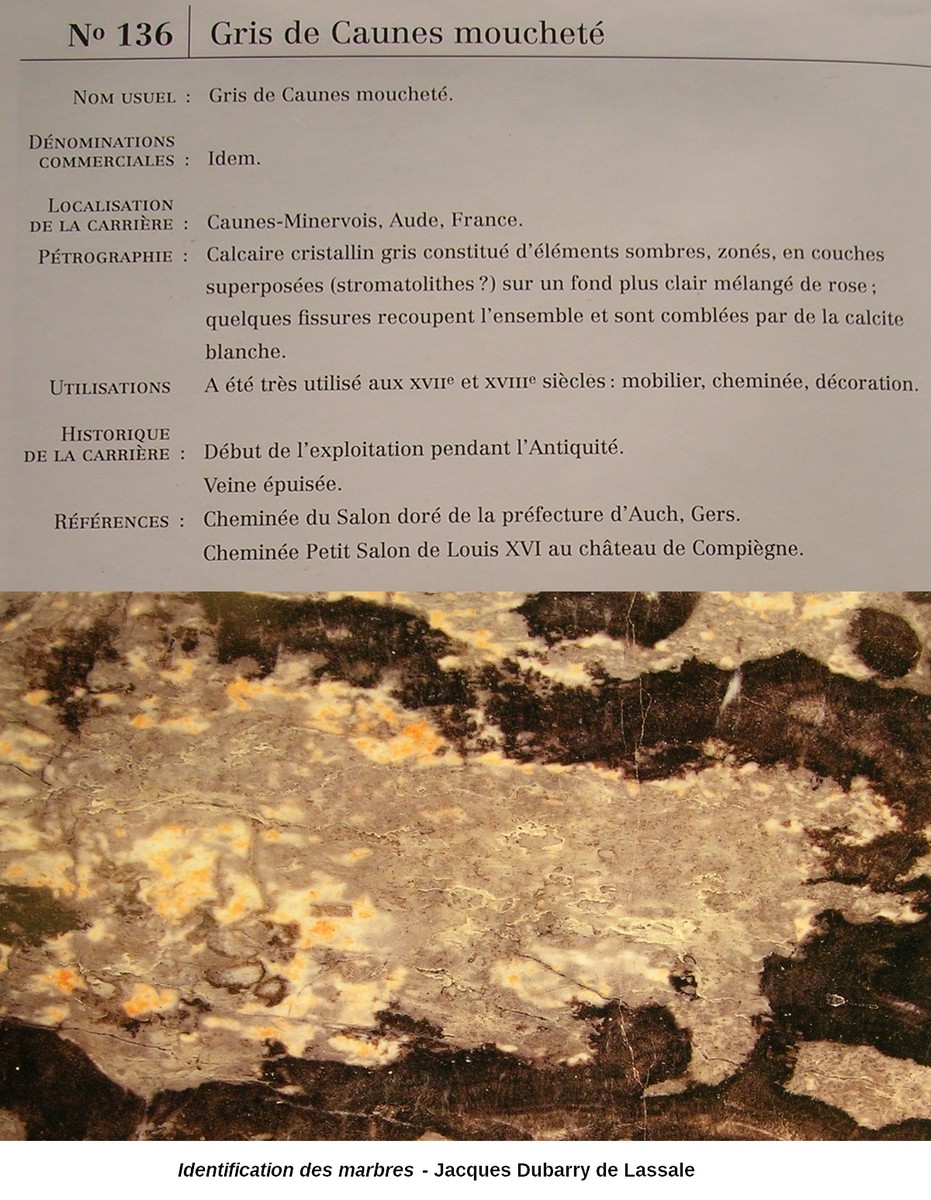
The richness of the original regional marble: a superb speckled grey Caunes marble (also known as Languedoc Californie, sometimes confused with Bleu Turquin due to its bluish tone, further warmed by pink hues), from the quarries of Caunes-Minervois. The 30 mm thick slab follows the contours of the piece and is finished with a bold bec-de-corbin edge, weighing approximately 120 kg. The rear edge is chisel-cut, while the front edge is hand-finished, displaying the characteristic undulating surface typical—and inimitable—of 18th-century marble. The stone shows an old, expertly restored fracture.
The interior finish, with two large and deep drawers carved with moulded bands, and door panels with raised mouldings.
The overall high-quality construction, with overlapping doors (rather than flush-mounted, as often seen on pieces of this scale), and original metal fittings: rooster-form escutcheons, strap hinges, fine iron locks, and remarkable handles on the interior drawers.
The piece is in very good condition, with minor restorations consistent with use.
Original marble. Interior modified with cremone bolts.
It has undergone a complete revision and a high-quality wax-filled finish.
Dimensions: Height 98 cm x Width 190 cm x Depth 78 cm
Measurements taken at the marble:
Length 190 cm at the back and 182.5 cm at the front – Width 78 cm at the center and 71 cm at the sides