Offered by Antiquités Philippe Glédel

18th Furniture, country french furniture
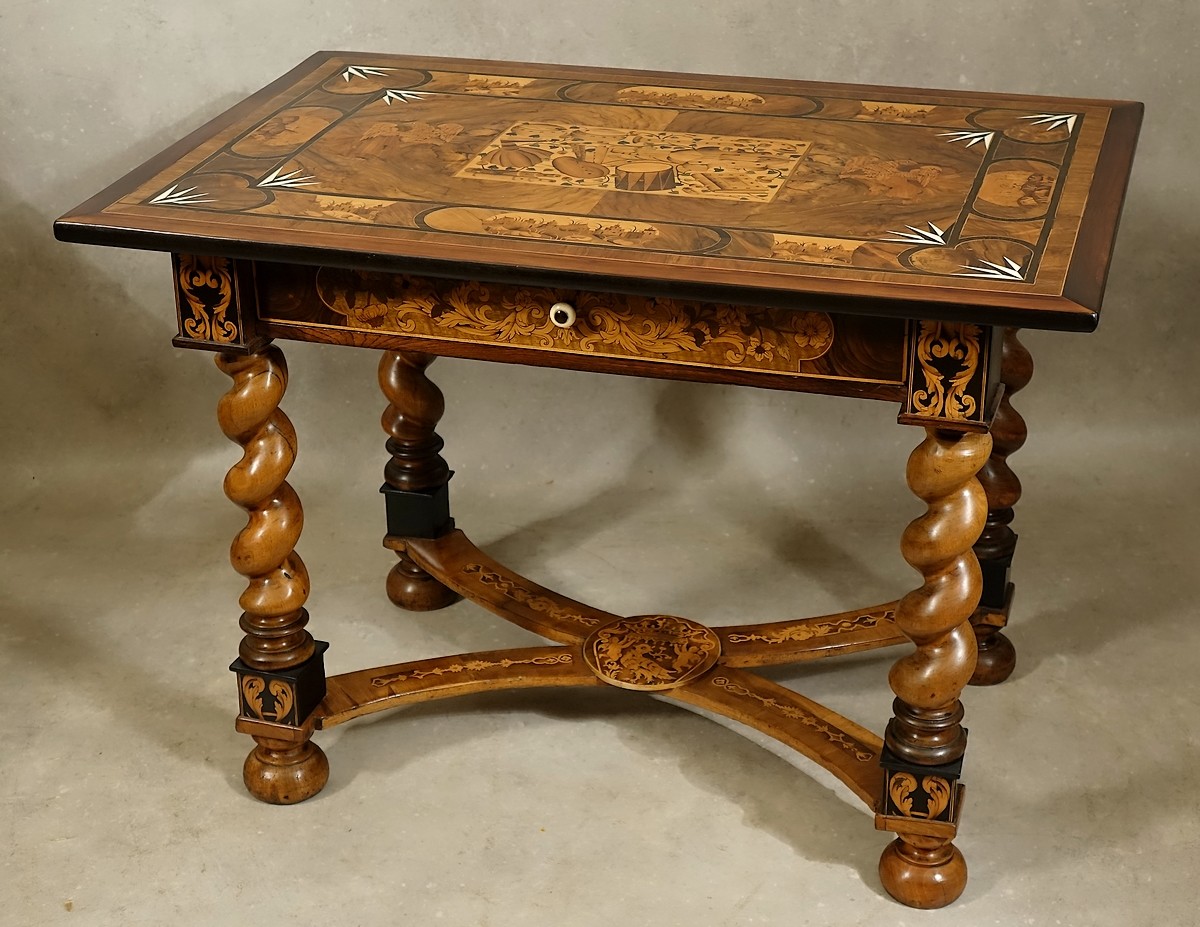
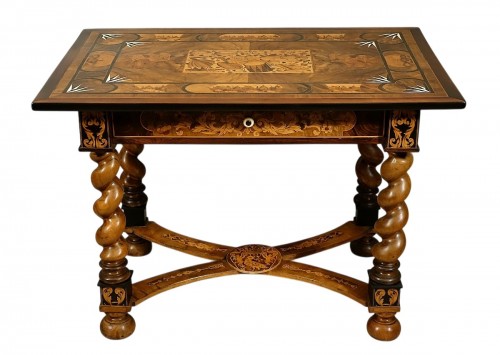
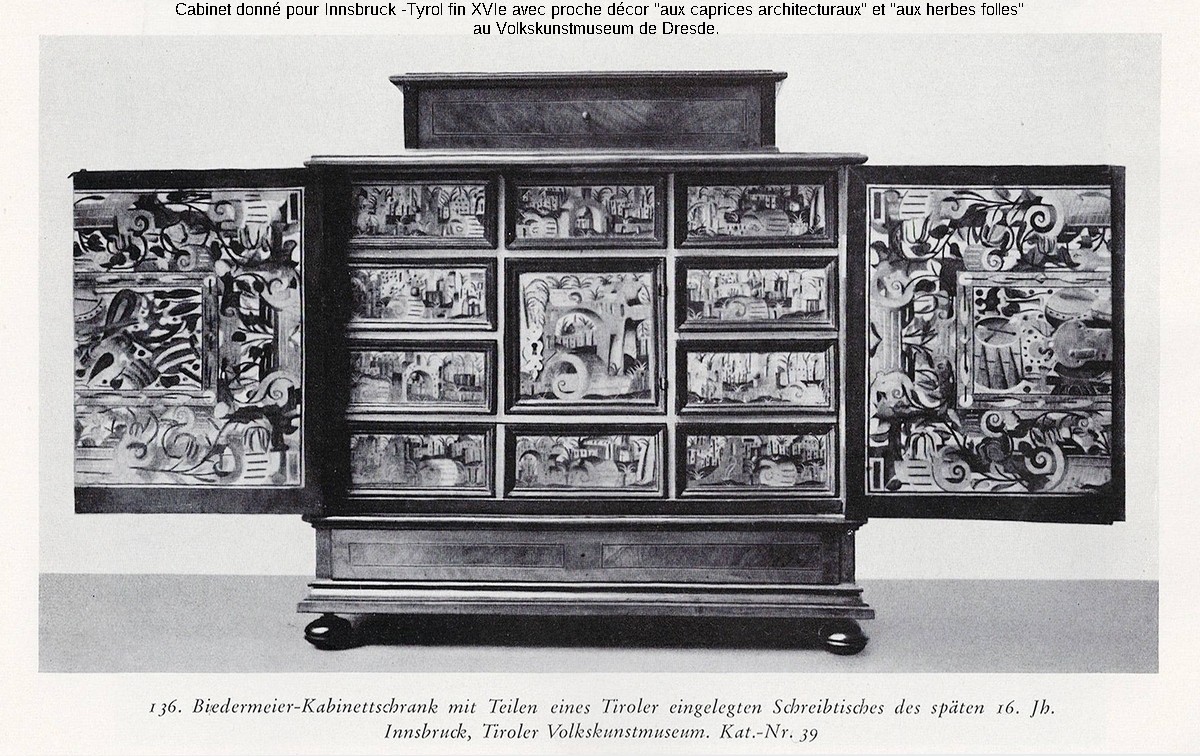
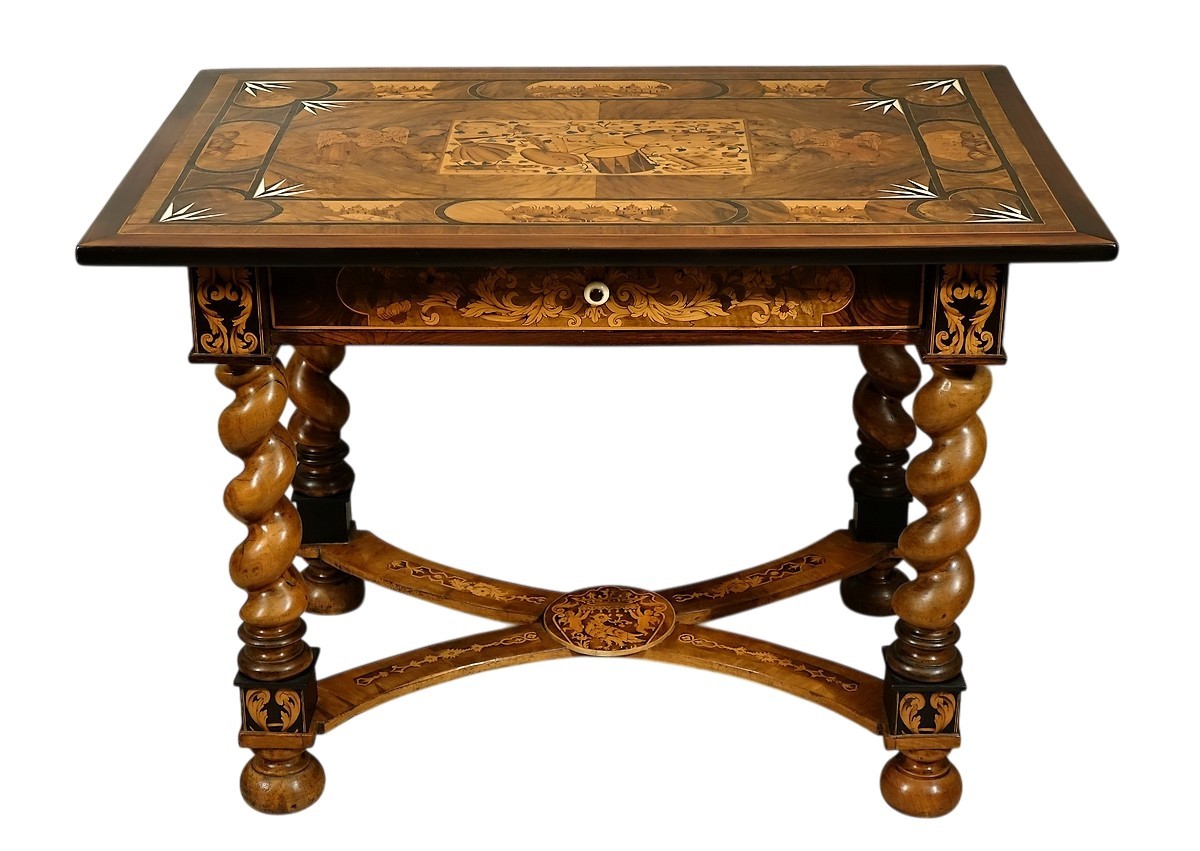
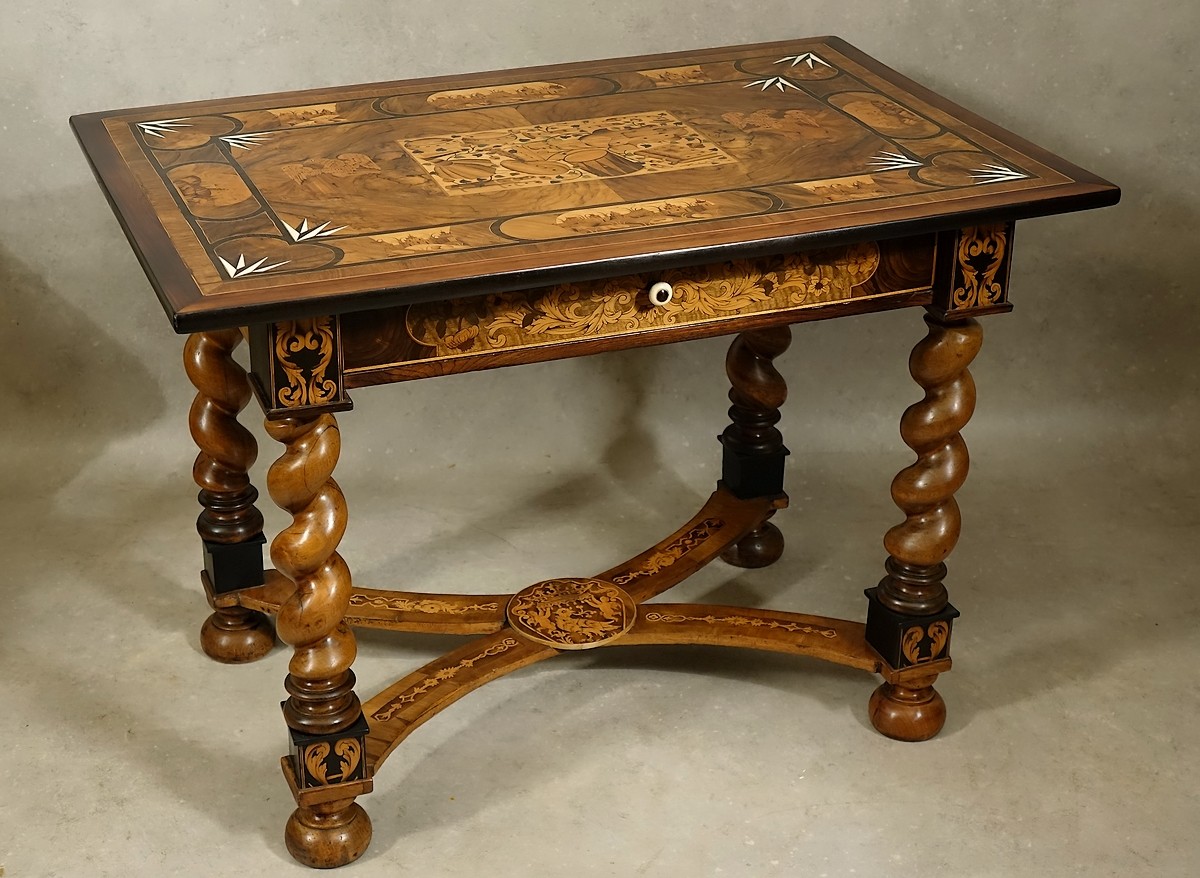
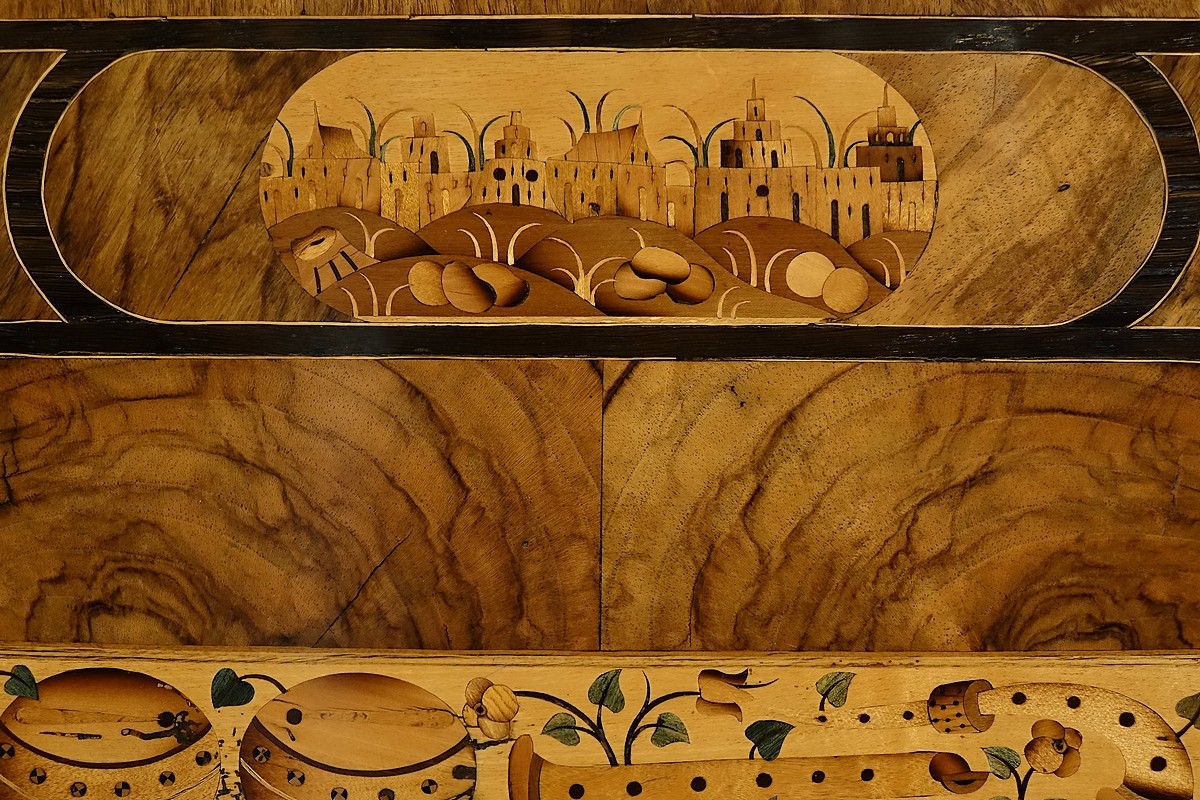
Very rare solid walnut table with rich marquetry decoration of “architectural caprices” and “wild grasses.”
Southern Germany or North Tyrol, probably Innsbruck, Austrian Tyrol.
“Louis XIV” period, mid-17th century.
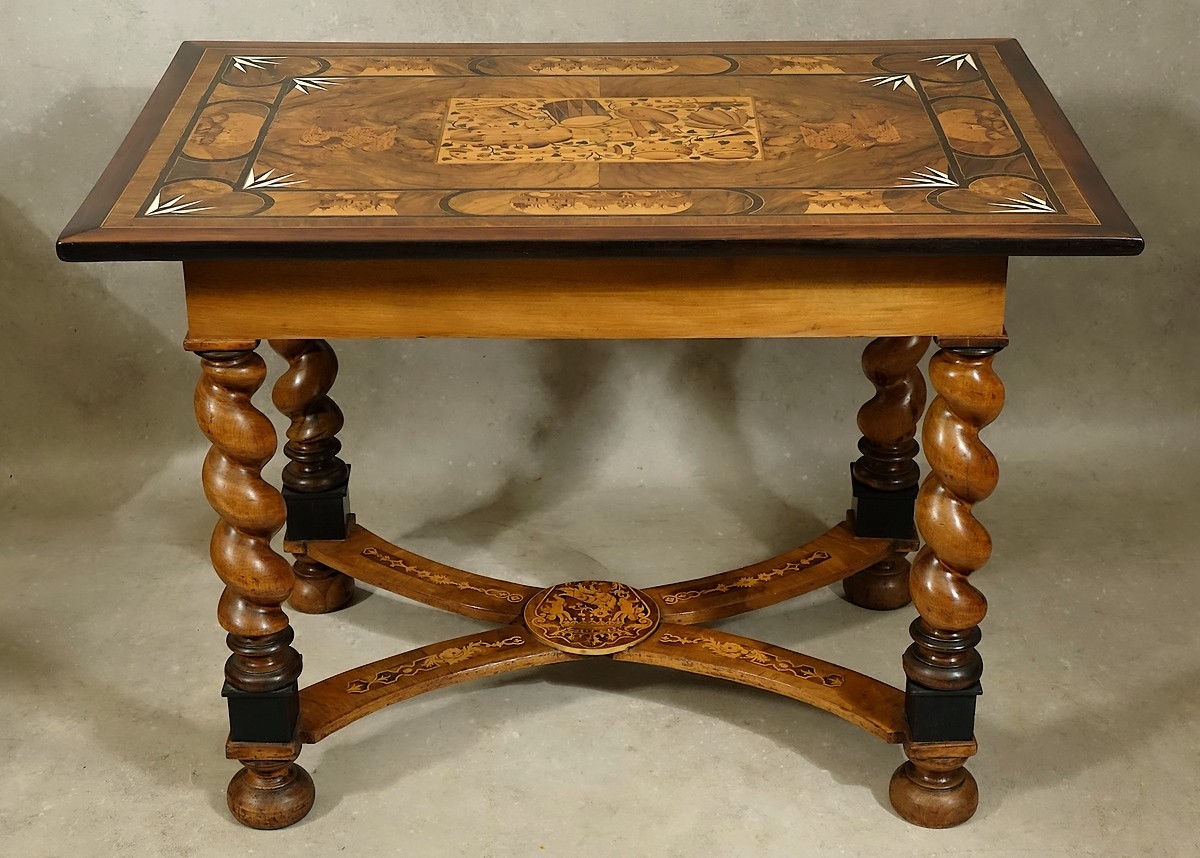
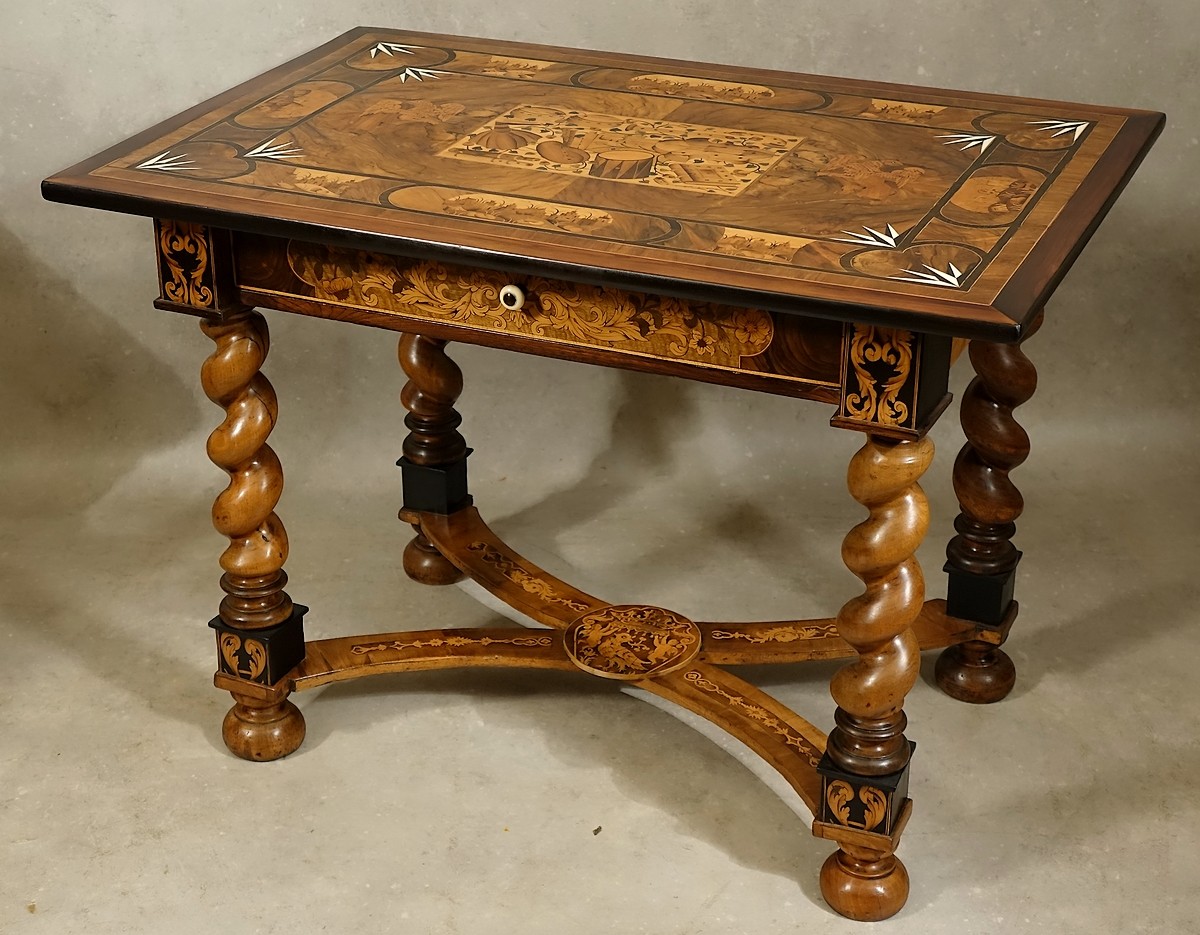
Standing on four twisted turned legs punctuated by flattened ball feet and joined by an X-shaped stretcher, it opens with a large front drawer and is topped by a rectangular top.
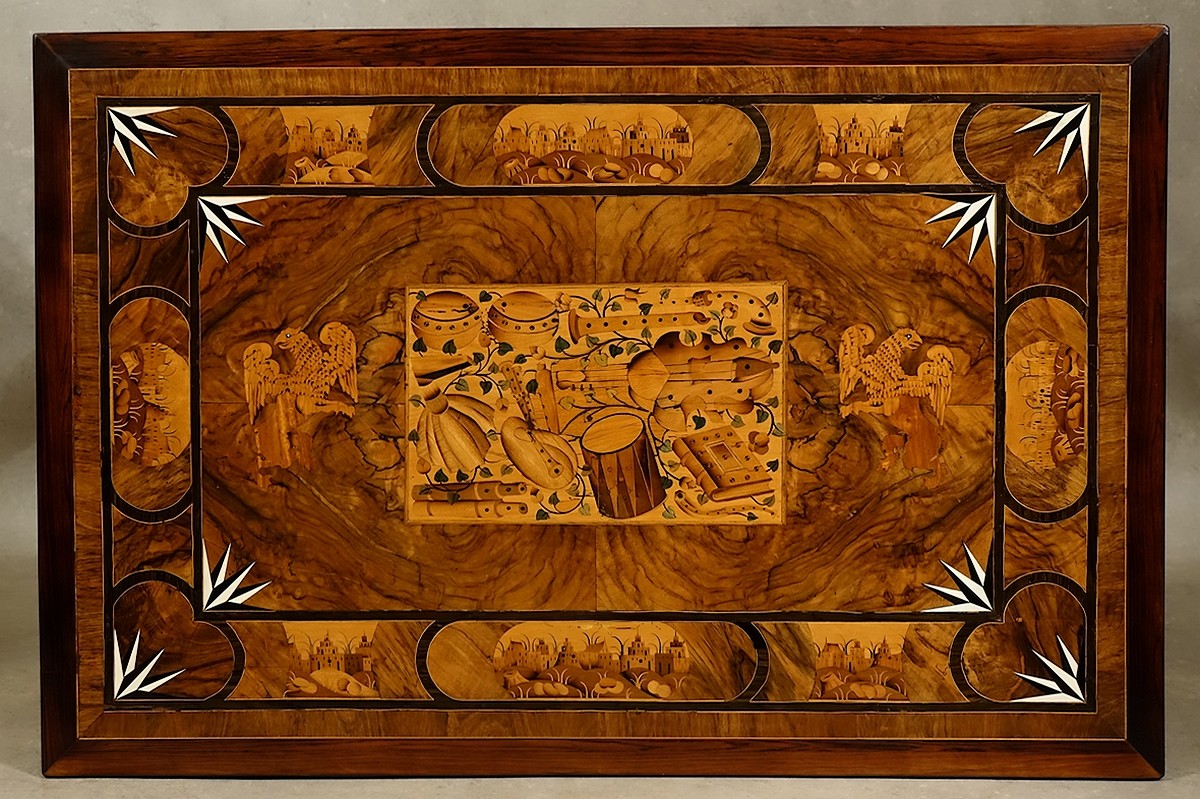
This top is veneered with a rosewood border, then with bands outlined by broad bog oak stringing framed with boxwood, forming geometric reserves in the shape of hearts — a traditional form in Protestant Europe — rectangles, and oblong figures, set against broad leaves of burr walnut. These reserves are animated by rich marquetry decoration depicting architectural perspectives characteristic of the Augsburg style, a decoration not unlike “Italian-style” marquetry, yet distinctive for its deserted village perspectives in which wild grasses appear. The woods used are mostly native — pear, apple, walnut, sycamore maple, boxwood, bog oak, and barberry — but also exotic, including rosewood and ebony, producing a wide range of tones through varied cutting methods, whether straight-grained, diagonal, or end-grain veneers, and through natural, stained, shaded, or scorched coloring.
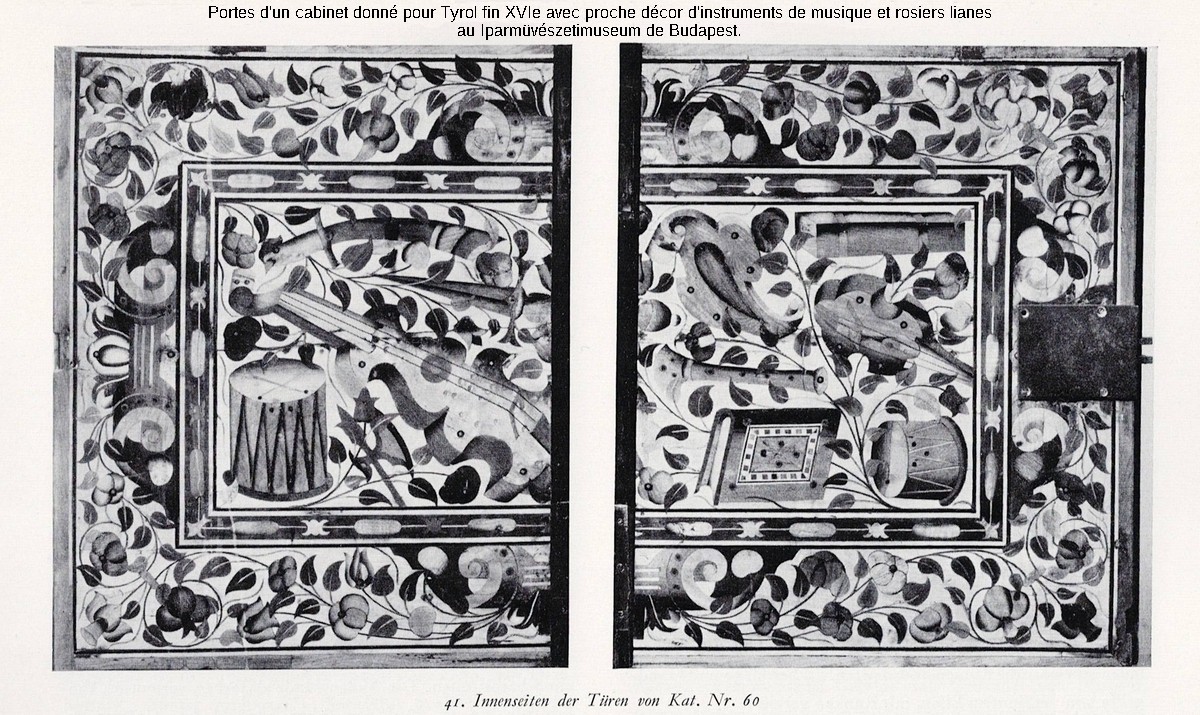
The central “picture,” framed by two important heraldic griffins with ivory eyes, presents a still-life scenography with musical instruments, once again intermingled with natural vegetal elements typical of Southern Germany, here climbing roses tinted green and ochre, while fan-shaped ivory and ebony inlays placed in the spandrels add further brilliance to the whole.
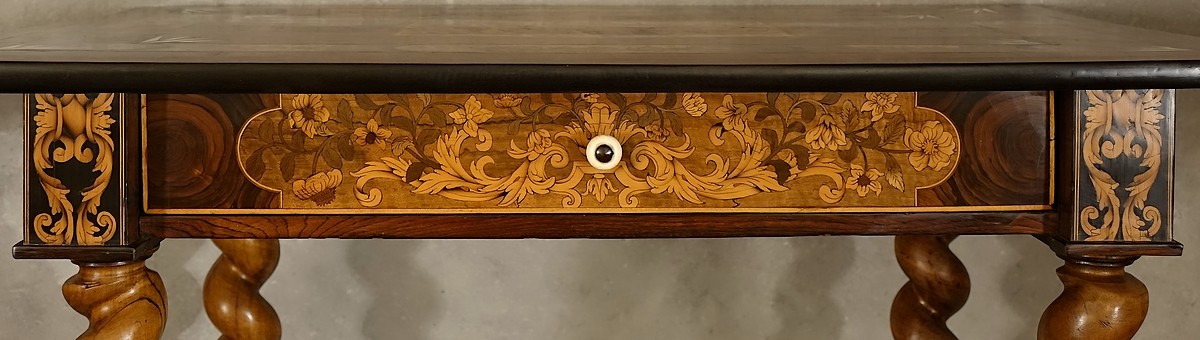
The table friezes are also veneered, though here only the joint blocks and the front drawer are animated with rich marquetry decoration of leafy scrolls in light and shaded boxwood, enhanced with barberry flowers.
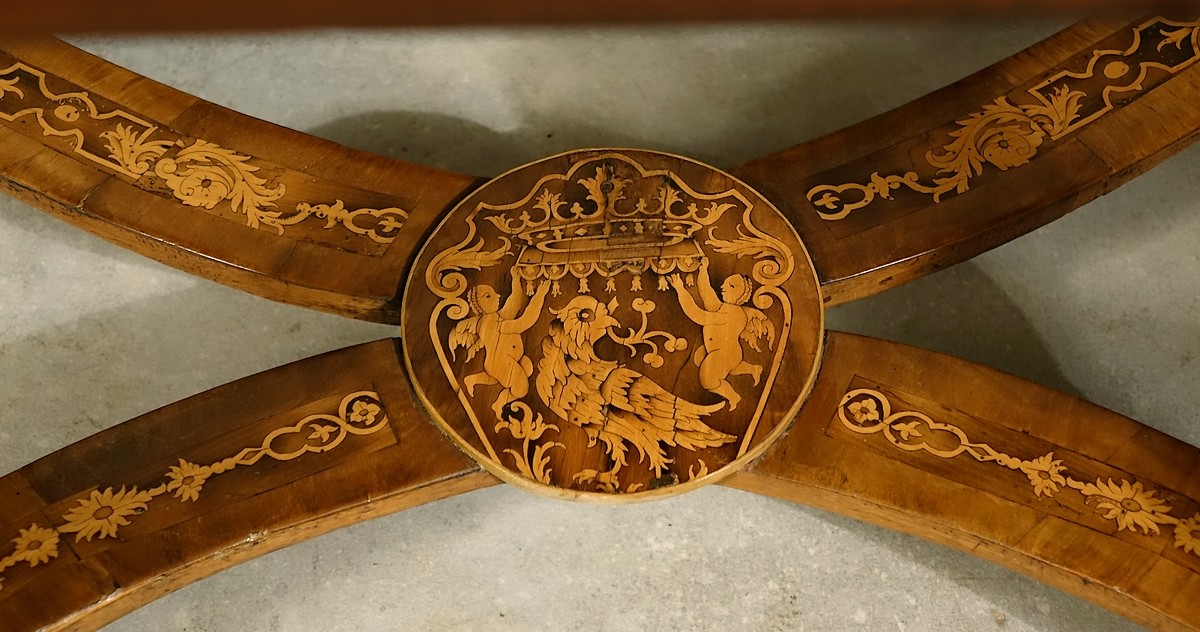
Like the drawer front, which presents two contrasting tones of marquetry and an ivory pull knob inlaid with ebony, the base is rhythmically structured by a contrast between the lighter turned elements in solid walnut and the darker blocks inlaid with vegetal scrolls in boxwood on a bog oak ground with rosewood borders. This luminous effect continues on the stretcher, veneered in walnut and inlaid with boxwood on a shaded sycamore ground. Finally, at its center, a medallion draws the eye through the finesse and refinement of its decoration: two putti supporting a crowned canopy above a phoenix.
Walnut base, top and stretcher on a fir core, oak drawer case.
Note: This table, of very fine quality, is also exceptionally rare. Although very similar decoration can be seen, notably on Augsburg-style cabinets, no comparable table appears, for example, in one of the main reference works: *Der Wrangelschrank und die verwandten süddeutschen Intarsienmöbel des 16. Jahrhunderts*, a book devoted to furniture from this Southern German and North Tyrolean school of the 16th and 17th centuries.
In the title, we indicate Louis XIV to situate it stylistically and historically, but with quotation marks, since although it was indeed made during the reign of this king, it was under another governance, probably that of Prince-Elector Maximilian I.
Condition: furniture in excellent original state of preservation: top, drawer, friezes, base, including the four ball feet and the stretcher.
Perfectly restored, with its patina enhanced by a genuine wax polish carried out by a master cabinetmaker.
Dimensions: 74.5 cm high × 105 cm wide × 69.5 cm deep.