Offered by Galerie Alexandre Piatti

Works of art, sculptures and furniture Haute Epoque
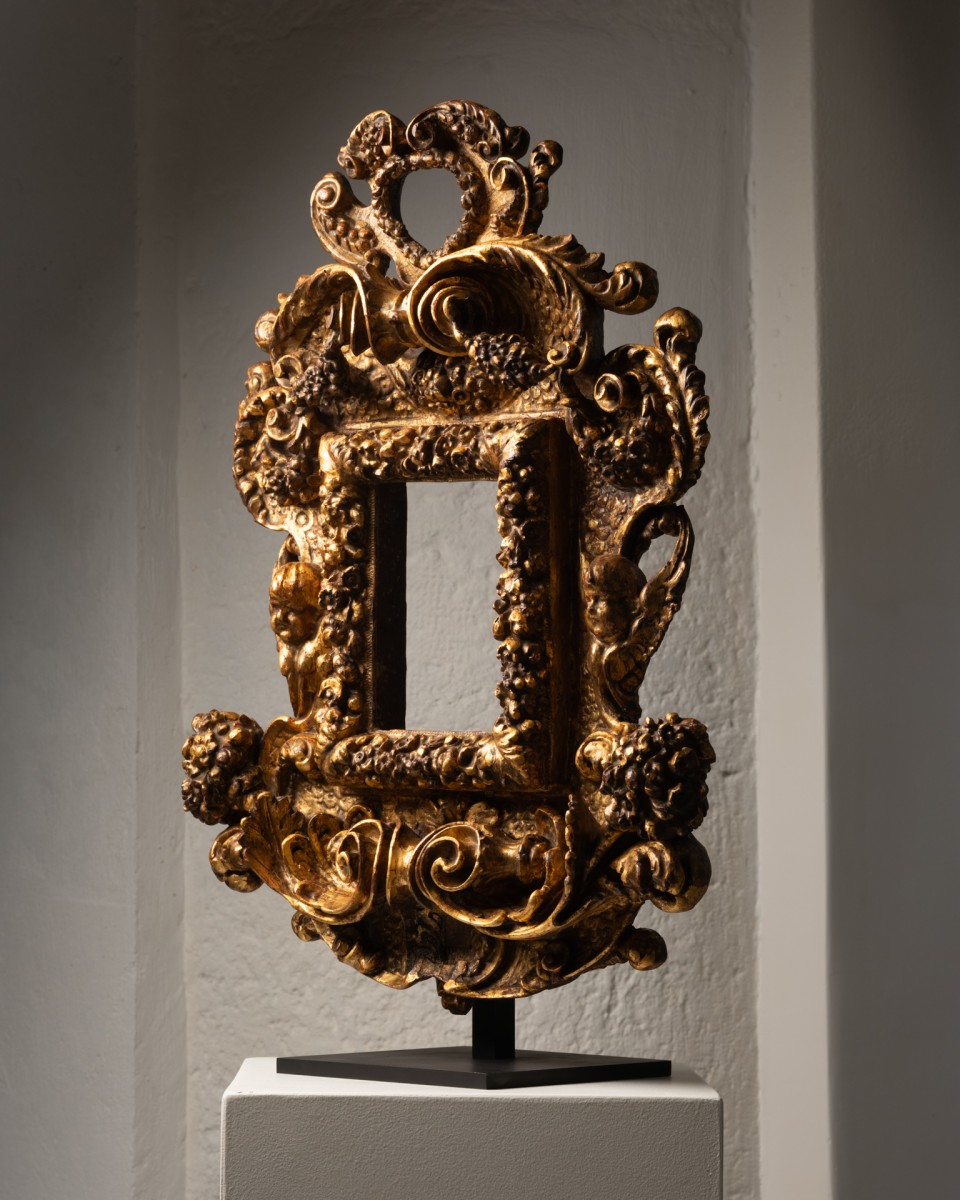
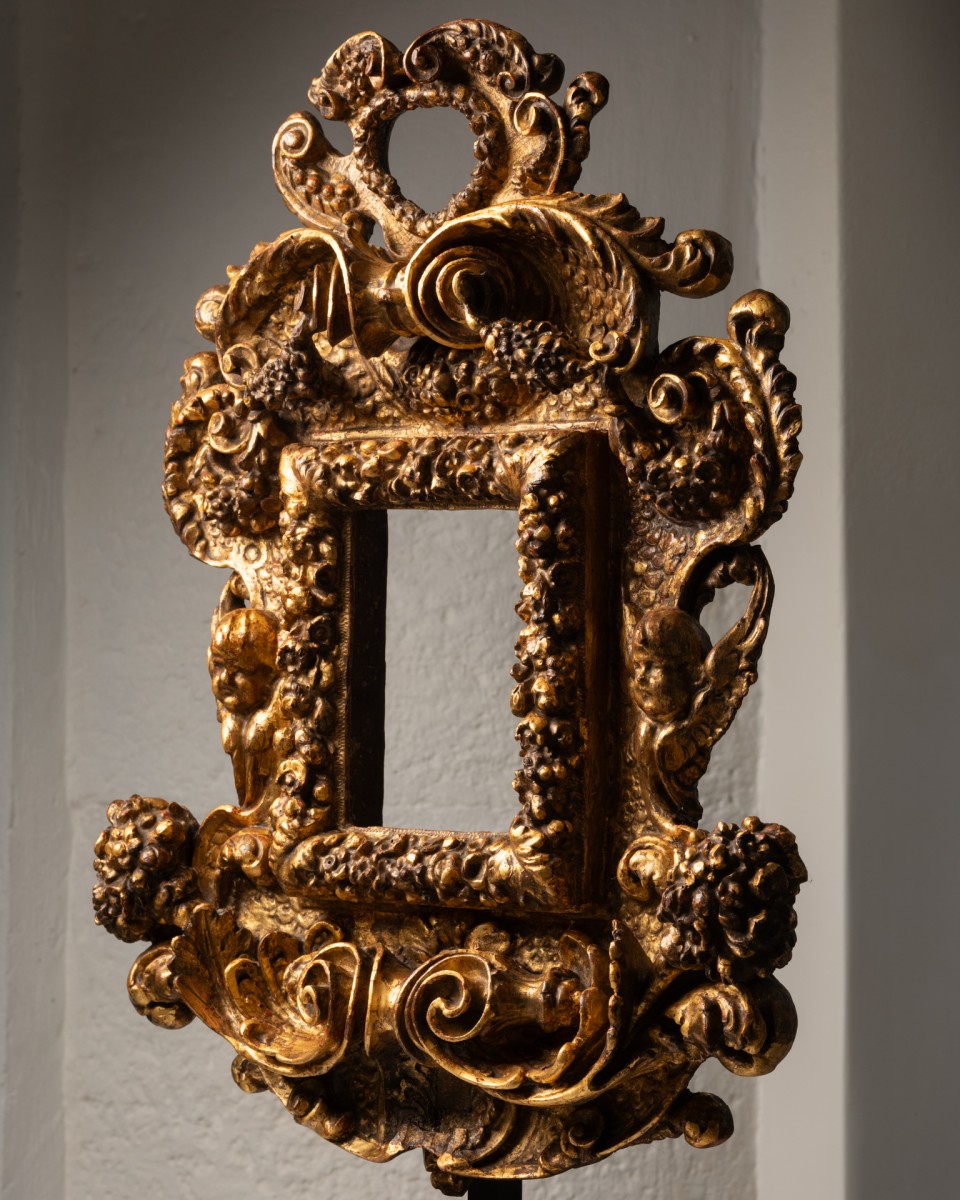
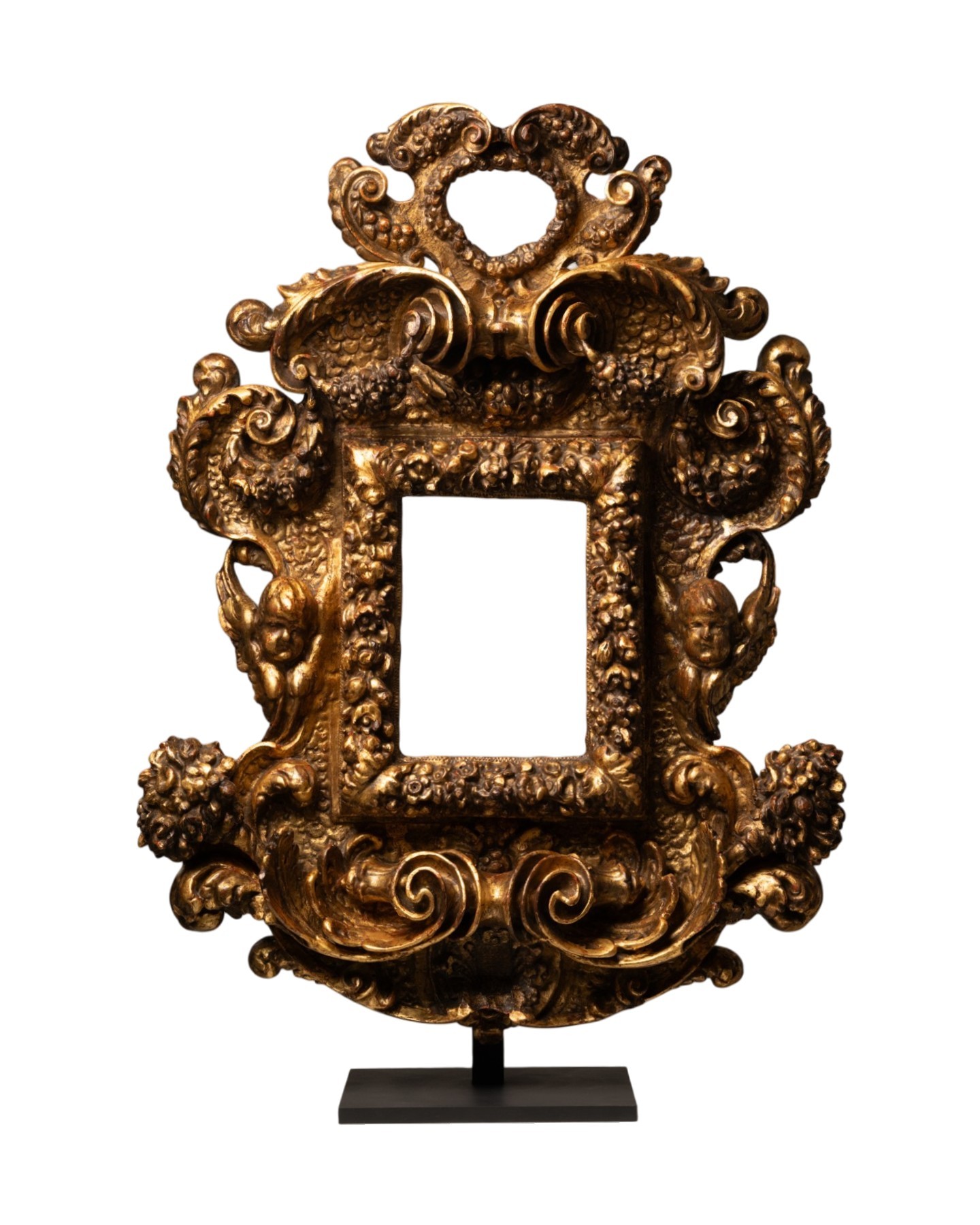
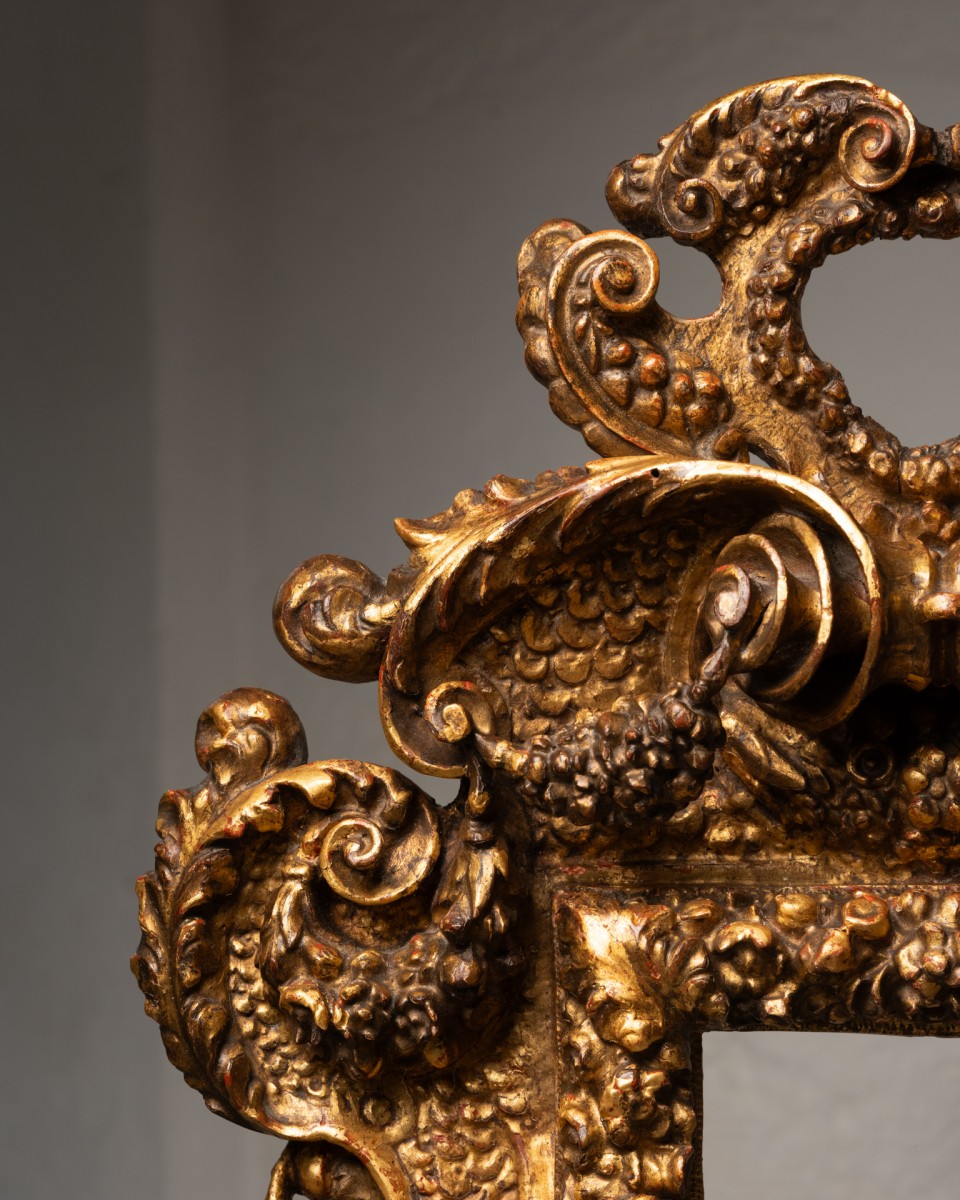
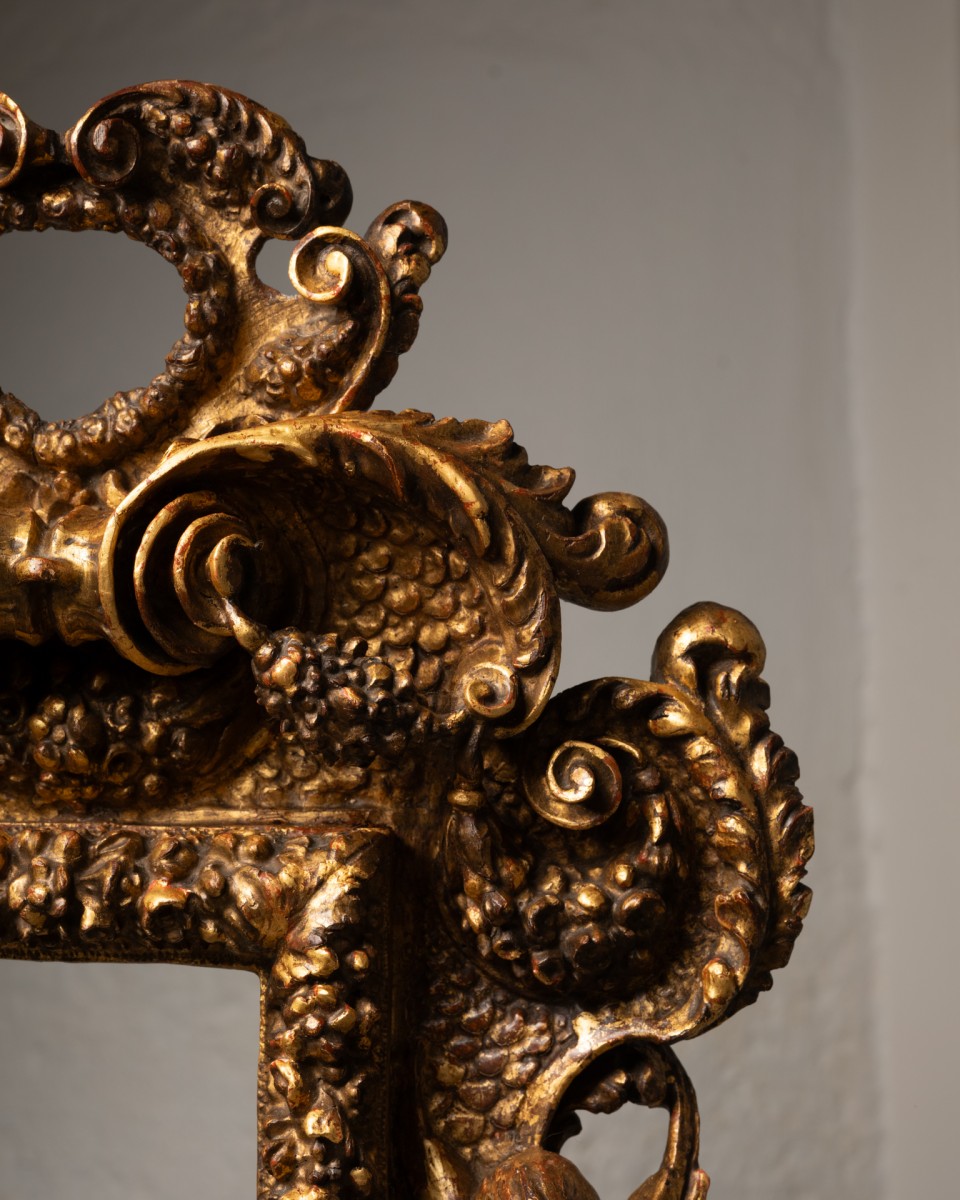
This sumptuous reliquary frame, carved from wood and gilded, of Lombard origin, is representative of the artistic production of northern Italy in the late 16th century. It is attributed to the circle of Andrea Fantoni, a leading figure in Baroque sculpture in the Bergamo region. With its rich ornamentation and masterful carving, it fully embodies the Baroque taste for movement, theatricality, and decorative profusion.
The creation of this type of reliquary frame is part of a religious tradition deeply rooted in private and domestic piety. Intended to house a relic, a sacred image, or a small devotional object, it contributes to the spread of a more intimate spirituality, which was encouraged following the Council of Trent. These objects are not merely decorative; they serve as genuine vehicles for spiritual connection, allowing the faithful to maintain a direct link with the sacred.
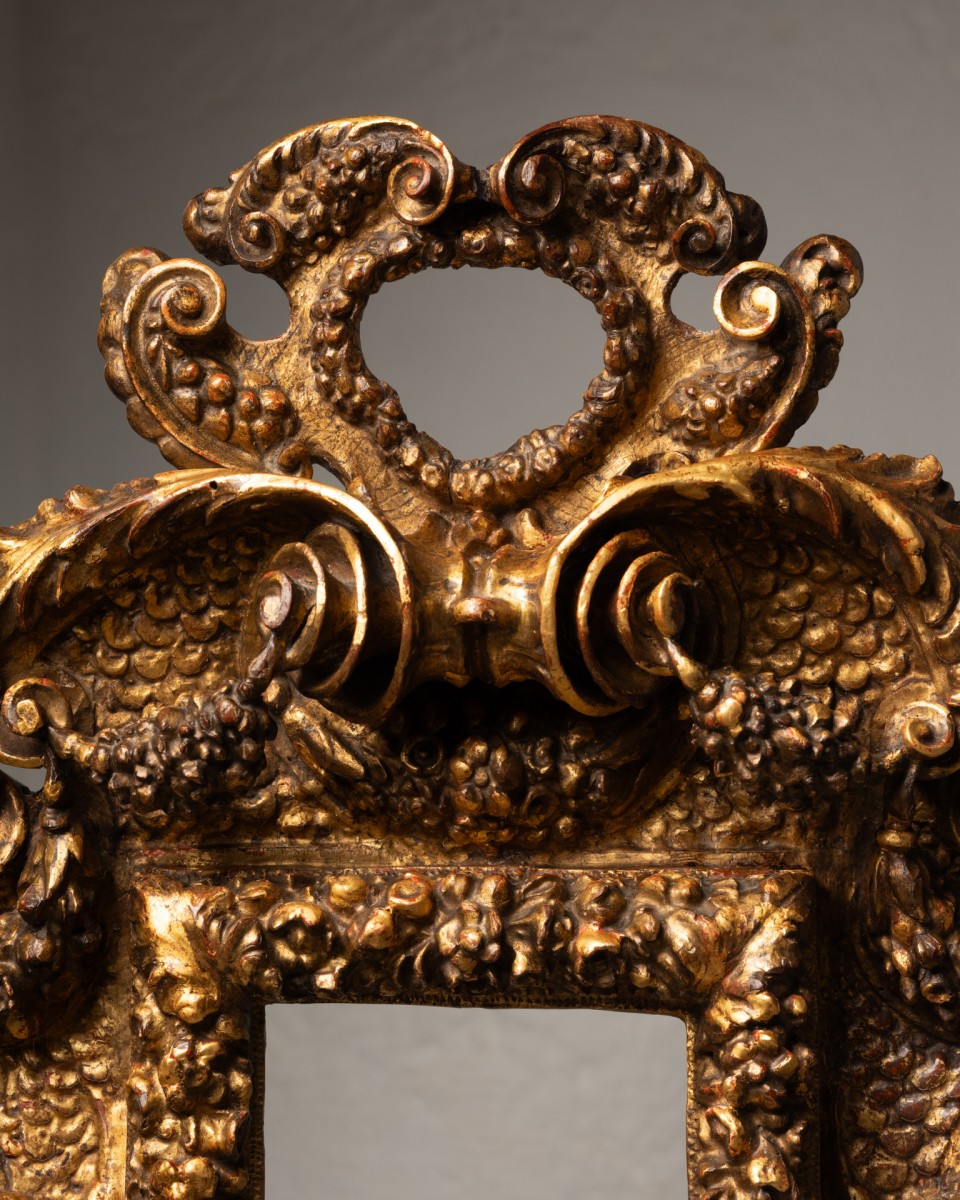
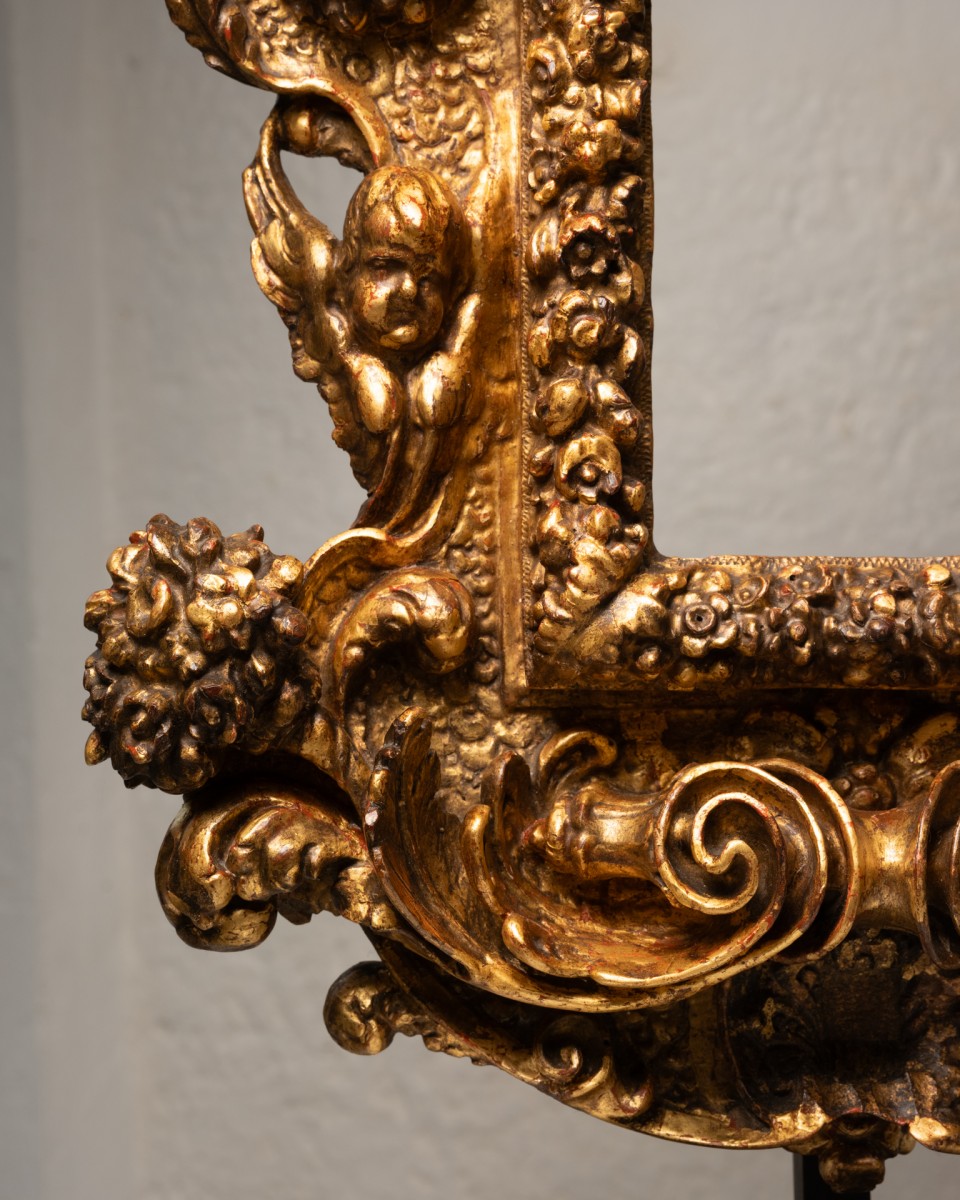
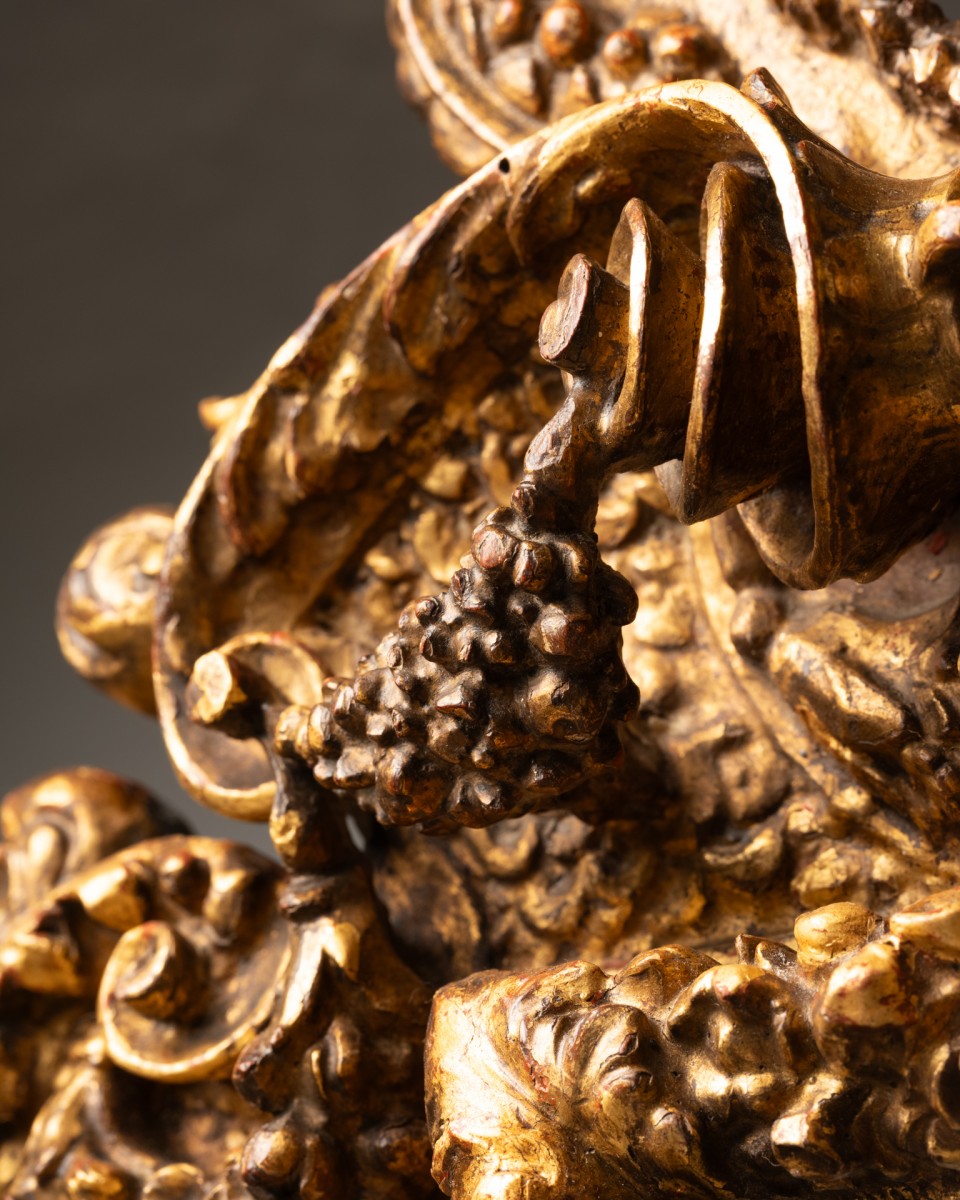
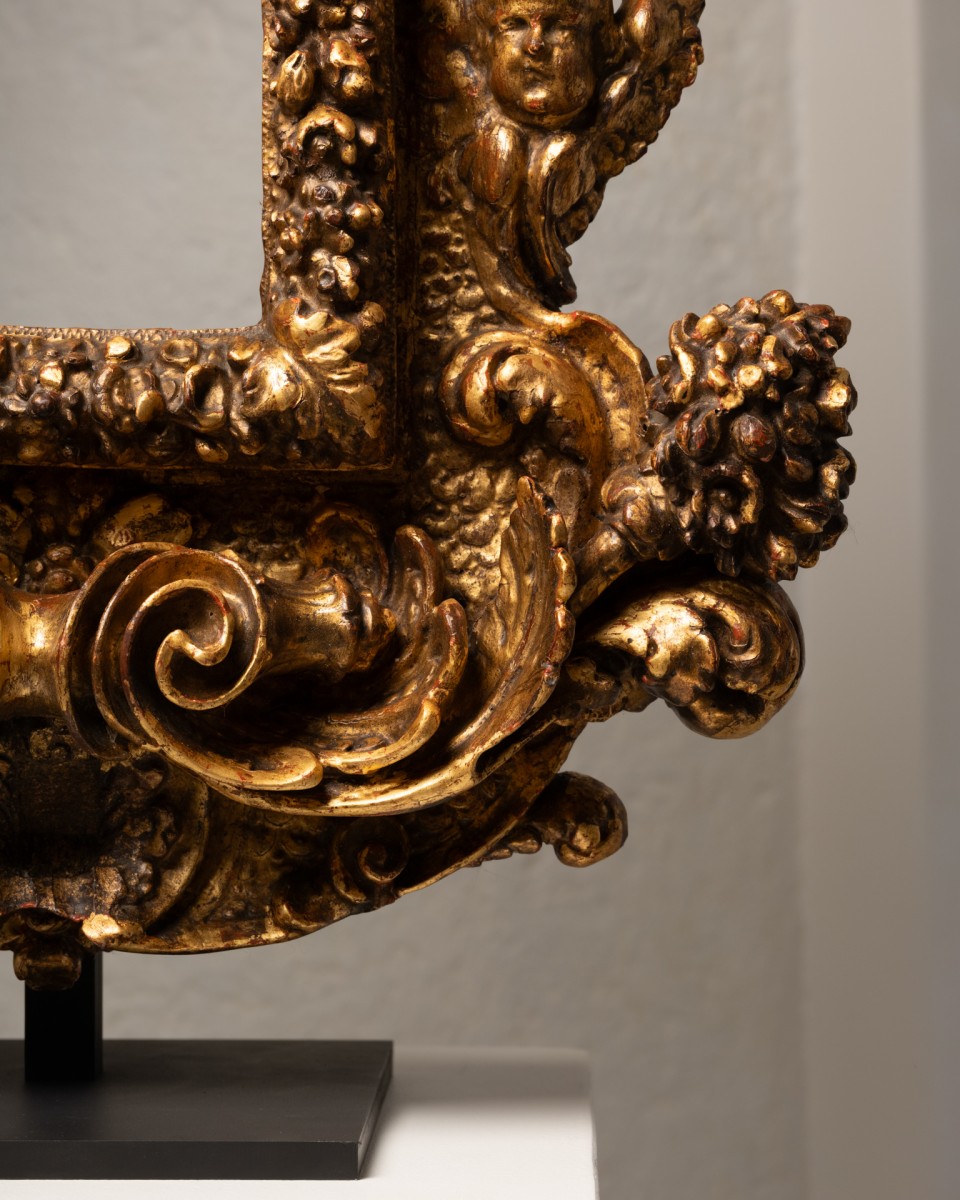
Unlike the more understated frames of the Renaissance, this one features a typically Baroque composition, characterized by an abundance of ornamentation. The composition is organized around a central rectangular opening, framed by a richly detailed architectural structure. The deeply carved volutes coil energetically, creating an interplay of curved lines that animates the entire surface. This decorative style, known as cartoccio, is characteristic of Lombard sculpture from this period and aims to produce particularly striking effects of light and shadow.
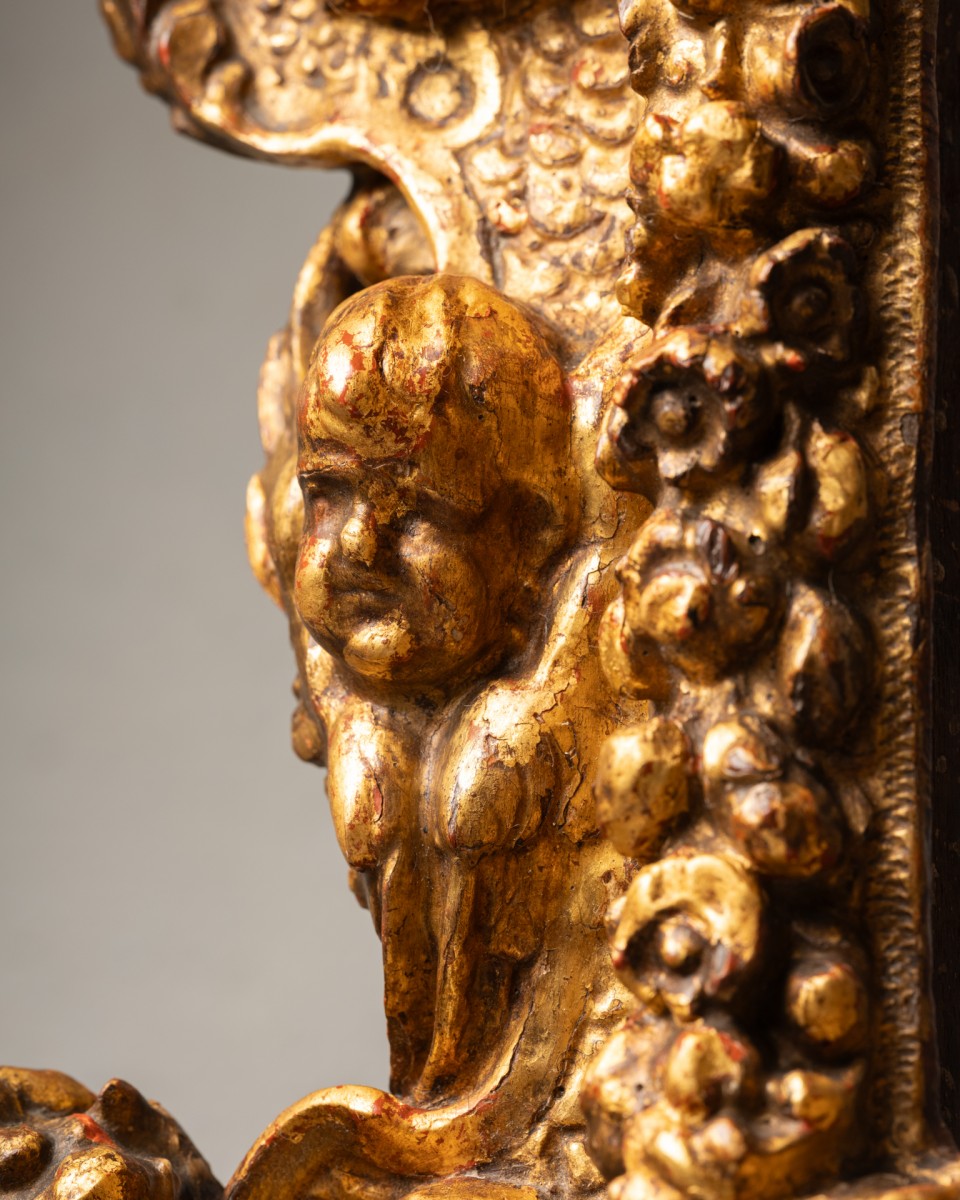
On either side of the sculpture are two winged figures in high relief, resembling putti. Their full faces, slightly idealized features, and hair rendered in thick strands attest to precise craftsmanship and a recurring motif in Fantoni’s workshop. These figures are not merely ornamental: they contribute to the object’s sacredness, acting as intermediaries between the faithful and the spiritual contents of the reliquary.
The upper crown, openwork and richly carved, reinforces the composition’s upward movement. It guides the eye upward in a typically Baroque gesture that suggests an ascent toward the divine. In contrast, the lower section, marked by broad volutes and plant motifs, anchors the object in a dense materiality. This balance between upward movement and material grounding, architecture and ornamentation, contributes to the work’s visual tension. It is not merely a frame, but a work of art in its own right, where Each element—scrolls, figures, and decorative motifs—contributes to the portrayal of the sacred.
The surface treatment also deserves special attention. The background is entirely adorned with a dense grain pattern and floral motifs, designed to catch the light and visually enrich the material. The gold leaf, applied over a ground prepared in a bowl, gives the piece a dazzling luster, now weathered by time. The visible signs of wear, moreover, add to the object’s charm.
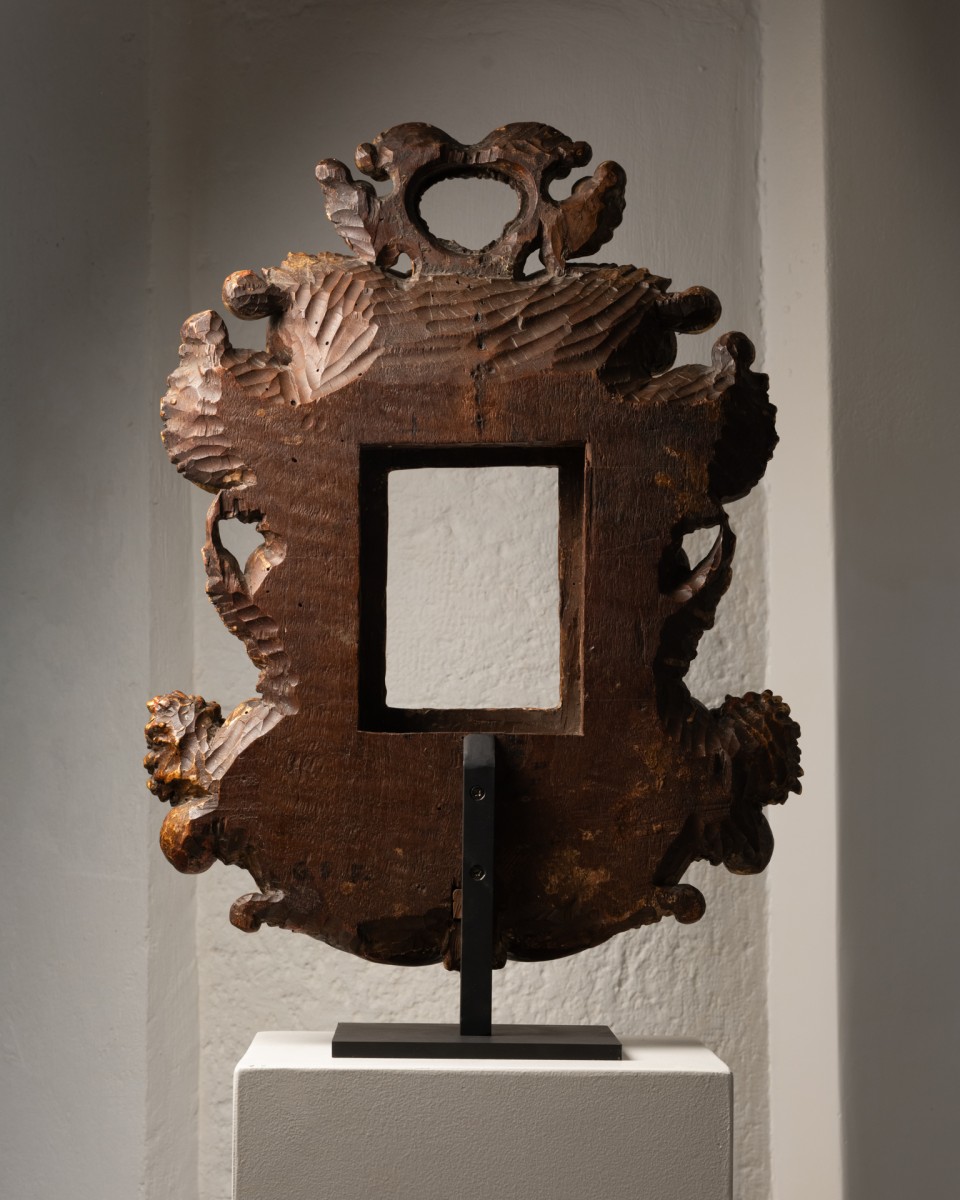
Carved entirely from a single block of walnut, this work displays exceptional technical virtuosity: the complexity of the deeply hollowed-out volutes requires absolute mastery of the material. Such a high level of craftsmanship surpasses that of standard production and is the work of a highly skilled sculptor.
Unlike monumental sculpture, the work here is on a more intimate scale, while still maintaining a remarkable artistic ambition.
This work can be compared to pieces produced in the Bergamo region in the late 16th century, particularly those from the Fantoni workshop. This dynasty of sculptors played a fundamental role in the development of woodcarving in Lombardy, producing everything from monumental altarpieces to more modest devotional objects. The frame presented here appears to be part of this workshop’s output, in which models were reproduced and adapted according to specific commissions.
Thus, through the quality of its carving, the richness of its decoration, and the coherence of its formal language, this reliquary frame stands as a particularly representative example of Baroque art in Northern Italy. It embodies both the virtuosity of the Lombard workshops and the importance accorded to devotional objects in the artistic and religious culture of its time.
Delevery information :
Please note that packing and shipping costs are not included in the price of the objects which are quoted ex shop.
Final amount including packing and shipment to be discussed with Galerie Alexandre Piatti.