Offered by Cristina Ortega & Michel Dermigny
REQUEST INFORMATION
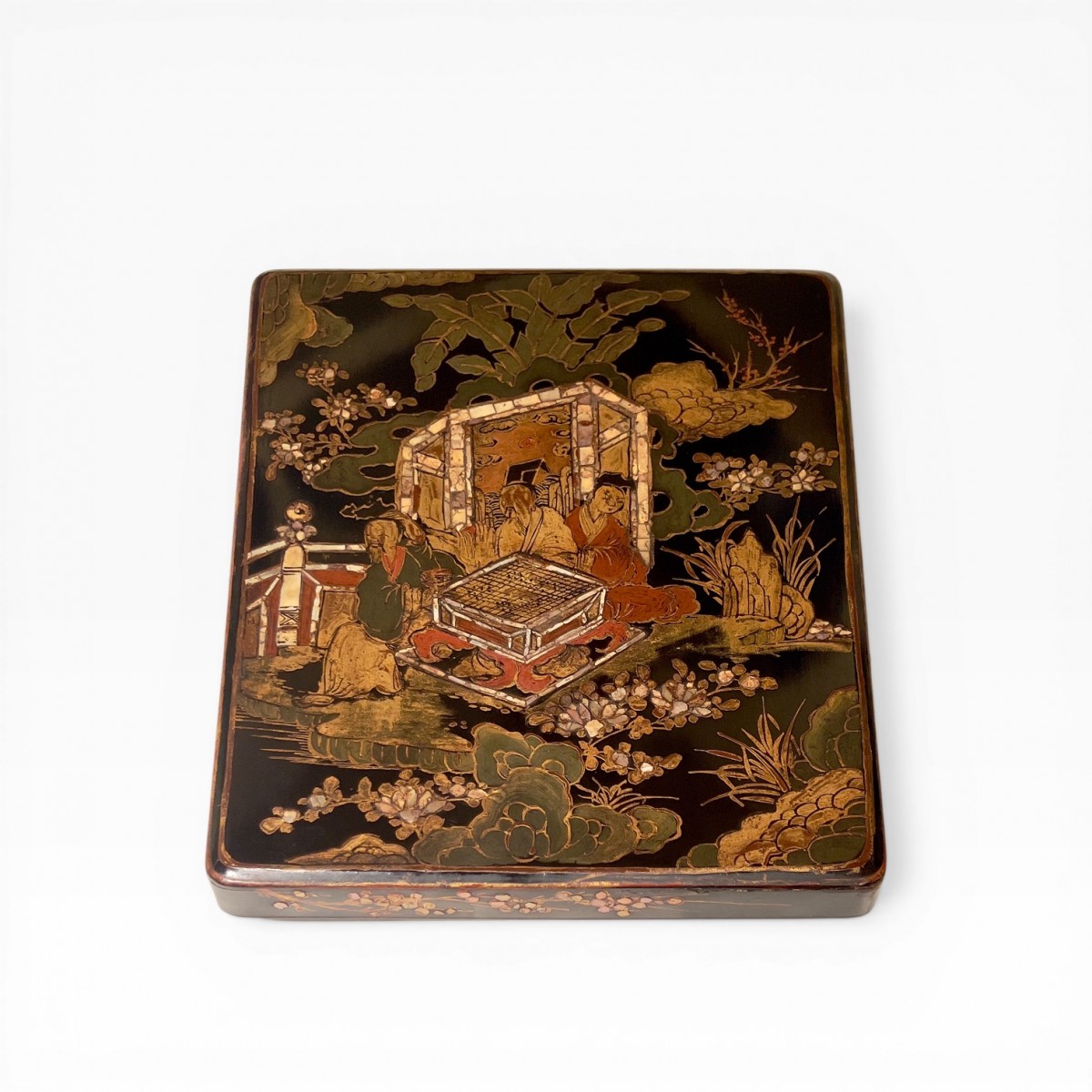
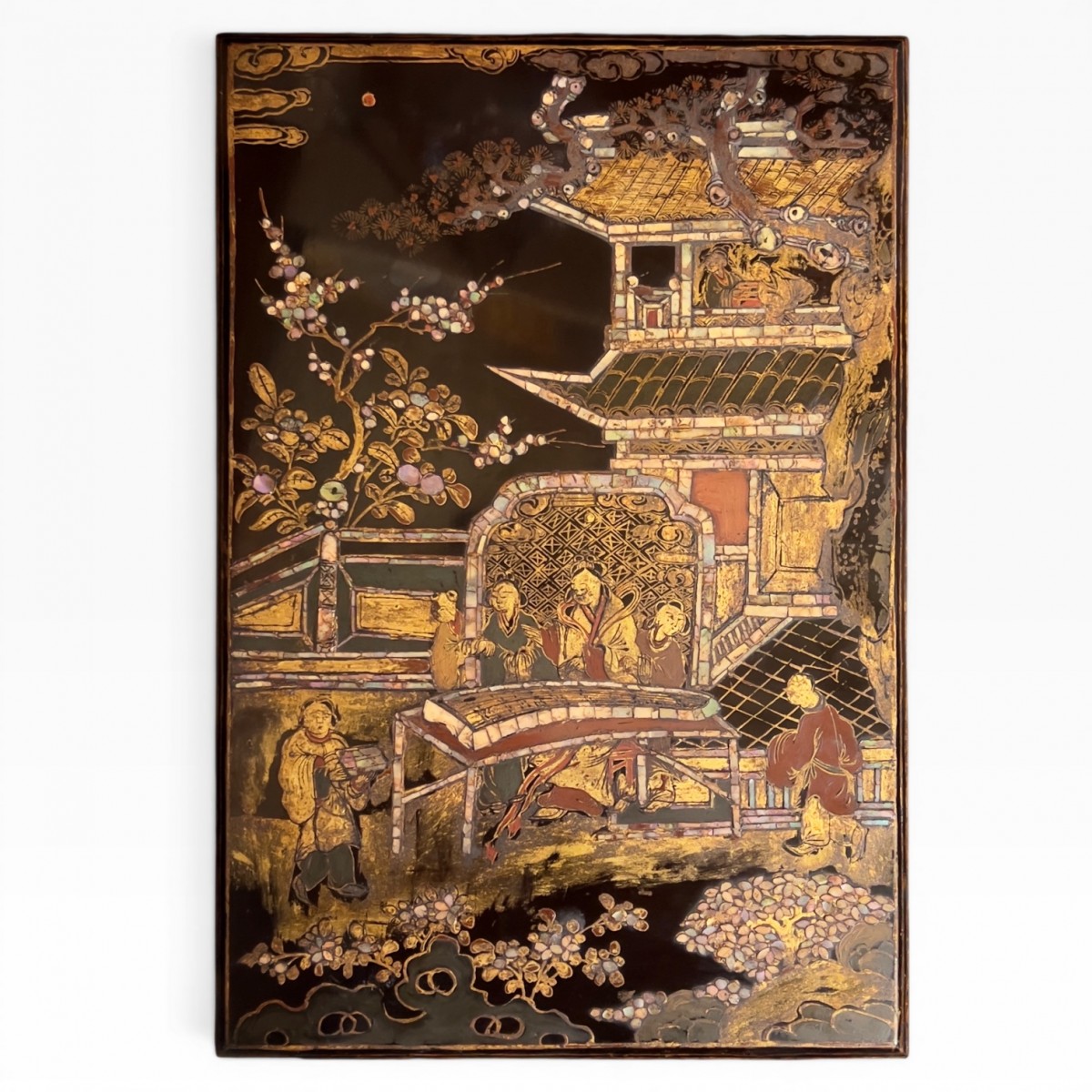
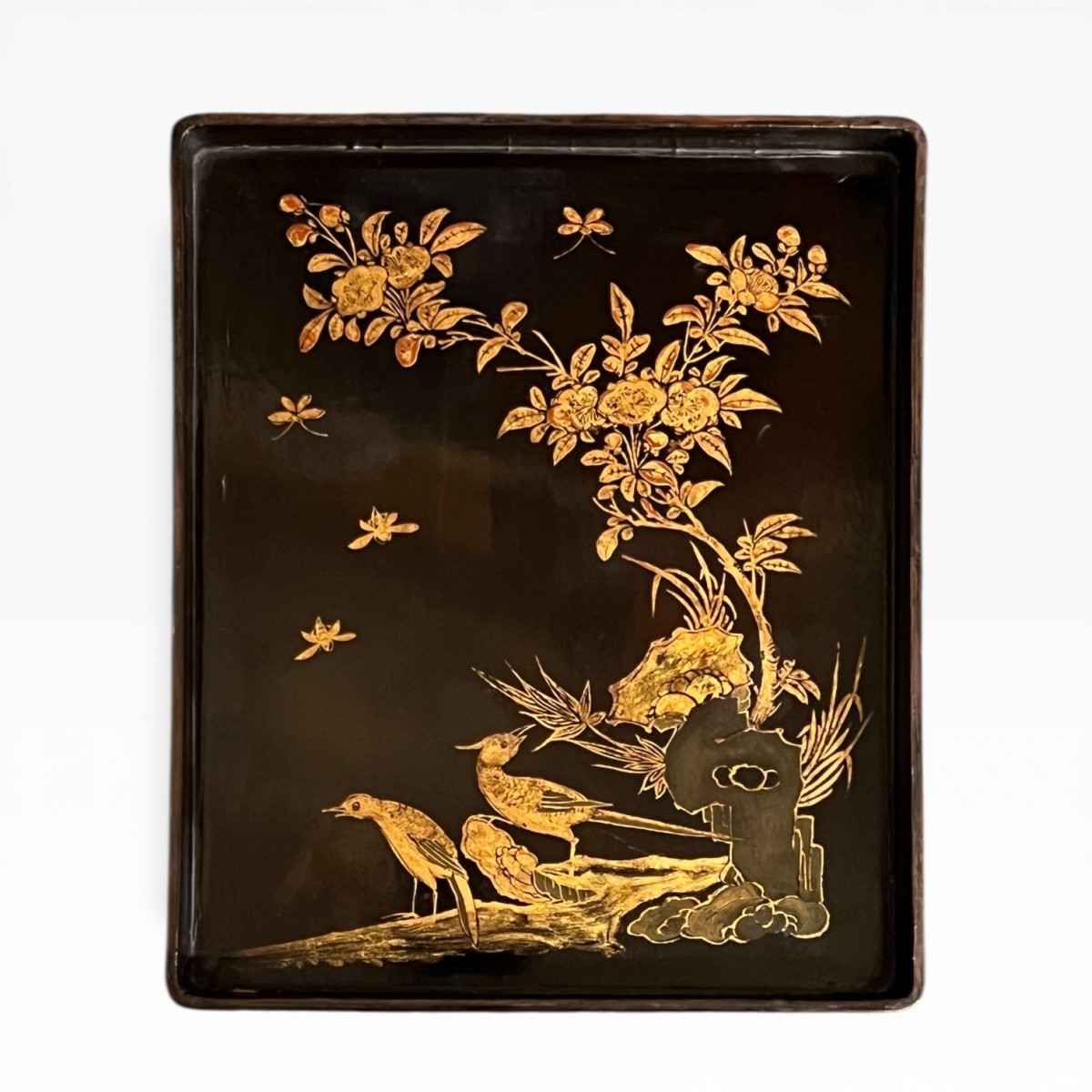

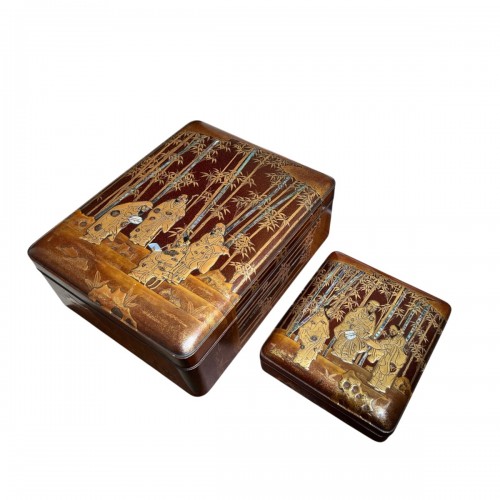
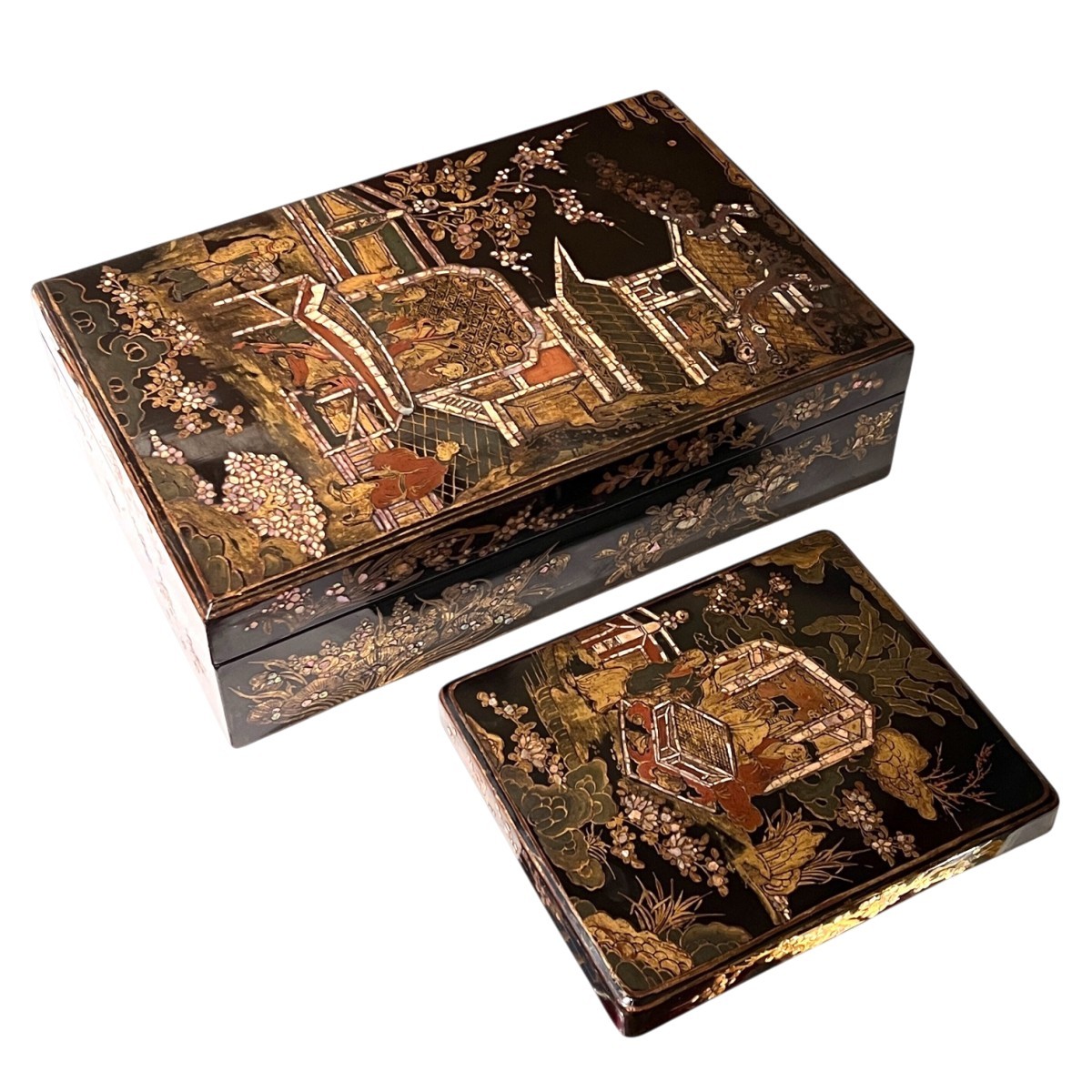
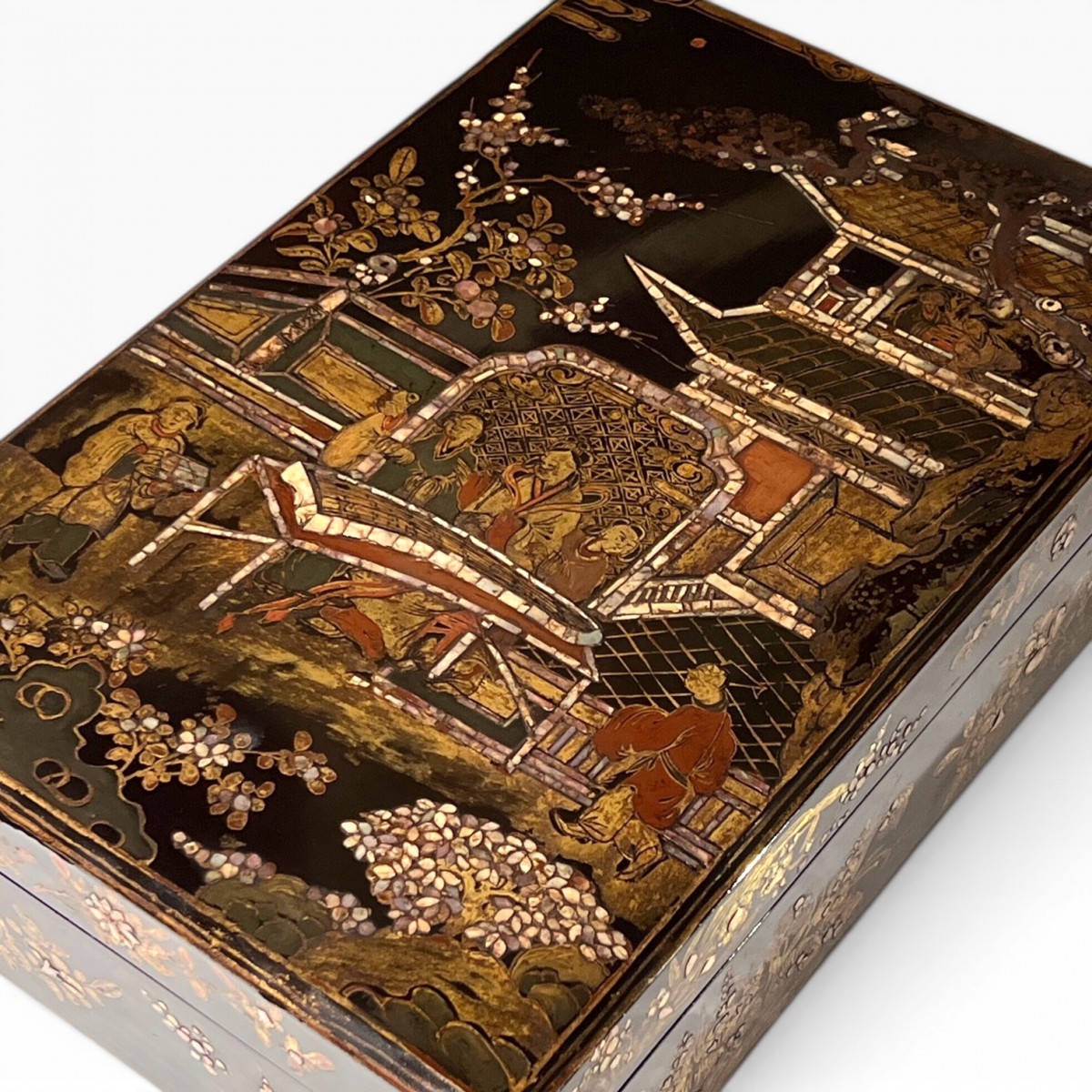
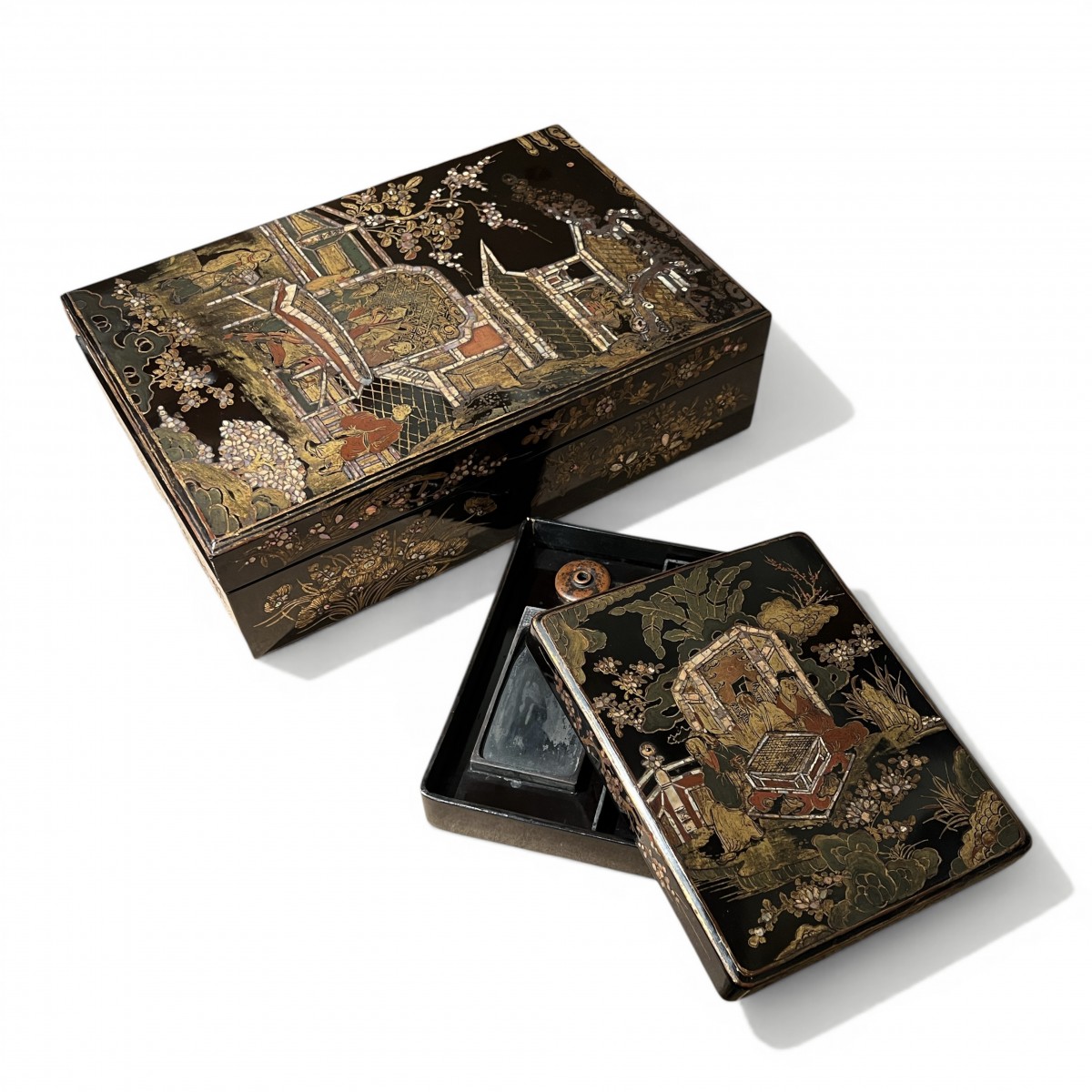
This ensemble comprises a document box (bunko) and a writing box (suzuribako) in Ryukyulacquer, decorated with aogai mother-of-pearl inlay on a black ground, with raised areas and a deliberately textured, almost earthy surface. The technique belongs to the Ryukyu tradition, while the iconographic repertory is directly drawn from the world of the Chinese literati. This association is rare.
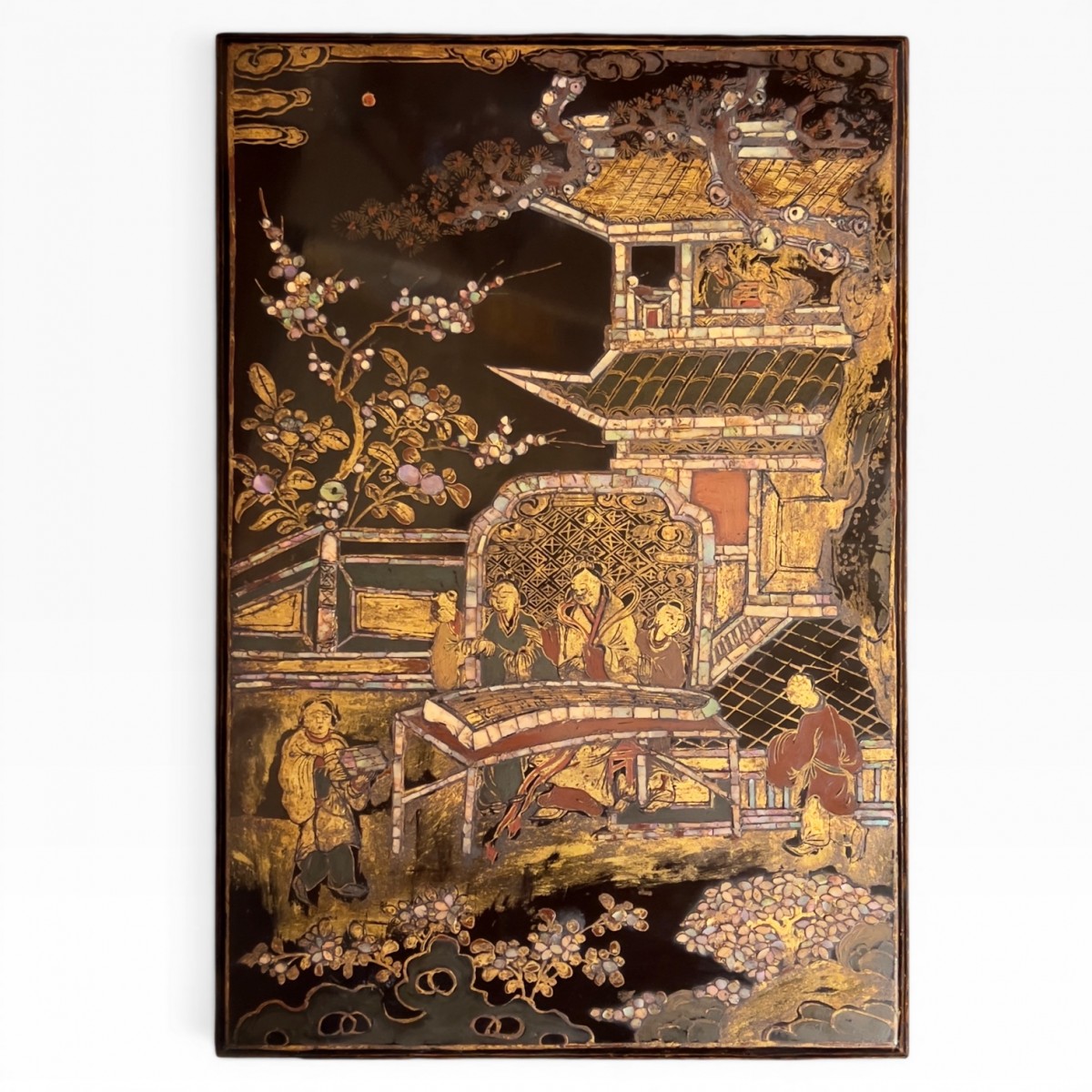
On the larger box, women play the qin in a garden before a Chinese screen, with a pavilion in the background. On the smaller box, men play weiqi, the game of go, before a screen; the pavilion does not appear there. These two scenes refer to two of the Four Arts of the literati — music and game playing —, a major theme in Chinese scholarly culture. The disposition of the figures, the presence of the screen, the organization of the landscape, and the overall spirit of the compositions all belong to an explicitly Chinese iconography, much more direct than in most Japanese lacquers.
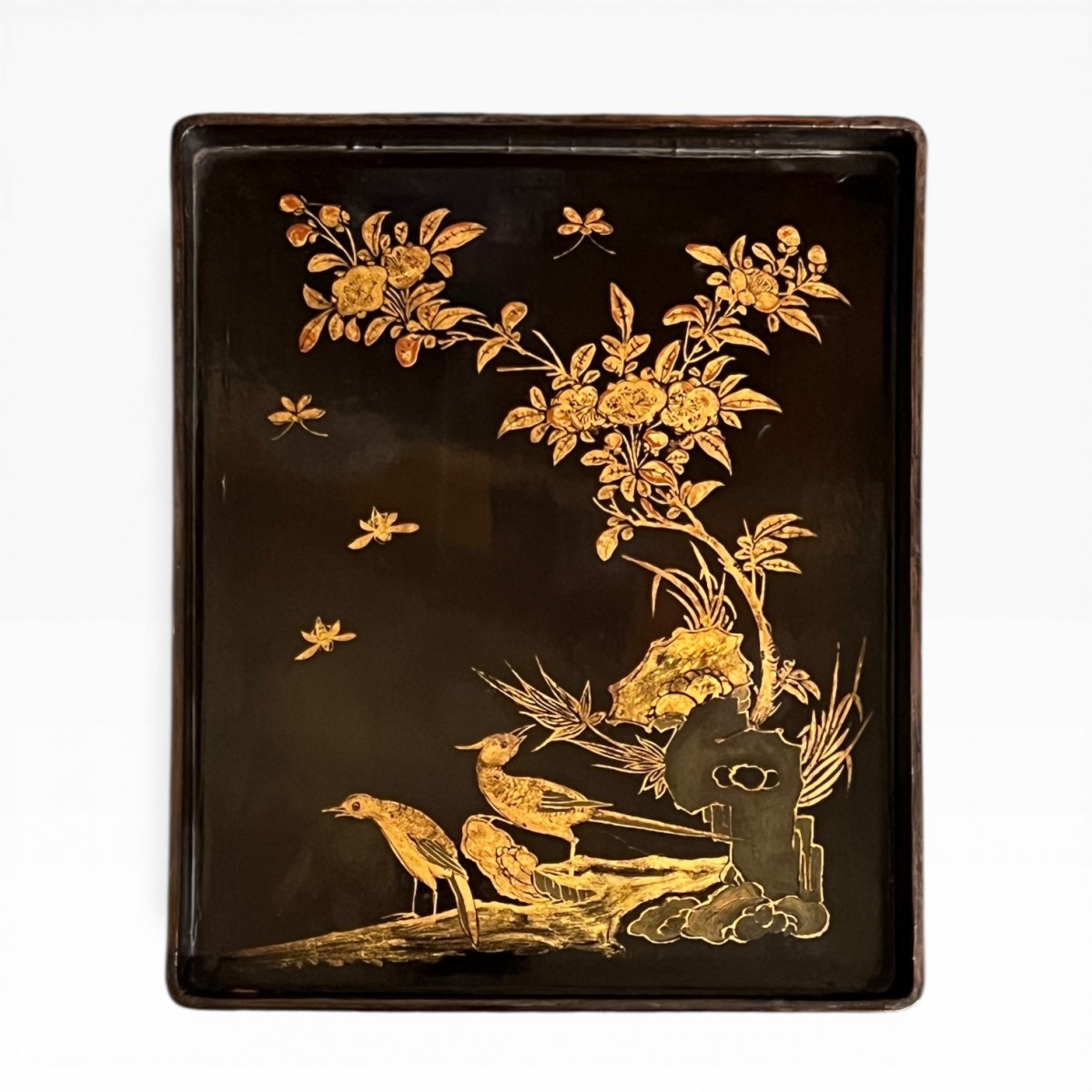
The interiors of the lids are also decorated, in slightly polychrome gold lacquer on a black ground. Here again, the iconography is clearly Chinese. This care given to the inner faces reinforces the precious character of the ensemble and shows that these were high-ranking objects, designed to be admired open as much as closed.
Aogai mother-of-pearl is used to punctuate foliage, flowers, and certain details of the decoration. The raised work animates the surface and gives the scenes an almost tactile presence. This technique belongs to the Ry?ky? tradition, known for its marked taste for mother-of-pearl inlay and for its methods of preparing the ground. The support received preparatory layers mixing, among other materials, pig’s blood with jinoko, a clay-based powder, then tonoko, a very fine mineral powder obtained from pulverized stone. Once dry, this ground becomes highly adhesive and limits flaking of the lacquer. The use of deigo (Erythrina variegata), a local wood that is light, porous, and fine-grained, is also characteristic of the lacquers of the archipelago.
The historical context helps explain the presence of such an ensemble. In the Momoyama period, the Ry?ky? kingdom occupied a relay position between China and Japan. Its production of prestigious lacquer belonged to a network of diplomatic and commercial exchanges through which forms, techniques, and iconographic models circulated. Refined objects were commissioned as high-level gifts or intended for Japanese dignitaries. The choice of subjects drawn from Chinese literati culture is not merely decorative; it asserts a horizon of distinction, education, and prestige.
The rarity of this ensemble lies in several combined features: Japanese forms, a strongly characterized Ry?ky? technique, refined use of aogai, and above all such an explicit Chinese iconographic program, developed both on the exterior and on the interiors of the lids.
Dimensions
Bunko: approx. 39 × 26.5 × h. 10.5 cm.
Suzuribako: approx. 23 × 19 × h. 4 cm.
Delevery information :
A special care is given to packing. Bigest pieces are crated.
All our shippings are insured with tracking.
As we do a lot of shippings, we do have very special rates. Please inquire!