Offered by Cristina Ortega & Michel Dermigny
REQUEST INFORMATION
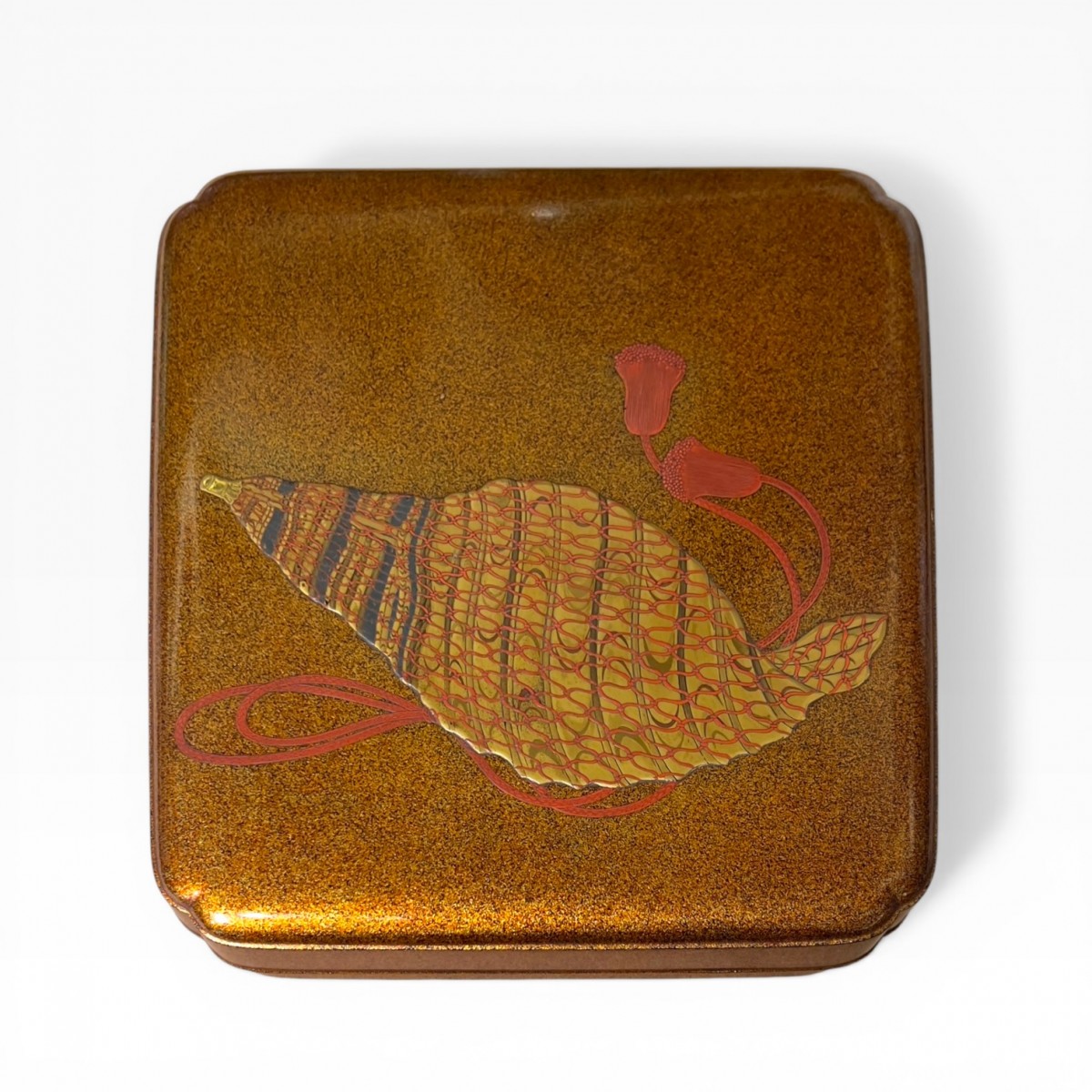
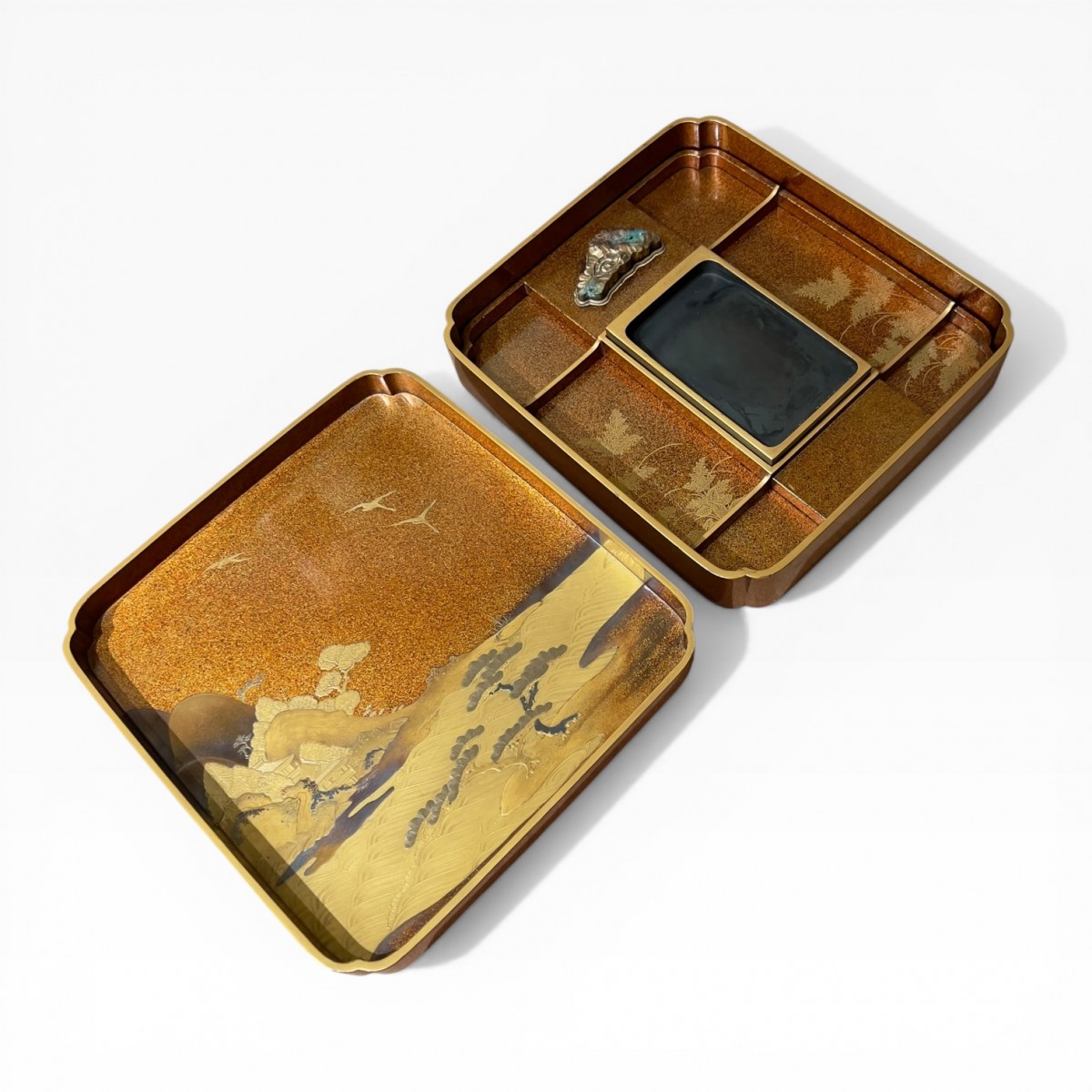
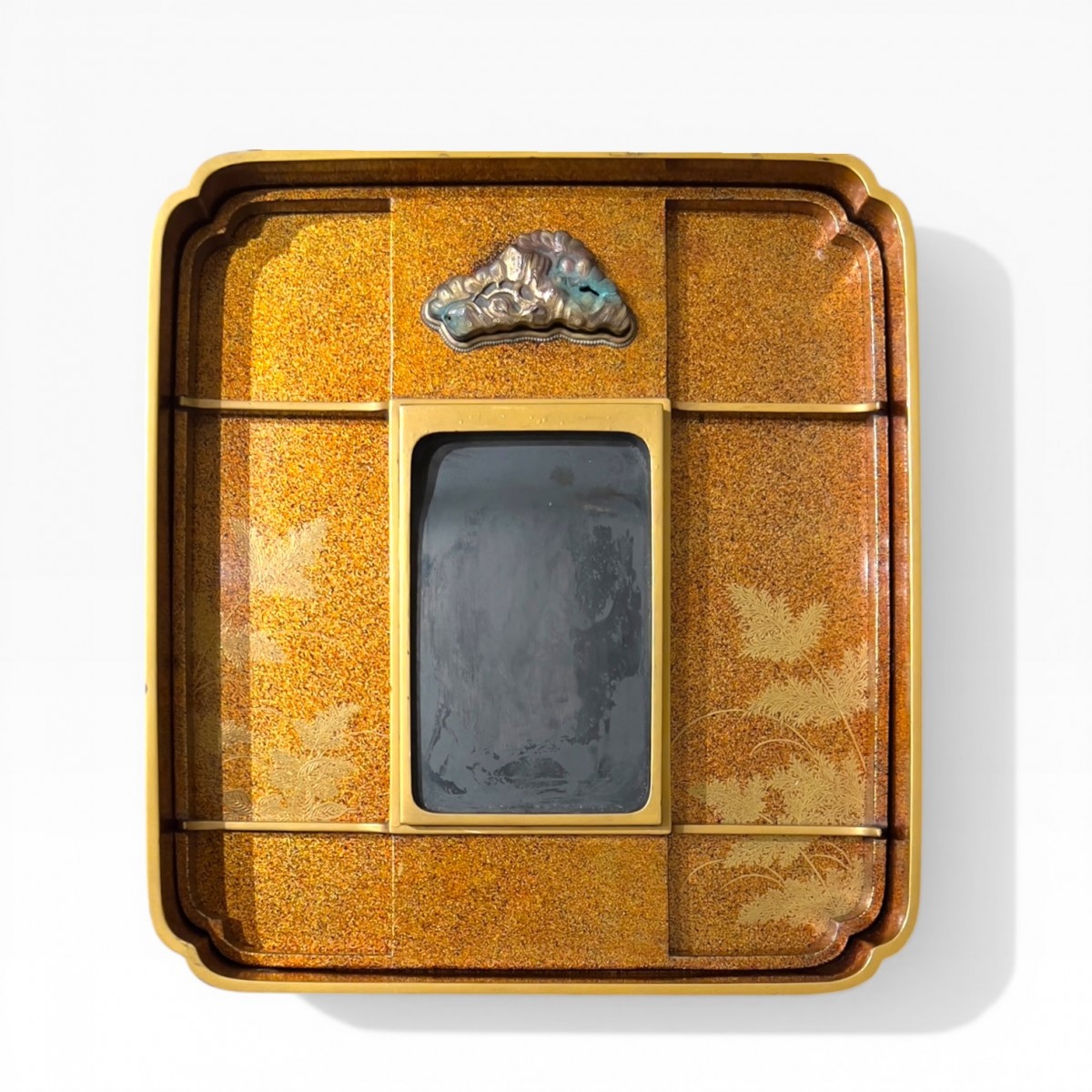

Suzuribako with horagai shell trumpet and pavilion landscape
Japan, Edo period, 18th-early 19th century
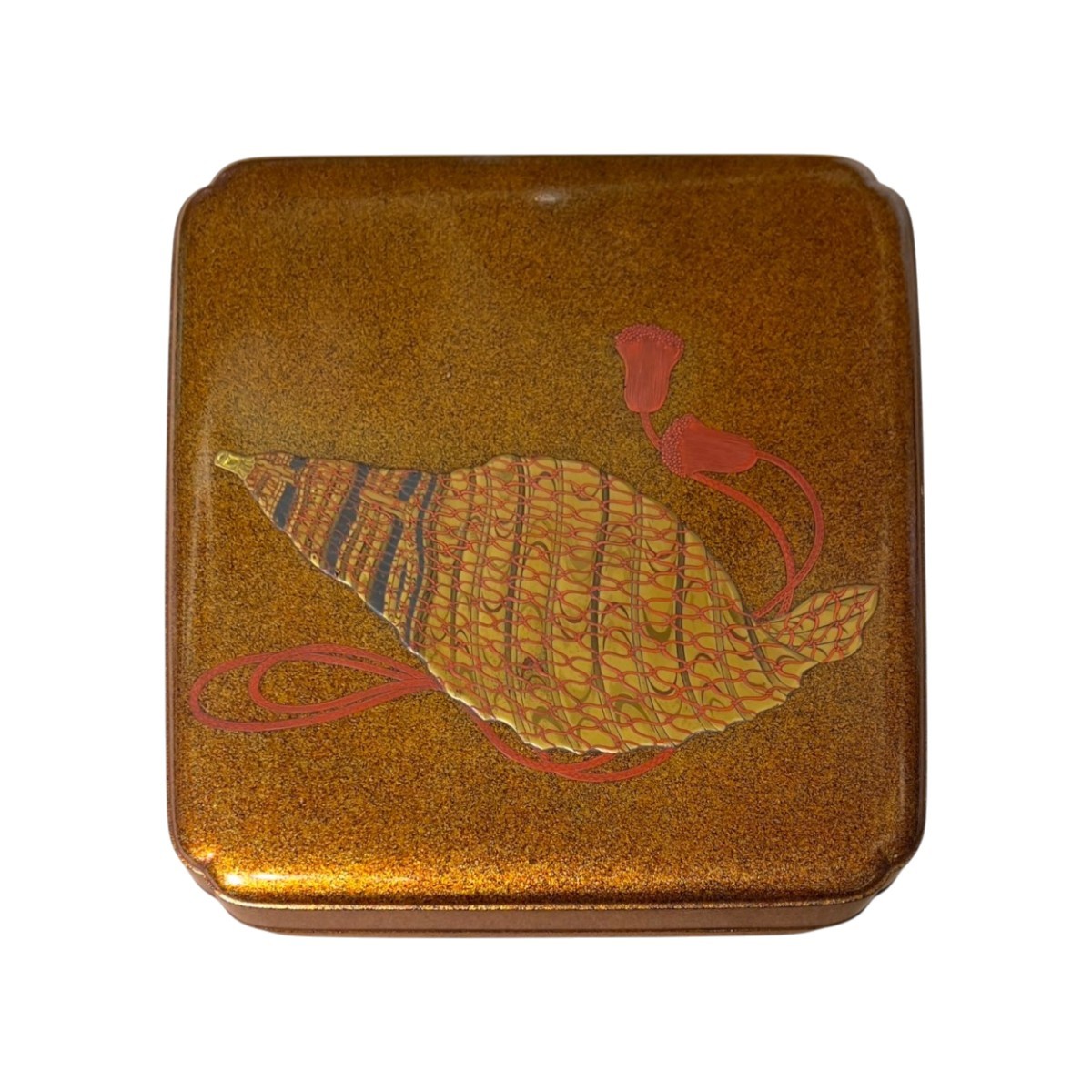
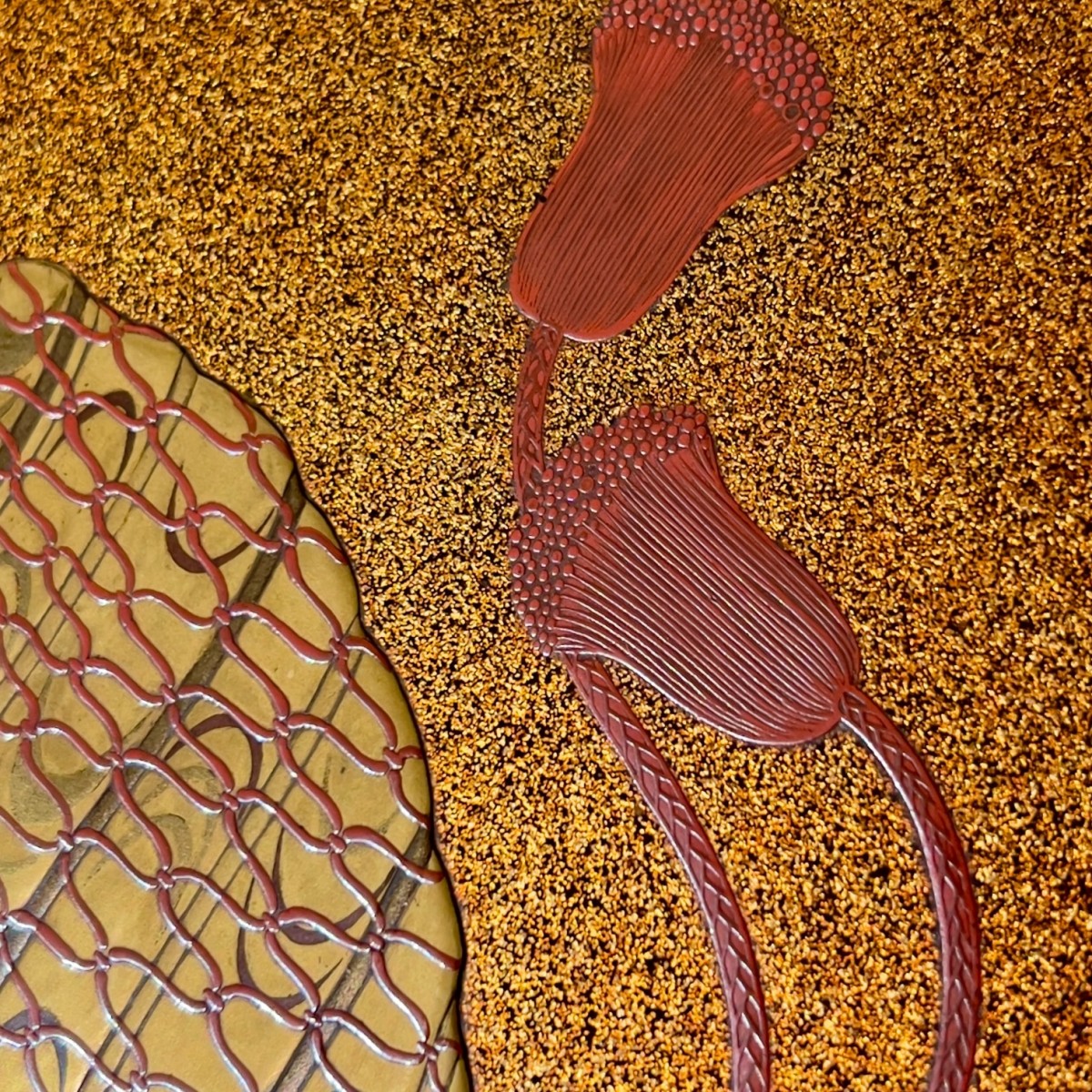
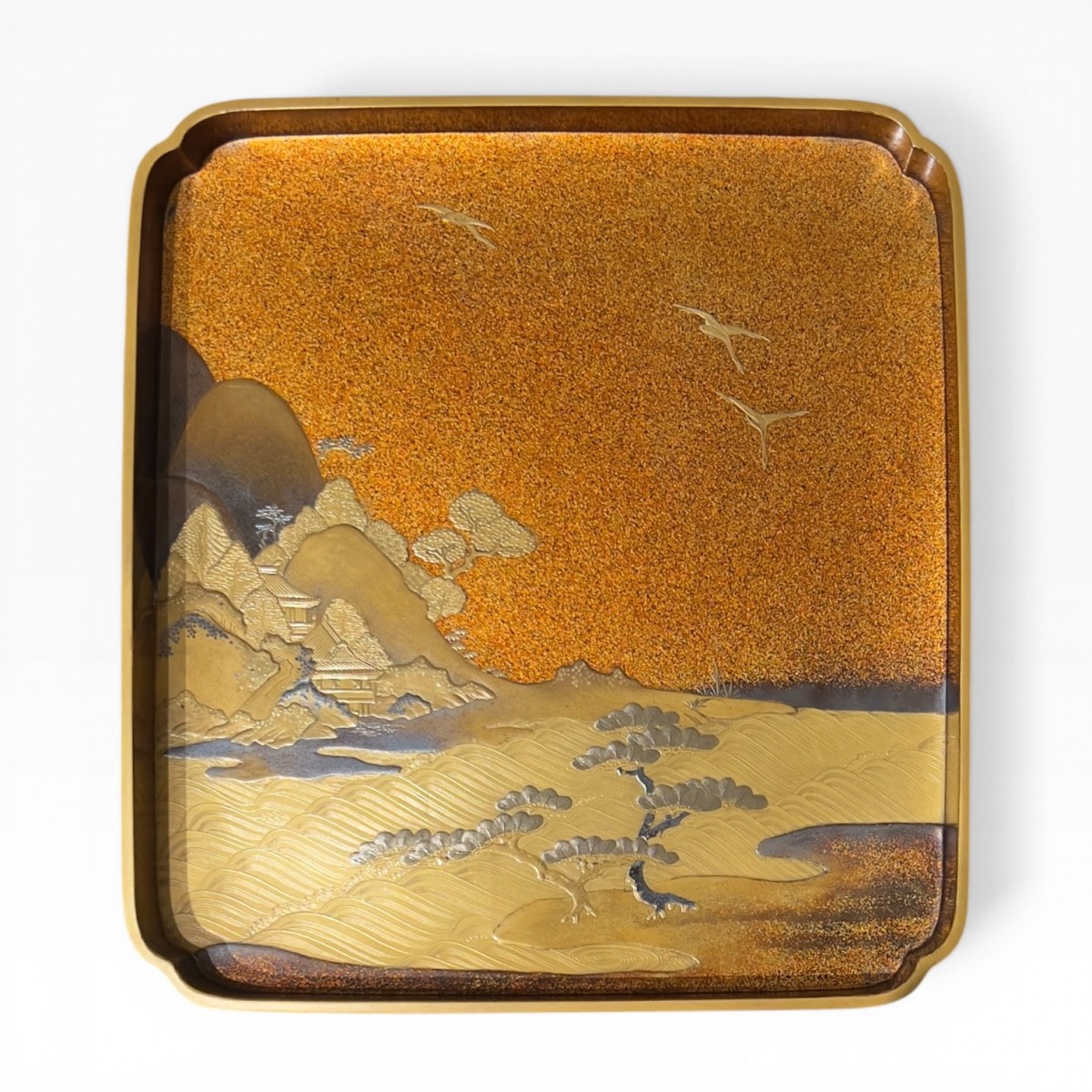
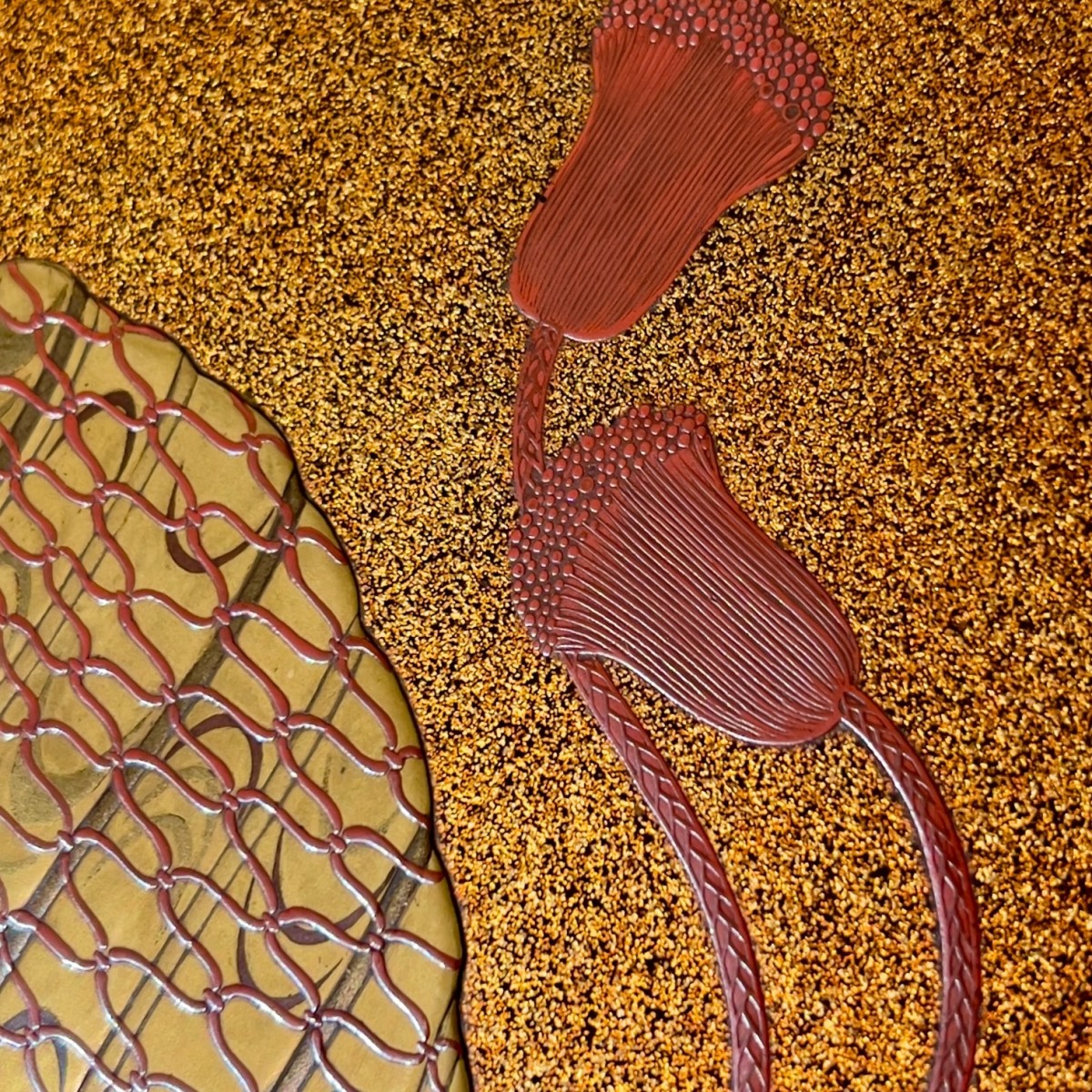
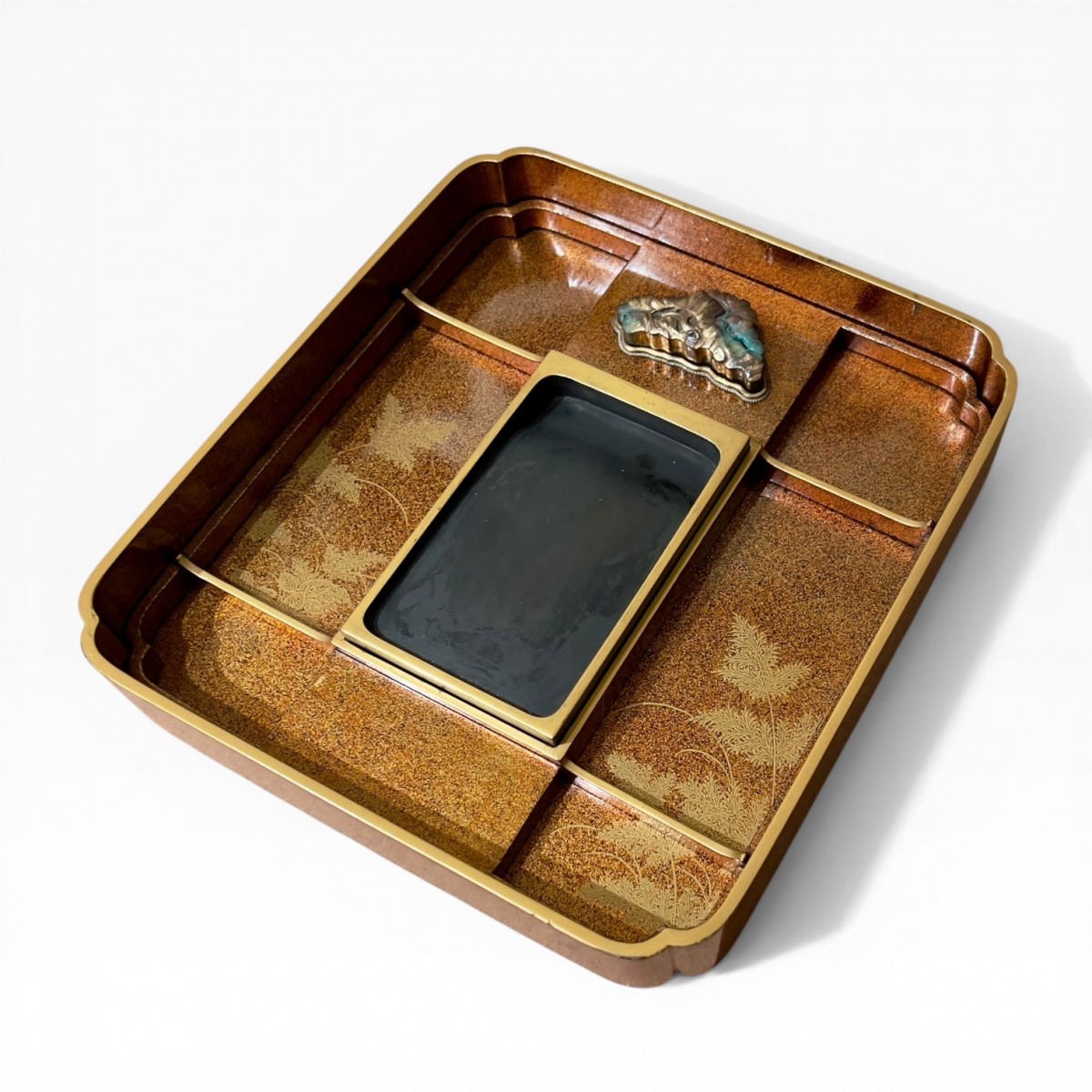
Rectangular suzuribako with rounded corners in lacquered wood, measuring 24.1 cm in width, 22.2 cm in height, and 4.7 cm in depth. The lid presents, on a nashiji ground, a large horagai ???, that is, a conch transformed into a trumpet, wrapped in a net rendered in raised red lacquer. The interior contains the inkstone and the water dropper, or suiteki, here in the form of a pine branch, while the reverse of the lid is decorated with a landscape of pavilions by the water. The suzuribako is a writing box intended to contain the implements necessary for preparing ink and writing.
The nashiji ground must be emphasized from the outset. This technique, which gives the surface the appearance of pear skin through the dense scattering of fine gold flakes, creates here a luminous, warm, and very regular field against which the motif stands out with great clarity. The decoration of the lid visibly combines hiramaki-e and takamaki-e. Hiramaki-e corresponds to the parts drawn with slight thickness and integrated into the surface, while takamaki-e designates the more pronounced reliefs, obtained by modeling before sprinkling with gold. The dialogue between these two processes gives the motif depth without breaking the smooth and precious unity of the lacquer.
The horagai is a well-identified instrument in Japanese culture, especially linked to the yamabushi, mountain ascetics of shugend?. Japanese sources recall that it was used to communicate in the mountains, to mark a presence, to punctuate certain ritual practices, and that it was also attributed a protective function capable of warding off evil forces. In the iconography of this box, its presence therefore introduces a world of retreat, hermitage, life outside the world, and mountain spirituality. The red net that carries it is not a secondary detail: it belongs to the reality of the object itself, and its representation, of extreme precision, is one of the great successes of the box. Each strand of the braid is followed, crossed, and tensioned with exceptional minuteness, giving the decoration an almost tactile truth.
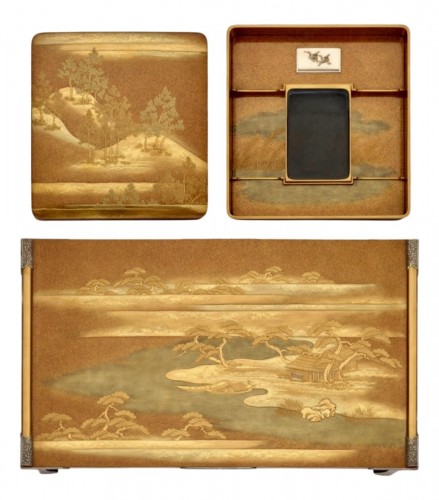
The interior develops another register, more properly literati in character. The reverse of the lid is decorated with a landscape of pavilions by the water, with pines, reliefs, and birds in flight. The lower section repeats this atmosphere through branches in gold lacquer. We are here in the vocabulary of the ideal, withdrawn, contemplative landscape, built around water, light architecture, and the pine, tree of permanence and composure. The suiteki in the form of a pine branch directly prolongs this decoration and shows that the accessories themselves participate in the iconographic program. Thus the decoration of the box is organized as a true dialogue between the world of mountain asceticism evoked by the horagai and that of writing, mental landscape, and cultivated retreat.
It is this dialogue that gives the work its particular intelligence. On the exterior, the large horagai dominates alone, almost monumental, with its raised red net, in a strong, concentrated, almost emblematic image. Inside, the eye enters a quieter, broader space made of water, pavilions, pines, and birds. The passage from the lid to the inside of the box thus corresponds to a symbolic passage: from signal, call, and mountain world toward the space of the literati, of writing and contemplation. Such iconographic coherence, supported by such precise execution, places this piece among suzuribako of excellent quality.
Dimensions: 24.1 × 22.2 × 4.7 cm.
Delevery information :
A special care is given to packing. Bigest pieces are crated.
All our shippings are insured with tracking.
As we do a lot of shippings, we do have very special rates. Please inquire!