Offered by Jan Muller
REQUEST INFORMATION

Attributed to GIUSEPPE RECCO
1634 - 1695
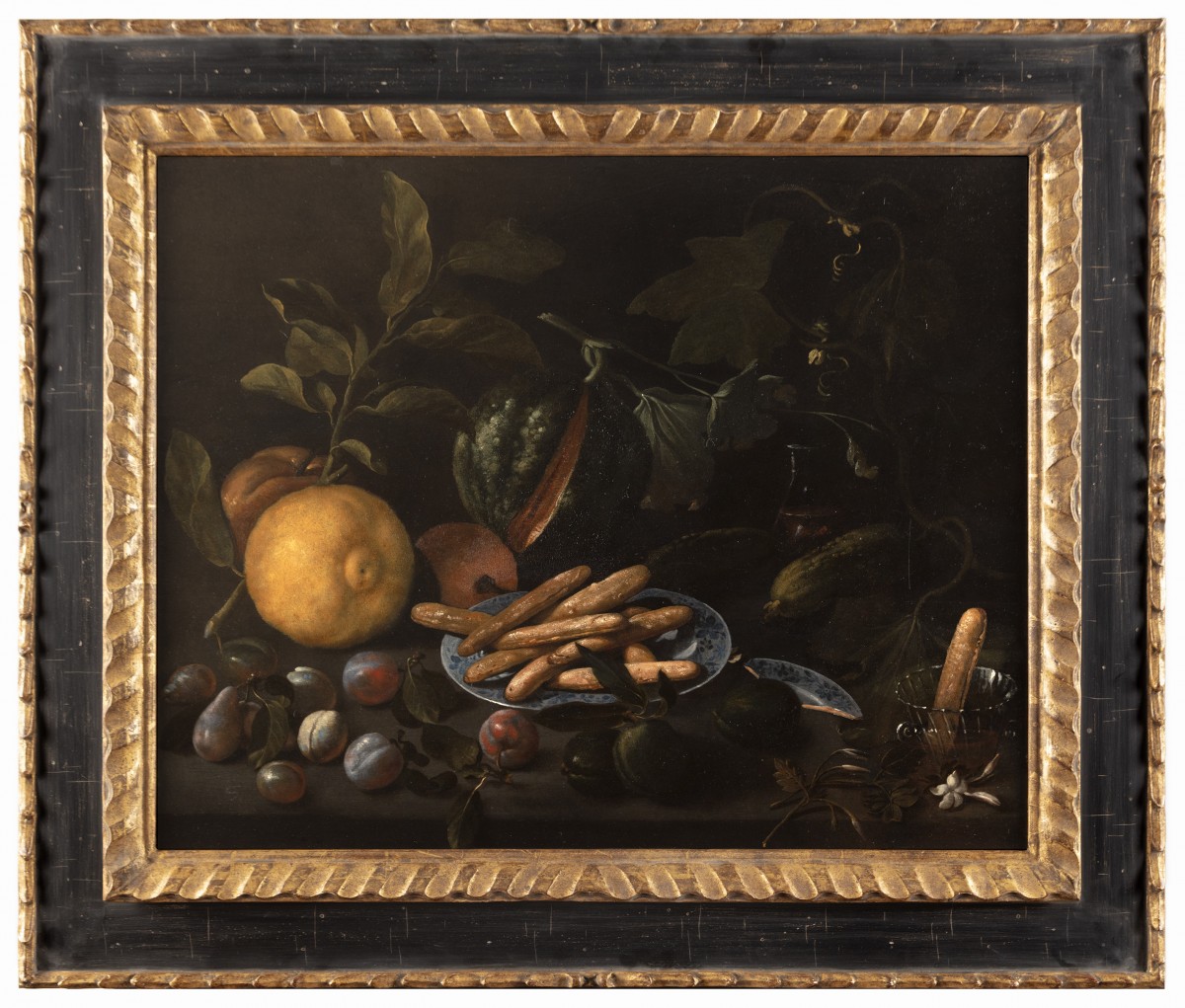
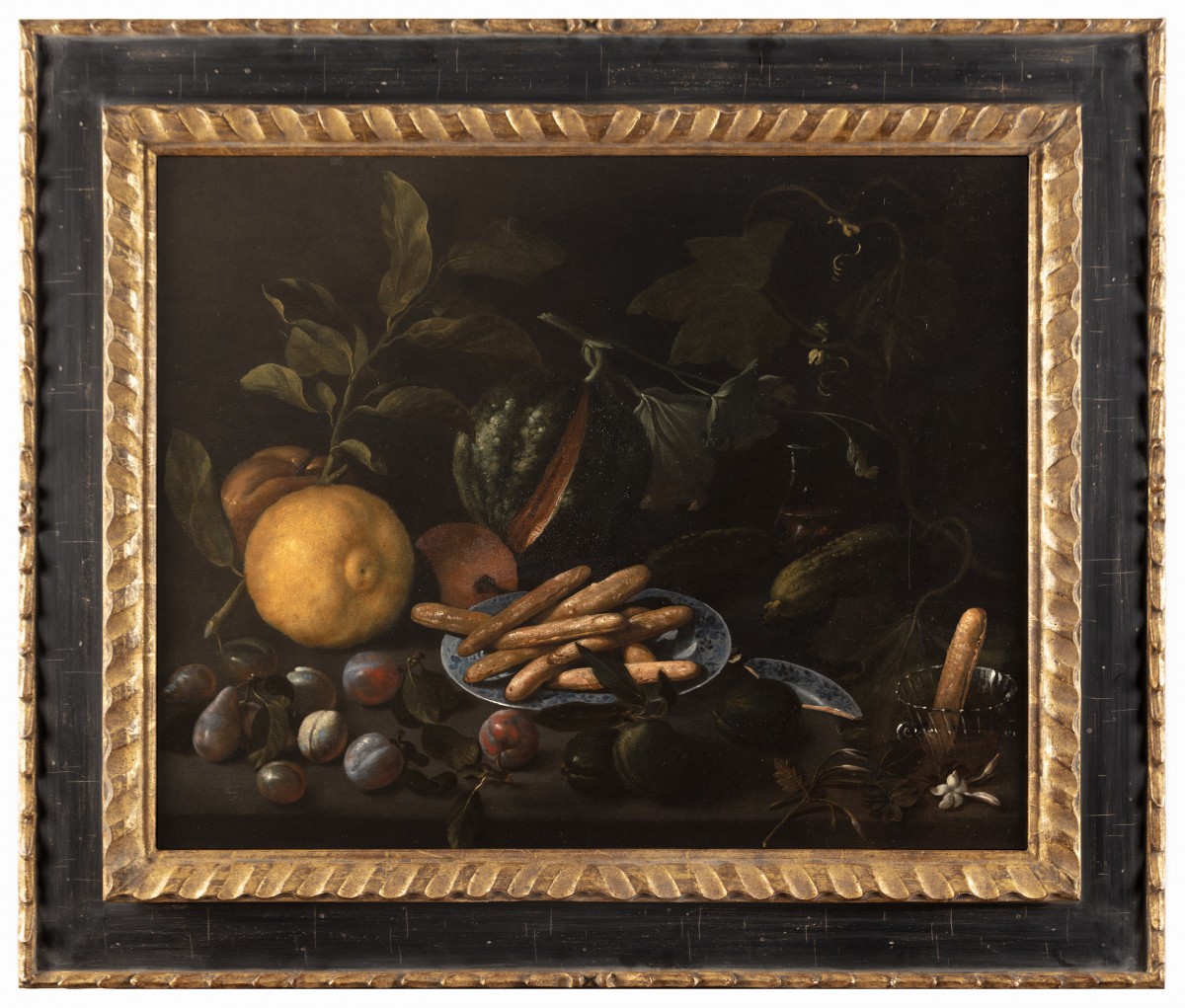
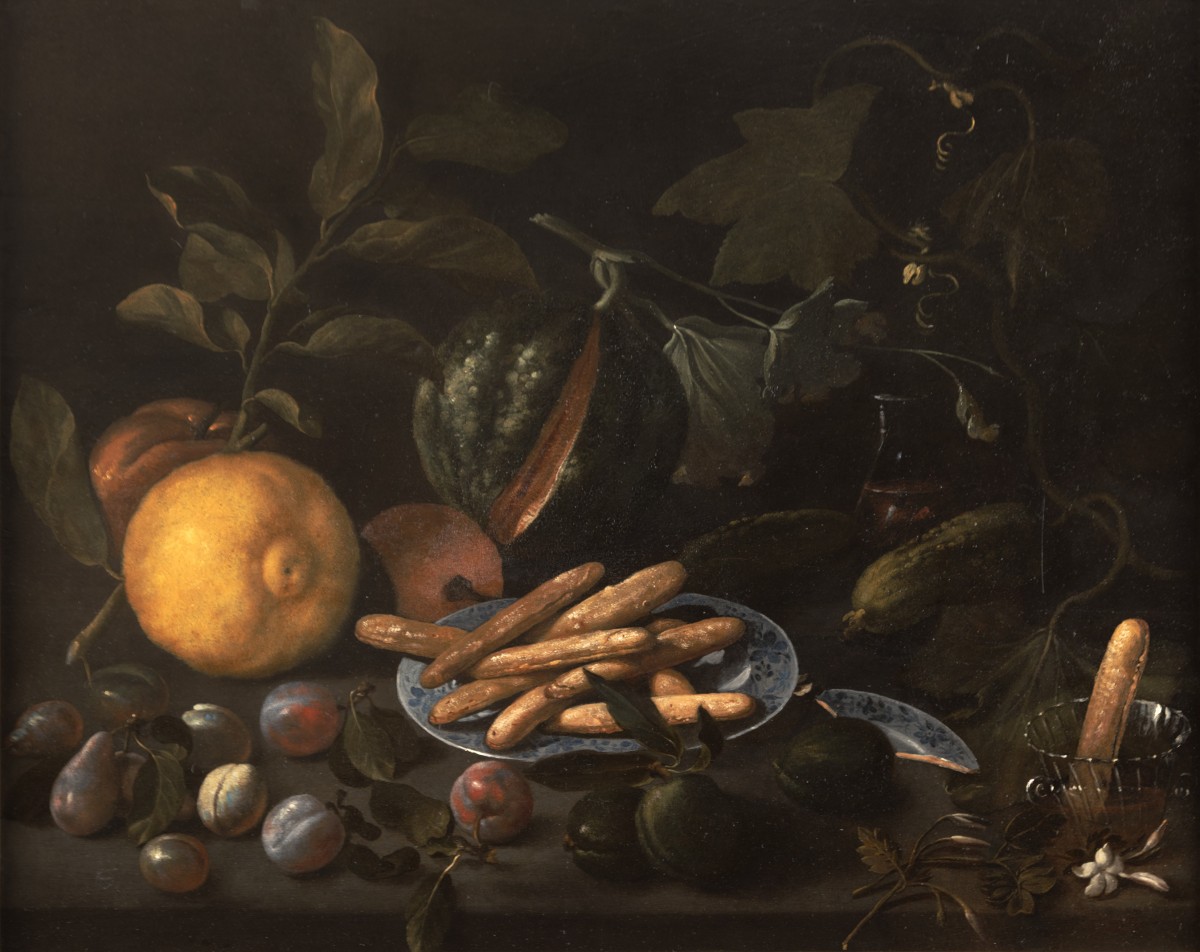
“Still life with bread, lemon, watermelon and prunes”
Oil on canvas
Provenance: Schweitzer Gallery, New York.
We’d like to thank dr. Fred Meijer for his advice.
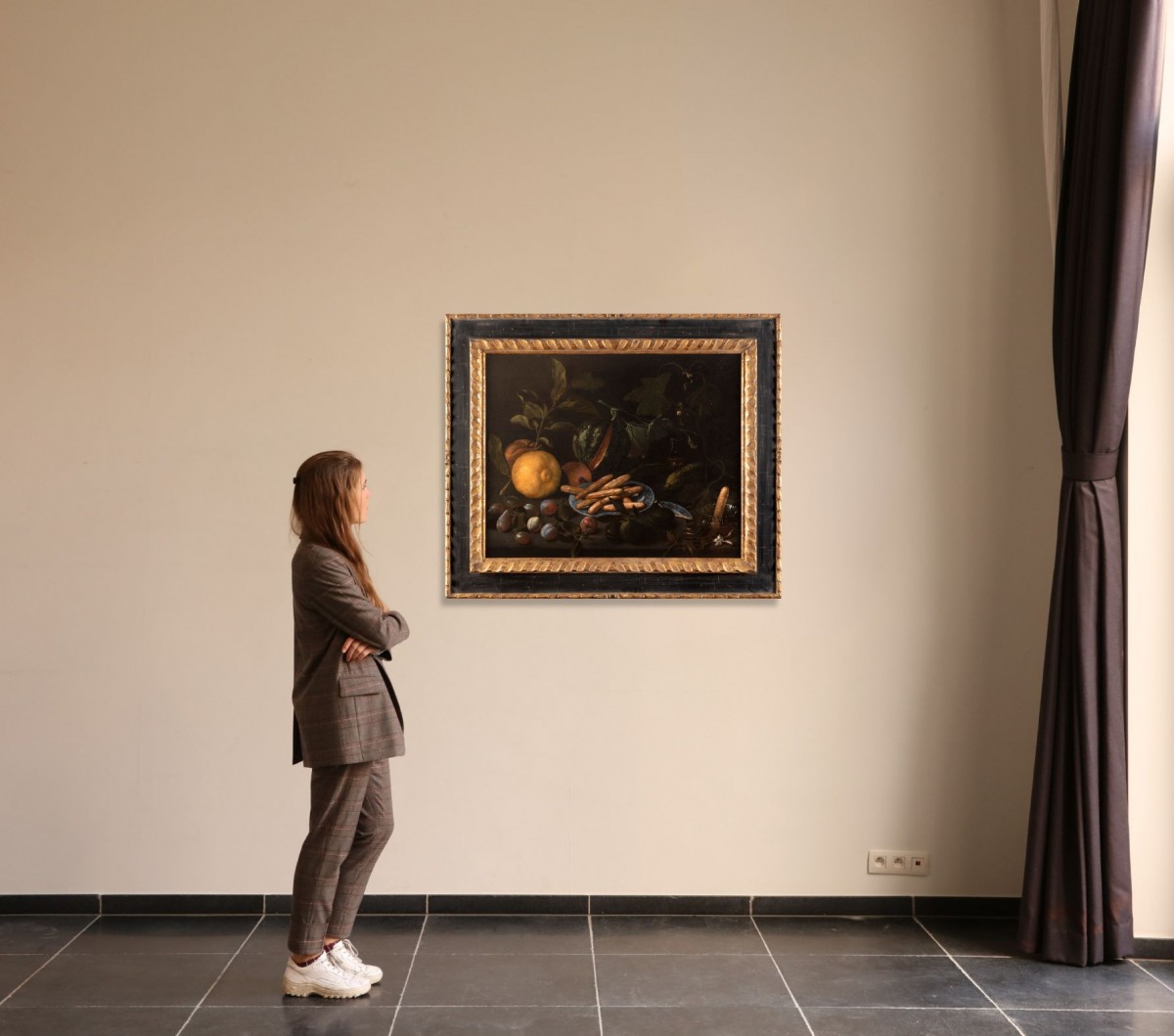
Dimensions: 73 x 88 cm, 96 x 114 cm (framed)
Artwork
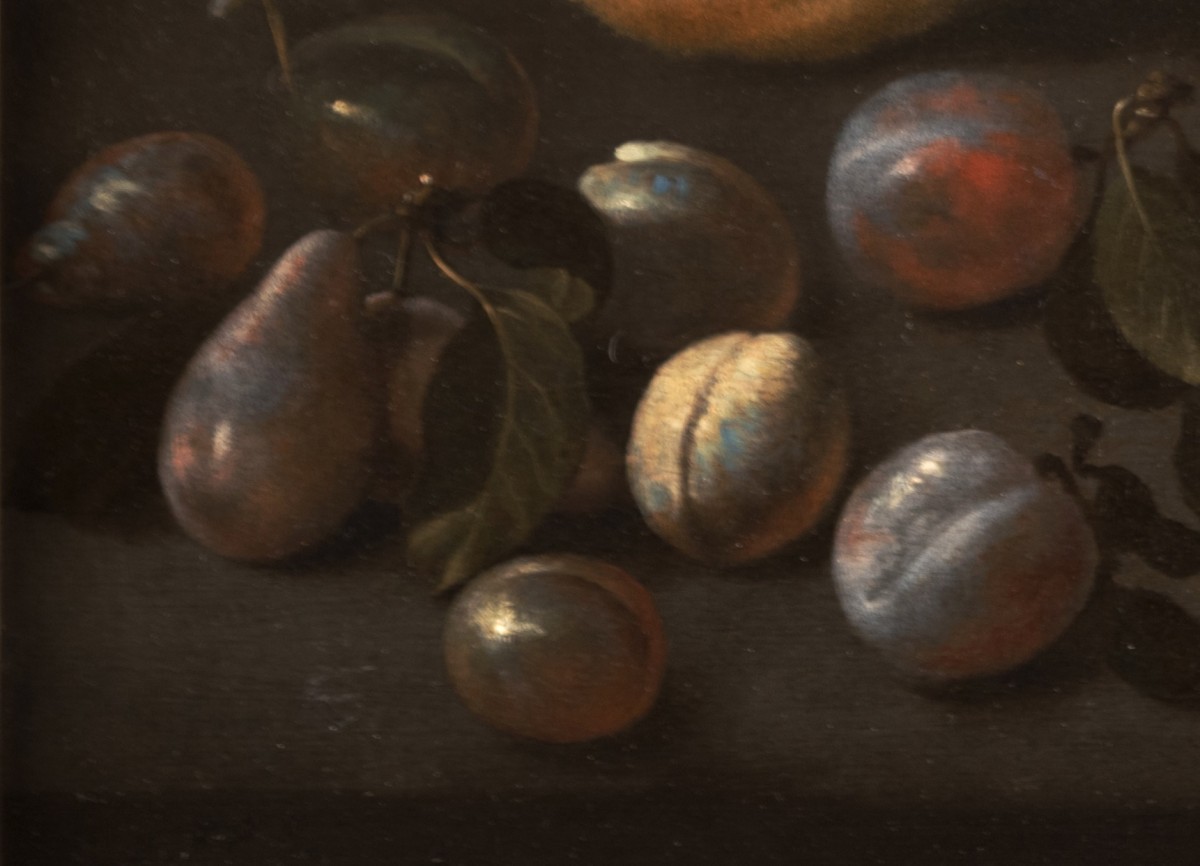
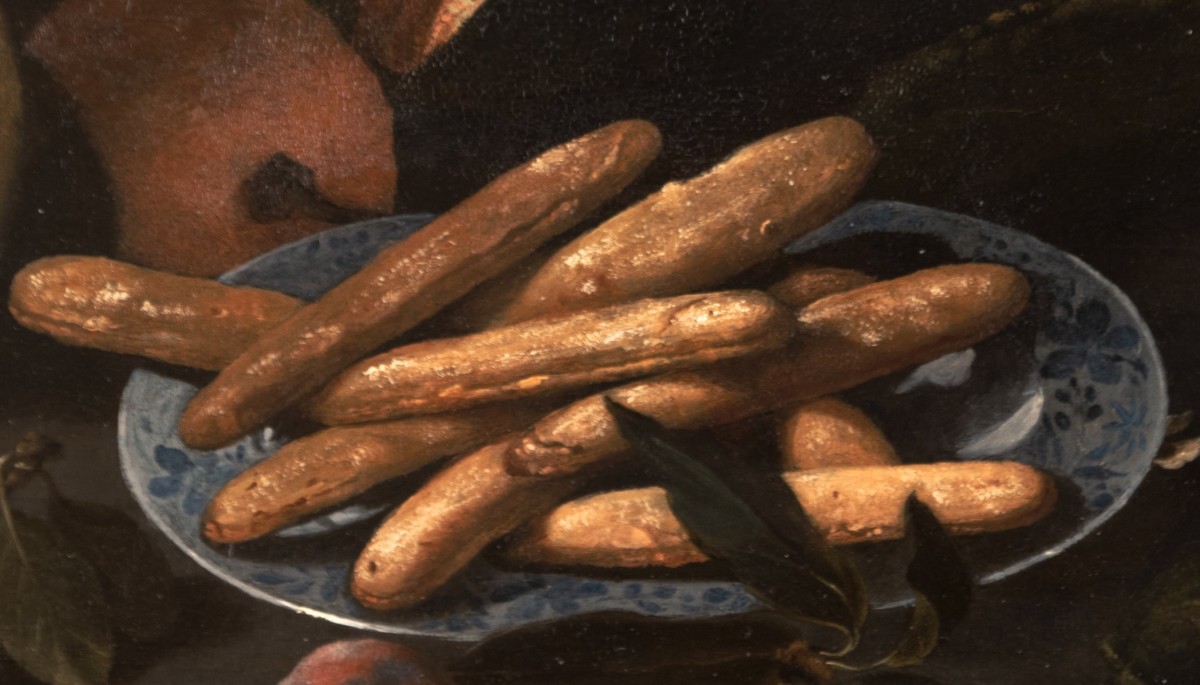
This robust still life presents a restrained yet sensuous arrangement of everyday foodstuffs: crusty breadsticks laid on a ceramic plate, a luminous lemon, a cut watermelon, and scattered prunes resting on a stone surface. The composition is anchored by strong contrasts between rough textures and smooth skins, light and shadow, freshness and decay , hallmarks of Neapolitan Baroque still-life painting.
The dramatic lighting, earthy palette, and tactile realism suggest a painter deeply attuned to the physical presence of objects. The lemon’s sharp brightness and the deep reds of the fruit punctuate the otherwise muted tones, while the dense foliage in the background creates a sense of depth and enclosure. The scene feels immediate and grounded, evoking abundance without luxury.
Such compositions reflect the Southern Italian tradition of bodegón-like still lifes, where humble food items are elevated through painterly intensity and compositional balance. The scale of the canvas and the confident handling of paint point toward an accomplished master active in elite collecting circles.
Artist
Giuseppe Recco was one of the leading Italian still-life painters of the late Baroque period. Born into the celebrated Recco family in Naples, he was trained within a lineage of painters and further refined his technique under Paolo Porpora, a prominent specialist in naturalistic still lifes.
Giuseppe Recco became renowned for his richly textured compositions featuring fish, fruit, bread, and game, painted with bold chiaroscuro and heightened realism. His reputation spread beyond Italy, and he was eventually invited to Spain by King Charles II, where Neapolitan still-life painting was highly prized by the Spanish court.
His work is often compared to that of Giovan Battista Ruoppolo, though Recco’s compositions are typically more direct and materially forceful. Today, Giuseppe Recco is regarded as a key figure in the international success of Neapolitan still-life painting during the second half of the 17th century.
Delevery information :
After reception of payment we can box and ship our items all over the world. Estimates of this service can be provided.