Offered by Ars Antiqua
REQUEST INFORMATION

Old Masters paintings, furniture, sculptures and modern art
Paolo De Matteis (Piano Vetrale, 1662 – Naples, 1728)
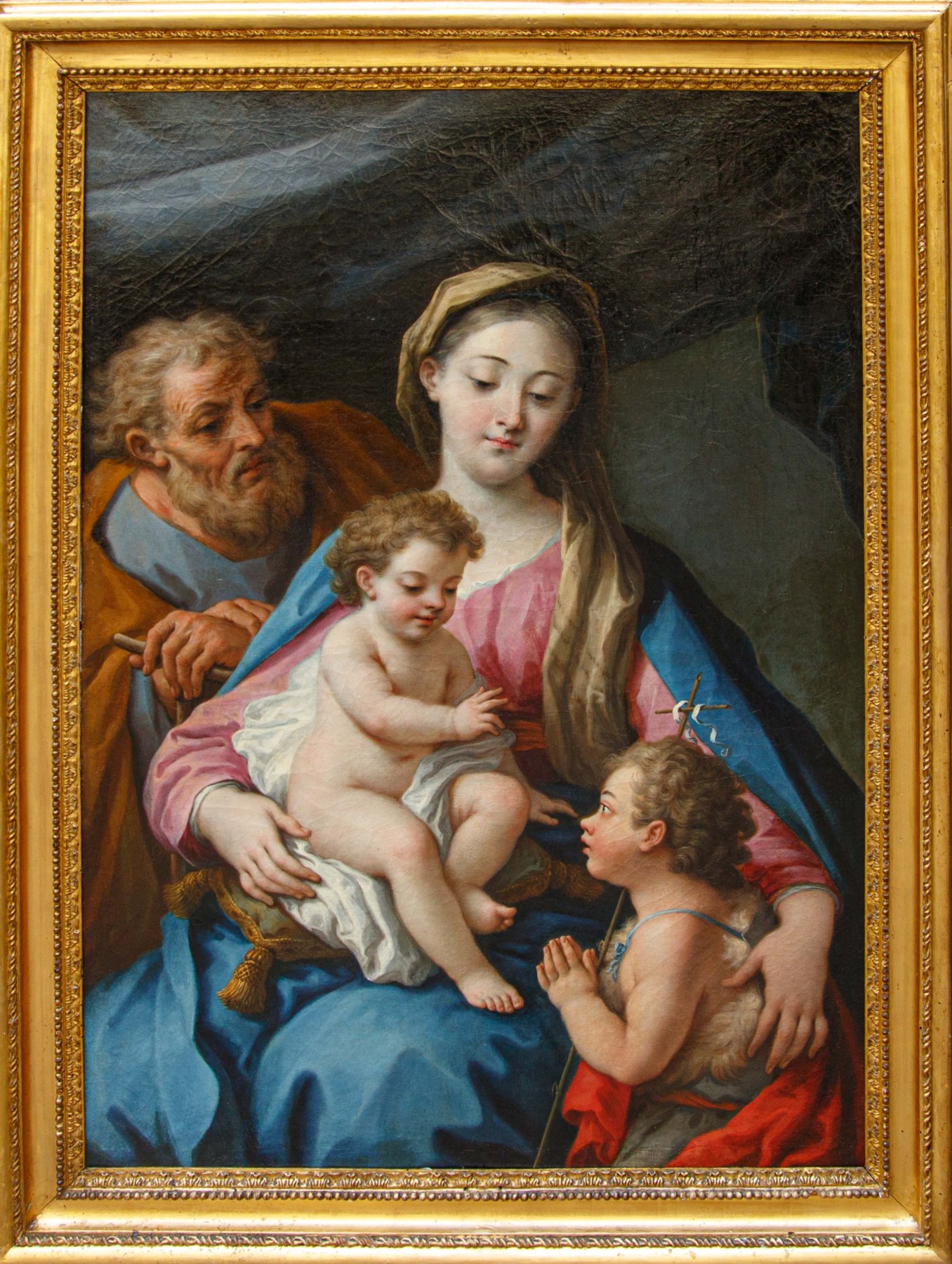
Holy Family with the Infant Saint John the Baptist
Oil on canvas, 115 x 80.5 cm – With frame, 136 x 101 cm
Critical entry by Prof. Alberto Crispo
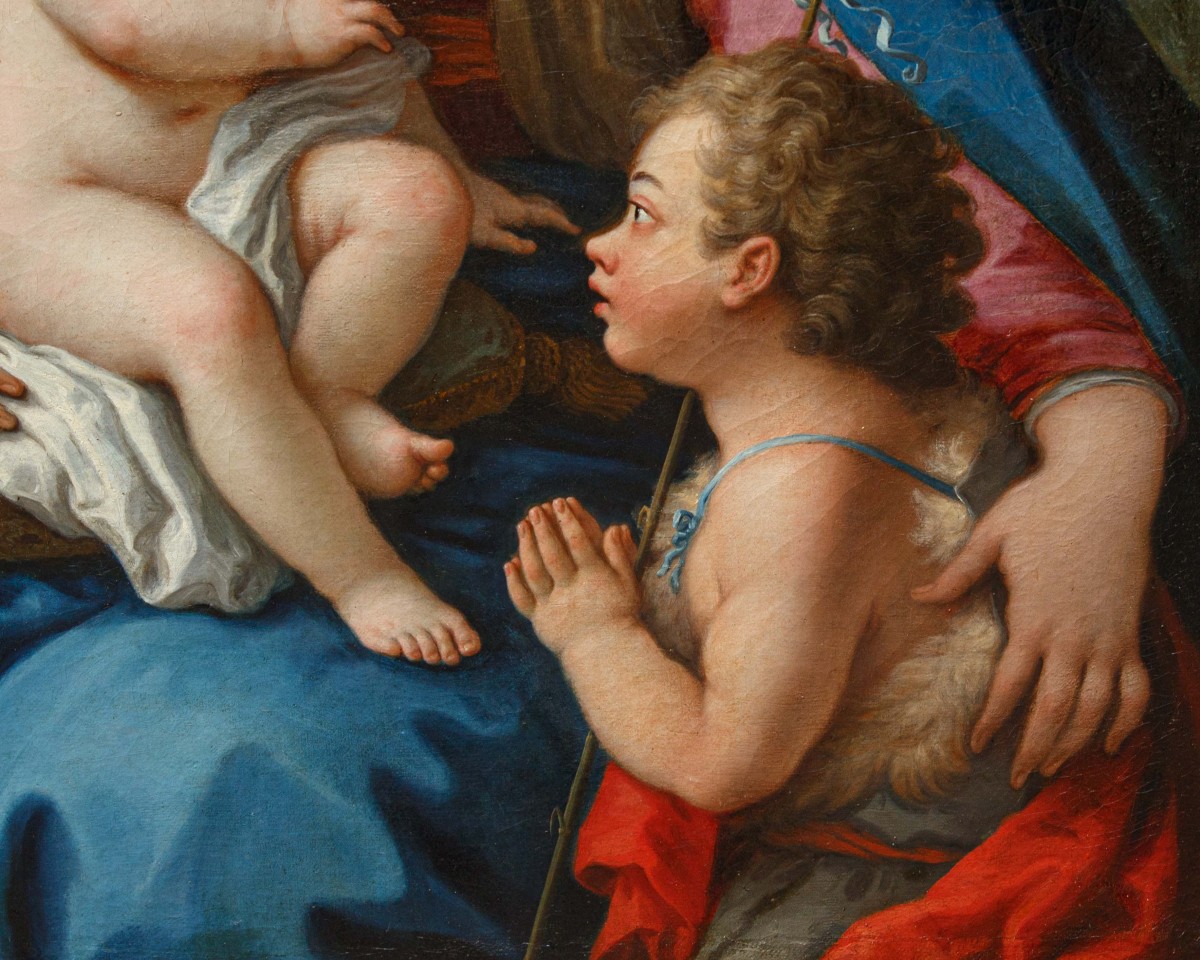
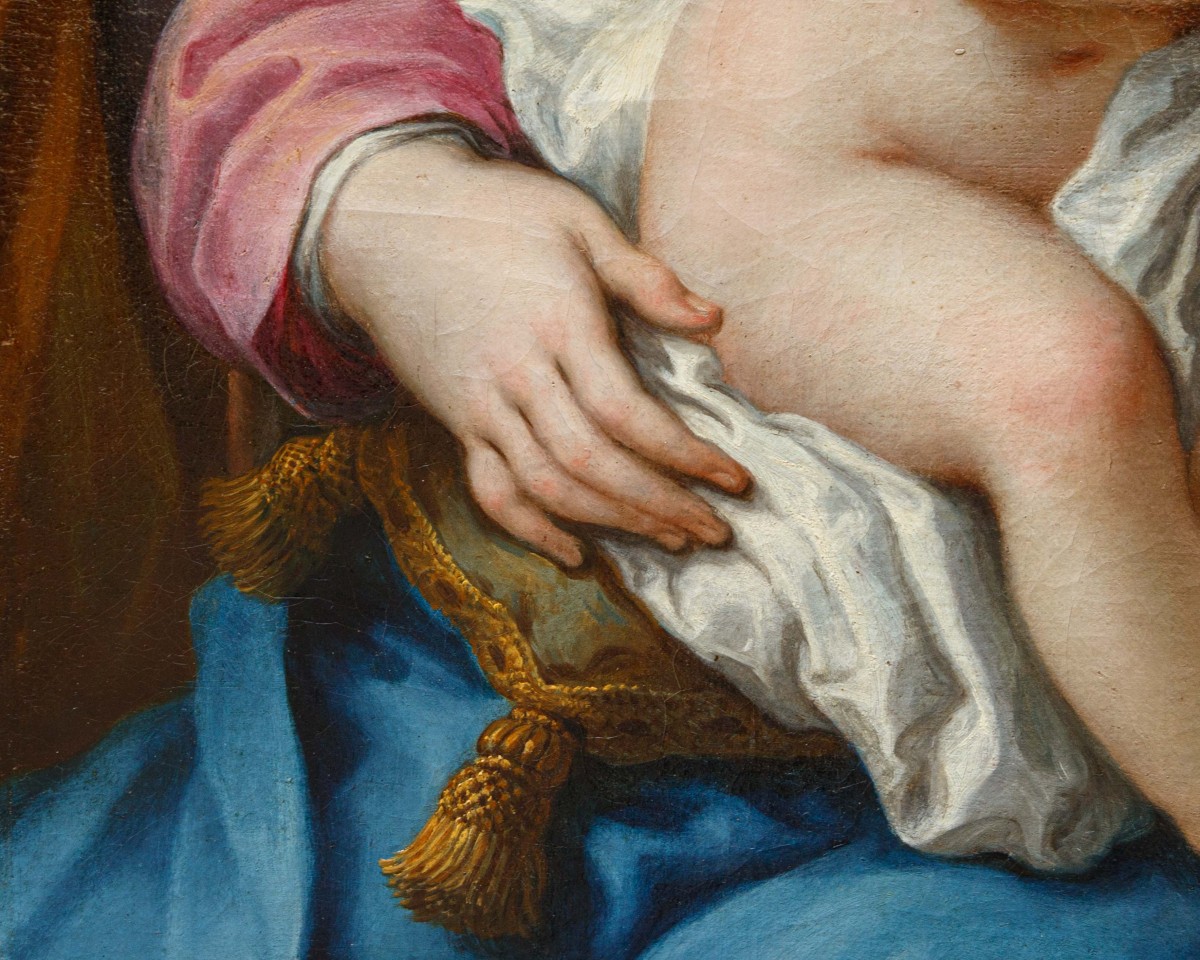
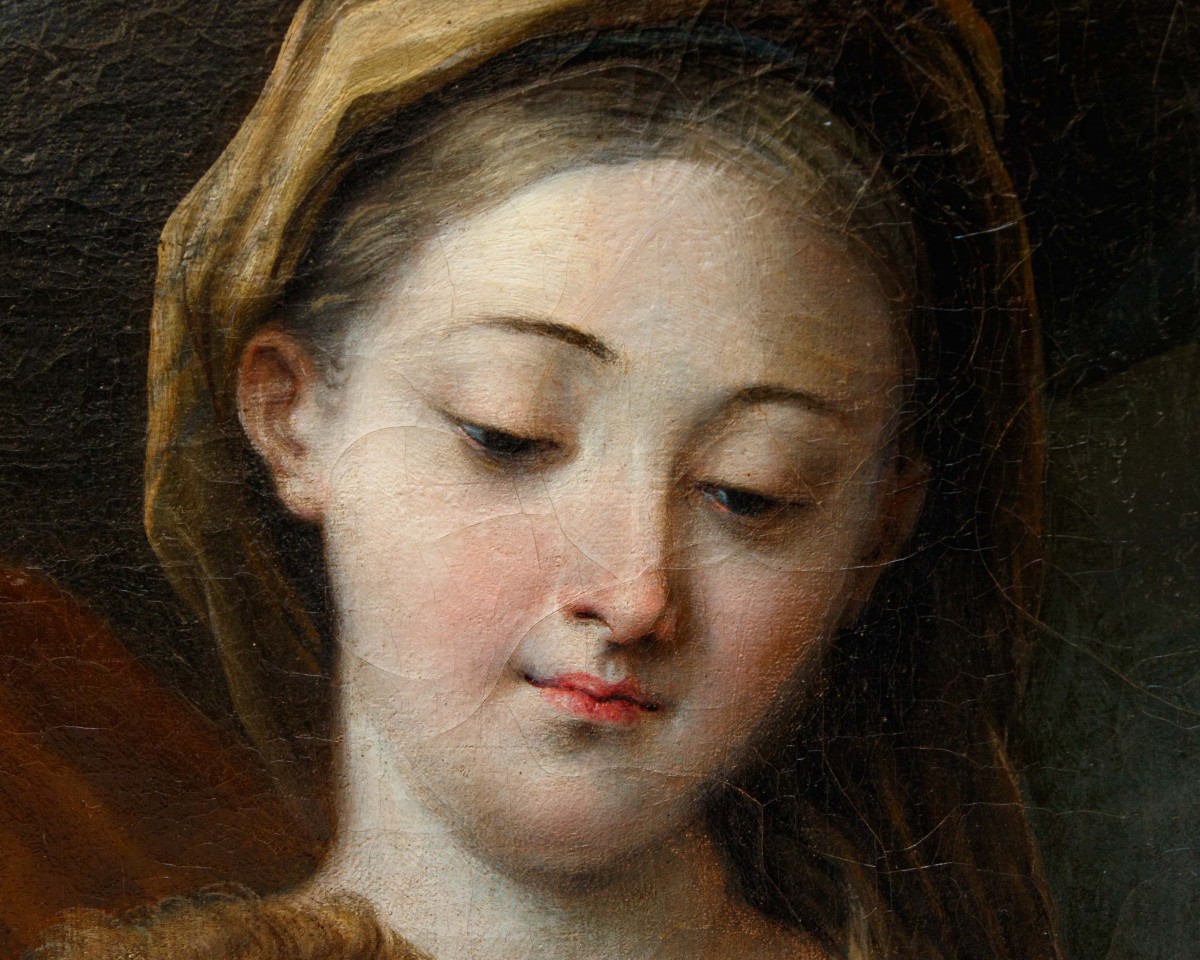
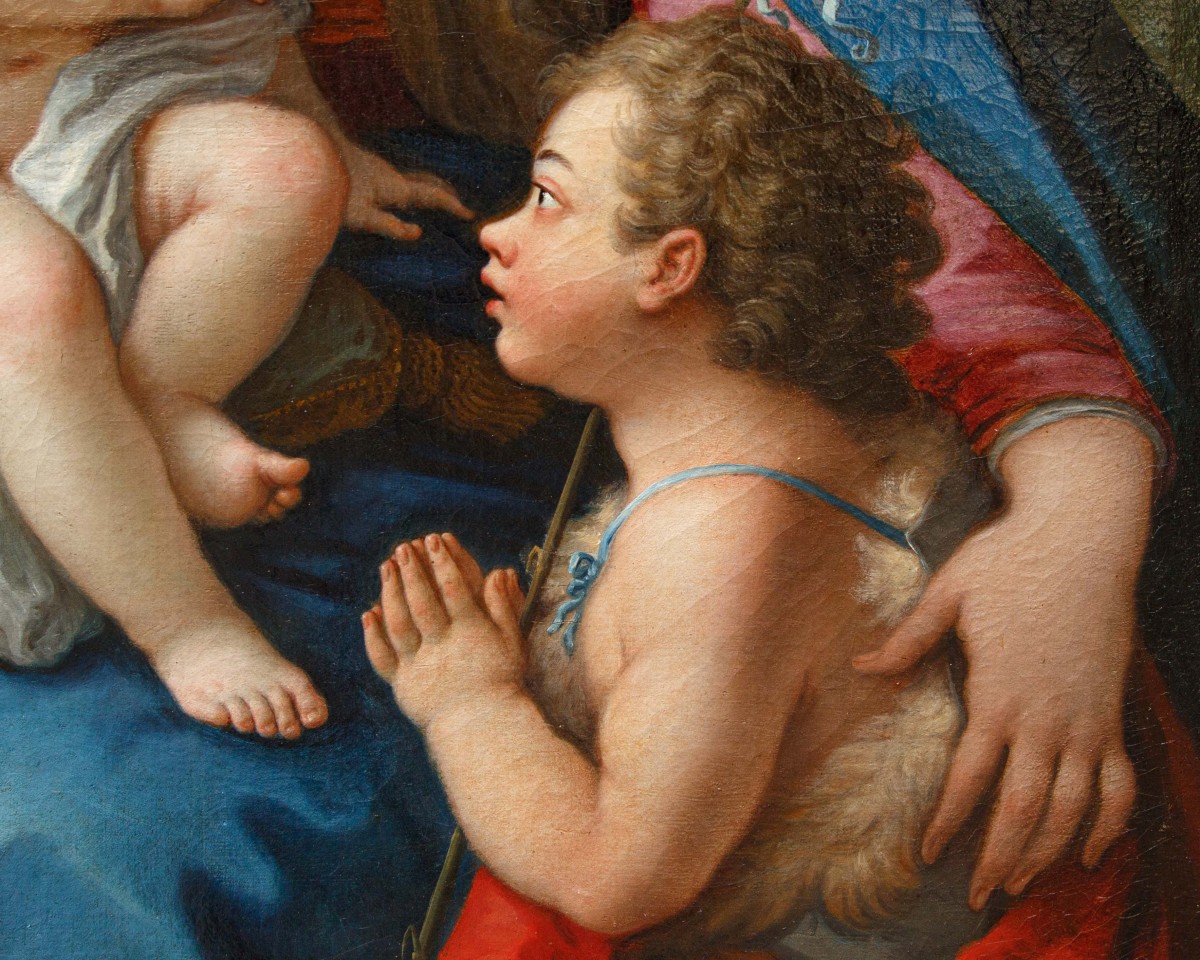
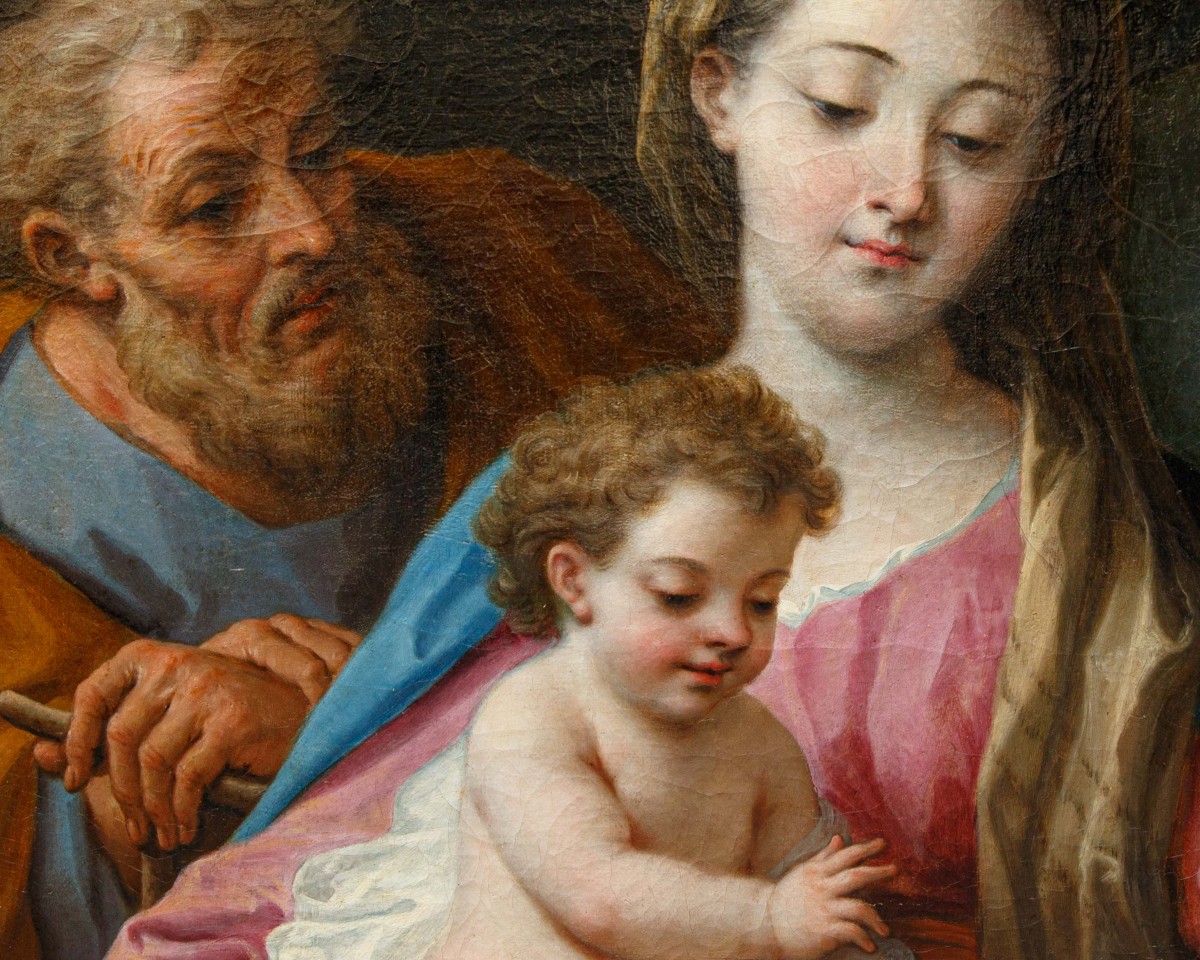
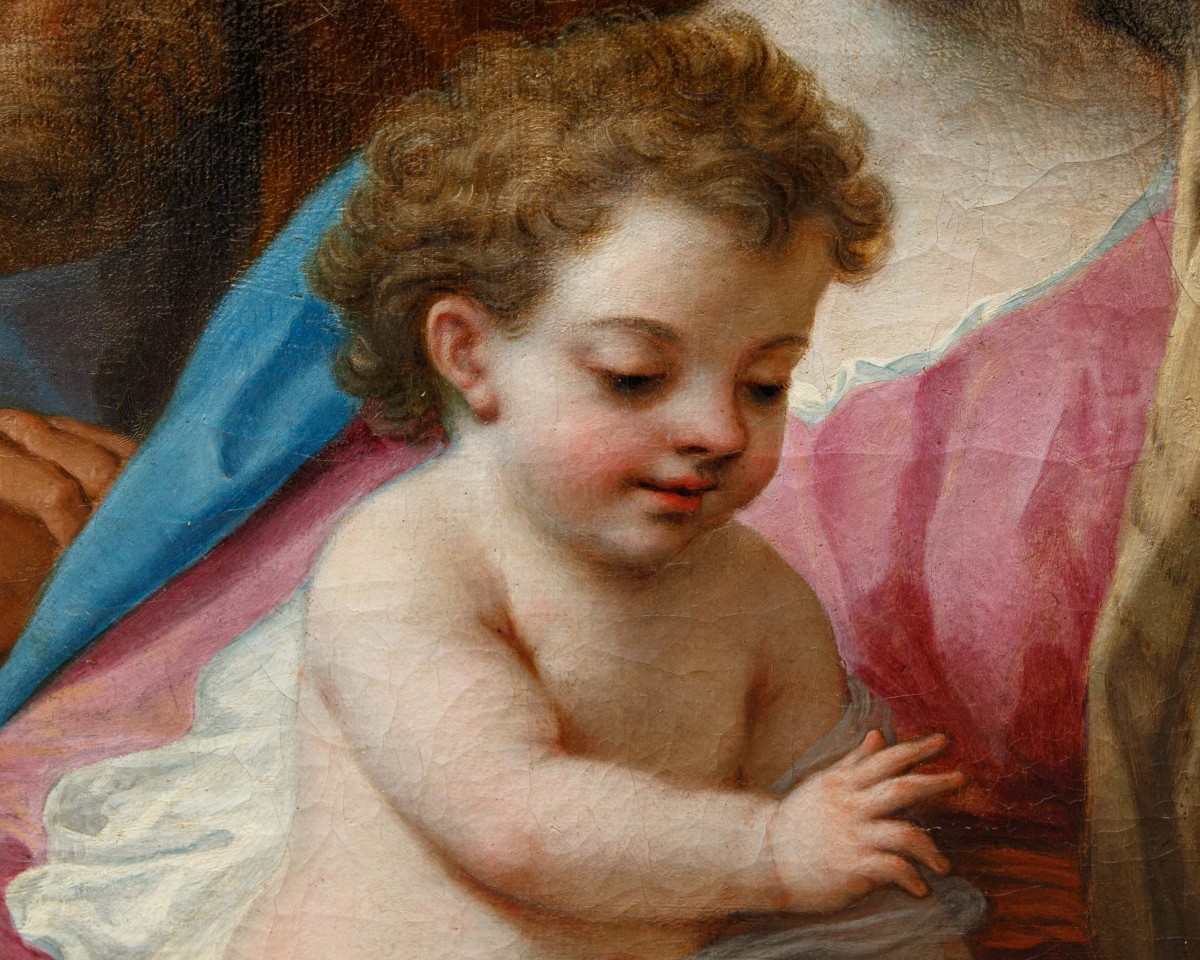
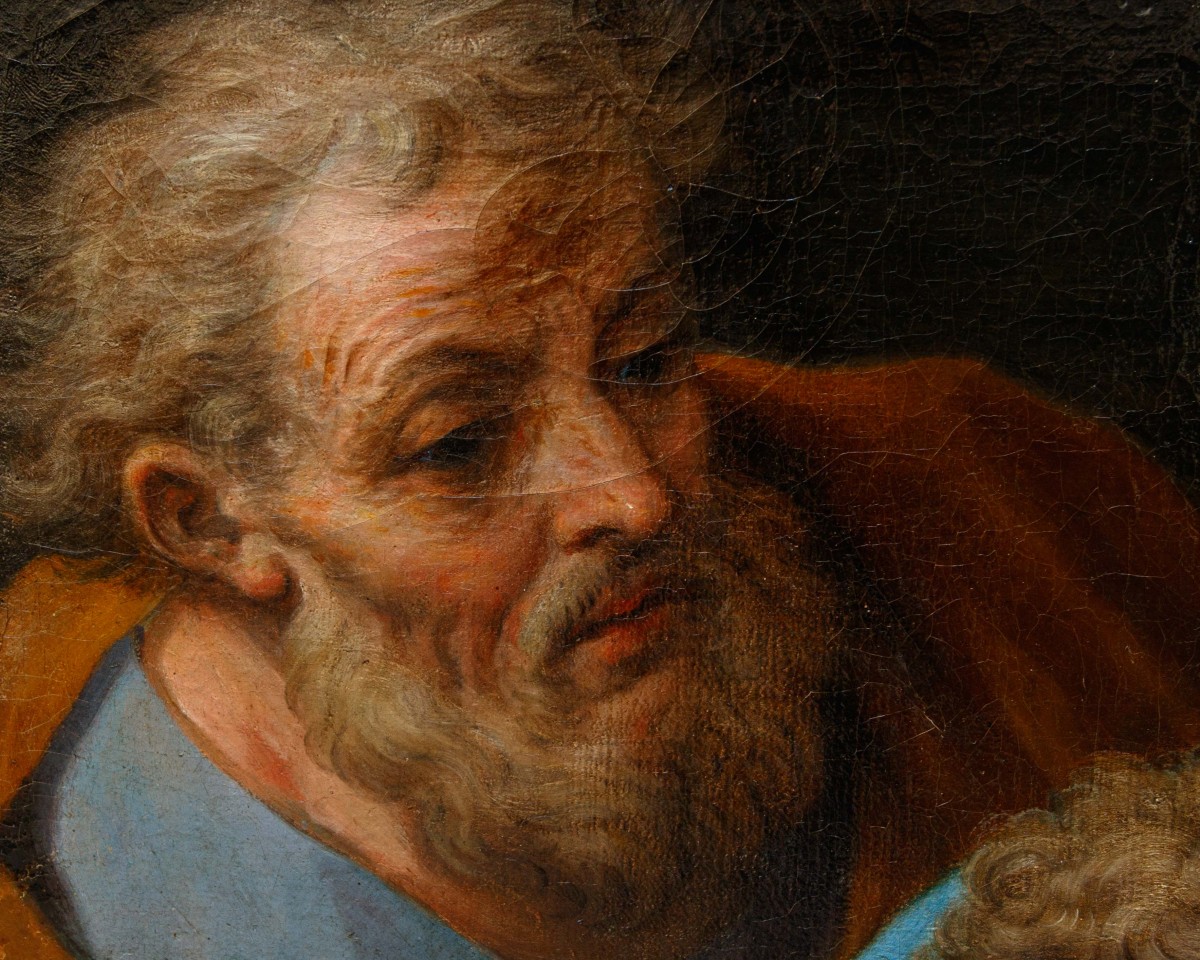
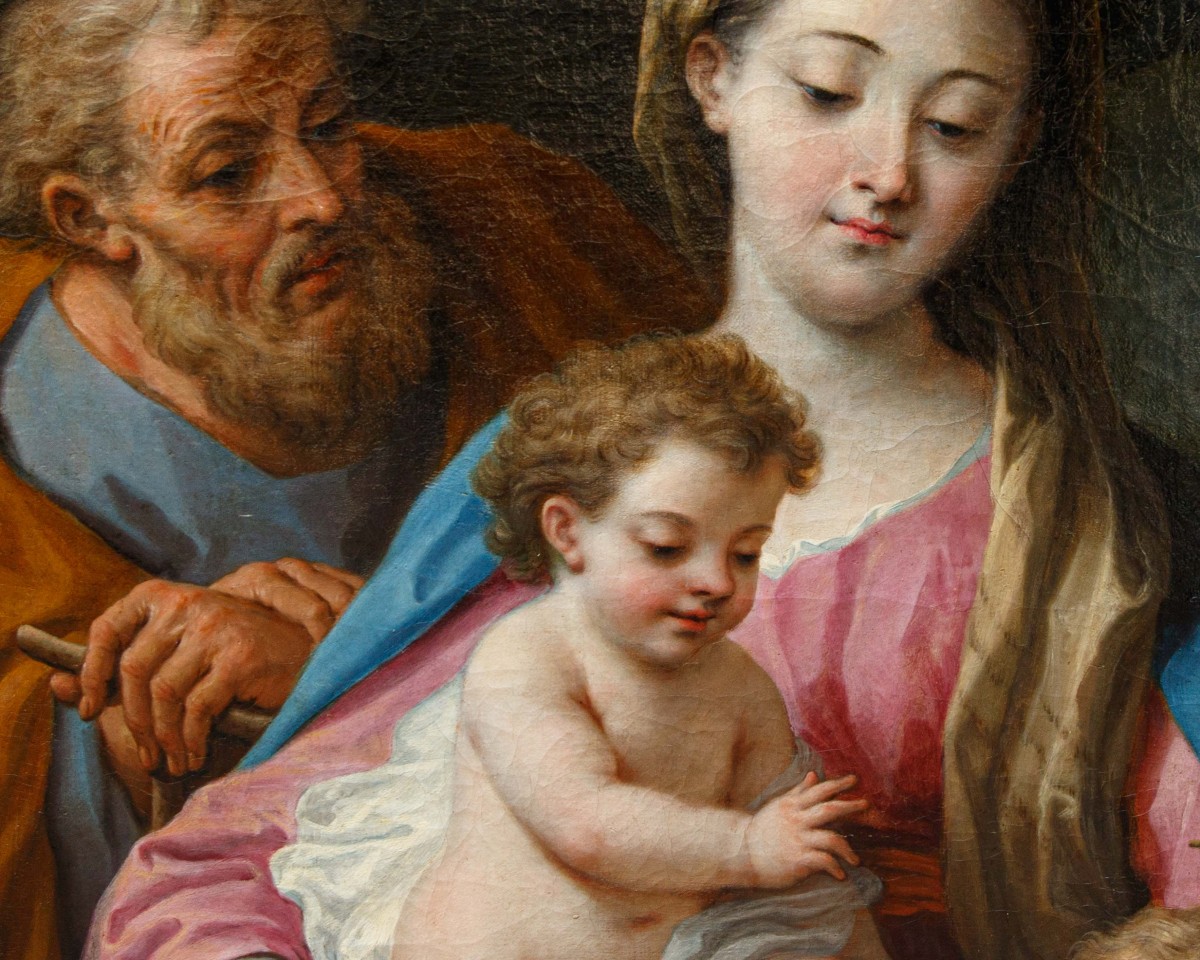
The sacred narrative unfolds upon the canvas with an intimate and measured grace, orchestrating a delicate visual dialogue between the protagonists of the Holy Family and the young Saint John the Baptist. At the center of the composition stands the figure of the Virgin Mary, her face imbued with an absorbed, meditative sweetness. With a soft, protective gesture, the Madonna enfolds both her Son and the little John in her arms, unifying the figures into a single, affectionate unit. The Infant Jesus, resting on his mother's lap and partially wrapped in a pale cloth, leans forward with a lively, penetrating gaze, raising his small hand in a gesture of blessing. At his feet, the young Baptist receives the salvific sign with joined hands, gathered in intense and innocent prayer. Completing the harmony of the scene in the background is the silent, caring figure of Saint Joseph, who watches over the encounter with anxious and reflective devotion. The work offers the viewer a admirable synthesis of domestic affection and theological solemnity, where light caresses the forms, enhancing their volumetric purity.
The execution of the painting is fully attributable to the hand of Paolo de Matteis, a prominent figure in Italian painting born in Piano del Cilento in 1662 and deceased in Naples in 1728. Following a fundamental initial apprenticeship in Naples within the prestigious and prolific workshop of Luca Giordano, the painter moved to Rome under the patronage of the Marquis del Carpio. In the papal capital, the artist perfected his studies under Giovanni Maria Morandi, a pupil of Carlo Maratta, and attended the Accademia di San Luca, assimilating a classicizing orientation that would indelibly mark his entire mature production. His fame rapidly spread beyond the borders of the Kingdom of Naples, leading him to work extensively in Paris between 1702 and 1705, and to establish fruitful relationships with prominent international patrons and aristocrats linked to the Habsburgs, such as Lord Shaftesbury and Prince Eugene of Savoy.
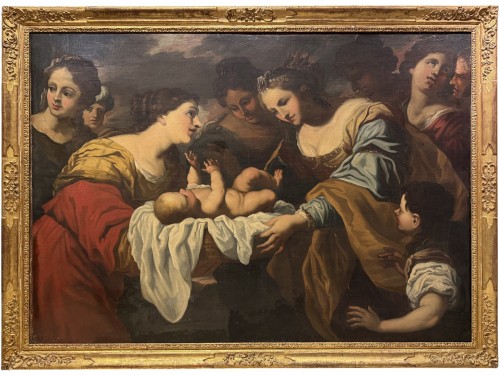
The chronological placement of this canvas belongs to the master's most advanced phase, presumably between the mid-1710s and 1728. It is precisely during this period that De Matteis's style becomes clearer and more crystalline, embracing the rationalist tenets of Arcadian culture and abandoning the dense Giordanesque pictorialism of his early years in favor of a smoother application of paint. To fully understand the work's authorship, stylistic comparisons with other canvases in the painter's catalog prove decisive. The same sweet features of the Virgin and the expressions of the children's faces, characterized by small, penetrating eyes, are consistently found in the Mystic Marriage of Saint Catherine on the art market and in the Finding of Moses sold at auction in London. Furthermore, a decisive match is obtained by comparing the canvas to the Holy Family with Saints Aloysius Gonzaga and Stanislaus Kostka in Recanati, dated 1727, where the Madonna and the blessing Child recall in a compelling and almost overlapping manner the formal solutions adopted in this painting. Further affinities in the use of a clear Venetian-derived palette and a glassy pictorial surface can be found in the Venus Delivering Arms to Aeneas in Macerata, the Nativity in the Richmond museum, and the large canvases for the Abbey of San Martino delle Scale in Palermo, confirming the work as a admirable testimony of early 18th-century Neapolitan painting.
On a strictly formal level, the work reveals extraordinary compositional intelligence in managing weight and mass within the reduced space of the canvas. The transition toward a smooth, enameled surface handling does not diminish the volume of the bodies; on the contrary, it enhances their geometric purity through a soft, never dramatic chiaroscuro. The almost pyramidal stability of the sacred group is subtly set in motion by the diagonal posture of the Infant's body, which creates a controlled dynamism guiding the viewer's eye directly toward the emotional core of the infant Saint John's prayer. Moreover, the choice to brighten the palette with limpid chromatic harmonies demonstrates how De Matteis was able to move beyond the dense, tumultuous pictorialism of 17th-century origin. The result is an atmosphere of poetic and intellectual suspension, where the fusion of linear rigor and soft skin tones anticipates, with surprising consistency, the sensibility and formal solutions characteristic of European Rococo.
Delevery information :
Les frais d'expédition seront calculés au moment de la commande en fonction de la destination, des dimensions et du poids du tableau, ainsi que de l'assurance couvrant la valeur totale de l'œuvre.
For paintings purchased from abroad: following payment, the application process to obtain the export license (ALC - Attestato di Libera Circolazione) will be initiated. All antiques shipped abroad from Italy require this document, which is issued by the Ministry of Cultural Heritage. The procedure may take 3 to 5 weeks from the date of request; therefore, the painting will be shipped as soon as the document is obtained