Offered by Antichità Castelbarco
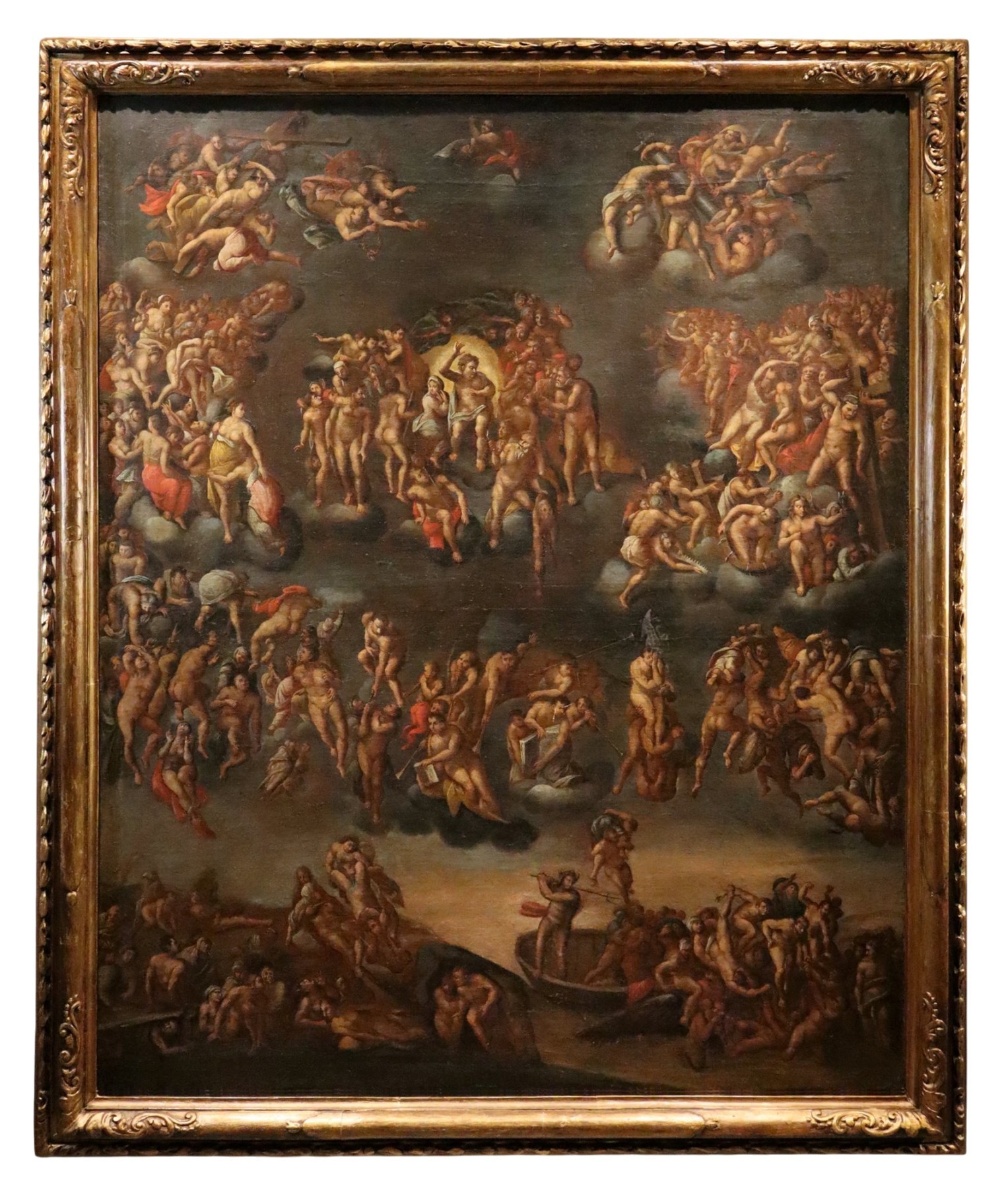
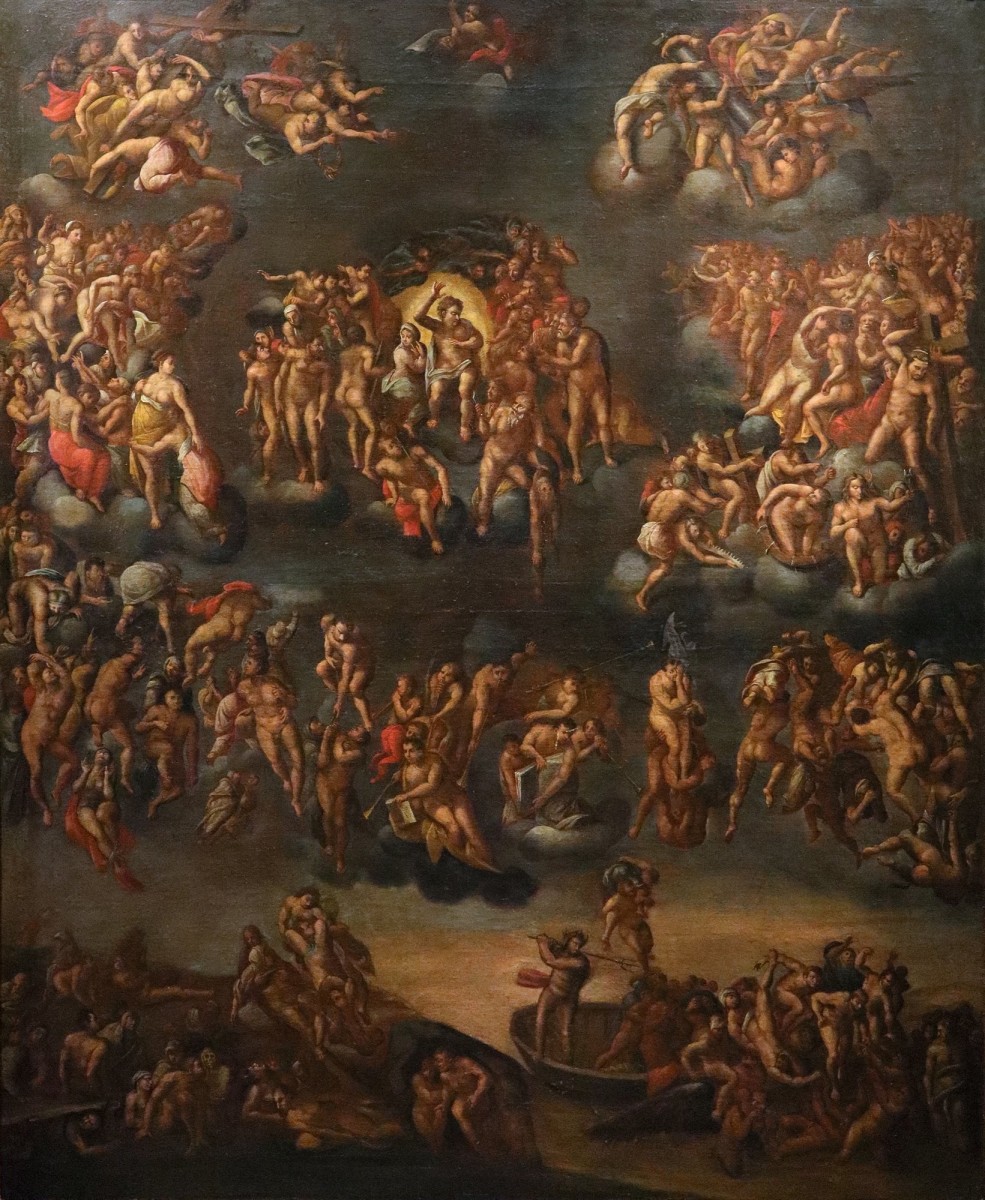
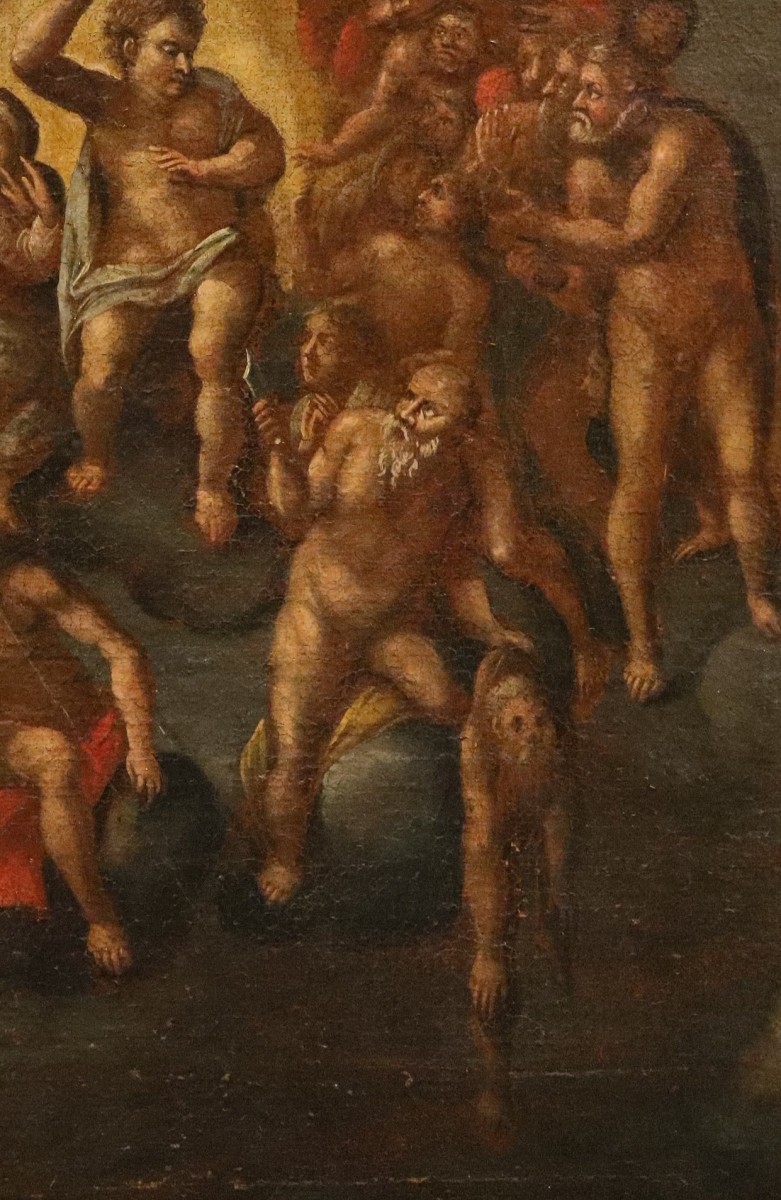
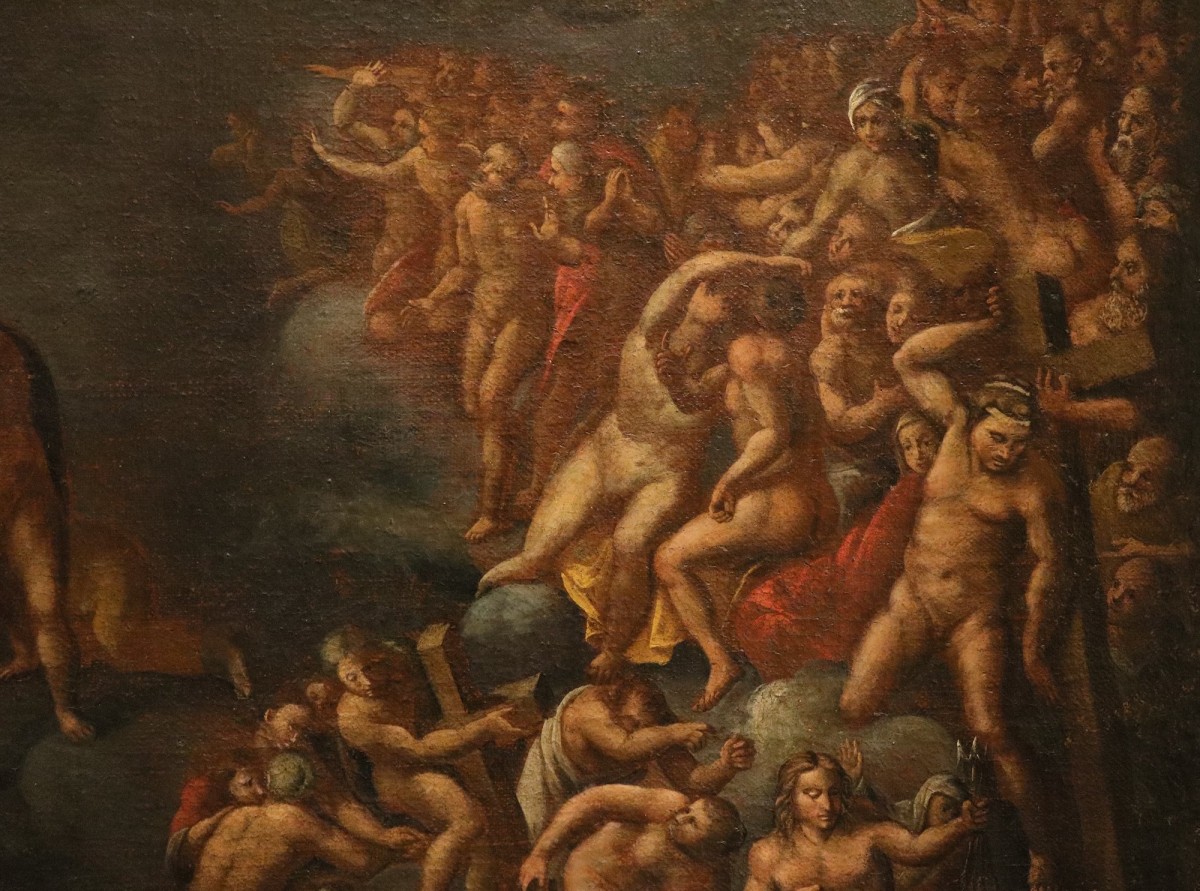
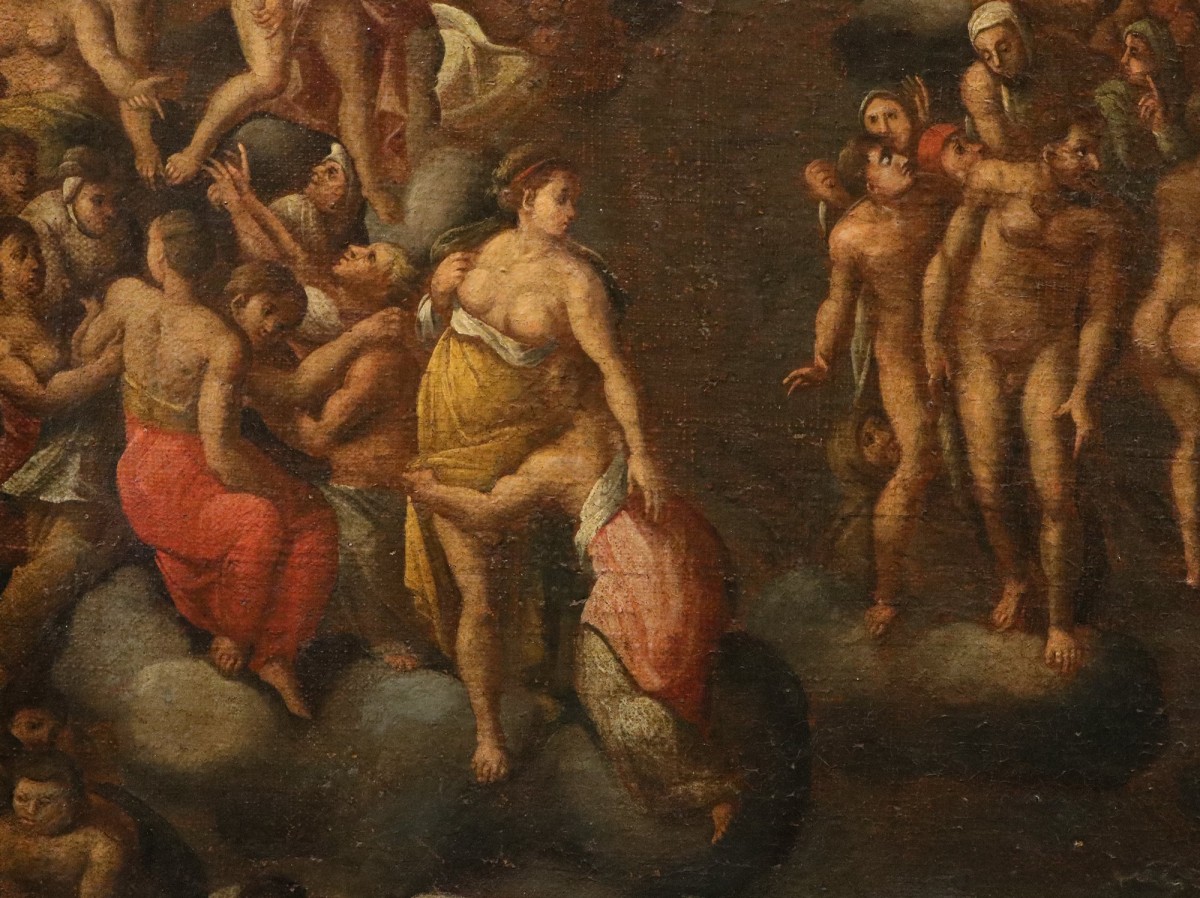

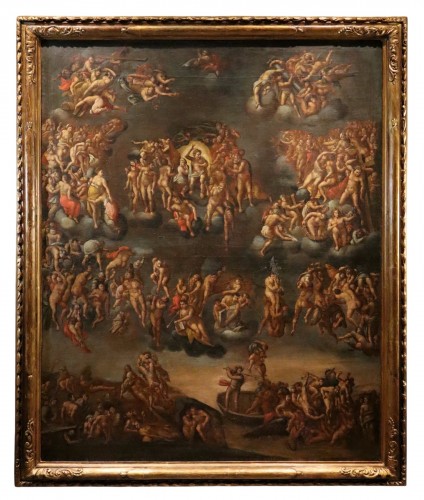
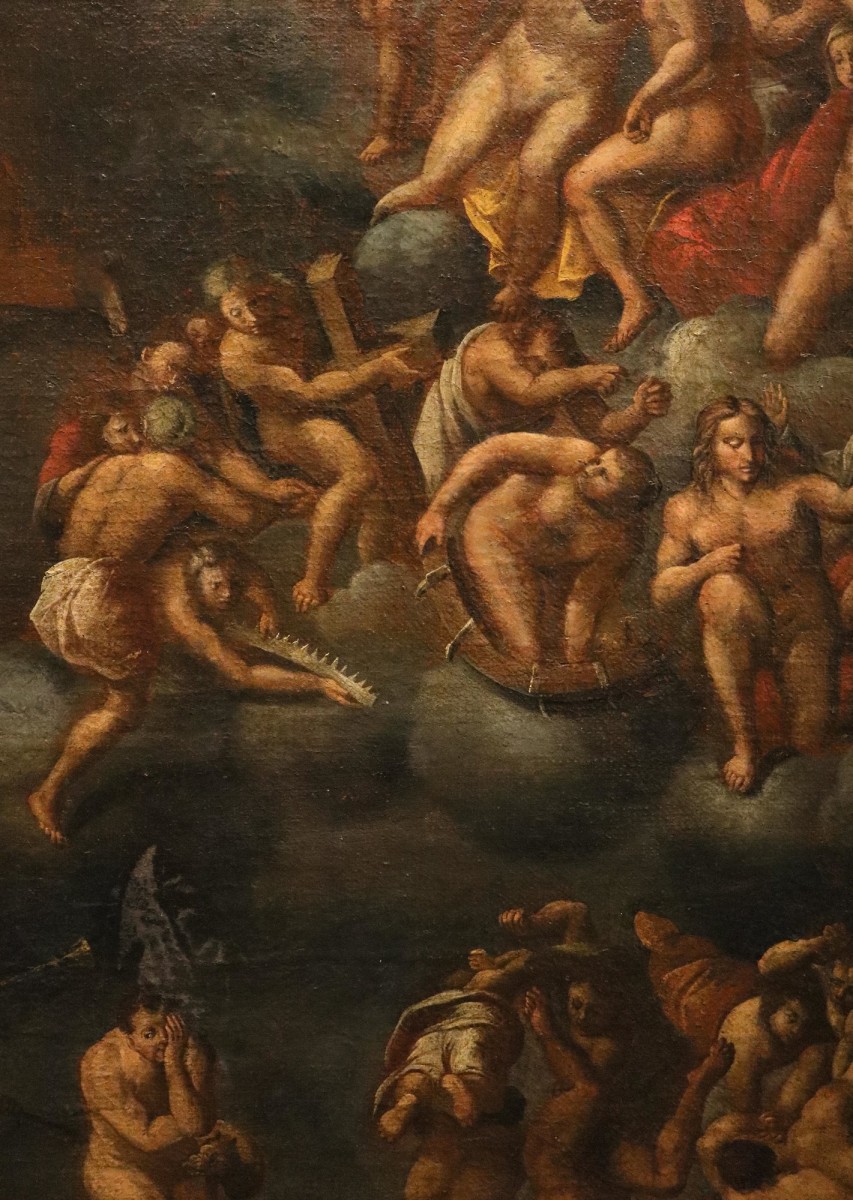
The Last Judgement by Michelangelo Buonarroti (Caprese 1475 – Rome 1564)
17th-century Roman painter
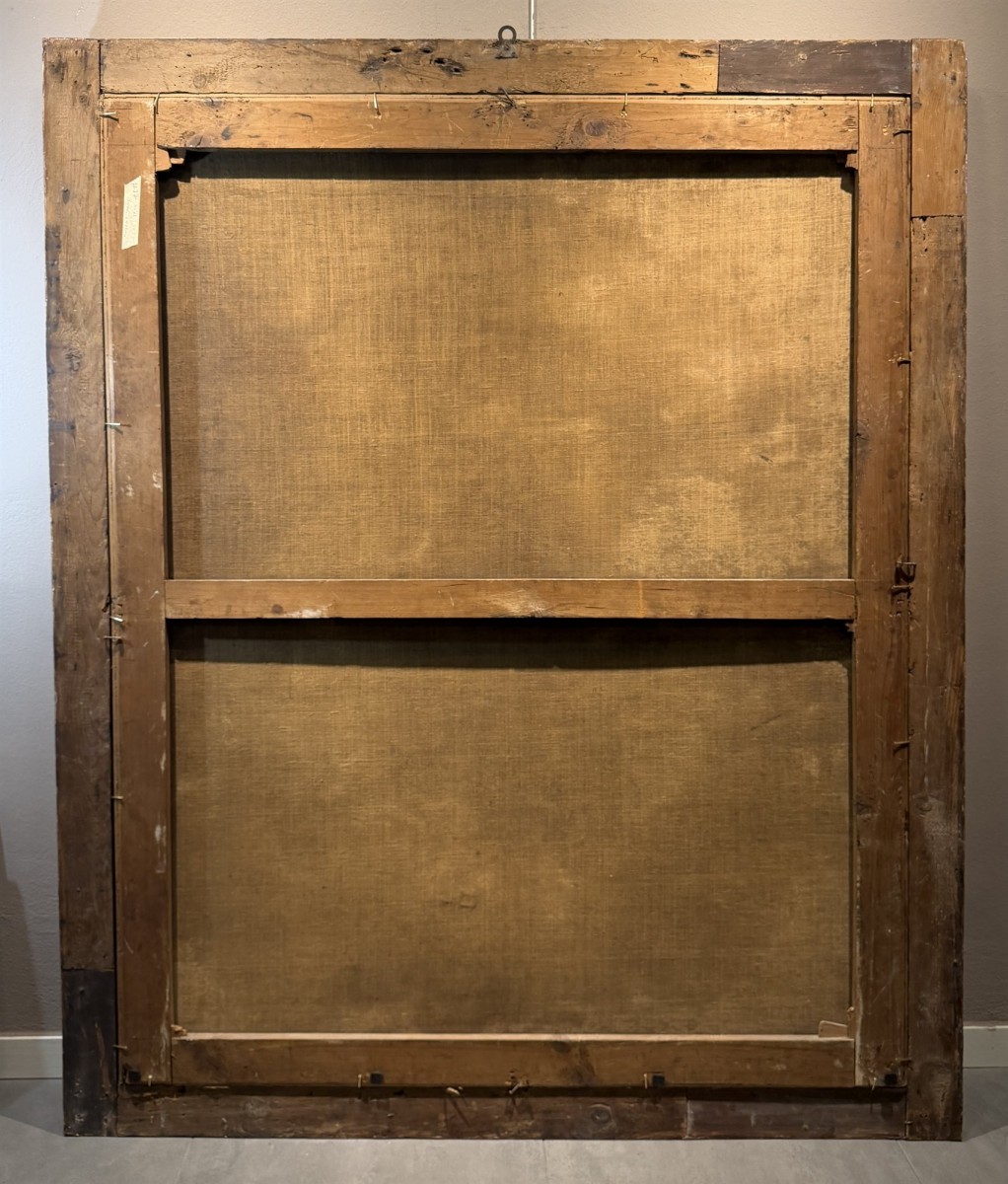
Oil on canvas 133 x 165 cm.
In an antique frame (with imperfections and minor losses) 152 x 184 cm.
Good condition NB: Please note that the images were taken using professional lighting. The painting may appear slightly darker if not properly lit.
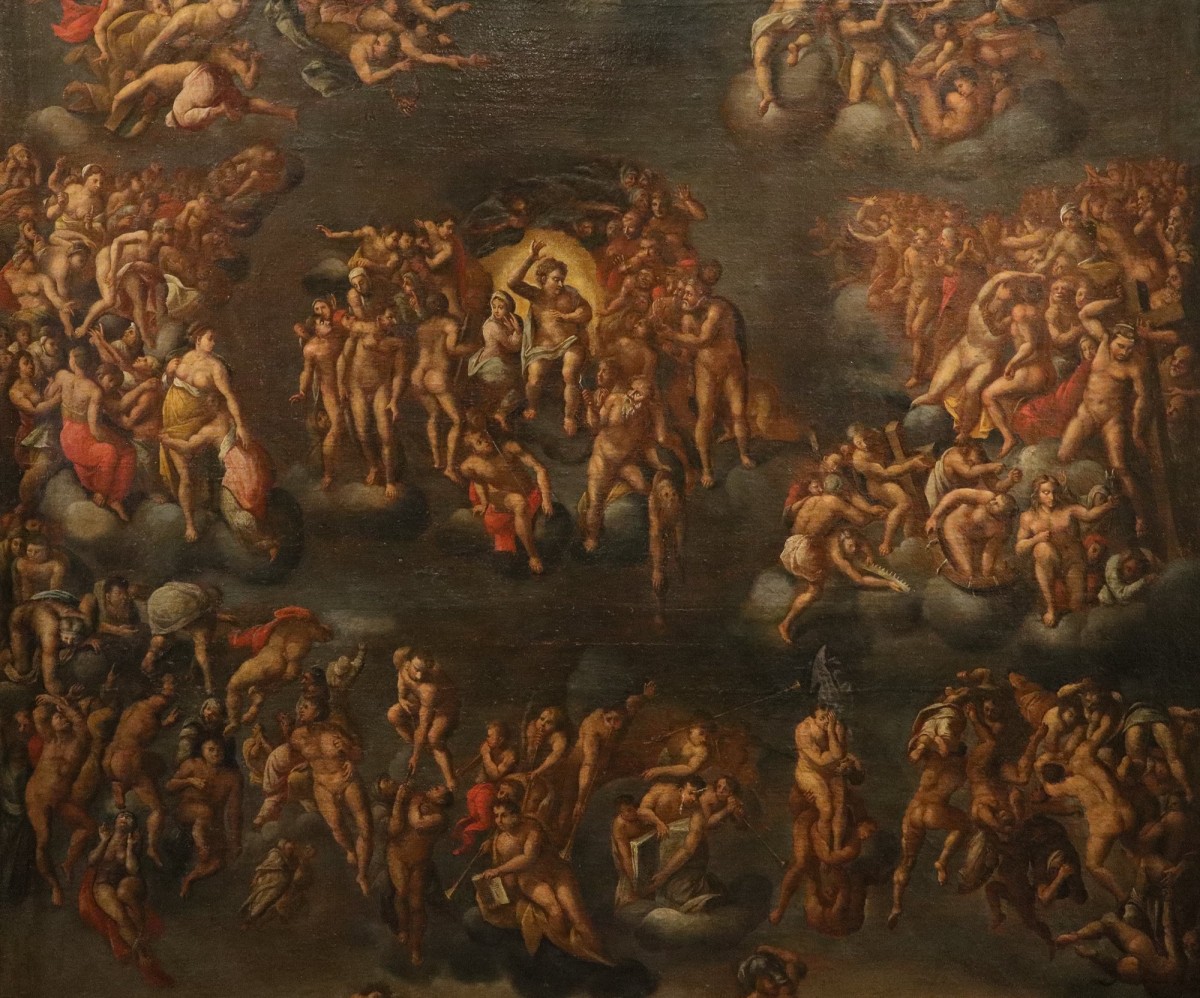
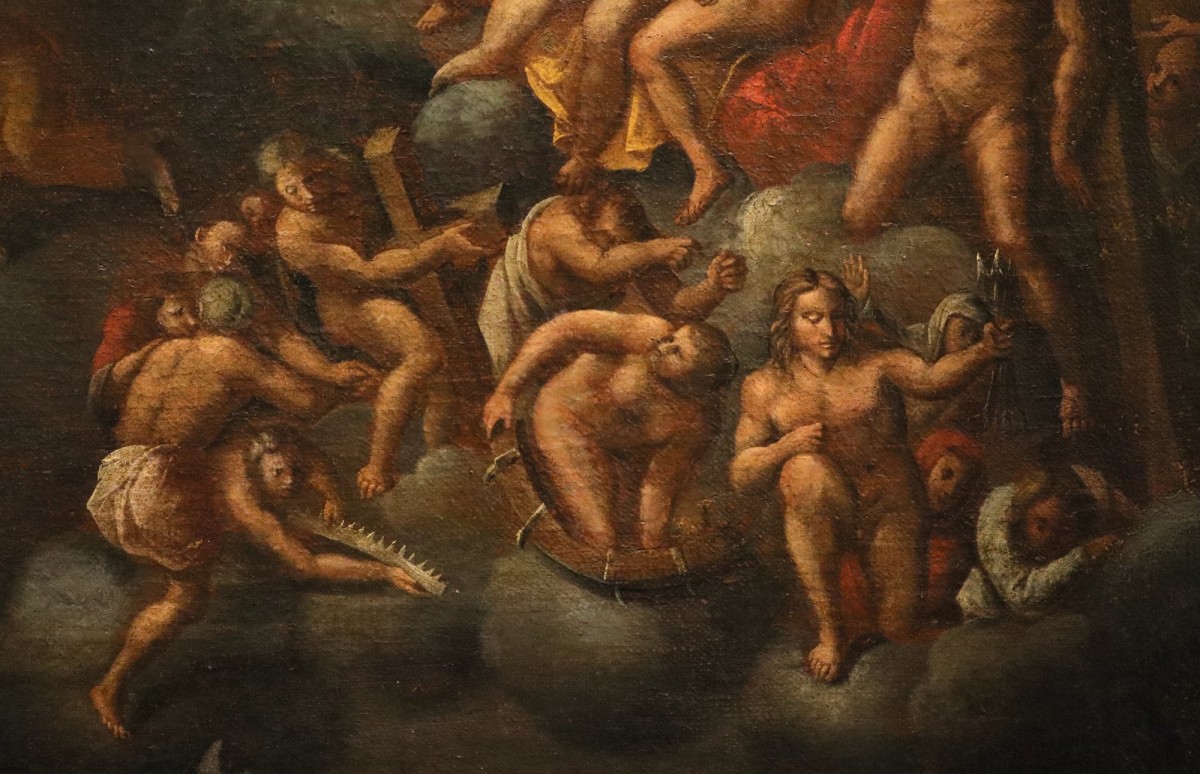
This is an extraordinary work created in the 17th century, inspired by the famous ‘Last Judgement’ fresco painted by Michelangelo Buonarroti between 1535 and 1541, commissioned by Pope Clement VII to decorate the wall behind the altar of the Sistine Chapel and now regarded as an absolute masterpiece of Western art.
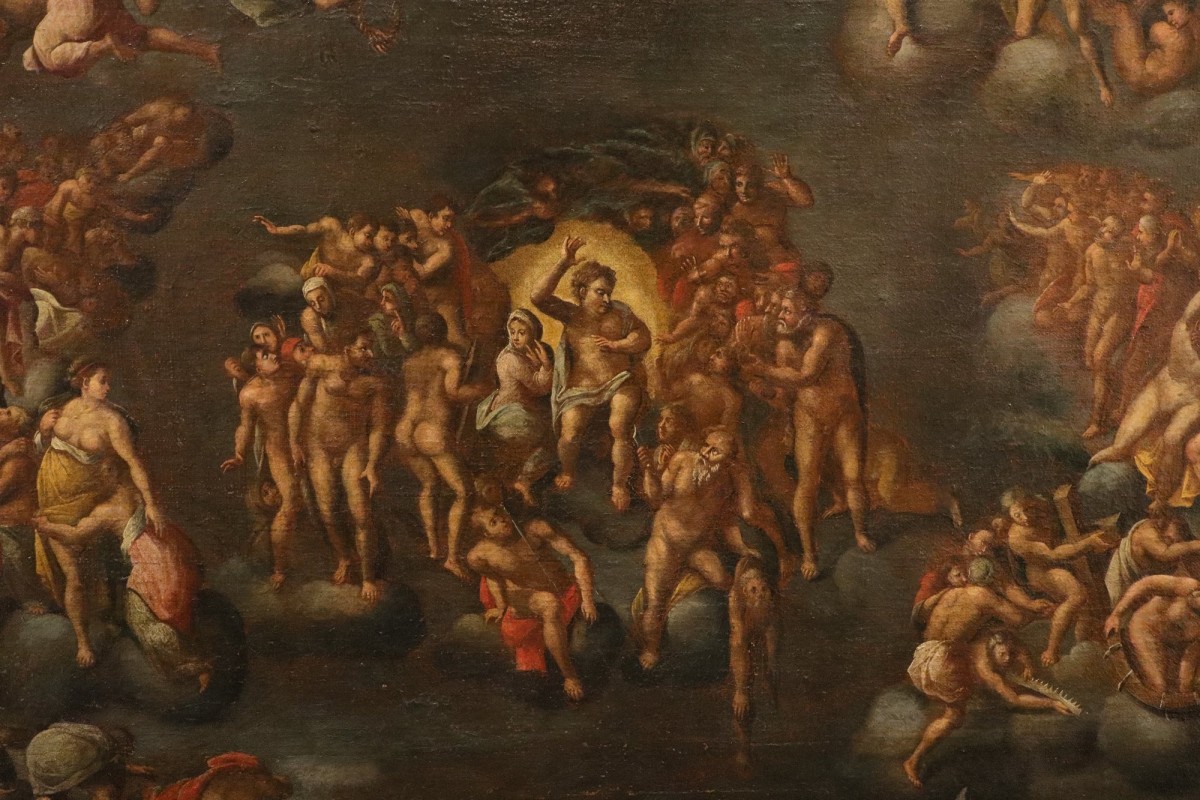
Buonarroti’s Last Judgement is a magnificent work, capable of evoking powerful emotions from the very first glance, with its whirlwind of over 400 figures swirling around the judging Christ at the centre, depicted half-naked like a classical hero, with the Virgin Mary at his side.
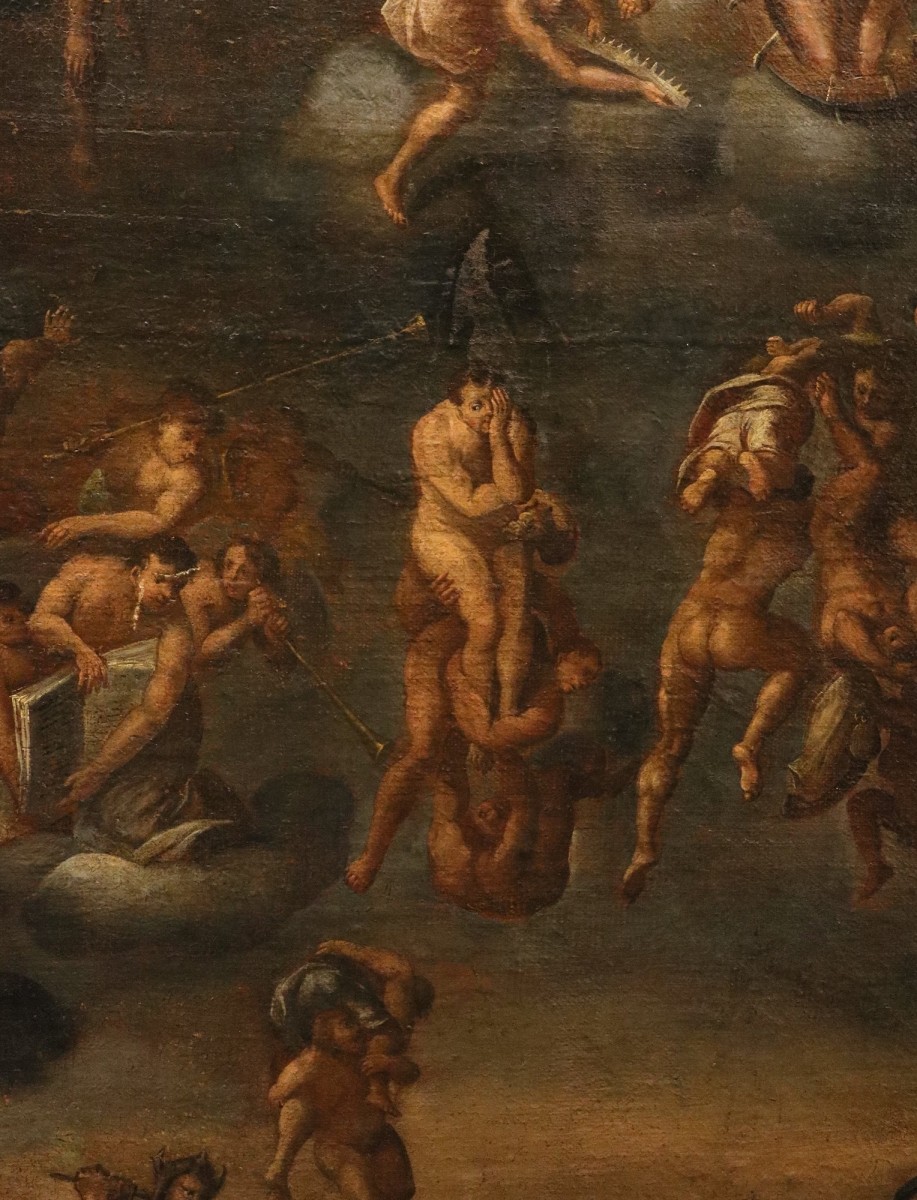
We witness the moment when the angels sound their trumpets heralding the onset of the Apocalypse, with Christ raising the dead and calling the blessed to join him in Paradise, whilst commanding the angels to cast the damned into Hell.
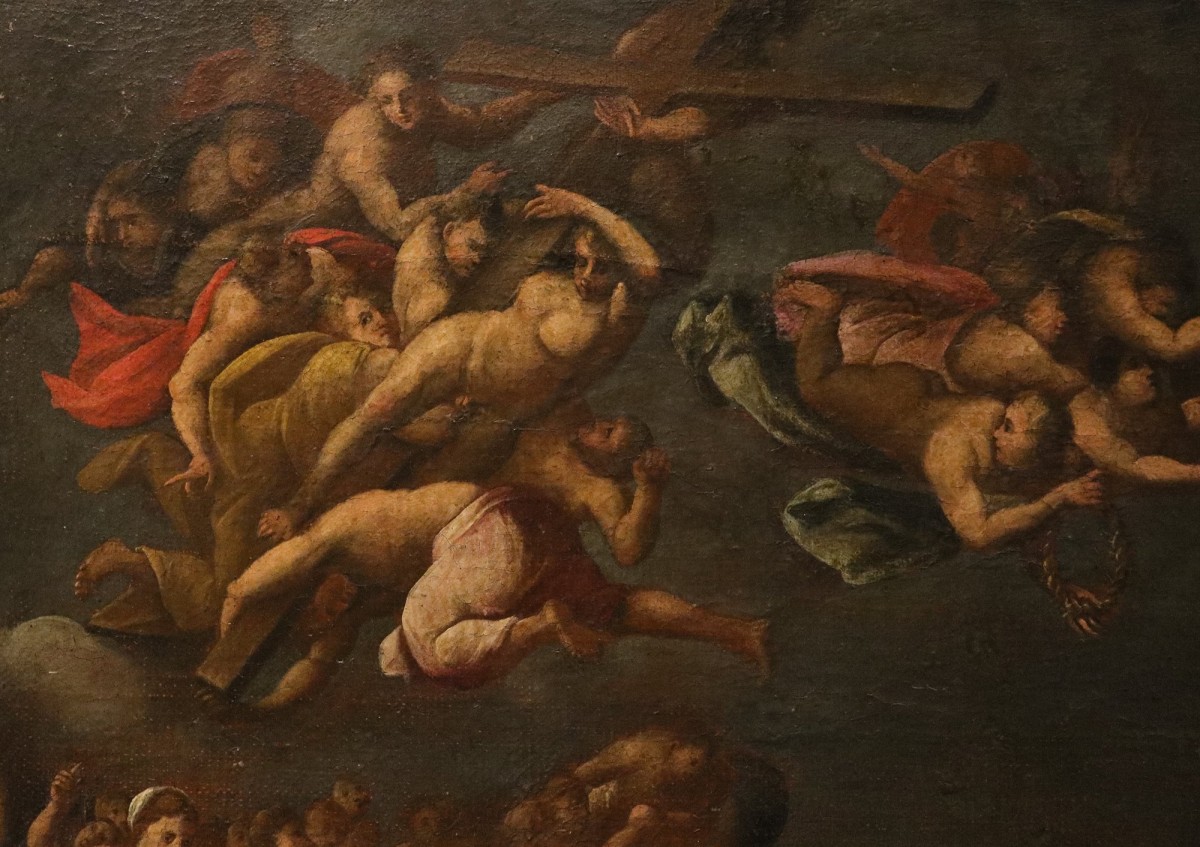
In the upper part of the composition, the angels bear the symbols of Christ’s Passion: the cross, the crown of thorns and the pillar of the scourging, whilst arranged in a circle around the figure of Christ are various figures from the Old Testament, such as apostles, prophets, heroines, sibyls and patriarchs, alongside saints, martyrs and virgins.
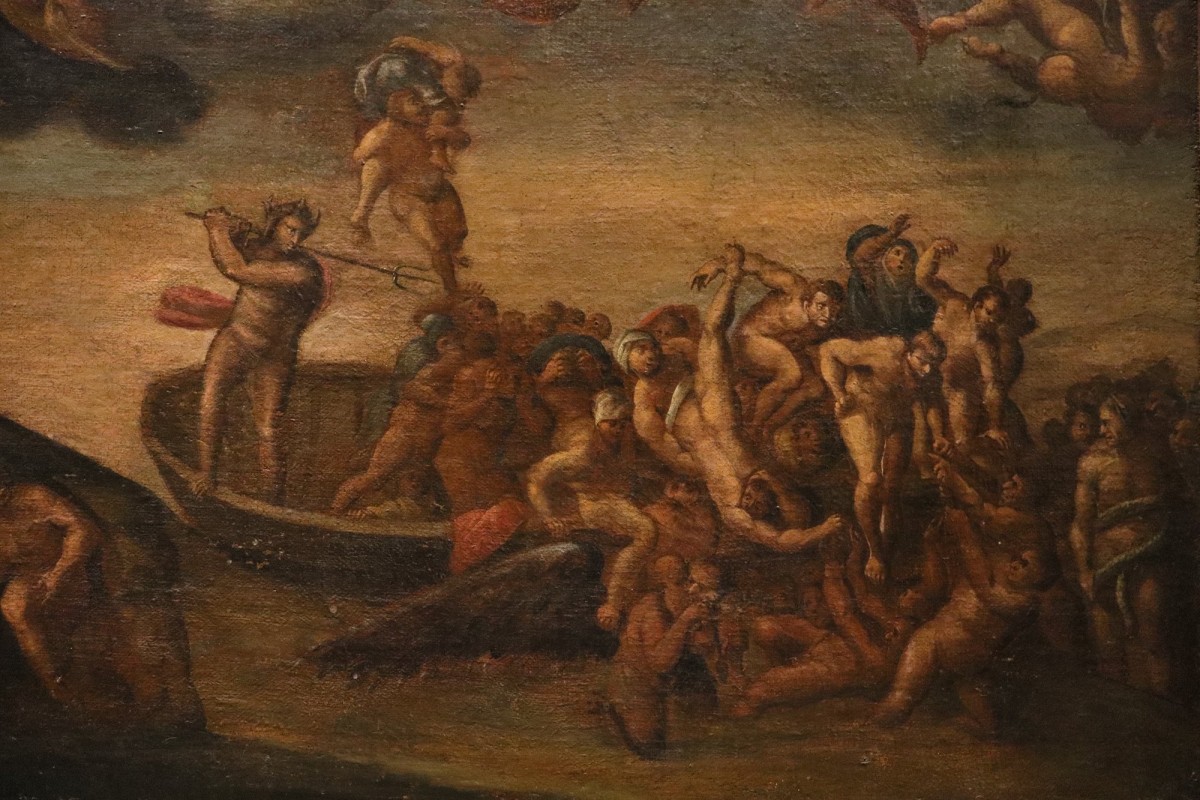
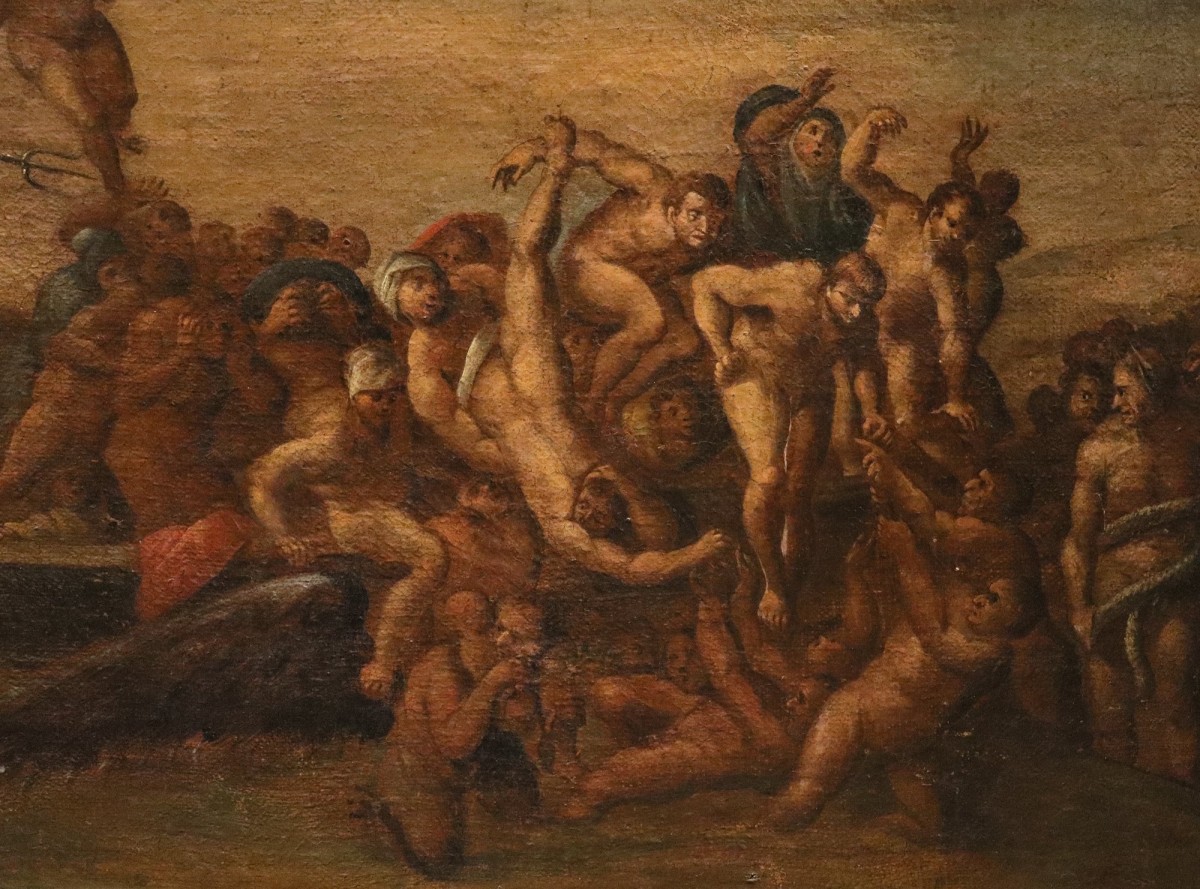
In the lower section, beneath the angels with trumpets holding the Holy Scriptures, on the left is depicted the resurrection of the dead; some of them ascend amongst the blessed, whilst others are cast into the depths of Hell, welcomed onto Charon’s boat and seized by devils.
Several reproductions of Michelangelo’s *Last Judgement* have been made, both in ancient and modern times, as it was a subject much sought after by the great art collectors of the era.
Among the most important artist-made copies, the panel by Marcello Venusti stands out: an original copy commissioned by Cardinal Alessandro Farnese from the artist in 1549, so that he might preserve a representation of Buonarroti’s original work, and now housed at the Capodimonte Museum in Naples (Fig. 1). https://catalogo.fondazionezeri.unibo.it/scheda/opera/16963/
In Rome, Venusti became one of the leading figures, through his workshop, in disseminating Michelangelo’s invention in smaller formats, though many other artists did the same.
In this instance, the work is masterfully rendered here by a talented painter, presumably active in Rome during the 17th century, and therefore created shortly after the master’s ‘Judgement’ was executed.
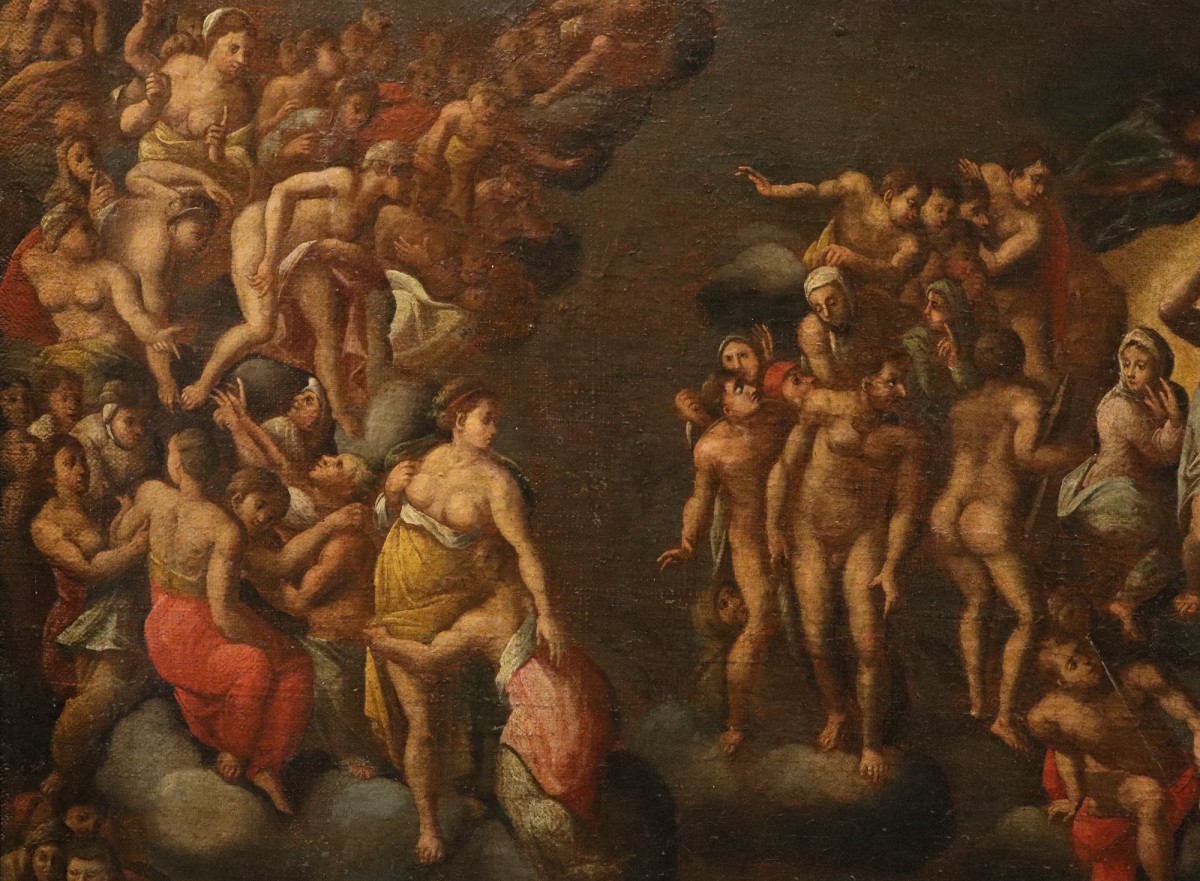
The distinctive feature and value of our work, just as with those created by Venusti, lies in its status as a historical document, showing Michelangelo’s fresco in its entirety prior to the censorship imposed by the Council of Trent in 1564, which led Daniele da Volterra to cover the nude scenes, deemed indecent.
In our case, the artist has enhanced the painting with brushstrokes of great expressive power, accompanied by a rich and vivid colour palette, which has been well preserved over time and allows us to admire the work in every detail.
Among the other works derived from this great masterpiece, we may mention: - Antonio Campi and workshop, The Last Judgement, second half of the 16th century, oil on canvas, 168 x 138.5 cm. Creval Collection, Sondrio (Fig. 2) - Attributed to Giulio Clovio, The Last Judgement, c. 1570, tempera on parchment, Florence, Casa Buonarroti (Fig. 3) - Giovanni Battista Moroni, The Last Judgement, Church of San Pancrazio (Gorlago, Bergamo) (Fig. 4) - Niccolò Della Casa (after Michelangelo), The Last Judgement, 1543–before 1562, burin engraving (Fig. 5) - Hendrick van Balen (Antwerp 1575–1632), The Last Judgement, Dorotheum, Vienna, 30 April 2019
Delevery information :
We take care of and organise the transport of the purchased works, both for Italy and abroad, through professional and insured carriers.
We take great care We personally take care of the packaging, to which we devote a great deal of care: each work is carefully packed, first with arti- cle material, then with a custom-made wooden box.
Should you have the desire to see this or other works in person, we would be happy to welcome you to our gallery in Riva del Garda, Viale Giuseppe Canella 18, we are always open by appointment only.